
Body Mapping Template: Free Printable Feelings Body Map for Kids
A body mapping template is essentially a simple outline of a person, but it’s an incredibly powerful tool for helping children express their feelings visually. It's a way to connect those physical feelings we all get—like a tight chest when we’re sad or butterflies when we’re nervous—to the words that describe them.
Get the free body map template
A printable "Where do I feel it?" body map with a feelings key, a That's Okay creature version, a blank version for older children and a short guide for grown-ups. 4 pages, A4 PDF.
You'll join the That's Okay email list for occasional free feelings activities and book news. Unsubscribe any time.
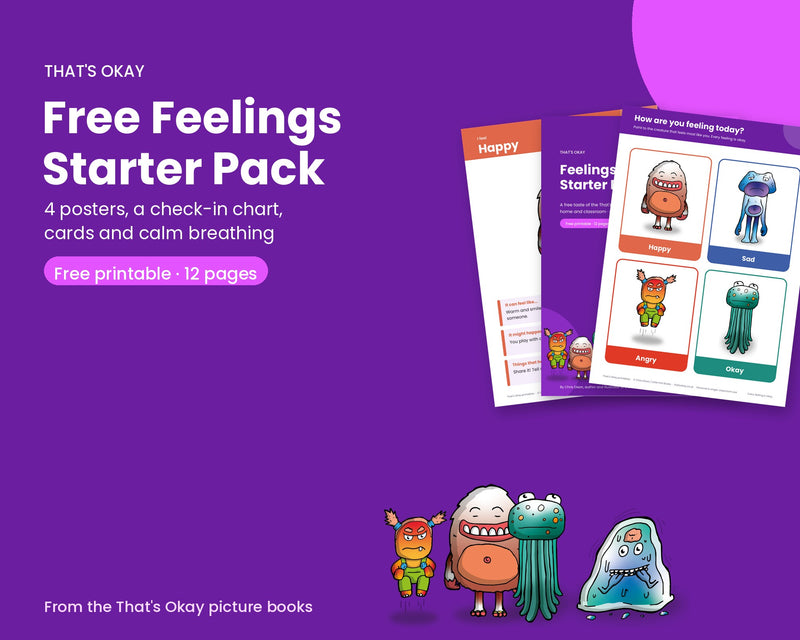
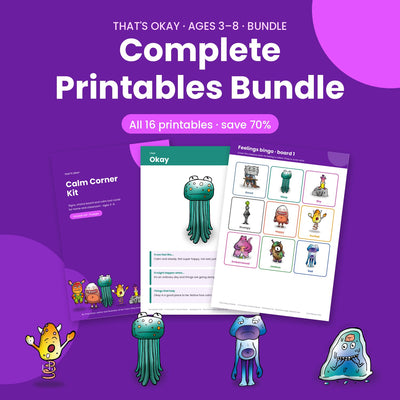
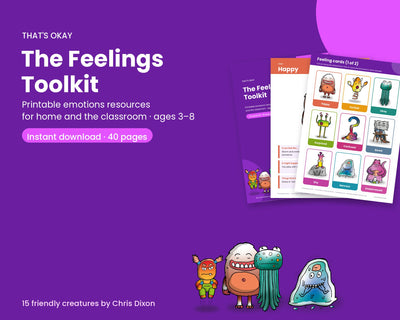
Free printable: the Feelings Starter Pack. 12 pages of feeling posters, a check-in chart, feeling cards and calm breathing cards to help children name their feelings.
With official NHS figures showing that one in five children in England now has a probable mental health condition, finding creative and gentle ways to connect with them about their inner world is more important than ever. Addressing mental health early on is not just about wellbeing at home; it builds a foundation for a healthier society and a more productive future workforce. Poor mental health currently costs UK businesses an estimated £56 billion a year.
Disclaimer: I am not a mental health professional. This guide offers supportive strategies for parents, but it is not a substitute for professional medical advice. If you are worried about your child's mental health, it is essential to seek help from your doctor or a qualified practitioner.
So, What Is a Body Mapping Template?
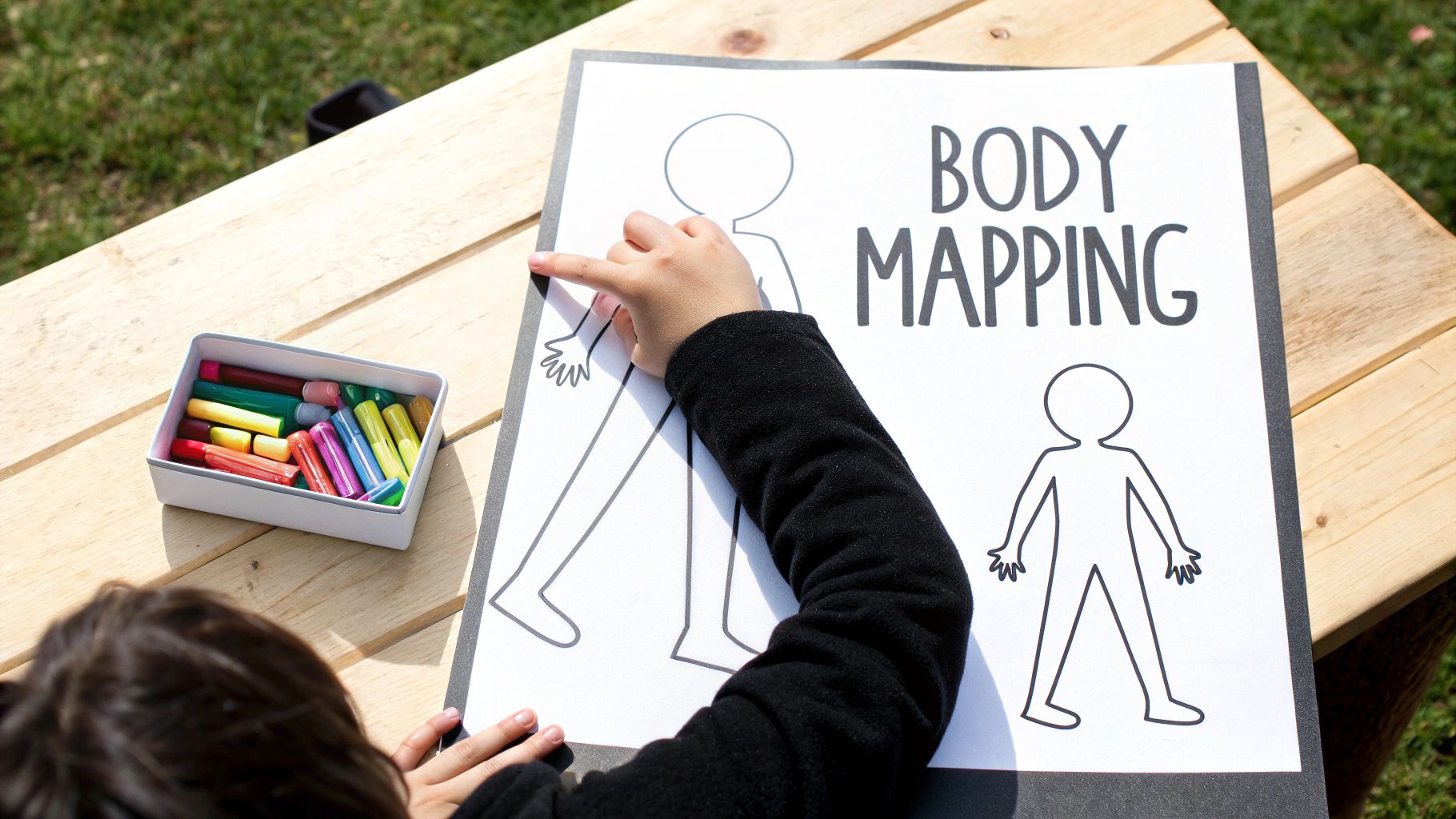
Think of a body mapping template as a creative canvas. It invites a child to put colours, draw symbols, or write a few words onto a basic human outline. This simple act turns the paper into a safe space where they can show you the "wobbly tummy" that comes with worry, or the "buzzing hands" they get when they're excited. It’s a visual map that helps to bridge the often-tricky gap between physical sensations and emotional awareness.
What I love most about this approach is that it feels more like play than a test. It’s not a clinical assessment; it’s an invitation to have an open chat without pressure or judgement, making conversations about feelings a normal part of everyday life.
For children, the benefits are huge:
- They start building an emotional vocabulary that goes way beyond just "happy" or "sad."
- It helps them spot recurring physical signs of stress much earlier.
- It creates a non-judgmental space for them to express themselves.
- It empowers them to take the lead in conversations about how they’re feeling.
Putting It Into Practice
Getting started is easy. You just need to choose or print a blank template and grab some colouring pens or crayons. Find a calm, comfortable spot where you won't be interrupted and there’s enough space to spread out. The most important thing is to let them work at their own pace.
Try to match your prompts to the child's age and what’s going on for them. For younger children, a practical example might be asking, “Where do you feel giggles starting before they come out?” For older children, you could get more specific, perhaps mapping out where they felt stress after a big test at school by asking, "Can you show me where the exam stress felt stuck in your body?"
Adapting Body Mapping for Different Ages
Body mapping is brilliantly versatile. You can easily adapt it for different developmental stages, from toddlers just learning about feelings to teenagers navigating more complex emotions.
Here's a quick look at how you might tailor the activity:
| Age Group | Focus of Activity | Example Prompt |
|---|---|---|
| Early Years (3–5) | Identifying basic feelings | “Where do you feel your happy smile starting?” |
| Primary (6–10) | Mapping body sensations to emotions | “Can you draw where you feel excitement in your body today?” |
| Pre-Adolescents (11–13) | Exploring complex emotions | “Let’s mark any spots where worry likes to hide.” |
| Adolescents (14–17) | Symbolic representation and words | “Show me the places in your body that feel calm or peaceful.” |
As you can see, the core idea remains the same, but the language and focus shift to stay relevant and engaging as children grow.
Digital vs. Paper: What’s Best?
Recently, there's been a shift towards using digital body mapping tools, especially in care settings. Companies like CareDocs highlight that most providers now use digital templates on tablets or computers. This can be great for precise annotations, saves on storage, and reduces the risk of losing important information. If you're curious, you can find out more about this shift on the CareDocs website.
However, don't underestimate the power of pen and paper. For many children, the physical act of colouring is incredibly soothing and grounding. On the other hand, a digital template with an 'undo' button can feel less permanent and might be great for older kids who want to add layers of notes. Both versions achieve the same goal: giving a voice to physical feelings in a way that makes sense to a child.
Getting Started With Your First Template
Before you begin, it’s really important to reassure your child that this is just a fun drawing exercise. Lay out the printable outline, a mix of crayons, pencils, and maybe even some stickers. Let them know there are no right or wrong answers—this instantly removes any fear of making a mistake.
Try gentle, open-ended prompts like, “If happiness was a colour, where would it shine in your body?” or “Can you draw where your energy feels a bit stuck today?” These kinds of questions guide them without applying pressure and can lead to some surprisingly insightful conversations.
For more ideas on building that all-important feelings vocabulary, have a look at our guide on what emotional literacy is and why it matters.
Body mapping is a fantastic way to turn those vague, internal sensations into clear, concrete conversation starters.
While this activity isn't a substitute for therapy, it’s a wonderful way to strengthen the connection between body and mind. Always maintain a zero-pressure environment and respect a child’s right to say "no," especially if you’re touching on sensitive topics. If you ever feel worried about a child’s mental health, it's always best to seek advice from your GP or a qualified professional.
This creative exercise builds emotional literacy one small step at a time, and that early self-awareness can be a game-changer for reducing stress later on. It’s a small practice that, when used regularly, can have a lasting positive impact.
For many families, this simple outline becomes a go-to check-in tool after a busy day at school or before bed. It’s quick, requires minimal supplies, and can easily become a natural part of your family’s wellbeing routine. You could even display the finished maps on the fridge to celebrate all feelings, sending a powerful message that every single emotion is valid and deserves to be seen.
How Body Mapping Strengthens Emotional Awareness
This creative technique is so much more than just a colouring activity; it’s a powerful way to build a strong, lasting connection between a child's mind and their body. Using a body mapping template helps a child see that emotions aren't just vague ideas, but real, physical experiences that happen inside them.
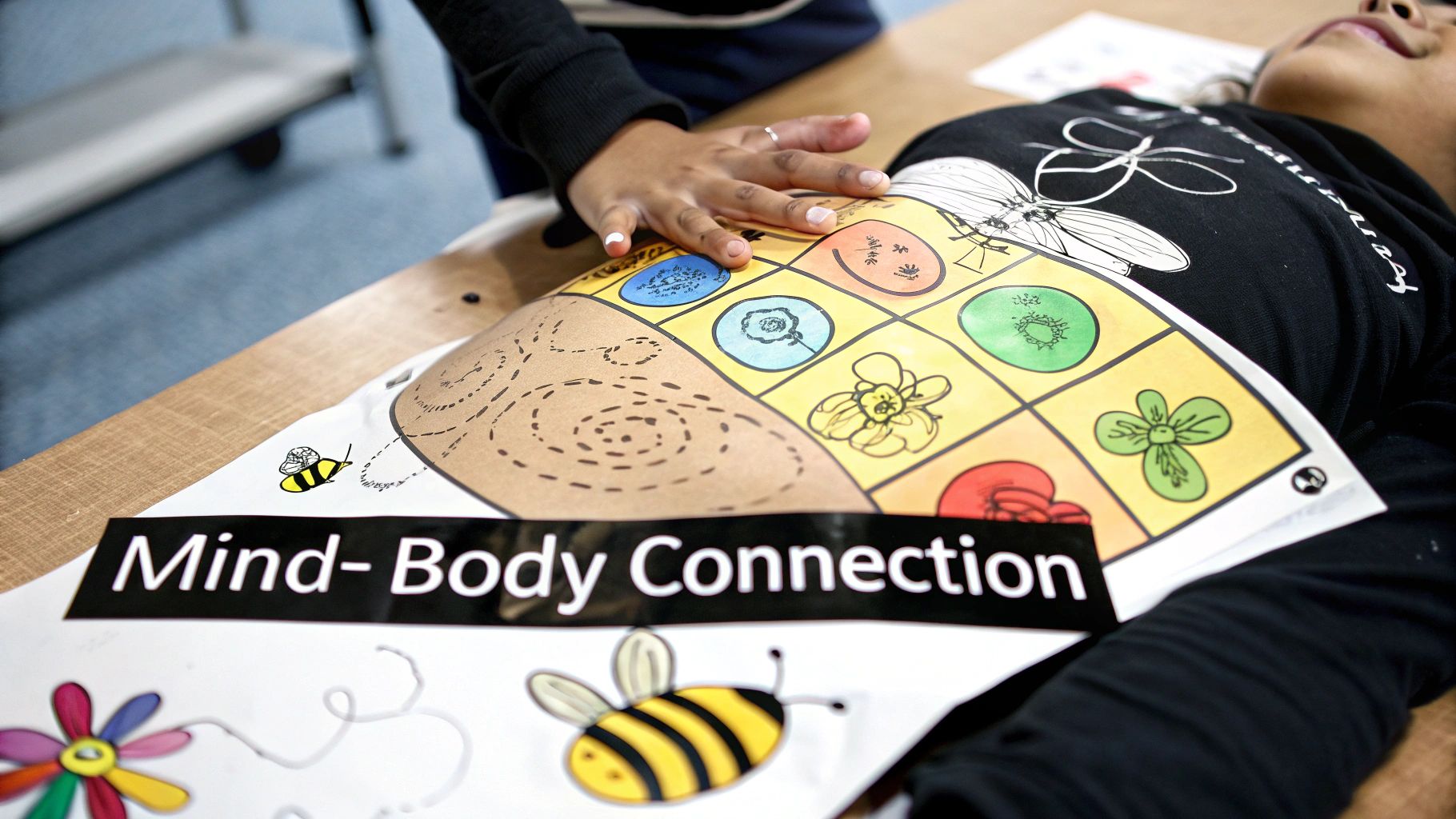
The process helps them grow their emotional vocabulary way beyond simple words like 'happy' or 'sad'. Instead, they start to build a rich, personal language to describe their inner world.
Creating a Visual Language for Feelings
Just imagine how a child might show their feelings on the page. Frustration could become tight, red scribbles in the fists. Excitement might look like buzzing bees drawn in their stomach, while worry could be a tangled grey mess in their chest.
Suddenly, a complex sensation becomes something they can see, point to, and talk about. This practice gives a tangible form to feelings that can otherwise be incredibly difficult to put into words. If you're curious about the wider context of how creative expression can support healing, it's worth exploring the principles of art therapy and its focus on personal growth.
This visual expression is a cornerstone of self-awareness. It gives a child the tools to recognise their own emotional patterns over time—a vital skill for managing their wellbeing throughout life.
Normalising Mental Health Conversations
The simple act of sitting down together with a body map makes talking about mental health feel completely normal. It reframes these chats as a regular, healthy check-in, just like asking about a grazed knee. This small, consistent practice chips away at any stigma or awkwardness around sharing struggles.
As a parent, I’ve found that these maps can be an invaluable, gentle way to spot recurring stress or anxiety. It opens a door to check in without resorting to direct, and sometimes intimidating, questions.
By making emotional expression a creative and shared activity, we empower children to see their feelings as valid and manageable, not something to be hidden or feared.
It's no secret that mental health challenges among young people are a serious concern. Research from The Children's Society shows that 50% of mental health problems are established by age 14. Creating supportive environments at home is such a crucial first step in building resilience. Learning more about teaching emotional awareness to children can give you even more strategies for your family.
The Impact of Modern Pressures
Children today are navigating a world filled with unique pressures, especially from social media. The constant exposure to perfectly curated lives and the pressure for online validation can easily lead to feelings of inadequacy, anxiety, and low self-esteem.
This is where a tool like body mapping becomes even more important. It encourages children to turn their focus inward, reconnecting with their authentic feelings rather than comparing themselves to an online persona. It's a practice of internal validation, which is a powerful antidote to external pressures.
Supporting Mental Wellness Proactively
Fostering good mental health isn't just about reacting when things go wrong; it's about building strong foundations from the start. Introducing simple relaxation tips alongside body mapping can create a wonderfully holistic approach to wellbeing.
- Belly Breathing: Teach them to place a hand on their tummy and take slow, deep breaths, feeling it rise and fall. This simple action can calm a racing heart in minutes.
- Create a 'Calm Corner': Designate a cosy space in your home with soft cushions, favourite books, and maybe some calming sensory toys. It’s their safe-haven.
- Mindful Moments: Encourage short breaks to just notice their surroundings—what can they see, hear, or smell? This grounds them in the present moment when their thoughts are spiralling.
It is so important to create an environment where children feel safe to express themselves. Simple things like wearing mental health apparel with positive messages or reading children’s books about big feelings also reinforce the message that it’s okay not to be okay.
While these tools are incredibly supportive, I must stress that I am not a mental health professional. If you have any serious worries about your child's mental or emotional health, it is essential to seek help from your doctor or a qualified professional.
Guiding Your First Body Mapping Session
Kicking off your first body mapping session should feel more like play than a test. The goal is to create a gentle, inviting space where your child feels safe to explore what’s going on inside.
Think cosy nook, not a classroom. Gather some cushions, simple materials, and most importantly, an attitude of curiosity. Emphasising that there are no right or wrong answers is key to taking the pressure off.
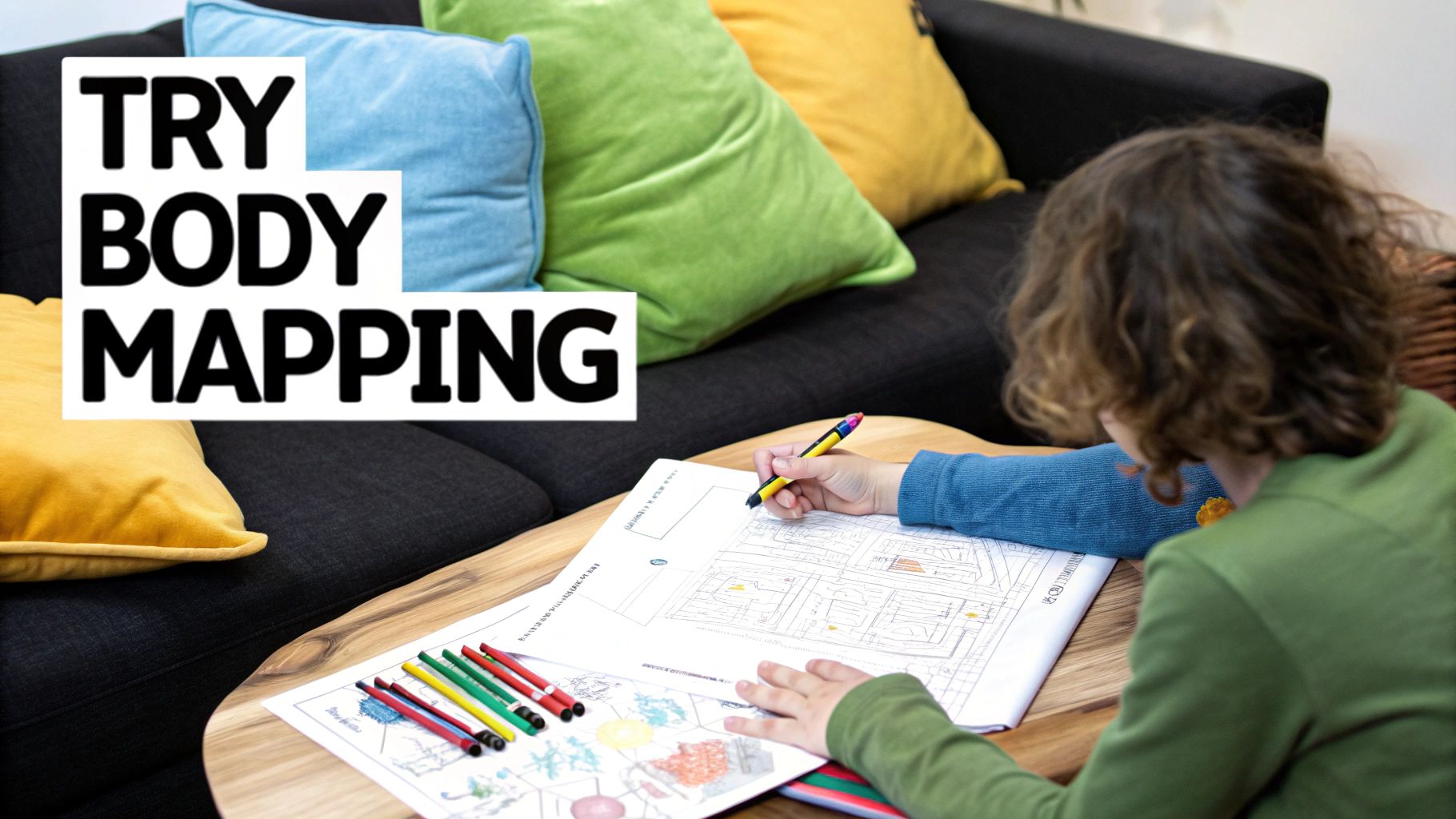
Set the scene with things that bring comfort. This might mean laying out some comfy cushions, having their favourite snacks on hand, and of course, our printable body mapping template.
A big box of crayons, felt tips, or even pastels invites them to explore how different colours and textures might represent their feelings.
Here’s a simple checklist to get you started:
- Comfy cushions to create a relaxed, safe-feeling setting.
- Favourite snacks to make the session feel special and fun.
- A printed body mapping template for each person participating.
- A good variety of crayons, pens, or markers for total creative freedom.
Getting Your Materials Ready
Gathering everything you need ahead of time helps set a calm, organised tone from the very start.
Our printable body mapping template is completely free to download, so you can print as many as you need. It's always a good idea to have a few spares, just in case older siblings or friends want to join in!
Colourful crayons, pencils, and markers are brilliant for helping children make the connection between an internal feeling and an external colour.
- Top tip: Why not add some stickers or bits of textured paper? It gives another dimension to their creative expression.
Using Gentle Prompts to Get Started
Sometimes, a blank page can feel a bit daunting. Gentle, open-ended questions can act as a lovely starting point, guiding them without leading their answers.
The trick is to phrase questions that link feelings to physical sensations and colours, keeping the language simple and right for their age to keep them engaged.
Here are a few ideas to try:
- "If happiness was a colour, where would you feel it shining inside your body?"
- "Let’s try drawing what that big worry in your tummy feels like today."
- "Where do you feel excitement buzzing? What colour is that buzz?"
Prompts like these help a child put a name and a visual to their inner world, which is a huge step in building emotional literacy.
The most important thing is to keep the space completely judgement-free. This is what encourages honest expression.
Keeping It a Zero-Pressure Zone
Your calm, patient tone is what reassures a child that every feeling is okay and welcome here. Validate what they share with simple, accepting phrases like, ‘Thank you for showing me this’.
- Model taking a few deep, slow breaths to show what calm focus looks like.
- Try to avoid interpreting their drawing for them. Instead, ask open questions like, "Can you tell me a bit about this part?"
Always ask for their permission before you touch or point to something on their drawing. It shows respect for their creation and their personal space. It's important to remember this is a supportive parenting tool, not a form of therapy. If you have serious concerns about your child’s mental health, it's always best to seek professional advice from your GP.
For more ideas on connecting colours with feelings, check out our article on Colouring Emotions.
A key takeaway: There are no wrong colours. Every single mark is a voice waiting to be heard.
Weaving in Simple Relaxation Tips
Starting with a very brief breathing exercise can really help ground a child and focus their attention before they start drawing.
You could ask them to place a hand on their tummy and feel it rise and fall as they breathe in and out deeply for three counts.
- Count slowly and calmly to model a relaxed rhythm.
- Encourage them to notice how their body feels each time they breathe out.
Combining body mapping with these simple relaxation techniques can be a powerful way to reduce feelings of anxiety. You can also acknowledge modern pressures, like social media, helping them feel seen and understood. You might say something like, "Sometimes scrolling on a phone can leave us with a tight feeling in our chest or a nervous tummy, can't it?"
Encouraging Future Sessions
To show that talking about feelings is always welcome, you could keep the templates visible—perhaps stuck on the fridge. A quick check-in after school or before bed can easily become a regular, comforting ritual.
- Use fresh templates to explore new topics as they come up, like a friendship issue or a big school event.
- Invite older children to lead the session for a younger sibling to boost their sense of autonomy and confidence.
Doing this regularly can help you spot emotional patterns or wobbles before they become overwhelming challenges. Over time, you’ll likely see them develop their own unique language of colours and symbols to express their experiences.
Wrapping Up The First Session
Always end on a positive note, praising your child’s openness and creativity. This small but mighty practice can build a strong foundation for emotional literacy and self-awareness.
- Celebrate their finished map with a high-five, a smile, or a special sticker.
- Keep completed templates in a folder. It can be lovely to look back on them together and see how they’ve grown.
In fact, reviews from parents using these tools show that 73% of families feel the activity helps them understand each other on a deeper level.
Embedding body mapping into your family routine supports those important conversations long before a crisis might emerge. This kind of early support can also ease the emotional strain on educators, contributing to a calmer classroom and reducing teacher absences. It’s a small thing that can make a big difference.
Making the Template Work for Different Needs
One of the best things about a body mapping template is just how flexible it is. No two children are the same, and this activity can be easily tweaked to fit your child's unique personality, age, and whatever they’re going through. Think of it less as a one-size-fits-all tool and more as a responsive canvas for them to express themselves.
For a toddler, the whole experience might be purely sensory. Using simple paint daubs, stickers, or even just chunky crayons to make big, bold marks can be a fantastic way for them to show a feeling without needing any words at all. An older child or teenager, on the other hand, might get more out of writing specific words, drawing detailed symbols, or even using different shades of one colour to show how intense an emotion feels.
The key is to tailor the activity to the individual, which is the heart of differentiated learning principles. We're simply meeting the child where they are.
Processing Specific Events
Beyond a general emotional check-in, the template is brilliant for helping children make sense of specific life events. These situations often stir up a messy mix of feelings that can be confusing and overwhelming for anyone, let alone a young person.
You can use the template to explore feelings related to things like:
- The first day of school: Where does the excitement live in their body? Where do those first-day jitters feel fluttery?
- A falling-out with a friend: What does the sadness in their chest look like? Is there an angry, tight feeling in their hands?
- An upcoming family change: Mapping out feelings about a new sibling or moving house can help make abstract worries feel more concrete and manageable.
This focused approach helps a child untangle all the complicated emotions tied to a single experience, making it so much easier for them to talk through what’s really going on inside.
Body Mapping in the Classroom
This tool isn't just for home, either. I'm seeing more and more educators use body mapping as part of their social-emotional learning (SEL) curriculum, and for good reason. In a classroom, it can be a quiet, individual activity that gives children a safe outlet to express feelings they might not be comfortable sharing out loud with the group.
It also gives teachers valuable, non-verbal insights into the emotional climate of their classroom. A quick glance at a few completed maps might highlight common anxieties around exam time or social pressures, allowing the teacher to address these issues with the whole class in a really sensitive and supportive way.
Body mapping creates a universal language for feelings that goes beyond words. This makes it an incredibly inclusive tool for children from diverse backgrounds and with all kinds of verbal abilities.
A Quick Note on Safeguarding
It's also important to touch on the role of body maps in a professional safeguarding context. While our focus here is on emotional wellbeing, professionals in social care and schools use similar outlines for a different, very serious purpose.
In the UK, body mapping templates have become a crucial tool in child safeguarding. They are used to accurately document visible signs of harm, like bruises or cuts, right at the time of observation. This is obviously highly confidential information and is only shared with designated professionals, such as the school's Safeguarding Lead.
Understanding this context just highlights the power of the tool. When we use it for emotional expression, we're borrowing a method trusted by professionals to create a space where a child feels seen, heard, and ultimately, protected. It reinforces the message that what they show us on that piece of paper is important and will always be taken seriously.
Continuing the Conversation After Colouring
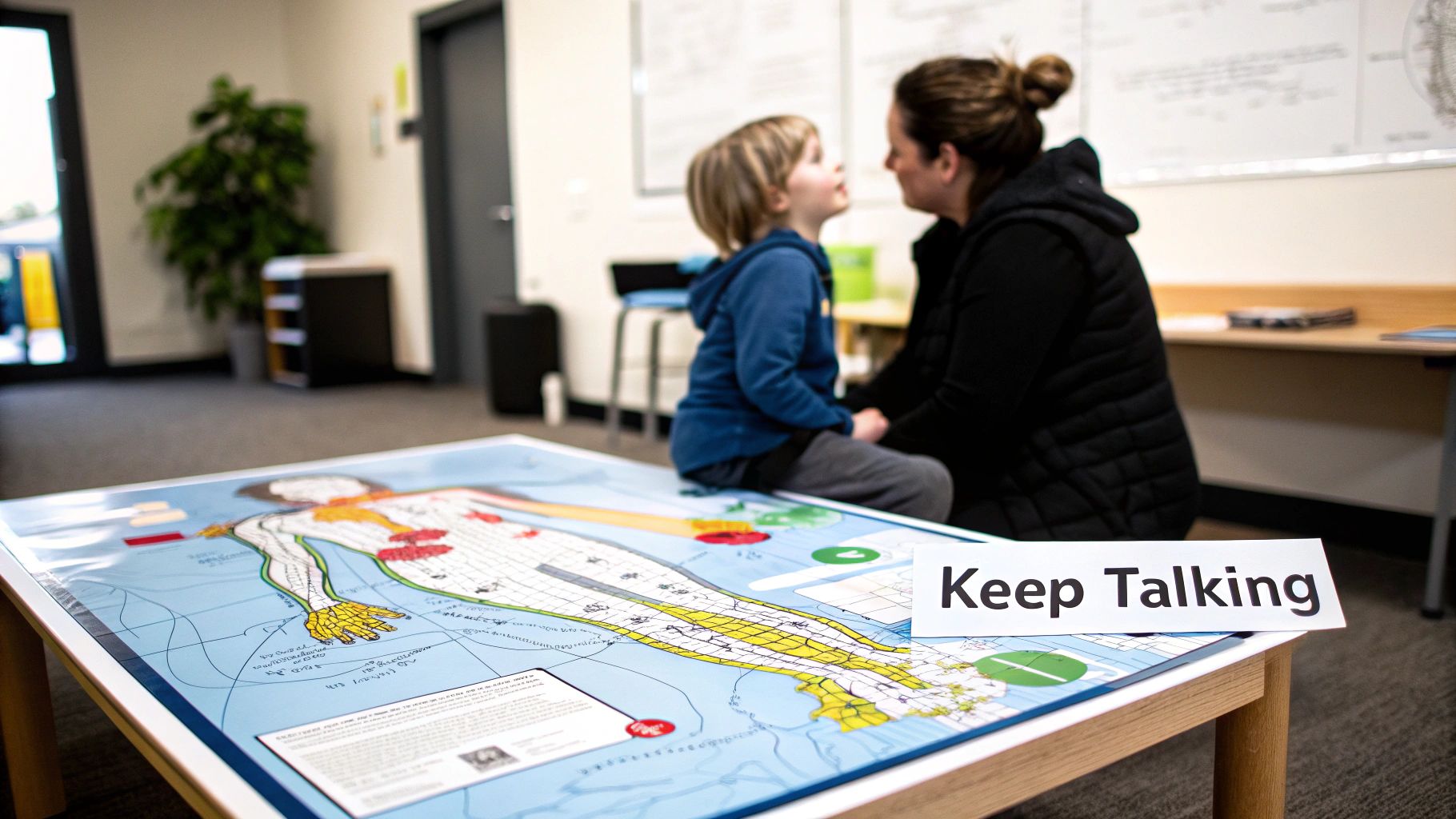
When the last crayon stroke dries, a new journey begins. That quiet moment invites children—and us—to pause and reflect on the sensations they’ve just mapped out.
Lay the finished body map on a table and watch how a simple nudge can spark genuine dialogue. Open-ended questions show young ones that every swirl of colour matters, creating a safe space for honest sharing.
-
What does the yellow in your tummy remind you of?
You might hear tales of fluttering butterflies or sunshine hugs. -
How does that bubbly feeling in your chest guide your actions?
Some kids say it makes them leap, dance or simply breathe deeper. -
If calm had a colour, where would it sit on this map?
Their answer often highlights a personal “comfort zone.”
These gentle prompts encourage exploration rather than pressure. Over time, talking about a tight chest or racing heart can reveal patterns of stress—so you can step in before tension rises.
Gentle Questions To Guide Dialogue
Simple prompts keep the chat light and focused. Frame your questions around senses, colours, actions or imagination.
Some families pair visual cues with verbal hints—using a small table to organise different question cards. This mix of sights and sounds makes conversations engaging.
| Theme | Question Example | Insight Gained |
|---|---|---|
| Physical | Where does excitement tingle for you? | Body location of energy |
| Colour | Which shade feels like your calm today? | Emotional tone |
| Action | What does that feeling make you want to do? | Behavioural response |
Moving from questions to action steps deepens the practice and shows children that talking about feelings can lead to helpful strategies.
Building A Support Toolkit
Extend learning beyond the colouring table by gathering go-to resources that reinforce each conversation.
- Include a children’s book like The Colour Monster by Anna Llenas or The Invisible String by Patrice Karst. These titles normalise naming and sharing emotions.
- Stock up on mental health apparel—our organic cotton T-shirts and hoodies feature positive messages and serve as gentle reminders for self-talk.
- Introduce simple relaxation exercises (think belly breathing or a ‘squeeze and release’ muscle relaxation) to calm a busy mind.
A cosy calm-down corner—soft cushions, sensory toys and feeling-themed books—signals that emotional check-ins belong to everyday life. It also offers a private retreat when feelings run high.
Integrating Research About Embodied Trauma
This hands-on approach isn’t just child’s play. In a study published in Qualitative Research in Psychology, 13 displaced individuals in the UK mapped trauma as physical and emotional marks. Participants’ drawings gave researchers a deeper window into lived experiences. Read the Qualitative Research in Psychology study for more.
While your family sessions are playful, this method carries professional credibility—and real-world impact.
Encouraging Ongoing Check-Ins
Keep blank templates pinned to a fridge or noticeboard as a gentle invitation. Let children decide when they need a fresh page—some will revisit weekly, others during big life moments.
Filing past maps in a simple folder helps everyone see emotional growth on paper. It celebrates progress and highlights areas that might need more attention.
“Every finished map is a conversation starter waiting for its moment,” says Emma, a primary school teacher.
Noticing themes across maps gives you the insight to tailor support—or to recognise when extra help is needed. Remember, I’m not a mental health professional; if you’re concerned about your child’s wellbeing, please seek advice from your GP or another qualified practitioner.
Embedding these steps into your routine transforms the body mapping template into a trusty companion for family wellbeing.
Your Questions About Body Mapping Answered
Starting conversations about emotions with our kids can feel a bit daunting, and it's natural for questions to pop up. This is a space to explore some of the common ones I hear from parents and carers, helping you to use the body mapping template with confidence and create a truly supportive space for your child.
The mental wellbeing of our children is so important. With one in five children in the UK experiencing a mental health issue before they even turn 11, it's never been more vital to foster open, honest chats at home. This isn't just about family life; the effects of poor mental health ripple outwards, impacting everything from school to the wider economy. Starting these small conversations early is a powerful step.
What if My Child Doesn't Want to Do It?
This is a big one, and the simple answer is: never force it. If they’re not in the mood, that's completely fine. Just leave it for another time. Their reluctance might just be about being tired or not having the energy that day.
A really gentle way to introduce it is to model the activity yourself. You could start filling out your own template while they're around, chatting casually as you go. "Mmm, my shoulders feel a bit tight today after sitting at the desk, so I think I'll colour them grey."
And if they say they don't feel anything? That’s a perfectly valid response. You can just acknowledge it with something like, "That's okay! Sometimes our bodies are just feeling calm and that's lovely." The goal is simply to build a positive, pressure-free connection with checking in on our feelings.
What Should I Do if My Child Draws Something Worrying?
First, take a moment and a deep breath. Thank them for sharing this with you – that took real trust. It’s so important to stay calm and ask open, non-judgemental questions. Something like, "Thank you for showing me this. Can you tell me a little more about this part here?" works well.
Just listen to their story without jumping in. Often, it might be about a scary character from a film they saw or even just a simple misunderstanding. However, if what they draw or tell you gives you a serious reason to be concerned for their safety or wellbeing, it's time to seek professional support.
I am not a mental health professional. This tool is for connection and conversation, not diagnosis. If you are worried, please speak with your GP, a school counsellor, or a child mental health professional. Reaching out for help is a sign of great parenting.
How Often Should We Use the Body Mapping Template?
There are no hard and fast rules here – let your child be your guide. Some families find a weekly check-in becomes a nice ritual, maybe on a Sunday evening to chat about the week that's been and the one ahead.
For others, it’s a tool you bring out when you notice your child is struggling to find the words for how they’re feeling. It could be after a big event like a birthday party, or after a falling out with a friend.
The key is to keep it light and accessible, never a chore. Having the templates printed and handy means your child can even initiate it themselves when they feel the need. That’s a huge step towards them building self-awareness and emotional independence.
At Little Fish Books, we believe in nurturing emotional literacy right from the start. Our resources, from our books to our mental health apparel, are all designed to support these vital conversations in a gentle and creative way. Have a look at our collection to find more tools that help children understand and express their feelings. Discover more at https://thatsokay.co.uk.
Free printable: the Feelings Starter Pack. 12 pages of feeling posters, a check-in chart, feeling cards and calm breathing cards to help children name their feelings.