

Books for Autism: Top Reads to Support Your Child's Growth
Finding the right books for autism can be a real game-changer. For parents, they offer a safe, predictable way to help children make sense of complex emotions and tricky social situations.
When professional support feels miles away or is stuck on a waiting list, these stories are an immediate, accessible tool. Think of them as a gentle bridge, connecting your child's inner world with the often-confusing one outside.
Why Books Are a Lifeline for Autistic Children
For so many families, navigating the world with an autistic child can feel isolating at times. Books create a powerful, shared experience that strengthens your bond and opens up new lines of communication. Within the pages of a story, a child can safely explore big feelings like frustration, joy, or anxiety without the real-time pressure of a social situation.

This kind of immediate support is more crucial than ever. With enormous NHS waiting lists for assessments, parents need resources they can use right now. In the UK, autism diagnoses shot up by a staggering 787% between 1998 and 2018. As of September 2024, over 204,000 people in England were still waiting for an autism assessment, with a shocking 89% enduring waits longer than 13 weeks.
This massive gap highlights why curated books, like the ones we offer at Little Fish Books, aren't just helpful—they're essential.
Beyond that emotional connection, books are brilliant for building practical skills. They are fantastic for supporting language development activities, offering a rich vocabulary and clear narrative structures that children can follow.
Navigating the Mental Health Landscape
We're all more aware of childhood mental health these days. Statistics show that one in six children aged 7-16 has a probable mental health problem. With modern pressures like the constant influence of social media, it's a growing concern for many families. Stories that tackle emotions and resilience offer a gentle counterbalance, giving children the tools they need for self-regulation and understanding. It's vital to address mental health early, as it lays the foundation for a healthier future.
Here at Little Fish Books, we carefully select stories and resources designed to nurture this growth. Our mission is to give families the tools to build emotional resilience and foster understanding right from the start. We have a range of mental health books for this purpose, and even have mental health apparel for adults, so you can wear your support proudly.
It's so important to remember that while books are a powerful aid, they are not a substitute for professional medical advice. I am not a mental health professional. If you have serious concerns about your child’s wellbeing, please consult your doctor or a qualified healthcare provider.
This guide will walk you through the different kinds of books that can make a real difference, from social stories to sensory-friendly picture books. We’ll look at practical examples and relaxation tips to help you turn reading into a calm, connecting experience for you both. Together, we can use the power of stories to create a more supportive world for every child.
Here are the different kinds of books that can make a world of difference.
Navigating the world of books for autism can feel a bit much at first, but I find it helpful to think of it as putting together a toolkit. Each type of book is a special tool, designed for a particular job—whether that’s building confidence, sparking understanding, or helping your child feel emotionally grounded.
Let’s break down the key categories that can make a real, practical difference in your day-to-day life. Once you know what each one offers, you can pick the perfect story to support your child through anything, from preparing for a new experience to simply understanding a big feeling.
Social Stories: Your Child's Friendly Map
Imagine trying to explore a new city without a map. That’s often what everyday social situations feel like for an autistic child. Social stories are that friendly, easy-to-read map, giving them a clear, step-by-step guide through what might otherwise be a confusing or overwhelming interaction.
These aren’t just any old stories. They’re short, descriptive narratives written in a very specific, literal way. They patiently explain social cues, what other people might be thinking, and what a good response might look like. For a practical example, a story about a birthday party might break down what to expect: the loud singing, the excitement around presents, and how to say "thank you" even if the gift isn't quite what you wanted.
This kind of preparation takes the mystery out of social events. It helps dial down the anxiety and gives children a sort of script they can run through in their heads. It turns a scary unknown into something predictable and manageable.
Sensory and Picture Books: A Gentle Visual World
For a child who experiences the world with their senses turned up to eleven, a busy, cluttered book can be just as overwhelming as a noisy room. That’s where sensory and picture books come in. They’re designed from the ground up to offer a calm, focused reading experience.
These books usually have a few things in common:
- Clear, simple illustrations: You'll often see bold outlines and clean backgrounds. This helps a child focus on the main character or object without getting distracted by visual noise.
- Soothing colour palettes: The colours are intentionally chosen to be gentle on the eyes, steering clear of chaotic or jarring combinations that can feel overwhelming.
- Tactile elements: Some of my favourite books incorporate different textures—a soft patch of fur on an animal, or a bumpy path to trace with a finger. This provides gentle sensory input that can be incredibly grounding and engaging.
This thoughtful design makes the book itself a safe space, rather than another source of sensory overload.
Routine and Visual Schedule Books: Creating Predictability
For many autistic children, predictability is a cornerstone of comfort and security. Routine and visual schedule books deliver exactly that, turning the vague concept of 'what's next' into a solid, visual sequence they can see and understand.
Predictability helps to reduce anxiety by answering the unspoken question, "What is going to happen to me?" When a child knows what to expect, they can conserve their mental and emotional energy for learning and engaging, rather than for worrying.
These books might lay out a morning routine—getting dressed, brushing teeth, having breakfast—or prepare a child for a specific event, like a trip to the dentist. By showing the steps in a clear, logical order, they give the child a sense of control over their day, which is hugely empowering.
To help you decide which book might be right for a particular moment, here's a quick guide matching common needs with the best book type.
Choosing the Right Book Type for Your Child's Needs
This table is designed to be a quick reference, helping you pinpoint the most effective type of book to support your child with specific goals or challenges.
| Book Type | Primary Goal | Best For... | Example Scenario |
|---|---|---|---|
| Social Stories | To explain social rules and expectations clearly and literally. | Children who find social situations confusing or anxiety-inducing. | Preparing for a playdate, explaining why we take turns, or understanding personal space. |
| Sensory/Picture Books | To provide a calm, engaging, and visually clear reading experience. | Children who are easily overwhelmed by sensory input or busy illustrations. | Quiet reading time, winding down before bed, or a low-demand shared activity. |
| Routine/Visual Schedules | To create predictability and a sense of control over daily events. | Children who thrive on routine and struggle with transitions or unexpected changes. | Outlining the steps for getting ready for school, a doctor's visit, or a holiday trip. |
| Neurodiversity Books | To build self-esteem and a positive autistic identity. | All autistic children, to see themselves represented positively in stories. | A child is starting to ask questions about why their brain works differently. |
| Skills/Transition Books | To rehearse a new skill or prepare for a new life event. | Children facing a new experience that might cause worry, like a haircut or a new sibling. | A book that walks through each step of a dental check-up before the actual appointment. |
Think of this table as a starting point. Often, the best approach is a mix of these resources, creating a well-rounded library that supports your child from all angles.
Celebrating Neurodiversity: Positive Identity Books
It’s so important that children see themselves reflected positively in the stories they read. Books that celebrate neurodiversity and feature autistic characters as the heroes of their own adventures are absolutely vital for building self-esteem.
These stories go beyond the challenges and shine a light on the unique strengths and perspectives that come with being autistic. Maybe a character’s special interest is the key to solving a mystery, or their unique way of thinking saves the day. Reading these stories helps a child understand that their brain isn't "wrong," it's just different—and different can be amazing.
This kind of positive representation is crucial for their mental wellbeing, helping to counteract any negative messages they might pick up from the world around them. It helps them build a strong, proud sense of who they are.
It's really heartening to see that even as the wider UK children's book industry faces its own challenges, key areas are growing. While the overall market might be projected to shrink, sales in picture books and early learning titles have actually gone up. This aligns perfectly with the growing demand for emotional literacy resources and books for autism. You can explore more data about the UK publishing market to see these trends for yourself.
Skills and Transition Books: Preparing for New Adventures
New experiences—from getting a haircut to starting a new school year—can be a huge source of anxiety. Skills and transition books act as a gentle dress rehearsal for these big moments, walking a child through the process before it even happens.
A book about a dental visit, for instance, might show pictures of the waiting room, the big reclining chair, and the friendly dentist's tools. By making the sights and sounds familiar in a safe, low-stakes way, the book strips away the fear of the unknown. This preparation builds coping skills and has the power to turn a potentially stressful event into a successful new adventure.
How to Choose the Perfect Book for Your Child
So, you've got a map of the different kinds of books out there. Now let's zoom in on finding the one that will genuinely click with your child. Think of yourself as a personal librarian, carefully curating a collection that not only supports their needs but also celebrates their unique personality. Every child is different, and the perfect book is one that meets them exactly where they are.
This process is about more than just picking a category. It's about trying to see the book through your child's eyes and considering their whole experience.
Match the Book to Their Sensory World
First things first, let's consider your child's sensory profile. For a child who gets overwhelmed easily, the visual style of a book is just as important as the story it tells. Some children thrive on bold, bright, high-contrast images that grab their attention right away.
Others find that same level of visual noise jarring or stressful. They might feel more comfortable with books that have gentle, watercolour illustrations, soft colours, and plenty of clean white space on the page. Simply paying attention to what visuals draw them in—or cause them to look away—is a powerful way to make sure reading feels comfortable and inviting from the get-go.
Harness the Power of Special Interests
One of the most effective ways to guarantee a book will be a hit is to tap into your child's special interests. If they are completely fascinated by dinosaurs, trains, or the solar system, finding books on these topics creates an instant connection and a real motivation to engage.
This isn't just about keeping them entertained; it's about validation. When a book is all about something they love, it sends a clear message that their passions are important and worth exploring. That shared excitement can turn reading from a chore into a joyful, shared activity, building positive feelings about books that can last a lifetime.
To help you get started, this simple decision tree can point you toward the right type of book based on what your child needs most right now.
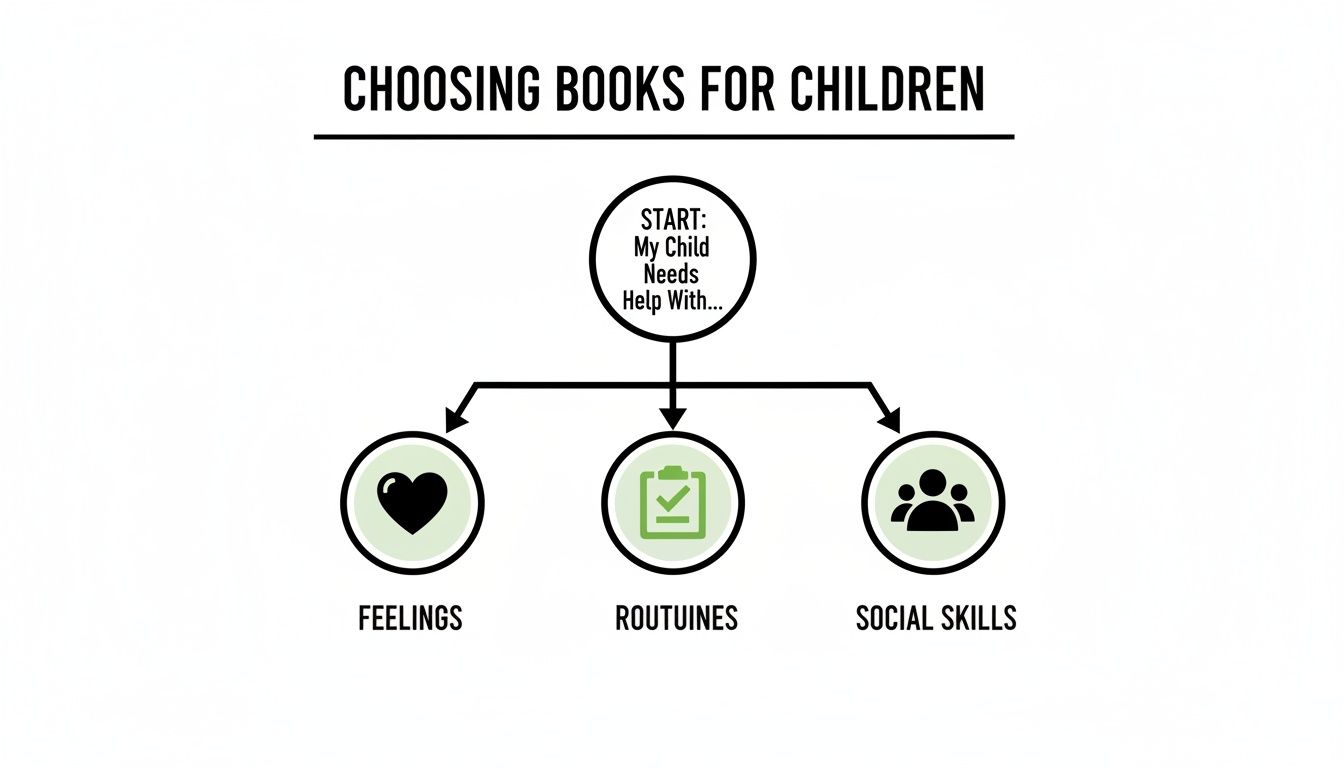
This visual guide shows how identifying a core need—like understanding feelings, navigating daily routines, or practising social skills—can quickly point you towards the most helpful category of books.
Assess the Language Level
Next up, think about the language in the book. The goal is to find a story that's accessible without being patronising. If the language is too simple, an older child might feel bored or talked down to. But if it’s too complex, full of idioms or abstract ideas, it can quickly lead to frustration.
Look for books with clear, literal language that supports the pictures. Repetitive phrases or predictable rhymes can be especially helpful, as they create a comforting rhythm that helps with understanding and remembering the story. Remember, the right book should build confidence, not create a barrier. For readers who might also have ADHD, finding books that hold their attention without overwhelming them is key, a topic you can learn more about when it comes to reading with ADHD.
Champion Positive Representation
Finally, and this might be the most important point of all, look for stories with positive representation. Every child deserves to see themselves as the hero of a story. Finding books where autistic characters are shown as capable, interesting, and valuable individuals is so important for building a strong, positive sense of self.
Positive representation helps a child feel seen, understood, and proud of who they are. It shifts the narrative from one of deficits to one of strengths, celebrating the unique way they experience the world.
Look for stories where an autistic character’s different way of thinking is what helps them solve a problem, or where their special interest plays a key role in the adventure. These books for autism do more than just teach a skill; they build self-worth and show your child, loud and clear, that they belong.
Making Reading a Calming and Connecting Experience
Once you’ve found the perfect book, the next step is to shape reading time itself into a positive, calming ritual. This isn’t just about getting through a story; it's about creating a powerful tool for connection, learning, and emotional regulation. With a few thoughtful strategies, you can turn a simple book into a rich, therapeutic experience that strengthens your bond with your child.
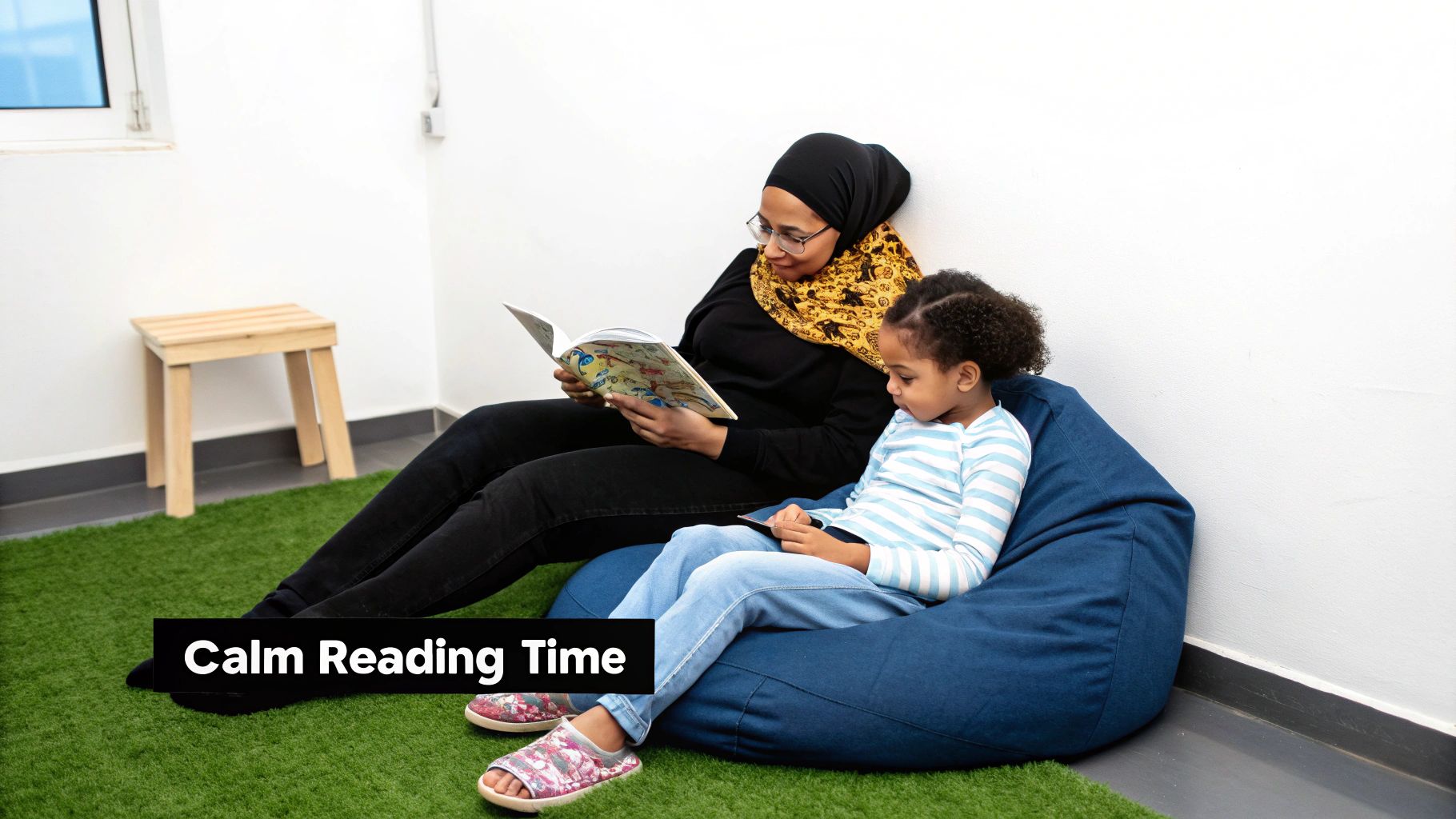
The real goal is to move beyond simply reading words on a page. We want to build a shared moment of calm focus, which is a precious thing in a world buzzing with distractions. This dedicated time offers a vital counterbalance to the pressures of social media, fostering a genuine connection away from screens.
Creating a Sensory-Friendly Reading Nook
The right environment can make all the difference. A dedicated reading nook doesn't have to be fancy, but it should signal to your child’s brain that this is a time for calm and focus. Think of it as their personal safe haven—a predictable space where they can relax and feel secure.
Here are a few practical tips to create one:
- Comfort is Key: Think soft cushions, a beanbag, or a cosy blanket. Physical comfort helps lower anxiety and makes it much easier for a child to settle in.
- Control the Lighting: Ditch the harsh overhead lights. A soft lamp with a warm-toned bulb creates a far more soothing atmosphere.
- Minimise Distractions: Choose a quiet corner of your home, away from the TV or busy hallways. Keeping the space uncluttered also helps reduce visual noise.
This small, dedicated space can become a sanctuary. It’s a place where the focus is solely on the story and your connection, free from the sensory overload of the outside world.
Proven Strategies for Deeper Engagement
With your calming space set up, you can start using specific techniques to make the stories more meaningful. These strategies help build context and link the book’s lessons to your child’s own life, making them much more likely to stick.
A fantastic technique is the 'picture walk'. Before you even read the first word, just flip through the book together and talk about the illustrations. Ask simple questions like, "What do you think is happening here?" or "How do you think this character is feeling?" This builds a mental framework for the story, making it easier for your child to follow along once you actually start reading.
By linking the events in a story to a child's own experiences, we are not just teaching a concept; we are building a bridge between the fictional world and their reality. This connection is what makes the lessons truly memorable and applicable to their own life.
For example, if you're reading a story about a character feeling nervous on their first day of school, you could say, "Remember when you felt a bit wobbly in your tummy before your first swimming lesson? Maybe that’s how they feel." This simple act of connecting the story to a personal memory makes the emotion tangible and relatable. Discovering how to make reading more engaging is a great way to support children, and you can explore more ideas about interactive children's books to expand your toolkit.
Extending the Story Beyond the Page
The learning doesn’t have to stop when you close the book. Post-reading activities are a wonderful way to reinforce a story’s themes in a creative, low-pressure way. These activities help your child process the emotions and ideas from the narrative through hands-on engagement.
Here are some simple ideas to get you started:
- Drawing and Colouring: Use our free downloadable emotion colouring sheets to draw the characters. You could ask your child to give them a facial expression that matches how they felt at the end of the story.
- Role-Playing: Act out a scene from the book. This is especially brilliant for social stories, as it gives your child a chance to practise a social script in a safe and playful context.
- Sensory Bins: Create a sensory bin themed around the book. If the story was about the beach, you could fill a tub with sand, shells, and blue-dyed rice for water.
These activities transform abstract concepts into concrete experiences, solidifying the lessons from the story in a way that is both fun and memorable. Ultimately, making reading a calm and connecting experience is about showing your child that stories are a safe place to explore the world and their own big feelings.
Resources for Teachers and Therapists
If you're an educator or therapist, you're on the front lines, using every tool in your arsenal to support the children you work with. The right books for autism can be a real cornerstone of this effort, acting as a springboard for genuine progress in social-emotional learning (SEL) and therapy sessions. They offer a shared, gentle language to explore tricky subjects.
Think about it: you could use a story about making friends to kickstart a classroom chat on empathy, or a book about anxiety to help a child in a one-to-one session find the words for their own feelings. These stories create a bit of safe distance, letting children observe and make sense of emotions without the immediate pressure of a real-life situation. This is where a simple story transforms into a powerful therapeutic instrument.
Because every child is different, professionals need access to a whole library of these tools.
Building Your Professional Library
For schools and therapy practices, having a really diverse collection of emotional literacy books is vital for meeting the varied needs of the children you support. We know that equipping an entire classroom or practice is a significant investment, which is why we’ve set up a straightforward wholesale ordering system to make it easier to build a comprehensive library of resources.
The need for these materials is growing, and fast. The UK autism spectrum disorder treatment market hit USD 95.6 million in revenue in 2024 and is projected to nearly double to USD 179.8 million by 2033. This growth highlights a sector where supportive materials, especially specialised books, are becoming more and more crucial for professionals. You can learn more about the UK autism support market growth and see what it means for educators and therapists like you.
Books are not just for reading; they are for referencing, revisiting, and reinforcing. A well-stocked library becomes a living resource that both professionals and children can turn to time and again to navigate life's challenges.
This kind of investment in emotional wellbeing really pays off. Tackling mental health early is so important, especially when you consider the substantial cost of poor mental health to UK businesses, estimated at up to £56 billion a year through lost productivity and attendance. By equipping children with coping skills from a young age, you are laying the foundation for a healthier, more resilient future.
Exclusive Support with a Little Fish Membership
To give professionals an extra hand, the Little Fish Books membership offers exclusive access to materials that are perfect for session and lesson planning. Members get previews of new titles and member-only resources you can weave directly into your work. We see this as an ongoing partnership, positioning Little Fish Books as a trusted ally in your efforts to champion children's mental wellbeing.
Our curated collection of mental health books is designed to provide practical, engaging, and effective support. It is important to note, however, that I am not a mental health professional. These resources are intended to complement your professional expertise, not replace it. If you have serious concerns about a child's mental health, it is vital to direct their caregivers to seek help from a doctor.
We also know how much pressure you're under. Simple relaxation tips, like mindful breathing or taking short sensory breaks, can be just as beneficial for you as they are for the children you work with. And on a lighter note, our line of mental health apparel allows you to champion awareness in a personal way, helping to foster a culture of openness and support wherever you go.
Creating a Supportive World Beyond the Page
The real magic happens when the lessons from these books leap off the page and into the rhythm of your family’s life. It’s all about taking those principles of predictability and emotional awareness and weaving them into the world your child lives in every single day.
This is how stories stop being just stories and become real-life tools for building confidence, resilience, and connection.
And these lessons aren’t just for the children. As a parent or caregiver, your mental health is the bedrock your child’s wellbeing is built on. It's a fact that poor mental health costs UK businesses billions each year in lost productivity—a stark reminder of the massive ripple effect that stress has on families and society.
Extending Support into Your Home
One of the most powerful ways to bring book-based strategies home is by using visual aids for daily routines, just like in the schedule books we’ve talked about. A simple chart on the wall showing the steps for getting ready for school can work wonders, reducing morning anxiety for everyone. It creates that same sense of predictability that makes stories so comforting for an autistic child.
Celebrating the small wins is also huge. When your child uses a feeling word they learned from a book, or navigates a tricky social moment, acknowledging it with a quiet high-five or a smile builds their confidence brick by brick. For more ideas and support, you can find some fantastic advice for parents of children with autism.
Supporting a child means supporting the entire family. A parent's emotional state directly influences a child's ability to feel secure and regulated. When we care for ourselves, we are so much better equipped to care for them.
Recognising this, we’ve also created some mental health apparel for adults. Our hoodies and mugs with positive affirmations are designed for the parents and allies. They’re a quiet, daily reminder to practise self-compassion and help normalise conversations around our own mental health. You can learn more about supporting children with autism by exploring how these strategies all fit together.
Simple Relaxation for Everyone
In a world filled with constant pings from our phones and endless to-do lists, finding moments of genuine calm is essential for both you and your child. It doesn't have to be complicated.
Here are a few simple relaxation tips you can try together:
- Mindful Breathing: Just take a moment to breathe in for four counts and out for six. This simple act can calm a frazzled nervous system almost instantly.
- Sensory Grounding: Focus on your five senses. Name one thing you can see, one you can hear, one you can feel, one you can smell, and one you can taste. It pulls you right back into the present moment.
- Shared Quiet Time: Put on some calming music and just sit together. No demands, no expectations. Just shared, peaceful space.
Remember, I am not a mental health professional. These are just some simple tips for general wellbeing. If you have serious worries about your own or your child’s mental health, please do seek help from your doctor.
Of course! Here is the rewritten section, crafted to sound like it was written by an experienced and empathetic human expert.
Your Questions, Answered
When you’re exploring how books can help an autistic child, it's natural for questions to pop up. Let's walk through some of the most common ones I hear from parents and teachers.
At What Age Should I Start Reading Books About Emotions?
Honestly? You can start right away. There’s no magic age. For the littlest ones, simple board books with big, clear facial expressions or different textures are a wonderful starting point. As they grow, you can move into more complex social stories that unpack trickier situations.
The key isn't really their age in years, but where they are in their development. The aim is to introduce these ideas in a way that feels engaging and makes sense to them, meeting them right where they are on their own journey.
How Can Books Help My Non-Verbal Child?
Books are an absolutely fantastic tool for non-verbal children. The trick is to focus on books that are heavy on pictures, allowing you to talk about the illustrations together. You can point to the characters, give their feelings a name, and chat about what’s happening in the scene.
Tactile books, with different textures to touch and feel, can also be incredibly engaging and grounding. Reading together is all about creating a powerful, shared experience that builds understanding and connection, no matter how a child chooses to communicate their thoughts and feelings.
How Do I Know if a Book Is Making a Difference?
Keep an eye out for the small but meaningful signs that the ideas are clicking into place. It might be your child starting to use a new word from a story to describe how they're feeling. Or maybe you'll notice they seem a little less anxious about something after you've read a social story about it a few times.
Sometimes, the sign is as simple as them pointing to a picture to show you how they feel, using the book itself as a bridge for communication. Trust me, these moments are huge wins. They show that the lessons are truly sinking in.
Where Can I Find More Support As a Parent?
Connecting with other parents is so important for your own wellbeing. When you think about how mental health costs UK businesses billions each year in lost productivity, it really highlights how widespread the impact of stress is. The National Autistic Society is an excellent place to start for finding local UK support groups and reliable information.
Online communities can also be a lifeline, offering a sense of solidarity and a safe space to share what you're going through. Please remember, you're not walking this path alone. Finding your support network isn't a luxury; it's a vital part of taking care of yourself.
At Little Fish Books, our whole mission is to provide the resources you need to support your child’s emotional growth. Take a look through our curated collection of books, activities, and supportive merchandise today. You might just find your next favourite story at https://thatsokay.co.uk.