
Calm down corner ideas: 8 simple setups for kids
In today's fast-paced world, children are navigating complex emotional landscapes shaped by academic pressures and the pervasive influence of social media. The state of children's mental health in the UK is a growing concern, with statistics revealing a significant rise in anxiety and stress-related issues. For instance, NHS Digital reports that one in five children aged 8 to 16 had a probable mental health condition in 2023. This not only impacts their wellbeing and development but has wider societal implications. Poor mental health in the UK workforce costs employers between £53 and £56 billion a year, highlighting the long-term importance of fostering emotional resilience from a young age.
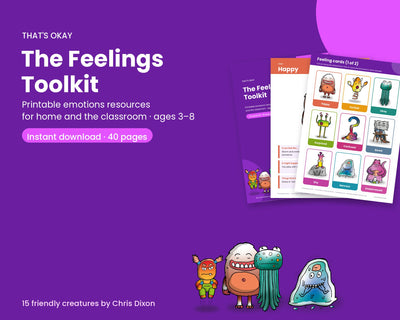
Want it ready-made? The That's Okay Calm Corner Kit is an instant PDF download with calm corner signs, a calm down choice board and coping skills cards, starring 15 friendly feelings creatures. Designed for ages 3 to 8.
Addressing mental health early is paramount, and creating a supportive environment is a crucial first step. A 'calm down corner' is more than just a quiet space; it's a dedicated area where a child can safely experience and process overwhelming emotions. It provides the tools and solitude needed to self-regulate, building foundational skills for lifelong emotional intelligence. Thoughtful arrangement is key, much like learning how to organize a nursery for a calm and functional space, the goal is to create a peaceful and supportive atmosphere.
This article offers practical, actionable calm down corner ideas to help you create a nurturing retreat for the children in your life, transforming a simple area into a powerful tool for emotional wellbeing. Please note, while these tips are designed to be supportive, I am not a mental health professional. If you have serious concerns about a child's mental health, it is essential to seek guidance from a doctor or qualified professional.
1. Sensory Bottles
Sensory bottles, often called glitter jars or calm-down jars, are a cornerstone of many effective calm down corner ideas. These transparent containers are filled with a mixture of water, glitter, beads, and other small objects, creating a mesmerising visual spectacle when shaken. The slow, swirling descent of the contents provides a gentle and predictable sensory input that can help a child redirect their focus away from overwhelming emotions like anger or anxiety.
Watching the glitter settle offers a tangible, external process for a child to concentrate on, mirroring the internal process of their own emotions settling. This simple act of observation helps to lower their heart rate and slow their breathing, guiding them back to a state of equilibrium. The visual tracking involved engages the brain in a non-stressful way, making it a powerful tool for self-regulation.
How to Implement Sensory Bottles
Creating and using sensory bottles is straightforward, but a few key details can enhance their effectiveness.
- Customise the Contents: Tailor the bottle's theme to the child's interests. A space-themed bottle might contain star-shaped glitter and dark food colouring, while an ocean bottle could feature tiny shells, blue food colouring, and fine sand. This personalisation makes the tool more inviting.
- Vary the Viscosity: Adding clear glue or baby oil to the water will slow down the movement of the contents, prolonging the calming effect and providing a more meditative experience. Experiment with different ratios to find the perfect speed.
- Ensure Safety: Always use sturdy, shatterproof plastic bottles for younger children. Secure the cap tightly with a strong adhesive like hot glue or superglue to prevent spills and ensure the small contents remain safely inside.
- Proactive Introduction: Introduce the sensory bottle during a calm, positive moment, not just during a meltdown. This helps the child build a positive association with the bottle as a tool for relaxation rather than a consequence of being upset. A practical tip is to sit with the child and say, "Let's watch the glitter settle together. See how it slows down? Our breathing can do that too."
By incorporating these visually engaging tools, you provide a non-verbal way for a child to process their feelings. This is especially valuable for children who may struggle to articulate their emotions. As an essential resource for supporting various needs, sensory bottles can be a simple yet profound addition to your emotional regulation toolkit. Learn more about essential SEN resources that can complement your calm down corner.
2. Weighted Blankets and Weighted Items
Weighted blankets and other weighted items, such as lap pads or stuffed animals, are powerful tools among calm down corner ideas. These items are filled with materials like glass beads or plastic pellets to provide Deep Pressure Stimulation (DPS). This gentle, firm pressure across the body mimics the feeling of being held or hugged, which can activate the parasympathetic nervous system, promoting a sense of security and significantly reducing anxiety and physiological arousal.

The proprioceptive input from the weight helps a child become more aware of their body's position in space, grounding them in the present moment. Popularised by the work of Dr Temple Grandin, this technique has been widely adopted by occupational therapists to support children with sensory needs. By calming the nervous system, weighted items make it easier for a child to manage overwhelming feelings and regain focus.
How to Implement Weighted Blankets and Items
To use weighted items safely and effectively, it is crucial to follow established guidelines and tailor the approach to the individual child.
- Choose the Correct Weight: A general guideline is to select a blanket or pad that is approximately 10% of the child’s body weight. This ensures the pressure is calming without being restrictive. Always consult with an occupational therapist if you are unsure.
- Introduce Gradually: Begin by using the weighted item for short periods, such as 5-10 minutes, and gradually increase the duration as the child becomes accustomed to the sensation. Never force a child to use it if they express discomfort.
- Pair with Other Techniques: Enhance the calming effect by encouraging deep breathing exercises or quiet listening activities while the child is using the weighted item. For example, you could say, "Let's put the cosy blanket on your legs and listen to the rain sounds for a few minutes." This combination can create a more profound sense of relaxation.
- Prioritise Safety and Hygiene: Ensure the item allows for proper air circulation to prevent overheating. Regularly check manufacturer instructions for washing to maintain hygiene, which is especially important in shared spaces like schools or clinics.
By providing this form of deep pressure, you offer a tangible, comforting strategy that helps a child feel secure and anchored when emotions become turbulent. This non-verbal support can be particularly beneficial for children who find it difficult to articulate their needs during moments of distress.
3. Mindfulness and Breathing Exercise Cards
Mindfulness and breathing exercise cards are visual guides designed to help individuals, particularly children, navigate overwhelming emotions through structured self-regulation techniques. These cards provide simple, illustrated, step-by-step instructions for exercises like belly breathing, star breathing, or progressive muscle relaxation. By offering a clear and tangible prompt, they empower children to take control of their physiological stress response, such as a racing heart or quick, shallow breaths, which often accompany feelings of anxiety or anger.
This approach transforms abstract concepts like "calming down" into a concrete set of actions. Following the visual cues helps a child shift their focus from the distressing trigger to the physical sensations of their breath and body. This process activates the parasympathetic nervous system, guiding the body back to a state of calm. For many children, especially those who are visual learners or struggle with verbal processing during heightened emotional states, these cards are an invaluable resource for developing foundational emotional regulation skills.
How to Implement Mindfulness and Breathing Exercise Cards
Introducing these cards effectively can turn them into a go-to tool for emotional management. A few thoughtful steps can significantly increase their impact.
- Practise Proactively: Introduce and practise the breathing exercises during calm, relaxed moments. This helps build muscle memory and creates a positive association with the cards, making them a familiar comfort rather than a tool used only during distress.
- Customise and Create: While many pre-made sets are available, creating personalised cards that resonate with a child's interests can boost engagement. A "dinosaur breath" (a long, slow exhale like a roar) or "flower and candle breath" (smelling a flower, then blowing out a candle) can make the practice more playful and memorable.
- Laminate for Durability: Children will be handling these cards frequently, often when they are not at their most gentle. Laminating the cards ensures they can withstand repeated use, spills, and general wear and tear, making them a lasting feature of your calm down corner ideas.
- Pair with Visual Timers: Combining the breathing cards with a sand timer or visual countdown clock can add structure to the practice. Instructing a child to do "square breathing" for the duration of the timer gives them a clear end point, which can be reassuring when they are feeling overwhelmed. One simple relaxation tip is to have them lie down, place a small toy on their belly, and watch it rise and fall as they breathe deeply.
By making these simple, guided exercises accessible, you provide a powerful, non-verbal method for a child to anchor themselves in the present moment. This is a fundamental skill for managing mental health, and these cards serve as an excellent starting point. Discover more ways to support children's emotional wellbeing with these mindfulness exercises for children that can complement the cards in your calm down corner.
4. Fidget Toys and Tactile Tools
Fidget toys and other tactile tools are fundamental components of many successful calm down corner ideas. These hand-held objects are specifically designed to provide sensory input and channel restless energy into quiet, repetitive movements. Items like stress balls, textured rings, and pop-its offer a physical outlet for feelings of anxiety or overstimulation, helping a child to self-regulate without causing disruption.
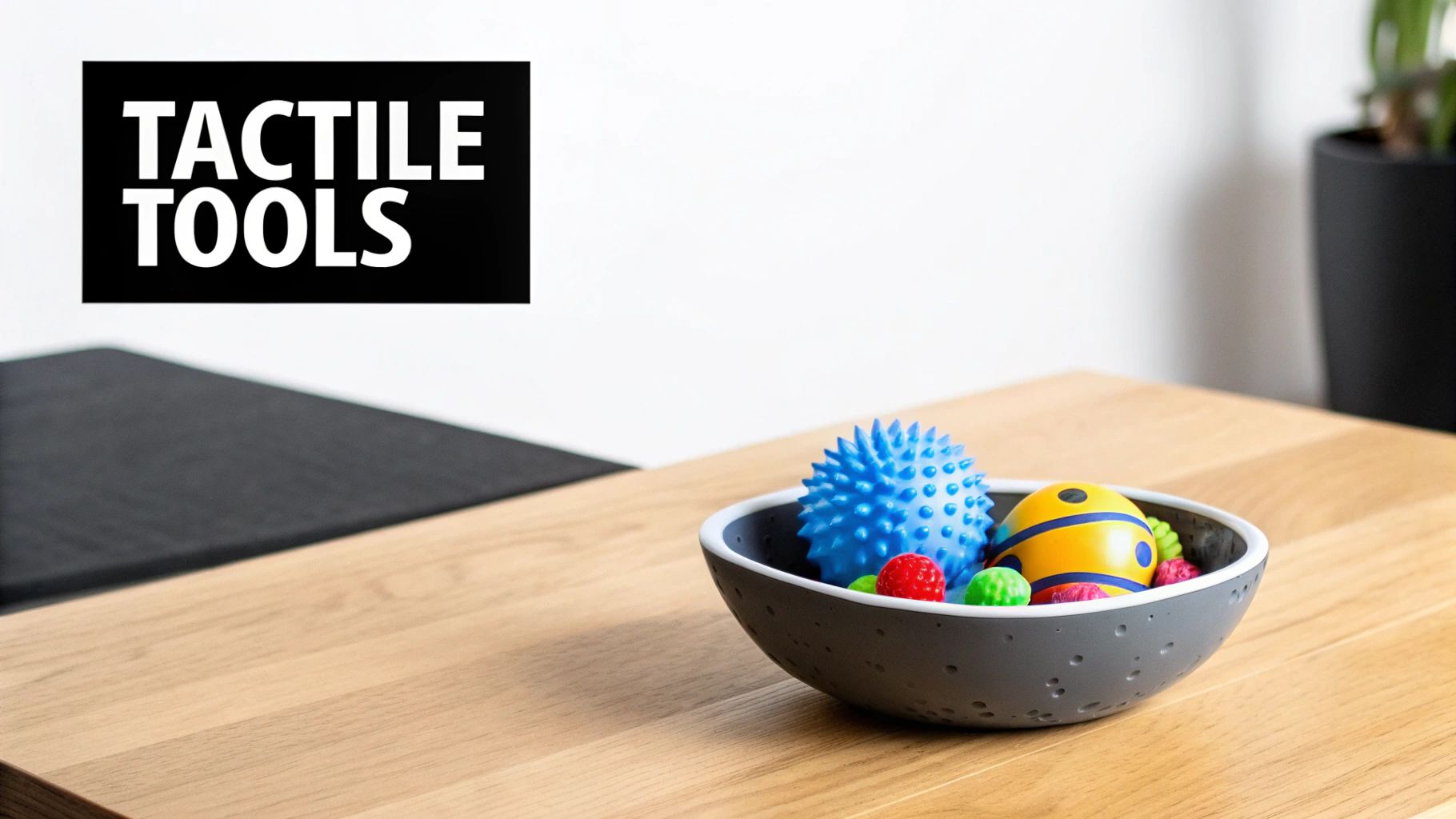
Engaging with a fidget toy allows the brain to filter out excess sensory information, which can improve focus and reduce feelings of being overwhelmed. The repetitive motion of squeezing, pulling, or twisting a toy can be incredibly soothing, helping to slow a racing heart and calm a busy mind. This physical action serves as a healthy distraction, grounding the child in the present moment and guiding them away from the source of their distress.
How to Implement Fidget Toys and Tactile Tools
Selecting and integrating these tools effectively can significantly enhance their calming benefits.
- Offer a Diverse Selection: Provide a variety of textures, resistances, and actions. Include soft, squishy items, hard, textured objects, and tools that click or pop. A basket with options like therapy putty, a marble mesh toy, and a smooth stress ball allows a child to find the specific sensory input that best meets their needs at that moment.
- Choose Quiet Options: For shared spaces like classrooms or quiet corners at home, select fidgets that make minimal noise to avoid distracting others. Silicone pop-its, therapy putty, and smooth stress balls are excellent quiet choices.
- Rotate the Collection: Keep the tools engaging by rotating them periodically. This maintains novelty and ensures that the child doesn't become desensitised to a single item, making the corner a consistently appealing space.
- Establish Clear Boundaries: Introduce fidget toys as tools for regulation, not just as playthings. Explain that their purpose is to help feel calm and focused, and set clear expectations for when and how they should be used to prevent them from becoming a distraction.
By thoughtfully curating a basket of tactile tools, you provide a child with a tangible way to manage their internal state. This empowers them with a discreet and effective strategy for self-soothing, building their confidence in their ability to handle big emotions independently. As an essential part of any emotional regulation toolkit, these simple items offer profound support.
5. Nature-Based Elements (Plants, Water Features, Natural Light)
Integrating nature-based elements into calm down corner ideas harnesses the powerful, innate connection between humans and the natural world, a concept known as biophilia. Introducing elements like living plants, the gentle sound of a tabletop water feature, or simply allowing natural light to fill the space can significantly reduce stress and anxiety. These features provide a passive, restorative sensory experience that promotes emotional regulation without requiring active participation.
Exposure to nature has been scientifically shown to lower cortisol levels, reduce blood pressure, and improve mood. For a child feeling overwhelmed, the quiet presence of a green plant or the soft burble of water creates a peaceful atmosphere that helps them feel grounded and secure. This approach transforms the calm down corner from a simple quiet area into a restorative sanctuary, supporting mental wellbeing by tapping into our inherent need for connection to the living world.
How to Implement Nature-Based Elements
Bringing the calming influence of nature indoors is a simple yet profoundly effective strategy. A few thoughtful additions can transform the corner's atmosphere.
- Choose Low-Maintenance Plants: Opt for hardy, easy-to-care-for plants like snake plants, spider plants, or pothos. These are resilient and purify the air, adding another layer of wellbeing. Placing them at the child’s eye level can enhance their visual impact.
- Incorporate Gentle Sounds: A small, quiet tabletop water fountain provides a soothing auditory backdrop that can mask distracting noises and promote relaxation. Alternatively, a sound machine with options like rainfall or flowing streams works well.
- Maximise Natural Light: Position the calm down corner near a window if possible. Natural light helps regulate circadian rhythms and has been linked to improved mood. If a window isn't available, use soft, warm lighting that mimics daylight or even high-quality nature photography to evoke an outdoor feel.
- Introduce Natural Textures: Include items like smooth river stones, pinecones, or a soft woollen blanket. These tactile objects can be held and touched, providing a grounding sensory experience that connects the child to the natural world. Another simple relaxation tip is progressive muscle relaxation: have the child squeeze a stone tightly in their hand for five seconds, then release, noticing the difference between tension and relaxation.
By thoughtfully incorporating these elements, you create a multi-sensory environment that encourages a state of calm. To further enhance your calm-down corner with greenery, learn how to start your own indoor garden. This connection to nature offers a gentle, non-verbal pathway for a child to de-escalate and find their centre.
6. Visual Timers and Visual Schedules
Visual timers and schedules are fundamental tools in many well-structured calm down corner ideas, particularly for children who find transitions and abstract concepts like time to be a source of anxiety. Unlike traditional clocks, visual timers (like the popular Time Timer) show the passage of time in a clear, graphical way, often with a disappearing coloured disc. This makes the abstract concept of time concrete and understandable, reducing uncertainty and the stress it can cause.
Pairing a visual timer with a visual schedule, which lays out a sequence of activities using pictures or words, provides a powerful framework for self-regulation. It answers the crucial questions of "how long?" and "what's next?", giving the child a predictable structure to follow. This external organisation helps them internally organise their overwhelming feelings, knowing that their time in the corner has a clear beginning, middle, and end, followed by a return to their routine.
How to Implement Visual Timers and Schedules
Effectively integrating these tools requires consistency and a thoughtful approach to ensure they are perceived as supportive rather than punitive.
- Establish Clear Sequences: Create a simple visual schedule for the calm down process. For example: 1. Go to calm corner, 2. Choose one activity (e.g., deep breathing), 3. Set timer for 5 minutes, 4. Tidy up, 5. Re-join the group. This predictability is immensely reassuring.
- Use Consistent Language: When setting the timer, use a consistent verbal cue like, "When the red is all gone, it will be time to read a story together." This creates a positive association with what comes after the calm-down period.
- Start Small and Build: Introduce the timer for very short durations, such as one or two minutes, and gradually increase the time as the child becomes more comfortable with the process. This helps build their tolerance and confidence.
- Position for Visibility: Ensure the visual timer is placed in the child's direct line of sight within the calm down corner. This allows them to passively monitor the time without it becoming a stressful focal point.
By providing this clear temporal structure, you empower a child to manage their own emotional recovery. These tools are not about rushing the calming process but about providing the security and predictability needed for genuine self-regulation to occur. The structure they offer can be especially beneficial for neurodivergent children or any child who thrives on routine.
7. Cosy Seating and Comfortable Spaces
The physical environment of a calm down corner is just as crucial as the tools within it. Creating cosy seating and comfortable spaces provides a child with a sense of safety and physical security, which is fundamental for emotional regulation. Soft, inviting furniture like bean bags, plush cushions, or small tents can create a nurturing retreat that encourages a child to relax their body, which in turn helps to soothe their mind.
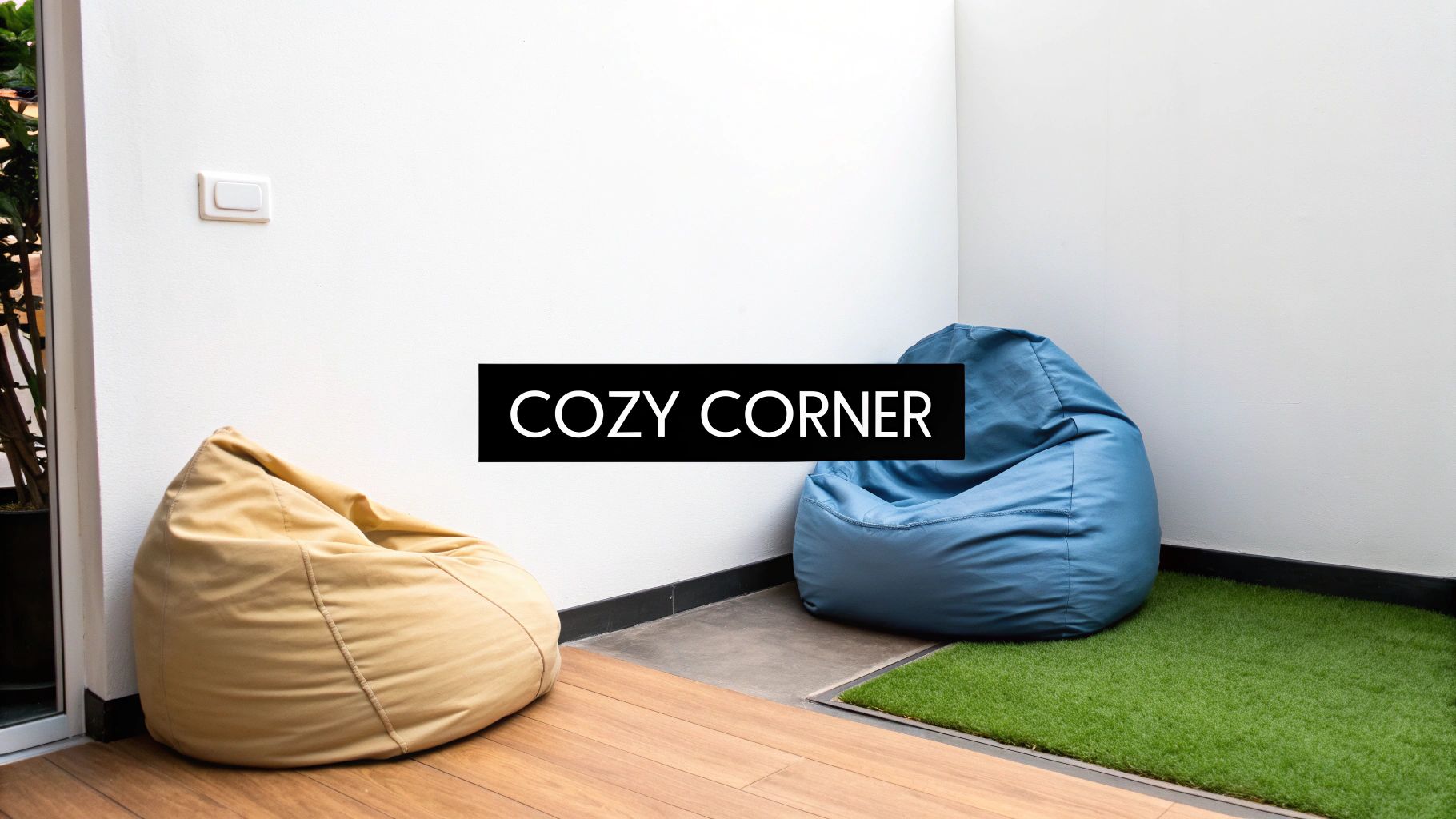
This focus on physical comfort helps to lower physiological arousal associated with stress, such as a rapid heart rate or tense muscles. An enclosed space, like a small tent or a nook with pillows, offers a gentle boundary from external stimuli, reducing sensory overload and allowing a child to feel protected and in control. When the body feels safe, the brain can more easily transition from a state of distress to one of calmness, making this one of the most foundational calm down corner ideas.
How to Implement Cosy Seating and Comfortable Spaces
Designing an effective comfortable space involves more than just adding a pillow; thoughtful details can significantly enhance its calming properties.
- Offer Variety and Choice: Provide a few different seating options to cater to individual preferences and sensory needs. A child might prefer the deep pressure of a bean bag one day and the open comfort of a large cushion the next. Giving them a choice enhances their sense of autonomy.
- Keep it Uncluttered: A calm space should be a peaceful one. Avoid overfilling the area with items; a minimalist approach prevents visual clutter that can be distracting or overwhelming. The focus should be on comfort and simplicity.
- Prioritise Softness and Hygiene: Use materials with soft, pleasant textures. Ensure all covers and cushions are easily removable and washable to maintain a clean and hygienic environment, which is especially important in shared spaces like classrooms.
- Position Strategically: Situate the corner away from high-traffic, noisy areas of the room to minimise disruptions. However, ensure it remains within an adult's line of sight to allow for discreet supervision without making the child feel watched.
By thoughtfully designing the physical space, you create a sanctuary that communicates safety and care non-verbally. This foundation of physical comfort makes it easier for a child to engage with other self-regulation tools and begin the process of understanding and managing their emotions.
8. Creative Expression Tools (Art, Music, Movement)
Creative expression tools provide a powerful, non-verbal outlet for processing complex emotions, making them one of the most versatile calm down corner ideas. Engaging in activities like drawing, colouring, playing an instrument, or movement allows a child to channel feelings of anger, sadness, or anxiety into a tangible creation. This process transforms overwhelming internal energy into a focused, productive, and self-expressive activity.
The act of creating offers a sense of control and accomplishment when a child feels their emotions are spiralling. It redirects focus from the source of distress to the task at hand, whether it's the methodical strokes of a colouring pencil or the rhythmic beat of a drum. This shift in attention helps to regulate the nervous system, lower stress levels, and provides a safe way to explore feelings that may be too difficult to articulate with words.
How to Implement Creative Expression Tools
Setting up a creative station is simple, but thoughtful implementation can significantly boost its calming benefits.
- Offer a Variety of Modalities: Stock the corner with a diverse range of materials to cater to different preferences and emotional needs. Include colouring books, blank paper, crayons, modelling clay, and perhaps a small, child-friendly instrument like a xylophone or rainstick.
- Encourage Process Over Product: Emphasise that there is no right or wrong way to create. The goal is expression, not perfection. Respond to their creations in a non-judgemental way, focusing on the effort and feelings expressed rather than the artistic skill. A simple comment like, "You used a lot of bright red in this picture, it looks very energetic," validates their expression without praise or criticism.
- Reduce Performance Anxiety: For children who feel pressure to create something "good," provide structured options like pre-drawn colouring pages or mandala patterns. This lowers the barrier to entry and makes the activity more accessible.
- Create a Calming Atmosphere: Play soft, instrumental music in the background during creative time to enhance the relaxing environment. Ensure materials are organised and easily accessible so the child can independently choose their preferred activity without added frustration.
By incorporating art, music, and movement, you give children a constructive language to communicate their inner world. This is especially vital for children who struggle to find the right words for their big feelings. By fostering this outlet, you're not just managing a difficult moment; you're building lifelong emotional resilience. Discover more about how colouring can help unlock and express inner feelings and support emotional wellbeing.
Calm Corner: 8-Item Comparison
| Item | 🔄 Implementation Complexity | ⚡ Resource Requirements | 📊 Expected Outcomes | 💡 Ideal Use Cases | ⭐ Key Advantages |
|---|---|---|---|---|---|
| Sensory Bottles | Low — simple assembly and sealing | Low — household materials (bottles, water, glitter) | Calming visual focus; quick redirection of anxiety | Classrooms, home calm corners, sensory seekers | Customisable, durable, screen-free |
| Weighted Blankets and Items | Moderate — select correct weight and supervise use | Moderate–High — cost for quality blankets; care instructions | Deep-pressure calming; improved sleep and focus for some | Therapeutic settings, sleep support, ADHD/autism | Evidence-backed deep-pressure input |
| Mindfulness & Breathing Cards | Low — minimal setup; requires practice for effectiveness | Low — printed/laminated cards or digital equivalents | Builds self-regulation skills; reduces stress with practice | Therapy, classrooms, independent practice | Portable, evidence-based, low-cost |
| Fidget Toys & Tactile Tools | Low — easy to introduce; needs rotation and rules | Low — wide range of affordable options | Immediate tactile engagement; short-term focus aid | Classrooms (with boundaries), individual focus sessions | Highly engaging; diverse sensory options |
| Nature-Based Elements | Moderate — design choice and ongoing maintenance | Moderate — plants, fountains, lighting, possible equipment | Long-term stress reduction; multisensory calming effects | Therapy rooms, biophilic classrooms, workplaces | Scientifically supported biophilic benefits |
| Visual Timers & Visual Schedules | Low–Moderate — initial setup and consistent use | Low–Moderate — timers, printed schedules or apps | Reduces transition anxiety; increases predictability | Autism/ADHD support, classrooms, routines | Concrete time-awareness and structure |
| Cosy Seating & Comfortable Spaces | Moderate — space planning, rules, and supervision | Low–Moderate — seating, cushions, lighting, small furnishings | Provides private retreat; sensory enclosure for regulation | Calm corners, reading nooks, sensory areas | Promotes independent regulation and comfort |
| Creative Expression Tools (Art, Music, Movement) | Moderate — requires organisation and facilitation | Moderate — art supplies, instruments, space and cleanup | Emotional expression and processing; mood improvement | Therapy, group activities, calm spaces | Multimodal, therapeutic, builds confidence |
How to set up a calm corner in the classroom
- Pick a quiet spot away from doors and busy walkways, but still within sight of an adult.
- Introduce it when everyone is calm. Show the class what's there, model how to use each tool and practise together.
- Agree simple rules, such as one child at a time, look after the things inside, and use a timer.
- Talk about it as a helping place, never as a punishment. Adults can use it too.
- Check in afterwards. A quick "How are you feeling now?" helps children link the strategy to feeling better.
Common calm corner mistakes to avoid
- Using it as a time-out. If children are sent there as a consequence, they'll see it as a punishment and stop using it.
- Too much stuff. A cluttered corner can overwhelm rather than calm.
- Skipping the practice. Strategies are easier to use in a big moment if they've been practised in a calm one.
- Expecting instant results. It can take a few weeks before children start choosing the calm corner on their own.
A ready-made calm corner kit
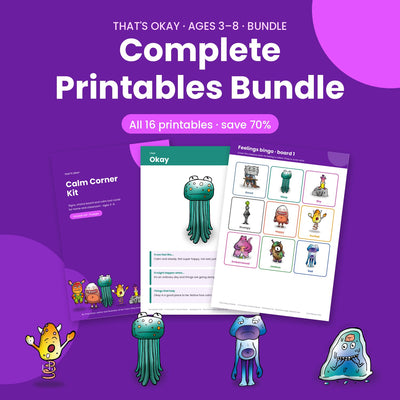
If you'd like everything in one place, the That's Okay Calm Corner Kit is an instant PDF download starring the 15 friendly feelings creatures from the That's Okay picture books. It includes calm corner signs, a calm down choice board and coping skills cards, designed for ages 3 to 8. Pair it with the Feelings Posters and Calm Breathing Cards for a complete space.
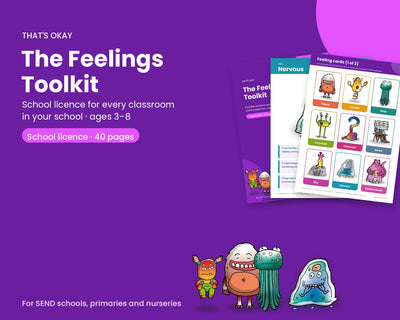
Setting up calm corners across a whole school? See our resources for schools. Or start with the free Feelings Starter Pack, which includes four feelings posters, a mini check-in chart and two breathing cards.
For children who find worries hard to say out loud, a worry monster can help. Our guide shows how to make a worry monster from a tissue box, with a free printable template and worry slips.
Building a Foundation for Lifelong Emotional Wellbeing
Creating a dedicated space for emotional regulation is one of the most powerful and proactive steps you can take in supporting a child’s development. The calm down corner ideas explored in this article, from the mesmerising flow of sensory bottles to the grounding pressure of a weighted blanket, are more than just tools to manage a tantrum. They are the building blocks of emotional intelligence, providing children with a tangible framework for understanding and processing their feelings in a healthy, constructive way. By implementing these strategies, you are not just de-escalating difficult moments; you are actively teaching invaluable life skills.
The true value of a calm down corner lies in its consistency and its ability to be personalised. What works wonders for one child might not resonate with another. The key is observation and adaptation. Perhaps the tactile feedback from fidget toys is most effective, or maybe the focused breathing prompted by mindfulness cards becomes their go-to strategy. The goal is to create a safe haven that feels uniquely theirs, a place where they learn that all emotions are valid and that they possess the inner resources to navigate them.
Key Takeaways for Your Journey
As you embark on creating or refining a calm down space, keep these core principles at the forefront:
- Co-regulation Precedes Self-Regulation: A calm down corner is most effective when introduced with a calm, supportive adult. Your presence and guidance teach a child how to use the space, modelling the very calmness you wish for them to find.
- It’s Proactive, Not Punitive: Emphasise that this space is a supportive tool, not a time-out area. It should be framed as a positive choice, a place they can go to feel better.
- Empowerment Through Choice: Offering a curated selection of tools, like different art supplies or fidgets, gives children a sense of agency over their emotional state, which is a crucial step towards self-regulation.
Fostering a Culture of Emotional Openness
The impact of this approach extends far beyond a single corner of a room. It helps to normalise conversations about mental health, a vital endeavour in today's world. By openly providing tools for emotional wellbeing, you communicate that mental health is just as important as physical health. This can be further supported by integrating resources like mental health books designed to build emotional literacy. For adults, modelling self-care is paramount; wearing mental health apparel with positive affirmations, for example, can act as a simple yet effective conversation starter.
Ultimately, these calm down corner ideas are about building a foundation for lifelong emotional wellbeing. You are giving a child a gift that will serve them through school, adolescence, and into their adult life, equipping them with the resilience to face challenges with confidence and self-awareness.
Disclaimer: Please remember, I am not a mental health professional. The information provided throughout this article is for educational and informational purposes only. It is not a substitute for professional medical advice, diagnosis, or treatment. If you have serious concerns about your child's mental health or emotional wellbeing, it is essential to seek guidance from a doctor, paediatrician, or a qualified mental health practitioner.
Ready to expand your emotional toolkit? The concepts in a calm down corner are beautifully reinforced through storytelling. Discover the award-winning collection of mental health books and resources at Little Fish Books, designed to help children and their grown-ups navigate big feelings together. Explore our stories and free resources at Little Fish Books.