
Finding the Right Children's Books on Self Esteem
Sharing a book about self-esteem with a child is a gentle, powerful way to open up conversations about confidence, resilience, and self-worth. These stories are more than just words on a page; they act as a bridge, helping children understand their own feelings and build a strong inner foundation right from the start.
Why Self-Esteem Books Are More Important Than Ever

Today’s world is a busy, complicated place, and our children are navigating a unique set of pressures. From social media comparisons to rising academic expectations, the challenges to a child's mental wellbeing feel more present than ever. It's no surprise that parents and educators are making it a top priority to nurture resilience and a positive self-image.
This is where the simple act of reading together can make all the difference. Children's books focused on self-esteem are practical, powerful tools for building emotional strength. They create a safe space where a child can see their own worries and wins reflected in relatable characters, helping them realise their feelings are normal and that they are not alone.
The Growing Need for Emotional Support
The state of children's mental health in the UK highlights an urgent need for this kind of support. One in six children aged 5-16 are now identified as having a probable mental health problem. Low self-esteem is a significant factor in this, acting as both a cause and a symptom of wider issues. Addressing these challenges early is vital not just for individual wellbeing, but for society as a whole. Poor mental health in the workforce costs UK businesses up to £56 billion a year, underscoring the importance of building resilient foundations from childhood.
These aren't just abstract statistics; they represent children in our own communities who need help navigating complex emotions. The constant exposure to curated lives on social media can amplify feelings of inadequacy, making it harder for children to develop a stable sense of self-worth. Books can be a gentle entry point for these crucial conversations, giving a child the words for feelings they might not yet understand, like jealousy, anxiety, or the fear of not being good enough. As you might imagine, exploring the wider benefits of reading shows just how deeply it supports both their thinking and emotional growth at the same time.
Please remember, while books are a fantastic support tool, they are not a substitute for professional medical advice. I am not a mental health professional. If you have serious concerns about your child's wellbeing, it is always best to consult a doctor or a qualified healthcare provider.
A Proactive Parenting Toolkit
Think of these books as a core part of your proactive parenting toolkit. They aren't just for fixing problems when they arise; they're for building the foundations of a healthy mind from the ground up.
By sharing stories that celebrate uniqueness, perseverance, and kindness, you are helping your child build a positive internal monologue. That inner voice, shaped by the heroes and lessons from their favourite stories, can become a source of strength that they carry with them for years to come.
How Stories Build a Child's Inner World
Think of a child's self-esteem as a little garden. For it to grow strong and healthy, it needs plenty of sunlight, water, and good soil. In this world, children's books on self esteem are those essential nutrients, providing the warmth and encouragement a child's inner world needs to truly bloom.
Stories are so much more than just a bit of fun at bedtime; they’re the blueprints children use to make sense of themselves and the world buzzing around them. When a child sees a character on the page who shares their worries, stumbles through similar challenges, and eventually finds their footing, something powerful clicks into place. It validates their own feelings, sending a quiet but profound message: "You are not alone in this."
This feeling of connection is everything. A practical example would be a story about a tiny squirrel terrified of climbing a tall tree. It doesn't just teach a dry lesson about courage. It gives a child a safe, relatable model for facing their own anxieties, whether that’s the first day of school or feeling too shy to speak up in class.
The Power of Seeing Yourself in a Story
When children see characters who look, feel, and live like them, it builds a powerful sense of belonging. This isn't just a 'nice-to-have'—it's a cornerstone of building real confidence. A 2022 study from the National Literacy Trust highlighted just how crucial this is, finding that 38.9% of children in the UK felt more confident after reading about characters they could connect with.
The effect was even stronger for girls, with 45.6% reporting a boost in confidence, which really shows how deeply these relatable stories can land. To truly enrich a child's inner world, it's also worth thinking about wider developmental aspects like nurturing your baby's social development. When a child feels seen and valued in the pages of a book, it strengthens their belief in their own worth.
Illustrations and the story's tone are also a huge part of the magic. They work together to create an emotional landscape for the reader.
- Warm and Gentle Illustrations: Soft colours and friendly character designs can make exploring big emotions feel much less scary. They’re like a visual hug, signalling that this is a safe space.
- Encouraging Narrative Tone: A story told with empathy and optimism, rather than judgement, helps a child absorb its message. The narrator’s voice becomes a comforting guide through the character’s journey.
Together, these elements transform a book into a secure world where a child can safely explore feelings like sadness, frustration, or shyness without any real-world risk.
A story acts as a mental rehearsal for life. By watching a character navigate a tricky social situation or overcome self-doubt, a child gains a mental blueprint they can draw upon when facing similar challenges themselves.
Building Emotional Intelligence Brick by Brick
Every story offers new emotional vocabulary and coping strategies, building a child's emotional intelligence one book at a time. Children learn to name their feelings, understand where they come from, and see healthy ways to manage them.
For instance, a character who feels angry might take deep breaths or talk to a grown-up they trust. A character feeling lonely might find the courage to ask someone to play. These aren't just plot points; they are practical, usable strategies presented in a format that sticks.
Let’s look at a simple example. Imagine a book about a little bear who is clumsy and often drops things, which makes him feel embarrassed.
- The Challenge: The bear feels bad about himself because he isn't as coordinated as his friends.
- The Turning Point: He discovers he’s a brilliant storyteller, and his friends absolutely love listening to his tales.
- The Lesson: The story gently teaches that everyone has different strengths and that being "good" at everything isn't what makes you special.
This simple narrative provides a powerful lesson in self-acceptance. It shows that our value isn't tied to one single skill, but to our own unique mix of talents and qualities. By absorbing these messages, children learn to be kinder to themselves and others, building a resilient and compassionate inner world that will support them for years to come.
How to Choose the Right Self Esteem Book
Choosing the right book for your child can sometimes feel like you’re trying to find a tiny, specific key for a very particular lock. You just know the right story is out there, but which one will click? When it comes to effective children's books on self esteem, it’s about so much more than a bright cover or a catchy title. It's about matching the story's message to your child’s unique inner world.
The aim is to find a story that lands just right—one that feels more like a comforting chat with a friend than a preachy lesson. For a toddler, that might be a simple, sturdy board book with cheerful pictures of a character who is loved simply for being themselves. But for a seven-year-old navigating the wobbles of friendship, a chapter book exploring empathy and bouncing back from setbacks will be a far better fit.
Matching Books to Your Child's Age
Getting the age right is the absolute foundation of a good choice. A book that’s too simple won’t hold an older child's interest, while one that’s too complex might just leave a younger one feeling confused or overwhelmed. It’s all about meeting them exactly where they are.
-
Toddlers (Ages 1-3): Stick to board books with really simple concepts. Think themes like unconditional love, celebrating what makes us different (like having curly hair or wearing glasses), and gentle kindness. The focus here should be on rhythm, repetition, and warm, clear illustrations.
-
Preschoolers (Ages 4-6): At this stage, little ones can follow more detailed stories. Books that model overcoming small fears, making a new friend, or learning to share are perfect. They’re just starting to grasp the idea that characters can solve their own problems and feel proud of themselves for it.
-
Early School Years (Ages 7-9): More nuanced themes like perseverance, handling disappointment, and understanding someone else's point of view become really important. Chapter books with relatable characters facing real-world school or friendship troubles can provide a powerful blueprint for resilience.
As you're looking, it's not just about the words but the whole package. For a wider look at picking great titles, this guide to children's picture books for joyful reading is a fantastic resource.
Identifying the Core Message
Once you've got the age group sorted, the next step is to get specific. What's the feeling or challenge you're hoping to touch on? Is your child feeling shy? A bit anxious about trying new things? Or maybe they could use a little boost in body positivity? Every book has a core message, and figuring that out is key.
This diagram offers a simple way to think about what a character is grappling with, which usually points straight to the book's central theme.
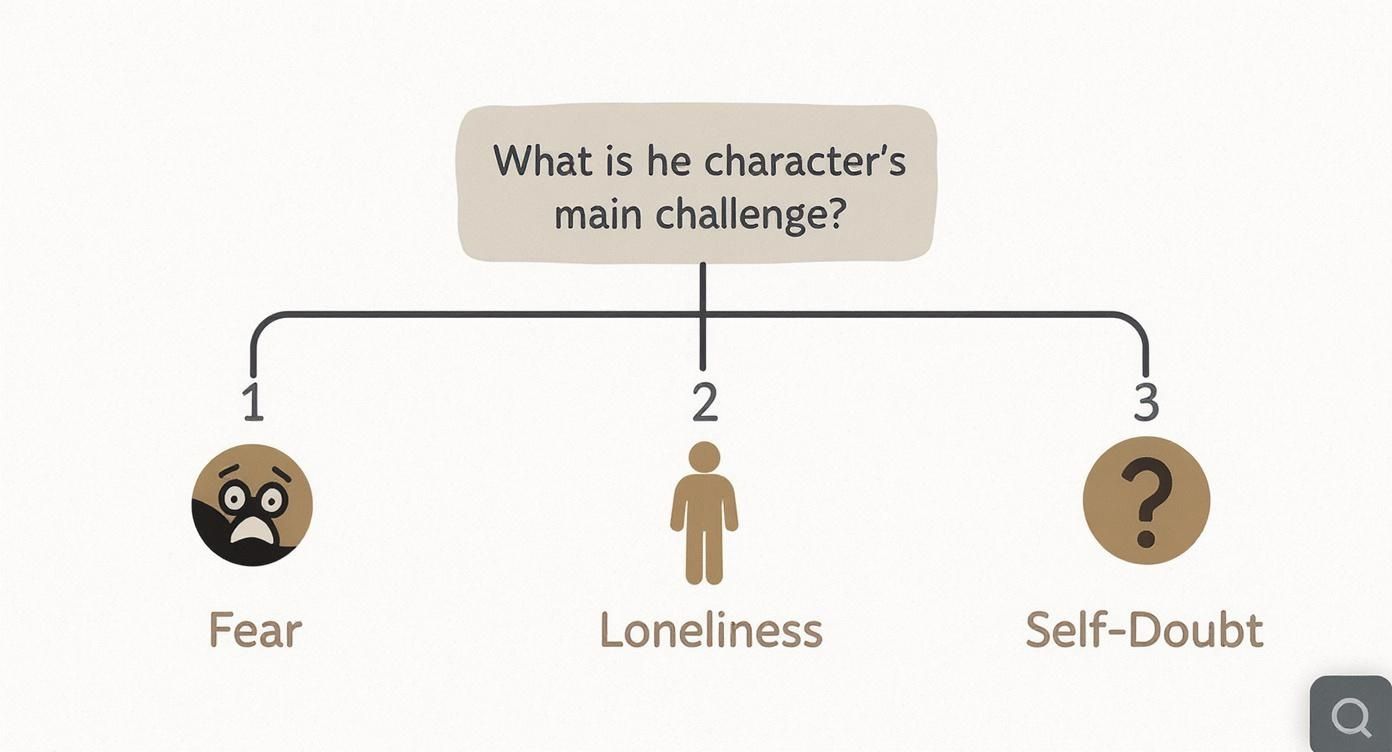
It helps us see that behind a character's actions are really common feelings like fear, loneliness, or self-doubt. This makes it so much easier to find a story that will truly connect with what a child is going through.
By finding a character who is navigating a similar internal struggle, you give your child a safe way to explore their own feelings. It sends the powerful message that their worries are valid and, most importantly, manageable.
A Practical Guide to Matching Themes
To make the whole process even clearer, take a moment to think about what your child is actually experiencing right now. By connecting their real-world challenges to specific book themes, you can curate a small library that acts as a powerful emotional toolkit.
Matching Book Themes to Self Esteem Challenges
Here's a quick guide to help you select books that address specific areas where your child might need a confidence boost.
| Child's Challenge | Key Book Theme to Look For | Example Character Archetype |
|---|---|---|
| Fear of trying new things | Courage and Perseverance | The small animal who learns to fly or climb. |
| Feeling lonely or left out | Friendship and Belonging | The new student who finds a kind friend. |
| Comparing themselves to others | Uniqueness and Self-Acceptance | The character who embraces their "weird" talent. |
| Worrying about making mistakes | Resilience and Growth Mindset | The inventor whose creation fails but tries again. |
| Negative self-talk | Self-Kindness and Positive Affirmation | The child who learns to say "I can do it." |
Ultimately, choosing the right self-esteem book is an act of empathy. It’s about listening to the quiet worries your child might not have the words for and offering them a story that says, "I see you, and you are wonderful just as you are." When you're intentional with your choices, you transform storytime into a truly meaningful chance for connection and growth.
Activities to Turn Reading into Lasting Confidence

The magic of a great story doesn't have to stop when you close the book. In fact, that moment is often just the beginning. By turning the ideas and messages from children's books on self esteem into simple, hands-on activities, you help your child take those lessons on board and build real, lasting confidence.
Think of it as shifting from simply reading a story to actively building self-worth. These activities aren't about complicated crafts or serious discussions. They’re about creating small, playful moments that carry the story's spirit into your child's own world, bridging the gap between a character's journey and their own life.
When a child physically acts out a brave moment or draws a picture of their own strengths, they aren't just having fun. They are rehearsing new feelings and embedding the story's positive messages deep into their sense of self. It’s about making confidence a feeling they can practise, not just an idea they hear about.
Creative Play to Build Self Worth
Creative activities offer a safe and tangible way for children to explore a book's big ideas. They can express feelings and concepts that might be tricky to put into words, turning abstract lessons into something they can see and touch.
A wonderful place to start is with a "Superhero Me" poster. After reading about a character who discovers their unique talent, get out some paper and crayons. Ask your child to draw themselves as a superhero, but instead of flying or super strength, their powers are their real-life strengths—like being a kind friend, a brilliant artist, or fantastic at telling jokes.
This simple act of identifying and celebrating their own positive qualities is a powerful boost to their self-worth. It teaches them that their everyday abilities are valuable and important, just like the character's in the story.
Another brilliant activity is role-playing. If a story features a character standing up to a challenge, act it out together! You can take turns playing the brave character, using your voices and bodies to show what confidence looks and feels like. This isn't just a game; it helps your child feel what it’s like to be courageous in a low-pressure setting, building a muscle they can use in real life.
Sparking Meaningful Conversations
Storytime is the perfect launchpad for conversations that matter. The right questions can open up a dialogue about feelings, challenges, and triumphs, helping your child connect the dots between the story and their own life.
Instead of just asking, "Did you like the book?", try more open-ended questions that invite a bit of reflection. These conversation starters can help them process the story's emotional heart:
- "How do you think the main character felt when that happened?"
- "Has anything like that ever happened to you?"
- "What do you think was the bravest thing the character did?"
- "If you were that character's friend, what would you say to them?"
There are no right or wrong answers here. The goal is simply to validate your child's feelings and show them that you're a safe person to talk to about big emotions. For more inspiration, exploring different self-esteem building exercises can offer a fantastic toolkit for both of you.
By asking thoughtful questions, you're not just checking for comprehension. You are signalling to your child that their thoughts and feelings are important and worth exploring, which is a cornerstone of building strong self-esteem.
Mindful Moments Inspired by Stories
Many books on self-esteem touch on themes of calming anxiety and practising self-kindness. You can bring these ideas to life with simple mindful moments drawn straight from the story.
If a character takes deep breaths to calm down before a big event, why not practise "dragon breaths" together? Breathe in deeply through your nose, then breathe out strongly through your mouth like a powerful, but gentle, dragon. It turns a practical coping strategy into something playful and memorable.
You could also create "Affirmation Jars." After reading a story about positive self-talk, write down encouraging statements from the book (or make up your own) on small pieces of paper. Words like "I am brave," "I am kind," or "It's okay to make mistakes" can be folded up and placed in a jar. Each morning, your child can pull one out as a positive thought for the day. This simple ritual helps build a positive inner voice, one affirming sentence at a time.
The Rise of Children's Wellbeing Books in the UK
If you’ve noticed more books about feelings, confidence, and kindness popping up in your local bookshop, you’re definitely not alone. There's been a massive, and quite heartening, shift in the UK. We're seeing a huge demand for stories that do more than just entertain—they actively nurture a child's emotional wellbeing. This isn't just a fleeting trend; it feels like a powerful cultural movement.
This surge in popularity is rooted in a much deeper societal change. Parents and educators are more tuned in than ever to the pressures kids face, from the constant buzz of social media to mounting academic expectations. Because of this, there's a collective drive to give children the tools they need to build resilience, make sense of their emotions, and develop a strong, healthy sense of self.
A Market Reflecting a Cultural Shift
The publishing world has certainly sat up and taken notice. The UK market for children's books on self esteem and related social issues has seen incredible growth, doubling over a decade to be worth £22.3 million. This boom is about more than just sales figures; it shows a real, tangible commitment to prioritising children's mental health. To get the full picture on this positive change, you can read the full story on children's media trends.
A perfect example of this cultural impact is Matthew Syed's You Are Awesome, a book that shot to the top of the nonfiction charts back in 2018. Its success speaks volumes about what parents and children are looking for: content that’s accessible and genuinely helpful, building confidence in a way that feels empowering, not preachy.
This shift really validates your choices as a parent or educator. When you seek out books on self-esteem, you're part of a wider, supportive movement that sees emotional health as a vital piece of a happy and successful childhood.
What's Fuelling the Demand?
Several key factors are coming together to create the perfect environment for these wellbeing books to really flourish.
- Increased Parental Awareness: Today's parents have so much more information about child psychology and mental health at their fingertips, leading them to take a more proactive approach to emotional support.
- Changes in the School Curriculum: Schools across the UK have been integrating Personal, Social, Health and Economic (PSHE) education more deeply, focusing on developing skills like resilience, self-respect, and empathy.
- The Impact of Social Media: The visibility of online pressures has spurred many families to actively seek out resources that build a child's inner strength and self-worth away from the screen.
- A Growing Library of Resources: It's not just books. We're also seeing a rise in supportive mental health apparel and other tools that help normalise conversations about feelings.
Practical Relaxation and Support
While these books offer fantastic support, it’s important to remember they are just one part of a bigger toolkit. Simple relaxation tips can be a wonderful addition to your daily routine. For example, after reading a story together, you could try a few minutes of "teddy bear breathing." Just have your child lie down with a cuddly toy on their tummy and watch it gently rise and fall with each slow, deep breath.
Ultimately, this growing library of wellbeing books is a direct reflection of a society that cares deeply about raising emotionally intelligent and resilient children.
Please note: I am not a mental health professional. The information provided here is for educational purposes only. If you have serious concerns about a child's mental health, it is essential to seek help from a doctor or another qualified healthcare provider.
Building a Library That Empowers Your Child
Raising a child with healthy self-esteem isn't about reaching a destination; it's a journey we walk alongside them every day. Throughout this guide, we've explored how a carefully chosen collection of children's books on self esteem can become one of the most powerful and gentle tools you have in this process.
You've learned why these stories are more critical than ever, how to pick tales that truly connect with your child's unique world, and easy ways to bring their uplifting messages off the page and into your daily life. The real goal here is for you to feel confident and ready to nurture your child's emotional world, turning story time into a special moment of connection and strength-building.
Mental Wellbeing as a Lifelong Skill
A child's mental health is the very bedrock of their future happiness. They're navigating a world shaped by social media and growing academic pressures, which makes having a strong, kind inner voice more important than ever before. Reading stories that normalise big feelings and show characters bouncing back from challenges is a brilliant, proactive way to help build this foundation.
When we support a child's mental health from an early age, the benefits ripple out for the rest of their lives. It helps reduce the likelihood of difficulties later on, which can affect everything from their relationships to their careers. In fact, poor mental health costs UK businesses billions each year in lost productivity, which really highlights just how important it is to start this support early.
A gentle reminder: I'm not a mental health professional. Books are a wonderful support, but if you have real concerns about your child's wellbeing, it's always best to speak with your doctor or a qualified healthcare provider for professional advice.
Continuing the Journey with Further Resources
Building a supportive home library is a fantastic start, but the conversation doesn't have to end there. Weaving these themes into other parts of life creates a positive and consistent environment for your child to thrive in.
- Explore More Mental Health Books: Self-esteem is just one piece of the puzzle. There’s a whole world of incredible books that help children understand and manage their emotions. For more ideas, our guide on books for emotional intelligence is packed with great suggestions.
- Embrace Mental Health Apparel: Sometimes a simple, visible reminder is all it takes. Wearing clothes with positive affirmations can be a lovely way to reinforce messages of self-worth and kindness for the whole family.
- Practise Relaxation Together: After a hectic day, simple techniques can work wonders. Try a few deep "belly breaths" together or spend five quiet minutes just listening to the sounds around you. These are powerful little tools for managing stress.
Ultimately, your commitment to sharing these stories and talking about their messages sends the most powerful signal of all: that your child’s feelings are valid, their uniqueness is something to be celebrated, and they are loved, no matter what. This is the solid ground upon which true, lasting self-esteem is built.
Frequently Asked Questions
It’s completely normal to have questions when you’re exploring how to support your child’s mental wellbeing. Here are a few common queries I hear from parents and carers who are using children's books on self esteem to help their little ones.
At What Age Should I Start Reading Books About Self Esteem?
Honestly, you can start much earlier than you might think. For toddlers (ages 1-3), the journey begins with simple board books that focus on those core feelings of being loved and special. It’s all about laying a gentle, positive foundation.
As they grow into preschoolers (ages 4-7), you can bring in stories with clearer plots. Think tales about making friends for the first time, figuring out big feelings, or finding the courage to overcome small fears. The golden rule is always to pick something that feels right for where your child is at developmentally.
What if My Child Rejects the Self Esteem Books I Pick?
First off, don't force it. The magic of these stories comes from a genuine connection, not a forced lesson. If a book doesn’t quite land, try bringing your child into the selection process next time. Look at the covers together, read the summaries, and see what sparks their curiosity.
And remember, a story about a brave knight or a kind animal can be just as powerful as a book explicitly about 'self-esteem'. Sometimes the most important lessons are wrapped up in a fantastic adventure, a bit of silliness, or a magical world.
The right book isn't just about the message; it's about the story that captures your child's imagination. A book they love and ask for again and again will always have the deepest impact.
How Do I Know if These Books Are Actually Helping?
The benefits tend to show up in small, meaningful ways rather than big, dramatic changes. You might hear your child using words from a book to explain how they’re feeling. Or maybe they’ll be a little more willing to try something new that used to make them nervous.
It’s often the conversations you have around the stories where the real progress happens. These chats are what help your child take the book's themes and connect them to their own life.
Beyond Books What Else Can I Do?
Books are a brilliant piece of the puzzle, but they’re part of a much bigger picture when it comes to nurturing wellbeing. Especially with the rise of social media and its impact on children’s mental health, creating a supportive environment at home is key.
Here are a few practical ideas to build on the stories:
- Mental Health Apparel: Sometimes a simple, positive message on a t-shirt is all it takes. Wearing clothing with affirming phrases can be a lovely, everyday reminder for the whole family to practise self-kindness.
- Relaxation Tips: Introduce simple calming techniques in a playful way. You could try "teddy bear breathing," where your child lies down with a soft toy on their tummy and watches it rise and fall with each deep, slow breath.
- Explore Other Mental Health Books: A well-rounded library is a wonderful thing. Add stories about empathy, managing anxiety, and emotional intelligence to give your child a rich set of tools for life.
Please Note: I am not a mental health professional. These books and suggestions are supportive tools, not a substitute for professional advice. If you have serious worries about your child’s wellbeing, it is essential to seek help from your doctor or a qualified healthcare provider.
At Little Fish Books, we believe in the power of stories to nurture young minds. Explore our curated collection of books and resources designed to support your child's emotional journey. Visit us today at https://thatsokay.co.uk to find the perfect story to share.