
A Parent's Guide to Educational Books for Kids
Educational books for kids are so much more than just learning tools. Think of them as powerful allies in nurturing a child's mental health and emotional resilience. In a world that can feel pretty full-on, stories offer a safe harbour for children to explore complicated feelings and realise they aren't the only ones who feel worried or sad.
These books can be the gentle nudge that starts those vital conversations about wellbeing, right from the comfort of your sofa.
Why Books Are Crucial for Your Child’s Mental Health
Here in the UK, the conversation around children's mental health has never felt more urgent. Recent figures show that one in six children aged 5-16 has a probable mental health problem. It's no wonder parents and carers are looking for ways to build strong emotional foundations from a young age.
Between the pressures of school, friendships, and the often-unseen impact of social media, life can feel pretty overwhelming for young minds. This is exactly where educational books for kids, especially those focused on feelings, can make a real difference. They act as gentle guides, helping children put a name to big, confusing emotions like anxiety, sadness, or anger.
A Safe Space to Explore Feelings
When a child sees a character in a book wrestling with the same worries they have, it's incredibly validating. It tells them, "Hey, you're not alone in this." This shared journey creates a safe, low-pressure space to talk about what’s on their mind. You could even think of it as a dress rehearsal for handling real-life emotional challenges.
A story about a little bear who's afraid of the dark, for example, can gently open up a chat about your child's own nighttime fears. It takes a big, scary feeling and turns it into a manageable, shared story. This is just one of the many practical benefits of reading you can explore together.
It's important for me to say that I am not a mental health professional. This guide is here to offer support and ideas, but if you have serious concerns about your child’s mental health, please seek advice from your GP or another qualified professional.
Building Resilience One Page at a Time
Reading stories about characters who face obstacles and find a way through teaches resilience. It shows children that it's okay to struggle and, importantly, that difficult feelings don't last forever. This is a massive part of building a strong sense of self and emotional wellbeing.
Here are a few simple relaxation tips you can try during storytime:
- Deep Belly Breaths: Before you open the book, take three slow, deep breaths together. Pretend you're blowing up a big balloon.
- A "Worry Hug": If a part of the story brings up anxious feelings, just pause for a tight hug. That physical comfort can be incredibly reassuring.
- Talk About the Pictures: Chat about the emotions on the characters' faces. Ask things like, "How do you think they're feeling here?"
The ripple effects of poor mental health aren't just personal; they touch society and the economy, too. It's estimated that poor mental health costs UK employers up to £56 billion a year. By fostering emotional literacy in childhood, we're not just helping our kids; we're investing in a healthier, more resilient future generation. It’s all part of a growing movement to normalise these conversations and make wellbeing a priority for the whole family.
The UK’s Growing Focus on Children's Learning
Have you walked through a bookshop recently? If you have, you've probably noticed just how many educational books there are for children. This isn't just a happy accident; it reflects a huge national shift towards championing children's learning and development, especially their emotional wellbeing.
This isn't a fleeting trend. It’s a genuine response from parents, teachers, and publishers who see the need for better resources to help young people navigate an increasingly complex world. This demand for high-quality books has made the children's sector a real cornerstone of the UK publishing industry.
What the Market Is Telling Us
The numbers themselves tell a powerful story about what we value as a nation. Educational books make up the biggest slice of the UK book market, bringing in 17.43% of the total revenue. That's a huge part of a market worth nearly £7 billion (USD 8,939.3 million), and it's set to grow even more by 2033.
So, what does this mean for you? It means that publishers are investing heavily in creating thoughtful, innovative books that go far beyond just the ABCs. They're telling stories that explore big feelings, build resilience, and nurture empathy—all crucial parts of what's known as social-emotional learning.
"The expansion of the educational book market shows a collective understanding that a child's learning journey is holistic. It’s not just about ABCs and 123s, but also about kindness, courage, and understanding oneself."
This investment results in beautifully illustrated and sensitively written stories. Think of these books as tools to help you start conversations about mental health in a gentle, age-appropriate way. You can learn more about introducing these ideas in our guide on what is social-emotional learning.
Why This Matters for Your Family
This focus on educational resources gives you better, more diverse choices for your family. Whether you need a book to help a toddler name their emotions or to guide a pre-teen through friendship troubles, the options have never been better. This vibrant market means the books you find are not only engaging but also grounded in solid developmental psychology.
It’s a win for the wider community, too. When we invest in children's mental and emotional health from a young age, the positive effects ripple outwards for years. It helps build a more resilient future generation, which ultimately eases the long-term strain on our mental health services.
Here are just a few key areas where this growth is making a real difference:
- Emotional Literacy: More books are available that teach children how to spot, understand, and talk about their feelings.
- Mental Health Awareness: Stories are helping to normalise chats about topics like anxiety and sadness, chipping away at stigma from an early age.
- Building Resilience: Characters who face and overcome challenges become powerful role models, teaching our kids what it means to keep going.
Ultimately, the thriving market for children’s educational books is a direct reflection of a society that truly values the wellbeing of its youngest members. It puts the power in your hands to support your child's journey, one story at a time.
How to Choose the Right Book for Your Child
Picking out the right educational books for kids can sometimes feel like you’re hunting for treasure without a map. It gets even trickier when your goal is to support their mental and emotional health. You’re not just after a good story; you’re looking for a tool that helps them make sense of the world and all the big feelings that come with it.
The secret is to match the book to where your child is developmentally, making sure the message hits home in just the right way. This isn't about finding one single "perfect" book. It's about building a whole library of stories that grow right alongside your child, reflecting their emotional journey step by step. A solid guide to choosing educational books for kids can be a huge help here, pointing you towards stories that spark wonder and a genuine love for reading.
And it's a big deal. Educational books make up a hefty chunk of the UK's total book market, showing just how much parents and educators value resources that support children's growth.
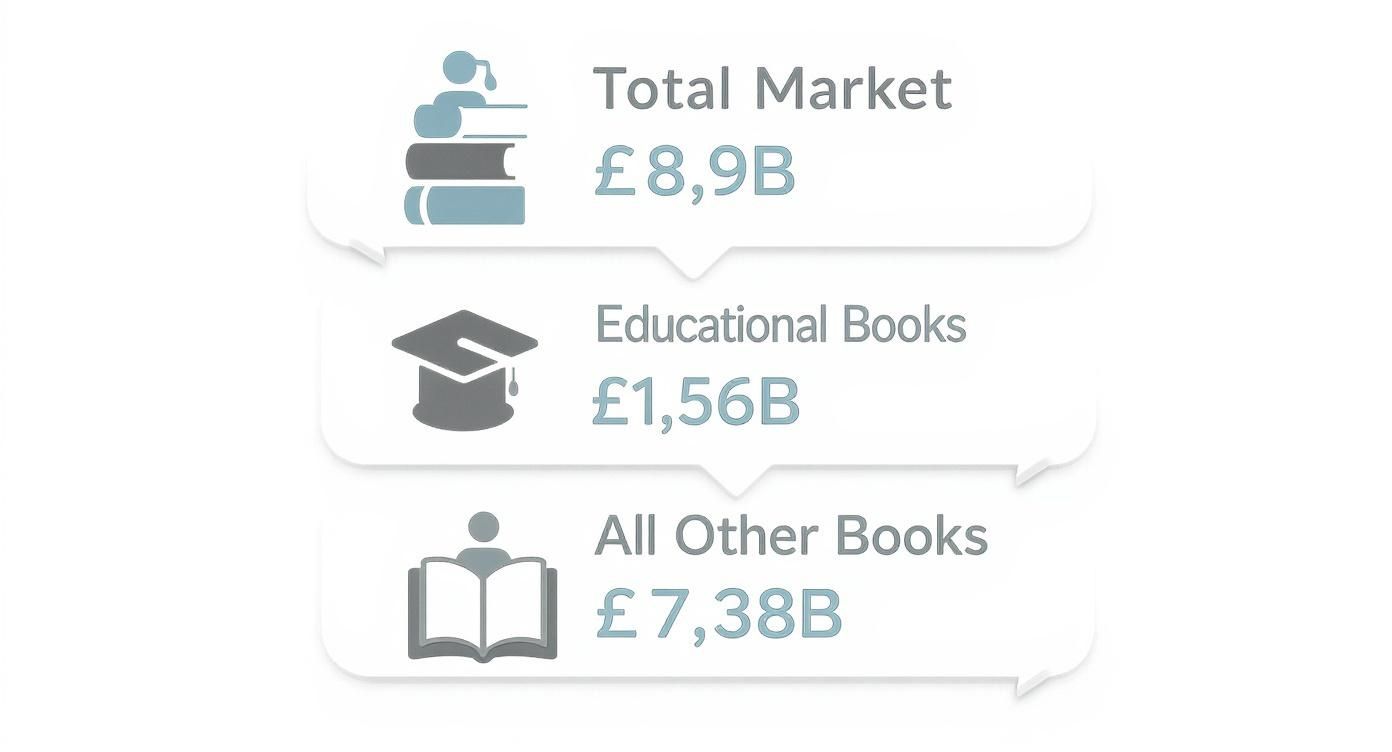
This £1.56 billion market highlights a strong demand for stories that don’t just teach letters and numbers, but also help children navigate their inner worlds.
Toddlers Ages 1 to 3
For our littlest readers, the world is a whirlwind of new sights, sounds, and baffling emotions. Books for this age group need to be simple, colourful, and focused on the absolute basics of feelings.
Think of stories that help them put a name to an emotion. A book about a grumpy lion or a joyful rabbit helps them connect the word "grumpy" or "joyful" to a facial expression and a situation. This is their very first, crucial step towards emotional literacy.
What to look for:
- Bright, Simple Illustrations: Pictures should be clear and uncluttered, showing emotions plainly on the characters' faces.
- Repetitive Language: Simple, rhythmic text is easier for them to follow and even start to memorise.
- Durable Formats: Board books are a must. They’re built to withstand curious hands and the occasional chew!
- Key Themes: Stick to core emotions like happiness, sadness, anger, and surprise.
Pre-schoolers Ages 4 to 5
Once children hit their pre-school years, their social worlds explode. Suddenly, they’re navigating the tricky waters of sharing, making friends, and realising that other people have feelings too. This is the perfect time to introduce books that model positive social behaviours.
A story about two friends who argue and then figure out how to make up gives them a practical script they can actually use on the playground. These kinds of narratives are what build the very foundations of empathy. You can see more about how illustrations help get these complex ideas across in our article on children's picture books.
Early Primary Ages 6 to 8
At this stage, children are developing a more complex inner life and can start to understand more nuanced emotional concepts. They might begin to feel things like anxiety about school, frustration with homework, or jealousy over a new sibling. Books for this age group can gently tackle these slightly bigger themes.
Look for stories where the main character faces a real challenge, feels a big emotion, and then learns a strategy to cope. A character who learns a simple breathing exercise to calm their worries, for example, gives your child a practical tool they can try for themselves.
It's so important to remember that these books are conversation starters, not cures. If you are ever worried about your child's mental health, the best first step is always to speak with your GP or a qualified professional.
Pre-teens Ages 9 to 12
For pre-teens, the emotional landscape gets even more complicated. They’re dealing with peer pressure, the first hints of social media's impact, and a growing (and often confusing) sense of who they are. Books for this age can explore deeper themes like resilience, self-esteem, and what it means to be a good friend.
Characters who stumble, fail, and then learn how to bounce back are incredibly powerful role models. They show that it's okay not to be perfect and that true strength comes from trying again. These stories validate their struggles and offer a bit of hope and perspective during what can be a turbulent time.
To help you find the right fit, we’ve put together a table that breaks down key themes and features to look for at each stage.
Book Selection Guide by Age and Mental Health Theme
This table is designed to give you a quick, practical reference for choosing age-appropriate books that really connect with the emotional and mental health needs of your child.
| Age Group | Key Developmental Focus | Example Book Themes | What to Look For |
|---|---|---|---|
| Toddlers (1-3) | Naming and recognising basic emotions | Happiness, sadness, anger, surprise, feeling scared | Simple, bold illustrations; repetitive text; sturdy board book format; clear facial expressions on characters. |
| Pre-school (4-5) | Understanding empathy, sharing, and social interactions | Making friends, resolving conflicts, kindness, empathy | Relatable social scenarios; stories modelling positive behaviour; clear cause-and-effect plots; engaging pictures. |
| Early Primary (6-8) | Developing coping strategies and emotional regulation | Managing anxiety, dealing with jealousy, building confidence | Characters facing challenges and learning coping skills (like deep breathing); stories that normalise "big" feelings. |
| Pre-teens (9-12) | Building resilience, self-esteem, and complex social skills | Overcoming failure, peer pressure, identity, friendship | Relatable protagonists with complex inner worlds; themes of resilience and personal growth; nuanced, character-driven stories. |
Using this guide can help take the guesswork out of building a library that not only entertains but also empowers your child to understand themselves and the world around them a little better.
Key Themes That Build Emotional Resilience
When we choose books for our kids, it's easy to get caught up in the story alone. But the real magic happens when we start looking at the themes – those core messages that help children build emotional resilience. These are the ideas that help them make sense of their own inner worlds, figure out how to get along with others, and learn how to bounce back when things get tough.
Think of these themes as the emotional nutrients that help your child’s wellbeing flourish. By weaving in concepts like mindfulness, empathy, and resilience through characters they can relate to, you’re giving your child a safe and simple way to talk about big, and often confusing, feelings. It’s a gentle way to start conversations about mental health from a young age, handing them a toolkit they can use for life.
Understanding and Managing Big Feelings
One of the most powerful things a children's book can do is simply validate big emotions. So many stories feature characters who feel overwhelming sadness, bubbling anger, or a flutter of anxiety. When a child sees their own feelings mirrored in a character, it sends a clear and vital message: it's okay to feel this way.
For instance, a story about a little badger who’s nervous about starting school helps a child put a name to their own first-day jitters. The book might show the badger learning a simple calming trick, like taking three deep breaths. Just like that, your child has a real, practical strategy they can try themselves. This is one of the first steps toward learning to manage their own emotions.
If you’re looking to explore this further, there are fantastic resources that can help you build emotional intelligence alongside your child.
Cultivating Empathy and Kindness
Empathy is really just the ability to understand and share someone else’s feelings. And honestly, books are one of the best tools out there for nurturing this skill. They invite children to step right into another person’s shoes for a little while. A story told from the perspective of a child who gets left out on the playground encourages the reader to imagine how that might feel.
This is how we begin to foster genuine compassion and kindness. Stories with practical examples show children not just why they should be kind, but how. A character might share their lunch with a friend who forgot theirs, showing a simple, doable act of kindness that a child can easily copy in their own life.
Building Resilience and a Growth Mindset
Resilience isn't about never falling down; it's about learning how to get back up. Stories are the perfect way to teach this. Children can read about characters who:
- Try to build a tower that keeps falling over, but they don’t give up.
- Make a mistake in a school play and learn that it’s not the end of the world.
- Work really hard to learn a new skill, like riding a bike, even when it’s tricky.
These kinds of stories model a growth mindset—the belief that you can get better at things with practice and hard work. It's a hugely important idea for building a child’s self-esteem and encouraging them to persevere when things get tough.
Disclaimer: It's important to remember that I am not a mental health professional. These books are wonderful supportive tools, but if you have any genuine concerns about your child's mental wellbeing, it is always best to seek advice from your GP or a qualified healthcare provider.
It's clear that more and more people are realising how important these books are. The global children's and young adult books market, valued at USD 11.9 billion, is growing, partly thanks to more reading initiatives and government literacy programmes. Here in the UK, this trend is helped by rising household incomes, which means more families can invest in these brilliant resources.
And the conversation doesn't have to stop with books. Things like mental health apparel, such as T-shirts with positive affirmations, can act as a gentle, everyday reminder of these important themes. By combining great stories with simple, positive daily practices, we can create a supportive space where a child's emotional resilience can truly take root and grow.
Turning Storytime into Meaningful Conversations
When you turn that final page, it’s often just the beginning of the most important part of the story. The real magic of educational books for kids isn't just in the words on the page, but in how they open the door to bigger conversations, turning a simple story into a genuine exploration of feelings and wellbeing.
Creating this space for connection doesn't require any special training. It’s all about being present, asking gentle questions, and listening without jumping in to judge or fix. This simple shift can transform reading from a quiet activity into a proactive and positive mental health practice for the whole family.
Starting the Conversation
The trick is to ask open-ended questions that reach beyond a simple "Did you like the book?" After you've finished reading, try to ask things that gently link the story back to your child's own life and feelings. This sends a powerful message: their thoughts and emotions matter.
For example, you could try questions like:
- "I wonder if you've ever felt a bit like the little fox did when he was nervous?"
- "What do you think was the bravest thing the main character did?"
- "How do you think the friends could have sorted out their argument differently?"
There are no right or wrong answers here. The goal is just to create a safe little bubble where your child can share what’s on their mind, helping them build the confidence to talk about their inner world.
Bringing Stories to Life with Creative Activities
Taking the conversation off the page and into a hands-on activity can make big, abstract ideas like 'anxiety' or 'resilience' feel much more real and manageable for a child. It’s a brilliant way to help a story’s message stick around long after the book is back on the shelf.
Think about activities that connect directly to the book's themes. This not only makes learning fun but gives your child a physical tool or a memory they can link back to a specific feeling or coping strategy.
Disclaimer: It's important to remember I am not a mental health professional. These activities are supportive tools, but if you have genuine concerns about your child's wellbeing, please seek advice from your GP or a qualified professional.
Here are a few simple ideas you can adapt for almost any story you read together:
- Create a 'Worry Box': If you’ve just read a book about an anxious character, you could make a special box together. Your child can then write or draw their worries on little slips of paper and 'post' them inside, giving them a physical way to let go of their concerns for a while.
- Practise Character Breathing: Did a character in the story find a clever way to calm down? Give it a go! If a little bear took three deep "bear breaths" to feel better, practise doing that together. It gives your child a simple, memorable relaxation technique they can actually use.
- Map the Character's Feelings: Draw a simple outline of the main character. Then, chat about all the different feelings they had during the story and draw or write them inside the outline. This helps children see that it’s totally normal to feel lots of different emotions, sometimes all at once.
These simple, creative follow-ups make the lessons from educational books for kids last. They build a shared language and a toolkit you and your child can use to navigate life's ups and downs, creating a strong foundation of emotional resilience, together.
The Power of Personalised Storybooks
Imagine a story where your child isn't just turning the pages, but is the hero of their own emotional journey. That’s the magic of personalised educational books—a wonderful approach that shifts reading from a passive activity into an active, immersive experience for young minds.
When a child sees their own name in print and recognises a character drawn to look just like them, the story’s message suddenly clicks on a deeply personal level. All at once, lessons about kindness, bravery, or navigating big feelings aren't about some faraway character; they’re about them. This simple, powerful touch helps a child connect with a story like nothing else can.
Making Every Lesson Stick
In a world brimming with digital distractions, a personalised book captures a child’s attention in a unique way. That sense of ownership and relevance makes the lessons inside feel real and, more importantly, achievable. It’s one thing to read about a character learning to be brave; it’s another thing entirely to read about yourself being brave.
Personalisation bridges the gap between a story and a child’s reality, turning abstract concepts into tangible, internalised skills. It makes emotional learning feel less like a lesson and more like a personal adventure.
You can see the growing appreciation for these custom-made stories in the numbers. The UK’s personalised children's books market, currently valued at around USD 160.43 million, is set to grow significantly by 2032. This isn’t just a passing trend; it shows a real demand from parents and educators for tools that genuinely engage children and spark a true love for reading. You can dive deeper into this market growth in this insightful report.
A Tool for Self-Esteem and Connection
Personalised books also give a child’s self-esteem a powerful boost. When they see themselves as the main character overcoming challenges, it reinforces their own sense of importance and capability. It’s a gentle way of showing them they are worthy of being the hero in their own life story.
What's more, these books can be created to address specific situations your child might be going through, whether it’s starting a new school, welcoming a sibling, or learning to manage anxiety. This tailored approach makes them incredibly effective for starting meaningful conversations. It helps you reinforce the exact emotional skills your child needs most, strengthening your connection as you explore the story together.
Common Questions About Kids Books and Mental Health
Dipping a toe into conversations about mental health with your little one can feel like a big step. Using books is a brilliant, gentle way to start, but it's natural to have a few questions. Here are some of the things parents and carers often wonder about when they start using stories to support emotional wellbeing.
What if a book brings up difficult emotions?
It can feel a little alarming if a story makes your child sad or anxious, but try to see it as a good sign. It means the book has really connected with them on a deeper level, opening a door for a really meaningful chat. The key is not to rush in and try to ‘fix’ how they’re feeling. Instead, just pause and sit with them in that feeling.
You could say something like, "It sounds like that part of the story felt really sad for you. Can you tell me more about what that was like?" This simple question shows them that all their feelings are okay and, most importantly, that you’re a safe person to share them with.
How do I introduce sensitive topics like grief or anxiety?
Start by picking a book that’s right for their age and handles the topic with a soft touch. Before you even open the first page, you could gently set the scene. Something as simple as, "This story is about a character who feels very worried sometimes. Let's read it together and see what happens," is perfect.
This little introduction frames the topic without making it sound big or scary. The story itself then does the heavy lifting, giving you both a gentle, third-person way to explore a feeling without putting your child directly in the spotlight.
What if my child doesn't want to talk about the book?
That’s completely fine, and actually quite common. The goal isn’t to force a deep and meaningful conversation right there and then, but simply to create the opportunity for one. Sometimes, the ideas and feelings in a book need a bit of time to sink in. Just reading the story together has already planted a seed.
You can always circle back to the theme later on, maybe when you’re doing something completely different. For example, a few days later, you might say, "Do you remember how the bear in our book took some big deep breaths when he felt cross? Shall we try that together?"
A Gentle Reminder: I am not a mental health professional. While books are incredibly powerful tools, they aren't a substitute for professional support. If you are worried about your child’s mental health, please speak with your doctor or a qualified healthcare provider. They can offer the guidance and support your family needs.
Using educational books for kids is all about building a foundation of emotional literacy, one story at a time. It’s about showing children that their feelings are valid and that talking about them is a sign of strength, not something to be hidden away.
At Little Fish Books, we are passionate about providing resources that help these crucial conversations happen. Take a look at our curated collection of books and activities, all designed to nurture emotional wellbeing in children and young people. Discover our full range of supportive educational books for kids and start your journey today.