
Feelings Display Ideas for the Classroom: 7 Simple Ideas
Share
A feelings display is one of the easiest ways to make emotions part of everyday classroom life. When children see feelings on the wall every day, with faces, words and ideas for what helps, they find it easier to notice and talk about how they feel. A good display isn't just decoration. It's a tool children use.
Here are practical feelings display ideas for primary classrooms, nurseries and calm corners, with tips on making them interactive.
What makes a good feelings display
- It's at child height. If children can't reach it, they can't use it.
- It uses pictures as well as words. Faces and characters help younger children and children with SEND recognise feelings before they can read the word.
- It includes all feelings. Not just happy and sad, but worried, cross, proud, excited, embarrassed and more. Every feeling is okay.
- It's interactive. Children can move a peg, add a name or choose a strategy.
- It links feelings to actions. The most useful displays show what children can do when a feeling gets big.
Feelings display ideas
1. A feelings check-in board
Put a row of feelings along the board, each with a picture. As children arrive, they move a peg or name card to the feeling that matches how they feel. It takes seconds and gives you a quick picture of the room.
2. "Every feeling is okay" bunting
Bunting across the top of a display or calm corner sends a clear message that all feelings are welcome. It's also a friendly, colourful way to brighten a classroom without clutter.
3. A feelings word wall
Add new feelings words as the class learns them. Start with simple ones and build up to trickier words like frustrated, disappointed and confused. Encourage children to use the wall when writing or talking about stories.
4. "What helps?" strategies
Next to each feeling, show one or two things that help: take five slow breaths, get a drink of water, talk to a grown-up, squeeze a cushion. Children learn that feelings and strategies go together.
5. A feelings thermometer
A thermometer shows that feelings come in sizes, from a little bit to really big. It works well near a calm corner, so children can show how big a feeling is and choose a strategy to match.
6. A kindness or compliments wall
Children add notes about kind things classmates have done. It builds empathy and gives children a reason to look out for each other.
7. A feelings display linked to a class book
Choose a picture book about feelings and build the display around its characters. Children can refer back to the story when they talk about their own feelings.
Tips for keeping it useful
- Introduce it properly. Walk the class through the display and model how to use it.
- Use it daily. A quick morning check-in keeps it alive. Unused displays quickly become wallpaper.
- Keep it calm. Busy, cluttered displays can overwhelm some children. Leave space and use a limited colour palette.
- Refresh it. Add new feelings words or strategies every half term.
- Laminate anything that gets handled. Pegs and name cards take a lot of wear.
Printable feelings display resources
The Every Feeling Is Okay Bunting is an instant PDF download with 18 flags spelling EVERY FEELING IS OKAY, each with a different That's Okay feelings creature. Pair it with the Feelings Posters (15 emotions) and the Feelings Check-In Pack for a complete, interactive display.
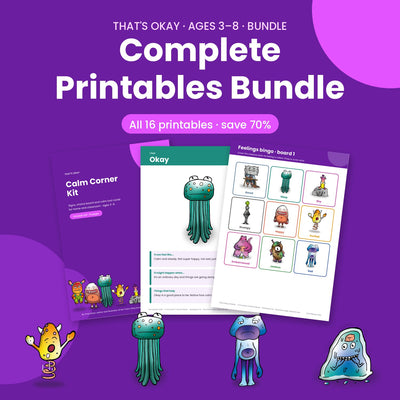
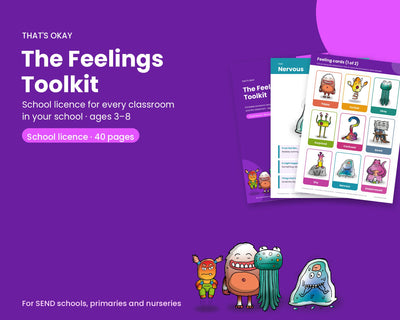
Setting up displays across a whole school? See our resources for schools, or get every pack at once in the Complete Printables Bundle.