
How to Develop Self Awareness: A Practical Guide for Parents
Helping a child develop self-awareness is about giving them the tools to recognise their own emotions, thoughts, and behaviours. It’s about teaching them to understand how they tick and how their actions impact themselves and the people around them.
Think of it as building an internal compass that helps them navigate life's ups and downs with a bit more resilience and empathy. It’s one of the most fundamental skills we can teach for their long-term mental wellbeing.
Why Self-Awareness Is So Vital for British Children
In a world that feels increasingly complex, understanding how to develop self-awareness is less of a 'soft skill' and more of an essential tool for life. For children all over the UK, this skill is the very bedrock of strong mental health. It allows them to understand their feelings rather than being completely overwhelmed by them. It’s that first, crucial step towards regulating their emotions and building real resilience against school pressures and social hurdles.
The need for this has never been more pressing. It's shocking to learn that one in five children in the UK now has a probable mental health disorder—a figure that has climbed significantly in recent years. This statistic isn't just a number; it points to a growing crisis that proactive emotional education can genuinely help tackle.
When children can put a name to what they're feeling and start to understand why, they gain a sense of control. They can learn to manage their reactions and build healthier ways of coping.
Navigating Modern Pressures
Childhood today comes with its own unique set of challenges. The always-on nature of social media, for instance, can create a tough environment where comparison and self-doubt run rampant.
A child with a strong sense of self-awareness is simply better equipped to understand the impact these platforms have on their self-esteem. They can learn to step back, think critically, and engage more mindfully. This awareness helps them see the difference between their real, authentic self and the perfectly curated versions of life they see online.
It's important to remember that I am not a mental health professional and this article offers general guidance, not a substitute for professional medical advice. If you have concerns about your child's mental health, please consult your GP or a qualified mental health professional.
The Foundation for Future Wellbeing
When we invest time in nurturing a child's self-awareness, the benefits ripple out far beyond the playground. Poor mental health is estimated to cost UK businesses up to £56 billion a year in lost productivity and staff turnover.
By teaching these skills early, we aren't just raising happier children. We're also preparing a future workforce that is more resilient, communicative, and emotionally intelligent.
Simple relaxation tips, like taking a few deep breaths or sharing a quiet moment with a story from our collection at Little Fish Books, are excellent starting points. Even something as simple as mental health apparel with a positive message can act as a gentle, everyday reminder for them to check in with how they’re feeling.
It’s these small, consistent practices that lay the groundwork for a lifetime of mental wellbeing, turning self-awareness from an abstract idea into a practical, daily skill.
So, What Exactly Are We Building Here?
Before we jump into the how, it’s worth taking a moment to get our heads around what self-awareness actually is. It sounds like a lofty psychological term, but at its heart, it’s really just about helping a child understand their own world, both inside and out.
Think of it as a journey, not a destination. By planting these seeds early, you're nurturing a skill that will grow and adapt with them for the rest of their lives.
This journey has two main paths. The first is helping them get to grips with their internal world—all those thoughts, feelings, strengths, and personal values swirling around inside. The second is helping them make sense of their external world—how others see them and the ripple effect their actions have on the people around them.
Mapping Out Their Inner World
A child’s inner world can be a chaotic place, full of huge feelings they often don't have the words for. Our job is to be their guide, helping them name and understand what’s going on. This is the very first step towards healthy emotional regulation, a critical skill for bouncing back from life's inevitable ups and downs. If you want to dive deeper into this, we have a whole guide on what is emotional regulation.
Let’s picture a simple, everyday moment. A child loses a board game and, in a flash of frustration, shoves all the pieces off the table.
- Without self-awareness: They just know they feel "bad" or "angry." The feeling is a big, overwhelming wave that takes over their actions.
- With developing self-awareness: They can start to put a name to the feeling. It's disappointment. It’s frustration. They might think, "I'm upset because I really wanted to win."
That small shift is massive. It’s the difference between being a puppet to your emotions and starting to understand them. The same goes for good feelings. When they share a toy and get that warm, fuzzy sense of pride, pointing it out helps them connect kindness with feeling good.
Seeing Themselves Through Others’ Eyes
The second piece of the puzzle is understanding their place in the wider world and how their behaviour lands with other people. This is where empathy starts to take root. It’s about gently encouraging them to look beyond their own viewpoint and consider the feelings of their friends, family, and classmates.
For instance, when a child blurts out something unkind on the playground, they often don’t see the immediate impact. A quiet chat later can help them connect their words to another child’s sad face. This isn't about shaming them; it’s about building their ability to see the world from someone else’s perspective.
Self-awareness isn't about creating a perfectly behaved child. It's about raising an emotionally honest one who can navigate their feelings and relationships with kindness and understanding.
Of course, a child's environment shapes how they see themselves, too. Research from the British Social Attitudes survey shows just how early this begins. The survey found that a huge 77% of UK respondents believe social class affects life opportunities, which shows how our awareness of the world around us is deeply tied to our sense of self. It highlights a clear link between a person's education, their self-identified class, and what they believe is possible for them, underlining how a child's context shapes their inner world.
By keeping these two sides of self-awareness—the internal and the external—in mind, we can create a more balanced and supportive approach. We can start using all those ordinary, everyday moments to build this essential life skill, helping to nurture a generation that is not only successful but emotionally intelligent and compassionate too.
Practical Activities to Nurture Self Awareness at Any Age
Knowing why self-awareness matters is one thing, but figuring out how to actively build it in our kids can feel like a whole different challenge. The good news? You don't need complicated psychological tools or formal training. Learning how to develop self awareness happens in the small, everyday moments you already share, using simple games and gentle conversations.
The real secret is tailoring your approach to their developmental stage. What works for a curious toddler is worlds away from what will resonate with a teenager navigating their own complex world. Let’s break down some practical, age-appropriate activities you can use to build this crucial skill from the ground up.
This simple diagram shows the core process we're aiming for – helping children understand their inner world, notice how they're perceived, and then bring those two things together.
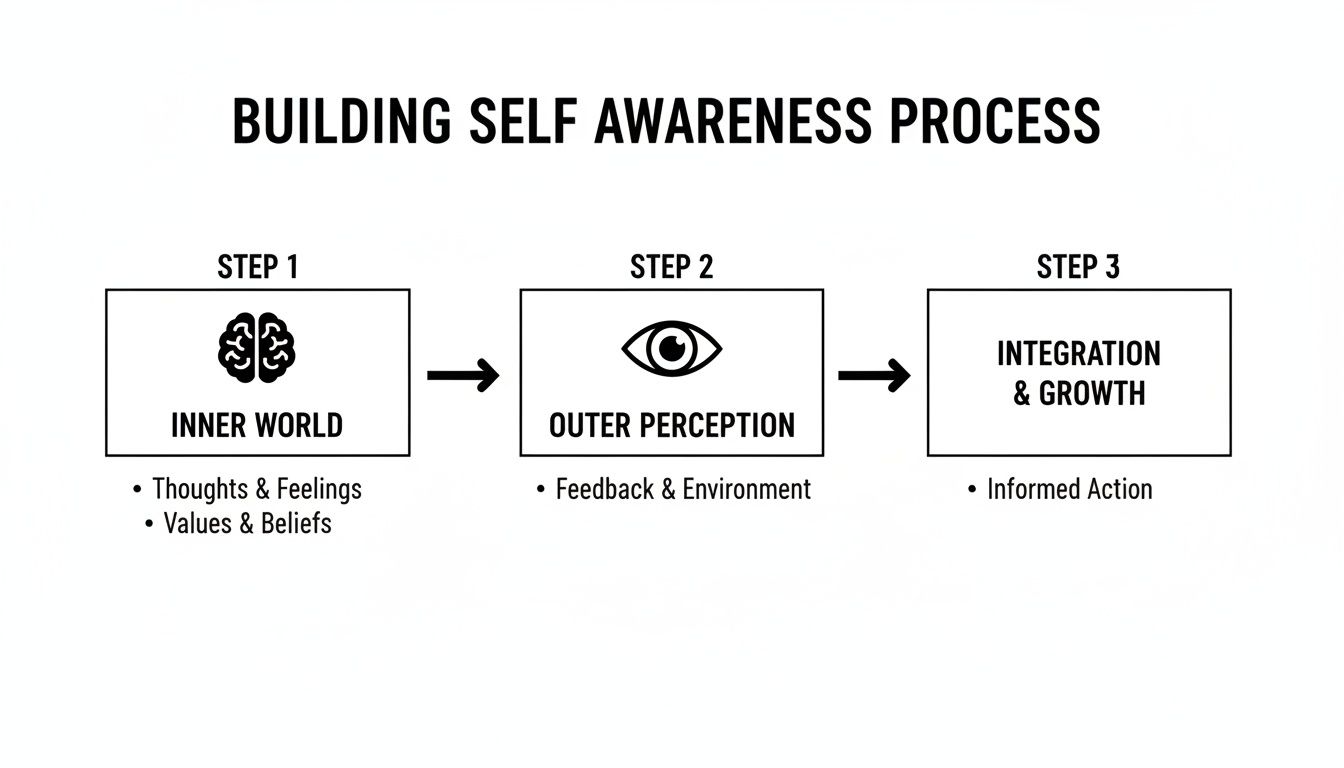
True self-awareness isn't just about knowing you're sad; it's about integrating those internal feelings with external feedback to build a solid sense of self.
The First Steps with Toddlers
At this early stage, it’s all about giving them the words for their big, overwhelming feelings. Toddlers live completely in the moment, and their emotions can feel enormous simply because they don't have the vocabulary to define them yet.
- Mirror Me Game: This one is as simple as it is powerful. Sit in front of a mirror with your little one and make different faces. "Look, I'm making a happy face! Can you make a happy face?" Try sad, surprised, and silly faces too. It's a fun way for them to connect an expression to an emotion.
- Narrate Their World: When you see a strong emotion bubble up, gently give it a name. If they're crying because a toy was snatched away, you could say, "You feel so sad because your brother took the car. It's okay to feel sad." This simple act validates what they're feeling and starts building their emotional library.
- Use a Feelings Chart: A basic chart with smiley, sad, and angry faces can be a fantastic visual tool. You can point to it in the morning and ask, "How are you feeling today?" or use it to talk about characters in a storybook.
These small activities lay the foundation, helping toddlers realise that the huge sensations they feel inside have names and are a normal, manageable part of being human.
Deeper Explorations for Primary School Children
As children move into primary school, their ability to reflect really starts to grow. They can begin to understand the 'why' behind their feelings and even start to see things from other people's perspectives. Here, the focus shifts from just naming emotions to exploring them more deeply.
Journaling is a brilliant way to encourage this. It doesn’t have to be a formal 'Dear Diary' thing at all; a simple notebook with a few fun prompts can work wonders.
Try prompts like these:
- What was the absolute best part of your day and why?
- Draw a picture of what anger looks like.
- When did you feel proud of yourself this week?
Another fantastic activity is the 'Emotional Weather Report'. At the dinner table or before bed, everyone can describe their day's emotional state using weather as a metaphor.
Parent: "My emotional weather was a bit cloudy this morning because I was worried about a meeting, but the sun came out this afternoon when we all went for a walk."
Child: "Mine was stormy when I fell over in the playground, but now it's calm with a rainbow because we're having my favourite dinner."
This playful approach makes talking about feelings less intimidating and much more creative. If you're looking for more ideas, you'll find a brilliant list of emotional literacy activities that are just perfect for this age group.
To help you get started, here is a quick summary of practical exercises tailored to different developmental stages, providing clear, actionable ideas.
Age-Specific Self-Awareness Activities
| Age Group | Activity Example | Core Skill Developed |
|---|---|---|
| Toddlers (1-3) | Mirror Me Game: Make faces (happy, sad, surprised) in a mirror together. | Emotional Recognition |
| Preschool (3-5) | Emotional Weather Report: Describe feelings using weather metaphors (sunny, stormy). | Emotional Expression |
| Primary School (6-11) | Feelings Journal: Use prompts to write or draw about daily emotions. | Self-Reflection |
| Teenagers (12+) | Mindful Check-in: Pause and notice thoughts/feelings without judgement. | Introspection & Regulation |
These activities are designed to be woven into your daily life, turning ordinary moments into opportunities for connection and growth.
Navigating a Complex World with Teenagers
The teenage years are a critical time for developing self-awareness. They're grappling with identity, peer pressure, and the huge influence of social media. The statistics on youth mental health are a serious wake-up call; in 2023, NHS figures showed that one in five children and young people aged 8 to 25 had a probable mental health disorder. This just shows how urgent it is to equip them with strong internal tools.
For teenagers, activities should encourage deeper self-reflection and critical thinking.
- Mindfulness and Relaxation: Introducing a simple mindfulness practice can be incredibly effective. It's not about emptying the mind, but about noticing thoughts and feelings as they come and go, without judgement. There are heaps of apps designed for teens, or you can just start with simple breathing exercises like box breathing (breathe in for four, hold for four, out for four, hold for four). Exploring various mindfulness activities for adults can also spark ideas that you can adapt for your teen.
-
The Social Media Check-in: Social media often presents a polished, distorted version of reality that can really warp a teenager's self-perception. Encourage open, non-judgemental chats about it.
- Conversation Starter: "I noticed you were scrolling for a while there. How did it make you feel afterwards? Did seeing those posts make you feel better or worse about your own day?" This simple question prompts them to connect their online habits with their emotional state.
Using Books and Apparel as Gentle Nudges
Sometimes, a direct conversation about feelings can feel way too intense for a child or teen. This is where things like books and even clothing can act as a gentle way in.
A well-chosen children's mental health book can explore complex emotions like anxiety or grief in a way that feels safe and relatable. Reading a story together about a character who is struggling creates a natural opening to ask, "Have you ever felt like that?"
In the same way, mental health apparel—like a T-shirt or hoodie with a positive affirmation—can be a quiet reminder for them to be kind to themselves. It normalises conversations about wellbeing and can make a young person feel seen and supported without a single word being spoken.
Throughout all this, please remember you're not expected to be a mental health professional. Your role is simply to create a safe space for exploration. If you are ever seriously worried about your child's mental health, the most important step you can take is to seek help from your GP or another qualified professional.
Spotting Progress and Navigating Common Roadblocks
Teaching a child self-awareness isn't something that happens overnight. It’s a journey, one filled with tiny victories and the occasional detour. There’s no sudden finish line they cross; instead, you’ll start to see gradual, heart-warming shifts in their behaviour and the words they use. Noticing these moments is what will keep you both motivated.
It's so important to manage your own expectations. This isn't about raising a child who never gets angry or sad. It's about raising one who can recognise they're angry, understand where that feeling might be coming from, and, eventually, choose a healthier way to respond.
Progress will look completely different at every age. A five-year-old who finally says, "I'm sad because you took my toy," instead of just crying has made a huge leap. A teenager who can admit, "I was grumpy with you earlier because I had a bad day at school," is showing a really mature level of self-reflection.
Realistic Milestones to Look For
Spotting progress is really about celebrating the small wins along the way. Think of these milestones less like a rigid checklist and more like gentle signs that your child's inner emotional world is becoming clearer to them.
Here’s what you might start to notice:
- Growing Emotional Vocabulary: They begin using more specific words for their feelings beyond "happy" or "sad," like "frustrated," "nervous," or "proud."
- Connecting Feelings to Actions: You'll hear them make those crucial links, like, "I yelled because I was frustrated with my homework."
- Showing Empathy: They start to notice emotions in other people, maybe offering a hug to a sad friend or asking why you seem tired.
- Developing Coping Skills: Instead of a full-blown tantrum, they might ask for a quiet moment or take a deep breath when they feel overwhelmed.
These moments are the real proof that your efforts are paying off. For a more detailed look at what to expect at different ages, exploring a guide on emotional development milestones can give you some valuable context and reassurance.
Handling Common Hurdles with Patience
Every single parent hits roadblocks on this journey. A child who clams up, a teen who rolls their eyes—it’s all part of the process. The real key is to respond with compassion instead of frustration.
Challenge 1: The Child Who Won't Talk
You ask, "How are you feeling?" and all you get back is a shrug or a mumbled "Fine." Sound familiar? It's incredibly common.
- Practical Solution: Instead of asking direct questions, try making gentle observations. Saying something like, "You seem a bit quiet today," opens the door without demanding an immediate answer. You can also model the behaviour yourself: "I felt a bit stressed earlier, so I'm going to read my book for a little while to relax." This shows them that talking about feelings is normal and safe in your home.
Challenge 2: The Teenager Struggling with Self-Criticism
Social media plays a massive role here, creating an environment where teens are constantly comparing their real, messy lives to someone else's curated online highlights. This can really fuel a harsh inner critic.
Remember, the goal isn't to solve their problems for them, but to create a safe space where they feel heard and understood. This builds trust and encourages them to open up over time.
- Practical Solution: Always validate their feelings first. "It sounds like you're being really hard on yourself right now." Then, gently challenge that negative self-talk. You could ask, "If your best friend made that same mistake, what would you say to them?" This helps them start viewing themselves with the same kindness they'd show to others.
When to Seek Further Support
While these strategies are brilliant for everyday challenges, it’s vital to know when a bigger issue might be at play. Your role is to be a supportive guide, not a mental health professional.
Setbacks are totally normal, but if you notice persistent changes in your child's mood or behaviour that are impacting their daily life—school, friendships, or family relationships—it's time to seek professional advice.
If you are worried, your first port of call should always be your GP or a qualified child mental health service. Reaching out is a sign of strength, and it’s the most loving step you can take to ensure your child gets the expert support they might need. Your intuition as a parent is a powerful thing; always trust it.
How Self-Awareness Shapes Your Child's Future
Helping a child develop self-awareness isn't just about getting through the occasional tantrum or navigating a tricky day at school. It's a genuine investment in their future happiness and success.
The skills they pick up today—like spotting their own emotions, understanding their values, and seeing how they affect others—are the very tools they'll use to build a happy, well-rounded adult life. The link between self-awareness and future success isn't just a theory; we see it play out in everything from school results to the health of their relationships down the line.
A child who gets a handle on their own strengths and weaknesses can tackle learning with more confidence, turning tough spots into chances to grow. Building up their independence is a huge piece of this puzzle. You can find some excellent tips to foster self-directed learning and autonomy to help them on their way.
The Link Between Self-Awareness and Wellbeing
A strong sense of self is tied directly to both mental and physical health. When children can put a name to what they’re feeling, they're much better at taking care of themselves. This could be as simple as realising they need a quiet moment to de-stress after a chaotic day, or noticing the physical jitters of anxiety before a big test.
This mind-body connection is a lifelong thing. Fresh data from the ONS, covering April 2022 to March 2023, really drives this home. In the UK, adults who rated their health as 'good' also rated their life satisfaction a massive 30.0% higher than those in 'very bad health'.
It shows that being aware of our own state is fundamental. A poor perception of health is clearly linked to lower happiness and higher anxiety. You can dig into the full research about the link between health and wellbeing on ONS.gov.uk.
Building Healthier Relationships
Self-awareness is also the foundation for empathy. It’s simple, really: a child who understands their own feelings is in a much better position to understand someone else’s. They can put themselves in a friend's shoes, offer a kind word, and work through disagreements without it all blowing up.
This skill is priceless for forming the strong, supportive friendships we all need for a happy life. It helps them build trust, say what they need clearly, and actually listen to what others need in return—all vital parts of any healthy relationship, be it with friends, partners, or colleagues.
By equipping children with self-awareness, we're not just helping them manage their emotions today. We are giving them a compass to build a life aligned with their personal values and to form connections that are genuine and lasting.
The Bigger Picture: Economic Impact
The benefits of emotional education don't just stop with the individual. They ripple out, affecting the wider community and even the economy. Poor mental health has a hefty price tag, costing UK businesses an estimated £56 billion every single year from things like lost productivity and staff absence.
When we make teaching self-awareness a priority in childhood, we're nurturing a future generation of employees and leaders who are more resilient, better at communicating, and more emotionally intelligent. These are the people who can manage stress, work well in a team, and lead with empathy.
Investing in these skills early is one of the most powerful, proactive things we can do to build a healthier, more productive society. It all comes back to the idea that understanding ourselves is the first step towards building a better world for everyone.
Your Questions on Developing Self-Awareness Answered
Starting the journey of teaching a child about self-awareness can feel a bit like navigating without a map. It’s a path filled with nuance, and it's completely normal to have questions and wonder if you're getting it right. Let’s tackle some of the most common concerns we hear from parents and educators, with some practical, straightforward advice.
"My child refuses to talk about feelings. How can I start?"
This is a frequent hurdle, especially with children who are naturally more reserved or just aren't sure how to put their big feelings into words. Pushing for direct answers like, "How do you feel?" can often cause them to clam up even more.
A gentler, more indirect approach often works wonders. Try using storybooks or films as a natural starting point. You could make a simple observation like, "Wow, that character seems really frustrated right now. Have you ever felt like that?" It opens a door without putting them on the spot.
Modelling the behaviour yourself is also incredibly powerful. During dinner, you might casually share, "I felt a bit stressed today when my computer crashed, but I took a few deep breaths and it helped." This normalises talking about emotions and removes any sense of pressure, showing them that it’s a safe and normal topic in your home.
"How do I know if it’s a bad day or a bigger concern?"
This is a big one. Distinguishing between typical childhood mood swings and something that might need more attention is a significant concern for many parents. A bad day or two is a normal part of life for everyone, kids included.
The key is to look for persistent changes in their behaviour and mood. If you notice prolonged sadness, irritability, or anxiety that lasts for weeks, or a sudden withdrawal from friends and hobbies they once loved, it might signal a deeper issue. Significant shifts in sleeping or eating habits are also important signs to watch for.
Important Disclaimer: I am not a mental health professional, and this content is for informational purposes only. If you are worried about your child's mental health, please consult your GP or a qualified professional for personalised advice. Trust your instincts; seeking help is a proactive and loving step.
"What is the best age to start teaching self-awareness?"
Honestly, you can begin laying the groundwork from a very early age, long before they can have complex conversations. For toddlers (around 18-24 months), the process starts with simply naming their emotions for them. Think of it as building their emotional vocabulary.
When you see them smiling, you can say, "You’re smiling so brightly, you must feel so happy!" When they're upset, you can say, "You look really sad that playtime is over."
Using a mirror to point out their own facial expressions—"Look at your cross face! You seem a bit grumpy"—is another wonderful and simple starting point. The activities should always be age-appropriate, growing in complexity as your child develops.
"Are there any good books or resources for UK families?"
Absolutely! The UK has a wealth of excellent resources available to support you and your child on this journey. It can feel overwhelming knowing where to start, but here are a few reliable places:
- Organisations: Charities like YoungMinds and the Mental Health Foundation offer fantastic, reliable guides and information for parents on their websites. They break things down clearly and offer advice you can trust.
- Mindfulness Apps: NHS-recommended apps such as Headspace and Calm have dedicated sections for children, making mindfulness accessible and even fun through guided stories and meditations.
- Children's Books: A well-chosen storybook can be one of the most effective tools for opening up conversations about big feelings in a safe and relatable way. Exploring stories designed to tackle complex emotions can provide the perfect, gentle starting point for these important family discussions.
At Little Fish Books, we are dedicated to creating resources that do just that. Our collection of books and activities is specifically designed to help children explore their inner worlds through engaging stories and characters.
Discover our full range and find the perfect story to support your child's emotional growth at https://thatsokay.co.uk.