

Interactive Books for Kids and Their Benefits
Picture a book that does more than just sit there and tell a story. Imagine one that pulls your child right into the middle of the action. That's the magic of true interactive books for kids. They use things like lift-the-flaps, different textures, and amazing pop-ups to get all the senses involved, turning story time into a proper hands-on adventure. This multi-sensory way of reading is a game-changer for early development, making these books brilliant tools for building skills from the ground up.
Unlocking a World Beyond the Page
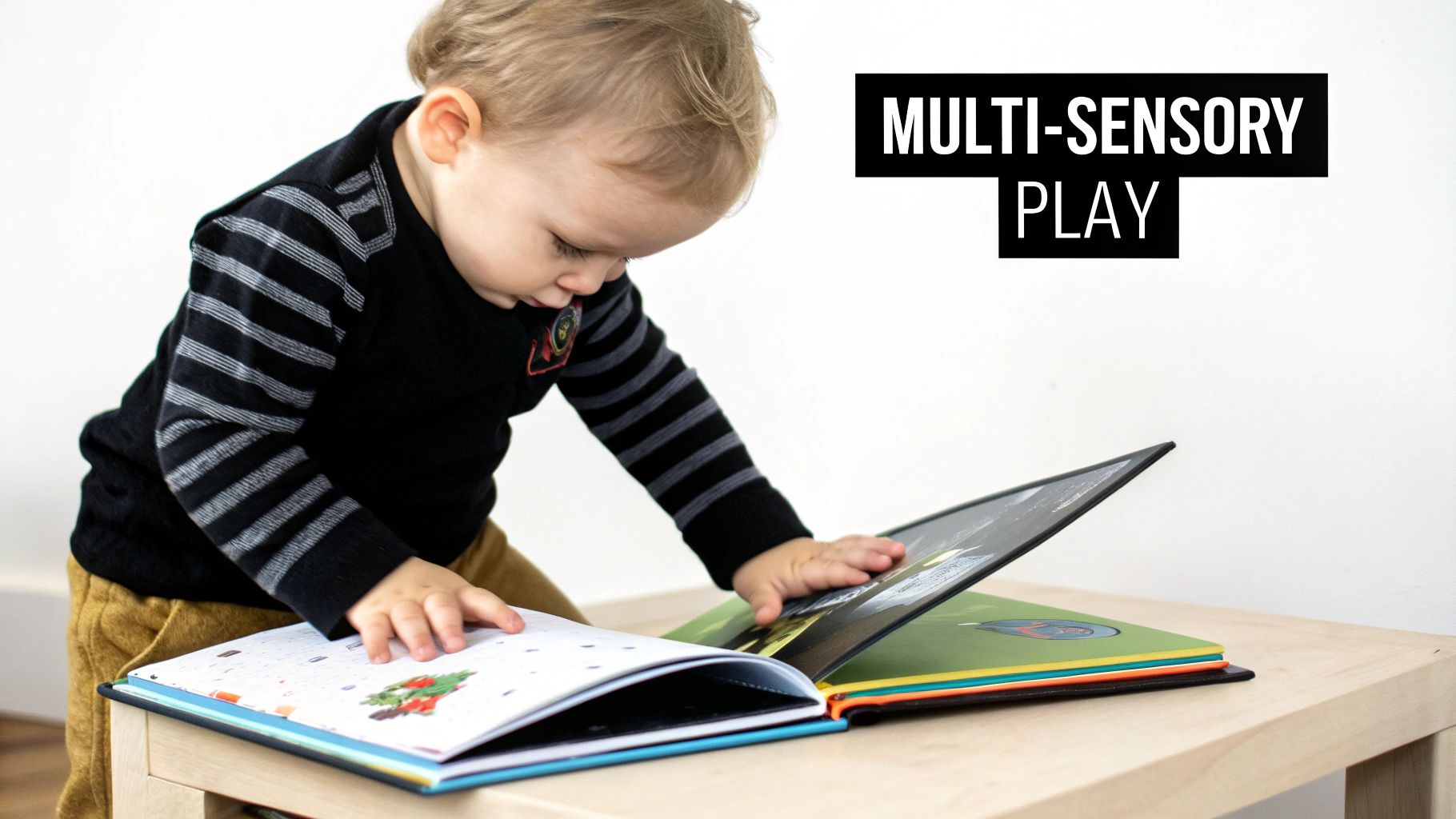
A standard picture book shows a story for a child to watch, but an interactive book asks them to do something. When they pull a tab, feel a patch of scratchy "fur," or lift a flap to see what’s hiding, they aren't just hearing the story—they're physically part of making it happen.
This simple act of getting involved is incredibly powerful. It changes reading from a one-way street into a dynamic, two-way conversation. Suddenly, the book is a toy, a puzzle, and a storyteller all rolled into one.
Building Foundational Skills Through Play
This hands-on approach is so much more than just a bit of fun; it’s a vital engine for a child's early development. Every little interaction is a mini-lesson, building essential skills without them even realising they’re learning.
Take the simple act of fiddling with a flap or a slider. It’s helping to develop their fine motor skills and hand-eye coordination. It also teaches cause and effect—"When I pull this, the car moves!"—which is a core building block for logical thinking and problem-solving down the line.
Interactive reading is a form of active learning. It sparks curiosity and rewards exploration, showing children that their actions can make a change in the world around them, starting with the world inside the book.
These books are also fantastic for building early literacy skills. They get children to spend more time on each page, spotting details, guessing what will happen next, and linking words to actions. This deeper level of engagement helps cement vocabulary and understanding in a way that feels natural and enjoyable.
The Gateway to Emotional Understanding
Maybe the greatest strength of interactive books for kids is how they can gently open the door to the complicated world of emotions. A story provides a safe bubble to explore feelings, and when a child can physically interact with the characters, that connection gets even stronger.
Think of a book where a character is hiding because they feel shy. Lifting a flap to find them can kickstart a chat: "Why do you think the rabbit was hiding? Have you ever felt like that?" These little moments turn reading into a golden opportunity for connection and emotional coaching. You can even see how storytelling and animation work together by creating a feelings and emotion animation to explore this concept further.
By using these engaging formats, we can lay the groundwork for a child's long-term mental well-being. They learn to spot, name, and understand their emotions in a playful, low-pressure way. This guide will show you how to harness that power, turning story time into a cornerstone of your child’s emotional growth.
The Real Developmental Benefits of Interactive Reading
Interactive books do so much more than just keep little hands busy. Each flap lifted and texture explored is actively shaping a child’s growing mind, creating a powerful foundation for both cognitive skills and emotional wellbeing that lasts a lifetime.
When a child lifts a flap to find a hidden character, they're not just playing peekaboo. They're conducting a tiny experiment in cause and effect, learning that their actions create a direct and predictable result. This simple, hands-on discovery is a fundamental building block for problem-solving and logical thought.
This kind of tangible interaction is a welcome alternative to passive screen time. The endless scroll on a screen can often lead to disengagement, but a physical book demands focus and participation. It creates a space for quiet concentration, helping to strengthen attention spans in a world full of digital distractions.
Nurturing Emotional Intelligence and Mental Health
Perhaps the most profound benefit of interactive books for kids is their ability to nurture emotional intelligence. The UK is facing a huge challenge with children's mental health; current statistics show that 1 in 5 children and young people have a probable mental health condition. These books offer a gentle yet effective way to start those vital conversations early on.
Imagine a story about a little bear who is too nervous to join his friends. An interactive element might let your child physically pat the bear's back or lift a blanket he is hiding under. This simple action forges a connection and creates a safe space to talk about difficult feelings.
You can ask gentle, open-ended questions like:
- "Why do you think the bear feels wobbly inside?"
- "Have you ever felt like you wanted to hide away?"
- "What do you think might help the bear feel a bit braver?"
These conversations build empathy and resilience. They teach children that feelings like anxiety or sadness are normal and manageable, equipping them with the vocabulary to express their own emotions before they become overwhelming. Tackling mental health from a young age is crucial, as early intervention can significantly improve long-term outcomes. The cost of overlooking this is immense, not just for individuals but for society; poor mental health costs UK employers up to £56 billion a year.
By creating these small moments of connection and understanding, you are providing your child with the emotional tools they will need for the rest of their lives. You are showing them that it’s okay not to be okay and that talking about feelings is a sign of strength.
Building Resilience in a Complex World
Today’s children are growing up in an increasingly complex world. Interactive stories provide a framework for them to understand and process what’s going on around them. A book might feature characters who work together to solve a problem, teaching cooperation and teamwork in a way that just feels like a game. The clever use of engagement techniques is key here; this article on gamification in education explains how this boosts learning.
These narratives can also introduce simple relaxation tips. A story might guide a child to take a deep "dragon breath" alongside a character who is feeling frustrated. Practising these techniques during a calm story time makes them much easier to remember during a moment of real-life stress.
These shared reading experiences build a strong, trusting bond between you and your child, creating a safe harbour where they feel comfortable sharing their worries.
Disclaimer: It's important to stress that while these books are a wonderful tool for emotional support, I am not a mental health professional. If you have any serious concerns about your child's mental wellbeing, it is always best to seek advice from a doctor or a qualified professional.
Choosing The Right Type Of Interactive Book
Stepping into the world of interactive books for kids can feel a bit like walking into a sweet shop – so many brilliant choices, but where do you start? From classic touch-and-feel boards to clever digital hybrids, the UK market is brimming with options. Finding the perfect match for your child’s age and unique way of learning is the real secret to unlocking their potential.
This guide will help you cut through the noise and make a confident choice. We’ll look at how each format offers its own special magic, turning a simple story time into a rich, hands-on learning adventure.
Classic Physical Books: The Sensory Favourites
For the youngest of readers, you just can’t beat the tangible wonder of a physical book. These classics are designed to get a child’s senses buzzing and build those all-important foundational skills through direct, screen-free interaction. They are perfect for quiet, focused moments together.
Here are a few popular types to look out for:
- Touch-and-Feel Books: Absolute magic for babies and toddlers. These books are filled with different textures like soft fur, bumpy scales, or smooth leaves. They’re fantastic for sensory development and help build early vocabulary as you name the textures they’re exploring.
- Lift-the-Flap Books: A timeless favourite for a reason. These books spark a child’s natural curiosity and teach them about object permanence – the big idea that something still exists even when they can’t see it. Peeking under a flap is also a great workout for their fine motor skills.
- Pop-Up Books: Bringing stories to life in glorious 3D, pop-up books create pure moments of wonder. They make the story far more memorable and are brilliant for holding the attention of slightly older toddlers and pre-schoolers who might be a bit more fidgety.
This decision tree shows how different kinds of interaction can nurture specific developmental skills, like understanding cause-and-effect, growing empathy, and building resilience.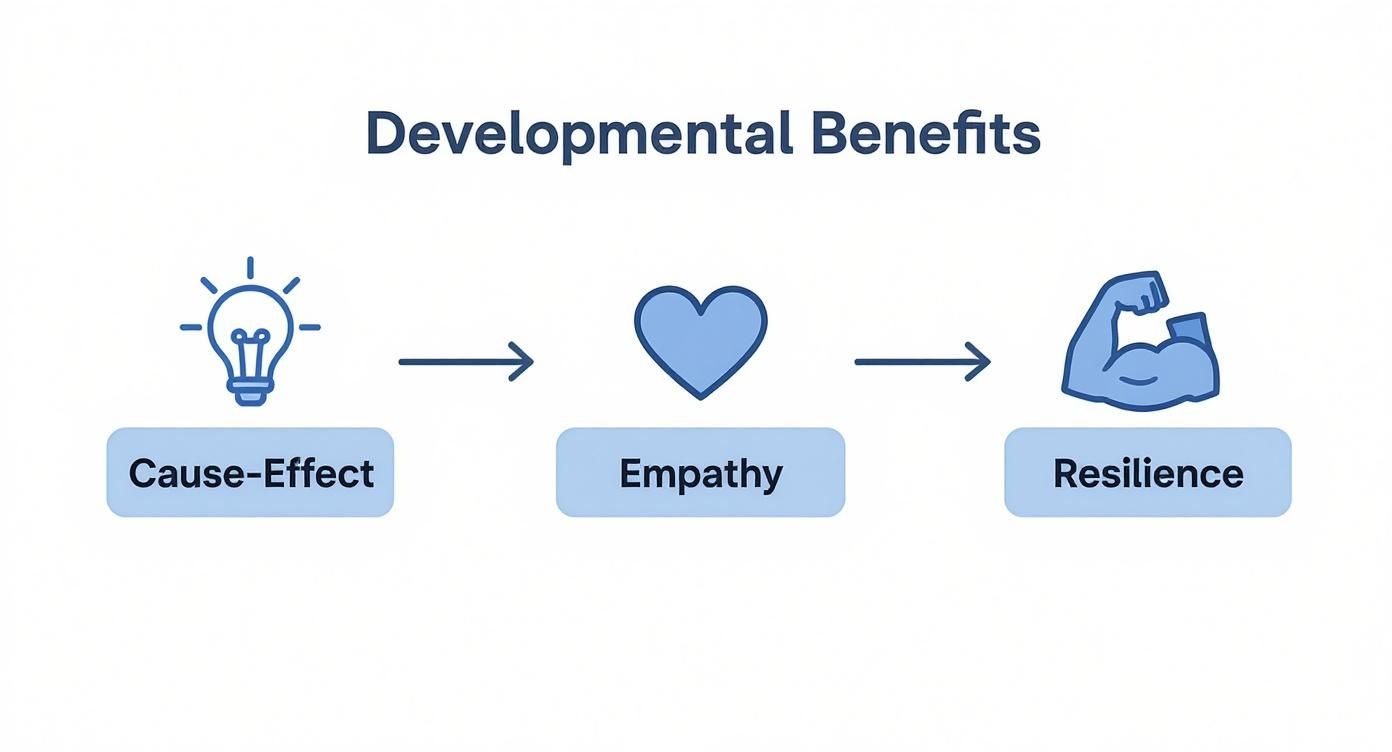
As the visual shows, even simple actions within a book can lead to huge emotional and cognitive leaps. It’s a powerful reminder that play is serious learning in disguise.
Sound Books And Digital Hybrids
As children get a little older, you can start introducing books that offer more complex ways to interact. These formats often blend traditional reading with audio and digital bits to create a multi-layered experience that works for all sorts of learning styles.
Sound books, for instance, have buttons that play music, animal noises, or spoken words. They’re excellent for developing auditory processing skills and helping children connect sounds to pictures and text. For kids who are auditory learners, this kind of reinforcement really helps words and their meanings click into place.
By combining different sensory inputs, these books make learning more dynamic and memorable. An audio element can bring a character’s emotions to life, helping a child to develop a deeper sense of empathy.
Modern digital hybrids take this a step further, often using augmented reality (AR) apps on a tablet or phone to make characters and scenes literally jump off the page. This can be a fantastic way to engage tech-savvy kids, striking a nice balance between a physical book and screen time. Blending formats can lead to a more immersive learning experience, and you can read more about the benefits of combining ebooks with audio to see just how well this multi-sensory approach works.
Comparing Interactive Book Formats
To help you visualise the options, here's a quick comparison of the different interactive book formats, highlighting what they do best and who they're for.
| Book Type | Key Features | Main Developmental Benefit | Ideal Age Range |
|---|---|---|---|
| Touch-and-Feel | Various textures (fur, scales, smooth surfaces) embedded in the pages. | Sensory exploration and early vocabulary development. | 0 - 2 years |
| Lift-the-Flap | Hidden pictures or text underneath flaps that can be lifted. | Develops fine motor skills and teaches object permanence. | 1 - 3 years |
| Pop-Up | Three-dimensional scenes that emerge as pages are turned. | Enhances narrative engagement and visual-spatial skills. | 2 - 5 years |
| Sound Book | Buttons that trigger sounds, music, or spoken words related to the story. | Builds auditory processing and sound-object association. | 1 - 4 years |
| Digital Hybrid (AR) | Physical book that interacts with a digital app for augmented reality features. | Bridges physical and digital play; engages tech-savvy kids. | 3 - 7 years |
Each format offers something unique, so think about what might excite your child the most right now.
Ultimately, the best choice comes down to your child. A sensitive little one might prefer the quiet, tactile nature of a touch-and-feel book, while an energetic pre-schooler might adore the surprise and excitement of a pop-up or sound book. By matching the book to their personality, you’re helping to build a positive and joyful reading habit that will support them for years to come.
How to Foster Emotional Learning with Books
Having the right interactive book is a fantastic starting point, but the real magic happens in the moments you share while reading it. Reading time can become one of the most powerful opportunities for emotional growth, but only when you move beyond simply reading the words on the page. It's about turning the story into a launchpad for meaningful conversations about feelings.
The rising mental health challenges among children are a serious concern. Currently, around 1 in 5 children and young people in the UK have a probable mental health condition. This statistic really brings home how important it is to address emotional wellbeing from the earliest possible age, and shared reading provides a gentle, effective way to start.
Turning Pages into Meaningful Conversations
The key to unlocking a book's emotional potential is to treat it as a two-way street. Instead of just reading to your child, you need to read with them. This means pausing, asking questions, and creating a safe space where they can share their thoughts and feelings without any judgement.
This doesn’t have to feel like a formal lesson; it’s really just about sparking their curiosity. Try using open-ended questions that don’t have a simple ‘yes’ or ‘no’ answer.
For example, you could ask:
- "How do you think the little fox felt when his friends wouldn't share?"
- "I wonder why the character decided to hide. What do you think was going on in her head?"
- "That part of the story seemed a bit scary. Did it make you feel wobbly inside, too?"
These kinds of questions invite your child to step into a character's shoes, which is brilliant for building empathy and helping them recognise similar feelings in themselves. This process is a core part of developing emotional literacy, a skill that is fundamental to good mental health. Learning how to put a name to a feeling is the first crucial step towards managing it. You can learn more by exploring our detailed guide on what is emotional literacy and its importance.
Connecting Stories to Your Child's World
The next step is to gently link what's happening in the story to your child's own life. This connection helps them see that their feelings are normal and that other people experience them too. It validates their emotions and can reduce any sense of isolation they might feel.
For instance, if a character is frustrated because their tower of blocks keeps falling over, you could say, "That reminds me of how cross you felt yesterday when your drawing didn't turn out right. It’s tricky when things don’t go the way we want, isn't it?" This simple act of relating the story to a real memory makes the lesson feel tangible and personal.
By connecting fictional scenarios to real-life experiences, you are teaching resilience. You are showing your child that it's okay to feel big emotions and that they have the strength to work through them, just like the characters in their favourite stories.
The digital world, especially the constant influence of social media, often presents a curated and unrealistic version of life, which can really knock a young person's self-esteem. Books, on the other hand, offer a safe space to explore the messy, complicated, and authentic nature of human emotions.
Practical Relaxation Techniques Inspired by Stories
Many interactive books for kids now include simple, actionable relaxation tips right there in the story. These are brilliant tools because they introduce mindfulness in a playful, context-driven way. A character might be feeling overwhelmed and decide to take a few deep "dragon breaths" to calm down.
You can practise these techniques together, right there and then. Just pause the story and say, "Let's try that! Let's take a big dragon breath in... and whoosh it all out!" Practising these calming strategies during a peaceful story time makes it so much more likely your child will remember and use them when they face a real moment of stress or frustration.
Disclaimer: It's vital to remember that I am not a mental health professional. While these books and tips are excellent resources for everyday emotional support, they are not a substitute for professional medical advice. If you have serious concerns about your child's mental wellbeing, please seek help from your doctor or a qualified specialist.
There are so many wonderful mental health books out there designed to open up these important dialogues. Publishers like our own, Little Fish Books, create stories focused on naming and navigating feelings. Additionally, you can find a whole range of mental health apparel that helps to normalise these conversations for adults, challenging stigma one T-shirt at a time. The goal is to build a supportive environment where talking about mental health is as natural as talking about a scraped knee.
Why are Interactive Books Becoming so Popular in the UK?
Across the UK, the buzz around interactive books for kids isn't just another fleeting trend. It feels like we're seeing a real shift in what parents and teachers are looking for. It’s no longer just about keeping children entertained; there's a genuine desire for resources that nurture a child's whole development, especially their emotional side.
This demand is making waves in the publishing world. The market for interactive children's books here in the UK has grown enormously, pushed along by new tech and a fresh look at what our kids really need to learn. A huge chunk of book sales revenue now comes from digital formats, and that includes these wonderfully engaging interactive stories. You can get a better sense of the children's book market here. It shows a clear move towards books that offer a much more hands-on, immersive experience.
Finding a Healthy Balance in a Digital World
Publishers are getting really clever, creating formats that give you the comforting feel of a physical book with the magic of modern technology. Let's be honest, many of us parents are wary of screen time. We worry about our kids passively scrolling through social media and what that might be doing to their mental health. It can feel quite isolating for them.
Interactive books can offer a much healthier balance. Take augmented reality (AR) books, for instance. A child can sit with a real book, turning the paper pages, and then use a tablet to see the characters pop up and come to life. It’s a brilliant way to blend the tactile joy of reading with a bit of digital sparkle, making learning feel exciting without losing that precious focus.
This mix of physical and digital play is the sweet spot. It meets children in the tech-savvy world they live in, while still encouraging the quiet concentration and parent-child connection that makes traditional story time so special.
Investing in Our Children's Future Mental Health
This growth is being fuelled by something much bigger: a widespread realisation of just how crucial early emotional education is. We know that mental health is a massive challenge, with 1 in 5 children and young people in the UK now experiencing a probable mental health condition. We simply can’t afford to wait to address this.
When we invest in a child’s emotional literacy, we’re not just helping them in the here and now. We're making a long-term investment in a future generation of resilient, mentally well individuals. The cost of poor mental health to the economy is huge, costing UK businesses up to £56 billion every single year. By giving children the tools to understand and talk about their feelings from a young age, we're helping to build a more empathetic and capable society for everyone.
Interactive books are a simple, yet incredibly powerful, part of this picture. They offer a safe and approachable way to begin those all-important conversations, turning a simple bedtime story into a cornerstone of mental wellness.
Important Note: I must stress that I am not a mental health professional. These books are wonderful supportive tools, but if you are worried about your child's wellbeing, it is always best to seek help from a doctor or a qualified specialist.
A Parent's Guide to Selecting the Best Books

Walking into a bookshop can feel a bit overwhelming, can't it? The sheer number of choices is staggering. Knowing you've picked the right book is the key to making story time truly special, so this guide is a practical checklist to help you find the perfect interactive books for kids. Asking a few simple questions before you buy can make all the difference, turning a simple purchase into a brilliant investment in your child's development.
And it seems many parents are on the same page. The demand for engaging, hands-on books is growing fast. Market experts predict the interactive children's book world will nearly double in size over the next ten years, growing from USD 2.64 billion to around USD 5 billion. This isn't just a trend; it's a clear signal that parents and educators want tools that do more than simply tell a story.
Is It a Good Fit for Your Child?
The first and most important question always comes back to your own child. A book that one toddler adores might completely overwhelm another. Think about their personality and where they are in their development right now. Is the book's interactivity just right for them, or could it be overstimulating?
A more sensitive child might treasure a gentle lift-the-flap story, whereas a more boisterous little one might get a huge kick out of a book filled with sounds and pop-up surprises.
Also, consider what the book is actually teaching. Does it genuinely support a skill they're working on, like fine motor control or recognising emotions? Or are the bells and whistles just a bit of a gimmick? The real value is in how the interactive parts make the story and the learning better, not how they distract from it.
Checking for Quality and Durability
Let's be honest: toddlers aren't exactly known for their delicate touch! When you're buying a physical book, durability is non-negotiable. You need something that can stand up to some seriously enthusiastic pulling, prodding, and maybe even the occasional chew.
Look for strong board book construction, nice thick pages, and well-made flaps or sliders that won't rip off after the first read. A high-quality book is an investment that pays off. It can be passed down to younger siblings or shared with friends, making it worth every penny. Beyond books, there are loads of great digital product ideas tailored for parents and families that can also enrich your child’s learning world.
A well-chosen book becomes more than just an object; it becomes a cherished companion for your child’s learning journey. Prioritising durability and age-appropriateness ensures it can fulfil that role for as long as possible.
How to Purchase Your Books
Once you've got a good idea of what you're looking for, there are a few ways to get your hands on these wonderful resources. You can often buy directly from publishers like us here at Little Fish Books, which is a great way to see the full range and catch any special offers. Many independent bookshops also do a fantastic job of curating a thoughtful selection.
If you're buying for a school, nursery, or therapy practice, it’s definitely worth looking into wholesale options. Buying in bulk is often far more cost-effective and means you'll have a steady supply of quality resources to support lots of children. It really reinforces the idea that these books are a forward-thinking choice for supporting child development on a larger scale.
Your Questions Answered
It's only natural to have a few questions when you're looking into new ways to help your child grow. Let's walk through some of the most common queries we hear from parents about interactive books for kids, so you can feel brilliant about the choices you make.
Is This Just More Screen Time?
This is a big one, and a concern we completely understand. The truth is, there’s a world of difference between passive screen time, like zoning out to videos, and the active, hands-on thinking an interactive book demands. These aren't just for watching; they require problem-solving and getting properly involved.
The real magic happens when you do it together. Exploring an interactive e-book with your child, chatting about the story and tackling the activities, transforms it into a shared learning moment rather than just another screen. Many modern books also blend physical pages with a sprinkle of digital magic, giving you the best of both worlds.
What’s the Best Age to Start?
You can bring interactive books into your child's world from a very early age, just as long as the book fits where they are developmentally.
- For babies (0-2 years): Think simple and sturdy. Touch-and-feel or lift-the-flap books are perfect for this stage. They're a fantastic sensory adventure and a great way to build those tiny fine motor skills.
- For toddlers (2-4 years): As they grow, you can introduce books with a bit more going on, like sound buttons, fun pop-ups, and very simple digital interactions.
The aim is always to keep it fun and engaging, never frustrating. Go with your gut and choose a book that feels just right for your child right now.
How Can I Use These Books if My Child Gets Overstimulated Easily?
If your little one is sensitive to a lot of noise and action, it’s all about choosing books with calmer features. Look for gentle textures or quiet lift-the-flap stories rather than those with loud, repetitive sounds or flashing lights.
Try to create a quiet, cosy reading space and let your child set the pace. They might only want to explore one or two things on a page, and that’s perfectly fine. The most important thing is to create a positive, bonding experience that they look forward to, turning story time into a safe and happy place.
At Little Fish Books, we pour our hearts into creating stories and resources that nurture your child's emotional wellbeing. Come and explore our collection of engaging books, activities, and supportive bits and bobs that turn reading into a powerful chance to connect and grow. Find the perfect tools for your family's journey at https://thatsokay.co.uk.