

Interactive Children Books That Boost Learning & Support Mental Wellbeing
Think back to the storybooks you had as a child. Most were probably a one-way street: the story flowed from the page to you. Now, imagine an interactive children's book as a lively town square, buzzing with different paths to explore. It’s this shift that turns passive listening into an active, hands-on conversation that truly captivates a young mind.
How Interactive Books Spark Early Development
Beyond the bright colours and fun sounds, interactive books are serious tools for nurturing a child's development. They transform reading from a quiet, passive activity into an engaging experience, laying the groundwork for both cognitive skills and emotional wellbeing. By inviting a child to touch, press, lift, and listen, these books create a dynamic back-and-forth between the story and its reader.
This active involvement is the magic ingredient. When a toddler lifts a flap to find a hidden animal or pushes a button to hear a duck quack, they're doing more than just playing. They're learning a fundamental lesson in cause and effect. This simple action reinforces the idea that their choices matter and have a direct impact on the world around them—a core concept for building confidence and problem-solving skills down the line.
A Growing Movement in Early Education
It’s not just parents who are catching on; this hands-on approach to learning is being recognised across the globe. The demand for interactive books is soaring as parents and educators alike see their incredible value. In fact, the market is expanding in a big way, with Europe and the UK leading the charge thanks to high literacy rates and an openness to new ways of learning.
The global interactive children's books market was valued at around USD 2.48 billion and is expected to hit nearly USD 5 billion by 2035. This isn't just a small trend; it shows a major shift in what we look for in our children's reading material.
This growth reflects a deeper understanding of how children learn best: by doing. For parents, this expanding market means more choice, more innovation, and more brilliant books to share. You can dig deeper into this trend and see how it’s shaking up UK publishing by looking at recent industry market analysis.
More Than Just Fun and Games
While they are undeniably fun, the real benefits of interactive reading go far beyond simple entertainment. These books are fantastic for building a whole range of essential skills that support a child's mental and emotional health as they grow.
Here are a few of the key areas where these books really shine:
- Fine Motor Skills: All that page-turning, tab-pulling, and button-pushing helps strengthen the small muscles in a child's hands and fingers. It’s brilliant practice for learning to write.
- Language Development: Sound books that name objects or animals are fantastic for expanding a child's vocabulary. They create a strong, memorable link between words, sounds, and images.
- Cognitive Abilities: Pop-up books and puzzle-like features spark curiosity and critical thinking. They gently teach children to predict what might happen next and understand how things fit together in the world.
- Emotional Literacy: Stories that let a child change a character's expression or choose what happens next are a gentle introduction to empathy and understanding feelings.
Ultimately, these books help create positive, happy first experiences with reading, setting the stage for a lifelong love of stories and learning. This foundation isn't just about getting ahead at school; it's about raising resilient, curious, and emotionally intelligent people who are ready for whatever the world throws at them.
Exploring the World of Interactive Books
The world of interactive children books has blossomed far beyond the simple picture stories many of us grew up with. From chunky board books with intriguing textures to vibrant tablet apps that make tales spring to life, the choices feel almost endless. Getting your head around the different types is the first step in finding the perfect book to click with your child's age, curiosity, and where they are in their development.
Physical books give children a real, tangible, screen-free experience that gets all their senses buzzing. These are the classics we remember, made to be touched, explored, and maybe even chewed on a bit. They are absolutely brilliant for building those early, foundational skills in a hands-on way. If you're just starting, looking at guides on the best board books for babies can offer some fantastic inspiration.
On the flip side, digital formats unlock a totally different kind of interaction. E-books and specially designed apps use sound, animation, and game-like features to grab a child's attention, teaching concepts in a way that feels just like playing. This digital corner of the reading world is definitely growing in popularity.
Hands-On Fun With Physical Books
Physical interactive books are all about encouraging direct touch and manipulation, which is so important for developing fine motor skills and a basic grasp of how the physical world works. They don’t just tell a story; they invite children to become a part of it.
- Lift-the-Flap Books: These are fantastic for building a sense of mystery and rewarding a child's natural curiosity. Lifting a flap to find a hidden character teaches object permanence—that brilliant concept that things still exist even when you can’t see them.
- Pop-Up Books: By turning a flat page into a three-dimensional scene, these books create little moments of pure magic. They help children understand spatial relationships and can make storytime an unforgettable experience.
- Touch-and-Feel Books: Adding different textures—like a sheep’s fluffy wool or a frog’s bumpy skin—gives vital sensory feedback. This helps children build their vocabulary by connecting words directly to physical feelings.
- Sound Books: What’s better than pressing a button to hear a cow moo or a little jingle play? This is a perfect, simple introduction to cause and effect. It makes reading a multi-sensory adventure and helps with recognising different sounds.
This handy infographic breaks down how these different features support a child's development across the board—from their thinking skills to their emotional and sensory understanding.
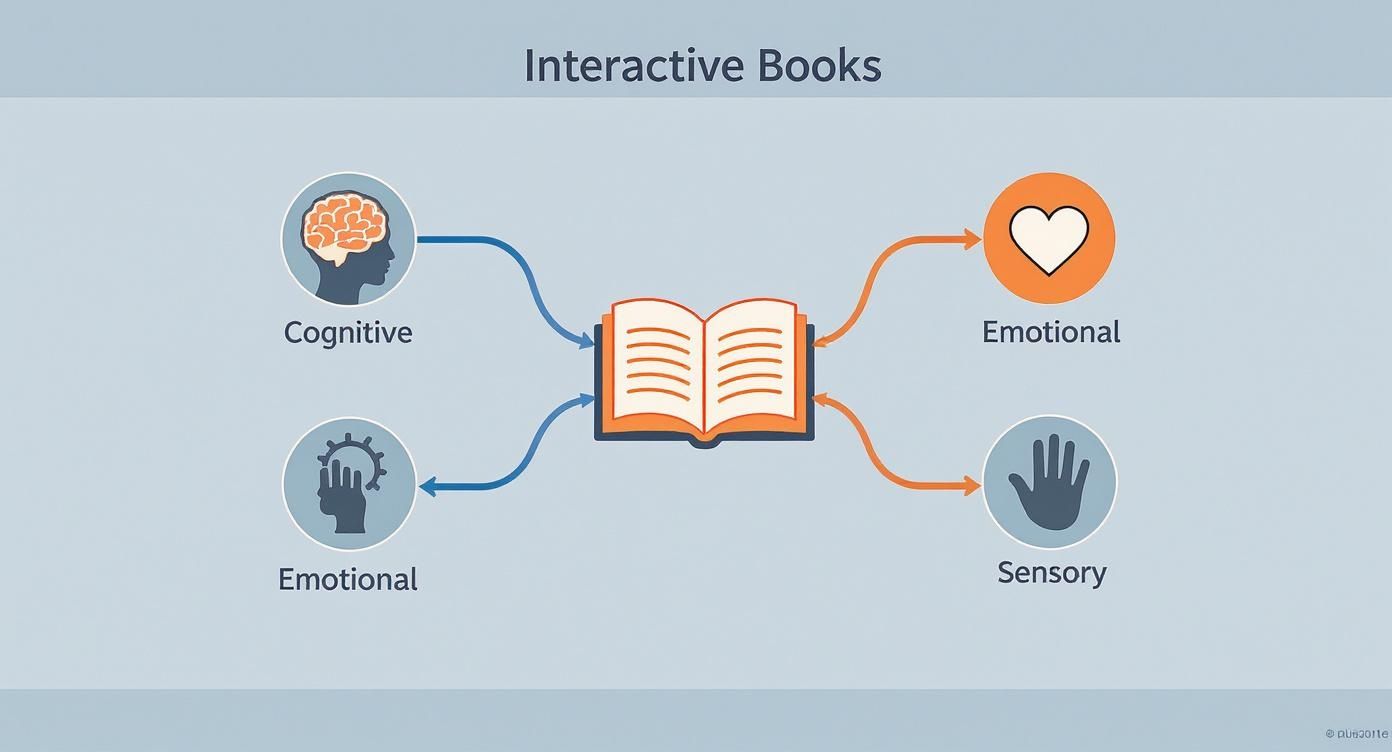
As you can see, every interactive element is a doorway to learning, engaging not just the mind but the heart and hands, too.
Exploring Digital Interactive Stories
Digital interactive books bring a different, but just as engaging, set of tools to the table. They use technology to create dynamic story environments that can actually respond to a child’s actions.
The UK children’s book publishing industry has remained impressively strong, with revenue hitting around £834 million. As more families use tablets and smartphones, it's become easier than ever to access stories anywhere, which has definitely fuelled the demand for digital interactive books.
Here are the main types you'll come across:
- Animated E-books: These often have lovely, subtle animations that bring the illustrations to life. Many include read-aloud narration that highlights words as they're spoken, plus sound effects that add a real atmosphere to the story.
- Interactive Story Apps: These take things a step further, often throwing in mini-games, puzzles, and even moments where a child's choice can change the story. It's a clever blend of storytelling and problem-solving.
- Augmented Reality (AR) Books: A fascinating mix of physical and digital, these books use a phone or tablet's camera to make characters and scenes look like they’re jumping right off the page and into your room.
Physical vs Digital A Quick Comparison
Deciding between a traditional physical book and a modern digital one can be tricky. Both have unique benefits that cater to different needs and moments. This table breaks down their key features to help you see which might be the best fit for your child right now.
| Feature | Physical Books (Lift-the-Flap, Pop-Up) | Digital Books (E-books, Apps) |
|---|---|---|
| Sensory Experience | Highly tactile; involves touch, sight, and sometimes sound (buttons). | Primarily visual and auditory; interaction is through a screen. |
| Motor Skills | Excellent for developing fine motor skills like grasping and turning. | Develops different skills like swiping, tapping, and drag-and-drop. |
| Durability | Can be very durable (board books) but pop-ups can tear. | No physical wear and tear, but requires a charged device. |
| Portability | Can be bulky, especially when carrying several. | Thousands of books can be stored on one lightweight device. |
| Interactivity | Based on direct, physical manipulation (flaps, textures). | Often includes animation, sound effects, narration, and mini-games. |
| Parental Involvement | Naturally encourages shared reading and physical closeness. | Can be a shared activity, but also allows for independent (supervised) play. |
| Cost | One-time purchase per book. | Can be cheaper per book, with many free options, but requires an expensive device. |
Ultimately, the goal isn't to pick a "winner." A well-rounded reading diet includes a bit of both! Mixing the tangible joy of a physical book with the dynamic fun of a digital story gives your child the best of both worlds.
Key Takeaway: The choice between physical and digital isn't about which is "better," but which is best for a particular moment. A tactile board book is perfect for quiet, sensory play, while an educational app can be a great tool for focused learning on the go. You can learn more about how to choose the right interactive children's books in our other guides.
By understanding the unique strengths of each format, you can build a rich and varied library that supports your child’s growth from every angle.
Building a Stronger Mind Through Play
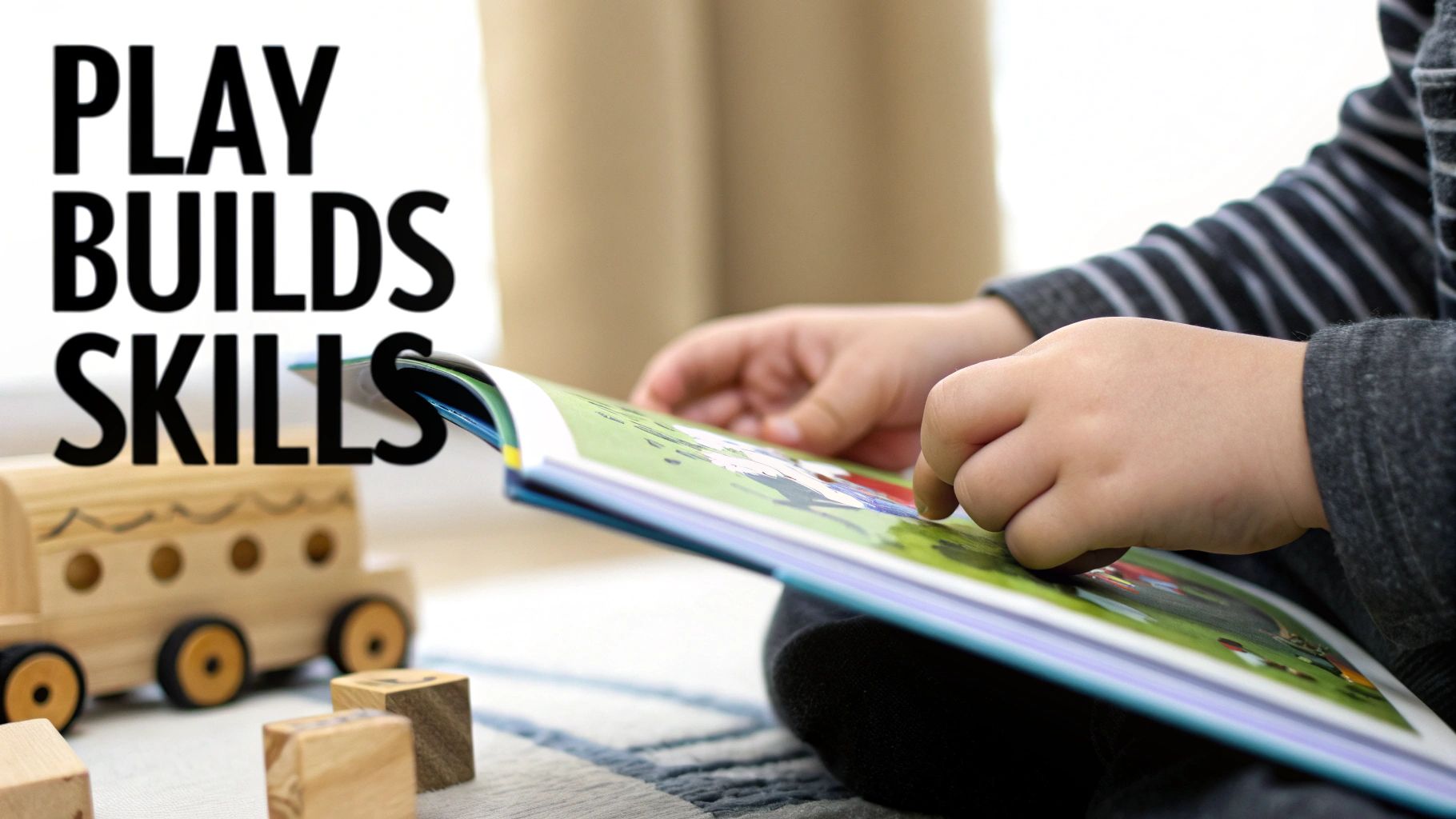
It’s easy to see an interactive children’s book as just a bit of fun, a colourful way to keep little ones busy. But they are so much more than that. Think of them as a child's first gym for their brain, actively training their mind by turning learning into a hands-on, problem-solving game.
This kind of active engagement is a brilliant, stimulating alternative to just passively watching a screen. It helps to build the crucial cognitive skills that become the very bedrock of good mental health down the line, particularly in a world where social media's impact on young minds is a growing concern.
When a child lifts a flap or feels a new texture, they're doing more than just playing. They’re developing their fine motor skills and hand-eye coordination—the same skills they'll need later for writing, drawing, and countless other fiddly tasks. Every little interaction strengthens the vital pathways in the brain connecting what they see with what their hands do.
Understanding Cause and Effect
One of the most powerful lessons an interactive book teaches is cause and effect. A child presses a button and hears a cow moo. Simple, right? But in that moment, they’ve learned a direct and immediate lesson: "When I do this, that happens."
This isn't just about fun animal sounds. This simple logic is the foundation for all critical thinking and problem-solving. Children who get to grips with cause and effect early on are better equipped to understand consequences, make thoughtful decisions, and feel a healthy sense of control over their world.
A child’s ability to understand that their actions create predictable outcomes is a cornerstone of mental resilience. It empowers them to see challenges not as overwhelming obstacles, but as problems that can be solved with the right actions.
The immediate feedback from an interactive book is also incredibly rewarding, encouraging a child to stay focused for longer. Unlike a static page, the promise of a hidden surprise or a new sound keeps their curiosity alive, naturally stretching their ability to concentrate.
Laying the Foundations for Mental Wellbeing
The skills nurtured by interactive children books are directly linked to a child's future mental wellbeing. Life will inevitably throw challenges their way, and the ability to think critically, solve problems, and understand consequences is essential for navigating them. These books are a child’s first training ground for building this mental toolkit.
Consider these key cognitive building blocks:
- Problem-Solving: Figuring out which tab to pull or which button to press is a mini-puzzle. For example, in a book about a sad rabbit, finding the flap that reveals his friends with a carrot is a simple, rewarding solution. Every success builds confidence and a positive "I can do it!" attitude.
- Memory Retention: The multi-sensory experience—combining sight, sound, and touch—makes information stick. A child is far more likely to remember the word "duck" when they can see it, hear its quack, and touch a textured feather all at once.
- Logical Reasoning: As they explore more complex books, children start to anticipate outcomes based on what they've learned before. This is a crucial step towards logical thought.
These abilities are vital for emotional regulation. A child who can think through a problem is less likely to become overwhelmed by frustration. They learn to pause, assess the situation, and try a different approach—a skill that is incredibly valuable for managing big feelings. Technology is also creating new avenues here; you can learn more about how an augmented reality experience for mental health is providing new ways to explore feelings.
By framing learning as an enjoyable game, interactive books make the hard work of cognitive development feel like pure fun. This positive association with learning and problem-solving can last a lifetime, fostering a resilient and curious mind ready to face the world.
Nurturing Emotional Intelligence with Stories
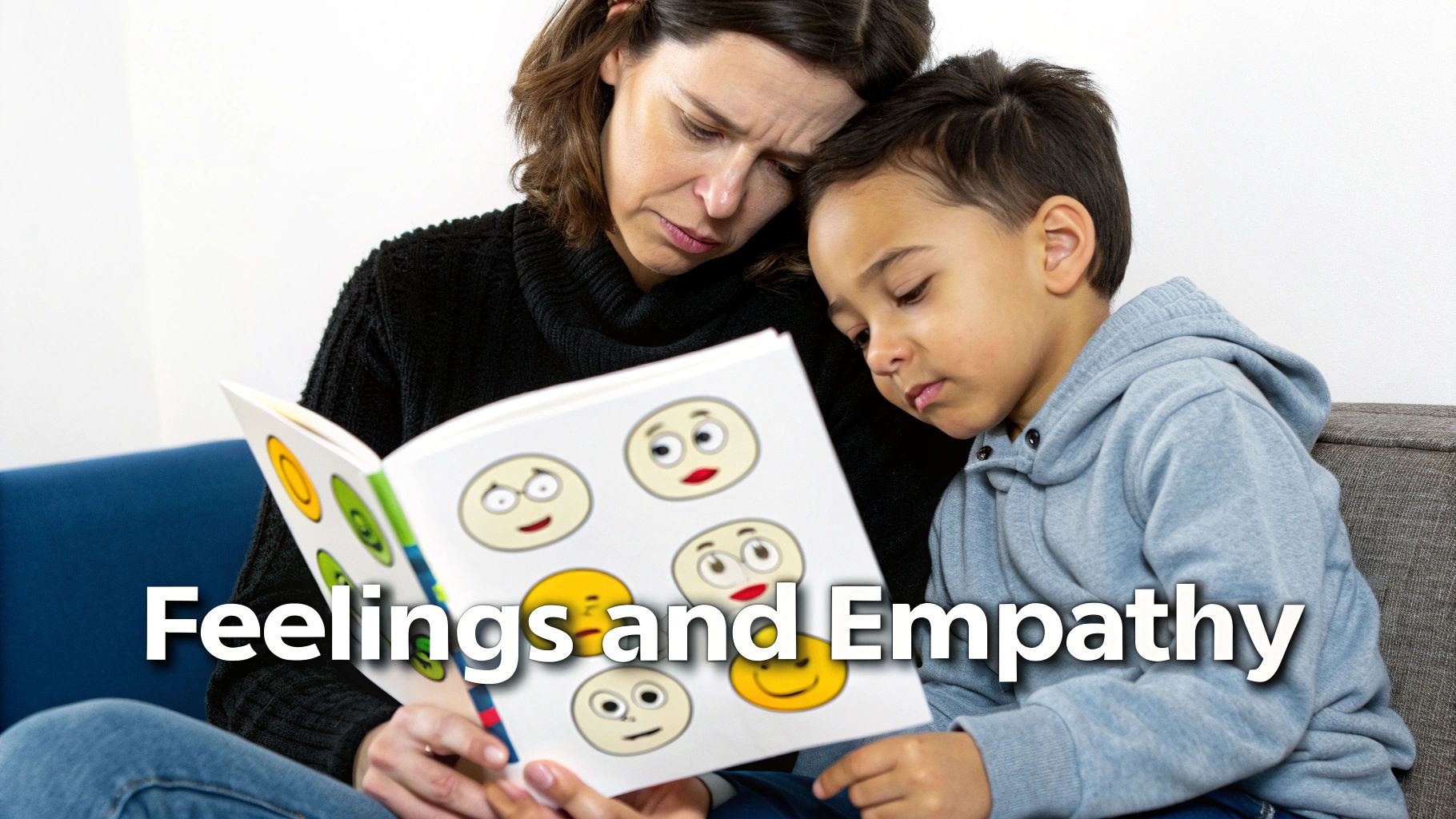
Beyond just learning the ABCs and 123s, interactive children's books can be your secret weapon for building emotional intelligence. Stories create a wonderfully safe space for our little ones to meet, name, and understand all those big, complicated feelings—both their own and those of others.
Think about it: when a character in a book feels sad because their tower of blocks has tumbled down, your child gets to see that emotion play out from a safe distance. This opens up a gentle way to chat about their own moments of frustration, making it clear that these feelings are a perfectly normal part of life.
A Safe Space to Explore Big Feelings
Addressing mental health from the earliest stages is one of the most vital things we can do for our children. It's a sobering thought, but in the UK, one in five children and young people have a probable mental health condition. This makes giving them the tools for emotional literacy not just a nice idea, but absolutely essential.
Interactive books make this whole process feel less like a lesson and more like a chat. A simple flap that reveals a smiling sun after a storm can be a powerful symbol of hope. A pop-up that shows two characters sharing a hug becomes a beautiful, tangible example of kindness and comfort.
These simple, hands-on features turn abstract concepts like empathy and resilience into something real they can touch and see. By engaging with these ideas through play, children build a rich emotional vocabulary that will stand by them for life.
From Storytime to Real-Life Skills
The magic of these books doesn't stop when you close the cover. A strong foundation in emotional understanding helps children navigate everything life throws at them, from playground squabbles to the complex digital world they’ll face later on.
A child who can put a name to their feelings is so much better equipped to manage them. For instance, a story might feature a little bear who gets angry and just wants to ROAR. The interactive element could be a little wheel your child turns to help the bear take deep breaths and calm down.
And just like that, you have a practical tool to use in your own home.
Practical Relaxation Tip: When your child feels overwhelmed, you can gently remind them of the story. Try saying, "Let's take some deep 'belly breaths' just like the sleepy bear in our book." Encourage them to pop a hand on their tummy and feel it rise and fall—it's a simple mindfulness technique that can work wonders.
This kind of shared reading experience helps to cement positive coping strategies in a way that feels supportive and connected, not clinical or cold.
Connecting Books with Broader Support
The journey of emotional development is a big one, and stories are a key piece of the puzzle. The UK's interactive children’s book market is cleverly designed to support this growth. You’ll find that books for toddlers aged 2-3 often weave in puzzles and guessing games that stimulate critical thinking right alongside emotional themes. Starting these dynamic reading habits early can make a real difference to creativity and academic performance down the line.
To build on the role stories play in fostering emotional intelligence, it's always helpful for parents to look at wider strategies for nurturing baby's emotional development.
Creating a Culture of Openness
Talking about feelings from a young age helps to dismantle the stigma that can often surround mental health. Having books about emotions visible in your home or even wearing mental health apparel sends a clear signal: these topics are a normal and welcome part of your family’s conversation.
- Mental Health Books: Try to curate a small library of books that explore a whole range of emotions, from pure joy to tricky feelings like jealousy. For example, a book about a character feeling worried before starting school can be a great way to open up a conversation about their own anxieties.
- Mental Health Apparel: For the grown-ups, wearing a t-shirt with a positive message can model self-compassion and kickstart some really important discussions.
This supportive home environment creates a positive ripple effect. After all, poor mental health doesn’t just affect individuals; it carries a significant cost for businesses and the wider economy through lost productivity. In the UK, it is estimated that poor mental health costs employers up to £56 billion each year. By raising emotionally aware children, we're helping to shape a healthier, more resilient future workforce.
Please remember, while I’m passionate about sharing these resources, I am not a mental health professional. The tips and ideas here are for educational purposes. If you are ever worried about your child's mental health or wellbeing, please trust your instincts and have a chat with your GP or a qualified health professional.
Finding the Perfect Interactive Book for Your Child
Choosing the right interactive children's book can sometimes feel like searching for a needle in a haystack. The shelves are packed with options, and it’s easy to feel a bit overwhelmed. My advice? Look past the age rating printed on the back and focus on what will genuinely click with your child’s unique personality and where they are in their development right now.
A brilliant place to start is with their current obsessions. If your little one is mad about animals, a touch-and-feel book about a farm will be an instant winner. Got a budding builder on your hands? A pop-up book about a construction site could spark pure delight. When you match the book to their passions, reading stops being a chore and becomes a genuine treat.
A Checklist for Choosing Well
When you're browsing in a bookshop or scrolling online, it’s useful to have a little mental checklist. This helps make sure you’re picking something that's not just fun, but also well-made and genuinely good for their development.
Here’s a simple guide to what I always look for:
- Durability and Safety: Especially for babies and toddlers, sturdy board books are an absolute must. Always check for rounded corners and non-toxic materials, and make sure any flaps or moving parts can handle enthusiastic (and sometimes clumsy!) little hands.
- Educational Value: Does the book introduce new ideas in a playful way? I look for titles that teach colours, numbers, shapes, or emotions through fun, hands-on interaction.
- Narrative and Illustrations: A captivating story and beautiful illustrations are every bit as important as the interactive bits. The very best books weave them together, creating a world your child will want to dive into again and again.
- Quality of Interaction: Are the interactive parts actually doing anything for the story? A good book uses flaps, sounds, or textures to make the narrative richer, not just as a gimmick.
Remember, the perfect book is one that sparks curiosity and is a joy to share together. It’s less about how complex it is and more about the connection it creates.
Sparking Conversations and Play
The magic of an interactive book doesn't stop when you turn the last page. These stories are fantastic springboards for conversation and imaginative play, helping to strengthen your bond while supporting your child's wellbeing. The shared experience of it all is what really counts.
After reading, you can keep the fun and learning going. For instance, if you've just read a book about different sounds, why not go on a "sound hunt" around the house, listening for things that are loud or quiet? Or you could grab their favourite toys and act out the story you’ve just enjoyed together.
This simple act of linking reading with real-world activities helps cement the concepts from the book and shows your child that stories are all around them. It’s a wonderful way to build their communication skills and creative thinking. Many parents also find that mixing up formats can make storytime even richer; you could explore the benefits of combining ebooks with audio for a more immersive experience.
By being thoughtful in your choices, you can create a positive and engaging reading routine. This routine does so much more than just teach words—it nurtures a lifelong love for stories, builds confidence, and creates precious moments of connection that will support their emotional growth for years to come.
Your Role in Supporting Your Child's Wellbeing
Interactive children’s books are fantastic tools for nurturing a child’s mind and heart. They can open up conversations about tricky emotions and help build a strong foundation for mental wellbeing. It’s vital to remember, though, that a book is a support, not a substitute for you.
The most powerful interactive element in any story is always the engaged, loving adult reading alongside their child. Your presence, your voice, and your reassurance are what truly bring the lessons of empathy and resilience to life. In a world where social media can create unspoken pressures even for the very young, building this secure, offline connection is more important than ever.
Normalising the Need for Support
The journey of childhood is full of ups and downs, and learning to navigate mental health is a normal part of growing up. We can create a supportive environment at home by making discussions about feelings a regular, everyday thing. Using mental health books can be a really gentle starting point for these chats. Even something as simple as wearing mental health apparel with positive messages can signal that it’s okay to not be okay.
Prioritising mental health from an early age has benefits that ripple outwards for years to come. By raising emotionally articulate children, we’re nurturing a more resilient and empathetic future generation.
Here are a few simple ways you can support your child’s wellbeing during storytime:
- Be Present: Pop your phone away and give them your full attention. It makes all the difference.
- Encourage Questions: Let their curiosity guide the conversation. There’s no such thing as a silly question.
- Share Your Own Feelings: Model emotional openness in an age-appropriate way. It shows them it’s safe to do the same.
- Practice Relaxation: Try simple breathing exercises together, like pretending to blow out birthday candles.
A Gentle Reminder: It is important to state that I am not a mental health professional. The advice and suggestions in this article are for educational purposes only.
If you have genuine concerns about your child's wellbeing or mental health, please trust your instincts. The most courageous and supportive action you can take is to seek professional advice. Speaking with your GP or a qualified child health specialist is a positive step towards getting your child the support they may need.
Your Questions, Answered
At What Age Can I Introduce Interactive Books?
Honestly, you can start right from day one. For the tiniest newborns, high-contrast, soft fabric books are a wonderful source of sensory input. As they grow, between 6-12 months, you'll find that touch-and-feel books and simple lift-the-flap stories are brilliant for helping them develop their motor skills and hand-eye coordination.
The goal at this early stage isn't really about 'reading' in the traditional sense. It's all about exploration, curiosity, and bonding. The trick is to match the book's complexity to where your child is at developmentally, making story time a joyful, multi-sensory experience right from the very beginning.
Are Digital Interactive Books Bad For Children?
Not at all, but like most things, it's about finding a healthy balance. Physical books are unbeatable for building fine motor skills and offering a screen-free, tactile experience that engages the senses in a way a screen just can't replicate.
That said, digital books can be incredibly engaging with their fun animations and educational games. The best approach is to see them as a supplement, not a replacement. Think of digital interactive stories as a special treat, while making sure your child still has plenty of time to cuddle up with physical books.
How Can A Book Help Me Talk About Difficult Emotions?
A story can be the perfect, gentle bridge into a tricky conversation. When you're reading together, you could point to a character and say something like, "Oh look, the little bear seems really sad right now. I wonder what's making him feel that way?" This simple question opens the door for your child to explore a big feeling from a safe, comfortable distance.
By relating a character's journey to your child's own world, you help them understand that having big, overwhelming emotions is completely normal and something they can manage. The interactive parts of a book—like a flap revealing a happy solution or a wheel that changes a character's expression—can make positive coping strategies feel real and tangible. These little shared moments make talking about feelings a natural and easy part of your reading routine.
Ready to explore stories that nurture your child's emotional wellbeing? Discover the full collection of engaging Little Fish Books and find the perfect interactive book to start these important conversations today.