

A Guide to Men's Mental Health Clothing
So, what exactly is men's mental health clothing? Think of it as apparel with a purpose. It's clothing—usually T-shirts, hoodies, and the like—that carries messages or designs aimed at raising awareness, breaking down stigma, and sparking conversations around male emotional wellbeing.
Essentially, it’s a wearable form of advocacy. It transforms a simple piece of clothing into a powerful tool for support and a personal reminder to practise self-compassion.
Why Clothing Can Spark a Mental Health Conversation
The crisis in men's mental health across the UK isn't a secret, but it's often a silent one. Deep-rooted expectations can make it incredibly tough for men and boys to show vulnerability, which means far too many suffer completely alone. This is where something as straightforward as a T-shirt can create a real opening for dialogue.
A piece of clothing with a positive mental health message acts as a quiet signal. It says, "it's okay to not be okay" and "you're not alone in this." It offers a low-pressure way to bring up a subject that many find difficult to tackle head-on. Addressing mental health is vital because it impacts every aspect of life, from relationships and work to physical health. Ignoring it doesn't make the problem disappear; it allows it to grow.
The statistics paint a grim picture. In the UK, a shocking 84 men take their own lives every single week—that's one man every two hours. Suicide is the biggest killer of men under 45, a tragedy made even worse by the fact that 84% of men admit to bottling up their emotions. Initiatives like men's mental health clothing are a direct response to this crisis, giving us a tangible way to chip away at the stigma.
The Staggering Cost of Silence
This culture of silence doesn't just affect individuals; it has a ripple effect. Poor mental health is estimated to cost UK businesses up to £56 billion annually through presenteeism, absenteeism, and staff turnover. When employees feel they can't talk openly about their mental health, the entire organisation feels the strain. This makes building a supportive culture not just a moral duty, but an economic one, too.
This infographic lays out just how urgent the situation is.
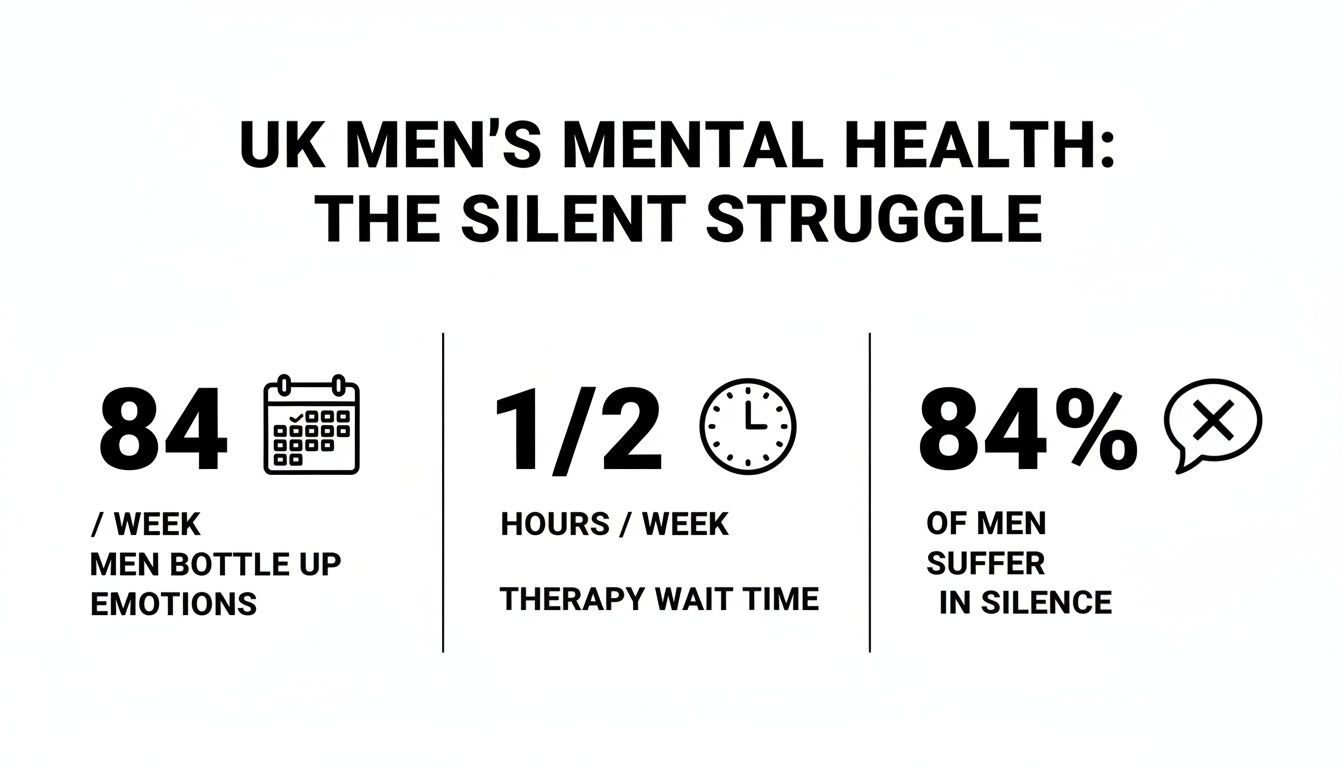
These figures show the devastating frequency of male suicide and the sheer number of men who suffer quietly, reinforcing just how badly we need more accessible ways to start these conversations.
A New Approach to Normalising Help-Seeking
By normalising these discussions from a young age, we can give future generations a solid foundation of emotional literacy. It's crucial to address mental health in children, as an estimated one in six children aged 5 to 16 has a probable mental health problem. When a dad, a teacher, or a coach wears a hoodie with a supportive message, they're modelling that it's both safe and healthy to talk about feelings.
That small act can empower a child to ask for help later in life, and that's a powerful thing.
For some practical advice on starting these sensitive chats, this is a brilliant resource on how to talk about mental health with confidence.
How Mental Health Apparel Becomes an Ally
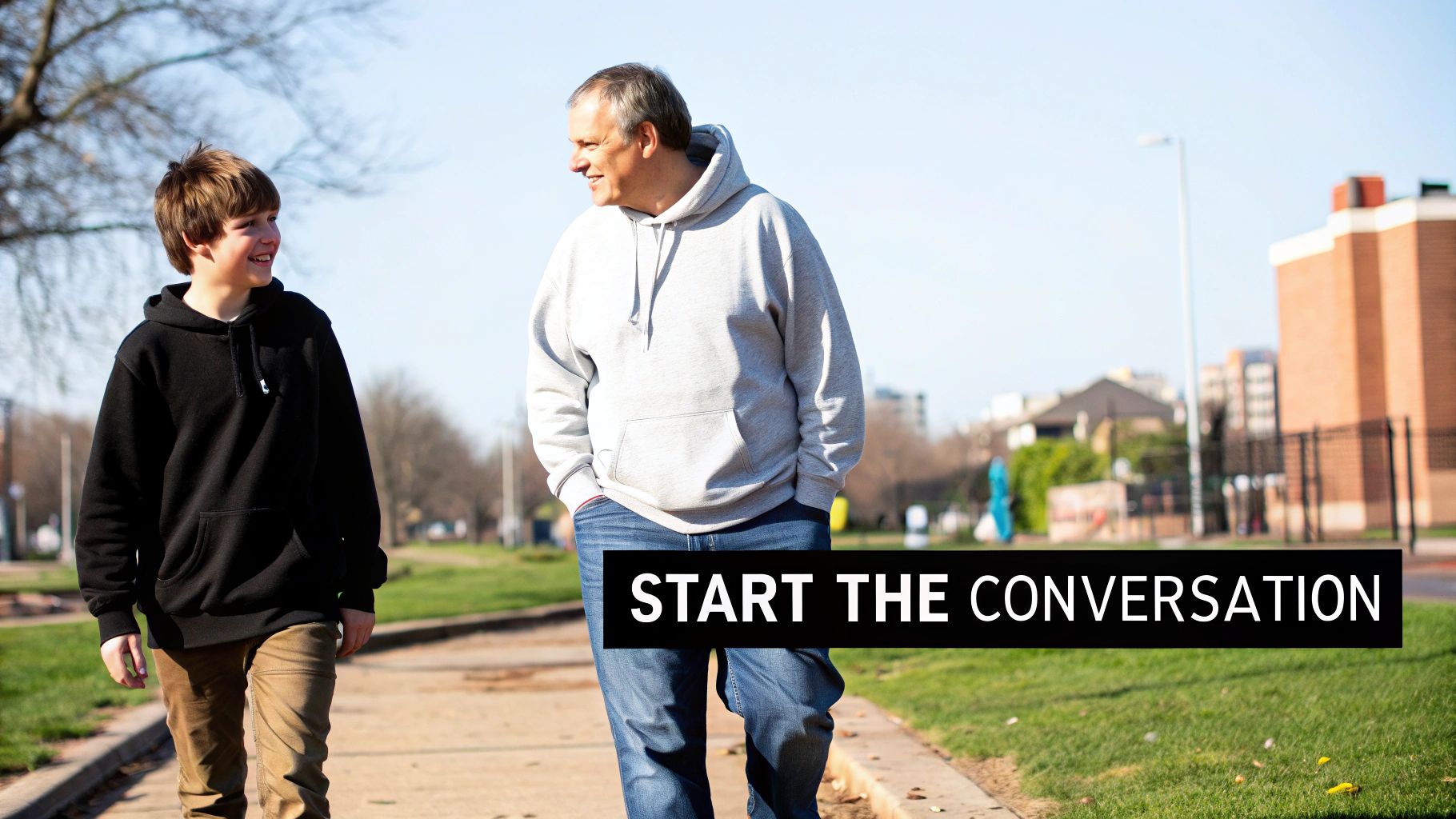
We’ve always used clothing to express ourselves, but men's mental health clothing takes that idea a whole lot further. It’s more than just fabric and thread; it’s a tool for personal encouragement and a quiet form of public advocacy. It works on two really important levels: one for the person wearing it, and one for everyone who sees it.
For the wearer, pulling on a T-shirt or hoodie with a supportive message can feel like a small act of self-compassion. It’s a tangible, physical reminder to be kinder to yourself, especially on those days when your inner critic is shouting the loudest. For example, wearing a jumper that says "Take a Moment" might prompt you to pause and breathe during a stressful work meeting. This quiet, internal dialogue is often the first, most crucial step in looking after your own mental wellbeing.
At the same time, for others, that same piece of clothing can be a powerful conversation starter. It helps to gently chip away at the stubborn stigma that keeps so many men silent about their struggles. The message acts as a subtle signal, creating a space where other guys might just feel safe enough to open up, too.
Modelling Emotional Openness for the Next Generation
The ripple effect of this is huge, especially when it comes to kids. Helping children build emotional literacy from a young age is one of the greatest gifts we can give them, laying the groundwork for lifelong mental wellness. In fact, research consistently shows that a child’s ability to understand and express their emotions is a massive predictor of their future wellbeing.
So when a father, an uncle, or a teacher wears clothing that supports mental health, they're doing more than just getting dressed. They're modelling a behaviour. It’s a simple, visual cue that challenges the outdated, harmful idea that men must always be stoic and silent.
It sends a clear message to young, observant eyes: your feelings are valid, and it is brave to talk about them. This foundation of emotional safety is invaluable.
Think about the unrealistic ideals of masculinity that get amplified on social media. This constant stream of curated perfection can be incredibly damaging, making boys and men feel like they're failing if they can't measure up. Thoughtfully designed clothing pushes back against this by championing authenticity and vulnerability instead.
The Power of a Personalised Message
Making the message your own can make it even more meaningful. If you’re thinking about a DIY approach, a guide on creating custom mental health apparel with iron-on transfer paper can be a great starting point. Crafting your own slogan or design turns a simple garment into a unique statement about your own journey.
Ultimately, this type of clothing helps normalise the very idea of looking after our minds. It aligns perfectly with the small, everyday acts of self-care that can make a real difference. Here are a few simple relaxation tips to get you started:
- Mindful Breathing: Just stop and take five deep, slow breaths. Concentrate only on the feeling of the air moving in and out. It’s a fantastic way to ground yourself in the present moment.
- A Short Walk: Getting outside for just 10-15 minutes can do wonders for clearing your head and lowering stress hormones. Try to notice your surroundings as you walk.
- Listen to Calming Music: Pop on a playlist that helps you relax. It’s a simple way to help your nervous system unwind after a hectic day.
Please remember, while supportive clothing and relaxation tips are helpful tools, I am not a mental health professional. If you are worried about your mental health, it is essential to seek help from a doctor or a qualified professional.
Choosing Clothing That Truly Speaks Volumes
When you decide to wear men's mental health clothing, you’re making a statement. But the message itself is everything. Not all slogans are created equal; some can feel a bit generic, while others have a real power to connect and resonate. The goal is to find something that speaks volumes—not just to others, but to you, too.
It’s a bit like choosing a book for a good friend. You could grab any bestseller, and it would be a safe bet. But picking a book that taps into their specific passions shows you really get them. In the same way, an authentic mental health message feels personal, supportive, and genuine.
From Slogans to Affirmations
The difference often comes down to the tone. A simple phrase like "Mental Health Matters" is a fantastic starting point and a vital message. But a more specific affirmation, like "It's Okay To Not Be Okay" or "Progress Over Perfection," can feel more like a personal mantra you carry with you through the day.
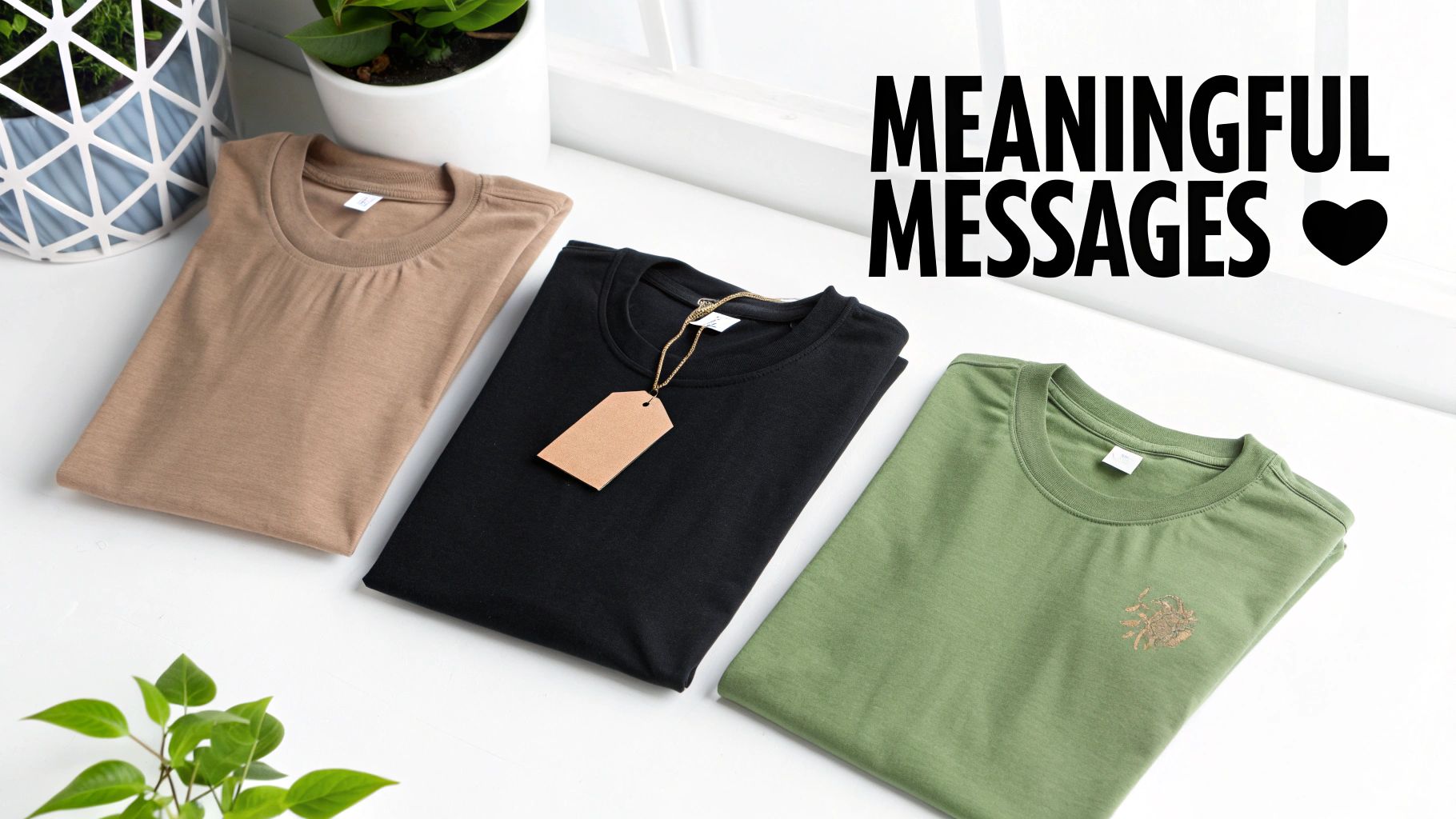
Look for messages that feel empowering and true to your own journey. Some lads prefer bold, clear statements that make their support impossible to miss. Others might go for a more subtle design—maybe a small, embroidered symbol that holds personal meaning without shouting it from the rooftops. Both approaches are equally valid and powerful.
Conscious Choices Beyond the Message
The impact of your clothing goes far beyond the words printed on it. The ethics and sustainability of the brand you choose to support add another layer of meaning to what you wear. When you choose clothing from a company that puts its values into practice, you amplify the message of care and compassion.
When you select apparel from a brand that is transparent about its supply chain or uses sustainable materials like organic cotton, your choice becomes an act of conscious consumerism. It aligns your purchase with the very values of wellbeing and responsibility you are hoping to promote.
This alignment makes your statement even stronger. Think about it: a brand that invests in its workers' wellbeing or donates a portion of its profits to mental health charities is actually living the message, not just printing it. Exploring different mental health clothing brands can help you find one whose ethos truly aligns with your own.
Decoding the Message in Mental Health Apparel
Choosing the right design is about finding a message that resonates with you and communicates your intended sentiment effectively. This table breaks down different types of messages to help you find the perfect fit for your personal style and advocacy goals.
| Message Type | Potential Impact | Best For | Example Phrase |
|---|---|---|---|
| Broad Awareness | Raises general visibility and normalises the conversation. A great starting point. | Public events, everyday wear, starting conversations. | "Mental Health Matters" |
| Personal Affirmation | Offers a private or public reminder of self-compassion and personal growth. | Daily wear for self-encouragement, a more personal statement. | "Progress Over Perfection" |
| Direct Support | Creates a sense of solidarity and lets others know they are not alone. | Group settings, showing direct support for friends or family. | "It's Okay To Not Be Okay" |
| Subtle Symbolism | A quiet nod to the cause, recognisable to those in the know but discreet. | Workplaces, situations where a bold statement isn't appropriate. | A semicolon icon, a brain wave graphic. |
Ultimately, the goal is to select a piece that feels authentic to you. It's not just about the words on a shirt, but about the values and intentions behind them.
When you're ready to choose, keep these points in mind:
- Message Authenticity: Does the slogan feel like something you would genuinely say or believe in?
- Design Subtlety: Do you prefer a loud-and-proud statement or a quieter, more personal design?
- Brand Ethics: Does the company have transparent and ethical manufacturing practices?
- Material Quality: Is the clothing made from sustainable, comfortable materials like organic cotton?
At the end of the day, the right piece of men's mental health clothing is one that feels right for you. It should be a garment you're genuinely proud to wear, knowing it sends a clear, positive, and authentic message of support and self-compassion. Your choice is a small but meaningful step in a much larger, much-needed conversation.
Addressing Body Image One Garment at a Time
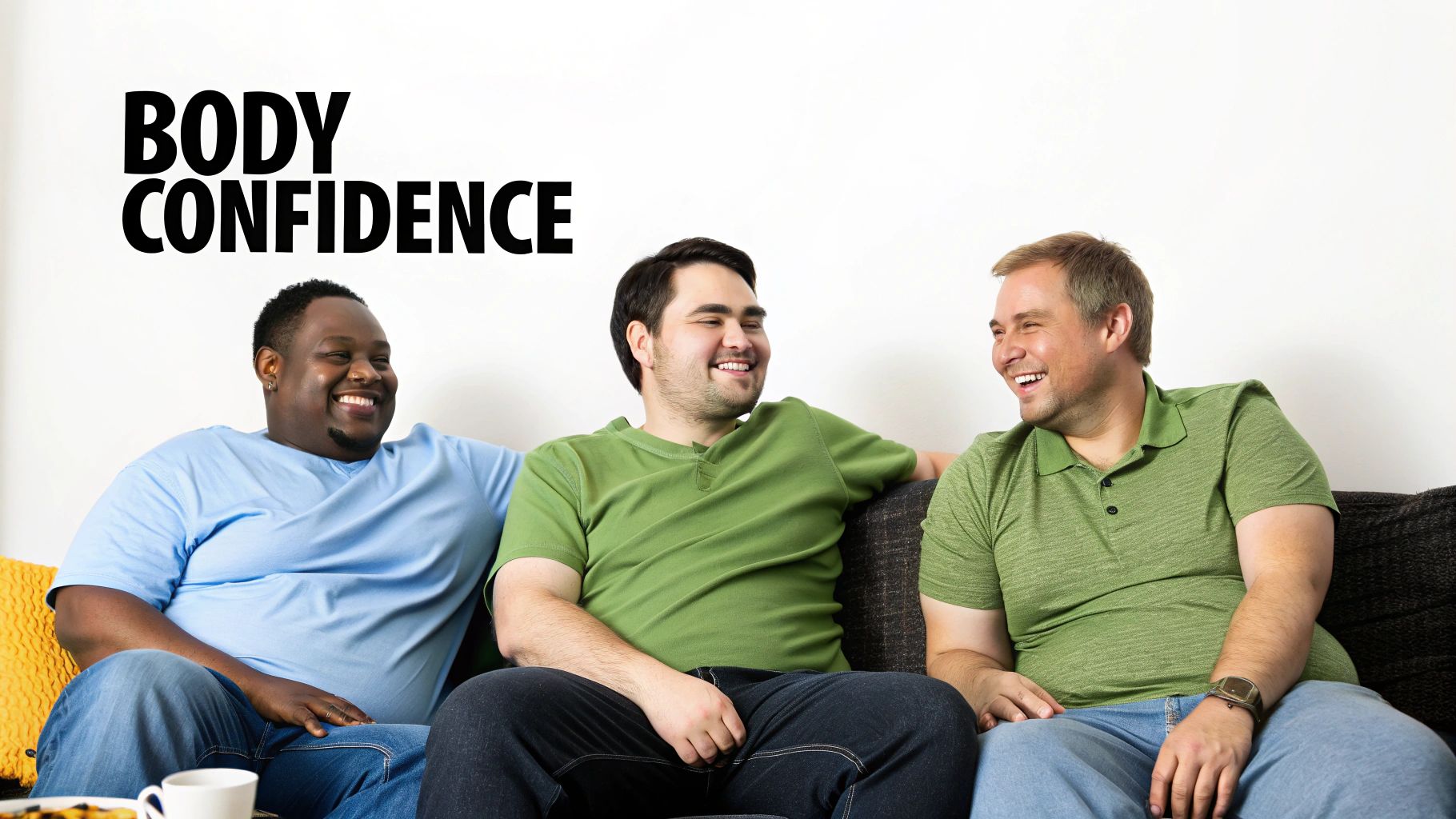
Body image is a huge piece of the men’s mental health puzzle, but it’s one we rarely talk about. The constant pressure from social media to have a certain ‘look’ creates a silent battle for so many men, chipping away at confidence and self-worth day after day.
This isn’t a small problem. Research shows that 58% of men between 26 and 40 feel negative about their appearance. What’s more, 48% directly connect these feelings to their struggles with mental health. It’s contributing to a massive culture of body-shaming that’s quietly damaging wellbeing across the UK. You can read more about the research into men's body image issues if you want to dig deeper.
But what if something as simple as the clothes you pull on in the morning could be a small act of defiance? Choosing to prioritise comfort and a good fit over chasing some impossible ideal is a tangible way to start feeling more at home in your own skin.
Building Self-Acceptance Through Comfort
Opting for men's mental health clothing that carries a positive, self-affirming message isn't just about fashion. It’s about building a foundation of self-acceptance from the outside in. Think of it like how we teach our children to acknowledge and accept all their emotions—we create a safe, validating environment for them. This is the same idea, but for ourselves.
When you wear something that feels good, both physically and emotionally, you're sending a powerful message back to yourself: your comfort matters. Your well-being matters. It's a small but consistent action that can start to counteract the negative noise from the outside world.
A well-fitting, comfortable piece of clothing with a positive message can act as a form of armour. It helps you face the day feeling grounded in who you are, rather than worrying about who you think you should be.
Connecting Physical Comfort with Mental Ease
To really strengthen that link between feeling good in your clothes and feeling good in your mind, you can pair it with some simple relaxation techniques. You don't need any special kit, and you can do them pretty much anywhere.
Here are a few relaxation tips to try:
- Mindful Body Scan: Get comfortable in your clothes, either sitting or lying down. Start by bringing your attention to your feet. Just notice how they feel. Slowly move that awareness up through your body—your legs, your stomach, your arms—simply observing any sensations without judging them.
- Progressive Muscle Relaxation: Tense the muscles in your toes for five seconds, then let go completely. Work your way up your body, tensing and releasing each muscle group (calves, thighs, and so on). That physical release can bring about a surprising amount of mental calm.
- Tactile Grounding: Focus on the feeling of the fabric against your skin. Is it soft? Smooth? This simple mindfulness trick pulls your attention into the present moment and away from any spiralling, anxious thoughts.
These little practices help reinforce the idea that your physical comfort and your mental ease are deeply connected. By choosing clothing that supports both, you’re taking an active role in looking after yourself.
Please remember, while these tips can be helpful, I am not a mental health professional. If you are worried about your mental health or body image, it is important to speak with a doctor or a qualified therapist who can provide the right support for you.
Integrating This Apparel into Your Daily Life
So, how do you take a piece of men's mental health clothing from just another item in your wardrobe to something that makes a real-world difference? It’s simpler than you might think. By wearing these pieces thoughtfully in different parts of your life, you can kickstart vital conversations and help build supportive spaces for everyone, from your kids to your colleagues.
For parents, pulling on a hoodie with a positive message can be a really gentle way to open up a dialogue at home. A child's curiosity is a powerful thing; they might ask what the words on your shirt mean, and just like that, you have the perfect opening to talk about big feelings in a safe, loving way. It’s a small act, but it models emotional openness and builds a solid foundation of trust.
Educators can get in on this, too. Wearing this kind of apparel in a classroom or during a workshop acts as a visual cue. It can signal to students that they’re in a safe space where it’s okay to be vulnerable. The T-shirt reinforces lessons on empathy and wellbeing without a single word needing to be said.
Creating a Supportive Culture in the Workplace
In the professional world, the cost of poor mental health is staggering, with lost productivity costing UK employers billions. Taking a proactive approach to wellbeing isn't just the right thing to do; it’s a smart business move. This is where company-branded mental health apparel can become a powerful part of a corporate wellness plan.
This kind of merchandise goes way beyond generic wellness programmes. It serves as a visible commitment from the company, helping to dismantle stigma and create a culture where people feel psychologically safe and genuinely supported.
When leaders and their teams wear these items, it normalises conversations around mental health. It sends a clear message that wellbeing is a shared responsibility. That visible solidarity can be the very thing that encourages someone to seek help when they need it, knowing they're part of a team that cares.
Expanding Your Toolkit with Mental Health Books
The messages on your clothing are brilliant conversation starters. But pairing them with a bit more knowledge can make those chats even more meaningful. Having a few good books on hand can give you more tools, both for your own journey and for supporting the people around you.
Here are a couple of recommendations that really align with the spirit of mental health apparel:
- Why We Sleep by Matthew Walker: This book is a deep dive into the science of sleep and its incredible impact on just about every part of our mental and physical health. It’s a fantastic read for understanding the very foundations of wellbeing.
- Reasons to Stay Alive by Matt Haig: A raw, honest, and ultimately hopeful memoir about navigating depression. It offers profound insight and a powerful message of resilience that really stays with you.
A great place to start wearing your support is by exploring a thoughtful collection of men's mental health t-shirts and clothing. And please remember, I'm not a mental health professional. If you are worried about yourself or someone else, it's always best to reach out to a doctor or a qualified professional for guidance.
The Ripple Effect of Your Conscious Choice
Choosing a piece of men's mental health clothing isn’t just another transaction. Far from it. Think of it as an investment in a quiet cultural shift, turning a wardrobe staple into a statement of support, compassion, and our shared humanity.
Every time you pull on a t-shirt or hoodie with a positive message, you’re adding your voice to a much bigger movement. This simple act reinforces the idea that it’s not only okay to talk about mental health, but essential. It’s a wearable conversation starter that helps to dismantle stigma, one brick at a time. Your choice empowers you to express your values and stand in solidarity with others.
More Than Merchandise, It's a Message
The impact of this movement becomes starkly clear when we look at issues like body image. The relentless pressure to live up to unrealistic ideals, supercharged by social media, takes a heavy toll on men and boys.
A landmark survey revealed that nearly three in ten UK adult men (28%) have felt anxious because of their body image. It’s led one in five men (21%) to change how they dress just to hide their bodies. For millions, this struggle is devastating, with 11% admitting they've had suicidal thoughts over these pressures. This is exactly why mental health apparel is so much more than merchandise; for many, it becomes a form of armour. You can explore the full findings from the Mental Health Foundation's survey to see the scale of the problem.
Your choice to wear this apparel sends a powerful signal of acceptance and defiance against harmful stereotypes. It tells others, and reminds yourself, that your worth is not defined by external expectations.
The ripple effect is real. A single piece of clothing can spark a conversation, offer a quiet moment of validation, or even inspire someone to finally seek help. It contributes to building a world where emotional honesty is seen for what it is: a strength, not a weakness.
To find more practical ways you can support this shift in our culture, have a look at our guide on how to reduce mental health stigma. Your conscious choice truly makes a difference.
A Few Common Questions
Got a few questions? It’s completely normal. Let’s clear up some of the common thoughts that come up when we talk about clothing with a message.
What Is the Real Point of This Kind of Clothing?
At its heart, the main goal is to make conversations about mental wellbeing feel normal. Think of it as a wearable tool—something that chips away at stigma, shows others they aren't alone, and acts as a quiet, personal reminder to be kind to yourself. The aim is to get to a place where talking about mental health feels as natural as talking about a broken arm.
How Can a Piece of Clothing Actually Help Mental Health?
Of course, a T-shirt isn't a replacement for professional therapy, but it can have a genuine psychological ripple effect. For the person wearing it, it can feel like a personal statement, an affirmation they carry with them through the day. For everyone else, it’s a visual cue that gently opens the door to supportive conversations, making a tough topic feel a bit less intimidating to bring up.
Are There Any Good Books to Read Alongside This?
Absolutely. Pairing the messages on the clothing with a deeper understanding is a fantastic step. Books like Reasons to Stay Alive by Matt Haig offer an incredibly honest look into depression, which can be eye-opening. Another great one is Why We Sleep by Matthew Walker, which clearly explains the vital link between getting enough sleep and keeping your mind on an even keel.
Just a gentle reminder: I'm not a mental health professional. The information in this guide comes from a place of support and education. If you're worried about your own mental health or someone else's, it’s so important to reach out to a doctor or another qualified professional for help.
At Little Fish Books, we truly believe in the power of words to heal and connect us. Feel free to explore our collection of mental health apparel and other resources we’ve created to support you on your journey. You can find your message at https://thatsokay.co.uk.