

Organic cotton tee shirts: Why they matter for you and the planet
An organic cotton tee shirt is so much more than just another item in the wardrobe; it’s a conscious choice for your family's health and the planet we all share. Think of it as a shift away from the churn of fast fashion and towards clothing grown and made without a cocktail of nasty chemicals, ensuring a gentler touch on skin and the environment alike.
Disclaimer: I am not a mental health professional. The information provided in this article is for educational purposes only and should not be considered a substitute for professional medical advice, diagnosis, or treatment. If you have concerns about your own or your child's mental health, please consult a qualified healthcare provider or your GP.
Why Organic Cotton Tee Shirts Matter
Choosing an organic cotton tee is a small, simple act with a surprisingly big impact. For parents and educators who care about what they buy, it’s a way to align the everyday routine of getting dressed with deeper values like sustainability and wellbeing. It's a quiet statement that you prioritise health, ethical production, and leaving a cleaner world for our children.
And it seems more and more people are feeling the same way. The demand for sustainable goods isn't just a niche trend anymore. The UK sustainable fashion market, for instance, hit USD 261.04 million in 2024 and is expected to climb to a massive USD 1,757.42 million by 2033. This isn't just a statistic; it shows a real change in how people, especially younger generations, think about their clothes.
A Clearer Choice for Families
When you pick out an organic cotton garment, you're not just buying a product. You're putting your money into a system that’s better for everyone involved, from the farmer tending the fields to the child wearing the tee. The positive effects ripple outwards. What we wear can also be a reflection of what we stand for, like supporting children's emotional health and making it normal to talk about mental wellbeing.
To really get why organic cotton is special, it helps to look at the whole picture. There's a whole world of fabrics out there, and this a comprehensive guide to T-shirt materials does a great job of breaking them down. When you see how organic cotton stacks up against other options, its benefits become crystal clear, especially for those simple, quality basics like a plain organic cotton men's t-shirt.
To make it easy to see the difference right from the start, here’s a quick comparison of what separates organic from conventional cotton.
Organic vs Conventional Cotton at a Glance
This table breaks down the key differences in how the two types of cotton are grown and what that means for us and the planet.
| Feature | Organic Cotton | Conventional Cotton |
|---|---|---|
| Seeds | Natural, non-GMO | Often genetically modified (GMO) |
| Pesticides | None used | Heavy use of synthetic pesticides |
| Fertilisers | Natural compost, manure | Chemical, synthetic fertilisers |
| Water Use | Significantly less water consumed | High water consumption |
| Soil Health | Builds and maintains healthy soil | Degrades soil quality over time |
| Feel | Often softer and more durable | Can be harsh due to chemicals |
As you can see, the journey from seed to shirt is worlds apart. Choosing organic is a vote for healthier soil, cleaner water, and a fabric that’s kinder from the get-go.
What Truly Makes Cotton Organic
When you see the word ‘organic’ on a tee shirt, what does it really mean? It’s probably best to think of it like tending a garden you love. You wouldn’t drench it in harsh chemicals, would you? Of course not. You’d nurture it with good compost and let nature do its thing. That’s the heart of how organic cotton is grown.
The whole journey starts with a seed that is completely natural—non-genetically modified (non-GMO). From the moment it goes into the ground, the entire farming process avoids the toxic pesticides and synthetic fertilisers that are so common in conventional cotton farming. Instead, farmers work with nature, not against it, using methods that build healthy, living soil.
This approach creates a balanced, self-sustaining ecosystem right on the farm. They encourage beneficial insects to keep pests in check and use crop rotation to naturally put nutrients back into the soil. It’s a method that protects farmers from exposure to nasty chemicals and preserves the biodiversity of the land around them.
A Deeper Dive into the Organic Difference
But understanding what makes cotton organic goes beyond just the absence of chemicals. It’s about a whole system that values water, soil, and people's health in equal measure. When you're trying to wrap your head around what makes cotton genuinely organic, differentiating standard 100% cotton from the real deal shows just how different the two production paths can be.
One of the most incredible benefits of this garden-like approach is how much less water it uses. Healthy organic soil acts like a brilliant sponge, holding onto moisture far more effectively than soil that’s been degraded by years of chemical farming.
Because the soil structure is so much better, organic cotton farming can use up to 91% less water than its conventional counterpart. That’s a staggering difference with a massive positive impact, especially in the water-scarce parts of the world where so much cotton is grown.
So, when you choose an organic tee shirt, you're directly casting a vote for smarter water use and healthier farming. The infographic below breaks down the core reasons—your health, the planet, and your values—that make organic cotton such a clear winner.
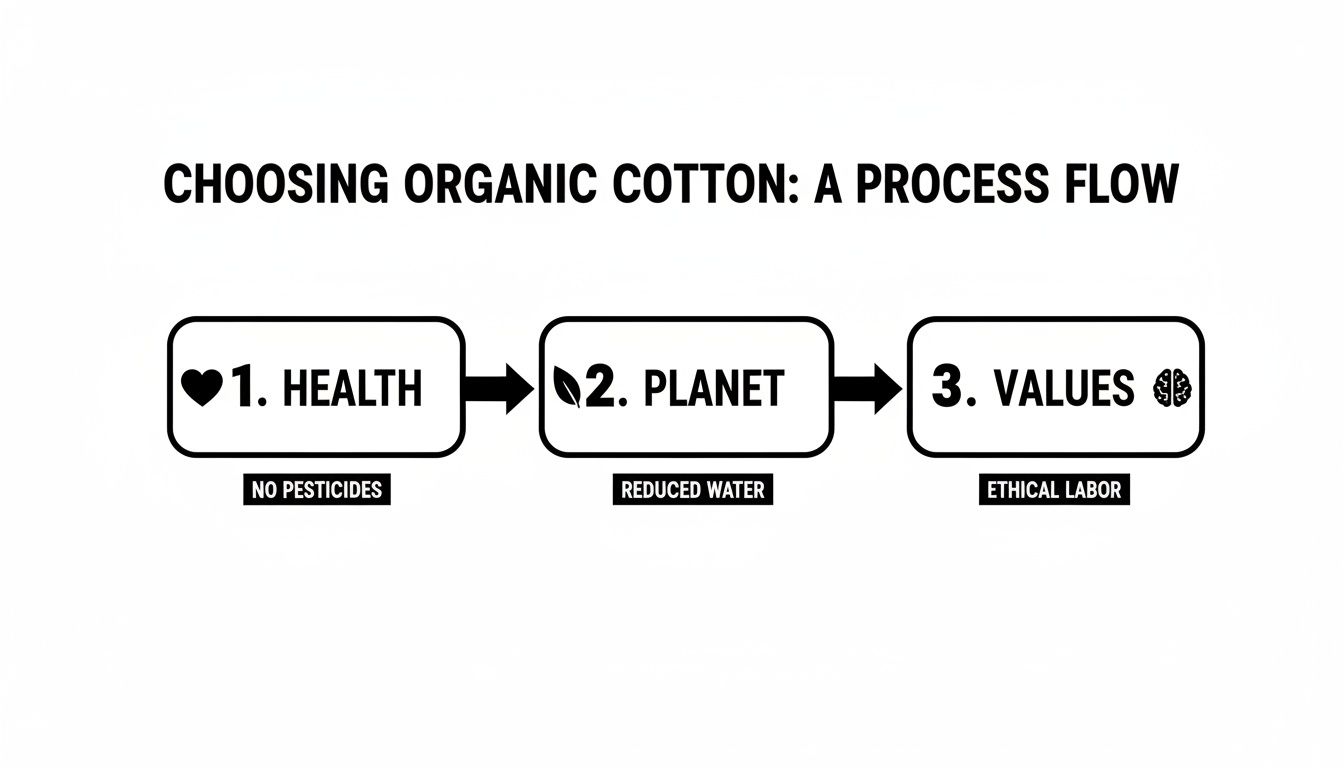
This process flow really highlights that the decision to buy organic is often driven by a desire for personal wellbeing, a commitment to looking after our planet, and a choice that aligns with our ethical values.
The Purity of the Fibre
The benefits don't stop in the field; they carry right through to the final fabric. Because the cotton fibres haven't been weakened by harsh chemical processing, they stay longer, stronger, and feel incredibly soft.
This results in a garment that’s not only more durable but also noticeably gentler on your skin. An organic cotton tee shirt isn't just another piece of clothing; it's the end product of a cleaner, safer, and far more thoughtful system, from the first seed right through to the final stitch.
Healthier Skin and a Healthier Planet
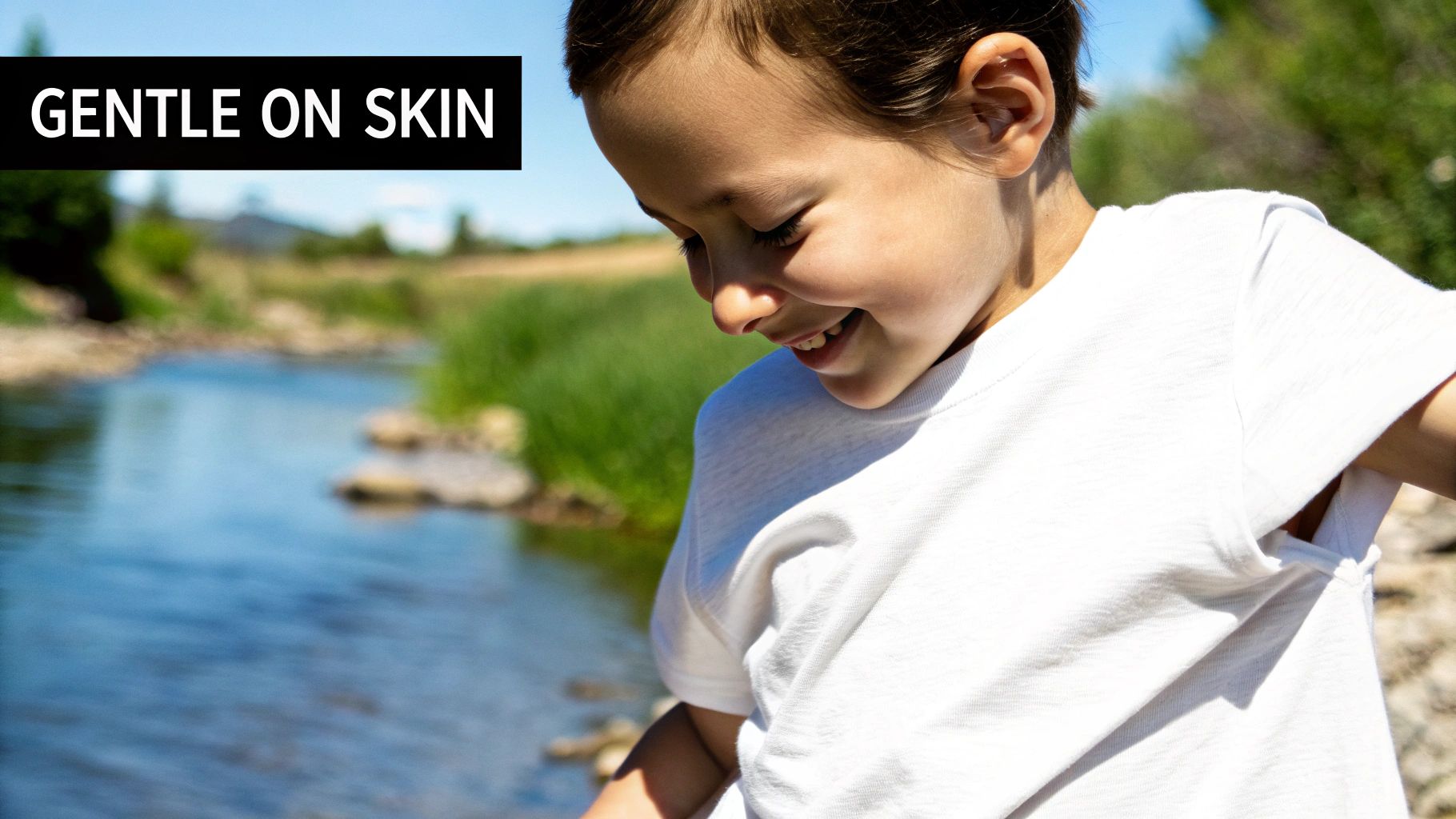
When you choose an organic cotton tee shirt, you’re getting more than just a piece of clothing. It’s a decision that has real, tangible benefits you can see and feel—for your own family and for the world around us. It turns a simple purchase into a small but meaningful act of care.
For children, this difference can be night and day, especially if they have sensitive skin. Conventional cotton is often treated with a cocktail of chemicals, from harsh dyes to finishing agents, and traces of these can easily remain in the final fabric. These residues can be a major trigger for irritation, leaving kids with itchy, uncomfortable skin, particularly if they’re prone to conditions like eczema.
Organic cotton, on the other hand, is wonderfully pure. It’s grown and processed without these harsh chemicals, making it incredibly soft, breathable, and gentle. It works with the skin, not against it, offering a soothing layer of comfort that lets kids get on with their day without the distraction of scratchy, aggravating clothes.
From Cleaner Waterways to Safer Farms
The positive ripple effect of choosing organic stretches far beyond our homes, right back to the soil and water that our planet relies on. Conventional cotton farming has a reputation for being incredibly thirsty and chemically intensive. It leans heavily on synthetic pesticides and fertilisers which can seep into the ground and run off into local water supplies. This pollution doesn't just harm aquatic life; it can affect the drinking water for entire communities.
Organic farming sidesteps this issue entirely by banning the use of toxic chemicals. This simple but profound commitment protects rivers and lakes, keeping them clean and safe for wildlife and people. It also creates a much safer working environment for the farmers themselves, who are no longer exposed to these hazardous substances day in, day out.
A single conventional cotton tee shirt can take up to 2,700 litres of water to produce. A huge amount of this is down to inefficient irrigation on land that’s been stripped of its natural goodness by chemicals. Organic farming rebuilds the soil, helping it hold moisture naturally and slashing water usage.
This incredible water efficiency is one of the biggest environmental wins for organic cotton. It’s a much smarter, more sustainable way of using one of our planet’s most vital resources.
Reducing Our Carbon Footprint One Tee at a Time
On top of all that, choosing organic helps to lower the carbon footprint of your wardrobe. The healthy, rich soil on organic farms is far better at capturing and storing carbon from the atmosphere. The entire production process for organic cotton also tends to use significantly less energy than its conventional counterpart.
When you opt for organic cotton tee shirts, you’re casting a vote for a system that puts people and the planet first. You're supporting:
- Purity: A fabric that’s free from irritating chemicals and perfect for sensitive skin.
- Water Conservation: Smarter farming methods that drastically cut down on water use.
- Worker Safety: A healthier, safer environment for the people who grow the cotton.
- Biodiversity: Practices that protect local ecosystems from chemical pollution.
Ultimately, it’s a simple choice that adds up to a cleaner, safer, and more sustainable world for the next generation. It’s a powerful way to wear your values and show you care, both for personal wellbeing and the health of our planet.
How to Read the Labels and Avoid Greenwashing
Trying to navigate the world of sustainable fashion can feel a bit like walking through a maze. With so many brands throwing around terms like ‘eco-friendly’ or ‘natural’, it’s easy to get lost or, worse, fall for misleading marketing. This practice has a name: greenwashing.
The key to finding a genuinely ethical organic cotton tee shirt is learning how to read the labels properly. The truth is, not all eco-claims are created equal. A brand might shout about one small green feature while conveniently ignoring massive environmental or ethical problems hiding elsewhere in its supply chain.
This is where independent, third-party certifications become your best friend. They cut through the marketing fluff and provide real, verifiable proof of a product's credentials. When you’re looking for authentic organic clothing, one label stands head and shoulders above the rest.
Understanding the GOTS Certification
The most reliable sign you can find on a truly organic product is the Global Organic Textile Standard (GOTS) certification. Think of it as a comprehensive guarantee that covers the entire journey of your tee shirt, from the cotton farm right through to the shop floor.
A GOTS label doesn't just check one box; it checks all of them. Here’s what a GOTS-certified tee shirt guarantees:
- True Organic Fibre: At least 95% of the fibres must be certified organic. This means the cotton was grown without harmful pesticides or genetically modified organisms (GMOs).
- Eco-Friendly Processing: All dyes and processing chemicals have to meet strict environmental and toxicological standards. This keeps harmful substances out of our waterways and away from your skin.
- Ethical Labour Practices: The certification ensures that everyone involved in making the garment works in safe conditions and is paid a fair, living wage, based on the high standards of the International Labour Organisation.
When you see the GOTS logo, you can be completely confident that your purchase supports a healthier planet and fairer working conditions for people. It’s the simplest way to sidestep greenwashing and make a choice you can truly feel good about.
The demand for authentic organic textiles is growing fast, which shows a huge shift in how much people care about where their clothes come from. The global organic textile market is projected to be worth around USD 58.4 billion in 2025, with clothing making up nearly half of all sales.
This boom really highlights how much shoppers value genuine sustainable choices. You can explore this growing trend by reading more about the organic textile market. Next time you’re shopping for an organic cotton tee shirt, looking for these details can make all the difference.
Wearing Your Values and Supporting Children's Wellbeing
Choosing an organic cotton tee shirt is about more than just what you put on in the morning; it’s a quiet statement, a way to wear your values on your sleeve. And when that tee shirt carries a message of kindness or emotional support, it becomes something more—a conversation starter about mental wellbeing.
This is especially powerful for children. We know that building emotional resilience starts young, and normalising conversations about feelings is a huge part of that. A staggering one in six children aged 5-16 in the UK are identified as having a probable mental health condition. This tells us just how critical early support and open dialogue really are. A simple, positive message on a t-shirt, for example one saying 'It's okay not to be okay', can act as a gentle, everyday reminder that it’s okay to feel what we feel and to talk about it.
More Than Just a Tee Shirt
These tops, which can be thought of as a form of mental health apparel, help foster a more empathetic world, whether that's in the classroom or around the dinner table. They are visual cues, little nudges that encourage emotional awareness and can help a child feel safer to express themselves. This is exactly why we offer wholesale options for schools and therapists—we want our clothing to be a practical resource for building a culture of support. Your purchase becomes a small but meaningful act of advocacy for the next generation.
The ripple effect of neglecting mental health is enormous, costing UK employers an estimated £56 billion every year due to absenteeism, presenteeism, and staff turnover. Fostering emotional wellbeing from childhood isn’t just a social responsibility; it's a direct investment in a healthier, more productive future for everyone.
People are increasingly looking for products that do good, and the market reflects that. The global organic cotton sector was valued at around $10 billion in 2023, with plenty of room to grow. Here in the UK, natural fibres like cotton are leading the charge in the sustainable fashion market, showing a clear shift towards more conscious buying habits. You can find more insights into these trends on amcustomclothing.co.uk.
Building a Culture of Support
When you choose clothing that champions mental health, you're not just dressing your child in soft, safe organic cotton. You're casting a vote for a world where emotional wellbeing is discussed openly and valued deeply. You can learn more about how clothing for mental health can normalise these important conversations. Each tee shirt helps build a foundation of support that can last a lifetime.
Simple Care for Long Lasting Softness
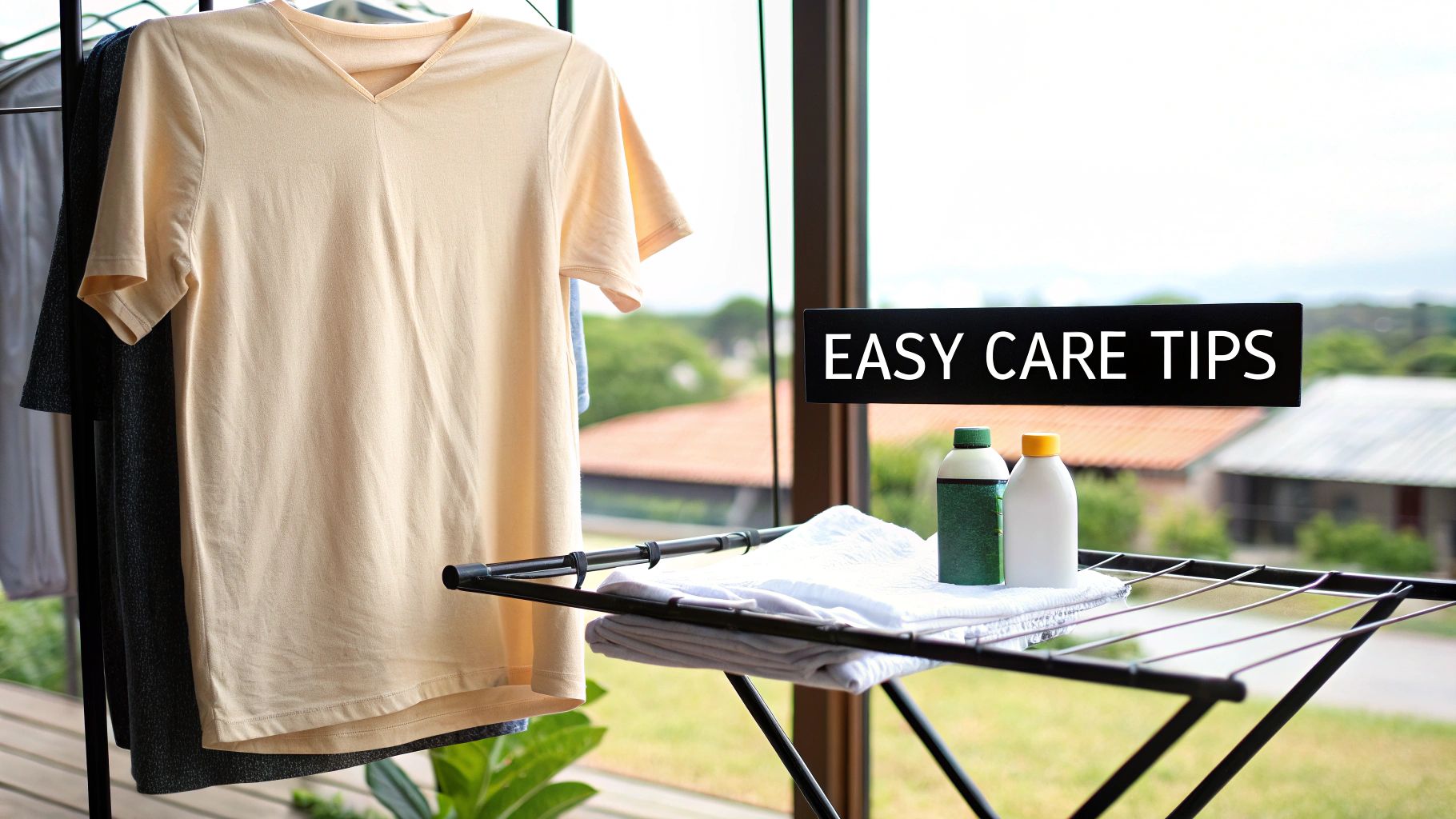
You’ve chosen a brilliant organic cotton tee shirt, and you want that incredible softness and vibrant look to last. The good news is, it’s easy. With just a little thoughtful care, you can keep your tee feeling and looking fantastic for years to come.
Proper care isn’t just about extending the life of your clothes; it’s about staying true to the sustainable principles that made you choose organic in the first place. Unlike conventional clothing that’s often treated with harsh chemicals to survive aggressive washing, organic cotton is a natural fibre that just needs a gentler touch to stay strong and smooth.
Your Eco-Conscious Washing Guide
Following a few simple steps will keep your tees in pristine condition while also being kinder to the planet. It’s a win-win.
-
Wash in Cool Water: Always go for a cool wash, ideally at 30°C or lower. This one small change uses a surprising amount of less energy, shrinking your carbon footprint. It’s also the secret to preventing the fabric from shrinking and helps keep the colours true.
-
Choose Gentle Detergents: Pick a mild, eco-friendly detergent. Look for one that's free from harsh chemicals, phosphates, and synthetic fragrances. These gentler formulas are more than capable of getting your clothes clean without stripping away the natural softness of the organic cotton fibres.
-
Air-Dry Whenever Possible: If you can, skip the tumble dryer completely. Line-drying or laying your tee shirts flat to dry is the best way to preserve their shape, feel, and fit. It's a zero-energy solution that also avoids the fabric damage high heat can cause over time.
If you absolutely have to use a dryer, make sure to choose the lowest heat setting you can. This will help protect those delicate natural fibres from unnecessary stress and potential shrinkage, giving your favourite tees a much longer life.
By following these easy tips, you'll make sure your organic cotton tee shirts stay a comfortable, well-loved part of your wardrobe for many seasons.
Your Questions About Organic Cotton and Wellbeing, Answered
Deciding to switch to organic cotton and support mental health initiatives is a brilliant step, but it's natural to have a few questions pop up. We get it. To help you feel completely confident in your choice, here are some straightforward answers to the things people often ask us.
Are Organic Cotton Tee Shirts Really Worth the Extra Cost?
It’s true that an organic cotton tee shirt might have a slightly higher price tag at first glance. But it’s helpful to think of it not as a cost, but as an investment—in quality, in your family's health, and in a kinder way of making clothes. That price reflects the real cost of doing things right: farming without harmful chemicals, paying people a fair wage for their work, and using beautiful materials that don’t leave a toxic footprint.
Plus, because organic cotton is often much more durable, it lasts so much longer. You’ll find you don’t need to replace it nearly as often, which actually offers better value in the long run.
Can You Suggest Any Good Mental Health Books for Children?
Absolutely. Reading together is a wonderful way to open up conversations about feelings. For younger children, "The Colour Monster" by Anna Llenas is fantastic for helping them identify and name their emotions. For slightly older kids, "What to Do When You Worry Too Much: A Kid's Guide to Overcoming Anxiety" by Dawn Huebner offers practical, cognitive-behavioural techniques in a really accessible way.
How Does Social Media Impact a Child's Mental Health?
This is a huge topic. While social media can offer connection, it also presents challenges like social comparison, cyberbullying, and pressure to present a 'perfect' life, which can negatively affect self-esteem and increase anxiety in children. It's vital for parents to encourage open conversations about online experiences, set healthy boundaries around screen time, and model a balanced relationship with technology themselves.
What are some simple relaxation tips I can teach my child?
Teaching relaxation techniques early is a gift. Try simple deep breathing exercises: ask your child to imagine they are blowing up a balloon slowly, then letting the air out just as slowly. This "balloon breathing" can be very calming. Another great one is progressive muscle relaxation, where they tense and then relax different muscle groups, like squeezing their fists tight and then letting go. Doing these together makes it fun and normalises self-care.
Where Can I Get Help If I'm Worried About My Child's Mental Health?
It is crucial to seek professional help if you have concerns. Your first port of call should always be your General Practitioner (GP), who can listen to your worries and refer you to specialised services like the Child and Adolescent Mental Health Services (CAMHS) if needed. Charities like YoungMinds also offer excellent resources and a parents' helpline for confidential advice. Remember, asking for help is a sign of strength.
At thatsokay.co.uk, we truly believe that our choices matter. Our collection of organic cotton apparel is designed to be gentle on your child’s skin and our planet, all while spreading important messages of kindness and emotional wellbeing. Take a look at our range and find the perfect tee to wear your values.