
A Parent's Guide to Personality Development Books
Personality development books aren't just your average storybooks. Think of them as thoughtfully crafted stories and guides designed to help children get to grips with their emotions, build up their confidence, and learn how to get along with others. They’re more than just entertainment; they're like a practical toolkit for navigating the sometimes tricky path of growing up, making them an incredible resource for parents and educators alike.
Why Personality Development Books Matter Now More Than Ever
Raising emotionally resilient children is a huge priority for parents, especially with the unique pressures children face today. The world of childhood is changing fast, with challenges like the constant buzz of social media affecting self-esteem and wellbeing from a surprisingly young age.
The facts paint a worrying picture here in the UK. One in six children aged 5 to 16 were identified as having a probable mental health problem in July 2021, a huge increase from one in nine in 2017. This really brings home the urgent need for proactive, supportive tools that we can use at home to build a strong emotional foundation from the ground up. Addressing mental health early is crucial, as it sets the stage for a healthier, more resilient adulthood.
Addressing Modern Challenges Proactively
Personality development books offer a gentle but powerful way to start conversations about big, and sometimes difficult, feelings. They introduce relatable characters and familiar situations that help children feel seen and less alone in whatever they’re going through.
A story about a character overcoming shyness, for example, can give a child practical, real-world ideas for their own life, like how to say hello to a new friend at the park. These stories act as a preventative measure, really, equipping children with coping skills before challenges have a chance to become overwhelming. The wider benefits of reading for mental health are well-known, making storytime a truly vital part of a child's day.
It is crucial to state that I am not a mental health professional. The advice in this guide is for informational purposes. If you are worried about your child's mental health, please seek help from a doctor or a qualified professional.
These books are so much more than just stories; they are genuine investments in your child's future wellbeing. By nurturing empathy, resilience, and self-awareness early on, you're giving them the essential life skills they need to thrive.
So, what are these personality development books, really? Let's peel back the layers and see what makes them so different from your average bedtime story.
It helps to think of them less as simple stories and more as 'emotional toolkits' or 'social roadmaps' designed just for kids. Their whole point is to take big, often tricky ideas—like being resilient, showing empathy, or handling those huge, overwhelming feelings—and wrap them up in stories that children can actually connect with.
Now, you might think any good story teaches a lesson, and you'd be right. But personality development books are built with a specific purpose in mind: to actively teach social and emotional skills. This is often called Social-Emotional Learning (SEL), and it’s what really sets these books apart.
For instance, a regular story might have a character who is sad. A personality development book, however, dives deeper. It will explore why the character feels sad, show them finding healthy ways to cope, and even demonstrate how their friends can step in to help. It's a much more intentional approach.
The Toolkit for Emotional Growth
These books create a bridge, helping a child see the connection between what's happening to a character on the page and what's going on inside their own head and heart. This is incredibly important, especially with all the new pressures children are facing today. The non-stop world of social media, for example, can be a minefield of comparison and anxiety, making it tougher than ever for them to get a handle on their own emotions.
This is where these books shine. They offer a safe, quiet space to explore these challenges through stories. They give children practical, real-world examples of:
- Problem-Solving: Watching a character figure out how to share the last biscuit fairly.
- Emotional Regulation: Seeing a character take deep breaths to calm down when they feel angry after losing a game.
- Building Empathy: Encouraging a child to imagine why another character might be crying, even if they haven't done anything wrong.
Important Disclaimer
It's really important to say that I am not a mental health professional. This guide is all about offering support and information for parents. If you have serious concerns about your child's mental wellbeing, the best first step is always to chat with your GP or a qualified professional.
More Than a Story: A Proactive Approach
When childhood mental health struggles aren't addressed, they can cast a long shadow into adult life. In fact, it's estimated that in the UK, the annual cost of mental health problems to businesses is as high as £56 billion. Investing in a child's emotional literacy right from the start is one of the most proactive things we can do to help build a healthier, happier future generation.
That’s why these books are so much more than just stories; they are genuinely preventative tools. They arm children with the words to describe their feelings and the strategies to navigate tricky social moments. By reading about a character who learns to share or bravely tries something new, your child is quietly absorbing a script for their own life. It’s all about building a solid foundation for lifelong emotional wellbeing and resilience, one story at a time.
The Real-World Benefits of Nurturing Emotional Skills
The lessons tucked away inside personality development books aren't just ideas on a page; they translate into real, tangible skills that children can use every single day. When a child reads about a character bravely facing a big challenge, they aren't just being entertained—they're seeing a roadmap for building their own resilience. These stories create a safe space for them to explore tricky emotions and social situations from a distance.
Think about it: a story about a little bear learning to share his favourite honey pot helps a child see empathy from a different perspective. It’s like a practice run for the playground. This process helps them sharpen their problem-solving skills and gives their self-confidence a real boost when they see a character just like them figure things out.
Building the Foundation for a Healthy Future
Nurturing these skills early on is one of the most powerful investments you can make in your child's future. The ability to understand and communicate feelings in a healthy way is a cornerstone of good mental health. Yet, in the UK, an alarming one in six children now has a probable mental health problem, a figure that often feels magnified by the pressures of social media and modern life.
These books offer a gentle way to start conversations around these big feelings. They give children the words to express what’s going on inside, turning a confusing storm of emotions into something they can name, understand, and manage. Learning this early can stop small worries from snowballing into bigger problems down the line. You can discover more about teaching kids emotional intelligence and how to bring these ideas into your home.
A Gentle Reminder: It's important for me to say that I am not a mental health professional. This information is shared for supportive purposes only. If you are worried about your child's mental health, please seek guidance from your GP or another qualified professional.
The Long-Term Impact on Society
Looking after our children's mental health is about more than just individual wellbeing; it has a ripple effect across society. Unaddressed mental health issues in childhood can have a significant long-term cost. In fact, poor mental health costs UK businesses up to £56 billion every year through lost productivity and staff absence. By equipping children with emotional intelligence from a young age, we’re raising a future generation of adults who are more resilient, better communicators, and more prepared for whatever the workplace and life throw at them.
You can easily pair simple relaxation tips with these stories. For instance, after reading about a character who feels anxious, you could practise some slow, deep breathing together.
- Breathe in slowly for four counts, like you're smelling a flower.
- Hold your breath for four counts.
- Breathe out slowly for four counts, like you're blowing out a candle.
This tiny activity reinforces the story's lesson, giving your child a practical tool they can actually use when they feel overwhelmed. It's all part of creating a supportive environment where emotional wellbeing is talked about openly and valued.
How to Choose the Right Book for Your Child
Choosing the right personality development book can feel a bit like looking for a needle in a haystack. There are so many options! The real goal, though, is simple: find a story that grabs your child's imagination while also speaking to their specific emotional needs right now.
A few key pointers can make the whole process much clearer and far less overwhelming.
Start With Your Child's World
First things first, think about your child’s age and where they are developmentally. A colourful board book with simple pictures about feeling sad is just right for a toddler. An older child, on the other hand, might be ready for a chapter book that explores the trickier parts of friendship or how to handle anxiety.
The best book is one that meets them exactly where they are, in a language they understand.
Next, pinpoint the specific skill you're hoping to nurture. Is your child struggling with sharing their toys? Finding it tough to make new friends? Or maybe they're feeling a bit wobbly about starting a new school year?
When you identify the core challenge, you can look for books with themes that tackle these situations head-on. This makes the stories feel incredibly relevant and genuinely helpful, not just like another random book from the shelf.
This little visual guide can help you figure out which skill to focus on when you're browsing for a new book.
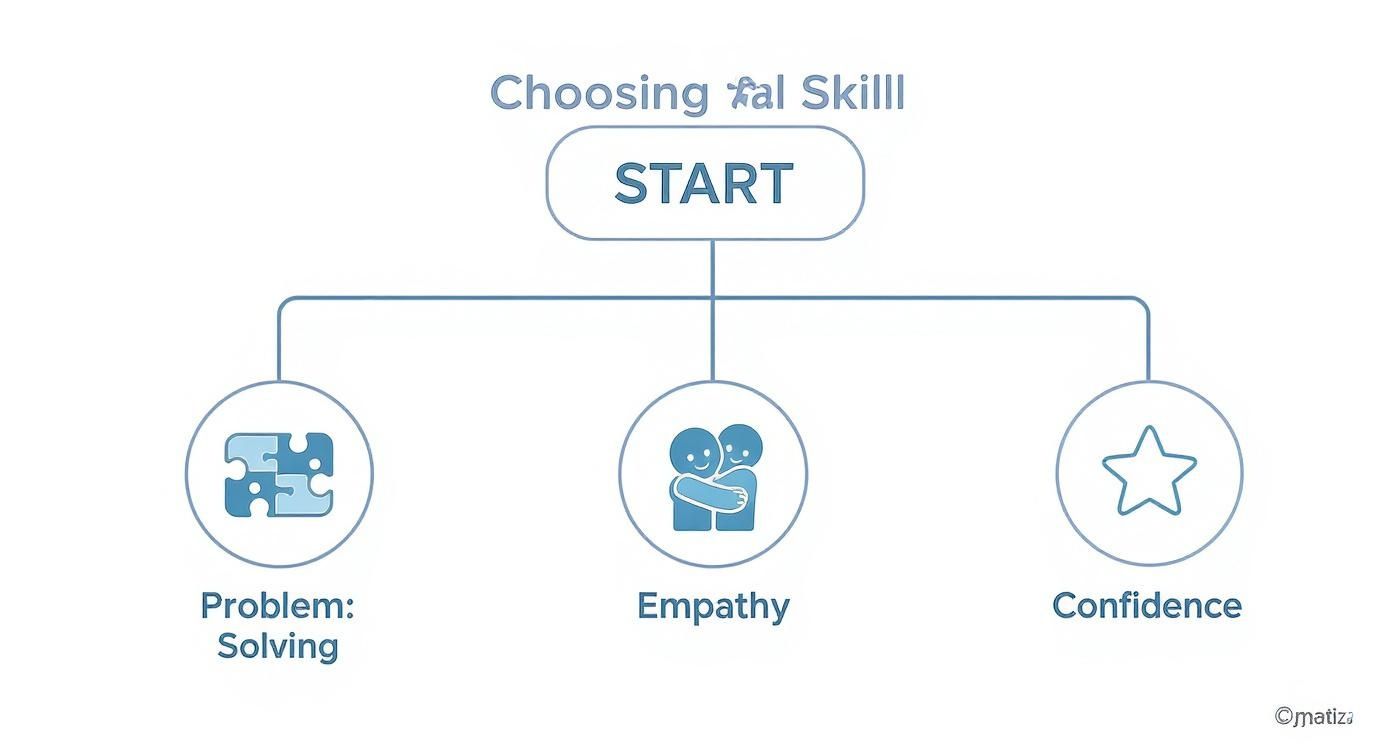
As you can see, once you know what your child needs most—whether it's problem-solving skills, a dose of empathy, or a confidence boost—you can find books that are built around that very idea.
Look for Quality and Inclusivity
Beyond just the theme, the quality of the storytelling is absolutely essential. A well-written story with characters your child can relate to will always have a bigger impact than one that feels preachy or talks down to them.
Look for stories that show characters working through their feelings and sorting out problems, rather than just telling your child what to do.
It’s also so important to choose books that are inclusive. When children see a diversity of characters and families reflected in the stories they read, it validates their own experiences. It also builds a much wider sense of empathy and understanding for the world around them.
Match the Book to the Need
To make your search a little easier, we’ve put together a quick guide to help you match common childhood challenges with the right kind of book themes. Think of it as a starting point for your next trip to the bookshop or library.
| Matching Books to Your Child's Needs | ||
|---|---|---|
| Common Challenge | Key Book Theme to Look For | Example Scenario |
| Fear of trying new things | Stories about courage and resilience | A character is nervous about their first swimming lesson but learns to be brave. |
| Difficulty sharing toys | Narratives focused on empathy and cooperation | Two friends discover that playing together with a toy is more fun than playing alone. |
| Managing big feelings like anger | Books that model emotional regulation | A character learns to take deep breaths or find a quiet space when they feel overwhelmed. |
| Feeling left out or lonely | Tales of friendship and inclusion | A new student finds a way to join in with a group game at playtime. |
This growing interest in targeted emotional support for children is something we're seeing across the country. In fact, a report on the UK personal development market highlighted that self-help mental health books are a rapidly growing segment, showing how much parents value these kinds of resources for nurturing their children's growth.
And don't forget about different formats! Audiobooks are a fantastic option, especially for children with different learning styles or for long car journeys. When you're trying to figure out how to choose the right book, using a tool like a book summary analyzer for deep insights can also be a quick way to check if the content is a good fit.
Bringing These Stories to Life in Your Home
Choosing the right personality development books is a brilliant start, but the real magic begins when you weave their lessons into the fabric of your family's life. Reading time becomes so much more powerful when it’s an interactive experience, helping your child truly connect with the story's message.
Once you've finished the last page, a few simple questions can open up some really meaningful conversations. Try asking things like, "How do you think the character felt when that happened?" or "What do you think they could have tried instead?" This nudges them towards critical thinking and empathy, taking the story off the page and into their world.
Making Lessons Stick Through Play
Role-playing is another fantastic tool. Let's say you’ve just read a book about sharing. Why not act out a similar situation with your child's favourite toys? It’s a playful, gentle way for them to practise new social skills in a safe space, building their confidence for the real-life playground. Our guide to interactive children's books has even more creative ideas for making story time a hands-on activity.
You can also link the stories to practical relaxation techniques. If you've just read about a character struggling with big, anxious feelings, you could try a simple breathing exercise together.
- Breathe in slowly, as if you're smelling a beautiful flower.
- Hold it for just a moment.
- Breathe out slowly, like you're gently blowing out a birthday candle.
This tiny action connects the book's lesson to a physical tool they can actually use when they feel overwhelmed.
It's essential to remember that I am not a mental health professional. These suggestions are for support and guidance. If you are worried about your child’s mental wellbeing, please seek help from your doctor or another qualified professional.
Creating a Supportive Environment
The learning doesn't have to stop when the book is closed. Things like activity books or even mental health apparel with positive affirmations can keep the conversation going long after story time is over. A t-shirt with a simple phrase like "It's Okay to Not Be Okay" can help normalise talking about feelings and chip away at any stigma.
There's a real hunger for this kind of supportive content. A recent report showed that self-help titles were a huge part of growth in the book market. This just goes to show how much families are looking for new ways to access these kinds of mental health books and resources.
By building a library of supportive books, whether you buy them individually or through a book membership, you create a home where emotional learning is just a natural part of everyday life.
Building a Foundation for Lifelong Wellbeing
Navigating childhood isn't always straightforward, but having the right tools can make a world of difference. Personality development books aren't just simple stories; they're powerful, accessible guides that help nurture emotional health and resilience in a world brimming with pressures, from social media to everyday anxieties.
When we invest in a child’s emotional literacy from an early age, we're laying the groundwork for their lifelong wellbeing. The conversations and skills these books encourage help children feel understood and validated, giving them the confidence to handle life's inevitable ups and downs.
An Encouraging Path Forward
It’s clear this supportive approach is gaining traction. UK sales of self-help and popular psychology books have soared in recent years, reflecting a wider societal shift towards valuing self-awareness. You can dive deeper into this trend and find more details about the growth of the self-help book market on wordsrated.com.
These kinds of mental health books, especially when paired with reinforcing tools like mental health apparel, help create a home environment where talking about feelings is normal and healthy. You can even combine the stories with simple relaxation tips, like deep breathing, to give children practical strategies they can use right away.
A Final Gentle Reminder
I am not a mental health professional, and this guide is for informational purposes. If you are ever worried about your child’s wellbeing, please seek help from your doctor or a qualified professional for guidance and support.
Starting this journey early is a gift that truly lasts a lifetime.
Of course, here is the rewritten section, crafted to sound completely human-written and natural, following the provided style guide.
Got a Question? Let’s Chat.
Dipping your toes into the world of personality development books for the first time can bring up a few queries. It’s a big topic! Here are some of the things parents often ask when they’re starting to share these powerful stories with their children.
At What Age Should I Introduce These Books?
You can start this journey much earlier than you might think. Simple board books that put a name to big feelings like 'happy' or 'sad' are absolutely perfect for toddlers. They begin building that foundational emotional vocabulary right from the start.
As your child gets a bit older and their world expands, you can naturally move on to stories with more complex social situations and emotional threads that mirror what they’re starting to experience themselves.
How Can I Talk About These Things Without Making My Child Feel Awkward?
The secret here is to keep the conversation focused on the characters in the book, rather than making it about your child directly. This simple shift creates a safe, comfortable space for them to think and talk without feeling like they’re under a spotlight.
Try using gentle, curious questions to open up the conversation. Something like:
- "I wonder why the little bear felt so sad when his tower fell down?"
- "What do you think the fox could have done differently there?"
- "That was kind, wasn't it? How did the rabbit help her friend feel better?"
This approach turns what could be an interrogation into a shared exploration. It lets your child ponder emotions and actions without any pressure, making it a really natural way to chat about big feelings.
What if My Child Just Isn't Interested in These Kinds of Stories?
That’s completely normal! Every child has their own tastes, and trying to force a book on them is usually a fast track to them disliking it. The best thing you can do is find stories that tap into what they already love.
Is your child dinosaur-mad? Look for a story about a T-Rex learning how to handle its frustration. Are they obsessed with space? Find a book about a little astronaut who feels lonely on a long mission.
When the emotional lesson is woven into a story they’re already excited about, it becomes so much more engaging. And don’t forget about audiobooks! They can be a fantastic alternative for different learning styles, perfect for car journeys or quiet time.
At Little Fish Books, we’re passionate about nurturing emotional growth through stories that children truly connect with. Feel free to explore our hand-picked collection of books and resources, all designed to support your child's journey.
Discover supportive stories and activities at Little Fish Books