
A Parent's Guide to Self Care Books for Young People
Think of self-care books as friendly, accessible guides that help young people make sense of their feelings and build emotional resilience. They’re packed with practical strategies for navigating the pressures of modern life, from school stress to the wild world of social media.
It’s important to remember, these books are not a replacement for professional help, but they can be a fantastic, supportive first step towards fostering mental wellbeing.
Why Self Care Books Are Essential for Young People Today
Today's world throws some pretty unique challenges at children and teenagers. The constant connection through social media can create a relentless pressure to appear perfect, which often leads to anxiety and low self-esteem. When you add academic expectations into the mix, it’s no surprise that youth mental health is a growing concern.
Here in the UK, an estimated one in five children now has a probable mental health condition. Addressing these issues early isn't just vital for individual happiness; it has a much wider societal impact. Poor mental health in early life can affect education, relationships, and even future employment. Deloitte estimates that poor mental health costs UK employers up to £56 billion a year.
The Growing Need for Emotional Tools
Simple relaxation tips like deep breathing or mindfulness are brilliant, but self-care books offer a deeper, more structured way for young people to build these skills. They provide relatable stories and practical exercises that a child can turn to whenever they feel overwhelmed. Think of them as a toolkit for the mind.
For instance, a book might explain anxiety through a story about a character worried about a school test. It could then offer simple, actionable steps the character takes to feel calmer, like the '5-4-3-2-1' grounding technique, which the reader can then try out for themselves. This process normalises difficult feelings and empowers children with their own coping strategies. For a broader look at emotional wellbeing, exploring a curated list of the best books on mental health can provide some excellent additional guidance.
It is crucial to remember that I am not a mental health professional. This guide offers supportive information, not medical advice. If you are worried about a child's mental health, please consult your GP or a qualified professional for guidance.
Starting the Conversation
Let's face it, talking about mental health can feel awkward. Resources like mental health books, and even supportive items like mental health apparel, can act as gentle conversation starters. They create a shared language for families to discuss emotions openly and without judgement, building a foundation of support that can last a lifetime.
What Makes a Good Self Care Book Effective?
So, what exactly is the magic ingredient that turns a simple book into a powerful tool for self-care? It's definitely not about wading through dense psychology texts or trying to decipher complicated theories. The best self-care books feel more like a quiet chat with a kind, trusted friend – one who offers comfort and real-world wisdom.
Think of these books as a friendly map for navigating the often-confusing world of emotions. A good map doesn't overwhelm you with jargon; it uses clear symbols and simple directions to help you find your way. In the same way, the most effective self-care books use language and situations that kids can relate to, guiding them through their own inner world.
The real power of these books is their ability to make children feel seen and understood. When a young person reads about a character grappling with the same worries they have—whether it's friendship troubles, exam stress, or just feeling a bit lost—it’s an instant validation of their feelings. That moment of recognition is the first, crucial step toward building emotional resilience.
Key Ingredients for an Effective Book
To truly connect with a young reader, a book needs a few essential components. These elements all work together to create a supportive and empowering experience that goes way beyond just telling a good story.
A great self-care book should contain:
- Relatable Characters: Young people need to see themselves in the story. Characters who face realistic challenges, make mistakes, and learn how to cope are far more impactful than flawless heroes.
- Practical Strategies: The book should offer simple, actionable coping mechanisms. This could be anything from a deep-breathing exercise described in the story to a prompt for drawing or writing about a feeling.
- Empowering Tone: The overall message must be one of hope and empowerment. The book should build a child’s confidence, reminding them that they have the strength to manage difficult emotions.
The goal is not to eliminate challenging feelings but to equip children with the tools to navigate them. It's about showing them that it's okay not to be okay and that they have the power to help themselves feel better.
Different Formats for Different Needs
It’s also important to remember that self-care support isn't a one-size-fits-all solution. The format of the book plays a huge role in how a child engages with its message. Illustrated storybooks are perfect for younger children, helping them put a name to "big feelings" like anger or sadness through simple narratives and expressive pictures.
For older children and teens, interactive journals can be incredibly effective. These provide a private, structured space for reflection, guided by prompts that encourage them to explore their thoughts and feelings without any pressure. Learning more about interactive children's books can offer further insight into how these formats foster engagement and emotional growth.
Ultimately, the best book is one that meets a child exactly where they are, offering support in a way that feels natural and completely accessible to them.
How Reading Boosts Your Child's Mental Wellbeing
A good story is so much more than just a bit of fun. Reading actually has a real, positive impact on a child’s mental health. The simple act of opening a book is directly linked to building emotional strength, offering something far deeper than just entertainment. Think of it as a gentle, yet powerful, tool for nurturing a resilient young mind.
Diving into a book offers a healthy and vital escape from the pressures of everyday life. Research shows that even a few minutes of reading can physically lower stress levels and calm anxiety. For a child, this quiet time away from screens and schoolwork is a chance to reset, bringing their heart rate down and relaxing their muscles.
Stepping into Another's Shoes
One of the greatest gifts reading gives a child is empathy. When they follow a story, they get to see the world through a character's eyes, feeling their joys, fears, and triumphs along with them. This whole process helps them understand that other people have feelings and perspectives that are different from their own — a true cornerstone of emotional intelligence.
For instance, a story about a character working through their shyness can give a child a 'blueprint' for handling their own social fears. By seeing how the character deals with a tricky situation, the reader picks up potential strategies they can try in their own life. It creates a safe space to explore solutions to real-world problems without any of the risk.
A book allows a child to practise empathy from a safe distance. It gives them a model for compassion and understanding that they can carry with them long after they've turned the last page.
A Bridge for Important Conversations
These stories don't just teach children; they open up opportunities for families to connect on a deeper level. Chatting about a character's struggles can make it so much easier to talk about real-life emotions, helping to break down any stigma around mental health. This shared experience helps to normalise talking about our feelings. You can discover more about the various benefits of reading and how it supports a child's overall growth.
This growing appreciation for reading's role in wellbeing is showing up in market trends, too. The UK books market, which includes a growing number of self care books, generated around USD 8.9 billion in 2024 and is set to grow significantly. In the end, these books are more than just paper and ink; they are essential tools for raising emotionally healthy and empathetic young people.
Choosing the Right Self Care Books by Age
Picking a self-care book that genuinely clicks with a child or teenager is the real secret to its success. You wouldn't hand a picture book to a 15-year-old, and it's the same with emotional tools—they have to fit the person's stage in life. A book that feels relatable, that speaks their language, is one they’ll actually want to pick up time and time again.
The first step is getting to grips with the unique world each age group inhabits. A toddler is just learning to put a name to huge feelings like frustration, while a primary school kid is trying to figure out the much more complicated rules of friendship. Teenagers? They’re grappling with identity, peer pressure, and the colossal weight of social media. The right book meets them exactly where they are.
Books for Toddlers and Young Children (Ages 2-6)
For the littlest readers, simplicity is king. You'll want to look for sturdy board books with bright, captivating pictures and just a handful of words on each page. The main goal here is to introduce the absolute basics of feelings—happy, sad, angry—in a way that’s totally clear and not at all scary.
Good stories for this age feature simple plots where a character feels one clear emotion and finds a way through it. Think of a book about a little bear who is sad because his favourite toy breaks, and then his parent gives him a cuddle to feel better. It gives a toddler a kind of 'script' for their own big feelings. Fun interactive bits like lift-the-flaps or different textures are also a brilliant way to keep them engaged.
Guides for Primary School Children (Ages 7-12)
Once kids hit primary school, their social and emotional lives suddenly get a lot bigger and more complex. Self-care books for this age group can start to explore trickier ideas like resilience, what empathy really means, and how to handle worries about school. The best ones feature relatable characters who face believable problems, like trying to make new friends or falling out with their best mate.
This is also the perfect age for early chapter books or activity-based guides. Books that include simple, practical exercises—like drawing your 'worry monster' or writing down three good things that happened that day—are fantastic. It’s all about building practical coping skills in a way that feels fun and accessible, not like a lesson.
The infographic below shows just how powerful reading can be for relieving stress, building empathy, and sparking important conversations.
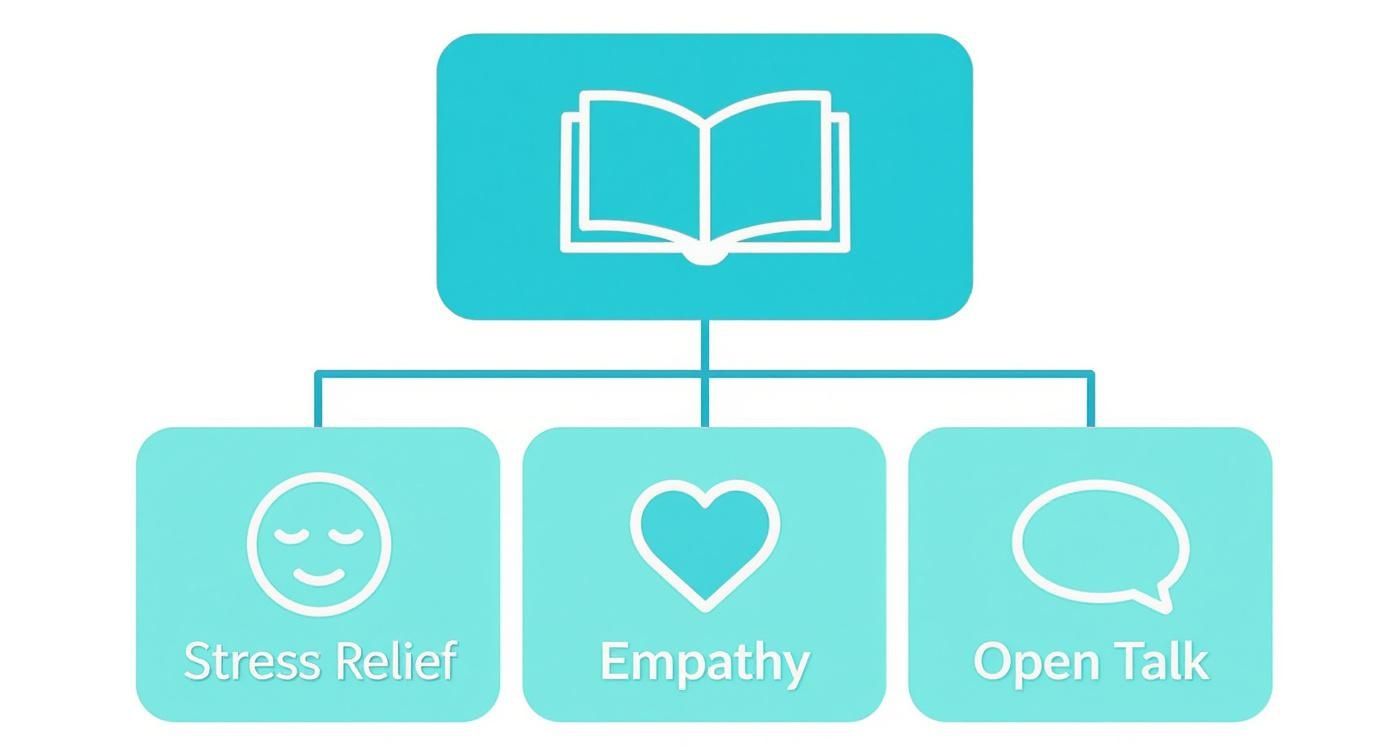
This really brings home that reading isn’t just a pastime; it's a tool that helps build the emotional foundations for life.
Resources for Teenagers (Ages 13+)
Teenagers need a completely different approach. They have a sharp eye for anything that feels patronising and value authenticity above all else. The best self-care books for this age group are often non-fiction guides that speak to them directly, journals with thoughtful prompts, or even fiction that explores mental health with real nuance.
Finding the right book means considering what developmental stage a young person is at. To make this easier, here's a quick breakdown of what to look for at different ages.
Selecting Self Care Books by Age Group
| Age Group | Book Type and Features | Common Self Care Topics Addressed |
|---|---|---|
| Toddlers (2-4) | Board books with bright, simple illustrations and minimal text. Interactive elements like flaps or textures. | Identifying basic emotions (happy, sad, angry), sharing, and simple comfort routines. |
| Early Years (5-7) | Picture storybooks with relatable characters and clear emotional plots. Early activity books with drawing prompts. | Naming more complex feelings (jealousy, excitement), navigating first friendships, and dealing with disappointment. |
| Primary (8-12) | Chapter books, graphic novels, and activity journals. Content includes practical exercises and strategies. | Building resilience, managing school anxiety, understanding empathy, coping with bullying, and developing self-esteem. |
| Teens (13+) | Non-fiction guides, journals with deep prompts, and realistic fiction exploring mental health themes. | Managing exam stress, navigating social media pressures, understanding anxiety and depression, identity, and healthy relationships. |
Ultimately, involving the young person in the choice is the most important step to ensure the book truly connects with them.
Topics that resonate could be anything from managing exam stress and navigating the minefield of social media to understanding depression and anxiety on a deeper level. For more specific titles, you can always check out our curated list of the best mental health books for young people.
And don't forget your local library! You can often discover diverse self-care resources at libraries, which is a fantastic, free way to try out different authors and styles. The best thing you can do is involve your teenager in the hunt—if they help choose it, they're far more likely to read it.
Making Self-Care Reading a Part of Your Family Routine
The true power of self-care books really comes alive when they become more than just a one-off read. When you start weaving them into your family’s natural rhythm, they transform from simple stories on a shelf into trusted, everyday tools for emotional wellbeing.
The idea here is to create positive, gentle habits around talking about feelings. This doesn't need to be some structured, formal lesson. Instead, think of it as sprinkling little moments of emotional awareness into your day-to-day life. The long-term impact of this kind of consistent support is huge, especially when you remember that mental health challenges affect a significant number of children right here in the UK.
Creating Calm and Connection
One of the simplest yet most effective things you can do is create a dedicated ‘calm-down corner’ somewhere in your home. This could be a cosy nook with soft cushions, a favourite blanket, and a small stack of self-care books.
It becomes a safe, go-to spot where your child can retreat when big feelings bubble up, using the books to self-soothe and make sense of it all.
Another great little trick is using the stories as natural conversation starters. If a character in a book has a disagreement in the playground, you can gently ask your child, “Has anything like that ever happened to you at school?” It’s a wonderfully low-pressure way to open up a chat about real-life challenges they might be facing.
Important Disclaimer: I am not a mental health professional. The tips and resources shared here are for informational purposes only. If you are worried about your child's mental health, it is essential to seek advice from your GP or a qualified professional.
Weaving Self-Care into Daily Habits
When you piggyback these practices onto routines you already have, they’re much more likely to stick. Here are a few practical ideas you could try:
- Bedtime Mindfulness: Got a book with simple breathing exercises or relaxation tips? Make it part of your bedtime routine to help your child wind down and switch off from the day.
- Journaling Together: If you're using an interactive journal, why not set aside ten minutes to sit and write or draw together? It’s a great way to spark some really meaningful discussions.
- Character Lessons: Chat about how a character in a story showed bravery or kindness, and gently link it back to your child’s own experiences. "That was a bit like when you..."
By making these books a regular, familiar part of your family life, you're constantly reinforcing the message that it’s okay to talk about feelings. You're doing so much more than just reading stories; you're building a solid foundation of emotional resilience that will support your child for years to come.
More Ways to Support Your Child's Wellbeing
While self-care books are a brilliant tool, they’re just one piece of a much bigger puzzle. Real, lasting wellbeing is built on a whole network of support, with different pieces working together. When you combine reading with other simple, practical techniques, you can make a huge difference in your child's ability to navigate their emotions day to day.
These extra tools don’t need to be complicated or time-consuming. In fact, some of the simplest relaxation exercises can be incredibly powerful. The next time you see your child starting to feel overwhelmed, you can guide them through a grounding technique right there in the moment. It’s a wonderful way to help them reconnect with the present and quieten those noisy, anxious thoughts.
Practical Relaxation Tips
- The Five Senses Game: This one is a classic for a reason. Ask your child to name five things they can see, four things they can physically feel, three things they can hear, two things they can smell, and one thing they can taste. It gently pulls their focus away from internal worries and grounds them in their immediate surroundings.
- Box Breathing: This is a fantastic, rhythmic breathing exercise. Guide them to breathe in for a count of four, hold for four, breathe out for four, and hold again for four. For younger children, it can help to have them trace a square in the air or on their knee as they breathe.
Normalising the Conversation
Beyond specific exercises, one of the most important things you can do is make mental health a normal, everyday part of your family’s vocabulary. Even small things, like having mental health apparel—a t-shirt or a hoodie with a positive, supportive message—can serve as a simple, visual reminder that it’s okay not to be okay. It helps reinforce that asking for support is a sign of real strength.
A Crucial Reminder: I am not a mental health professional. The information in this guide comes from a place of support and experience, but it is not a substitute for clinical advice. These tools are here to supplement professional care, not replace it.
If you are ever worried about your child's mental wellbeing, please don't hesitate to seek help. Your first port of call should always be your GP or a qualified professional who can offer a proper assessment and expert guidance. Organisations like YoungMinds also offer excellent, trusted resources for parents and young people all across the UK.
Common Questions About Self-Care Books
Diving into the world of emotional wellbeing can feel a little overwhelming, and it's natural to have questions. Let's walk through some of the most common queries that parents and guardians have when they start introducing self-care books to their kids.
At What Age Should I Introduce These Books?
Honestly, you can start as early as you like! For toddlers around age two, simple picture books are perfect for helping them put a name to big feelings like sadness or excitement. The most important thing is simply to match the book's ideas to where they are in their own development.
For primary school-aged children, you can start looking for stories that touch on themes like friendship, bouncing back from disappointment, and understanding others. Once they hit their teenage years, it’s a great idea to get them involved. Let them help choose books or journals that feel relevant to their own lives – it gives them a real sense of ownership over their wellbeing journey.
What if My Child Refuses to Read Them?
First off, don't force it. That's the quickest way to build a negative connection with reading about feelings. Instead, try to get curious about why they're not interested. Maybe the book you picked just doesn't click with them, and that's okay.
A gentle approach often works best. You could leave a few different kinds of books out in a common area, like the living room, with no pressure to read them. Another idea is to suggest reading a chapter together, or even looking at different formats like graphic novels or audiobooks that cover similar topics. The goal is to open a door, not shove them through it.
Crucial Disclaimer: I am not a mental health professional. This content is for informational purposes only and is not a substitute for professional medical advice. If you have serious concerns about your child's mental health, it is essential to contact your GP or a qualified counsellor.
Are These Books a Substitute for Therapy?
Absolutely not. Think of self-care books as brilliant tools to have in your emotional toolkit. They’re fantastic for building an emotional vocabulary, introducing coping strategies, and making it feel normal to talk about mental health. They are there to support wellbeing, not to treat clinical conditions.
If you are worried about your child’s mental health, seeking professional help is always the right first step. These books can then become a wonderful support to use alongside therapy, helping to reinforce the ideas discussed and offering a way to continue the conversation at home.
At Little Fish Books, we believe in empowering young people with the tools they need to understand and manage their emotions. Explore our curated collection of books and resources designed to support every stage of your child's emotional growth.
Find the perfect book for your family at https://thatsokay.co.uk today.