
What Is Emotional Maturity and How Do You Develop It?
When we talk about emotional maturity, what do we really mean? It’s far more than just keeping a stiff upper lip or hiding how you feel. At its heart, emotional maturity is the ability to understand your emotions, manage them, and express them in a healthy, constructive way. It's that crucial pause between feeling something and reacting to it.
This skill is what allows us to face life's ups and downs with a sense of perspective rather than just raw instinct. It’s the difference between lashing out in anger and taking a deep breath to figure out what's really bothering you.
Understanding Your Inner Compass

Think of yourself as the captain of a ship, navigating the vast ocean of life. Emotional maturity isn’t about hoping for clear skies and calm seas all the time. Storms are inevitable. Instead, it’s about having the skill to steer your ship through those storms with a steady hand, guided by a reliable inner compass.
It’s about building a deep, honest connection with your inner world. You learn to recognise your feelings without letting them take over the ship. In this guide, we'll explore what emotional maturity is, why it's so vital for our wellbeing, and how we can help nurture it in ourselves and in the children we care for.
The Four Pillars of Emotional Maturity
To really get to grips with this, it helps to break emotional maturity down into four core pillars. These aren't separate skills you learn one by one; they’re all interconnected, working together to build a strong emotional foundation. Think of them as the practical, everyday application of emotional wisdom.
The Four Pillars of Emotional Maturity at a Glance
This table offers a quick snapshot of what each pillar means and, more importantly, what it looks like in real life.
| Pillar | What It Means | Everyday Example |
|---|---|---|
| Self-Awareness | Being able to recognise and understand your own emotions and see how they affect your thoughts and actions. | Noticing you feel irritable because you're tired, and choosing to rest instead of picking a fight. |
| Accountability | Taking ownership of your actions and their impact, without blaming others for how you feel or react. | Saying, "I'm sorry, I overreacted," after snapping at a family member, rather than, "You made me angry." |
| Adaptability | The ability to adjust to change and handle unexpected setbacks with flexibility and a resilient spirit. | When a planned trip to the park is rained off, you calmly switch to an indoor game without getting frustrated. |
| Empathy | The skill of understanding and sharing someone else's feelings by seeing things from their point of view. | Genuinely listening to a friend's problem to understand how they feel, rather than jumping in with solutions. |
These pillars provide a framework for a more considered, connected, and resilient way of moving through the world.
It is important to remember that this article is for informational purposes only. I am not a mental health professional, and this content should not be used as a substitute for professional medical advice. If you have concerns about your own or a child's mental health, please seek guidance from a doctor or a qualified healthcare provider.
The Growing Need for Emotional Skills in UK Children
The ability to understand and work through our emotions isn't just a 'nice-to-have' skill; it’s a fundamental building block of a healthy, happy childhood. Yet, right across the UK, there's a worrying gap between the emotional tools children need and the ones they actually have.
This isn’t about blaming children for being 'difficult' or 'naughty'. It’s about recognising that these behaviours are often a sign that a child is struggling to cope with big feelings they just don’t have the words or skills to manage yet.
When a child has huge meltdowns over small setbacks, finds it impossible to share with their friends, or shies away from social situations, they’re communicating a need. These aren't the hallmarks of a 'bad' child, but of a child who hasn't yet developed the foundations of emotional maturity. Without the right support, this gap can have a serious impact.
It can lead to ongoing behavioural problems in the classroom, make it tough to build friendships, and even get in the way of learning. More seriously, it puts children at a much greater risk of developing long-term mental health problems as they get older.
The Scale of the Challenge in England
The situation is becoming more urgent by the day. Recent data paints a pretty stark picture of the emotional wellbeing of our young people, showing this is a widespread issue, not just something affecting a few families here and there.
Disturbing new figures from the NHS show that in 2023, one in five children and young people aged 8 to 25 in England had a probable mental health condition. This is a significant increase from one in nine in 2017, highlighting the growing crisis in youth mental wellbeing.
This data really hammers home a crucial point: helping children build emotional skills is no longer an optional extra. It’s an essential, proactive step we must take to support a generation navigating an increasingly complex world. Addressing mental health openly and early is vital to prevent these issues from escalating into adulthood.
Understanding the Broader Impact
The consequences of this trend stretch far beyond the school gates. Children who don't develop a healthy level of emotional maturity can find it incredibly hard to adapt to the pressures of adulthood. This has huge implications not just for their own personal wellbeing, but for society as a whole.
For businesses, the cost of poor mental health among employees is massive. A 2022 report by Deloitte found that poor mental health costs UK employers up to £56 billion per year, stemming from absenteeism, staff turnover, and lower productivity. By focusing on social emotional learning early on, we can give children the resilience they’ll need for their future careers.
On top of this, the rise of social media adds new layers of complexity. Young people are constantly seeing curated, perfect-looking lives online, which can fuel anxiety and social comparison, making it even harder for them to manage their own real-world emotions. To counter this, we need to make a conscious effort to build strong emotional foundations away from the screen.
Even simple things can make a world of difference. Encouraging a child to take a few deep breaths when they feel overwhelmed or just talking openly about feelings can build vital coping skills. Things like wearing mental health apparel or reading mental health books together can also help normalise these conversations and chip away at the stigma.
It's really important for me to say that while these strategies can be a great help, I am not a mental health professional. If you are ever worried about your child's emotional wellbeing, the best and most important step is to speak to your doctor for professional advice.
Recognising Emotional Maturity at Different Ages
Emotional maturity isn't some finish line you cross once and for all. It’s a lifelong journey, with different landmarks popping up at each stage of life. What emotional maturity looks like in a four-year-old is worlds away from what we’d hope to see in a teenager, a colleague, or even ourselves.
By getting a handle on these developmental milestones, we can set more realistic expectations and offer the right kind of support when it’s needed most. It gives us a practical roadmap, turning "emotional maturity" from an abstract idea into something we can actually see and nurture every single day.
The urgency of this topic can't be overstated. The following infographic shows just how sharply the emotional needs of UK children have risen in a very short space of time.
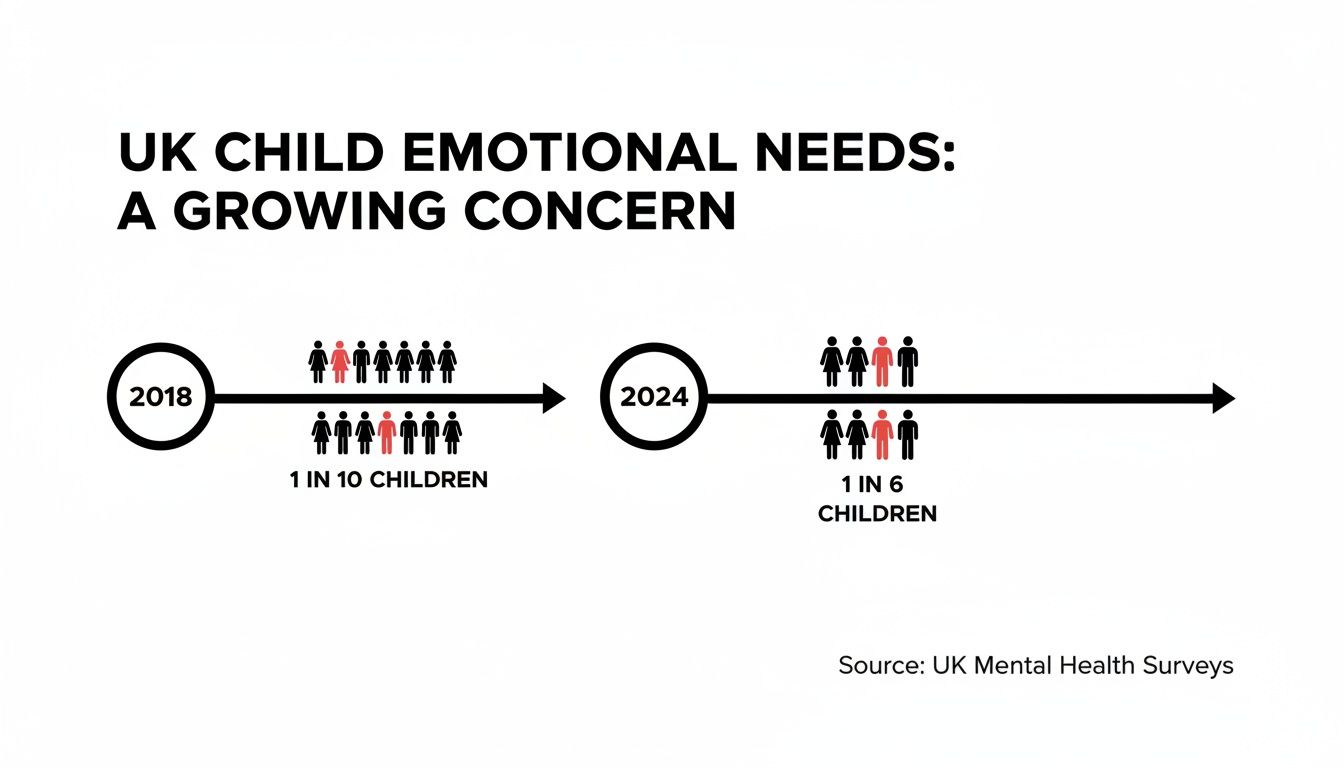
This jump from 1 in 10 children needing support in 2018 to 1 in 6 just six years later is a stark reminder of how vital it is for parents and educators to be proactive in fostering these skills from the very beginning.
Early Childhood Milestones
In the early years, emotional maturity is all about the building blocks of self-regulation and empathy. It’s the slow and steady process of moving from a world that revolves entirely around them to realising that other people have feelings and needs, too.
You can spot these early signs in action:
- Waiting Their Turn: A young child who can wait for the swing at the park without a full-blown meltdown is taking a huge step. For example, they might tell themselves, "My turn is next," and find something else to do for a minute.
- Using 'Feeling' Words: Instead of just crying or lashing out, a child might say, "I'm sad you took my toy." This is a massive leap, showing they can identify an emotion and communicate it.
- Offering Comfort: Seeing a friend fall over and instinctively offering them a hug or a toy is a classic sign of empathy beginning to blossom. For instance, they might say, "Are you okay?" and pat their friend's back.
These first steps are the absolute foundation upon which all future emotional skills are built. For a more detailed look, you can explore our guide to the specific child emotional development stages.
Navigating the Teen Years
Adolescence is a time of huge change, and emotional maturity here involves navigating tricky social pressures while trying to form a stable sense of who they are. It’s about learning to think beyond the immediate impulse and consider the long-term consequences of their actions.
A teenager showing real emotional growth might:
- Handle Peer Pressure: They can say "no" to something they're uncomfortable with, even if it means not fitting in with a particular group. For example, refusing to join in with gossip about a classmate.
- Accept Constructive Criticism: They can take feedback from a teacher or parent without getting defensive, understanding it’s meant to help them improve.
- Take Responsibility: When they mess up, they own it. For instance, if they miss a deadline, they'll admit it was their fault instead of blaming the teacher for not reminding them.
The journey through the teen years can feel turbulent. The goal isn't perfection, but progress—learning to manage intense emotions, developing a stronger moral compass, and building healthier relationships.
Emotional Maturity in Adulthood
For adults, emotional maturity shines through in how we handle responsibility, conflict, and our relationships. It’s about being reliable, accountable, and able to see perspectives beyond our own.
This could look like managing workplace feedback constructively or navigating a disagreement in a relationship without resorting to blame. Interestingly, research suggests there's a noticeable gap in how quickly men and women reach this stage. A landmark British study revealed that men reach full emotional maturity at age 43 on average—a full 11 years later than women, who typically mature by 32.
The research also found that 46% of women felt they had to 'mother' their male partners, telling them to 'act their age' around 14 times a year. This difference often comes down to cultural factors and societal expectations rather than biology.
Ultimately, regardless of gender, adult emotional maturity is about consistent, thoughtful behaviour that creates stability and trust in every area of life.
The Life-Changing Benefits of Emotional Growth
Putting in the time and effort to develop your emotional maturity pays off in every corner of your life. It isn’t just about feeling a bit better; it's about fundamentally changing how you connect with the world around you. This inner work leads to stronger relationships, deeper resilience, and a much more stable sense of who you are.
In our personal lives, emotional maturity is the glue that holds things together when times get tough. It helps us navigate arguments more effectively, swapping blame and defensiveness for empathy and a genuine desire to understand. Instead of reacting on impulse, you can actually listen to someone else's point of view, take responsibility for your part, and work towards a solution that builds trust instead of chipping away at it.
Boosting Wellbeing and Professional Success
This skill is also a powerful buffer against common mental health struggles like anxiety and depression. When you learn to manage your own emotional state, you build the resilience to handle setbacks without feeling completely knocked over. It creates a sense of inner calm and control, even when everything outside feels chaotic.
Professionally, the benefits are just as clear. Emotional maturity is a hallmark of great leadership. It allows managers to give feedback that helps people grow, inspire real teamwork, and handle pressure with grace. For everyone else, it translates into better collaboration and a more positive place to work. The economic impact is undeniable; poor mental health costs UK businesses billions each year in lost productivity, making emotional wellbeing a vital asset for everyone.
A critical part of understanding what emotional maturity is involves seeing it as an active, ongoing practice. It’s the consistent choice to respond with thought rather than react with instinct, creating a ripple effect of positivity in your relationships, career, and overall mental health.
Addressing the National Skills Gap
The need to nurture these skills from a young age is becoming more urgent than ever. Concerning data from 2022 revealed that 15- and 16-year-olds in England are lagging significantly behind their global peers in crucial socio-emotional skills. This gap covers core traits of emotional maturity, including emotional control, empathy, persistence, and stress resistance. You can read the full research about these findings to understand the scale of the challenge our young people are up against.
This isn’t just a personal problem for individual children; it's a national issue with long-term consequences. Fostering emotional maturity is a vital investment in our collective future. It equips the next generation with the tools they need to build healthier relationships, succeed in their careers, and contribute to a more stable and compassionate society. By focusing on emotional growth today, we're paving the way for a more resilient and connected tomorrow.
Practical Strategies to Cultivate Emotional Maturity
Knowing what emotional maturity is gives you the map, but now it’s time to actually start the journey. The good news is that cultivating this skill isn't about making massive, sweeping changes overnight. It’s built through small, consistent, and intentional actions that, over time, create a powerful emotional foundation for you and your family.

This isn't a set of complex psychological exercises. Think of it as a toolkit filled with simple, actionable strategies that anyone can start putting into practice today.
Start with Labelling Your Feelings
One of the most powerful first steps is simply growing your emotional vocabulary. So often, children (and many adults!) get stuck with basic labels like 'sad', 'mad', or 'happy'. The problem is, if you can’t name a feeling, it’s almost impossible to manage it.
Start making a conscious effort to label feelings as they pop up. For instance, instead of saying, "Stop being naughty," you could try, "I can see you're feeling really frustrated because playtime is over." This tiny shift validates what they're feeling and gives them a word for it, a vital skill for building resilience. You can learn more about how to build emotional resilience in our dedicated guide.
Practise Simple Relaxation Techniques
When big emotions take over, our bodies flip into fight-or-flight mode. Teaching simple relaxation techniques gives children a physical 'off-switch' to help calm their nervous system right down.
One of the easiest and most effective methods is Box Breathing. It’s simple enough for even very young children to grasp and can be done absolutely anywhere.
- Breathe in slowly for a count of four.
- Hold your breath for a count of four.
- Breathe out slowly for a count of four.
- Wait for a count of four before breathing in again.
Practising this together when everyone is already calm makes it much easier to remember and use when a stressful moment hits. Another simple tip is progressive muscle relaxation: tense the muscles in your toes for five seconds, then relax them. Work your way up the body, tensing and relaxing different muscle groups. This helps release physical tension tied to emotional stress.
Model Healthy Coping Mechanisms
Children learn far more from watching what we do than from listening to what we say. When you face a setback, how do you react? Do you get angry, start blaming others, or just shut down?
Modelling healthy coping might sound like saying, "I'm feeling really disappointed that our plans were cancelled. I'm going to take a few minutes to sit quietly before we decide what to do next." This shows your child that it’s perfectly okay to feel upset and gives them a constructive example of how to handle it.
By modelling accountability and emotional regulation, you are providing a living, breathing blueprint for what emotional maturity looks like in action. It’s one of the most profound ways to teach this essential life skill.
Utilise Books and Creative Resources
Stories are a fantastic way to explore complex emotions from a safe and relatable distance. Reading books that feature characters navigating tricky feelings like jealousy, fear, or loss can open up incredibly important conversations.
These resources act as a natural springboard for discussion, helping children see that their feelings are normal and that other people experience them too. To support their emotional development, explore different books about social emotional learning to find titles that can help you on this journey.
Spark Conversations with Mental Health Apparel
Sometimes, just getting a conversation about mental health started is the hardest part. Something as simple as mental health apparel—like a hoodie or t-shirt with a positive affirmation—can act as a gentle, low-pressure conversation starter.
It helps to normalise talking about wellbeing and sends a clear message that it's okay to not be okay. This can chip away at the stigma within the family and the wider community, making it easier for everyone to speak openly about their emotional state without any fear of judgement.
It's important to remember that these strategies are for guidance and support. I am not a mental health professional, and this advice is not a substitute for professional help. If you are ever worried about your own or your child's mental health, the most important step you can take is to speak with your doctor or a qualified healthcare provider.
Knowing When to Seek Professional Support
While all the strategies we've talked about are powerful tools for growth, it's so important to recognise their limits. Building emotional maturity is a lifelong journey, but sometimes, we come up against challenges that need a bit more than self-help or parental guidance. Knowing when to reach out for professional support isn’t a sign of failure—it's a sign of real strength.
The goal here is to get rid of any stigma around asking for help and make you feel confident taking that next step if you need to. Learning to manage our everyday feelings is one thing, but dealing with emotional distress that just won't go away is something else entirely.
Recognising the Red Flags
Certain signs can suggest it’s time to chat with a professional. This isn't a definitive checklist, of course, but these red flags can indicate that there might be underlying issues needing specialised attention, for both children and adults.
Keep an eye out for patterns like these:
- Persistent Mood Changes: A long spell of sadness, irritability, or anxiety that just doesn't seem to lift.
- Extreme Emotional Outbursts: Reactions that are consistently and significantly out of proportion to what's going on.
- Social Withdrawal: Actively avoiding friends, family, or activities that they used to love.
- Significant Decline in Performance: A noticeable drop in grades at school or productivity at work that feels out of character.
- Changes in Sleep or Appetite: Drastic shifts in sleeping patterns or eating habits that are affecting daily life.
These behaviours can point to deeper struggles that would benefit from a professional's insight. They are not signs of a personal failing, but indicators that a bit of extra support could make all the difference.
Disclaimer: Please remember, I am not a mental health professional. This article is for informational purposes only and shouldn't be taken as a substitute for proper medical advice. Your wellbeing is the absolute priority.
If you are worried about your own or your child's mental health, your GP is always the best first port of call. They can listen to your concerns, offer initial advice, and refer you to specialised services like the Child and Adolescent Mental Health Services (CAMHS) if needed. Taking that first step is a courageous and incredibly responsible act of care.
Your Questions Answered
When we start talking about emotional maturity, it often opens up a flood of other questions. It’s a big topic! Let's clear up a few of the most common ones that come up.
Is Emotional Maturity Just Another Term for Emotional Intelligence?
That's a great question, and it’s easy to see why people get them mixed up. They’re definitely related, but they’re not the same thing.
Think of emotional intelligence (EQ) as the knowledge you have about emotions – your ability to recognise, understand, and label feelings in yourself and others. Emotional maturity, on the other hand, is the action. It’s how you consistently and wisely apply that emotional knowledge, especially when things get tough.
You can have a sky-high EQ, able to read a room perfectly, but still react impulsively under pressure. True maturity is less about what you know and more about what you do, shown through thoughtful behaviour and sound decisions over time.
Can You Still Develop Emotional Maturity as an Adult?
Absolutely. In fact, for many of us, the real work doesn’t even start until adulthood. Emotional growth isn’t a race with a finish line in your twenties; it's a lifelong journey. Life experience gives us more to work with, more patterns to notice, and more motivation to change.
Adults can actively cultivate it through things like:
- Self-reflection: Pausing to honestly ask, "Why did I react like that?"
- Asking for feedback: Genuinely wanting to know how your actions land with others.
- Working with a therapist: Getting professional guidance to unpack your emotional habits.
- Reading insightful books: Learning from psychologists and others who’ve explored this territory.
It all boils down to a genuine desire to understand yourself better and take ownership of your emotional world.
What's the Impact of Social Media on a Teen's Emotional Growth?
Social media is a real double-edged sword here. On one hand, it can open up a teen’s world, exposing them to different perspectives and fostering a sense of global connection. But on the other, it can put some serious roadblocks in the way of developing emotional maturity.
The constant comparison, the pressure to maintain a perfect online persona, and the way it enables conflict without real-world consequences can make it incredibly hard for teens to sit with their own messy, authentic feelings. This pressure to present a curated, perfect self can stunt the very growth they need.
It’s so important for parents and carers to keep the lines of communication open about the pressures of being online and, crucially, to model what healthy, real-world connections look like.
At Little Fish Books, we believe that helping our children build emotional skills is one of the most important things we can do. Take a look through our collection of books, activities, and resources, all designed to help young people understand their feelings and build a strong foundation for a happy, resilient life. Visit our online store today to find the perfect tools for your family's emotional growth journey.