
What Is Emotional Support? Meaning, Examples and How to Give It
Last updated: 1 October 2026
Emotional support: a quick definition
Emotional support means helping someone feel heard, understood and less alone, by listening, showing empathy, and offering comfort and reassurance. It is different from practical support (doing things for someone) or giving advice.
Examples: listening without judging, naming how someone feels ("that sounds really hard"), a hug or sitting together, checking in later, and encouraging them to get extra help if they need it.
When we talk about emotional support, what do we really mean? At its heart, it's about offering care, empathy, and acceptance to someone, helping them feel truly seen and valued.
It's about simply being there for another person. You’re providing a safe space for them to open up about their feelings without you jumping in to try and fix everything. Think of yourself as a comforting presence that validates their emotional experience, whatever it may be.
Unpacking What Emotional Support Really Means

Picture a child navigating the choppy waters of their feelings—anger, sadness, or anxiety. In this picture, emotional support is the safe harbour you provide. It’s not about stopping the storm or telling them how to steer their boat. Instead, you offer a calm, steady anchor where they can rest, feel secure, and know they aren’t alone in the storm.
This kind of support is absolutely fundamental to a child's mental wellbeing. It teaches them that their feelings are valid, which is a cornerstone for developing strong what is emotional literacy. When children feel heard and accepted, they learn to trust their own emotions. This builds a foundation for resilience that will serve them for the rest of their lives.
Core Components of Emotional Support
So, what does this "safe harbour" actually look like in practice? It’s less about grand gestures and more about the small, consistent actions that show you care and understand.
- Active Listening: This means putting your phone away, turning off the telly, and giving them your full attention. Really hearing what’s being said (and what isn’t).
- Empathy and Validation: Acknowledging their feelings with simple phrases like, "That sounds really difficult," or "I can see why you feel so upset."
- Non-Judgemental Presence: Creating an atmosphere where your child knows they can share anything without being afraid of criticism or being dismissed.
- Reassurance and Comfort: Offering simple, comforting words or a physical gesture, like a hug, to show you’re right there with them.
It's so important to remember that emotional support is different from other kinds of help. It isn't about giving advice, solving the problem for them, or telling someone how they should feel. Its real power is in connection and acceptance.
Clarifying Different Types of Help
To make this even clearer, let's take a quick look at what emotional support is and what it isn't. This distinction really helps us see its unique and vital role in our relationships, especially with our children.
Emotional Support at a Glance
This little table breaks down the key differences, helping to show exactly what we're aiming for when we offer emotional support.
| Key Aspect | What Emotional Support Provides | What It Is Not |
|---|---|---|
| Primary Goal | To offer comfort, validation, and a sense of being understood. It’s about connection. | To fix the problem, offer solutions, or provide practical assistance (like doing their homework for them). |
| Main Action | Listening with empathy, validating feelings, and just being present for the person. | Giving advice, directing their actions, or trying to change how they feel. |
| Outcome | The person feels heard, less alone, and emotionally secure. | The problem might be solved, but the person may not have felt emotionally understood or supported. |
| Example | "It sounds like you had a really tough day at school. I'm here to listen if you want to talk about it." | "Don't be sad. You just need to tell the teacher and it will be sorted." |
Ultimately, providing genuine emotional support strengthens your bond and creates an environment where children can thrive emotionally. It gives them the confidence they need to face life's inevitable challenges, knowing you've always got their back.
Why Emotional Support Is More Crucial Than Ever
It feels like the world is spinning faster than ever, doesn't it? For children and young people, the pressures are piling up, creating a complex world that can feel impossible to handle alone. This is why understanding what emotional support truly means, and how to give it, has never been more important.
From the relentless pings of social media to looming academic expectations, kids today are navigating challenges previous generations never even imagined. This new landscape demands we pay closer attention to their mental wellbeing, making the steady, reassuring presence of a supportive adult an absolute lifeline.
The Growing Pressures on Young Minds
Let's be honest: mental health challenges among young people are on the rise. A huge part of this is the influence of social media, which often breeds a toxic culture of comparison and perfectionism. It can quietly chip away at a child’s self-esteem, leaving them feeling like they’re never quite good enough.
But it’s not just what’s happening on-screen. The pressure to achieve at school seems to start earlier and earlier. When you mix these social and academic stresses together, having a safe space to talk about it all isn't just a nice-to-have—it's essential for healthy development.
A child’s emotional wellbeing is the foundation upon which they build their future. When we fail to provide adequate emotional support, we're not just affecting their present; we're impacting the adults they will become and the society they will shape.
This isn't just a family matter; it ripples out into the wider world. Poor mental health in childhood can cast a long shadow, affecting everything from education and employment to the health of our economy. In fact, mental health problems cost UK businesses tens of billions of pounds each year in lost output. Investing in a child's emotional health now is truly an investment in all of our futures.
Responding to the Rising Need
The numbers don't lie. Across the UK, the demand for mental health services has exploded, pointing to an urgent need for support. It's estimated that one in five children and young people aged 8 to 25 had a probable mental health condition in 2023. This dramatic rise is exactly why informal, day-to-day emotional support from family and carers is so critical. You can dig into the statistics on the British Medical Association's website.
While professional help is vital for many, the first line of defence is often a compassionate ear at the kitchen table.
Simple, consistent actions can make a world of difference:
- Mindful Moments: Take five minutes each day to do a simple breathing exercise together.
- Open-Ended Questions: Instead of the classic "How was school?", try asking, "What was the most interesting part of your day?"
- Shared Reading: Use mental health books for children to gently open up conversations about feelings.
As a final note, I want to be clear that I am not a mental health professional. The advice and information shared here are for educational purposes. If you have any serious concerns about your child's mental health, please reach out to your doctor or another qualified professional for guidance.
Distinguishing Emotional Support from Therapy
It’s completely understandable why people often use "emotional support" and "therapy" in the same breath. Both can offer a listening ear and a sense of comfort, but they actually play very different roles in our mental wellbeing. Getting clear on the difference is the first step to knowing what kind of help a child needs, and when they need it.
Let's try a simple analogy. Think of emotional support as emotional first aid. If a child scrapes their knee, you’re right there in the moment to clean the cut, pop a plaster on, and give them a big, reassuring hug. In the same way, when they're feeling emotionally hurt or overwhelmed, emotional support is that immediate care you provide—simply listening, validating how they feel, and making them feel safe and seen.
Therapy, on the other hand, is like seeing a specialist doctor. If that scraped knee gets infected or turns out to be a more serious injury, you'd go and get professional medical help. Therapy is the emotional equivalent: a structured, professional process led by a qualified expert to address persistent emotional difficulties, dig into underlying issues, or treat mental health conditions.
Emotional Support Versus Professional Therapy
The real differences come down to the goals, the qualifications of the person providing the help, and the setting. Emotional support can be given by anyone who cares—a parent, a friend, a teacher, a sibling. It’s built on a foundation of trust and empathy, and its main goal is to offer comfort and validation right when it's needed.
Professional therapy is a different kettle of fish. It’s provided by a trained and licensed professional, like a psychologist or counsellor, who uses evidence-based techniques to help people understand and manage their thoughts, feelings, and behaviours over the long term. The goals here are usually much more specific, like developing new coping strategies or healing from past trauma.
- Who Provides It? Emotional support comes from friends, family, or anyone in a person's trusted circle. Therapy is delivered exclusively by qualified, accredited professionals.
- What's the Goal? Emotional support aims to provide immediate comfort and validation. Therapy aims to create long-term change, develop coping mechanisms, and treat mental health conditions.
- What's the Context? Emotional support is informal and happens naturally within relationships. Therapy is a formal, confidential, and structured process with scheduled sessions.
This infographic really drives home the pressures modern children face, highlighting why both that informal support from loved ones and professional help are so crucial.
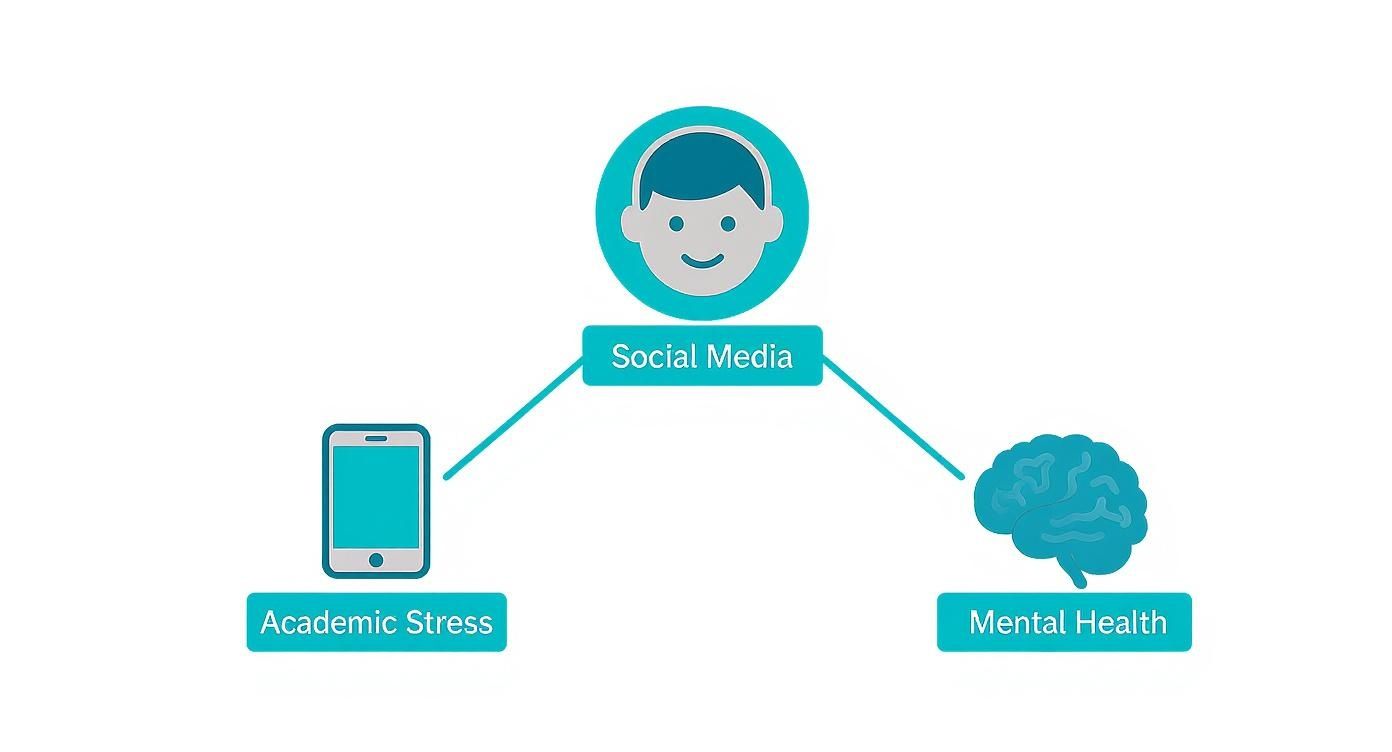
As you can see, things like academic stress, social media pressures, and mental health are all tangled together, creating a complex web of challenges for young people today.
Other Forms of Support
To paint a full picture, it’s helpful to see how emotional support stacks up against other types of help. This little table breaks down the key differences to make sure we’re not blurring any important boundaries.
Comparing Support Types
| Support Type | Who Provides It | Primary Goal | Example Scenario |
|---|---|---|---|
| Emotional Support | Friends, family, teachers | To provide comfort, validation, and a safe space for feelings. | Listening to a child talk about their fear of a school test without offering solutions, just empathy. |
| Therapy | Licensed professionals | To diagnose, treat mental health conditions, and build long-term coping skills. | A therapist working with a child on cognitive behavioural techniques to manage anxiety. |
| Practical Support | Anyone | To complete tasks and reduce tangible burdens. | Helping a teenager create a revision timetable or cooking them a healthy meal during exam week. |
| Emotional Support Animal (ESA) | A prescribed animal | To provide companionship and comfort as part of a formal treatment plan. | A child's dog, prescribed by a therapist, offering a calming presence during panic attacks. |
This comparison really highlights the unique and powerful role of emotional support. It's not about fixing problems or offering professional advice; it’s about being truly present for our loved ones in a way that matters, while also recognising when it's time to encourage them to reach out for more specialised help.
Important Note: I am not a mental health professional. This information is for educational purposes only. If you are worried about your own or someone else's mental health, it is vital to seek advice from a doctor or a qualified mental health expert.
How to Provide Effective Emotional Support
Knowing what emotional support is and why it’s so important is one thing. But how do we actually put that knowledge into practice? Let’s move from theory to action with some simple, powerful strategies you can start using today. Giving great support isn't about having all the answers; it's about building a connection that makes your child feel safe, seen, and truly heard.

At its heart, genuine support is less about what you say and more about how you listen. It's about showing up consistently and creating a space where honesty is welcome and feelings are always valid—even when they’re messy or inconvenient.
The Power of Active Listening
Active listening is a world away from just hearing words. It’s about absorbing the emotion behind them. This means putting your phone down, making eye contact, and giving your child your full, undivided attention. It sends a powerful message: "You matter. Your feelings matter to me."
This simple act can feel revolutionary in a world packed with distractions. It builds a bridge of trust that allows for deeper, more meaningful conversations down the line.
When we're thinking about how to offer support, particularly in a family setting, techniques like fostering sustained shared thinking can be a game-changer. This approach takes simple chats and turns them into moments of real, shared understanding.
Validate Feelings Before Offering Solutions
Our instinct as parents is to fix things. When our child is hurting, we want to leap in with advice and solutions to make the pain disappear. But one of the most crucial parts of emotional support is to resist the urge to fix it immediately.
Instead, start by just validating their feelings. This simply means acknowledging their emotion without judgement. It tells them that it’s okay to feel whatever they're feeling, which is a massive cornerstone of emotional health.
Here’s what that shift looks like in real life:
-
For a Young Child (Ages 4-7):
- Instead of: "Don't be sad, it's just a broken toy."
- Try: "I can see you're feeling really sad that your toy broke. It's okay to feel sad about that."
-
For an Older Child (Ages 8-12):
- Instead of: "You just need to tell the teacher if they're being mean."
- Try: "It sounds like you felt really left out and hurt today. That must have been tough."
-
For a Teenager:
- Instead of: "Everyone feels stressed about exams, you just have to study harder."
- Try: "That sounds incredibly overwhelming. I'm here to listen if you want to talk it through."
Moving from solving to validating creates a safe space where they feel truly understood, not just managed.
Building a Consistently Safe Environment
Emotional support isn’t a one-off conversation. It’s built through small, consistent, reliable actions over time. You are building an environment where your child knows, without a shadow of a doubt, that they can come to you with anything.
This means being predictable in your emotional responses. If one day you listen patiently but the next you dismiss their feelings because you're stressed, that safe space gets fractured. Consistency is everything.
The goal isn't to raise a child who never struggles. The goal is to raise a child who knows how to ask for help and trusts that they will be met with compassion and understanding when they do.
To help keep this supportive atmosphere going, try weaving in some simple, regular check-ins. These don't have to be big, formal sit-downs.
- During a car ride: "What was one thing that made you smile today, and one thing that was a bit tricky?"
- At bedtime: "Is there anything on your mind tonight before we go to sleep?"
- While cooking dinner together: "How are things feeling with your friends at the moment?"
These small, everyday moments build a powerful foundation of trust. They show that you care about their inner world and are a reliable source of support. Remember, providing emotional support is a skill that grows with practice—for both you and your child.
Disclaimer: Please remember, I am not a mental health professional. The information and suggestions provided in this article are for educational purposes only. If you are worried about your child's mental health, it is essential to seek guidance from a doctor or a qualified mental health expert.
Recognising When Professional Help Is Needed
Knowing how to offer emotional support is a powerful skill, but it’s just as important to recognise its limits. Think of yourself as a safe harbour for your child during an emotional storm. You can offer shelter and comfort, but you're not equipped to navigate a hurricane. Understanding when a child needs more specialised help is a crucial part of looking after their wellbeing, and it empowers you to take the right action at the right time.
Emotional support is often the first line of defence, but sometimes, professional help is the necessary next step. This isn’t a sign that you've failed; it’s a sign of responsible and attentive care. The goal is simply to make sure your child gets the precise support they need to thrive.
Key Signs to Look For
Spotting the signs that a child might be struggling beyond the usual ups and downs can be tricky. Every child is different, of course, but there are some persistent changes in behaviour and mood that warrant closer attention. We're not talking about one-off bad days, but consistent patterns that start to affect their daily life.
- Persistent Mood Changes: This could be ongoing sadness, irritability, or feelings of hopelessness that just don’t seem to lift.
- Social Withdrawal: A noticeable shift in their social habits, like avoiding friends, family, or events they once loved.
- Loss of Interest: Losing enthusiasm for hobbies, sports, or activities that used to bring them genuine joy.
- Significant Changes in Sleep or Appetite: Either sleeping much more or less than usual, or noticeable changes in their eating habits.
- Difficulty at School: A sudden drop in performance, trouble concentrating, or actively avoiding school altogether.
Observing these signs doesn’t automatically mean there’s a serious problem, but they are signals to start a conversation and think about seeking professional advice. It's also vital to educate yourself on specific indicators, such as postpartum depression warning signs, to ensure timely support for the entire family's mental wellbeing.
Taking the Next Steps
If you are worried, the first and most important step is to speak to a professional. Your GP is an excellent starting point. They can listen to your concerns, offer initial advice, and refer you to specialised services like Child and Adolescent Mental Health Services (CAMHS) if needed.
The need for this kind of support is growing. In the UK, one in five adults now lives with a common mental health problem, and for young people aged 16–24, these rates have shot up. Worryingly, 33% of young people report having unmet mental health needs, often having to rely on school counselling services for help. You can read more in Mind's Big Mental Health Report.
Disclaimer: I am not a mental health professional. The information provided in this article is for educational purposes only and is not a substitute for professional medical advice. If you have concerns about your child's mental wellbeing, it is essential to consult your doctor or a qualified mental health professional.
Building Your Own Support Skills
While you're in the process of seeking professional help, you can also build your own skills to better support your child at home. Understanding the fundamentals of mental health support can make a huge difference. You can find out more by checking out our guide on Youth Mental Health First Aid, which provides practical skills to help young people who are experiencing mental health problems.
Remember, reaching out for help is a sign of strength. It shows you are committed to your child’s health and are taking proactive steps to ensure they get the best possible care. You are their biggest advocate, and getting the right support is a team effort.
Building a Toolkit for Emotional Resilience
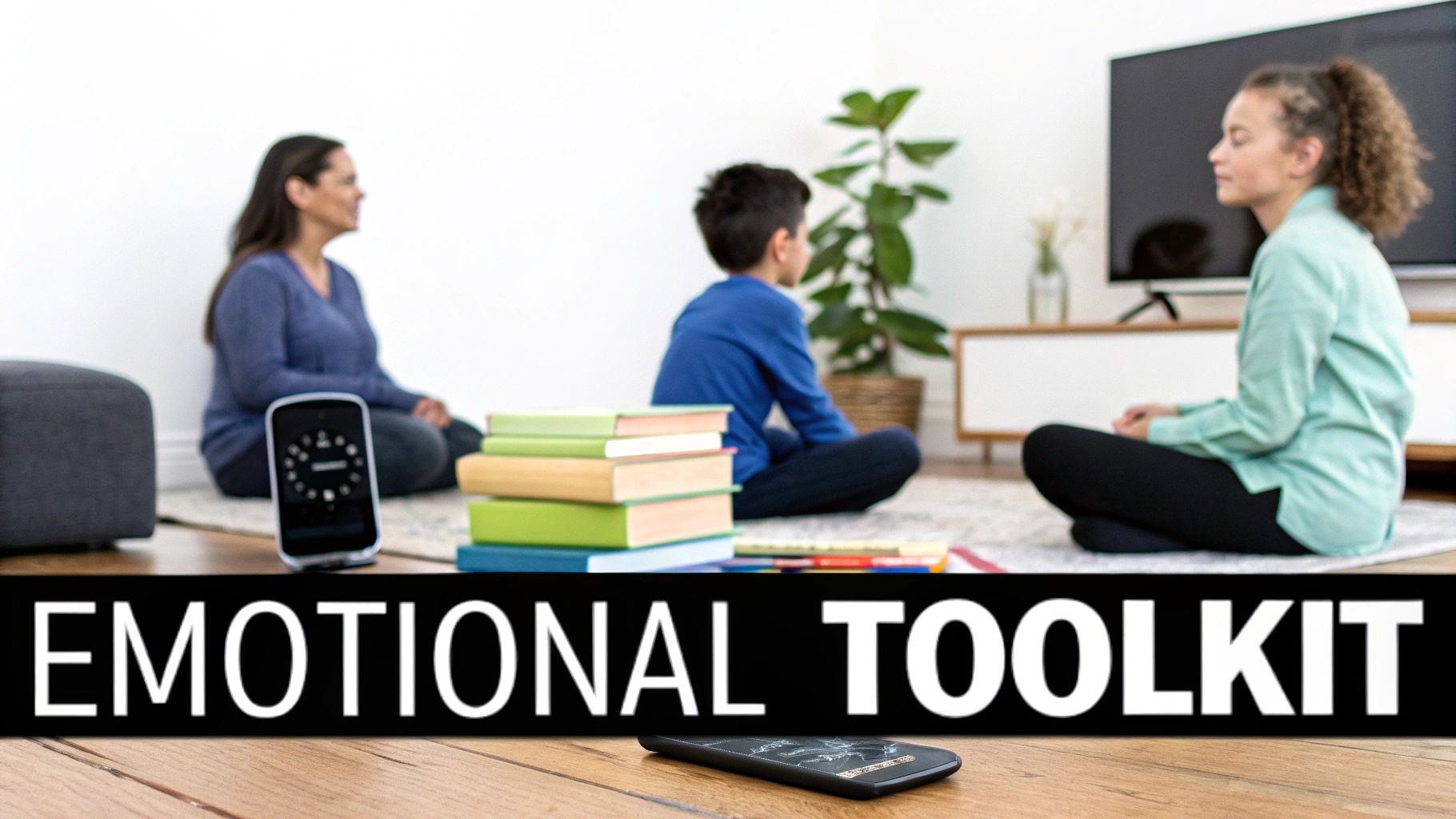
So, we’ve wrapped our heads around what emotional support really is and when it might be time to bring in a professional. Now for the fun part: filling our homes with practical, everyday tools that help build lasting resilience in the whole family.
Think of it as creating a home culture where emotional health is talked about openly and looked after proactively. These strategies aren't complicated or time-consuming. They’re small, consistent actions that together weave a strong safety net of support and understanding. From simple relaxation exercises to sharing a book, these tools help normalise big feelings and give kids the skills to handle life’s inevitable bumps in the road.
Simple Relaxation Techniques for the Family
When stress levels are high or emotions feel overwhelming, having a go-to relaxation technique can be a game-changer for kids and adults alike. The best part? When you practise them together, they become a shared family skill.
- Box Breathing: This one is incredibly simple but so powerful. Breathe in for a count of four, hold for four, breathe out for four, and hold again for four. That steady rhythm helps calm the nervous system right down.
- Mindful Listening: Sit quietly together for just one minute. The challenge is to notice all the different sounds you can hear, both close by and far away. It’s a great way to pull focus away from swirling thoughts and get grounded in the present.
- A "Calm-Down Corner": Find a cosy spot in your home and fill it with soft cushions, a weighted blanket, and a few comforting books. This isn’t a time-out spot; it’s a safe space to retreat to when emotions just feel too big to handle.
These simple practices give children tangible ways to manage stress, teaching them they have some control over how they feel. If you'd like to explore this further, you can learn more about how to build emotional resilience in our dedicated guide.
Sparking Conversations with Books and More
Sometimes, a story can say what we're struggling to find the words for. Using books as a gentle starting point can open up tricky conversations about feelings, worries, and mental health.
Reading about a character who feels anxious or sad helps validate a child's own feelings, showing them they aren't alone. It builds a bridge, making it easier for them to share what's on their mind in a safe and relatable way.
Creating a little library of age-appropriate mental health books for both children and grown-ups can be a fantastic family resource. But the conversation doesn’t have to end with books. Even something as simple as the clothes we wear can act as a gentle reminder. Mental health apparel, like a t-shirt with a positive message, helps to normalise these discussions, reduce stigma, and make emotional wellbeing a visible part of family life.
Ultimately, building this toolkit is an ongoing journey of connection and learning. By equipping your family with these resources, you’re not just offering emotional support in the moment – you’re nurturing a resilient mindset that will last a lifetime.
Your Questions Answered: A Practical Guide to Emotional Support
Stepping into the world of emotional support can feel like navigating new territory. It’s natural to have questions and feel a bit unsure. But here’s the thing: the goal isn't to be perfect. It’s simply to connect. Let’s walk through some of the most common worries parents and carers have.
Remember, you are the most important guide on your child’s emotional journey. Your willingness to listen, learn, and just be there is the most powerful tool you’ll ever have.
What if I Don’t Know the Right Thing to Say?
This is a fear every single one of us has felt. But here’s a little secret I’ve learned: listening is almost always more powerful than speaking. You don’t need a perfectly crafted script.
When you simply offer your full, undivided attention and create a space free from judgement, you’re sending the clearest message possible: "Your feelings are valid, and they are safe with me."
Sometimes, the simplest phrases are the most comforting:
- "That sounds really tough."
- "Thank you for sharing that with me."
- "I'm right here with you."
And don't underestimate the power of quiet. Just sitting with them in silence can communicate more care and solidarity than words ever could. Your presence is the real support.
Can I Give My Child Too Much Emotional Support?
That's a really thoughtful question. We all want to support our kids without accidentally preventing them from building their own resilience. It's all about finding the right balance between validating their feelings and fostering their independence.
Emotional support isn’t about solving every problem for them. It's about giving them the confidence to face challenges themselves, knowing they have a secure base to return to, no matter what.
The aim is not to clear the path of all obstacles, but to give your child the skills and confidence to navigate the path themselves, knowing you're always there to help if they stumble.
Once you’ve listened to how they feel, gently encourage them to think of their own solutions. Asking "What do you think you could do?" shows you trust their abilities and helps them build that all-important self-reliance.
How Do I Start a Conversation About Mental Health?
Bringing up mental health can feel like a big, formal event, but it absolutely doesn't have to be. The best way is to look for natural, everyday openings. Using a character from a film they love or a story from a book (like one of ours!) can be a gentle and relatable way in.
You could try a simple, open-ended question that doesn't put them on the spot:
- "I was just wondering how you've been feeling in yourself lately?"
- "Has anything been on your mind that's felt a bit heavy?"
Ultimately, the most important thing is to create a home where talking about feelings is just a normal part of life. This starts with you. When you're open about your own emotions (in an age-appropriate way, of course), you give your child unspoken permission to do the same.
At Little Fish Books, we believe every family deserves the tools to build a strong foundation of emotional wellbeing. We pour our hearts into creating beautifully illustrated books, engaging activities, and supportive resources designed to help you start these important conversations and nurture resilience in your child. Discover your next favourite family resource at https://thatsokay.co.uk.