

What Is Mindfulness for Kids? A Guide to Calm and Focus
So, what exactly is mindfulness when we're talking about children?
Put simply, it’s the practice of paying attention to right now, on purpose. It’s a way of noticing your breath, your feelings, and everything happening around you without judgement or getting swept away by a whirlwind of busy thoughts.
Understanding Mindfulness as a Superpower for Young Minds
In a world buzzing with notifications, school pressures, and the endless scroll of social media, a child's mind rarely gets a moment of quiet. This constant stimulation can easily lead to feeling overwhelmed, anxious, or just plain unable to focus. This is where mindfulness steps in, not just as a nice idea, but as an essential life skill.
Think of mindfulness as a pause button. It’s not about emptying the mind or stopping thoughts altogether—an impossible task for anyone, let alone a child! Instead, it’s about learning to observe those thoughts and feelings like clouds passing in the sky. You see them, you acknowledge them, and then you just let them drift by without needing to chase after them.
To make this a bit clearer, let’s look at how these concepts play out in a child's world.
Mindfulness for Kids at a Glance
This table breaks down some of the core ideas of mindfulness and compares them to things a child already understands.
| Mindfulness Concept | What It Means for a Child | A Simple Analogy |
|---|---|---|
| Present Moment Awareness | Noticing what's happening right now, not worrying about yesterday or tomorrow. | Like pressing 'pause' on a game to look around the room and see what’s really there. |
| Non-Judgement | It’s okay to have any feeling – happy, sad, angry. You don’t need to label it "good" or "bad." | Feelings are like the weather. You can't control if it rains, but you can notice it's happening. |
| Observing Thoughts | Seeing your thoughts come and go without getting stuck on them. | Your thoughts are like bubbles floating by. You can watch them without having to pop them. |
| Mindful Breathing | Using your breath as an anchor to feel calm and centred. | Your breath is like a superhero's anchor that holds you steady when the sea gets stormy. |
Seeing it laid out like this helps us realise we're not teaching kids some mystical, complex practice. We're just giving them simple, powerful tools to navigate their inner world.
Why It Matters Now More Than Ever
Addressing mental health from a young age is crucial for raising resilient, happy adults. The reality is that children today are facing significant emotional hurdles. A landmark 2023 NHS England survey revealed a shocking statistic: one in five children (that’s 20.3% of 8–16 year olds) in England had a probable mental disorder.
This data shows a worrying trend and highlights how these struggles touch every part of a child's life, from feeling safe at school to simply being able to enjoy learning. You can read the full research on children's mental health to get a clearer picture of the scale of the issue.
This isn’t just a personal struggle; it has much wider effects. Poor mental health in childhood can lead to long-term difficulties that impact everything from future jobs to general wellbeing. In fact, mental health issues cost UK businesses an estimated £56 billion each year in lost productivity, which really drives home the importance of giving children preventative tools early on.
A Simple Breakdown for Parents
So, what does mindfulness for children look like in real life? It’s teaching them to anchor themselves in the 'now'.
It might be as simple as really noticing the sweet taste of a strawberry, feeling the tickle of grass on their feet, or just listening to the sound of the rain against the window. These small acts of paying attention build an incredibly powerful skill over time.
Please remember, I am not a mental health professional. While mindfulness is a brilliant tool, it is not a replacement for professional medical advice. If you have concerns about your child's mental health, please speak to your GP or a qualified professional for guidance.
By introducing these ideas gently, we give children a foundational toolkit for life. They learn that it's okay to have big, messy feelings and that they have the power within themselves to find a moment of calm, no matter what’s going on around them. It's a simple, yet profound, gift.
Why Mindfulness Is So Important for Children’s Mental Health
Introducing mindfulness to a child isn't about finding a quick fix for tricky moments. Think of it more like giving them a preventative toolkit for life, one that helps them build genuine, lifelong emotional resilience.
In a world filled with constant digital pings and social pressures, these skills act as an essential 'offline' anchor.
It can be something as simple as a two-minute breathing exercise before a school test to calm their nerves. For example, the ‘square breathing’ technique: breathe in for four counts, hold for four, breathe out for four, and hold for four, visualising drawing a square. Or you could try a 'listening walk', where a child focuses only on the sounds they can hear. This simple act helps them connect with their environment and pulls their attention away from internal worries.
These aren't just fluffy, calming activities; they are practical ways to train the brain. They genuinely help children develop better emotional regulation, improve their focus in the classroom, and build a stronger sense of empathy for others.
The Growing Need for Mental Health Tools
The mental wellbeing of children across the UK is a growing concern. Modern life comes with its own unique set of challenges, and the pressures from school, the constant influence of social media, and wider societal stresses all play a part. The curated perfection often displayed online can lead to feelings of inadequacy and anxiety in young people.
Recent data paints a clear and worrying picture. The 2023 Good Childhood Report revealed that a staggering 20.3% of children aged 8-16 had a probable mental disorder. Amidst these challenges, it’s obvious that proactive, accessible tools are more important than ever. You can discover more insights from The Children's Society report to get the full picture.
This infographic breaks down some of the key statistics around children's mental health in the UK.
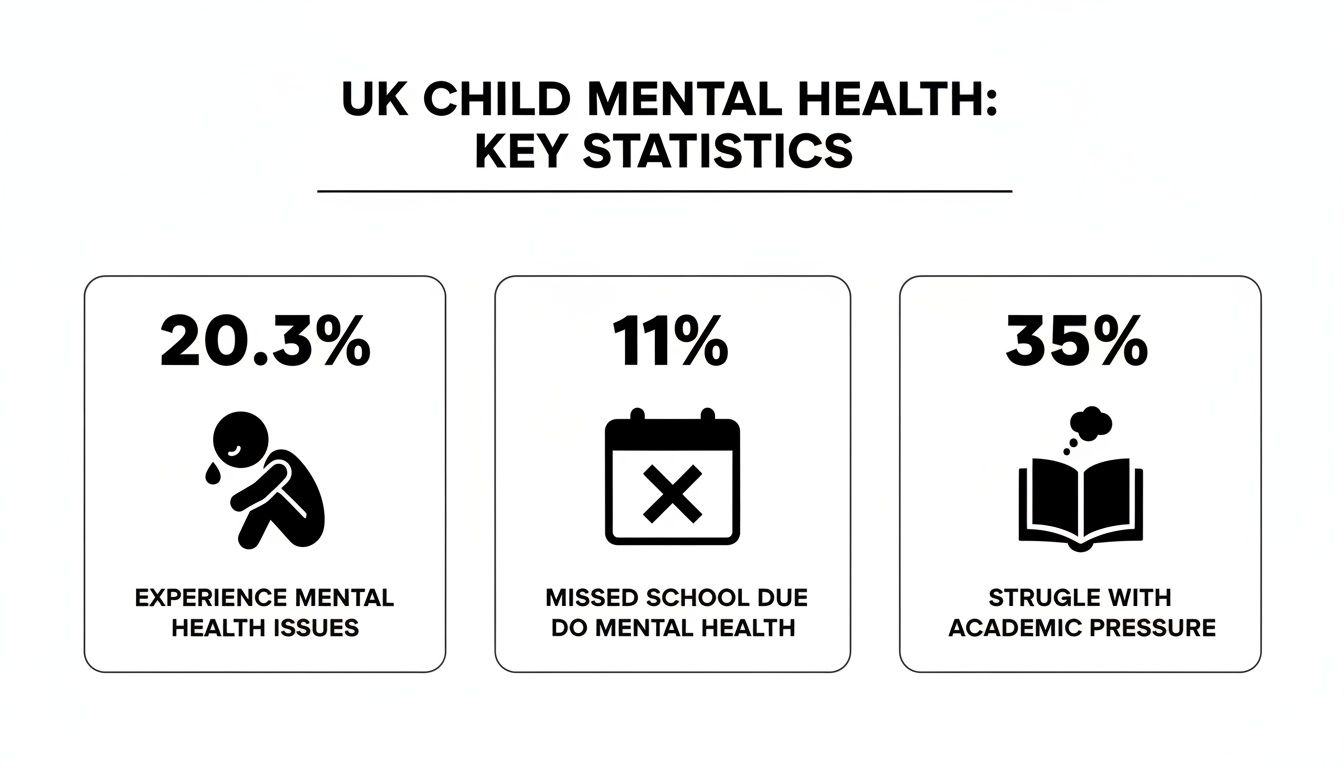
These numbers show just how much mental health struggles can directly impact a child's education and their ability to simply enjoy life.
Practical Relaxation Tips for Everyday Life
The good news is that bringing mindfulness into your child’s life doesn't have to be complicated. Simple, consistent practices can make a huge difference.
- Mindful Moments: Encourage your child to take three slow, deep breaths whenever they feel overwhelmed. This simple action is powerful enough to reset their nervous system. A lovely practical example is 'hot chocolate breathing' – pretend to hold a cup of hot chocolate, breathe in its lovely smell for three counts, then blow out gently for three counts to cool it down.
- Sensory Check-in: Ask them to name five things they can see, four they can feel, three they can hear, two they can smell, and one they can taste.
- Weather Report: Help them describe their feelings like the weather. For example, "I feel stormy and angry inside," or "My mind feels sunny and clear." This helps them observe the emotion without judgement.
Reading together can also be a wonderful support. Many mental health books for children are designed to explain big feelings in a simple, relatable way. For parents looking for more guidance, our article offers some effective strategies for prioritising children's mental health.
A Gentle Reminder: It's important to state that I am not a mental health professional. These tips and practices are intended as supportive tools, not as a replacement for professional medical advice. If you are worried about your child’s mental wellbeing, please seek help from your GP or a qualified therapist.
Finally, one of the most powerful things we can do is normalise conversations about mental health. Even something as simple as wearing mental health apparel with positive messages can be a visual cue that it’s okay to talk about our feelings and support one another.
Fun and Simple Mindfulness Activities for Every Age
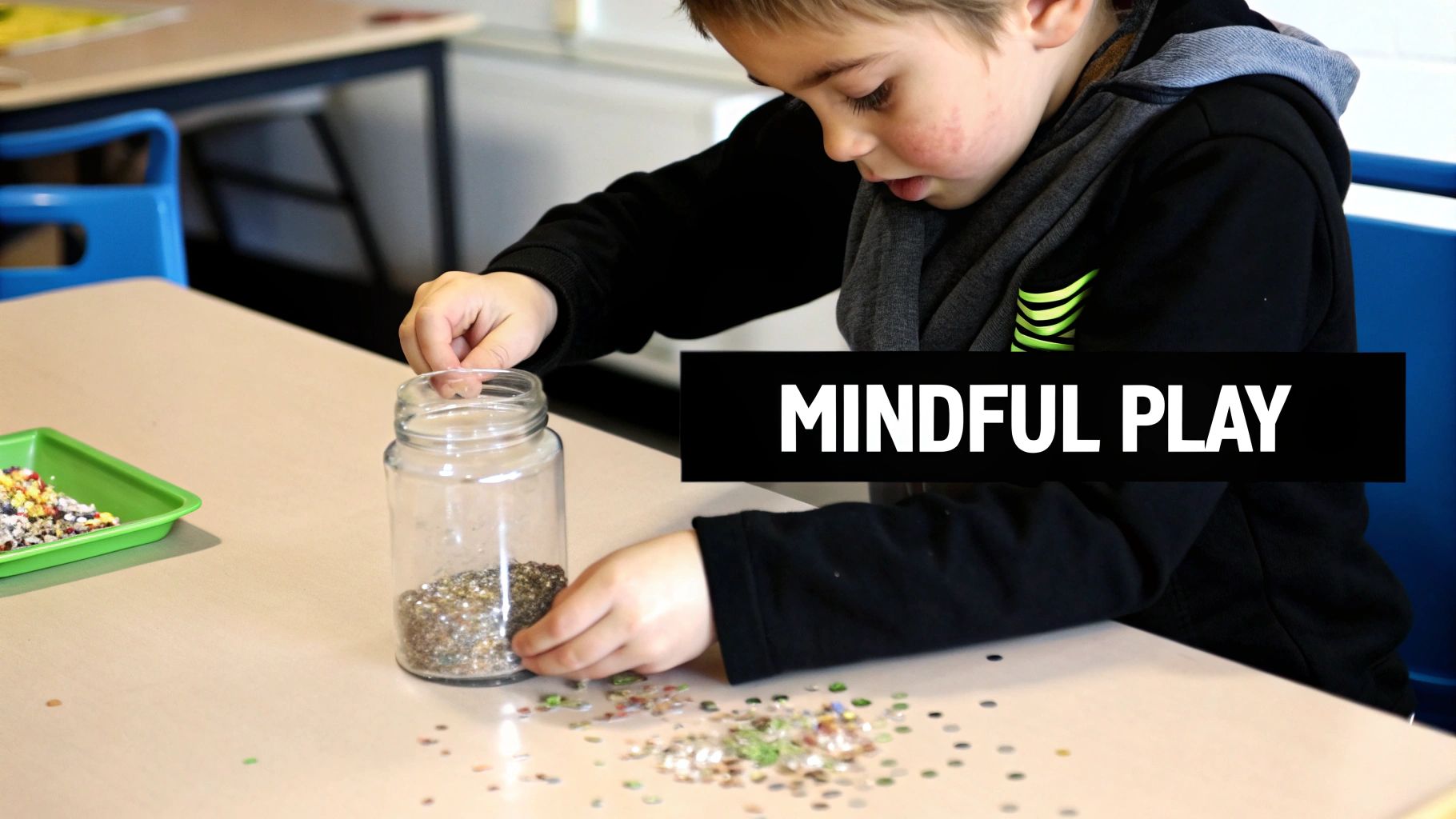
Knowing what mindfulness is for kids is the first step, but the real magic happens when you start doing it together. The trick is to make these activities feel like a game, not another task on the to-do list. When you weave simple, fun exercises into their day, you’re gently showing them how powerful it is to just be present.
These ideas are just a starting point, so feel free to mix them up to suit your child's personality and mood on any given day. Remember, this isn't about getting it perfect; it’s about finding those small, quiet moments of calm and connection together.
Activities for Toddlers and Preschoolers (Ages 2-5)
At this age, it’s all about tapping into their senses and getting them moving. You’ll want to keep instructions really simple and the activities short. Think playful exploration rather than quiet, still meditation.
- Teddy Bear Breathing: Ask your child to lie down and pop a favourite stuffed animal on their tummy. Let them watch their teddy gently ride the waves of their breath – rising as they breathe in and falling as they breathe out. It’s a lovely, visual way to make breathing feel like a gentle game.
- Listening Walk: Head outside for a walk, or even just sit by an open window and ask, "What can you hear?" Pause and listen together for birdsong, the rustle of leaves, distant traffic, or a passing siren. It’s a simple exercise that sharpens their focus on one sense at a time.
- Mindful Munching: During snack time, invite them to become a food explorer. Using a raisin or a piece of strawberry, ask them to look at its colour and texture. What does it feel like? What does it smell like? How does it taste? This encourages them to slow down and really enjoy the experience of eating.
Activities for Primary School Children (Ages 6-11)
Children in this age group are ready for slightly more abstract ideas. You can bring in a bit more structure, often using creativity and imagination to help explain what’s going on inside their busy minds.
A "Mind Jar" is a fantastic visual tool for this age. Just fill a jar with water, a bit of food colouring, and a good spoonful of glitter. Shake it up and watch the glitter swirl around chaotically – just like our busy, worried thoughts. As you both watch the glitter slowly settle, you can explain that this is what our minds do when we take a moment to be still and just breathe.
Another brilliant one is the "Heartbeat Exercise." After a bit of running around or doing some star jumps, get them to place a hand on their chest to feel their fast-thumping heart. Then, sit quietly for a minute and notice how it gradually slows down. It’s a really concrete way for them to feel their own body returning to a state of calm. You can find even more practical ideas in our guide to mindfulness exercises for children.
Activities for Older Children and Teenagers (Ages 12+)
Mindfulness can be a real anchor for older children navigating the pressures of school, friendships, and social media. The focus here shifts towards building self-awareness and giving them practical tools to cope with stress.
- Mindful Walking: Challenge them to take a short walk without their phone. The goal is simple: notice five things they’ve never really looked at before, pay attention to the feeling of their feet on the ground, and just observe the world around them without judgment.
- Simple Journaling Prompts: Journaling doesn't need to be a massive "dear diary" entry. Suggest simple, quick prompts like, "What was one good thing that happened today?" or "Name three things you feel grateful for right now." This helps steer their focus towards the positive.
- Five Senses Check-In: This is a classic grounding technique that’s perfect for moments of anxiety or overwhelm. Ask them to silently name: 5 things they can see, 4 things they can feel, 3 things they can hear, 2 things they can smell, and 1 thing they can taste.
Of course, it doesn’t always have to be a formal exercise. Families can find focus and connection through shared hobbies like fun family cooking activities, which are great for fostering creativity and making memories. The most important thing is to find what feels right for your family and approach it with a light, playful touch.
How Parents Can Model Mindful Behaviour
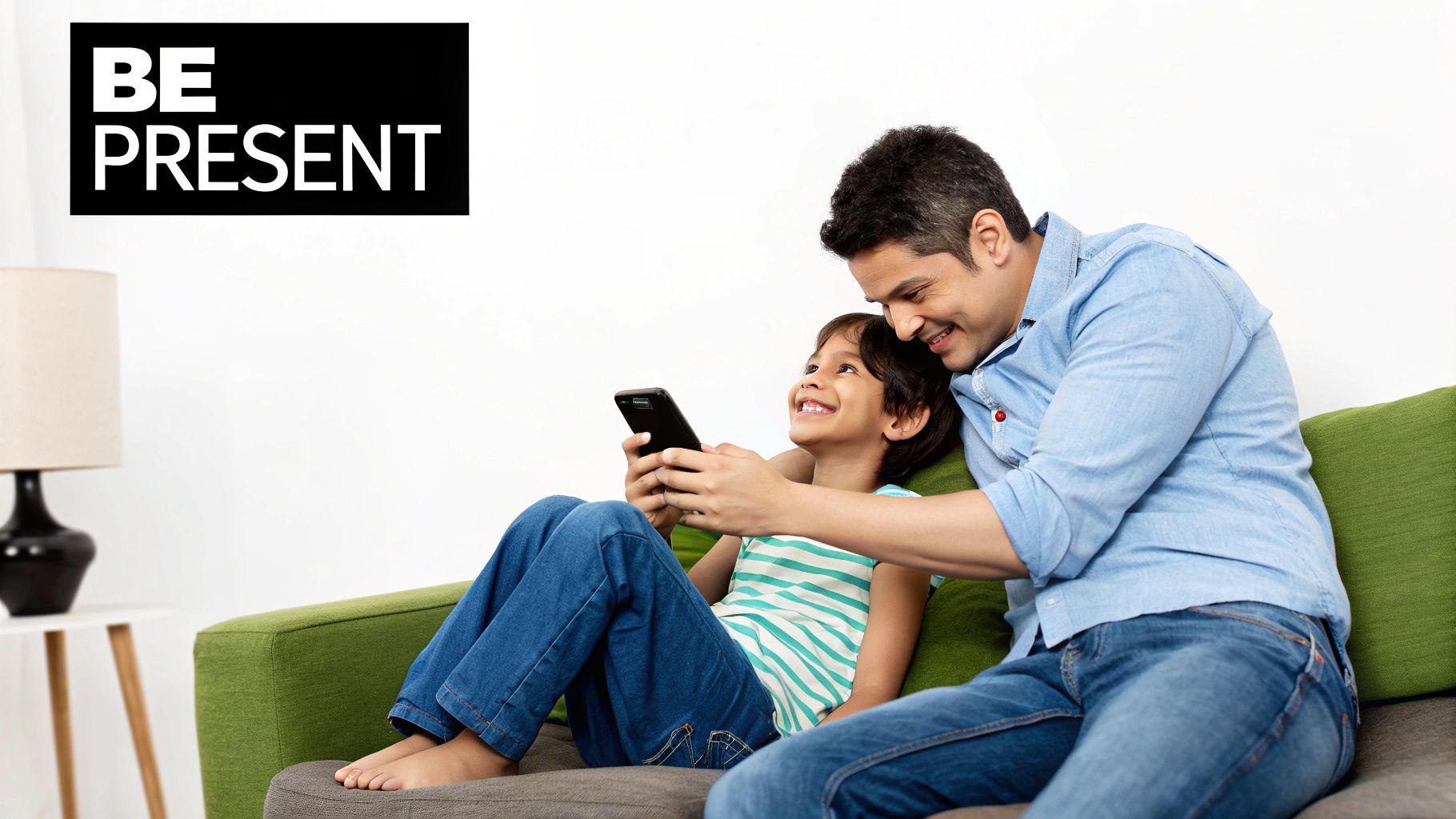
Let’s be honest, children are expert observers. They absorb far more from what we do than what we say, which means to teach mindfulness, we really need to practise it ourselves first. When we model mindful behaviour, we’re doing something incredibly powerful: creating a calmer, more connected home where emotional wellbeing is just a normal part of conversation.
It all starts with how we handle our own stress. Think about it. When your child sees you take a deep, steadying breath after a frustrating email instead of snapping, they’re learning a vital lesson. They see, in real-time, that it’s possible to pause before reacting and that big feelings can be managed calmly. That’s a lesson that sticks far better than any lecture ever could.
Another huge part of this is simply being present. We live in an age of constant notifications, and the impact of social media on mental health is a real concern for adults and children alike. When you put your phone away during dinner or playtime, you’re sending a clear and loving message: "You are my priority right now."
Practical Ways to Be a Mindful Parent
Becoming a more mindful parent isn't about achieving perfection—that's impossible! It's about being intentional with small, everyday actions. Here are a few simple and realistic ways to get started.
- Practise Self-Compassion: We all have tough days. Instead of judging yourself, acknowledge it out loud. Saying something like, "I'm feeling a bit grumpy today, so I'm going to take five minutes to sit quietly," is a brilliant way to model healthy self-awareness.
- Communicate Feelings Calmly: It’s so easy to blurt out, "You're driving me mad!" A mindful alternative could be, "I'm feeling overwhelmed right now and I need a moment of quiet." This teaches children to name their emotions without placing blame.
- Share Your Gratitude: Make it a small habit to mention something you’re grateful for each day. This simple act can shift the whole family’s focus towards appreciating the small, positive moments that are so easy to miss.
Important Note: I am not a mental health professional. While these relaxation tips can be very helpful, they are not a substitute for professional medical advice. If you are ever worried about your own or your child's mental wellbeing, it is essential to seek help from your GP or a qualified therapist.
Normalising Conversations About Mental Health
Creating an open dialogue around feelings and mental health truly begins at home. It doesn't have to be a big, scary conversation. Simple, everyday acts can normalise these important chats and make them feel much less intimidating.
Things like wearing mental health apparel with positive affirmations or snuggling up to read mental health books together can act as gentle conversation starters. These small tools help build a family culture where talking about your feelings is seen as a sign of strength, not a weakness. By modelling this openness, you’re giving your children an invaluable gift—the emotional literacy and resilience they'll carry with them for life.
Helpful Resources for Your Family’s Mindfulness Journey
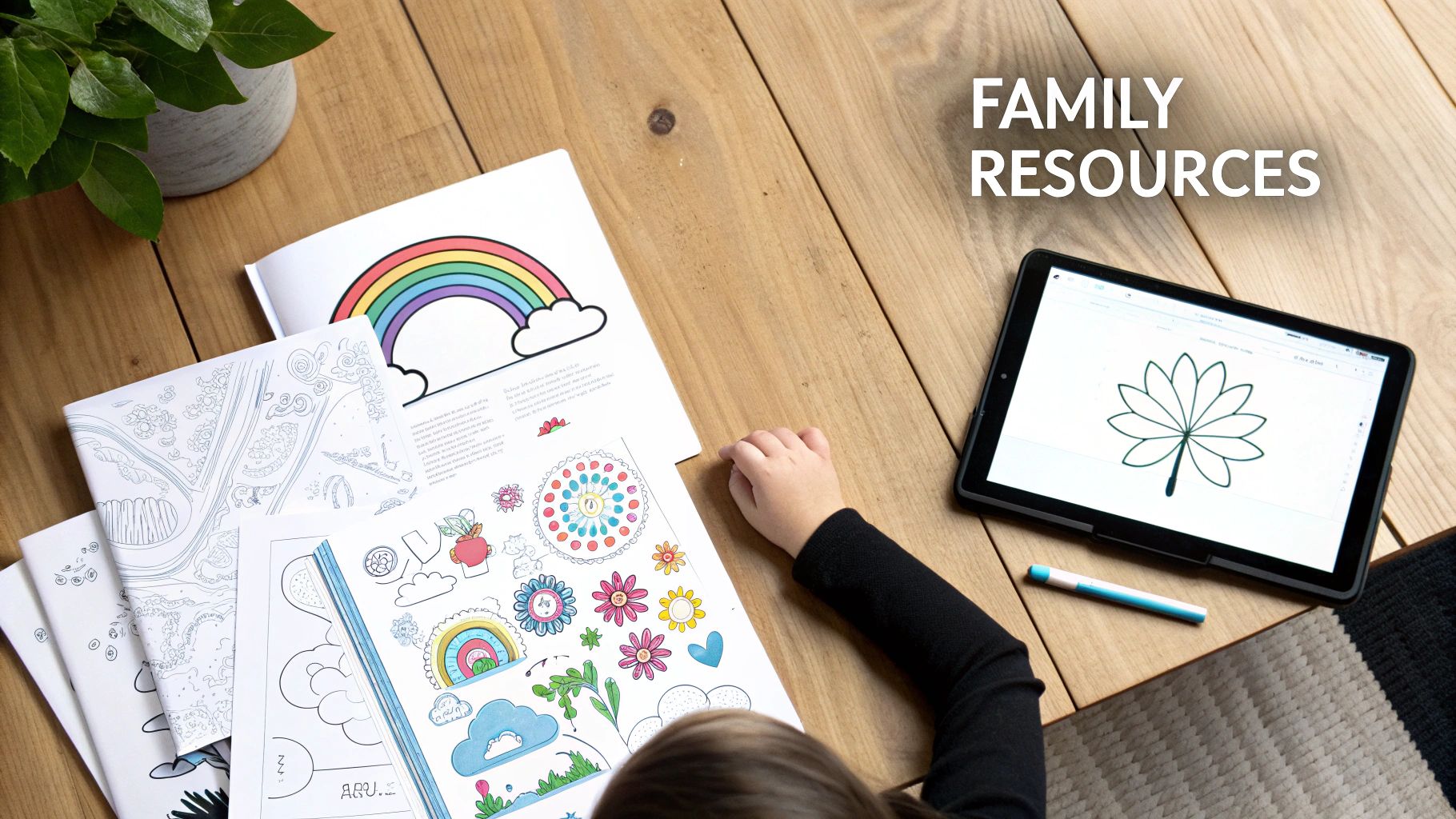
You don’t have to figure all this out on your own. Far from it. Building a foundation of mindfulness and emotional wellbeing is a journey, and having the right tools can make all the difference. Think of this as your curated hub of resources, here to support you every step of the way.
The rise in mental health challenges among children is something we can’t ignore. With around 20% of 8-16 year olds now experiencing a probable mental disorder, finding accessible and engaging support is more important than ever.
Children’s Mental Health Books
Reading together is such a gentle yet powerful way to introduce complex emotions. Books written specifically for children can translate those big, confusing feelings into relatable stories, helping them understand and express what’s going on inside.
These stories create a safe space to explore topics like anxiety, sadness, and anger. They give children the words to name their feelings and, crucially, show them they aren't alone in their experiences. For families looking to immerse themselves more deeply, exploring structured programmes such as mindfulness day retreats can also be a valuable option for older family members.
Digital Resources and Activities
Alongside brilliant books, there are plenty of digital tools that can help reinforce mindful concepts in a fun, interactive way. From guided meditations to creative activities, these resources make learning about emotional wellbeing feel less like a lesson and more like play.
- Colouring Sheets: Simple activities like colouring can be incredibly calming. It’s a wonderful way for children to focus their attention and express themselves without needing any words.
- Audio Guides: Guided meditations designed for young ears can teach breathing techniques and visualisation in an easy-to-follow, story-like format.
- Interactive eBooks: Many resources cleverly combine storytelling with practical exercises, creating a really engaging learning experience.
For example, you can explore resources that bundle stories with activities, like the guided meditation eBook and colouring sheets designed to help children find their calm.
Please remember, I am not a mental health professional. These resources are intended to be supportive tools. If you have serious concerns about your child’s wellbeing, it is always best to seek help from your GP or a qualified mental health practitioner.
Ultimately, surrounding your family with positive and supportive materials helps to normalise conversations about mental health, making it an everyday part of life, just as it should be.
Got a Few Questions?
It's completely normal to have questions when you're trying something new with your children. As parents and carers, we're always trying to do our best for them, especially when it comes to their mental wellbeing. Let’s tackle some of the most common worries to help you feel more confident as you get started.
How Can I Get My Energetic Child to Sit Still?
This is the big one, isn’t it? The most common question I hear! But here’s the wonderful thing about mindfulness for children: it doesn’t have to mean sitting still at all.
Lots of brilliant activities are based on movement, like going on a listening walk, paying attention while eating a snack, or even just doing some simple stretches. The goal is to help them pay attention to the moment, not to achieve perfect stillness.
For really active children, start small. And I mean really small. Try 30 seconds of ‘teddy bear breathing’ where they watch their favourite cuddly toy rise and fall on their tummy. Keep it light, make it a game, and never a chore. Over time, as they get used to that feeling of calm, you might find they can sit quietly for a little longer.
How Long Until I See a Difference?
Every child is different, so there’s no magic timeline. You might notice small changes quite quickly with some children – maybe they’ll start taking a deep breath when they feel frustrated. For others, the benefits will be slower to appear, unfolding gradually over time.
What really matters is consistency, not how long you do it for. A few mindful minutes every day builds a much stronger foundation than one long session once a week. Think of it as planting a seed. You’re nurturing their emotional resilience for the long haul. This is a practice, not a quick fix.
Is Mindfulness a Replacement for Therapy?
This is a really important one. While mindfulness is a fantastic tool for supporting a child’s mental health, it is not a substitute for professional medical advice or therapy.
A quick disclaimer: I am not a mental health professional. The information here is purely for educational purposes. If you have serious concerns about your child's mental wellbeing, please chat with your GP or a qualified mental health professional.
The best way to think of mindfulness is like brushing their teeth. It’s a brilliant, supportive daily habit for their emotional health. It can absolutely complement professional support, but it should never be used to replace it when it's needed.
At Little Fish Books, our mission is to empower families with gentle, effective tools to support emotional growth. Have a look at our collection of children's mental health books, colouring sheets, and activities, all designed to make these important conversations a little easier and a lot more fun.