
What Is Positive Psychology Explained
Positive psychology is all about what helps us thrive. It’s the scientific study of the strengths and virtues that allow people and communities to flourish, rather than just focusing on what’s broken. It represents a shift from merely fixing problems to actively building a life filled with purpose and joy.
Think of it as moving from just surviving to truly flourishing.
Understanding Psychology's Shift to Well-being
For a long time, the field of psychology zeroed in on mental illness—diagnosing what was wrong and trying to treat it. Imagine a doctor who only ever deals with sickness. It's vital work, of course, but it misses the other half of the picture: what actually makes life feel good and meaningful?
So, what is positive psychology? It's a simple change in perspective. Instead of asking, "What's wrong?", it asks, "What's right?". This approach doesn't turn a blind eye to hardship or distress. Instead, it works alongside traditional methods, giving us the tools to build resilience, optimism, and genuine well-being.
It’s the science of human flourishing, giving us a proactive way to strengthen our mental health from the ground up. This shift helps explain recent findings from the UK Office for National Statistics, where the average self-reported happiness was 7.4 out of 10, showing a stable level of well-being post-pandemic. You can read more about these national well-being figures in the full report.
Traditional Psychology vs Positive Psychology: A Quick Comparison
To really see this difference in action, let's compare the two approaches side-by-side. This table shows how positive psychology provides a much fuller picture of the human experience.
| Aspect | Traditional Psychology Focus | Positive Psychology Focus |
|---|---|---|
| Primary Goal | To alleviate suffering and dysfunction. | To cultivate well-being and human flourishing. |
| Area of Study | Mental illness, trauma, and pathology. | Happiness, strengths, resilience, and optimism. |
| Core Question | "What is broken and how can we fix it?" | "What is working and how can we build on it?" |
| Therapeutic Outcome | Moving from a negative state to neutral. | Moving from neutral or good to great. |
This distinction is crucial. While traditional methods are essential for treating specific conditions, positive psychology provides the blueprint for building a genuinely fulfilling life.
Recognising this is also a core part of trauma-informed practice, which focuses on creating environments where people feel safe enough to heal and grow. You can learn more about what trauma-informed practice involves in our related guide.
Ultimately, positive psychology gives us a more balanced and hopeful vision for mental health. To dig deeper into its academic roots, you can explore resources within the broader field of psychology. It offers everyone the scientific tools not just to cope with life's challenges, but to truly thrive.
Building the Foundations of a Flourishing Life
Knowing that positive psychology zooms in on our strengths is one thing, but how do we actually go about building a life filled with well-being? This is where the work of its founder, Martin Seligman, gives us a clear roadmap. He developed the hugely influential PERMA model, a framework that outlines five essential pillars for a flourishing life.
Understanding these pillars helps us see what positive psychology looks like in action. They aren't just abstract ideas; they're tangible elements we can actively cultivate in our daily lives.
This diagram neatly contrasts the focus of traditional psychology with the aims of positive psychology, showing the shift from just fixing problems to actively building well-being.
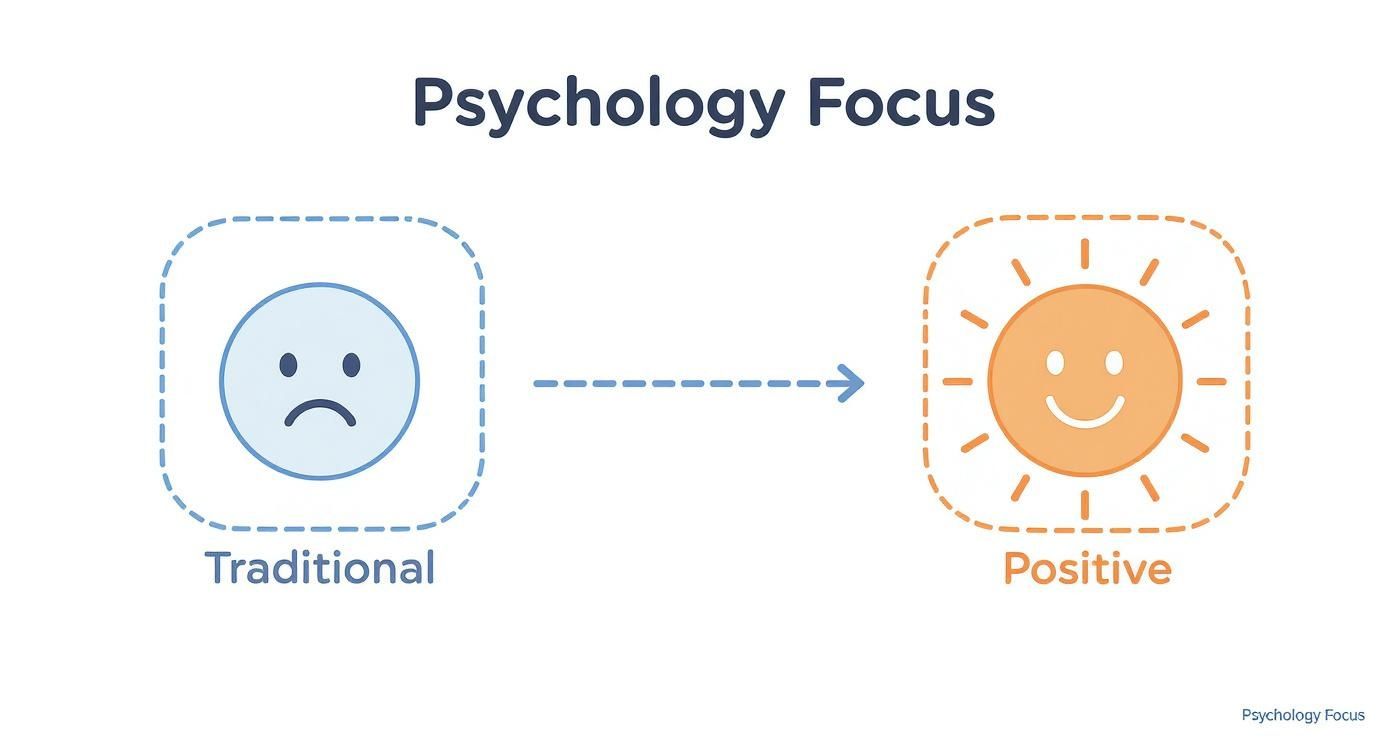
As the image shows, while one approach works to bring people from a state of suffering up to neutral, the other aims to lift them from that neutral starting point into a state of genuine flourishing.
Exploring the Five Pillars of PERMA
Each element of the PERMA model contributes something unique to our overall sense of fulfilment. By getting to grips with them, we can spot opportunities to strengthen these pillars in our own lives and in the lives of the children we care about.
-
P – Positive Emotion: This is about so much more than just fleeting happiness. It’s about intentionally cultivating feelings like joy, gratitude, hope, and contentment. A really simple example is keeping a journal to jot down three good things that happened each day, which literally trains our brains to notice the positive.
-
E – Engagement: Have you ever been so completely absorbed in an activity that you lose all track of time? Psychologists call this immersive state ‘flow’. It happens when we’re using our skills to meet a challenge we find stimulating, whether that’s playing an instrument, solving a tricky puzzle, or just getting lost in a creative project.
-
R – Relationships: Strong, positive relationships are absolutely fundamental to our well-being. We’re social creatures, after all. Authentic connections with family, friends, and our community provide vital support and a deep sense of belonging. This is especially critical for children’s mental health, as secure attachments build a solid foundation for resilience later in life.
A key insight from positive psychology is that investing time and energy in our social bonds is one of the most reliable ways to boost our own happiness and life satisfaction.
-
M – Meaning: This pillar speaks to our deep-seated need to belong to and serve something bigger than ourselves. Meaning can be found in all sorts of places—through faith, community work, parenthood, or dedicating ourselves to a cause we truly believe in. It provides a sense of purpose that anchors us, especially through life’s inevitable challenges.
-
A – Accomplishment: Setting and achieving goals, both big and small, builds our self-esteem and gives us a sense of competence. Accomplishment isn’t about winning for the sake of it, but about the journey of pursuing mastery and the quiet satisfaction of personal growth that comes from striving for something important to you.
Applying Positive Psychology for Children and Young People
This is where the rubber really meets the road. Translating the principles of positive psychology into real, tangible strategies for children is one of its most powerful applications.
It's a sobering fact that one in six children aged 7 to 16 in the UK has a probable mental health problem. This makes fostering resilience and emotional well-being from a young age more vital than ever. The goal isn't to build a bubble around our kids to shield them from life's inevitable bumps and bruises, but to give them the inner tools to navigate those challenges with confidence.
Simple, consistent practices can make a world of difference. The best part? These techniques aren't complicated; they're designed to be easily woven into the fabric of everyday life, both at home and in the classroom.
Practical Tools for Parents and Teachers
You don't need any special training to start integrating positive psychology into a child's life. It all begins with small, intentional habits that help children recognise their inner strengths and cultivate gratitude—directly building up those pillars of the PERMA model.
Here are a few simple ideas to get you started:
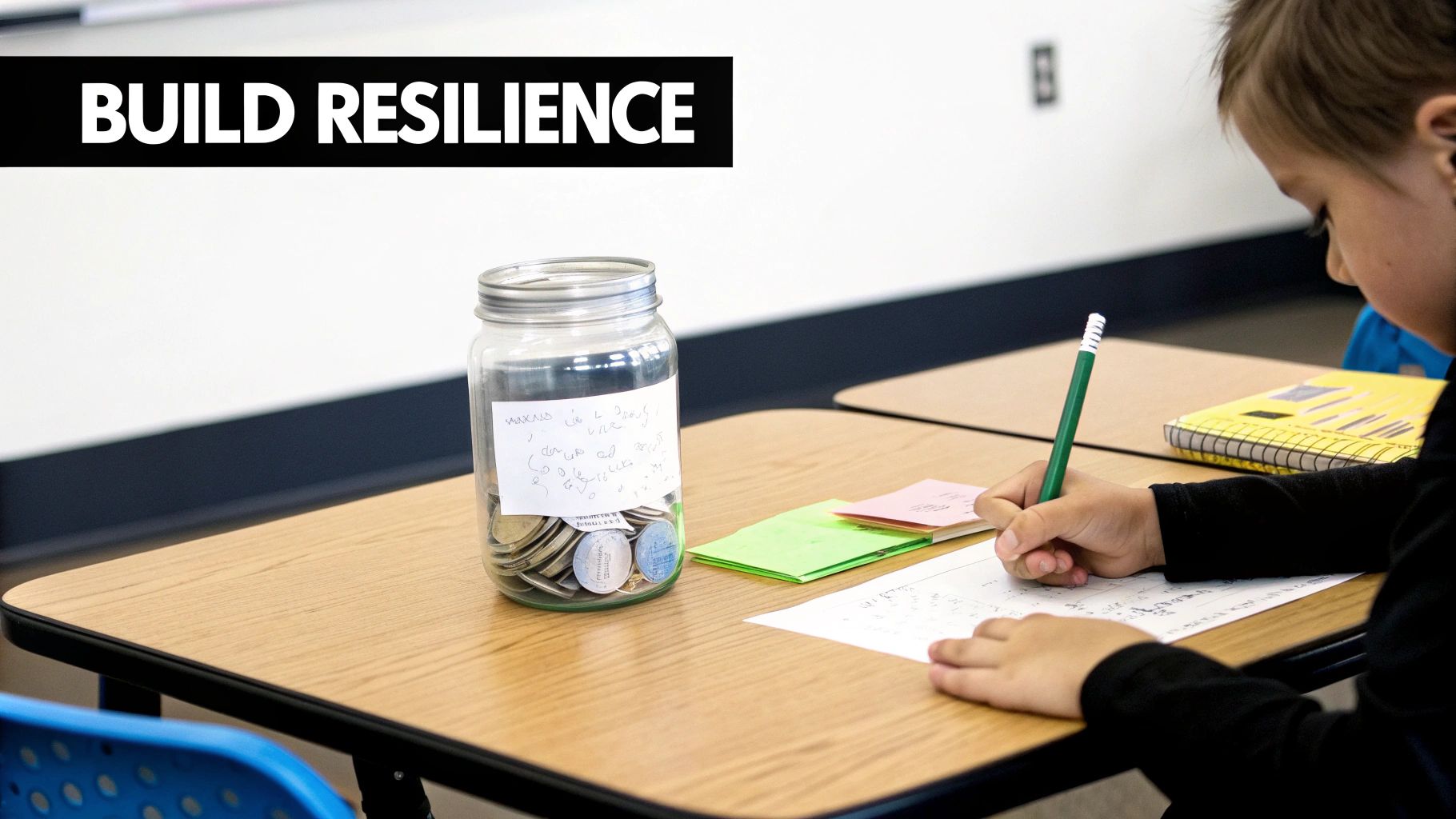
- Create a Gratitude Jar: Each day, ask your child to jot down one thing they're thankful for on a slip of paper and pop it in a jar. When they're having a tough day, you can pull out a few notes and read them together. It's a powerful, tangible reminder of all the good things in their life.
- Practise Strengths-Spotting: Get into the habit of actively noticing and naming the strengths you see in action. Instead of a generic "good job," try something specific like, "I saw how you kept trying with that puzzle even when it was tricky; that showed real determination." This helps them build a vocabulary for their own character and skills.
- Three Good Things: This is a classic for a reason. At bedtime or around the dinner table, encourage your child to share three things that went well for them that day and, crucially, why they went well. This simple exercise trains the brain to scan for the positive.
For anyone looking to dive deeper into fostering positive character traits, you might find this practical guidance on raising children with strong values really helpful.
Navigating Social Media Pressures
Let's be honest, the rise of social media has thrown a real spanner in the works for young people's mental health. It often creates a relentless culture of comparison and perfectionism that can be incredibly tough to deal with. Positive psychology offers a powerful counterbalance.
The key is teaching young people that their self-worth comes from their character, actions, and real-world connections, not from online validation.
By encouraging them to focus on their unique strengths and engage in offline activities that get them into that state of 'flow', we can help reduce their reliance on social media for a sense of self-worth. If you're looking for more inspiration, our guide on fun kids' mental health activities has plenty of ideas for building these crucial skills away from the screen.
It is important to remember that I am not a mental health professional. If you are worried about your child's mental well-being, please seek help from your GP or a qualified practitioner for professional advice.
How Well-being Shapes a Stronger Society
The ideas behind positive psychology stretch far beyond just making individuals happy; they have a real, measurable impact on the health and strength of our society as a whole. When we start focusing on what helps people to truly thrive, the benefits ripple outwards, building stronger communities, more resilient workplaces, and a much healthier public landscape right across the UK.
This connection is incredibly clear when you look at the world of business. Poor mental health comes with a staggering price tag for British companies, leading to more sick days, lower engagement, and a massive hit to productivity. In fact, research by Deloitte shows that mental health issues cost UK employers up to £56 billion a year.
But it’s not all doom and gloom. Companies that actively invest in well-being programmes, especially those based on positive psychology principles, see a tangible return on their investment. Imagine a workplace that actively seeks out and celebrates employees' strengths, encourages a proper work-life balance, and trains its managers to genuinely support their teams. This isn't just about 'feeling good'—it's smart business.
Fostering Community and Public Health
The impact doesn't stop at the office door, either. On a much broader scale, positive psychology is shaping public health strategies that are all about building resilience and connection within our own neighbourhoods.
By fostering a sense of community belonging and giving people the tools to manage stress, we can create a society that is better equipped to handle challenges. This proactive approach to mental health helps reduce the strain on public services.
It’s a simple but powerful idea: when people feel connected to those around them and properly supported, they are far more likely to thrive. This creates a positive feedback loop where healthier individuals contribute to healthier communities, which in turn nurtures everyone's well-being.
The Growing Acceptance of Seeking Support
Thankfully, the conversation around mental health in the UK is changing for the better. More and more people are actively looking for ways to improve their well-being, and the old stigma around seeking help is finally starting to fade.
The British Association for Counselling and Psychotherapy (BACP) found that 35% of UK adults have had therapy or counselling at some point. And here’s the crucial part: a massive 73% of those who sought help said it was beneficial. This shows a real and growing appreciation for support that helps us grow. You can find more insights in the BACP's public perceptions survey.
This shift in attitude really highlights how focusing on what makes us flourish benefits everyone. From the person taking that first step to seek support, to the business investing in its people, the principles of positive psychology are quietly building a stronger, healthier, and more resilient society for us all.
Your Toolkit for Everyday Well-being
Putting the ideas of positive psychology into practice doesn't have to be a grand gesture. In fact, it's the small, consistent actions that really build mental resilience and make a difference over time. Think of this as your personal toolkit, filled with simple, evidence-backed techniques to help you cultivate well-being in your daily life.
These aren't quick fixes, but practical habits designed to gently shift your focus and strengthen your emotional foundations. Best of all, they're accessible, completely free, and you can adapt them to fit into your own routine.
Simple Relaxation and Well-being Tips
Why not start with just one or two of these suggestions? The goal is to find what really resonates with you and weave it naturally into your week.
- Three Good Things Journal: Every evening, jot down three things that went well during your day and a brief note on why. It's a surprisingly powerful exercise that retrains your brain to notice and appreciate the positive, fostering a genuine sense of gratitude.
- Mindful Breathing: When you feel the familiar creep of stress, take just five minutes to focus only on your breath. Breathe in slowly for a count of four, hold it for four, and then breathe out for six. This simple act is amazing for calming your nervous system and anchoring you in the present moment.
- Acts of Kindness: Make a conscious effort to do something small and kind for someone else, without expecting anything back. It could be buying a coffee for a colleague or sending a thoughtful text. You'll find these actions often boost your own happiness just as much as the recipient's.
Learning simple, effective relaxation techniques is fundamental to feeling good. If you're looking for more ideas, our guide explains how to manage stress with practical tips you can use absolutely anywhere.
Finding Further Support and Inspiration
Looking after your mental health is a continuous journey, not a destination, and thankfully there are countless resources out there to guide you. From insightful books to community projects, finding the right support can make all the difference.
You might want to explore some highly-rated mental health books that dive deeper into these topics. Titles like The Happiness Advantage by Shawn Achor or the classic Man's Search for Meaning by Viktor Frankl offer profound insights grounded in solid psychological principles.
Important Disclaimer: Please remember, I am not a mental health professional. The information provided here is for educational purposes only. If you have concerns about your mental health, it is essential to speak with your GP or a qualified practitioner for professional advice and support.
Even your wardrobe can play a small part. Mental health apparel, like a t-shirt or hoodie with a positive affirmation, can be a great conversation starter. It’s a simple way to challenge stigma and remind yourself—and those around you—that it’s okay to prioritise well-being.
Your Positive Psychology Questions Answered
When you first hear about positive psychology, it’s easy to get the wrong end of the stick. It isn’t about plastering on a fake smile or pretending life’s difficulties don’t exist. Far from it. It’s about scientifically understanding what helps us build the inner strength to handle everything life throws at us – the good, the bad, and everything in between.
Let’s tackle some of the most common questions to clear up the confusion and give you a better picture of what it’s all about.
Is It Just About Being Happy All the Time?
Absolutely not. This is probably the biggest myth out there. Positive psychology fully accepts that sadness, anger, and worry are completely normal, even necessary, parts of being human. The goal isn't to live in a state of non-stop happiness.
The real aim is to build resilience – that incredible ability to face tough times, learn from them, and come back even stronger. It's about expanding our emotional toolkit so we can find meaning and strength, even when things are difficult, rather than just chasing a feeling of happiness.
How Does It Differ From Self-Help Fads?
This is a great question. While you can find some gems in the self-help world, positive psychology stands apart because it's a scientific field. Its ideas and practices aren’t based on someone's personal opinion or a single success story. They come from proper, peer-reviewed research and evidence.
This scientific backbone means that when you try a technique like a gratitude journal or identifying your character strengths, you know it's been tested and shown to actually work. It gives us a reliable, evidence-based map for helping ourselves and our kids flourish.
Important Disclaimer: Please remember, I am not a mental health professional. The information provided in this article is for educational purposes only. If you have any concerns about your mental health or that of your child, it is crucial to speak with your GP or a qualified practitioner for professional advice and support.
Where Can I Learn More?
Building well-being is a journey, not a destination, and thankfully there are some brilliant resources to help along the way.
- Mental Health Books: For a deeper dive, look for books grounded in solid research. Titles like Flourish by Martin Seligman or The Gifts of Imperfection by Brené Brown are fantastic starting points.
- Mental Health Apparel: Sometimes, a simple visual cue is all you need. Wearing clothes with positive affirmations can be a personal, daily reminder to focus on your strengths. It can also open up conversations with others and help break down the stigma around mental health.
- Relaxation Tips: Never underestimate the small things. Simple practices you can do anywhere, like mindful breathing, taking a short walk in nature, or putting on some calming music, can make a huge difference to your daily stress levels.
At its heart, the message of positive psychology is one of empowerment. It hands us the tools to actively create a more resilient and meaningful life, both for ourselves and for the children we’re raising.
At Little Fish Books, we’re passionate about creating resources that nurture the emotional growth of children. From our engaging books and activities that build emotional intelligence to supportive merchandise for adults, we offer practical tools to help your family flourish. Discover our collection and start building emotional literacy today.