

7 Best Worksheets on Self Esteem for Children in 2025
In an increasingly complex world, fostering robust self-esteem in children is more vital than ever. Mental health is not a footnote in a child's development; it is the foundation upon which they build their future resilience, relationships, and happiness. Statistics highlight a growing concern in the UK, with research from the NHS showing that one in five children and young people aged 8 to 25 had a probable mental health disorder in 2023. Addressing mental health early is paramount, as it establishes a foundation for lifelong wellbeing. Factors like academic pressure and the pervasive, often negative, influence of social media can erode a child's sense of self-worth, making proactive support essential.
Low self-esteem in youth can lead to longer-term difficulties, impacting not only personal wellbeing but also future economic potential. For businesses, the cost of poor mental health in the workforce is substantial, with Deloitte estimating it costs UK employers up to £56 billion per year, underscoring the importance of early intervention. This article is a practical guide for parents, educators, and carers, providing a curated list of high-quality worksheets on self esteem to open up conversations and build confidence. To deeply engage students and instil crucial values, also consider the power of storytelling in education.
It is important to note, however, that I am not a mental health professional. The resources shared here are for support and educational purposes. If you have serious concerns about a child's mental health, please consult a doctor or a qualified professional for guidance. Together, let's explore practical ways to empower the next generation.
1. Free youth emotional support digital resources – book previews and colouring sheets
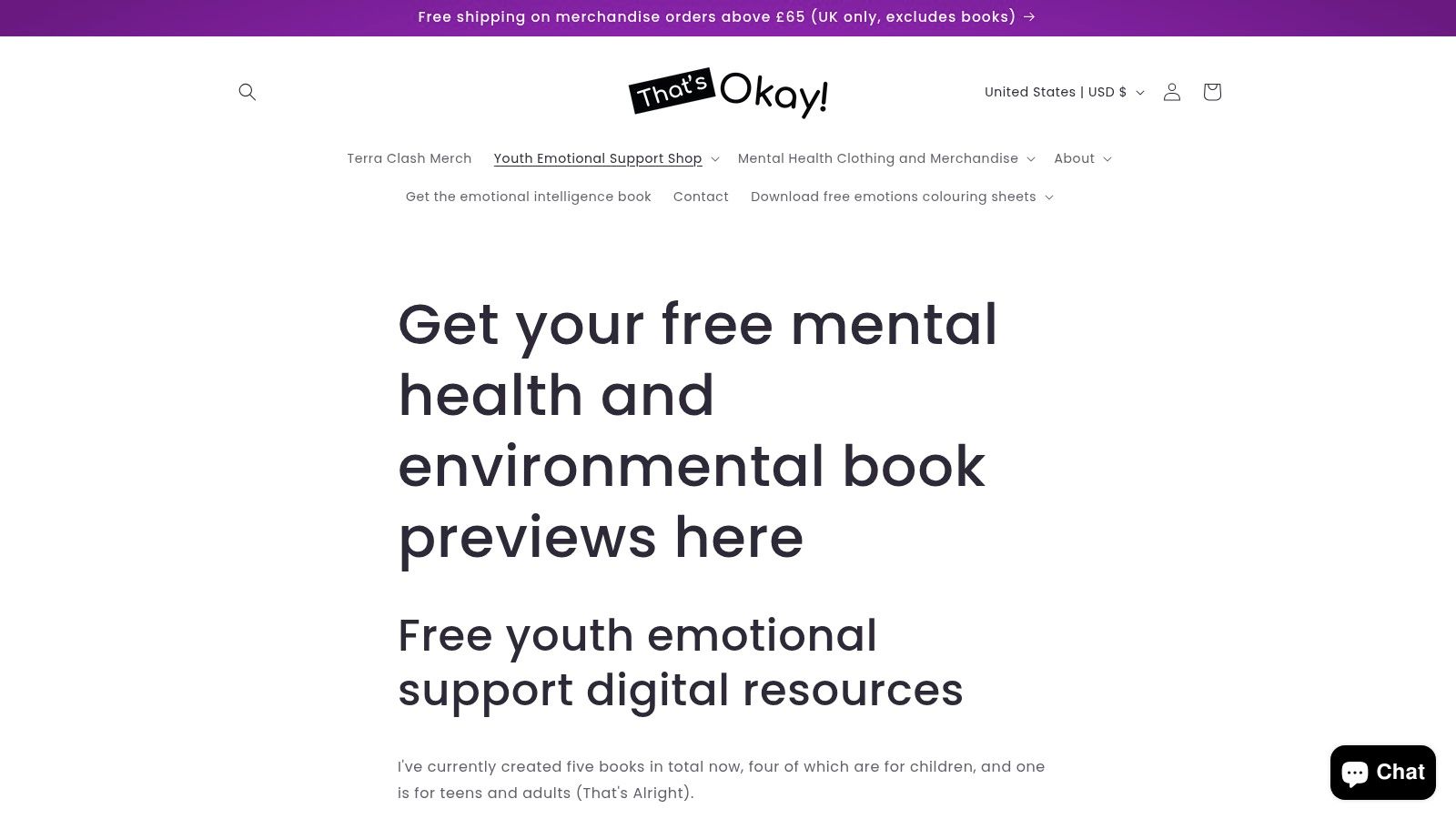
Little Fish Books offers a fantastic and immediately accessible entry point for parents, educators, and therapists seeking to nurture self-esteem in young people. Its free resources page provides a no-friction gateway to high-quality, professionally designed materials that normalise emotions and foster self-awareness. Unlike platforms that require sign-ups or subscriptions, these tools are available for instant download, making them an excellent first stop for anyone needing practical support without commitment.
The platform’s core strength lies in its developmentally targeted approach. It provides distinct materials from two companion books: "That’s Okay" for younger children and "That’s Alright" for teens and young adults. This thoughtful separation ensures the language, illustrations, and core messages resonate appropriately with the intended age group, which is crucial for building trust and engagement. These aren't just generic worksheets on self esteem; they are carefully crafted conversation starters designed to build emotional literacy from the ground up.
Key Features and Practical Applications
The downloadable PDFs, which include sample pages and colouring sheets, serve as versatile tools for various settings. A parent can print a colouring sheet to open a gentle dialogue about a tough day, while a teacher can use a book preview as a focused classroom activity on empathy and self-acceptance. Therapists will find the pages useful for grounding exercises or as homework to reinforce session themes.
Expert Tip: Use the "That's Okay" colouring sheets as a warm-up activity in a one-to-one session with a child. As they colour, you can ask open-ended questions like, "This character looks a bit sad. Have you ever felt that way?" This creative approach can make discussing difficult feelings feel much safer.
Pros and Cons
| Strengths | Limitations |
|---|---|
| Completely free and instant access: No need to create an account or provide an email to download the sample resources. | Sample content only: The free downloads are previews, not the complete books, which require purchase. |
| Age-specific materials: Separate resources for children and teens ensure content is relevant and effective. | Requires a printer: As the resources are printable PDFs, they are not interactive digital tools. |
| Versatile for different settings: Ideal for home, school, therapy sessions, or youth groups. | Static format: The worksheets are not customisable, offering a fixed activity experience. |
| Part of a wider ecosystem: Users who need more can explore full books, wholesale options, and complementary merchandise, such as mental health apparel. |
Ultimately, this platform excels by removing barriers to accessing quality mental wellbeing tools. While the free offering is a preview, it provides more than enough value to initiate meaningful conversations and creative expression, serving as an exceptional foundation for building stronger self-esteem in young people.
Find the resources here: thatsokay.co.uk
2. Twinkl
Twinkl is a well-respected, UK-based subscription platform primarily designed for educators, but its extensive library is equally valuable for parents and caregivers. It offers a vast collection of teacher-made, curriculum-aligned resources, including dozens of high-quality worksheets on self esteem designed for children from Early Years Foundation Stage (EYFS) through Key Stage 2 (KS2) and beyond.
What makes Twinkl stand out is its direct alignment with the UK’s Personal, Social, Health and Economic (PSHE) and Relationships and Sex Education (RSHE) curricula. This ensures that the content is not only age-appropriate but also uses inclusive, classroom-safe language, making it an excellent choice for structured learning environments. The resources are designed for immediate implementation, often coming bundled with teacher guidance notes, lesson plans, and related activities that create a cohesive learning experience.
Key Features and Offerings
- Curriculum-Aligned Packs: Access entire units dedicated to topics like positive thinking, body image, and building confidence. For example, the "I Am an Amazing Person" worksheet for KS1 encourages children to write down their positive qualities.
- Instant Downloads: All resources are available as printable PDFs, making it easy to prepare for a lesson or home activity at a moment's notice.
- Diverse Formats: Beyond simple worksheets, you'll find interactive PowerPoint presentations, group activity cards, and craft instructions, catering to different learning styles.
Practical Tips for Using Twinkl
To get the most out of the platform, use the search filters to narrow down resources by age group (e.g., KS1) and specific topic (e.g., "resilience"). Many resources are part of larger themed collections, such as "Wellbeing" or "Growth Mindset," which can help you build a comprehensive series of sessions. The user-friendly interface and consistent quality control, including user reviews, make finding reliable materials straightforward. For those looking for more general inspiration on worksheet styles, exploring different self-esteem handouts can provide a broader perspective on what works for various age groups.
| Feature | Details |
|---|---|
| Primary Audience | UK Teachers, School Counsellors, Parents of school-aged children |
| Content Focus | EYFS, KS1, KS2; PSHE/RSHE topics; Whole-class and small-group activities |
| Access Model | Subscription-based with a free trial; a selection of resources is always available for free |
| Pros | Strong UK curriculum links; consistent quality; lesson-ready materials; inclusive language |
| Cons | Full access requires a paid membership; styling is heavily school-oriented, less so for clinical use |
Website: Twinkl Self-Esteem & Personal Development Collection
3. Tes Resources
Tes Resources is the UK’s largest online marketplace for teaching materials, functioning as a massive digital hub where educators buy, sell, and share their creations. This peer-to-peer model results in an incredibly diverse and extensive collection of worksheets on self esteem, ranging from single-page activities to comprehensive, multi-week lesson plans uploaded by practising teachers and educational authors.
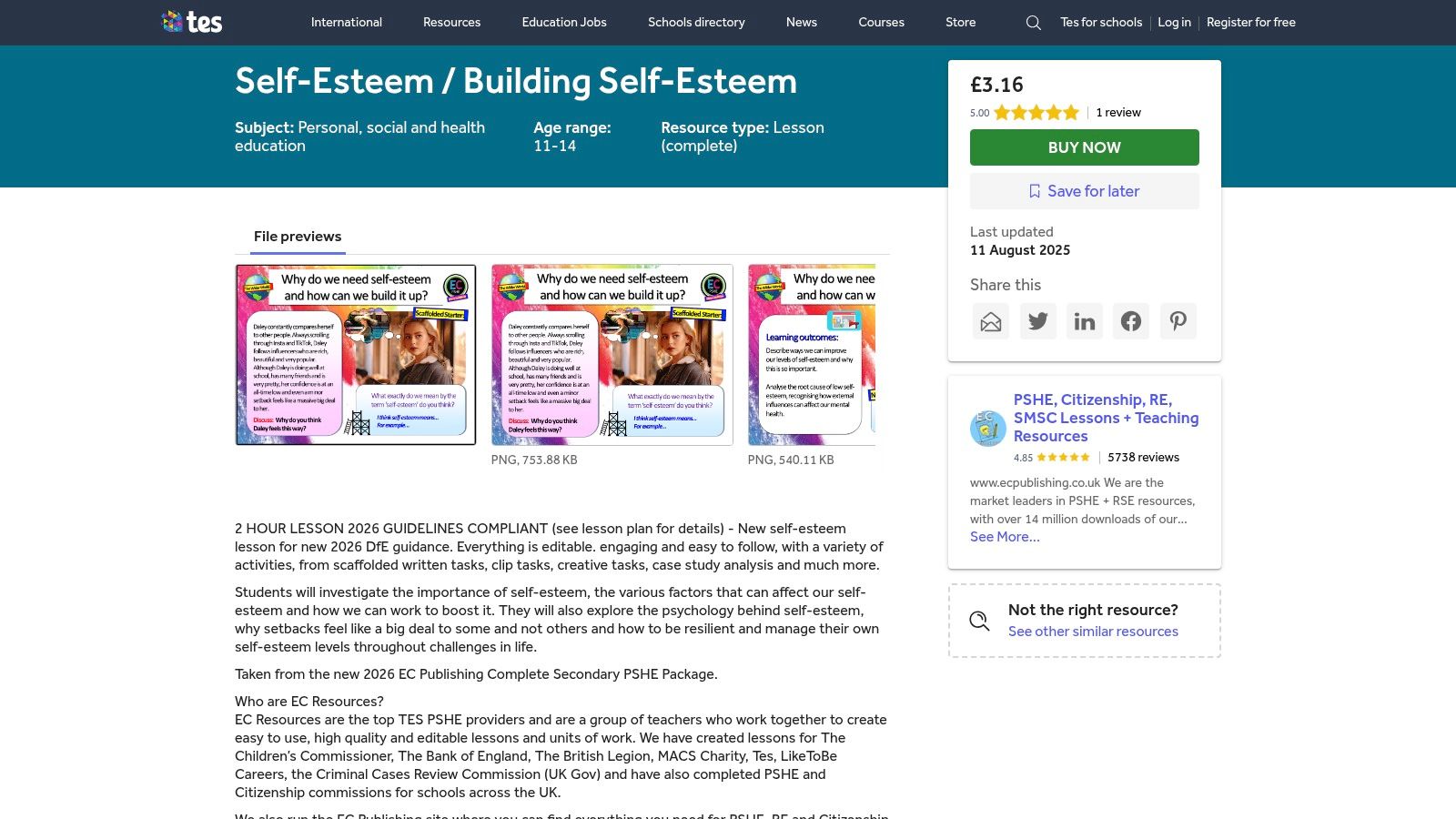
What distinguishes Tes is its marketplace dynamic. Unlike a single-publisher platform, the quality and style of resources vary, but this is balanced by a transparent system of user reviews, author ratings, and detailed resource previews. This allows you to vet materials thoroughly before purchasing. Many resources are explicitly mapped to UK curriculum guidance for PSHE and RSHE, making it a go-to for educators seeking classroom-ready content that addresses the growing mental health needs of children, especially considering the impact of social media on self-perception.
Key Features and Offerings
- Huge Selection with Previews: The sheer volume of content is a major advantage. You can find resources covering niche topics like assertiveness, positive self-talk, and body neutrality for all key stages.
- Instant Digital Downloads: Once purchased, resources are available immediately as digital downloads, typically in PDF, Word, or PowerPoint formats.
- PSHE/RSHE Mapping: Many authors specify how their resources align with curriculum objectives, saving teachers significant planning time.
- Transparent Pricing and Reviews: Items are priced individually, with many high-quality options available for free. Buyer reviews provide valuable, real-world feedback on a resource's effectiveness.
Practical Tips for Using Tes Resources
To find the best materials, use specific search terms like "KS2 self esteem workbook" or "secondary resilience lesson pack". Always check the resource preview to ensure the format and content suit your needs, and pay close attention to the author’s shop and overall ratings. A practical example is using a 'strengths flower' worksheet, where a child writes a personal strength on each petal, creating a visual representation of their positive attributes. If you're looking to understand more about how these resources fit into a broader strategy, you can explore various perspectives on using self-esteem worksheets to support a child's mental wellbeing.
| Feature | Details |
|---|---|
| Primary Audience | UK Primary and Secondary Teachers, Heads of Department, Parents |
| Content Focus | Individual worksheets, lesson bundles, and assemblies for KS1-KS5; strong PSHE/RSHE focus |
| Access Model | Pay-per-resource marketplace; many resources are available for free |
| Pros | Massive variety of content; transparent pricing and user reviews; strong UK curriculum relevance |
| Cons | Quality can vary by author; some resources are presentation-heavy and may not be simple worksheets |
Website: Tes Self-Esteem Resource Collection
4. Psychology Tools
Psychology Tools is a UK-based clinical resource library highly regarded by mental health professionals for its structured, evidence-based materials. While its primary audience is therapists, its collection offers some of the most rigorous and effective worksheets on self esteem available, grounded in Cognitive Behavioural Therapy (CBT). These resources are perfect for practitioners or individuals seeking a more clinical, structured approach to building self-worth.
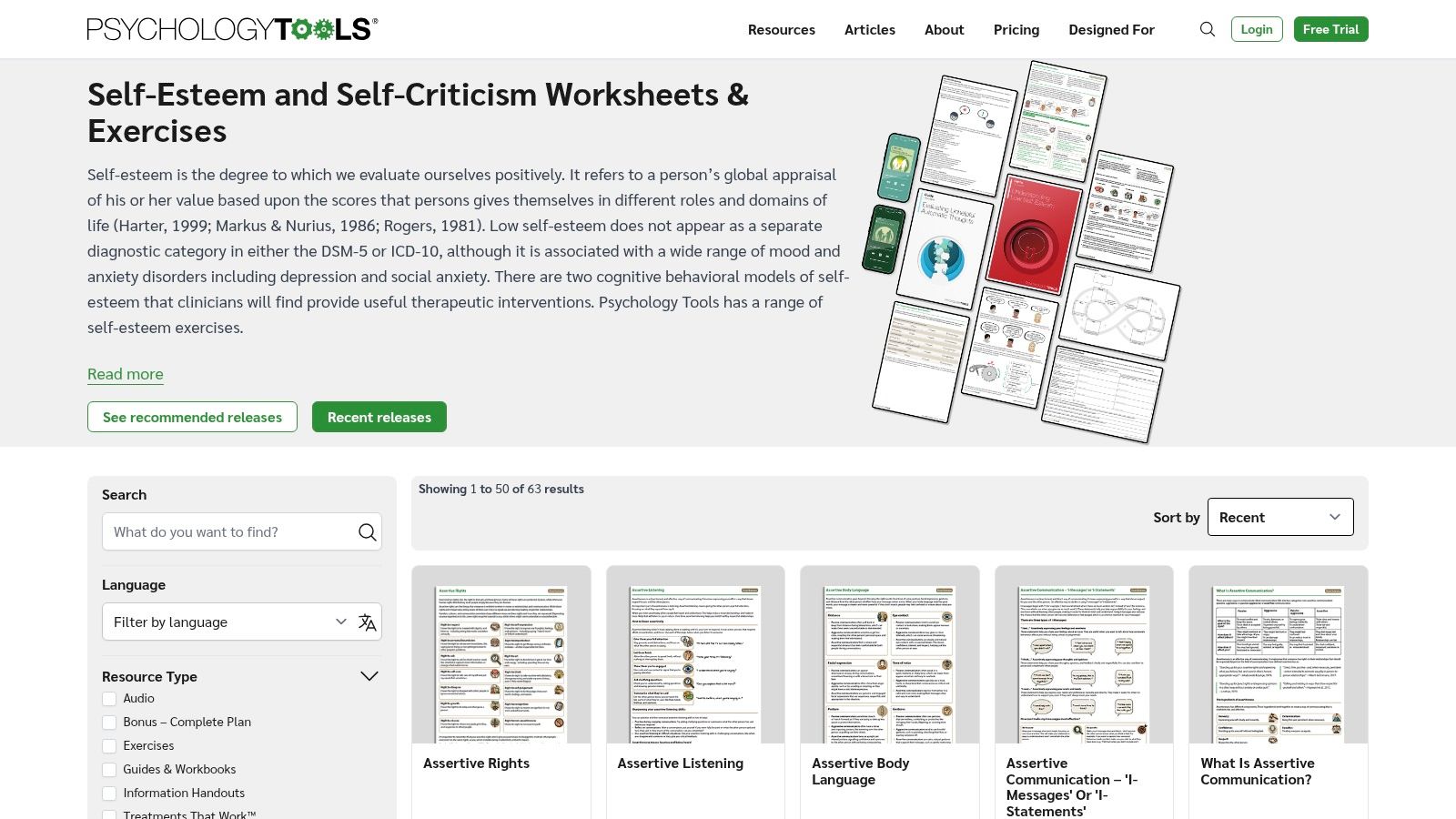
What distinguishes Psychology Tools is its clinical focus and commitment to evidence-based practice. The platform provides detailed psychoeducation, formulations, and exercises designed to tackle core beliefs and self-criticism head-on. Many resources come in two versions: a professional guide with instructions for the therapist and a client version to be completed as homework. This dual-format approach ensures the materials are used effectively within a therapeutic framework, making them a gold standard for professional use.
Key Features and Offerings
- Evidence-Based CBT Worksheets: Access exercises focused on identifying and challenging negative core beliefs, understanding vicious cycles of low self-esteem, and developing compassionate self-talk. A classic example is a thought record sheet, where a user logs a negative thought, examines the evidence for and against it, and creates a more balanced alternative.
- Professional and Client Versions: Many worksheets are paired with clinician guides, explaining the theoretical background and providing session delivery tips.
- Multi-Format Downloads: Resources are available as standard PDFs, and many are fillable, allowing for digital completion and easy sharing between a therapist and client.
- Multilingual Options: A selection of core resources has been translated into multiple languages, increasing accessibility for diverse client populations.
Practical Tips for Using Psychology Tools
For therapists, the "send to client" feature is invaluable for assigning homework digitally. Always start by reading the professional guide to understand the worksheet's clinical purpose before sharing it. For individuals using the platform without a therapist, it's beneficial to start with the psychoeducation articles to grasp the underlying CBT concepts. While these tools are powerful, they are designed for a clinical context; if you are struggling significantly, it is vital to seek support from a GP or qualified mental health professional.
| Feature | Details |
|---|---|
| Primary Audience | Psychologists, Therapists, Counsellors, and informed individuals seeking clinical-grade resources |
| Content Focus | CBT-based worksheets, psychoeducation, clinical formulations for self-esteem and self-criticism |
| Access Model | A mix of free resources and a comprehensive library accessible via a paid professional subscription |
| Pros | Clinically rigorous, high editorial standards, designed for professional use with clear guidance |
| Cons | Much of the best content is behind a paywall; language and format can be technical for a general user |
Website: Psychology Tools Self-Esteem & Self-Criticism Collection
5. Therapist Aid
Therapist Aid is a highly regarded online resource hub for mental health professionals, but its clear, practical design makes it equally accessible for parents, educators, and individuals seeking self-help tools. It provides an extensive library of evidence-informed resources, including a robust collection of free and premium worksheets on self esteem suitable for adults, teenagers, and older children.
What makes Therapist Aid stand out is its blend of professional-grade content with user-friendly accessibility. Many worksheets come with detailed usage notes and sample prompts, explaining the therapeutic theory behind the exercise in simple terms. This context is invaluable for non-specialists, ensuring the materials are used effectively and responsibly to foster positive self-perception and emotional resilience. The clean, minimalist design of the handouts makes them ideal for both printing and sharing on-screen during telehealth or online tutoring sessions.
Key Features and Offerings
- Diverse Resource Library: The collection includes sentence-completion exercises, strengths and values identification sheets, and self-care journals designed to build self-awareness and confidence.
- Interactive and Fillable PDFs: Pro members gain access to fillable versions of many worksheets, allowing for digital completion, which is particularly useful for working with tech-savvy young people.
- Professional Guidance: Each resource is designed with therapeutic application in mind, often including references and clear instructions for facilitators, making them quick to implement.
Practical Tips for Using Therapist Aid
Begin by exploring the free section to get a feel for the quality and style of the materials. When using a worksheet like "Exploring My Strengths," encourage the young person to think beyond obvious talents and consider character traits like kindness or perseverance. For instance, you could ask, "Think about a time you helped a friend. What strength did you use then?" For those new to these concepts, exploring different self-esteem worksheet examples from various sources can help you adapt the content to a specific child's needs. Remember that while these tools are helpful, they are not a substitute for professional mental health support. If you have serious concerns about a child's wellbeing, it is crucial to consult a GP or a qualified mental health professional.
| Feature | Details |
|---|---|
| Primary Audience | Mental Health Practitioners, Counsellors, Parents, Educators, Individuals (teens and adults) |
| Content Focus | Evidence-informed tools for adults and young people; topics include self-compassion, strengths, values |
| Access Model | A large collection of free resources; Pro membership unlocks fillable PDFs and additional tools |
| Pros | Strong mix of free/paid materials; approachable for non-specialists; quick to implement |
| Cons | Key interactive features are behind a paywall; US-centric crisis info and occasional US spelling |
Website: Therapist Aid Self-Esteem Tools
6. Centre for Clinical Interventions (CCI)
The Centre for Clinical Interventions (CCI) is a specialist public mental health service in Western Australia, offering an outstanding, evidence-based self-help programme that is highly respected by clinicians worldwide, including within the NHS. It provides a comprehensive, multi-module workbook called 'Improving Self-Esteem' entirely for free, which is grounded in Cognitive Behavioural Therapy (CBT) principles. This resource is perfect for older teens and adults engaging in self-help, or as a structured tool for therapists, school counsellors, and support workers.
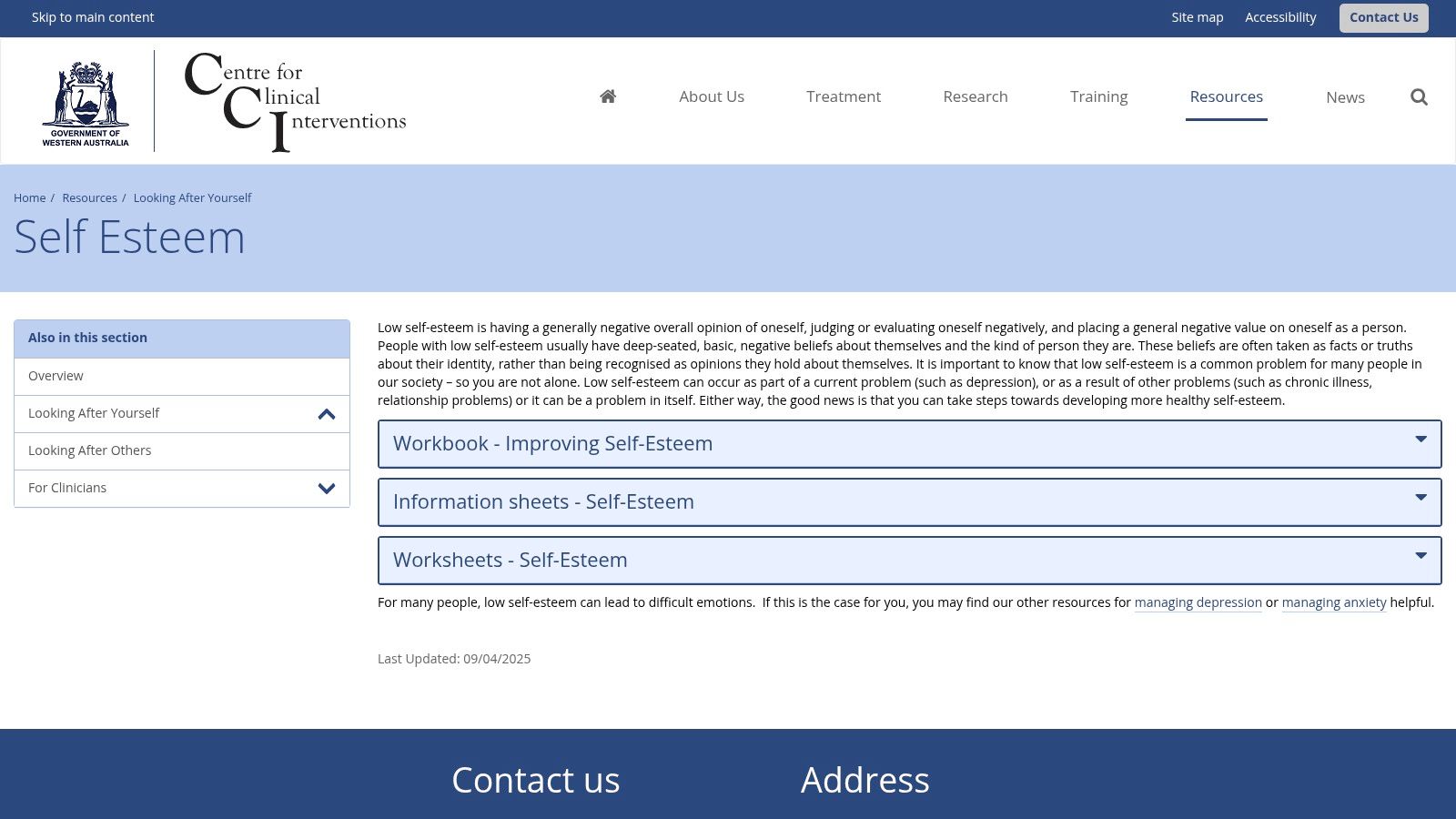
What sets CCI apart is its clinical-grade, systematic approach. Unlike single-activity sheets, CCI offers a complete therapeutic journey that explains the 'why' behind low self-esteem before providing the 'how' to change it. The programme methodically builds skills, from understanding negative core beliefs to challenging them with behavioural experiments. The worksheets on self esteem are integrated directly into each module, making the learning process practical and actionable. It's a gold-standard resource available to everyone, with no sign-ups or barriers to access.
Key Features and Offerings
- Complete CBT Workbook: Access a full, free downloadable workbook with nine modules covering the theory and practice of improving self-esteem.
- Printable Companion Worksheets: Each module comes with dedicated worksheets, such as the "Positive Qualities Record" or the "Positive You Journal," which reinforce the concepts learned.
- Immediate PDF Access: All materials are available as individual PDF files or a single zip file, requiring no account creation or personal information.
- Structured Learning: The step-by-step format is designed to be followed sequentially, guiding the user through a structured process of self-discovery and change.
Practical Tips for Using CCI
For facilitators, it’s best to work through the modules in the intended order, as each one builds on the last. A practical example is using the 'Behavioural Experiment' sheet to test a negative belief like "If I speak up in class, everyone will think my idea is stupid." The user plans the experiment, predicts the outcome, and then records what actually happened, often disproving the negative assumption. For individuals, setting aside dedicated time each week to read a module and complete the associated self-esteem handouts can create a consistent and effective self-help routine.
| Feature | Details |
|---|---|
| Primary Audience | Older Teens, Adults, Therapists, Counsellors, School Wellbeing Staff |
| Content Focus | Clinically-backed CBT programme; Self-help modules; Structured, sequential learning |
| Access Model | Completely free; no account or subscription required for full access to all PDF resources |
| Pros | Evidence-based and clinician-recommended; completely free; comprehensive and well-structured |
| Cons | Design is clinical and plain; not specifically tailored to UK school curriculum language (but adaptable) |
Website: CCI Self-Esteem Resources
7. Etsy
Etsy, the global marketplace for unique and creative goods, has become an unexpected yet invaluable hub for mental health resources. It hosts thousands of independent creators and therapists who design and sell printable worksheets on self esteem. This makes it an excellent source for finding visually appealing and highly specific worksheet bundles that cater to adults, teens, and children, often at a very accessible price point.
What sets Etsy apart is the sheer variety and creativity of its offerings. While platforms like Twinkl are curriculum-focused, Etsy sellers provide niche packs covering topics from inner child work and boundary setting to overcoming imposter syndrome. Many UK-based sellers offer A4-formatted PDF bundles as instant digital downloads, meaning you can have a comprehensive set of 20 to 50+ pages ready to print within minutes. This makes it ideal for therapists, counsellors, and individuals looking for aesthetically pleasing and modern-looking resources.
Key Features and Offerings
- Vast Thematic Variety: Discover bundles focused on niche areas like positive self-talk, confidence building, body neutrality, and healing from past experiences.
- Instant Digital Access: All worksheet sets are sold as digital files (usually PDFs), eliminating shipping costs and wait times. You can purchase and print them immediately.
- Seller Ratings and Previews: Detailed listings include buyer reviews, seller ratings (look for 'Star Seller' badges), and comprehensive image previews, allowing you to assess quality before purchasing.
Practical Tips for Using Etsy
To find the best materials, use specific search terms like "teen self esteem bundle PDF" or "CBT self-talk worksheets". A great practical use is purchasing a 'self-care planner' bundle, which often includes daily mood trackers, gratitude logs, and goal-setting sheets, helping a young person build consistent positive habits. Always read the seller's description to understand their background; some are qualified therapists, while others are graphic designers. Scrutinise reviews and product images to ensure the content aligns with your needs. Remember, while many of these tools are excellent, they are not a substitute for professional mental health advice. If you or someone you know is struggling, it's crucial to seek guidance from a GP or a qualified counsellor.
| Feature | Details |
|---|---|
| Primary Audience | Therapists, School Counsellors, Adults seeking self-help tools, Parents of teens |
| Content Focus | Niche mental health topics; printable bundles; modern and aesthetic designs for adults and teens |
| Access Model | One-off purchases of digital downloads; prices vary by seller |
| Pros | Incredible value bundles; huge variety of unique and niche topics; instant digital delivery |
| Cons | Quality varies significantly between sellers; not all creators are clinicians, so vetting is essential |
Website: Etsy Self Esteem Worksheet Marketplace
Top 7 Self-Esteem Worksheets Comparison
| Resource | 🔄 Implementation complexity | ⚡ Resource requirements | 📊 Expected outcomes | Ideal use cases | ⭐ Key advantages / 💡 Tips |
|---|---|---|---|---|---|
| Free youth emotional support digital resources – book previews and colouring sheets | Low — plug‑and‑play printable PDFs | Minimal — free downloads; printer/supplies recommended | Quick wins: normalise feelings, prompt reflection, boost emotional literacy | Parents, teachers, youth groups, therapy warm‑ups | ⭐ Free and age‑targeted; 💡 use as conversation starters; buy full books for depth |
| Twinkl | Low — lesson‑ready packs, easy to implement | Subscription for full access (30‑day trial often); printable PDFs | Classroom‑aligned, consistent lesson delivery for PSHE/RSHE topics | Primary/secondary teachers and lesson planning | ⭐ Strong UK curriculum alignment; 💡 use themed bundles for topic weeks |
| Tes Resources | Variable — depends on author/resource; needs vetting | Pay‑per‑item or free uploads; instant digital download | Wide range of worksheets/lessons; quality varies by author | Teachers seeking specific worksheets or supplement materials | ⭐ Huge selection + reviews; 💡 check previews and author ratings before buying |
| Psychology Tools | Moderate — clinician‑oriented, structured CBT materials | Subscription for premium content; editable/downloadable formats | High clinical rigour: structured CBT formulations and worksheets | Therapists, clinicians, supervised trainees | ⭐ Evidence‑based and therapist‑ready; 💡 follow professional guidance for clinical use |
| Therapist Aid | Low–Moderate — user‑friendly, many fillable sheets | Mix of free and Pro content; printable and online interactives for members | Practical therapy tools for rapid implementation across ages | Therapists, counsellors, tutors, telehealth sessions | ⭐ Approachable and evidence‑informed; 💡 use fillable sheets for remote work |
| Centre for Clinical Interventions (CCI) | Moderate — structured self‑help workbook requiring user commitment | Free PDFs, no account needed; printable materials | Comprehensive CBT‑based improvement when workbook is followed | Self‑help users, school wellbeing programmes, adjunct to therapy | ⭐ Comprehensive and free; 💡 adapt plain materials to classroom style |
| Etsy | Variable — instant download but inconsistent formats and quality | Purchase per seller; digital downloads in various paper sizes | Niche, themed packs and large bundles; outcomes depend on product quality | Counsellors, teachers, creatives seeking bespoke visuals | ⭐ Wide variety and value options; 💡 vet previews/reviews and prefer clinician‑authored packs when needed |
Beyond the Worksheet: Building a Lifelong Foundation of Self-Worth
We have explored a wealth of resources, from free downloadable colouring sheets and comprehensive portals like Twinkl and Tes Resources to clinically-focused platforms such as Psychology Tools and Therapist Aid. Each of the worksheets on self esteem we've covered offers a unique pathway to exploring self-perception, identifying strengths, and challenging negative self-talk. The key takeaway is that there is no single "correct" tool; the best choice depends entirely on the individual's age, specific needs, and the context in which it is being used, whether in a classroom, a therapy session, or at the family dinner table.
Turning Tools into Lasting Change
While structured activities are powerful catalysts for reflection, their true value is unlocked when they become part of a broader, supportive ecosystem. The journey from completing a worksheet to embodying genuine self-worth is continuous. The goal is to move beyond the paper and integrate these concepts into daily life, creating an environment where emotional wellbeing is not just an activity, but a core value. This involves modelling healthy behaviours, fostering open communication, and consistently reinforcing a child’s intrinsic value.
To make this transition seamless, consider these actionable steps:
- Integrate Relaxation Routines: Simple practices can make a world of difference. Introduce a daily 'five-finger breathing' exercise: trace your hand, breathing in as you trace up a finger and out as you trace down. Or create a designated 'calm-down corner' with sensory items. This teaches children how to self-regulate, a cornerstone of emotional resilience.
- Embrace Storytelling: Mental health books, like Matt Haig's The Truth Pixie or those from our own collection at Little Fish Books, can translate complex feelings into relatable narratives. Reading together normalises emotions and provides a shared language for discussing challenges.
- Model Positive Self-Talk: Children learn by observing. Let them hear you acknowledge your own mistakes without harsh self-criticism. Saying, "I burnt the toast, that's frustrating, but I can try again," is a powerful lesson in resilience.
Practical Skills and Professional Guidance
Building self-esteem also involves developing tangible life skills that create a sense of competence and independence. Beyond traditional exercises, practical life skills also foster self-worth; for instance, learning how to start conversations with confidence is a valuable skill that builds social self-esteem and helps young people navigate social situations more effectively.
It is also crucial to recognise the limits of these tools. The resources listed are designed for support and education, not as a substitute for professional medical advice. I am not a mental health professional. If you have persistent worries about a child's mental health or your own, please consult a GP or a qualified mental health professional. Their expertise is invaluable in navigating more complex challenges. The ultimate aim of using worksheets on self esteem is to plant a seed of self-worth that, when nurtured with conversation, support, and professional guidance where needed, can grow into a lifelong foundation of confidence and resilience.
Ready to continue the conversation beyond the worksheet? Explore the collection at Little Fish Books, where our beautifully illustrated stories and resources are designed to help children and families talk about big feelings in a gentle, accessible way. Discover our titles and support a child's emotional journey today at Little Fish Books.