
ADHD and Reading: Why It Can Be Hard and Strategies That Help
For many children, the connection between ADHD and reading can be a source of real frustration. It’s a puzzle that leaves both parents and children feeling confused, but the reason isn't a lack of intelligence or a refusal to learn. The real challenge is in how the ADHD brain is wired for focus, turning the seemingly simple act of reading into a uniquely demanding task.
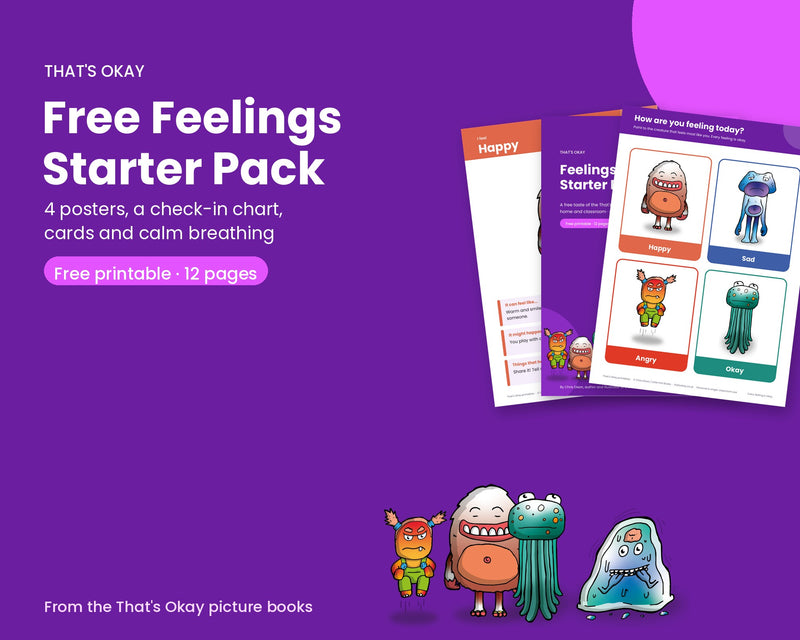
Free printable: the Feelings Starter Pack. 12 pages of feeling posters, a check-in chart, feeling cards and calm breathing cards to help children name their feelings.
Why Reading Can Feel Like an Uphill Battle with ADHD

Have you ever tried tuning an old radio to a specific station? You know the music you want is there, but the dial keeps slipping, catching snippets of other channels and static along the way. That’s a pretty good picture of what it’s like for an ADHD brain trying to sustain focus while reading.
It’s not about being unable to read. It's about how incredibly difficult it can be to maintain a clear, steady connection to the words on the page without getting pulled away by a dozen other things.
The Core Challenges of ADHD and Reading
ADHD affects several key executive functions—think of them as the brain's management team. These are the skills that orchestrate complex tasks, and they are absolutely essential for reading and understanding a text.
When it comes to reading, there are three major hurdles:
- Attention Regulation: This is a common misconception. It's not an inability to pay attention, but rather a struggle to control where that attention goes. A child might be reading one moment, then suddenly derailed by a bird outside the window, the tag on their shirt, or an unrelated thought that just popped into their head.
- Working Memory: Reading isn't just about decoding words; it's about holding onto information as you go. You need to remember who the characters are, what just happened in the last paragraph, and where the story is heading. For a child with ADHD, this mental 'scratchpad' can get wiped clean in an instant, making it almost impossible to follow the thread of a story.
- Impulse Control: This often shows up as rushing. A child might race through sentences, skip over tricky words, or guess at what a word says just to keep moving. This need for speed gets in the way of both reading smoothly and actually understanding what the text means. For example, they might read "The cat sat on the mat" as "The cat sat mat" just to get to the end of the sentence faster, missing the meaning entirely.
"When these executive functions are overloaded, the brain simply can't cope with all the demands of reading at once. This mental strain makes the entire process feel exhausting and, frankly, not very rewarding."
This constant struggle isn't just an academic issue. In the UK, we know the pressure on children's mental health is immense. It's estimated that one in six children aged 7 to 16 has a probable mental health problem. Difficulties at school can easily snowball into feelings of anxiety and low self-worth.
To get a better handle on the 'why' behind these challenges, it can be really helpful to look into concepts like cognitive load theory, which explains how our brains process new information. Understanding these neurological roots allows us to approach the problem with empathy instead of frustration, which is the first step toward providing real, effective support.
Recognising the Signs in Your Child's Reading Habits

Understanding why a child with ADHD might struggle with reading is a massive first step. But the next, equally important one, is learning to spot the specific behaviours that signal this connection in your own home or classroom.
Often, these signs are subtle. They can easily be mistaken for simple carelessness or a lack of interest, which is why it’s so vital to observe with an informed and empathetic eye. It’s all about noticing the patterns that pop up during homework or story time.
For instance, does your child read a page aloud almost perfectly, but when you ask what happened, they look back at you with a completely blank expression? That gap—between saying the words and actually absorbing their meaning—is a classic indicator.
Common Behaviours Linked to Reading and ADHD
Pinpointing these behaviours isn’t about sticking a label on your child. It's about gathering information so you can give them the right kind of support. Many of these signs can also overlap with other conditions. You might find our guide on books for dyslexia, for example, offers some useful perspectives.
See if any of these common scenarios feel familiar:
- Constantly Losing Their Place: Even when they’re using a finger or a bookmark to follow along, do they frequently jump lines or have to re-read sentences because they've lost their spot? This often points to their attention wandering right in the middle of a thought.
- Rushing and Skipping Words: Is there a tendency to race through the text, often glossing over smaller but crucial words like "the," "an," or "is"? This impulsivity can make sentences confusing and completely disrupt the flow of the story.
- Fidgeting and Restlessness: Reading requires a certain stillness that can be incredibly tough for a child with ADHD. You might notice constant squirming, leg tapping, or the need to get up and walk around after just a few minutes of trying to read.
- Difficulty Recalling Details: Those working memory challenges we talked about earlier often show up as poor comprehension. They might remember the main character's name but have no idea what that character actually did in the previous chapter.
Important Disclaimer: Please remember, I am not a mental health professional. This information is intended to be educational and empowering. If you are worried about your child's development or mental health, it is crucial to seek help and advice from your doctor or a qualified specialist.
A Quick Checklist for Parents and Teachers
To help you organise what you’re seeing, I've put together a simple table of signs that might indicate ADHD is impacting a child's reading. In the UK, the need for awareness is huge. Although only about 3.4% of children aged 5-15 have a formal ADHD diagnosis, many more struggle academically, particularly with tasks like reading that demand sustained focus.
Here’s a look at what to watch for:
Common Signs of ADHD-Related Reading Difficulties
| Behaviour Category | Specific Signs to Watch For |
|---|---|
| Attention & Focus | Easily distracted by sounds or sights while reading. |
| Skips words, sentences, or entire lines of text. | |
| Reads without absorbing the meaning (poor comprehension). | |
| Impulsivity | Rushes through reading without pausing at punctuation. |
| Guesses at unfamiliar words instead of sounding them out. | |
| Interrupts frequently when reading with others. | |
| Working Memory | Forgets what was just read moments ago. |
| Struggles to summarise a paragraph or chapter. | |
| Has trouble following multi-step instructions related to reading tasks. | |
| Physical Restlessness | Fidgets, wiggles, or is unable to sit still during reading time. |
| Avoids reading activities or complains of boredom quickly. |
Noticing these patterns is the first step toward finding strategies that actually work. It helps shift the conversation from, "Why aren't you trying?" to "How can I help you succeed?"—and that makes all the difference for a child's confidence and emotional wellbeing.
Effective Reading Strategies for School and Home
Now that we know what to look for, we can move from simply observing to taking real action. Creating a supportive reading environment, whether at home or in the classroom, is about more than just a bit of encouragement. It means using specific, practical strategies that work with the ADHD brain, not against it.
Our goal isn’t to force a child to read like their neurotypical peers. Instead, it’s about providing the right kind of scaffolding to help them build focus, manage their boundless energy, and maybe even find some genuine joy in the world of books. This is where small, consistent adjustments can make a world of difference.
Creating Structure and Predictability
The ADHD brain doesn't just like routine; it thrives on it. Unstructured time can feel chaotic and overwhelming, but a predictable framework removes the mental guesswork of how to start. This frees up precious cognitive energy for the actual task of reading.
A fantastic way to do this is to "book-end" reading sessions. This simply means creating a small pre-reading habit to ease into the task and a post-reading habit to wind down. This is a game-changer for those tricky transitions that so often challenge the ADHD brain.
- Pre-Reading Ritual: This could be as simple as spending five minutes tidying the reading spot, listening to a particular calming song, or doing a few quick stretches. It's a signal to the brain that it's time to switch gears.
- Post-Reading Wrap-Up: After the book is closed, take a moment to put it away in a special place or jot down one thing they remember from the story. This creates a satisfying sense of completion and boosts feelings of accomplishment.
Why This Works for an ADHD Brain: Predictable routines cut down on decision fatigue and anxiety. By automating the ‘getting started’ and ‘finishing up’ parts of the task, a child can save their limited executive function energy for understanding and enjoying the story.
Engaging Multiple Senses
Reading is so often presented as a silent, still, and purely visual activity. For a child who needs more stimulation to stay engaged, that's a real recipe for frustration. Bringing in multisensory elements transforms reading from a passive chore into an active, engaging experience.
One of the most powerful tools here is combining audio with text. Having a child listen to an audiobook while they follow along in the physical book can be revolutionary for their focus and comprehension. You can learn more about how audiobooks can support your child's reading journey in our detailed guide. This technique essentially offloads some of the hard work of decoding, allowing the child to sink into the story itself.
Practical Tools and Accommodations
Sometimes the simplest, low-cost tools can provide the exact support a child needs to get over a specific hurdle. These aren't complicated gadgets, but they directly address the core ADHD challenges of attention and distraction during reading.
Here are a few brilliantly effective tools to try:
- Reading Strips: A plain plastic ruler or a strip of coloured acetate can help a child keep their place on the page. It isolates a single line of text, which reduces the visual clutter and stops their eyes from jumping all over the page.
- Visual Timers: A ticking clock can be a source of constant, nagging anxiety. A visual timer, like an old-school sand timer or a modern colour-coded clock, shows time passing without any distracting sound. It makes a set reading period feel much more manageable.
- Fidget Tools: Handing over a quiet, non-distracting fidget tool (like putty or a stress ball) can work wonders. It provides just enough sensory input to help their brain focus on the text, rather than going in search of other distractions around the room.
Beyond these reading-specific tips, exploring broader ADHD management strategies can make a massive difference at home and school. There are some excellent resources out there that outline practical strategies for managing ADHD without medication, offering a wider toolkit for supporting your child.
Putting these strategies into practice is a journey of trial and discovery. What works wonders for one child might not click for another, so it’s important to approach this with patience and teamwork. By working together, you can find the unique combination of tools and routines that helps transform reading from a source of stress into something truly accessible and rewarding.
Turning Reading from a Chore into an Adventure

When reading feels like a constant struggle, it’s all too easy for a child to build up a wall of negative feelings. The pressure to keep up can completely overshadow any chance of enjoyment, turning books into a source of dread. The mission is to flip that script. We want to bring a sense of playfulness and discovery back to the page.
The trick is to shift the goalposts entirely. Forget about how many pages they’ve read or chapters they’ve finished. Let’s focus on building positive, happy memories around books instead. It's all about creating low-pressure, genuinely engaging moments that let a child with ADHD connect with stories on their own terms. That's how we transform reading from a task they have to endure into a whole new world waiting to be explored.
Make Reading a Team Sport
One of the best ways to dial down the pressure is to share the load. Reading doesn't have to be a solo mission. In fact, for a child with ADHD, making it a team effort can be a complete game-changer, reducing the mental strain and adding a much-needed social spark.
A brilliant technique to try is paired reading. It’s simple: you and your child take turns reading aloud. Maybe you read a page, then they read a page. Or you take one paragraph, and they take the next. This gives them a built-in break, helps keep them on track, and lets you model what fluent, expressive reading sounds like in a really supportive way.
Important Disclaimer: Please remember, I am not a mental health professional. The tips provided here are for educational purposes. If you are worried about your child's mental health or development, it is crucial to seek help from your GP or a qualified specialist.
Tap into Tech and Get Creative
For a brain that thrives on novelty and interaction, a traditional book can sometimes feel a bit… flat. Luckily, we live in an age where technology can be a powerful ally in making ADHD and reading a happier partnership.
Interactive e-books filled with animations, sound effects, and things to click on can capture and hold a wandering attention span far more effectively than static print. Similarly, gamified reading apps turn learning into a fun challenge with points and rewards, tapping right into the dopamine-driven motivation system of the ADHD brain.
Here are a few other creative, low-stress ideas to get you started:
- Create a Comic Strip: After reading a chapter, grab some paper and pens and get them to draw it out as a comic. It’s a brilliant visual activity that reinforces what they’ve read without the pressure of a test.
- Act It Out: Turn your living room into a stage and act out a key scene from the book. This is a fantastic way to channel their physical energy and help them connect with the characters’ feelings.
- Design a New Book Cover: Ask your child to play publisher and design a brand-new cover that shows off the most exciting part of the story for them.
The Power of Picking the Right Books
Never underestimate the magic of the right book. It can change everything. For instance, beautifully illustrated mental health books are often a perfect match for children with ADHD. The compelling visuals draw them in, while the relatable stories about big feelings can hold their focus and open up space for important conversations.
This is also a great chance to gently introduce chats about mental wellbeing. You could even have a bit of fun exploring mental health apparel with positive messages to help normalise talking about our feelings.
The whole point is to create an environment where reading is just one part of a bigger culture of support, fun, and emotional honesty. When we prioritise connection over completion, we help our children build a positive relationship with books that can last a lifetime.
Nurturing Your Child's Emotional Wellbeing
The emotional fallout from struggling to read can be huge. Imagine, day after day, feeling like you just can't keep up with everyone else. For a child, that constant feeling can really chip away at their self-esteem, planting little seeds of anxiety around anything to do with school.
That’s why providing unwavering emotional support is just as vital as any reading strategy we put in place. A child who feels safe, supported, and confident is a much more resilient learner.
We can't talk about learning without talking about mental health. When a child's mental health is suffering, it doesn't just show up in their school performance; the ripples can be felt long into their adult life. In fact, the cost of poor mental health to UK businesses is estimated at a staggering £53-£56 billion a year in lost productivity and staff turnover. It really brings home how much those early challenges matter.
Fostering a Growth Mindset
One of the most powerful gifts we can give our children is a growth mindset. This is simply the belief that our abilities aren't set in stone. We can develop them through dedication and hard work. It helps your child see a tricky word not as a personal failing, but as a temporary hurdle they can figure out how to jump over.
It’s about small but powerful shifts in our language. Instead of saying, "You're so smart!" when they read a page well, try praising their effort: "I love how you didn't give up on that tricky word." This helps them connect success with persistence, not just some magical, innate talent.
Remember, the goal is to normalise the struggle. Every expert was once a beginner, and every single reader stumbles. Framing mistakes as opportunities to learn is the very heart of building emotional resilience.
This is especially crucial in a world where social media often bombards children with a distorted view of perfection. Reinforcing that learning is a messy, beautifully imperfect process provides a vital dose of reality.
Practical Tips for Managing Frustration
When reading time leads to a frustration meltdown, having a plan is your best friend. Forcing a child to just push through rarely works. More often than not, it just makes that negative feeling about reading even stronger.
Simple relaxation techniques can make a world of difference:
- Introduce 'Brain Breaks': Teach your child to recognise that feeling of being overwhelmed. A five-minute break to stretch, grab a drink of water, or do some jumping jacks can completely reset their focus and mood. It gives them back a sense of control.
- Deep Breathing Exercises: Practice 'box breathing' together – it’s a brilliant tool. Inhale for four seconds, hold for four, exhale for four, and hold for four. It's such a simple, powerful way to calm the nervous system right down.
- Spark Open Conversations: Sometimes, the best medicine is just talking about it. Things like mental health apparel with positive slogans or engaging mental health books can be gentle, low-pressure ways to start a conversation, making it easier to chat about those big emotions.
Important Disclaimer: I am not a mental health professional. The advice shared here is for educational purposes. If you are ever worried about your child’s mental health or wellbeing, it is vital that you seek help and guidance from your GP or a qualified specialist.
Navigating Professional Support and Diagnosis in the UK
Taking that first step towards seeking professional support for ADHD and reading difficulties can feel monumental. It’s a path often filled with more questions than answers, and it’s easy to feel overwhelmed. But knowing where to start within the UK system is the key to feeling empowered. The journey usually kicks off with conversations at school and a trip to your GP, which lays the foundation for a formal assessment.
It's a process that calls for both patience and a bit of persistence. Looking after a child's mental health is so important, not just for how they get on at school, but for their emotional wellbeing for the rest of their lives. When these struggles aren't addressed, it can really knock their self-esteem and lead to bigger problems down the line.
The First Steps Towards Assessment
Your child's school should be your first port of call. Ask for a meeting with their teacher and, most importantly, the Special Educational Needs Coordinator (SENCo). SENCos are the specialists in the school who organise support for children with additional needs, making them an invaluable source of guidance.
When you go to the meeting, try to be prepared. Jot down a list of your specific observations about how your child is struggling with both ADHD and reading. If you're looking for ideas on what to look out for, our list of essential SEN resources might give you a few pointers.
At the same time, make an appointment with your GP. They'll listen to your concerns, go over your child’s developmental history, and can refer you to a specialist service, like the Child and Adolescent Mental Health Services (CAMHS) or a community paediatrician.
What to Expect from an ADHD Assessment
A formal ADHD assessment is a thorough process. It’s not just a quick chat; it's designed to build a complete, detailed picture of your child by gathering information from a few different sources.
An assessment will likely involve:
- Detailed Questionnaires: You, your child’s teachers, and sometimes your child will be asked to fill in forms about their behaviour in various settings.
- Clinical Interviews: A specialist will have a chat with both you and your child to get a real sense of the challenges from your unique perspectives.
- Direct Observation: In some cases, a professional might pop into school to observe your child in their learning environment to see things firsthand.
- Cognitive Tests: These aren't always needed for a diagnosis, but they might be used to assess skills like working memory and attention.
It is so important to be completely open and honest during this process. The more information the clinical team has to work with, the more accurate their assessment will be. Just remember, the whole point is to get your child the right support.
The Reality of NHS Waiting Lists and Seeking Support
It’s important to be realistic about how long this can all take. Unfortunately, waiting lists for NHS assessments can be incredibly long—we're talking months, and sometimes even years. This is a huge challenge for so many families across the UK.
But you're not powerless while you wait. Organisations like the ADHD Foundation have a fantastic range of resources, webinars, and support groups for parents. Staying proactive and informed can make a massive difference to your child’s emotional state and your own.
This diagram shows a simple but powerful way to handle the emotional rollercoaster that often comes with these challenges.
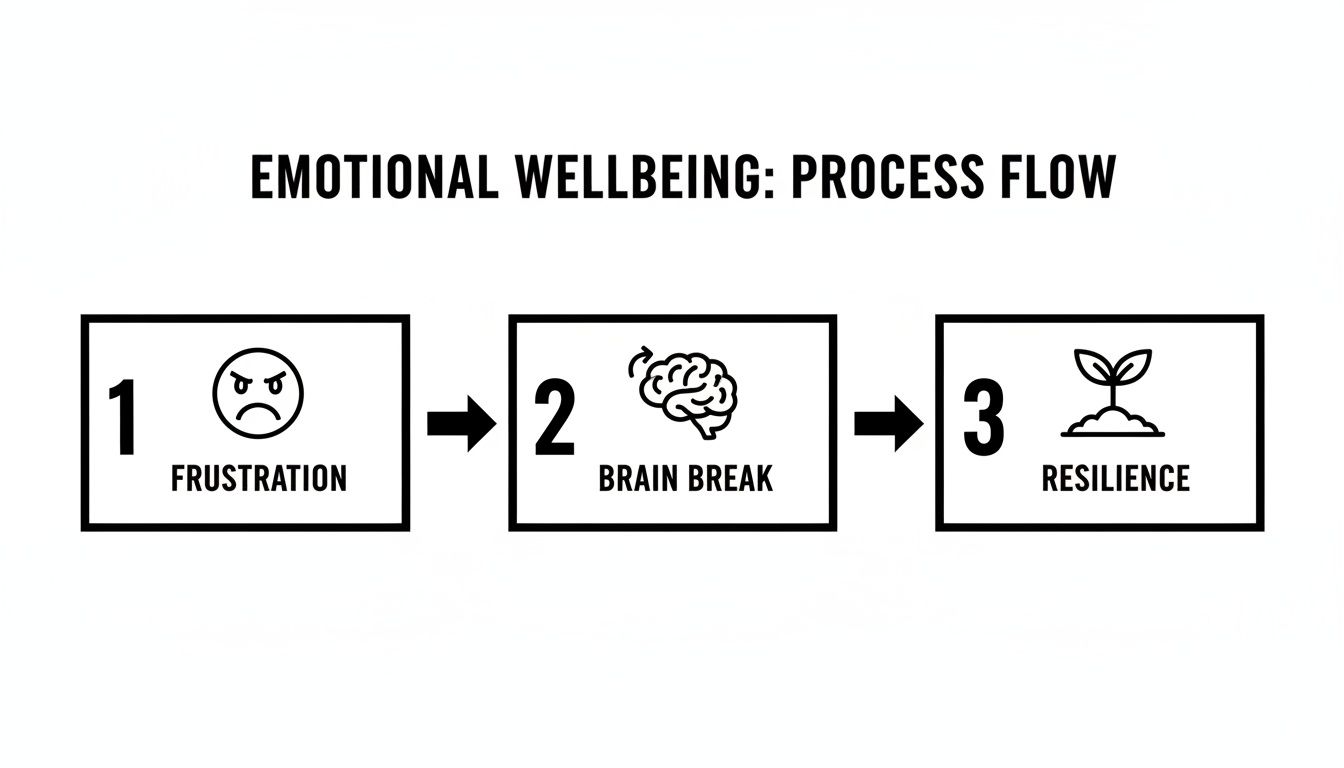
It highlights a key cycle for building resilience: acknowledging the frustration, taking a deliberate 'brain break' to reset, and then coming back to the task.
For adults, the journey to a diagnosis can be even more complicated. Adult ADHD has a profound impact on reading habits, with an estimated 3-4% of UK adults living with the condition, yet many go undiagnosed. While diagnoses in adults were rising faster than in children by 2018, getting access to treatment is still a major hurdle, meaning lifelong reading difficulties can continue unchecked. You can discover more about these adult ADHD service provision trends on kingsfund.org.uk.
Ultimately, navigating the system is all about being an advocate. By understanding the steps, preparing your case, and knowing where to turn for help, you can be the most effective champion for your child, or indeed, for yourself.
Your Questions About ADHD and Reading, Answered
Let's tackle some of the most common questions that pop up when we talk about the link between ADHD and reading.
Can a Child with ADHD Ever Truly Enjoy Reading?
Absolutely. It’s a myth that children with ADHD are destined to dislike reading. While ADHD certainly throws a few extra hurdles in the way, finding joy in reading is completely achievable. The secret is to shift the goal from performance to pleasure.
Many people with ADHD grow up to be lifelong book lovers once they find the right kinds of books and strategies that click with them. It’s all about finding books on topics your child is genuinely obsessed with, trying out different formats like audiobooks, and celebrating the effort they put in rather than pushing for perfection. When you take the pressure off, reading can transform from a chore into a wonderful escape. This is so important for their mental health, ensuring reading doesn't become just another source of stress.
What Is the Difference Between ADHD and Dyslexia?
This is a really important distinction to make, and one that causes a lot of confusion. While they often show up together, ADHD and dyslexia are two very different things.
ADHD is a neurodevelopmental disorder that mainly affects executive functions – things like paying attention, managing impulses, and staying organised. Dyslexia, on the other hand, is a specific learning disability that makes it difficult to decode words and process the sounds in language.
Here’s a simple way to think about it: A child with ADHD might struggle to stay focused on the page, getting distracted or losing their place. A child with dyslexia will likely struggle with the mechanics of reading itself, like sounding out the words. Because the two can coexist, a proper professional assessment is the only way to be sure your child gets the specific support they need.
What Types of Books Work Best for a Child with ADHD?
Graphic novels, comics, and highly illustrated mental health books can be absolute game-changers. The visuals do a lot of heavy lifting, providing context that helps with comprehension, breaking up intimidating walls of text, and keeping their brains engaged. It just makes the whole experience feel less overwhelming.
Books with short chapters or even collections of short stories are also fantastic. They provide quick, satisfying wins and a real sense of accomplishment that can be hugely motivating. But honestly, the most important tip is to follow their lead. A book about their favourite video game, a wacky historical event, or how to build something will always be more engaging than a book that doesn't connect with their passions.
Disclaimer: I'm not a mental health professional, and the information here is for educational purposes. If you have any concerns about your child's development or mental wellbeing, please have a chat with your GP or a qualified specialist. It's so important to address these challenges early on. To put it in perspective, poor mental health costs UK businesses an estimated £53-£56 billion every single year, which really highlights the long-term value of getting support when it's needed.
At Little Fish Books, we believe that nurturing emotional wellbeing is just as important as building academic skills. Our collection of engaging books and resources is carefully chosen to help children build their confidence, make sense of their feelings, and discover the joy of reading. Take a look at our supportive materials at https://thatsokay.co.uk and let's turn reading into a shared adventure.
Free printable: the Feelings Starter Pack. 12 pages of feeling posters, a check-in chart, feeling cards and calm breathing cards to help children name their feelings.