
Choosing Books for First Readers: A Parent's Guide
That magic moment when a child reads their very first sentence is a milestone for the whole family. But what exactly are books for first readers? They aren't just simple stories; they're thoughtfully designed tools that bridge the gap between being read to and a child proudly reading all by themselves.
The Adventure of a Child's First Book
This guide is all about helping you choose books that build confidence, not frustration. We’ll explore how the right stories, especially those from Little Fish Books, can nurture not just reading skills but crucial emotional intelligence too, laying the groundwork for a lifetime of learning and wellbeing.
Looking after our children's mental health from a young age has never been more important. With one in six children aged 7-16 in the UK having a probable mental health problem, giving them tools for emotional literacy is a vital, proactive step. The ripple effects are huge; poor mental health doesn't just impact individuals, it costs UK businesses up to £56 billion a year, showing just how valuable it is to build resilient future generations.
Nurturing Wellbeing Through Stories
Stories are a gentle way to start these big conversations. Using books for first readers that touch on emotions gives children a safe space to explore feelings, offering a much-needed counterbalance to modern pressures like social media, which can so easily knock their self-esteem.
Reading about a character who feels nervous helps a child put a name to their own complex feelings. It opens a safe space for conversations, teaching them that emotions are universal and manageable.
These shared reading moments can become simple relaxation tips in themselves—a quiet, focused activity away from the buzz of screens. For instance, you could try some gentle breathing exercises together, imagining you're blowing out birthday candles like a character in the story. By following along with characters and their feelings, children learn empathy and pick up coping skills without even realising it. Little Fish Books offers a range of titles and apparel designed to support these conversations.
It is important for me to stress that I am not a mental health professional. While these books are wonderful for starting conversations about feelings, you should always chat with a doctor or a qualified healthcare professional if you have any worries about your child's mental health.
Decoding the Different Reading Levels
Stepping into the world of early reading can feel like you’re learning a new language yourself, full of confusing terms like ‘phonics phases’ and ‘book bands’. Let's cut through the jargon. Think of reading levels like learning to swim; a child starts in the shallow end with armbands before gradually moving into deeper water as their confidence and skills grow.
This isn't about slapping rigid labels on a child. It's about finding that perfect book for them right now. The goal is to hit that sweet spot where they feel challenged enough to learn something new, but supported enough to feel successful and proud of what they've achieved. Finding their 'swimming level' is all about looking for clues in the books for first readers you choose.
Finding the Right Fit
So, what are those clues? Start by looking at how a book is actually put together. Pay close attention to things like sentence length, how often words are repeated, and just how much the pictures help tell the story. A book for a complete beginner will have very short, predictable sentences and illustrations that directly show what the words are saying.
As a child's reading skills take off, the books should evolve right alongside them. Sentences can get a bit longer, the vocabulary can stretch a little, and the illustrations might start adding extra context rather than just mirroring the action. This careful, step-by-step progression is what builds real, lasting confidence.
The best books for first readers actually do two crucial jobs at once, building both reading mechanics and emotional skills.
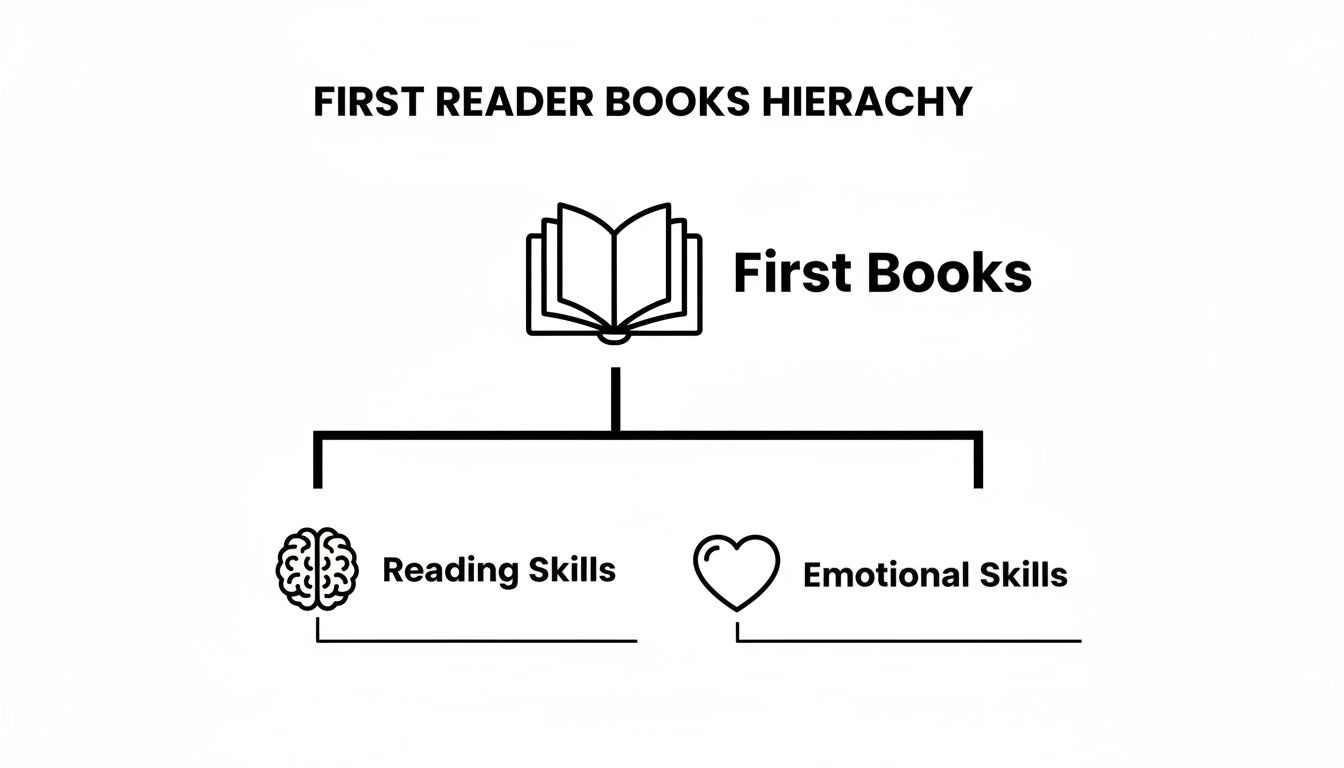
As you can see, the most effective first books don’t just teach the mechanics of reading. They also nurture emotional understanding, creating a well-rounded and resilient little learner.
Common Reading Level Systems
In the UK, schools often use structured systems to guide this journey, and you might hear your child’s teacher mention them.
- Book Bands: Many schools use a colour-coded system where each colour (like Pink, Red, or Yellow) represents a step up in difficulty. These bands group together books from different publishers that share similar features, like text complexity and vocabulary.
- Phonics Phases: This is a core part of early reading lessons, broken down into clear stages. Phase 2, for example, introduces simple letters and sounds, while later phases tackle more complex letter combinations and tricky spellings. Good books for first readers are often designed to match these specific phases perfectly.
Getting a feel for these systems helps you have more meaningful chats with teachers and pick out books at home that support what your child is learning in the classroom. Consistency between home and school makes a huge difference.
For some children, especially those with learning differences, finding the right level needs a bit of extra care and attention. If you're looking for more tailored advice, our guide on choosing books for dyslexia might be a helpful next step.
Ultimately, getting to grips with reading levels isn’t about becoming an expert overnight. It's about feeling empowered to find those special stories that spark joy and turn the challenge of learning to read into a truly rewarding adventure.
What Makes a Great First Reader Book
It's a common misconception that all beginner books are created equal. They really aren't. The very best books for first readers are like a perfectly designed puzzle, giving a new reader just the right pieces to succeed without overwhelming them. When those pieces click into place, reading transforms from a chore into a real adventure.
So, let's break down the five non-negotiable elements that all great first reader books share. These features work together to build a strong, confident foundation for any young learner.
Decodable Text and Controlled Vocabulary
First up, and arguably the most important, is decodable text. This simply means the words in the book are made up of the letter-sound relationships the child has already been taught in their phonics lessons. This alignment is crucial; it turns reading from a frustrating guessing game into a rewarding process of problem-solving.
Hand-in-hand with this is a controlled vocabulary, which ensures the child isn't bombarded with too many new or complex words all at once. The book will intentionally repeat high-frequency words, allowing the child to practise them in different contexts until they become second nature. This repetition is absolutely key to building fluency and confidence.
When a child successfully sounds out a word they've learned in phonics, it builds an incredible sense of achievement. It proves to them that they can read, giving them the motivation to keep trying.
For a bit more on how text and pictures can work together, you might find our guide on the power of children's picture books a useful read.
Simple Sentences and Supportive Illustrations
The way the sentences themselves are built also plays a vital role. Early reader books use simple sentence structures—think short, clear, and direct sentences. This allows a new reader to focus their mental energy on decoding words, not on untangling complicated grammar.
And the pictures? They aren't just there for decoration. Supportive illustrations act as powerful visual clues that help a child confirm their decoding efforts or figure out an unfamiliar word from the context of the story. A great illustration will directly reflect the action being described in the text on that very same page.
An Engaging and Meaningful Plot
Of course, even with all the technical elements in place, a book will fall flat if the story isn't interesting. A truly great first reader has a genuinely engaging plot that makes the effort of reading worthwhile. Even a simple story with relatable characters and a clear beginning, middle, and end gives a child a reason to keep turning the page.
- Relatable Problems: The characters might face simple challenges, like losing a toy or feeling nervous about the first day of school.
- Clear Resolution: The story provides a satisfying conclusion that makes the reading journey feel complete and rewarding.
- Emotional Connection: The reader feels something for the characters, making the experience more memorable and meaningful.
Beyond these general characteristics, parents often look for stories that tap into their child's specific interests. For example, learning how to choose the perfect dragon children's book can be a fun way to find a story that really sparks their imagination. Ultimately, these five elements work in harmony to create a positive and empowering first reading experience.
How Reading Nurtures Emotional Wellbeing
Beyond simply learning phonics and becoming fluent, books for first readers are a fantastic way to nurture a child's emotional world. At a time when we're all growing more concerned about children's mental health, stories offer a gentle and easy way to start building crucial emotional literacy from a very young age.
When a child reads about a character feeling nervous, sad, or full of joy, it's doing so much more than just telling a story. It gives them the words to put a name to their own big, often confusing feelings. This simple act opens up a safe space for chats, showing them that their emotions are normal, universal, and something they can learn to manage.
Building Resilience One Story at a Time
With one in six children in the UK now having a probable mental health problem, proactively building emotional skills feels more important than ever. Children today face all sorts of pressures, including the subtle impact social media can have on their self-esteem, meaning they need a really strong inner foundation to stand on.
Reading stories that explore feelings helps to build that foundation by teaching key life skills:
- Empathy: Stepping into a character's shoes helps a child see things from a different perspective to their own.
- Resilience: Watching a character work through a challenge shows that tough moments can be navigated and things can get better.
- Self-Regulation: Seeing how characters handle their emotions provides a model for children to follow when they feel overwhelmed.
These aren't just 'nice-to-have' skills; they're fundamental for navigating friendships, school, and all the ups and downs life throws at us. The cost of poor mental health to UK businesses is estimated at up to £56 billion a year, which really brings home how vital it is for society that we raise emotionally healthy future generations.
Practical Ways Reading Supports Wellbeing
Making books about feelings part of your routine can be a simple, calming activity in itself. It’s a chance to connect away from screens and share a quiet moment together. You might even wear some mental health apparel to spark conversations, or explore specially curated mental health books that tackle these topics with a gentle touch.
It's vital to remember that I am not a mental health professional. These books are a wonderful support and conversation starter, but they are not a substitute for professional medical advice. If you have any worries about your child's mental health, please seek help from a doctor or a qualified healthcare provider.
Ultimately, using books for first readers to explore emotions is about giving children a toolkit for life. It teaches them that their feelings are valid and gives them the confidence to face the world with a little more understanding and a lot more heart.
Making Reading Together a Joyful Habit
Knowing what makes a great book is one thing, but actually turning reading time into a cherished, pressure-free part of your day is another altogether. The real goal is to make it a joyful habit, a special time for connection that your child genuinely looks forward to. It’s all about creating positive memories around stories, making sure that picking up a book feels like a treat, not a chore.
The secret is to keep it light and engaging. Why not create a special, cosy reading nook? It doesn't have to be anything fancy – just a pile of cushions in a quiet corner can do the trick. This simple act signals that it's time for a calm, shared activity, a little escape from the hustle and bustle of daily life.
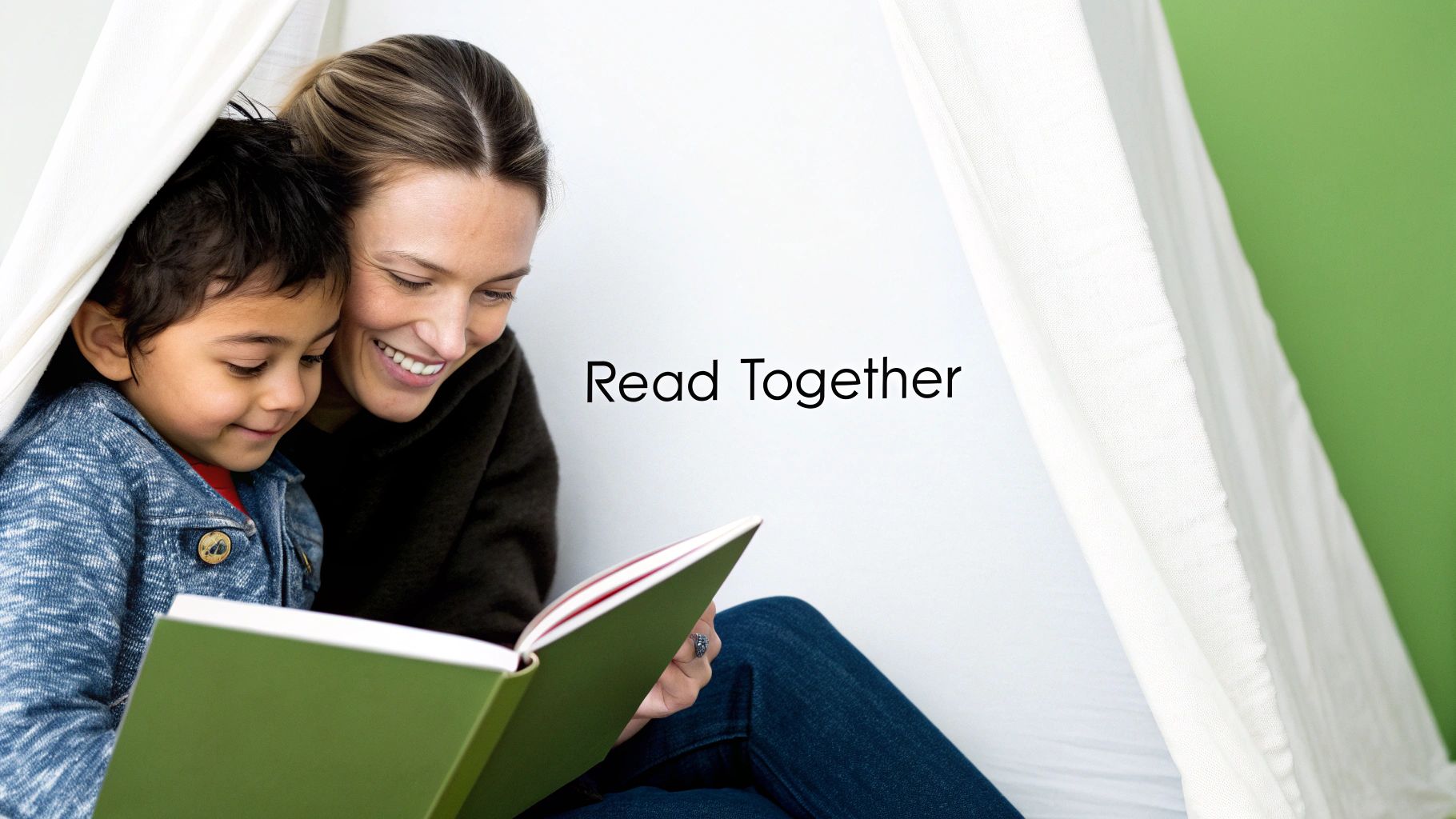
This shift in focus from performance to pleasure makes all the difference for new readers. These shared moments are just as much about strengthening your bond as they are about building literacy skills.
Gentle Guidance and Fun Interactions
When your child stumbles on a word, it’s so tempting to jump in and correct them straight away. But a much more empowering approach is the ‘pause, prompt, praise’ technique. It’s a way of gently guiding them without taking away their sense of independence.
- Pause: Just wait a few seconds. Give them a chance to puzzle it out on their own. That small moment of struggle is where the real learning happens.
- Prompt: If they’re still stuck, offer a small clue. You could ask, “What sound does that first letter make?” or point to a picture for a bit of context.
- Praise: Celebrate their effort, not just whether they got it right. A simple “I love how you tried to sound that out!” does wonders for building their resilience and confidence.
Fostering this positive association with reading is absolutely vital. When a child feels supported and successful, their motivation to pick up a book on their own will grow naturally.
Making the story interactive also brings it to life in a wonderful way. Use funny voices for different characters, act out little scenes, and ask open-ended questions like, “What do you think is going to happen next?” These simple actions turn passive listening into active participation, lodging the story more firmly in their memory. For more ideas, our article on how audio books accompany ebooks offers extra tips on engaging young listeners.
To keep the momentum going, think about mixing in some related fun and educational activities for 1st grade that complement their reading. By blending storytelling with hands-on play, you create a rich, vibrant learning environment where a love for reading can truly thrive.
Build a Library of Feelings with Little Fish Books
Here at Little Fish Books, we believe the best books for first readers should do two jobs at once. They need to build the technical skills for reading, of course, but they also need to build the emotional strength for life. Every single story we create is a tool for connection, carefully designed to help children explore their inner world with confidence and curiosity.
Imagine sitting with your child, reading a story about a little fish feeling anxious before a big race. As they sound out the words, they’re not just practising phonics; they’re absorbing a powerful lesson about naming their worries and finding courage. This is the heart of our mission: turning reading practice into a meaningful conversation about feelings.
More Than Just Stories
Our support for your family doesn’t stop when you close the book. We’ve built an entire ecosystem to help you keep these important conversations going. On our website, you’ll find free downloadable activity and colouring sheets that tie directly into the themes of our stories, reinforcing the learning in a fun, creative way.
It’s all about creating a bridge between the story world and your child's own world.
Our goal is to provide a complete toolkit for parents, educators, and therapists who want to champion both literacy and wellbeing, hand-in-hand. We see reading as a foundational skill for mental health.
Spreading the Message
We also know that supporting children’s mental health really starts with the adults in their lives. That’s why we’ve created a line of mental health apparel for grown-ups. Our comfy, organic T-shirts and hoodies carry positive messages that help challenge stigma and normalise conversations about wellbeing in our communities.
When you choose Little Fish Books, you're not just buying a book; you’re joining a movement. You’re building a library of feelings for your child, giving them the vocabulary they need to understand themselves and the people around them. It’s about raising a generation of kind, resilient, and emotionally intelligent readers.
Your Questions Answered: Navigating the World of First Readers
As you dive into this exciting new chapter with your little one, a few questions are bound to pop up. Here are some quick, clear answers to the ones we hear most often from parents.
How Do I Know If a Book Is Too Hard?
There's a great little trick for this: the 'five-finger rule'. As your child reads a page aloud, hold up one finger for every word they don't know or can't figure out.
If you reach five fingers before the page is finished, the book is probably a bit too tricky for them to tackle alone right now. But don't just shelve it! It's the perfect book to read together, with you taking the lead. This keeps reading fun and takes all the pressure off.
Is It a Bad Thing If My Child Only Wants to Reread the Same Book?
Not at all! In fact, it’s brilliant. Repetition is one of the best ways for new readers to build fluency and, just as importantly, confidence. Each time they revisit a favourite story, they're mastering its vocabulary, rhythm, and sentence patterns.
That feeling of success is so powerful. It reinforces the idea that they are a reader, which is a massive motivator. Celebrate it! Keep offering new books, but let them enjoy their well-loved favourite as much as they want.
What If My Child Just Isn’t Interested in Reading?
First off, try not to worry. The key is to make reading an invitation, not a chore. Your main job is to show them how magical and enjoyable stories can be.
- Read Aloud Every Day: This is your secret weapon. Use silly voices, be dramatic, and let them hear the pure joy in a good story.
- Follow Their Passion: Pick books for first readers that tap into what they already love. Dinosaurs? Fairies? Fire engines? Whatever it is, there’s a book for it.
- Lead by Example: Let your child see you reading and enjoying your own books. Your enthusiasm is more contagious than you think!
You can also connect stories to everyday life. Baking from a recipe book or reading a sign at the park shows them that reading isn't just something you do in a chair—it's a key that unlocks the world.
Ready to build a library that nurtures both reading skills and emotional wellbeing? Explore the collection at Little Fish Books and discover stories that help your child grow in heart and mind. Find the perfect first reader for your little one at our online bookshop.