
Choosing Books for Teenage Readers: A Parent's Guide
Picking the right books for teenage readers can feel like a lifeline, giving them a unique space to explore complex emotions and build resilience. In a world saturated with digital noise and social pressures, a good story can be like a trusted friend, helping a young person feel truly seen and understood.
Why Reading Is a Lifeline for Modern Teenagers
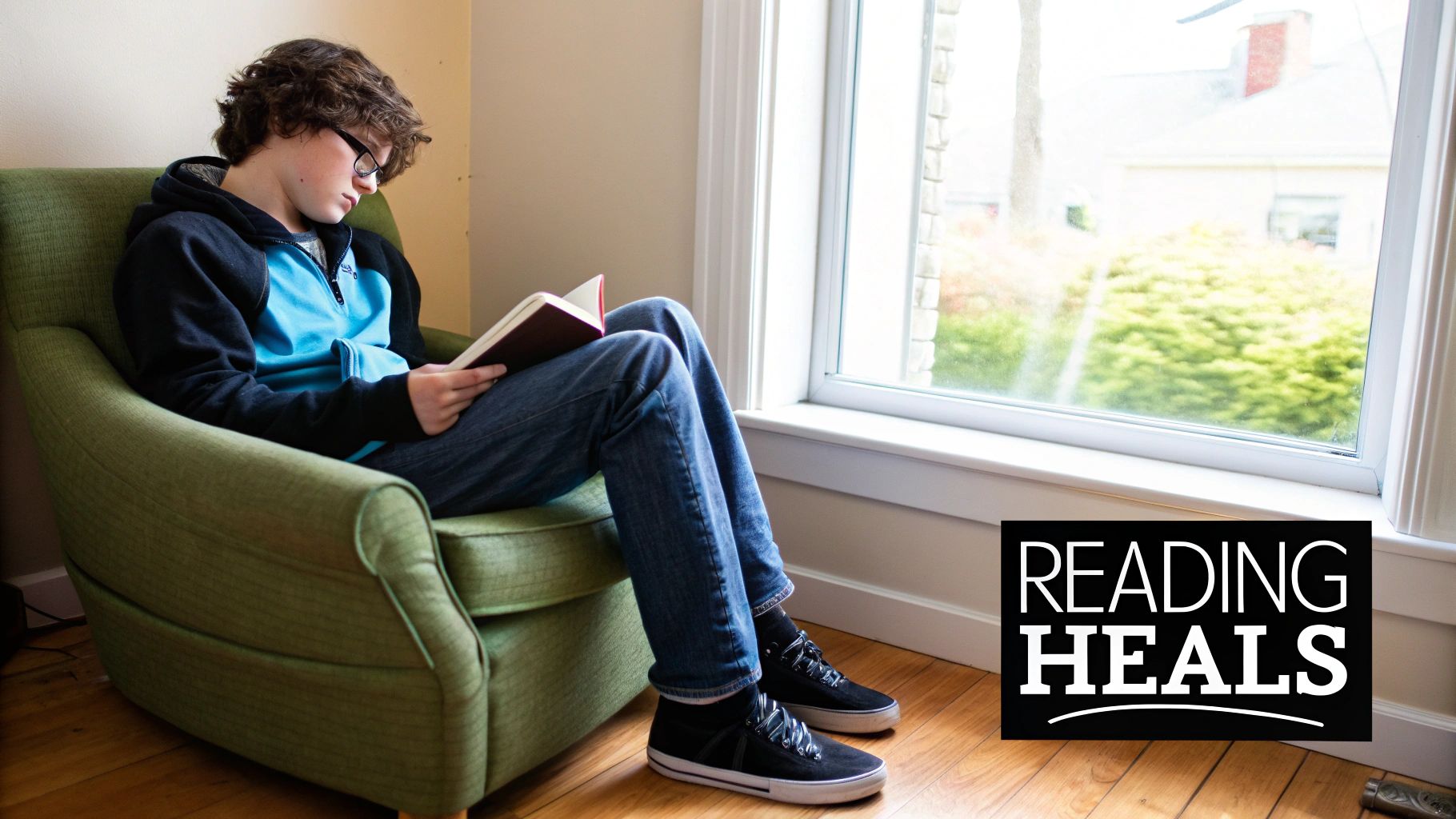
The teenage years are a whirlwind of change, and today's youth are navigating pressures we never had to. The constant stream of social media often paints a distorted picture of reality, which can chip away at self-esteem and mental wellbeing. For example, seeing endless posts of friends at parties they weren't invited to can fuel feelings of isolation and anxiety.
This is where the quiet power of reading steps in. Unlike an endless scrolling feed, a book offers a deep, immersive experience. It lets a teenager walk in someone else’s shoes, which builds empathy and creates a safe space to process difficult feelings without any judgement.
The Growing Need for Emotional Support
The statistics around youth mental health in the UK are impossible to ignore. It is estimated that one in six children aged 7 to 16 has a probable mental health problem. This shows just how badly we need accessible tools that can support emotional literacy from a young age.
Reading provides a private, non-confrontational way for teenagers to explore sensitive topics. When a character in a book struggles with anxiety or feels like an outsider, it validates the reader's own feelings and shows them they are not alone.
This guide is all about giving practical advice to parents and educators. We'll look at how to find books that don't just entertain but also spark vital conversations about mental health. You can learn more about the core benefits in our article exploring why reading books is important.
To give you a clearer picture, let's break down how reading directly impacts a teenager's emotional world.
How Reading Supports Teenage Mental Wellbeing
| Area of Impact | Key Benefit for Teenagers |
|---|---|
| Empathy Building | By stepping into characters' lives, teens learn to understand different perspectives and emotions. |
| Emotional Validation | Seeing their own struggles reflected in a story helps them feel less isolated and more "normal." |
| Stress Reduction | Immersing themselves in a good book provides an escape from daily pressures and lowers stress levels. |
| Problem-Solving Skills | Fictional characters model different ways to face challenges, offering new coping strategies. |
| Safe Exploration | Books allow teens to safely explore complex themes like grief, identity, and conflict from a distance. |
This table is just a snapshot, but it shows how a simple book can become a powerful tool for navigating the ups and downs of being a teenager.
Beyond the Page: Practical Benefits
The advantages of reading go far beyond just feeling understood. A story about overcoming adversity, for instance, can offer real-world examples of resilience. When a character develops coping mechanisms, like taking deep breaths before a big exam, or musters the courage to ask for help, it models healthy behaviour for the reader.
Reading is also a brilliant springboard for social emotional learning activities, helping teenagers get to grips with complex feelings and relationships. This guide will show you how to choose books for teenage readers that truly make a difference.
Disclaimer: I am not a mental health professional. The information in this guide is for educational purposes only. If you have concerns about a teenager's mental health, please seek advice from a doctor or a qualified mental health practitioner.
Diving Into the Themes of Modern Teen Fiction
Let's be honest, young adult (YA) fiction has grown up. It's not just about first crushes or magical adventures anymore. The best books for teenage readers today are diving headfirst into the real, messy, complicated world they're living in, acting as both a mirror to their own lives and a window into someone else's.
Mental health is a huge part of this conversation. It's something we can't ignore, especially when you hear that one in five children and young people in England aged 8 to 25 have a probable mental health problem. That’s a staggering number. It makes it crystal clear why stories that explore anxiety, depression, or body image are so vital. These books offer a sense of validation, a quiet voice that says, "You're not alone in this."
And then there's the relentless pressure of social media, which can really weigh on a teenager's mind. Scrolling through endless feeds of seemingly perfect, curated lives can easily spark feelings of inadequacy and anxiety. A book, on the other hand, offers a much-needed escape—a quiet space where characters are just as insecure and imperfect as the rest of us, reminding teens that it’s completely normal not to have it all figured out.
Finding Your Place: Identity and Belonging
Alongside mental wellbeing, a massive theme weaving through modern teen fiction is the search for identity. It’s that universal journey of figuring out who you are. This might mean exploring sexuality, connecting with cultural heritage, or simply trying to find your tribe within different peer groups.
When a teenager picks up a book and sees a protagonist who looks like them, talks like them, or is wrestling with the same questions they are, it's incredibly powerful. A story about a character navigating their dual heritage, for example, can be a source of immense comfort for a teen in a similar boat. It sends a clear message: your story matters.
The Ripple Effect of Mental Health
Talking openly about mental health isn't just a "nice to have"; it's essential. When these challenges aren't supported early on, the consequences can ripple out and affect everyone.
- Impact on Businesses: Young people struggling with their mental health may find it difficult to be productive or even show up for work when they join the workforce. In fact, poor mental health is estimated to cost UK employers up to £56 billion a year.
- Strain on Healthcare: Getting in early with support can significantly reduce the long-term strain on our public health services, making sure help is there for those who need it most.
- Stronger Communities: When we build emotional literacy from a young age, we’re creating more empathetic and supportive communities for all of us to live in.
Books that kickstart these conversations are a brilliant first step. They give teens the words and the context to make sense of what’s going on in their own minds and to better understand the people around them.
Disclaimer: Just a quick note – I'm not a mental health professional. The resources and mental health books mentioned here are for informational purposes only. If you are genuinely worried about a teenager's wellbeing, it's so important to reach out to a doctor or a qualified mental health practitioner for support.
Practical Tips for Finding a Moment of Calm
Reading itself is a fantastic way to unwind, but it can also be a springboard for other calming activities. When a character in a story discovers a healthy way to cope, it can plant a seed for your teen to try it themselves. Some simple ideas include:
- Mindful Breathing: Just taking five deep, slow breaths can do wonders for calming the nervous system.
- Journaling: Inspired by a character’s journey, writing down thoughts and feelings can be a huge release.
- Getting Creative: Putting on some music, drawing, or painting can be a great way to process emotions.
Encouraging these small, positive habits can make a real difference. In a similar way, things like mental health apparel with positive affirmations can act as little daily nudges to practise self-compassion—a theme you'll often find at the heart of the most powerful mental health books.
A Practical Guide to Selecting the Right Book
Picking out the right book can feel like a daunting task, but trust me, there's no secret formula. The real goal is to shift the whole process from being a chore into something you can do together. When you bring your teen into the conversation, you don't just find a story that clicks; you actually build a stronger connection.
A great place to start is by looking at what they already love. If they're obsessed with action-packed video games, they’ll probably get hooked by a fast-paced thriller or a sprawling sci-fi adventure. Got a teen who spends hours scrolling through artists on social media? A graphic novel or a book with stunning illustrations could be the perfect fit. It’s all about connecting reading to their existing passions, showing them it’s just another exciting way to explore what they already find fascinating.
Gauging Interests Without Being Intrusive
Instead of the direct "What do you want to read?" which often gets a classic teenage shrug, try a more subtle approach. You could casually mention a book you've recently finished or ask their thoughts on a film adaptation of a book they've seen. This opens up a natural conversation about characters, plots, and themes without putting them on the spot.
Another brilliant strategy is to balance comfort with challenge. If they've just worked their way through a heavy book tackling some tough topics, maybe suggest something a bit lighter and more comforting next. It’s about creating a positive, sustainable reading habit, not forcing them through a rigid, intimidating list.
This infographic breaks down how different themes in teen fiction—like identity, wellbeing, and culture—can speak to all sorts of different interests.

It’s a handy visual guide for quickly pinpointing stories that might align with what a teenager is navigating in their own life right now.
Exploring Different Formats
Don't forget that reading isn't just about a traditional physical book. Trying out different formats can be a total game-changer, especially if you're dealing with a reluctant reader.
- Audiobooks: Absolutely perfect for teens who are always on the move or find it hard to sit still with a book. They can listen while doing chores, on the bus, or even while exercising.
- E-books: The convenience of having an entire library on a phone or tablet is a massive plus. It's discreet and makes getting a new title incredibly easy.
- Graphic Novels: These are so much more than just comics. They tell rich, complex stories with incredible artwork, which makes them ideal for visual learners.
At the end of the day, the format is far less important than the engagement. The real aim is to find a way into stories that works for them. For more ideas, feel free to check out our curated lists of engaging books for young adults.
Encouraging book ownership is also an incredibly powerful motivator. Having a book of their own can completely transform a teenager's relationship with reading, turning it from an assignment into a personal possession they can treasure and return to again and again.
Research consistently backs this up, showing a strong link between owning books and the enjoyment of reading. Worryingly, book ownership for 8–18 year-olds in the UK has hit its lowest point in over a decade, with just 89.4% reporting they have a book at home. This powerful connection between ownership and engagement is explored in a report from the National Literacy Trust, which is well worth a read to understand the full impact.
Using Books to Start Meaningful Conversations

A shared book is so much more than just a story; it’s a bridge. Using books for teenage readers as a conversation starter can feel far less direct and confrontational than a face-to-face chat, creating a safe space to gently explore tough subjects like mental health, peer pressure, and relationships.
When a character in a book is grappling with anxiety, for instance, it opens a door. You can ask gentle, open-ended questions about what they are going through. Instead of putting your teen on the spot, you can discuss the character’s feelings and choices together. This transforms reading from a solitary activity into a powerful tool for connection.
Asking Questions That Go Deeper
The key is to move beyond simple plot points. While "What happened next?" is a fair question, it doesn't spark much reflection. The goal is to encourage your teen to think critically and share their own perspectives, all within a non-judgemental environment.
Try asking questions that connect the story to their world:
- "Why do you think the character reacted that way? Have you ever felt something similar?"
- "If you were in that situation, what do you think you would have done differently?"
- "Was there a moment in the story that really surprised you or made you think?"
These kinds of questions show you value their opinion and are genuinely interested in their thoughts, not just checking if they've done their reading.
It's important to remember that I am not a mental health professional. These tips are intended to help you open up dialogue. If you are worried about a teenager's wellbeing, please seek support from a doctor or a qualified mental health practitioner.
Expanding the Conversation Beyond the Book
A meaningful chat doesn't have to end when the last page is turned. Complementary activities can help teens process the themes and express feelings they might otherwise keep hidden. This is particularly helpful for those who find direct conversation a bit of a challenge.
For instance, you could suggest:
- Journaling: Encourage them to write from a character's point of view or reflect on how a theme in the book relates to their own life.
- Exploring Through Film: Watch a film adaptation or a movie with similar themes and chat about the differences and similarities.
- Creative Expression: Suggest drawing a scene, creating a playlist for a character, or even exploring mental health apparel with messages that echo the book's themes of hope and resilience.
By using literature as a starting point, you can help your teen build the emotional vocabulary they need to navigate the complexities of growing up. A simple story can become an invaluable tool for understanding themselves and the world around them.
Helpful Resources for Parents and Teens
Getting through the teenage years takes a village, and knowing where to find trusted advice can make a world of difference. While books are an incredible starting point, it helps to have a wider support system. This is where other organisations and wellness tools come in, reinforcing the positive messages your teen is reading about. Think of this as a toolkit to help you build that comprehensive support network.
Let's be honest: talking openly about mental health is vital, especially when you see the ripple effects it can have. When young people struggle, it can lead to long-term challenges. In the UK alone, businesses face costs of up to £56 billion annually from issues like lost productivity linked to poor mental health. Getting support in early helps build a more resilient future workforce and, more importantly, stronger communities.
Just a quick note: I'm not a mental health professional. The resources I'm sharing here are for your information. If you have real concerns about your teen's wellbeing, it's so important to reach out to a doctor or another qualified practitioner for help.
UK Mental Health Organisations
When you need professional guidance, these UK-based organisations are fantastic places to start. They offer everything from confidential helplines to online resources designed specifically with young people in mind.
- YoungMinds: A leading charity dedicated to the mental health of children and young people. They have a brilliant parents' helpline and a huge amount of information on their site.
- The Mix: Offers essential, free, and confidential support for anyone under 25, covering everything from mental health to housing. They’re available through multiple channels, which is great for teens.
- Mind: A household name for a reason. Mind provides advice and support to empower anyone experiencing a mental health problem, while also campaigning to improve services and promote understanding.
For families looking for direct, professional mental health support, various youth counselling services are available to help teenagers work through their challenges.
Recommended Mental Health Books
The right book at the right time can feel like a lifeline. While many books for teenage readers cleverly weave these themes into fiction, there are also some excellent non-fiction mental health books out there offering practical, actionable advice for both teens and their parents. My advice is to look for titles that are praised for their sensitivity and are written by credible authors.
It’s no secret that keeping teens reading can be a challenge. UK survey evidence shows that while around half of young people still read printed fiction, the numbers are slipping. One report noted that 49.3% read printed fiction in their free time, but other market data points to a general decline. This makes finding truly engaging and relevant books for teenage readers more important than ever to keep them connected to the power of stories. You can see more about these reading trends on Statista.
Other Supportive Tools
Wellness isn't just about one thing; it's a whole-person approach. Have you noticed the rise of mental health apparel? It's a simple but effective idea, using positive messages on clothing to build a sense of community and serve as a little daily reminder for self-care.
Beyond that, there's a whole world of supportive tools you can explore in these mental health resources for teens. Pairing a good book with other relaxation techniques like mindfulness apps or journaling can create a really well-rounded approach to supporting your teen's emotional wellbeing.
Your Questions About Teenage Reading, Answered
Finding the right book for a teenager can feel like a bit of a minefield. It’s totally normal to have questions or feel a bit stuck, especially when you’re trying to spark a genuine connection between a young person and the stories they read. We get it, and this section is here to give you some clear, practical answers to the most common queries we hear from parents and educators.
The book world itself can be a tricky thing to navigate. In the UK, the children's and young adult market is massive—BookScan tracked a whopping 195 million print book sales in just one year. But trends like BookTok can cause a huge surge in demand for very specific titles, which often means other brilliant books for teenage readers get less of the spotlight. If you’re curious about these market shifts, the Publishers Association's annual report is a great place to dig deeper.
Frequently Asked Questions
Here are some straightforward answers to the common challenges you might come up against when trying to get a teenager reading.
My teen says they hate reading. How can I encourage them?
First off, let's look beyond the traditional paperback. Audiobooks are a game-changer for teens who are always on the go or just prefer listening over reading. And don't underestimate the power of graphic novels; they can make really complex stories feel much more approachable and visually exciting.
The real key is to link reading to what they already love. Are they into gaming, sports, or art? There’s a book for that. Frame reading not as a chore they have to do, but as another way to dive deeper into their passions.
How do I know if a book's content is appropriate for my teen's age?
Most publishers provide age guidance, which is a good starting point. But for a more detailed picture, check out reviews from trusted places like Common Sense Media or parent bloggers who often give the lowdown on specific themes, language, and maturity levels.
Honestly, the best approach is to talk to your teen directly. Having an open conversation about why a book might be challenging or contain mature themes can be far more powerful than just banning it outright.
Fostering an environment of trust and open dialogue around reading choices is crucial. It shows your teen that you respect their growing independence while still offering guidance and support. This collaborative spirit makes them more likely to share their thoughts and feelings about what they read.
What if my teenager only wants to read one type of book?
This is so common, and it’s actually a great sign! It means they're properly engaged and have found something that clicks. Instead of trying to steer them away, lean into it. If they’re obsessed with fantasy, help them discover different sub-genres or find authors who put a fresh spin on the tropes they love.
Over time, you can gently introduce them to related genres. A fan of dystopian fiction, for example, might really get into a grounded sci-fi thriller next. At the end of the day, the goal is to build a positive, lifelong relationship with stories, whatever shape they come in.
At Little Fish Books, our passion is creating resources that build emotional literacy and support wellbeing. Our collection of books, activities, and merchandise has been thoughtfully designed to help children and young people explore their feelings and develop resilience. You can explore our full range and find the perfect tools to start those important conversations at https://thatsokay.co.uk.