

A Guide to Books for Young Adults
When we talk about books for young adults, what exactly do we mean? The simple answer is stories written for teenagers, usually between the ages of 12 and 18. But that's just scratching the surface. These books are so much more than an age bracket; they are a vital space for exploring the complex emotional and social whirlwind of adolescence.
Think of them as both a mirror and a window. A mirror that reflects a teen's own world back at them, validating their feelings, and a window that offers a glimpse into the lives and experiences of others. It’s this focus on the intense, often messy, journey of self-discovery that truly defines the category.
What Defines Young Adult Books Today

Young Adult (YA) literature has grown up. It's moved far beyond the simple coming-of-age tales you might remember. Today's YA shelves are filled with stories that dive headfirst into the real, and often difficult, issues that modern teens are navigating every single day.
From the constant pressure of social media to the intricate challenges of mental health, YA fiction provides a safe harbour for young people to explore their feelings and see their own struggles reflected on the page. Addressing mental health openly is incredibly important, as early support can build a foundation for lifelong emotional resilience.
The need for these resources is more urgent than ever. Recent statistics show a deeply worrying trend, with one in five children and young people in the UK now having a probable mental health condition. In this climate, books offer a private, non-judgemental way for teens to process what they’re going through, on their own terms.
A Mirror to Modern Teen Life
What really sets contemporary YA apart is its emotional honesty. These stories don’t tiptoe around difficult subjects; they tackle them with sensitivity and genuine care. This honesty allows young readers to connect deeply with characters who are navigating similar challenges, helping to chip away at feelings of isolation.
Take social media, for instance. Its constant presence has a huge impact on teen mental health, often fuelling a damaging cycle of comparison and anxiety. Many modern YA books address this directly, exploring themes of online identity, cyberbullying, and the intense pressure to curate a "perfect" life. Seeing these struggles articulated can be incredibly validating for a young person.
It's really important for me to state this clearly: I am not a mental health professional. This guide is written to share information and ideas. If you have any concerns about a young person's well-being, please reach out to a doctor or a qualified mental health practitioner for professional advice.
More Than Just a Story
YA literature isn't just about entertainment; it's a powerful tool for building empathy and resilience. These books are a preparation for life's inevitable hurdles. They can also be a brilliant catalyst for crucial conversations between teens and the trusted adults in their lives, helping to break down the stigma that so often surrounds mental health.
Just think about the practical impact:
- A character's journey with anxiety can normalise the experience for a reader and even model healthy coping strategies, like simple breathing exercises. A practical example could be a character taking five slow, deep breaths before giving a class presentation.
- A story about friendship, conflict, and loss can provide a safe framework for discussing grief. For instance, reading about a protagonist writing letters to a lost loved one can open a dialogue about healthy ways to process loss.
- A novel exploring identity and belonging can help a young person feel more confident and secure in who they are.
By reflecting the genuine, unfiltered complexities of being a teenager today, these books become essential guides for navigating one of the most pivotal stages of life.
Why YA Books Are a Lifeline for Teens
Let's be honest, being a teenager has never been easy. But for many young people in the UK today, it feels more turbulent than ever before. The constant hum of social media and relentless academic pressure can create a perfect storm for mental health struggles. In the middle of all that noise, a book – specifically a book for young adults – can be a quiet, powerful, and very private lifeline.
These stories create a safe space for teens to process complicated emotions like anxiety, depression, and loneliness without ever having to say a word. When a young person sees their own worries reflected in a character on the page, it instantly breaks down that crushing feeling of isolation. It’s a silent reassurance: You are not the only one feeling this way.
A Safe Harbour in a Digital Storm
It's impossible to talk about teen well-being without talking about social media. The curated perfection scrolling past on platforms like TikTok and Instagram often fuels a damaging cycle of comparison, leading to deep feelings of inadequacy and anxiety. It paints a picture where everyone else’s life seems flawless, making a teen’s own very real struggles feel abnormal, like some kind of personal failure.
This is where books for young adults offer such a vital counterbalance. They introduce characters who are messy, flawed, and beautifully imperfect—just like real people.
- They Validate Feelings: Reading about a character whose heart is racing with social anxiety before a party makes a reader’s own fears feel normal and understood.
- They Model Healthy Responses: Seeing a protagonist finally reach out to a friend or a trusted adult shows that asking for help is a sign of strength, not weakness.
- They Provide Perspective: Stories can peel back the curtain on the online façade, reminding teens that social media is just a highlights reel, not the full, complicated picture of someone's life.
By grounding their stories in emotional reality, these books provide both an essential escape and a practical tool for building resilience against the pressures of the digital world.
It's so important to remember that while books are an incredible support, they are not a substitute for professional help. If you are worried about a young person's mental health, please seek advice from a GP or a qualified mental health professional.
Building Bridges Through Shared Stories
One of the most powerful things a book can do is start a conversation. A thoughtfully chosen story can act as a gentle bridge between a teen and a parent, teacher, or friend, opening a door to topics that might otherwise feel too awkward or confrontational to bring up directly.
Imagine a story that sensitively portrays a character’s battle with depression. It creates a natural opening. You could ask a simple, open-ended question like, "It sounds like that character was having a really tough time. What do you think might have helped them?" This indirect approach takes the pressure off, allowing a teen to share their thoughts on the character's feelings, which might just be a safe way of talking about their own.
This shared experience builds connection. The book becomes a common language, a shared emotional landscape where difficult subjects can be explored safely. And this is crucial. The cost of unaddressed mental health challenges extends far beyond one person, impacting families, schools, and even future workplaces. In fact, UK businesses lose billions each year due to poor mental health, which just goes to show how vital it is to build supportive foundations early on.
How Common YA Themes Connect to Teen Well-being
YA books often explore universal themes that resonate deeply with the adolescent experience. This table shows how these popular narrative threads directly link to key aspects of a teen's mental and emotional development.
| Popular YA Theme | Connection to Mental Health | Example Scenario in a Story |
|---|---|---|
| Finding Your Identity | Boosts self-esteem and helps teens feel comfortable with who they are, reducing anxiety about "fitting in." | A character explores different hobbies, friendship groups, and styles to figure out where they truly belong. |
| First Love & Heartbreak | Normalises intense emotions and teaches resilience, showing that it's possible to heal from emotional pain. | A protagonist navigates the incredible highs and crushing lows of a first relationship, learning about themselves along the way. |
| Overcoming Adversity | Builds resilience and hope by showing characters facing down huge challenges—from family issues to social injustice. | A teen stands up to a bully or fights for a cause they believe in, discovering their own inner strength. |
| Complex Friendships | Teaches crucial social and emotional skills, like communication, empathy, and how to navigate conflict. | Best friends have a major falling out and must learn to communicate honestly to repair their relationship. |
Ultimately, seeing these struggles play out on the page helps teens realise their own experiences are a valid and normal part of growing up, not something to be ashamed of.
From Coping to Confidence
Beyond simply reflecting challenges, the very best books for young adults offer something even more valuable: hope. They show characters navigating hardship, learning coping mechanisms, and ultimately finding a way forward. That narrative arc is incredibly empowering for a young reader.
Think about the practical, healthy coping skills often woven right into the plot:
- Mindful Breathing: A character might be shown taking slow, deep breaths to calm their nerves before a big exam. This is a great, simple relaxation tip that readers can try themselves.
- Journaling: A protagonist could use a diary to untangle their thoughts, showing a healthy way to process overwhelming feelings.
- Connecting with Nature: A walk in the woods or sitting by the sea might be depicted as a source of peace and clarity for a character in turmoil.
Seeing these strategies in action makes them feel accessible and normal. It’s not just about surviving; it’s about learning to thrive. This shift is even reflected in trends like mental health apparel, where wearing a hoodie with a positive message becomes a small but visible act of self-care and solidarity. At the end of the day, a good book doesn't just tell a story; it equips its reader with tools for their own.
Choosing Books That Truly Support Young Readers
Picking out the right book for a teenager is about so much more than just a gripping plot. It's about finding a story that genuinely offers them support. For parents, librarians, and teachers, this means choosing books for young adults that don’t just entertain, but also build emotional resilience.
This comes down to a few key things: Is it right for their age? Are the themes relevant to their life? And does it offer a glimmer of hope, even when the topics get heavy? It’s not about wrapping teens in cotton wool, but giving them stories that build empathy and show them healthy ways to cope.
This little flowchart can help you decide whether a young reader might get more from a story that mirrors their own life or one that opens their eyes to a totally new perspective.
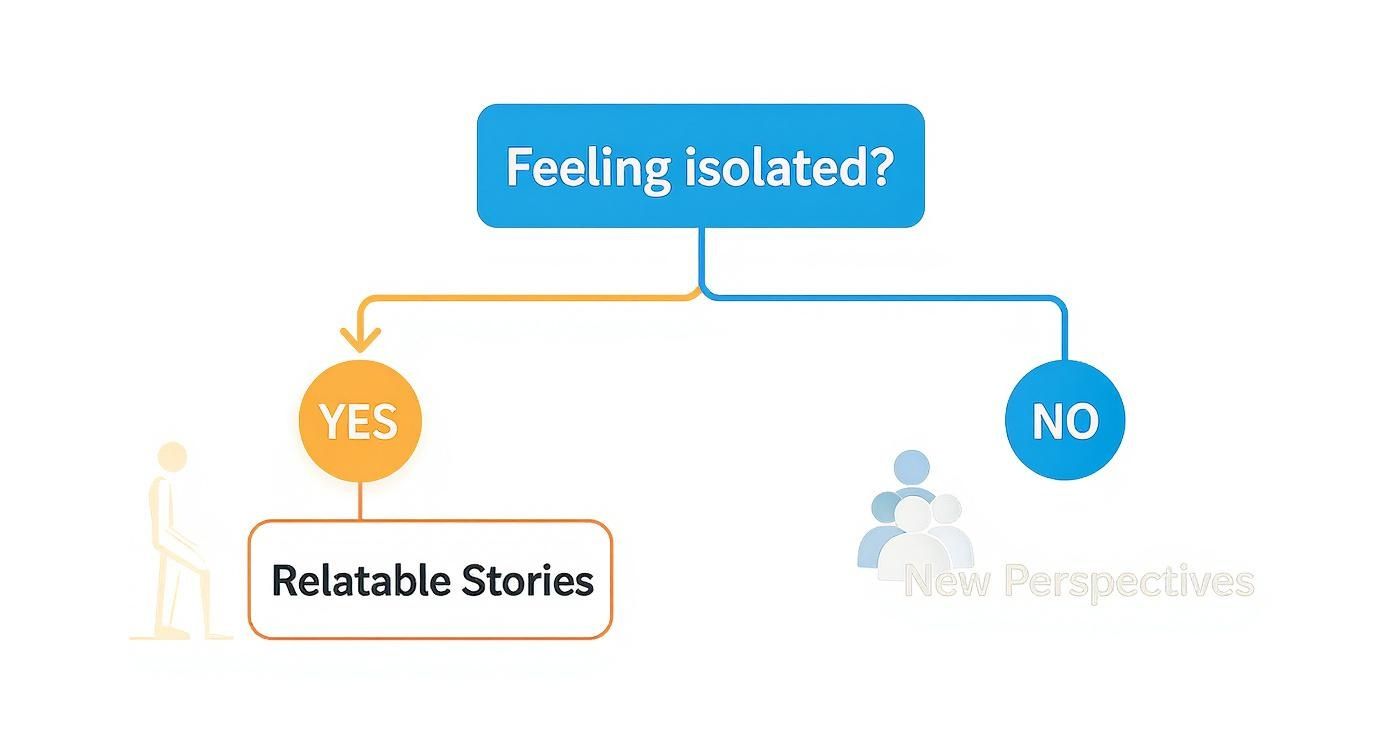
As the guide shows, there’s huge value in both relatable stories and those that offer a fresh point of view – it all depends on what that reader needs in that moment.
Evaluating Age and Thematic Relevance
First things first, you have to match the book to the reader. A story that’s perfect for a seventeen-year-old could feel completely overwhelming for a thirteen-year-old. Publisher age ratings are a good starting point, but always think about the individual teen’s own maturity and life experiences.
Next up, themes. Are you trying to find a book that explores a specific issue like anxiety, grief, or the pressures of social media? Finding a story where a character is going through something similar can be incredibly powerful. It sends a vital message: you are not alone in this.
This is more important than ever. The UK market for YA fiction has exploded, with print sales jumping by nearly 48.2% since 2018. In 2022 alone, around 35 million print copies were sold, showing just how many young people are turning to books to help make sense of the world.
Finding Hope in Heavy Topics
Many of the very best YA books don’t shy away from the tough stuff. They dive into mental health struggles, family drama, and social injustice with raw honesty. But the most supportive books manage to do this while keeping an undercurrent of hope alive.
This doesn't mean every story needs a fairy-tale ending. Instead, look for stories that:
- Show characters learning to cope. This could be as simple as a character discovering deep breathing exercises or finding an outlet through art.
- Highlight the power of connection. Maybe the story shows a character finally reaching out to a friend, parent, or a professional for help.
- Emphasise resilience. The protagonist might not fix everything, but they learn, grow, and find the strength to carry on.
A hopeful message is a quiet reassurance to a young reader that even when things feel dark, there’s always a path forward.
Checking for Content Sensitivity
Before you hand over a book, it’s smart to get a sense of any potentially triggering content. This isn’t about censorship; it’s about being prepared to have a supportive chat if they need it.
Just a reminder, I'm not a mental health professional. This advice is for guidance and information only. If you have serious concerns about a young person's mental health, it is essential to seek help from a doctor or a qualified practitioner.
Here’s a quick checklist for weighing up a book’s content:
- Read Reviews: Check out reviews on sites like Goodreads or Common Sense Media. Readers often flag sensitive themes.
- Skim the Book: If you can, have a quick flick through any intense-looking chapters to get a feel for the tone.
- Prepare to Talk: If a book deals with heavy topics, be ready to discuss them. Asking simple, open-ended questions can make a world of difference.
For great reading lists and guidance, you can explore guides to the best young adult series to find collections that have already been tried and tested. At the end of the day, the goal is to choose stories that empower young readers, giving them both tools and confidence for their own journey.
Turning Reading into a Conversation Starter
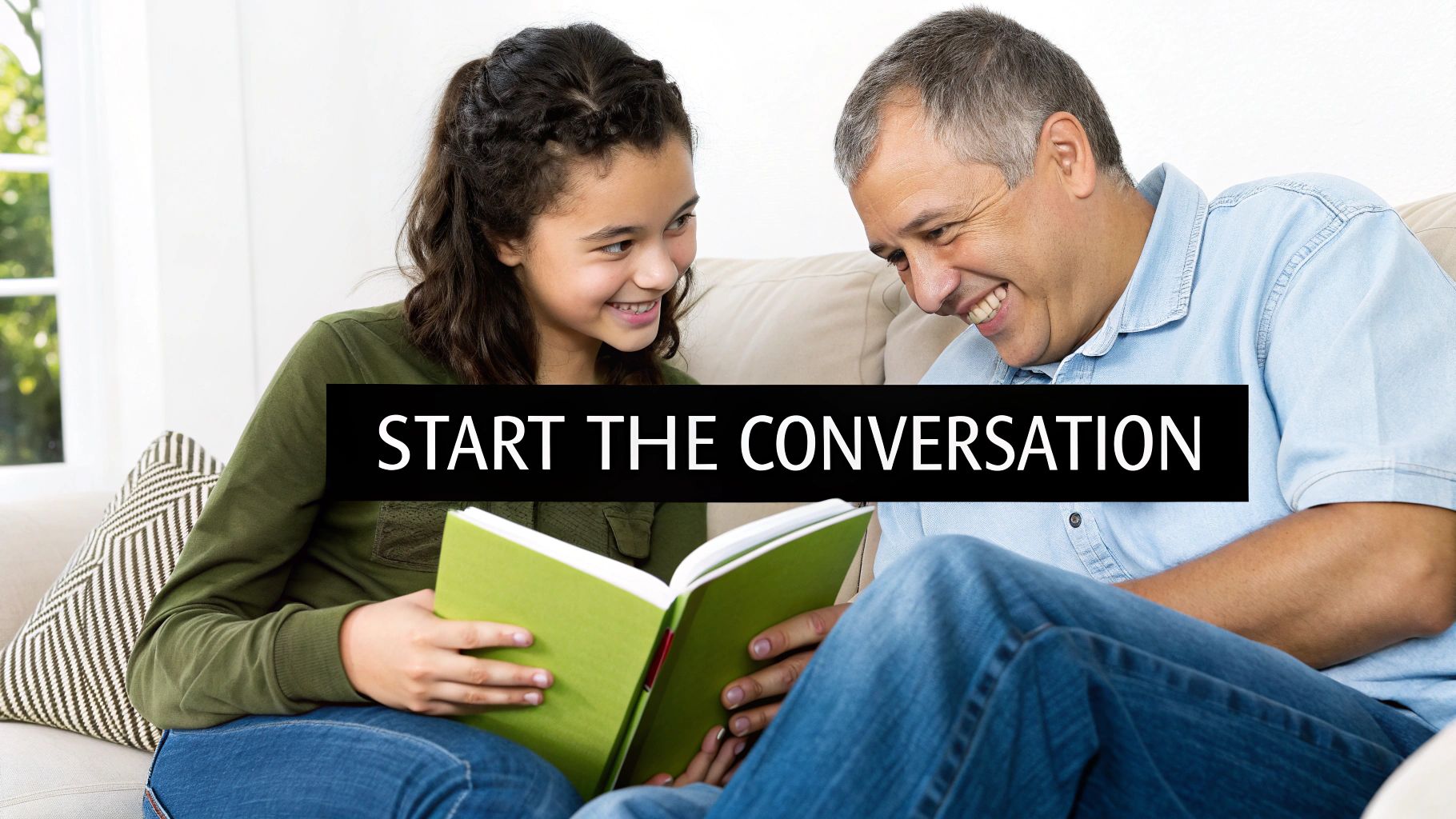
The real magic of a book often happens after the final page is turned. It's in the quiet connection it fosters, creating a shared world that can spark genuine, meaningful conversations. Using books for young adults as a bridge, we can open up discussions about well-being in a way that feels natural and safe.
The secret is to move beyond just asking, "Did you like the book?" and instead gently probe the emotional heart of the story. This simple shift turns reading from a solitary activity into a shared experience, strengthening bonds and creating an environment where a teen feels truly heard.
Asking the Right Questions
Starting these conversations doesn't need to feel like an interrogation. The goal is to ask open-ended questions that don't have a right or wrong answer. They simply invite reflection and sharing, free from pressure or judgement.
Think of yourself as a curious fellow reader, not an examiner. Your only job is to listen and validate their perspective.
Here are a few simple conversation starters you can adapt:
- "What do you think that character was feeling in that moment?" This question focuses on empathy and emotional interpretation.
- "Did any part of their story remind you of something in your own life?" This carefully links the fictional world to their real-world experiences.
- "If you could give one character some advice, what would you say?" This encourages problem-solving and critical thinking from a safe distance.
By focusing on the characters' journeys, you create a low-stakes way for teens to explore complex emotions. It's often easier to talk about a character's anxiety than it is to talk about their own. For a bit more guidance, exploring our advice on https://thatsokay.co.uk/blogs/news/how-to-talk-about-mental-health can offer extra strategies for these important chats.
It's crucial to remember that I am not a mental health professional. These tips are intended as supportive suggestions. If you are worried about a young person's mental state, please consult a doctor or another qualified practitioner for professional guidance.
Creative Ways to Process Stories
Sometimes, talking directly feels too intense. That's where creative activities come in, providing another outlet for processing the complex themes found in so many books for young adults. These methods allow teens to explore a story's emotional weight in a hands-on, low-pressure way.
One brilliant activity is character journaling. Encourage them to write a diary entry from a character's perspective at a pivotal moment in the book. This helps them step into someone else’s shoes, building empathy and a deeper understanding of what drives a character's actions.
To foster even richer discussions, it can be really helpful to give young readers some tools for grasping the core of a story. You can find some excellent effective book summarization techniques that can help them organise their thoughts before a conversation.
The Power of a Shared Experience
Whether you read a book at the same time or simply discuss it afterwards, sharing the experience is what truly matters. This act of connection reinforces that you are a safe person to talk to about difficult subjects. It’s also important to meet them where they are. Data from the UK shows that while print remains popular, audiobooks and eBooks are increasingly preferred formats for young people.
Ultimately, turning reading into a conversation builds a foundation of trust. It shows a young person that their thoughts are valued and their feelings are valid, creating a safe harbour where they feel comfortable sharing what’s on their mind, long after the book is back on the shelf.
YA Book Recommendations for Mental Health
Finding the right story at the right time can feel like finding a friend who truly gets it. This list brings together some powerful books for young adults that handle mental health topics with real honesty and care, making it a great starting point for anyone looking for their next supportive read.
The UK market for children's and YA books has been growing steadily, which really speaks to the timeless power of a good story. In 2024, this market hit a value of around $11.9 billion, and it's set to keep expanding. This isn't just a number; it shows a genuine hunger for stories that connect with and support young readers. You can dig into more insights on the children's and YA books market at researchandmarkets.com.
Books Tackling Anxiety and Depression
Stories that realistically show what anxiety or depression feel like can be incredibly validating for young readers, proving they aren’t alone in what they're going through. These narratives often introduce healthy coping skills and show the importance of reaching out for help.
- Turtles All the Way Down by John Green (Ages 14+): This book gives you a raw, unfiltered look inside the mind of Aza Holmes, a teenager living with severe anxiety and OCD. Its real power is in its unflinching portrayal of spiralling thoughts, making it a profound read for anyone trying to understand the internal reality of these conditions.
- The Perks of Being a Wallflower by Stephen Chbosky (Ages 15+): A modern classic for a reason. This story follows Charlie as he navigates the choppy waters of adolescence, friendship, and past trauma. It sensitively handles themes of depression, grief, and PTSD, showing how human connection can be a powerful antidote to feeling isolated.
This drive to open up conversations around mental health isn’t just happening in literature. We're seeing a similar trend with things like mental health apparel, where wearing a T-shirt or hoodie with a positive message is a small but public act of solidarity and self-care. It’s all part of a bigger movement to chip away at the stigma.
Important Disclaimer: I am not a mental health professional. These recommendations are for informational purposes only. If you have concerns about a young person’s well-being, it is crucial to seek advice from a doctor or another qualified practitioner.
Stories Exploring Grief and Loss
Grief is a tangled, deeply personal journey, and books can offer a safe space for young people to process their feelings. These stories don't shy away from the pain of loss but gently offer a path toward healing and hope.
- The Astonishing Colour of After by Emily X.R. Pan (Ages 14+): After her mother’s death by suicide, Leigh travels to Taiwan to meet her maternal grandparents. The book beautifully blends magical realism with a poignant exploration of grief, family history, and depression, offering a unique and hopeful narrative about finding light after darkness.
- A Monster Calls by Patrick Ness (Ages 12+): This deeply moving story follows Conor, whose mother is battling a terminal illness. A monster visits him at night, telling stories that force Conor to confront his deepest fears and the painful truth of his situation. It's a masterful look at anticipatory grief and the difficult path to acceptance.
Finding resources that nurture emotional well-being is so important. For more ideas that go beyond this list, you can check out our guide on other helpful self-care books that support mental health.
Ultimately, each of these books for young adults is more than just a story. They are tools for building empathy, they are conversation starters, and they are quiet companions for teens navigating some of life’s most difficult challenges. By offering authentic representation and hopeful endings, they empower young readers to feel seen, understood, and a little less alone.
Where to Find Further Support and Professional Help
While books for young adults can be an incredible tool for building empathy and starting important conversations, it's crucial to remember they are a companion to, not a substitute for, professional support. If you're genuinely worried about a young person's well-being, reaching out for expert advice is always the right thing to do.
Crucial Disclaimer: I am not a mental health professional. This guide and its suggestions are for informational purposes only. Please consult a GP or another qualified practitioner for professional medical advice if you have concerns about mental health.
Knowing where to turn when things get tough can feel completely overwhelming. The good news is there are some fantastic UK-based organisations out there, ready to support young people and their families with confidential advice, helpful resources, and direct access to trained professionals.
Trusted UK Mental Health Organisations
- YoungMinds: A leading charity fighting for children and young people's mental health. They have a brilliant parents' helpline and offer tons of information and resources designed specifically for young people.
- Mind: An amazing organisation that provides advice and support to empower anyone experiencing a mental health problem. They also campaign to improve services and raise awareness, which is so important.
- The NHS: Your local GP is the best first port of call. They can help you get a referral to specialist services like Child and Adolescent Mental Health Services (CAMHS) if needed.
Simple Self-Care Strategies
Alongside reading and professional guidance, building small, simple self-care habits can make a real difference in developing resilience. These aren't magic cures, but they are positive, practical actions that support a person's overall well-being.
Try encouraging gentle relaxation ideas like a short walk every day, five minutes of deep breathing exercises, or just scribbling down thoughts in a journal. These small rituals can create a much-needed sense of calm and control in a world that can feel chaotic. For a deeper look into other supportive tools, you might find our list of mental health resources for teens a helpful next step.
Ultimately, the goal is to build a supportive net around our young people. We want them to feel safe enough to express themselves and to know, without a doubt, that help is always available. When you combine the emotional insight from books with real-world professional support, you're giving them the very best chance to navigate life's challenges.
A Few Common Questions About YA Books
Dipping your toe into the world of books for young adults can bring up a few questions, particularly when you’re thinking about how they can support a teen’s emotional well-being. Here are some of the queries we hear most often from parents, carers, and educators, along with our thoughts.
It's important to remember that our role here is to offer information and support. We are not mental health professionals, and this advice should never take the place of guidance from a qualified doctor. If you're worried about a young person, please reach out for professional help.
Are Books a Substitute for Therapy?
In a word, no. A better way to think about it is like this: a healthy diet and regular exercise are brilliant for your physical health, but they don't replace a doctor when you're genuinely unwell. In the same way, emotionally supportive books are a fantastic tool for building resilience and empathy, but they are never a substitute for professional mental health care.
What books can do is play a powerful supporting role. They can help normalise therapy by showing characters who ask for help, make it easier to talk about mental health, and give a teen a private space to process their own feelings. They’re a valuable part of the toolkit, but professional guidance is absolutely essential for clinical concerns.
How Do I Know if a Book Is Too Intense?
This is a really common and important question. The honest answer is that it all comes down to knowing the young person you're choosing the book for. A story that one fourteen-year-old finds empowering might feel overwhelming for another. A good starting point is to check the publisher's age guidelines and read a few reviews from trusted sources, as they often flag sensitive content.
It also helps to frame reading as a shared experience. Let them know you’re around to chat if any part of the story feels too heavy or hits a bit close to home. Keeping the lines of communication open is your best tool for making sure their reading journey is a positive one.
What if a Teen Rejects My Book Suggestions?
First off, don't be discouraged! This is completely normal. Young adulthood is all about carving out your own identity and taste. Trying to force a book on them will almost always backfire. A gentler approach is to simply leave a few thoughtful options lying around the house, with no pressure to pick them up.
Another great strategy is to lead by example. When they see you enjoying a book, it subtly reinforces reading as a relaxing, positive activity. You could also try shared trips to the library where they have total freedom to choose whatever catches their eye. It's a great, low-stakes way to encourage them to explore new books for young adults on their own terms.
At Little Fish Books, we’re dedicated to finding and sharing resources that nurture emotional literacy and well-being. From our carefully curated books to creative activities, our goal is to support the young people in your life. Explore our collection and discover tools to open up conversations and build resilience. Visit us at https://thatsokay.co.uk.