

Finding Calm Pages: Books on Anxiety for Kids and Teens
The best books on anxiety for children and young people are the ones that feel like a gentle guide, turning big, complicated feelings into stories they can relate to. From colourful picture books for the little ones to engaging workbooks and novels for teens, the right book provides comfort and practical tools, helping them feel understood and a little less alone. Addressing mental health in childhood is crucial; it lays the foundation for emotional resilience and a healthier future for everyone.
Why Stories Are a Safe Harbour for Anxious Minds
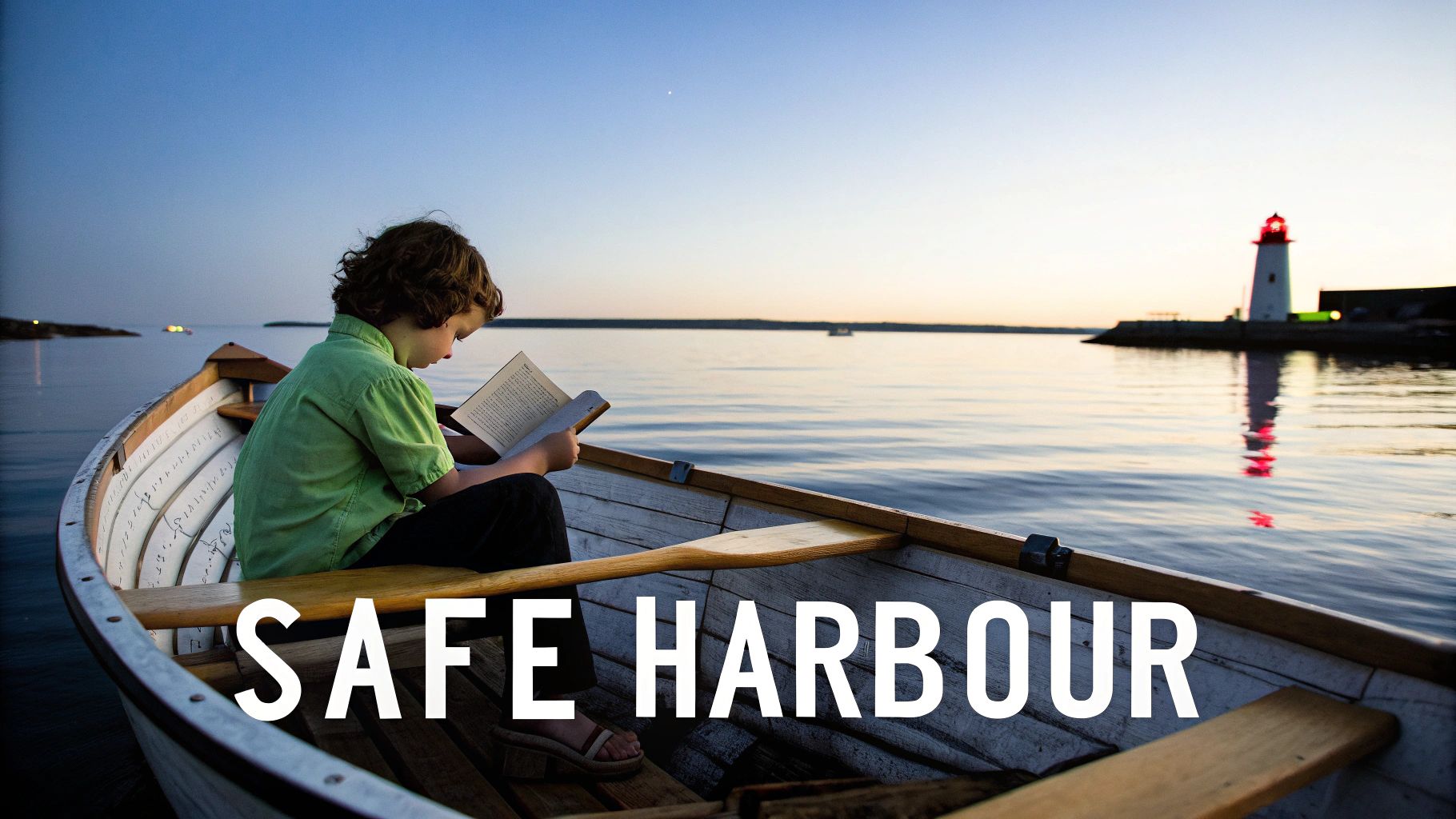
For a child or teenager, anxiety can feel like being lost in a stormy sea of emotions. A good storybook can be a safe harbour, offering a calm space where they can start to make sense of those overwhelming feelings. Books are a uniquely powerful way to start gentle conversations about mental health.
When a child sees their own worries reflected in a character on the page, it validates their experience. It sends a clear and powerful message: it's not just you. This shared experience is often the very first step towards building emotional resilience.
The Growing Need for Mental Health Support
Talking about mental health from an early age has never been more important. Today, an alarming one in five children has a probable mental health condition, a sharp increase in recent years. This statistic alone highlights the urgent need for accessible resources that support emotional wellbeing.
It's crucial to remember that while books are incredibly helpful for support, they are not a substitute for professional medical advice. I am not a mental health professional. If you have serious concerns about a child's wellbeing, please seek help from a doctor or a qualified mental health professional.
The ripple effects of poor mental health are massive. It's estimated that mental health issues cost UK businesses up to £56 billion a year through absenteeism and lost productivity. Investing in emotional literacy when children are young is really an investment in our collective future.
Navigating Modern Pressures
Today's young people are growing up with a unique set of challenges. Social media, in particular, can amplify feelings of inadequacy and anxiety by creating a culture of constant comparison. Books offer a focused, screen-free way to explore these pressures.
Picture books help build a child’s emotional vocabulary, while young adult novels can tackle complex social dynamics head-on. There are different kinds of stories for every age.
Even simple things, like wearing mental health apparel with positive affirmations, can act as gentle daily reminders to prioritise wellbeing. All these tools, from mental health books to clothing, help create a culture where talking about feelings is normal and encouraged.
How Reading Builds Emotional Resilience
Using books to talk about mental health, an approach sometimes called bibliotherapy, is an incredibly powerful way to build emotional resilience in children. When a child sees a character going through the same struggles they are, it instantly validates their feelings and whispers, "You're not alone in this." That simple act of recognition can be a huge relief for a young person tangled up in anxiety.
Think of a good book as a ‘feelings map’. It lays out a safe, clear path through the confusing territory of emotions like worry and fear. By following a character's journey, a child can start to put names to their feelings, understand where they might be coming from, and see how others have found their way through similar challenges.
Creating Space for Connection
Reading books on anxiety together is about so much more than just learning coping skills; it’s a powerful way to strengthen the parent-child bond. It carves out a trusted, quiet space where difficult conversations can begin to unfold naturally. A story can be the gentle bridge you need, allowing you to ask, "Does this character's 'worry monster' ever feel a bit like the one you have sometimes?"
This shared time is a welcome, screen-free alternative to the constant pressures of the digital world. In a time where social media can often crank up anxiety and comparison, curling up with a book is a focused, calming activity that genuinely fosters connection and understanding. For a deeper look into how reading supports wellbeing, you can explore the many benefits of reading for mental health in our detailed guide.
Reading a story about anxiety is like having a practice run. It gives children the language and strategies they need before they have to face the real-world challenge, equipping them with tools they can recall when they feel overwhelmed.
Investing in Our Collective Future
Looking after children's mental health isn't just about individual wellbeing; it's a vital investment in our collective future. The cost of poor mental health to UK businesses is staggering, with lost productivity and absenteeism putting a huge strain on the economy. By fostering emotional literacy from an early age, we're helping to raise a generation of adults who are better equipped to manage stress and contribute positively to the world around them.
This is why simple relaxation tips, learned from characters in a story, are so important. Techniques like deep belly breathing or finding a ‘safe place’ in their imagination become practical, lifelong tools. As I am not a mental health professional, it's essential to seek help from a doctor if you are worried about your child, but stories can be a wonderful starting point for building these foundational skills for a resilient life.
Choosing the Right Book for Your Child
Finding the perfect book to help an anxious child isn’t about picking any old story off the shelf. It’s about matching the message to their age, personality, and exactly what they're feeling. When a story really connects, it can become a trusted friend on their journey. The goal is to give parents, carers, and educators the confidence to choose books on anxiety that genuinely click with young readers.
Just as a doctor wouldn’t prescribe the same medicine for every ailment, we can't expect one book to suit every child. Picture books filled with gentle, affirming illustrations are perfect for little ones just learning to put a name to their big feelings. For teenagers, young adult (YA) novels with authentic characters navigating realistic challenges can be a huge source of validation and perspective.
Starting the Conversation
How you introduce these books is just as important as which one you choose. You want to frame the story as a helpful companion or a shared adventure, not as a chore or some sort of 'fix-it' manual.
A calm, no-pressure approach is always best. You could simply leave a book out where they’ll see it, or suggest reading it together during a quiet moment. This turns the book into an invitation, making it much more likely to be met with curiosity instead of resistance.
This simple decision tree gives you a way to think about building resilience when your child is feeling anxious.
The key takeaway here is that turning to a book is a positive, proactive step you can take the moment a child needs support.
Tailoring to Their Developmental Stage
The right book meets a child exactly where they are. It’s important to think about not just their reading level, but their emotional maturity too.
To help you get started, here’s a quick breakdown of what tends to work best for different age groups.
| Book Type | Target Age Group | What to Look For | Primary Goal |
|---|---|---|---|
| Picture Books | 3-6 years | Simple plots, clear illustrations, gentle tone. | Naming basic emotions like worry or fear in a safe way. |
| Activity/Workbooks | 7-11 years | Interactive elements, practical exercises, relatable characters. | Learning and practising simple, actionable coping strategies. |
| YA Novels/Graphic Novels | 12+ years | Authentic characters, realistic challenges, non-patronising voice. | Normalising experiences and showing they are not alone. |
| Parent/Teacher Guides | All Ages | Actionable advice, conversation starters, evidence-based tools. | Equipping adults to provide effective, informed support. |
This table is just a starting point, of course, as you know your child best. Use it as a guide to narrow down the options and find something that feels like the right fit for your family.
A Deeper Look at Age Groups
-
For Early Years (Ages 3-6): Look for simple stories with clear, colourful illustrations. The focus should be on identifying and naming basic emotions like worry or fear in a non-threatening way. A book with playful activities can make the whole topic feel much less overwhelming.
-
For Primary School (Ages 7-11): At this stage, children can follow more complex plots. Look for stories where characters learn practical coping strategies, like breathing exercises or positive self-talk. Workbooks that get them drawing, writing, or trying things out can be especially powerful.
-
For Teenagers (Ages 12+): Young adults appreciate stories that don't talk down to them. The best books on anxiety for this age group feature relatable protagonists dealing with school pressure, social media, and friendships. These narratives help normalise what they’re going through. For some great recommendations, explore our guide to books for teenage mental health, which dives into titles that tackle these complex issues with real honesty.
Remember, the book's purpose is to open a door, not to solve everything. It’s a tool to build understanding and start a conversation. Your support and willingness to listen are what bring the story’s lessons to life.
I am not a mental health professional, and it is vital to seek help from your doctor if you are worried about your child's wellbeing. These books are wonderful resources for support and starting conversations, but they are not a substitute for professional guidance. Choosing a book is a thoughtful step on a longer journey of support.
Bringing the Story's Lessons into Real Life
The real magic of books on anxiety isn't just in the reading. It happens when the lessons leap off the page and land right in the middle of your child’s world. A story can feel a bit abstract, but when you connect it to real-life activities, those big ideas become solid, memorable, and genuinely useful when big feelings show up. This is how a book becomes more than a story—it turns into a practical tool for building resilience.
When you make reading an interactive experience, you help your child really absorb and own the coping strategies. The aim is to turn the ideas they’ve just read about into skills they feel confident using themselves.
Making Coping Strategies Tangible
Activities are the bridge between a character's journey in a book and your child's own life. They create a safe, playful space to practise the skills from the story, making it feel less like a lesson and more like a game.
Here are a few practical examples to get you started:
- Create a 'Worry Box': Inspired by a character who learns to tame their worries? Grab a small box and decorate it together. Encourage your child to write or draw their anxieties on bits of paper and 'post' them into the box, giving them a physical way to set their worries aside.
- Role-Play Scenarios: Gently act out a scene from the book where a character faces a fear, perhaps struggling to talk to a new person at a party. This gives your child a chance to practise saying "Hello, my name is..." in a low-pressure setting, building their confidence for when it happens for real.
- Use Colouring Sheets: Resources like our downloadable emotions colouring sheets are perfect for chatting about a story’s themes. Colouring is naturally calming and can be a brilliant, low-key way to open up conversations about what different feelings look and feel like.
These simple, creative exercises help make emotional regulation something your child can get their hands on, not just an idea in their head. They also strengthen your connection, showing your child that you're a team when it comes to navigating these feelings. Becoming that supportive guide is a skill in itself, something you can learn more about in our guide on emotional coaching for parents.
Pairing Reading with Relaxation
Try pairing story time with simple relaxation tips. This can build a powerful, positive link between reading and feeling calm, making it a wonderful foundation for talking about mental health. Weaving this into your routine can make your child much more open to a book’s messages.
Creating a cosy, safe reading nook is a wonderful way to start. A quiet corner with soft cushions, a warm blanket, and good lighting signals that this is a time for calm and connection, free from the day's pressures.
Before you even open the book, try a simple breathing exercise together. You could say something like, "Let's breathe in slowly like we're smelling a beautiful flower, and then breathe out gently like we're blowing out a birthday candle." This small ritual helps settle restless minds and bodies, making it much easier to focus on the story and its lessons.
Please remember, I am not a mental health professional. These ideas are here to support the conversations that books can start. If you are ever worried about your child's mental health, it is essential to seek help from a doctor or a qualified professional for guidance.
Our Top Recommended Books on Anxiety

To help you get started, we've picked out a few brilliant books on anxiety. We won't just give you a list, though. We’ll explain what makes each one special and what kind of situation it’s perfect for. That way, you can find just the right match for the young reader in your life.
It's clear people are looking for accessible ways to support their mental health. You can see it in the bookshops. Even when overall book sales dip, the psychology and self-help sections hold strong. For example, despite a 7.7% drop in the total UK book sales value early in 2025, titles like Dr Julie Smith's 'Why Has Nobody Told Me This Before?' are flying off the shelves. It shows there's a real hunger for practical, supportive resources.
This just proves how valuable it is to introduce these ideas early. Giving children these tools now sets them up with skills they can use for life.
Books for Learning Through Doing
For the hands-on kids who learn best by getting stuck in, interactive workbooks are fantastic. They’re great at translating techniques from Cognitive Behavioural Therapy (CBT) into something a child can actually understand and enjoy. Complex ideas become fun activities.
- What makes them effective? They get children drawing, writing, and solving puzzles. This helps them actively practise coping skills instead of just reading about them. It makes the learning stick.
- Best for: Children aged 7-12 who are dealing with specific worries and could use some practical, step-by-step strategies to feel more in control.
Stories for Visual Learners
Graphic novels are another powerful option, especially for visual learners or kids who are a bit reluctant to read. The blend of striking artwork and clear, simple text makes tough topics like social anxiety feel much less intimidating.
You can see a character’s emotions, not just read about them. This is brilliant for helping children build empathy and understand all those non-verbal cues. For worries that pop up at bedtime, the Restful Nights Sleep Anxiety Book uses gentle stories to help soothe those specific fears.
It’s important for me to say that I’m not a mental health professional. These books are wonderful tools for opening up conversations and offering support, but they aren't a replacement for professional help. If you have serious concerns about your child's wellbeing, please speak to your GP.
Choosing the right book is a small act that can make a huge difference. It gives a child something real they can hold onto, a reminder that they’re not alone and that those big, overwhelming feelings can be managed.
Building a Supportive World Beyond the Book
A good book is a fantastic starting point, but its real power unfolds when it’s part of a bigger, supportive world. The lessons a child learns from books on anxiety are so much more powerful when they’re echoed in a caring environment at home and at school. It all comes down to building a family culture where mental health is talked about openly and kindly.
This supportive world isn’t built with grand gestures, but through small, consistent actions. It’s about really listening when a child shares a worry, validating their feelings by saying, “That sounds really tough,” and simply keeping the lines of communication open. These little moments chip away at the stigma around mental health, showing children that it’s absolutely okay to not be okay.
Creating a Culture of Wellbeing
You can weave a culture of wellbeing into your family in all sorts of ways. Simple relaxation tips you learn together can become a shared tool for everyone. It could be as easy as taking five deep, slow breaths together before school or before a big event that feels a bit daunting.
Even things like mental health apparel with positive affirmations can act as gentle, everyday reminders for the whole family to check in with their feelings. They’re simple visual cues that make it normal to talk about how we’re doing on the inside.
The ultimate goal is to create a community at home and school where emotional health is treated with the same importance as physical health. It's about nurturing an atmosphere where children feel safe enough to be vulnerable.
Practical Steps for Everyday Support
Building this kind of environment doesn't require a massive effort. It's woven into the fabric of daily life through practical, compassionate habits that you model yourself.
- Model healthy coping: Let your child see you manage stress in a positive way. Maybe you go for a walk, talk openly about a tough day, or just take a few quiet moments for yourself. They’re always watching and learning.
- Validate, don't just solve: Before jumping in with solutions, just sit with their feeling for a moment. A simple "I can see why that would make you feel anxious" is incredibly powerful and shows them you get it.
- Explore further resources together: To build on what you’ve read, you can explore other effective coping strategies for stress and anxiety that can complement the ideas from the book.
Please remember, I am not a mental health professional, and this advice is for support and guidance. It is vital to seek help from your doctor if you are worried about your child's wellbeing. Raising emotionally resilient children is a shared journey, and you are not alone in this vital work.
Your Questions Answered
When you're navigating the world of children's emotions, it's natural to have a few questions pop up. Here are some of the most common things parents and teachers ask, along with a bit of guidance to help you on your way.
At what age can I start reading books about emotions?
Honestly, you can start right from the toddler years. Simple board books that just show different faces are a brilliant first step in building a child's emotional vocabulary. The most important thing is simply to pick books on anxiety and feelings that match their age and gently introduce ideas they can get their heads around.
What if my child won't talk about the book afterwards?
That’s completely okay. The goal is never to force a conversation. Sometimes, a story does its most powerful work quietly, planting a little seed of understanding that will grow later.
You can always leave the door open by saying something casual like, “That was a lovely story. I’m here if you ever fancy a chat about it.”
The book itself is a powerful starting point. It normalises the conversation, making it easier for a child to bring up their feelings later when they feel ready.
Just a reminder, I am not a mental health professional. These resources are here to support you and to get conversations started. It's so important to seek help from a doctor if you have any worries about your child’s wellbeing.
At Little Fish Books, we truly believe in the power of stories to nurture young minds. Come and explore our hand-picked collection of books and activities, all designed to support your child's emotional wellbeing. Visit us at https://thatsokay.co.uk to find the perfect resource for your family.