

Unlocking Potential With Books on Confidence for Children
Confidence-building books are incredible tools. For parents and educators, they offer a way to help children build that all-important inner strength and emotional resilience. These stories and activities give us a gentle starting point for talking about big feelings, showing kids that self-doubt is normal, and teaching them practical ways to cope from an early age.
Why Nurturing Your Child's Confidence Matters
In a world full of digital pressures and the endless comparison culture of social media, a child's inner strength has never been more vital. Confidence isn't just about feeling good about yourself; it's the very foundation of a child's mental wellbeing. It's what equips them to face challenges, build healthy relationships, and bounce back when things get tough.
And the need to build this foundation is urgent. In the UK, the rates of probable mental health conditions among children and young people are a real concern. Recent figures showed that in 2023, roughly one in five children and young people aged eight to 25 had a probable mental health condition. This really brings home the growing need for proactive, supportive tools that we can use at home and in our schools.
The Role of Stories in Building Resilience
This is exactly where a well-chosen book on confidence can make all the difference. They are so much more than just stories—they're conversation starters, emotional guides, and mirrors where children can see their own struggles reflected and feel understood. A story about a character overcoming shyness, for example, creates a safe, relatable space for a child to explore their own feelings without feeling like they're under a microscope. A practical example could be a character who uses 'power poses' before a school play, giving a child a tangible technique to try themselves.
"A book can be a quiet friend, showing a child that they are not alone in their feelings and that courage is something you can grow, one small step at a time."
These stories are packed with practical examples of how to handle tricky situations. They give children the words to name their emotions, which is a massive first step in developing emotional literacy. By seeing characters model positive self-talk and work through problems, kids learn that confidence isn't something you're born with, but a skill you can practise and develop over time.
A Gentle Reminder for Parents and Carers
It's so important to create an environment where these conversations can happen naturally. While books and resources like our mental health apparel or various mental health books are invaluable, please remember that I am not a mental health professional. Everything shared here is intended as a supportive aid. If you're looking to explore more about building strong character from a young age, resources on how sports psychology for youth builds confidence can offer some great insights.
If you ever have serious concerns about your child's mental wellbeing or notice lasting changes in their behaviour, it is always best to consult a doctor, GP, or a qualified therapist for professional guidance.
Navigating the Different Kinds of Confidence Books
Not all confidence books are cut from the same cloth, and let's be honest, finding the right one can feel a bit like searching for a needle in a haystack. The real secret is matching the book's style and message to your child’s unique personality, their age, and whatever challenges they're facing right now.
Think of it like choosing the right tool for a specific job. A vibrant picture book brimming with simple, positive messages might be just the ticket for a toddler. An older child, however, might get much more out of an interactive workbook they can really get stuck into. Some books are brilliant conversation starters for tricky feelings like shyness or worry. Others introduce relatable characters who show resilience in action, teaching kids that it’s okay to stumble and that courage is something you can build, one small step at a time.
This simple diagram shows just how foundational confidence is for a child's overall wellbeing.
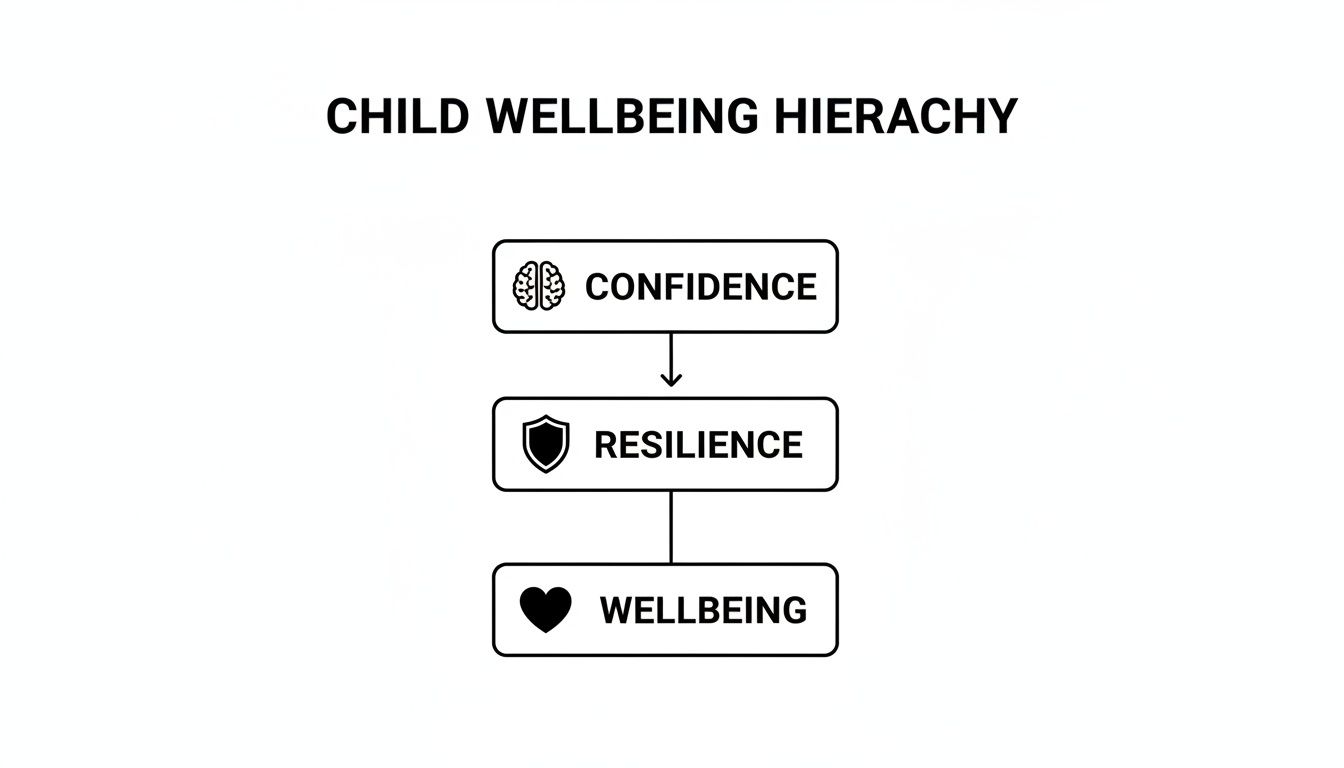
As you can see, building a child's confidence is that crucial first step. It creates the bedrock for resilience, which in turn supports their holistic mental wellbeing.
Finding the Perfect Fit for Your Child
The goal is to stop guessing and start choosing with purpose. To help you do just that, here’s a breakdown of the main types of confidence-building books you'll come across.
-
Picture Books (Ages 2-6): These gems use colourful illustrations and simple, gentle language to introduce big emotional concepts in a small, friendly package. They often explore themes like trying something new, celebrating what makes you special, and just starting to understand all those feelings. A story about a tiny animal doing something brave can be a powerful, non-intimidating way to open up a chat about courage with a little one.
-
Social-Emotional Stories (Ages 6-10): Once they hit primary school, chapter books with relatable characters facing real-world challenges are fantastic. These stories might dive into friendship wobbles, school performance nerves, or even the early impact of social media. By seeing how characters navigate similar situations, children develop empathy and pick up valuable problem-solving skills along the way.
-
Activity and Workbooks (Ages 7-12): These interactive books are an absolute win for kids who learn best by doing. They are often packed with quizzes, drawing prompts, and journaling exercises designed to encourage self-reflection. More than that, they teach practical coping strategies, like positive self-talk or simple breathing tips, that kids can use straight away.
-
Teen Self-Help (Ages 13+): As you explore the world of confidence literature, you'll find a huge range of self-help books aimed at personal growth. For teenagers, these books tackle more complex topics like self-doubt, body image, and the anxieties of figuring out the future. They offer practical advice and evidence-based techniques in a direct, supportive voice that respects their growing maturity. You can find more specific ideas in our guide to children's books on self-esteem.
To make it even easier, here's a quick guide to help you find the most suitable book based on your child's age and what they might be going through.
Matching the Right Book to Your Child's Needs
Use this table to quickly find the most suitable type of confidence book based on your child's age and the challenges they may be facing.
| Book Type | Target Age Group | Key Focus | Example Scenario |
|---|---|---|---|
| Picture Books | 2-6 years | Introducing core emotions, normalising feelings like fear or shyness, encouraging bravery in simple terms. | A preschooler is nervous about starting nursery or trying a new activity like swimming. |
| Social-Emotional Stories | 6-10 years | Building empathy, navigating friendships, dealing with school-related stress, modelling resilience. | A child is feeling left out by friends at playtime or is anxious about a class presentation. |
| Activity/Workbooks | 7-12 years | Practical skill-building, self-reflection, learning coping strategies for anxiety and negative self-talk. | A child struggles with perfectionism or needs concrete tools to manage their worries. |
| Teen Self-Help | 13+ years | Addressing complex issues like self-doubt, social pressure, body image, and future planning with actionable advice. | A teenager is comparing themselves to others on social media or feeling overwhelmed by exam pressure. |
Ultimately, choosing the right format transforms reading from a passive activity into a powerful tool for growth. It gives you and your child a shared language to talk about big feelings, building a foundation of emotional literacy that will support them for years to come.
How to Turn Reading Time into a Confidence-Building Ritual
The real magic of books on confidence doesn’t just live in the words on the page. It comes alive in the shared moments you spend reading them together. When you make story time a deliberate ritual for building confidence, you create a powerful space for connection, understanding, and real growth.
This starts with creating a safe, cosy spot where your child feels comfortable enough to share their thoughts. The goal isn't just to get through the story, but to gently explore its themes together. When a character does something brave, that’s your cue to open up a quiet conversation.
Making the Story Their Story
The key is to gently connect the story back to your child's own world. This helps them truly absorb the lessons, realising that feelings like doubt or shyness are completely normal and something everyone deals with. You’re essentially building a bridge from the character’s experiences straight to their own.
You can do this with simple, open-ended questions that don’t have a right or wrong answer. These kinds of questions invite reflection, not just memory.
- "That character was really brave then. Can you think of a time when you felt brave like that?"
- "I wonder why the little fox was feeling so shy. Have you ever felt that way before school or a party?"
- "What do you think really helped them feel better about themselves in the end?"
This simple shift turns reading from a passive activity into an active, engaging chat. For more ideas on making reading a hands-on experience, you can explore our guide on interactive children's books. These approaches help reinforce the idea that their feelings are valid and worth talking about.
Reinforcing Lessons Beyond the Last Page
To help these ideas stick, try adding a related activity after you've closed the book. A colouring sheet of the characters, for example, gives you a relaxed way to keep the conversation going while your child is busy creating. You could even act out a favourite scene or draw your own pictures of a time you both felt courageous.
By linking the story's lessons to tangible activities, you help your child move from understanding a concept to feeling it. This is where a simple story evolves into a lived experience, building lasting self-esteem.
The market for educational content is a huge part of the UK’s book publishing industry, which was valued at £6.9 billion in 2024. While specific data on confidence-focused books isn't isolated, the clear growth in learning materials shows just how much parents are looking for resources to support their child's development. These shared reading rituals are a fantastic way to meet that need, nurturing emotional intelligence one story at a time.
How to Choose the Right Confidence Book
Walking into a bookshop or scrolling online for the right books on confidence can feel a bit much. There are so many options out there. How do you find the one that’s actually going to click with your child and make a difference? This guide will help you cut through the noise and pick books that genuinely build up your child’s mental wellbeing.
First thing’s first: make sure it’s right for their age. A book that empowers a ten-year-old with detailed stories about friendship troubles will go right over the head of a toddler who just needs a simple rhyme about trying new things. You need to meet your child where they are, with language and situations they can actually relate to.
Look for Real Substance, Not Empty Slogans
It’s so important to find books that are based on solid emotional principles. The best ones go way beyond vague phrases like "just be happy." Instead, they tell stories that show it’s normal to struggle and that resilience is something you can build. They feature characters who work through their feelings, make mistakes, and learn that confidence isn’t something you’re born with—it’s a skill you can practise.
This means looking for stories that give kids real, practical strategies. It could be a character taking a few deep breaths before a big game, or using positive self-talk when they feel nervous. These simple, actionable examples give children actual tools they can use in their own lives. It turns story time into a proper skill-building session.
Celebrate Diversity and Inclusion
Every child deserves to see themselves as the hero of a story. When you’re choosing a book, make a conscious effort to look for diverse and inclusive characters. Representation is a huge deal. It validates a child’s own experience and teaches them that people from all backgrounds, with all kinds of abilities and family setups, are worthy of being the main character.
A book that celebrates diversity doesn't just boost the confidence of the child who sees themselves in its pages. It also builds empathy in every child who reads it, helping to create a more compassionate world.
While it's tricky to find exact sales figures for confidence books in the UK, the growing demand for children's wellness resources is clear. If you're curious about the wider market, you can get a sense of the trends by exploring UK book sales figures here. By choosing books that reflect the wonderful diversity of our society, you’re making sure those powerful messages of self-worth and empowerment truly connect with everyone.
Supporting a Confident Mindset Beyond the Book

A brilliant book is a fantastic starting point, but building lasting confidence isn't something that happens between the first and last page. It’s an everyday practice. The real magic happens when the lessons from these stories are woven into the fabric of daily life at home.
This means creating an environment where themes like resilience and self-worth are reinforced through actions, chats, and routines. The importance of looking after our mental health right from the start can’t be overstated, especially with modern pressures like social media fuelling comparison and self-doubt. A supportive home helps to counteract these outside forces, turning ideas learned from a book into skills they can actually use.
Practical Relaxation and Mindfulness Tips
One of the most powerful ways to support your child’s confidence is by teaching them how to manage big feelings. Simple relaxation techniques can be practised together, which makes talking about and regulating emotions feel completely normal.
- Mindful Breathing: Try "teddy bear breathing." Ask your child to lie down and pop a soft toy on their tummy. Encourage them to watch the teddy rise and fall with each slow, deep breath. It’s a simple, visual way to help them focus and calm their nervous system.
- A "Worry Box": Decorate a small box together where your child can "post" their worries. They can write or draw them on little slips of paper and pop them inside. This simple act helps get anxious thoughts out of their head, making them feel much more manageable.
- Gratitude Moments: Before bed, take a moment to share three things you are each grateful for. This small habit shifts the focus towards the good stuff and builds an appreciation for personal strengths and little joys.
These activities don’t take much time, but they build powerful emotional muscles. If you’re looking for more structured exercises, our guide to self-esteem worksheets is packed with useful ideas.
Reinforcing Confidence with Tangible Reminders
Sometimes, a physical object can act as a gentle, powerful reminder of a child's inner strength. Think about something like a t-shirt with a positive affirmation like "It's Okay to Feel". It can be a great conversation starter, helping to normalise chats about emotional wellbeing.
Plus, it serves as a wearable reminder of the lessons they've learned from their favourite books on confidence.
By creating this supportive environment, you reinforce the message that managing feelings is a normal, healthy part of life. This consistent support is crucial, as the long-term cost of poor mental health on businesses and society is significant.
Ultimately, all these little things add up. They help build a strong foundation of self-belief that will stick with a child long after they've finished the book.
Please remember, I am not a mental health professional. If you are ever worried about your child's wellbeing, seeking help from a doctor is the most important step.
The Bigger Picture: Investing in Youth Mental Health
When we help one child build their confidence, it creates a ripple effect that benefits everyone around them. Using books on confidence isn’t just another parenting technique; it’s an investment in a healthier, more resilient future for our whole community.
By prioritising youth mental health, we're not just raising happier kids. We’re nurturing future adults who are far better equipped to handle whatever life throws at them.
This kind of proactive support is more important than ever. The pressures of social media and modern life are taking a real toll on children’s mental health, which makes giving them emotional tools early on absolutely vital. Neglecting this has huge long-term costs – UK businesses, for example, face massive productivity losses due to employee wellbeing issues. Investing in our children now helps reduce that strain down the line.
Building a More Empathetic Society
When we help children develop emotional literacy, we're actually laying the groundwork for a more empathetic and compassionate society. A child who learns to understand their own feelings through a story is also learning how to recognise and respect the feelings of others. That’s the very foundation of a kinder world.
The growing demand for mental health books and resources shows that more and more of us are realising this. While it's hard to get specific sales data just for confidence books, the overall trend in educational and wellness literature is clear: parents and educators are actively looking for these kinds of supportive tools. You can get a sense of the bigger picture by looking into the UK book sales market and its trends.
Providing children with emotional tools is one of the most important things we can do for our collective future. It's an investment that pays dividends in wellbeing, resilience, and community strength.
From tangible reminders like mental health apparel to practising simple relaxation tips, every little action helps build a stronger foundation. Let's make a commitment to giving our children the inner strength they need not just to get by, but to truly thrive.
Please remember, I am not a mental health professional. If you are ever worried about your child's wellbeing, seeking help from a doctor is the most important step.
Of course! Here is the rewritten section, crafted to sound like a genuine human expert with a natural, conversational tone.
Your Questions About Confidence Books, Answered
As parents, we're always full of questions. When it comes to something as important as our children's emotional well-being, it's only natural to want clear, practical advice. Here are some of the most common things I get asked about using books on confidence.
At What Age Should I Start Reading Confidence Books to My Child?
Honestly, you can start as soon as they're toddlers. It's never too early. For the little ones, simple picture books that put a name to big feelings or have lovely, positive affirmations are just perfect. The real secret is matching the book to where they are developmentally.
As they grow, you can move on to stories with more complex social situations or even activity books that get them thinking and doodling about their feelings. The beautiful thing about starting early is that it makes talking about emotions feel completely normal and healthy right from the start. With around one in five children now facing a probable mental health condition, creating that open dialogue at home is more vital than ever.
What if My Child Just Isn't Interested?
First of all, don't force it. That's a surefire way to make them switch off completely. A better approach is to try and find a story that taps into what they already love. Is there a character who adores football or art but also struggles with feeling shy? That connection can make all the difference. Activity-based books can also be a winner, as they feel more like play than a lesson.
Another trick I love is to read the book yourself and just start using its ideas and phrases in your everyday chats. The goal isn't to sit them down for a formal lesson, but to model confidence and emotional openness in a way that feels completely natural. A positive, encouraging environment is everything.
Can One Book Really Fix My Child’s Low Self-Esteem?
That’s a great question, and the honest answer is no. A book on its own isn't a magic wand. Think of these books as powerful tools—they're brilliant for starting conversations, teaching new emotional skills, and giving you a shared language to talk about big feelings. But they work best as part of a whole support system.
Think of these books as guides, not cures. They open the door to vital conversations and provide a shared language for emotions, but they are one part of a much bigger picture of support.
Consistent encouragement from you, a loving home environment, and even tangible reminders like fun mental health apparel all play their part.
If you have serious or persistent worries about your child’s self-esteem or mental health, the most important thing you can do is seek professional support. Chat with your GP, a school counsellor, or a child therapist. Please remember, I'm not a mental health professional, and reaching out to a doctor when you're concerned is always the best first step.
At Little Fish Books, our mission is to create engaging resources, from books to colouring sheets, all designed to help children build lasting emotional resilience. Come and explore our collection to find the perfect tools to support your child’s unique confidence journey.