

A Parent’s Guide to Educational Kids Books
When you hear the term ‘educational kids books,’ your mind might jump straight to learning the alphabet or counting to ten. And while those are important, the real magic of these books goes so much deeper.
Think of them less as textbooks and more as foundational blueprints for a child’s mind. They’re specially designed stories that don’t just teach facts, but help a child make sense of the world, their own jumbled-up feelings, and what they’re capable of. They are the tools we use to build crucial thinking skills, nurture a kind heart, and spark a curiosity that we hope will last a lifetime.
Beyond the ABCs: How Stories Shape Young Minds
In a world buzzing with screens and constant noise, the simple act of cuddling up with a book offers a quiet, sacred space for connection and growth. Educational books pull double duty: they spin a great yarn that keeps a child hooked, while subtly weaving in vital lessons about empathy, working through problems, and managing big emotions.
We simply can't ignore the importance of talking about mental health from an early age. The latest figures show that one in six children aged 7-16 now has a probable mental health problem. Giving them the tools to build emotional resilience isn't just a nice idea; it's absolutely essential.
Stories provide a safe, gentle way to explore complex feelings. They let a child see their own worries reflected in a character on the page, helping them feel seen, understood, and a little less alone. For example, a book about a little bear who feels wobbly and worried about starting school gives a child a tangible character to relate to, making their own anxiety feel less strange and overwhelming.
Let’s take a look at the key developmental areas that a good educational book can support.
The Core Building Blocks of Educational Books
This table gives a quick overview of the key developmental areas targeted by high-quality educational children's books.
| Developmental Pillar | What It Develops | Example in a Story |
|---|---|---|
| Cognitive Skills | Problem-solving, critical thinking, language, and memory. | A character needs to figure out how to cross a river, trying different solutions. |
| Social-Emotional Learning | Empathy, emotional regulation, self-awareness, and relationship skills. | A story about a little bear learning to say sorry after taking a friend’s toy. |
| Moral & Ethical Reasoning | Understanding fairness, honesty, kindness, and consequences. | A character finds a lost wallet and has to decide whether to keep it or return it. |
| Creativity & Imagination | Encourages imaginative play, creative thinking, and curiosity. | A book about a magical treehouse that can travel anywhere the children imagine. |
As you can see, these stories are doing so much more than just telling a tale. They're actively building a child's capacity to navigate the complexities of life.
A Foundation for Wellbeing
The knock-on effects of poor mental health are huge, costing UK businesses up to £56 billion a year through staff absence and lower productivity. When we foster emotional literacy in childhood, we aren't just raising happier kids; we're laying the groundwork for a healthier, more resilient future workforce.
And then there's the ever-present influence of social media, which presents a whole new set of challenges to a young person’s self-esteem. Thoughtfully chosen books can act as a powerful counterbalance, grounding children in narratives that champion self-acceptance, kindness, and healthy ways to cope with life’s ups and downs.
Even simple relaxation techniques, like deep breathing, can be brought to life beautifully in a story. A book might show a little dragon pretending to blow out birthday candles to cool down his fiery temper, giving a child a practical tool they can try themselves.
It's important to remember that these books are supportive tools, not clinical solutions. I am not a mental health professional, and if you have serious concerns about your child’s wellbeing, it is essential to seek help from your doctor or a qualified specialist.
By having books that discuss mental health on the shelf, or even wearing supportive apparel, we start to normalise these conversations. It makes talking about emotional wellbeing a natural, everyday part of family life and creates a shared language for asking for help when it's needed.
Building a Stronger Brain Through Reading
Every time you settle down with your child and a good book, you’re doing so much more than just sharing a quiet moment together. You're actually helping to strengthen the vital pathways in their brain—the ones responsible for language, memory, and complex thought.
Think of it like building a mental gymnasium. Each new story is like a different piece of equipment, designed to exercise and grow a particular part of the brain's "muscle". This consistent mental workout builds an incredibly powerful foundation for all their future learning.
How Stories Teach Critical Thinking
One of the magical things about educational kids' books is how they teach complex ideas without ever feeling like a lesson. They cleverly weave problem-solving and logic into engaging stories that capture a child's full attention. A regular reading habit is a fantastic way to nurture analytical skills and improve concentration, both of which are essential for school and whatever comes next. If you're keen to explore this further, there are some brilliant articles on why reading books is so important for a child's development.
For instance, the very structure of a story naturally teaches crucial cognitive skills:
- Cause and Effect: When a character makes a choice—like a little squirrel forgetting to store his nuts for winter—a child sees the direct result. The squirrel gets hungry. This simple plot point beautifully illustrates that actions have consequences.
- Sequencing: Following a character's quest to find a lost toy helps a child grasp logical steps. They learn that first, the character realises the toy is gone; next, they retrace their steps; and finally, they find it under the sofa.
- Problem-Solving: A story about building a den that keeps falling down encourages a child to think creatively right alongside the characters. They might start wondering, "What if they used stronger branches?" This is the spark of their own analytical thinking.
Reading aloud to young children is one of the most effective ways to build what is known as 'knowledge of the world'. The more they read, the more they learn about people, places, and ideas they have yet to experience firsthand, expanding their mental horizons with every page turned.
This process isn't just about passively absorbing information; it’s about making connections. When a child tries to predict what will happen next or talks about why a character feels a certain way, they are practising the very essence of critical thought. These early adventures in storytelling lay the groundwork for more advanced analytical skills, helping children learn how to evaluate information, form their own opinions, and express their ideas clearly as they grow.
Nurturing Emotional Resilience with Stories
Beyond boosting brainpower, the right children's books are incredible tools for what we call social and emotional learning (SEL). Let's be honest, feelings like sadness, frustration, and anxiety can feel far too big and overwhelming for a little person to get their head around, let alone put into words.
Think of these books as ‘emotional maps’. They offer a safe and gentle way to start exploring a child's inner world by introducing them to characters who are figuring out the very same things. When a storybook hero learns to deal with their fear of the dark or navigate a falling out with a friend, it validates a child's own feelings, showing them they're not alone.
This is more important than ever. With a growing awareness of children's mental health, giving them tools to build resilience isn’t just a nice-to-have anymore. Stories that explore friendship troubles or the jitters of facing a new situation build empathy and hand children a kind of script they can use in their own lives.
From Story to Strength
When children see themselves reflected in the characters on the page, it sends a powerful message: "You are seen, you are understood." That's why representation in books is so crucial; it shows a child that their experiences matter and their feelings are completely valid. These stories create a shared language between you and your child, making it so much easier to talk about the tough stuff.
Imagine reading a book about a little fox who's worried about their first day of school. This can naturally lead to a conversation:
- "The little fox's tummy felt all wobbly. Does your tummy ever feel like that?"
- "What did the fox do to feel brave? Maybe we could try that too?"
- "Who helped the fox feel better? It's always okay to ask for help, you know."
These simple questions bridge the gap between the story and your child's world, turning a passive reading time into an active lesson in emotional intelligence. It’s a foundational step in building those all-important coping skills. For more ideas on using stories to kick-start these chats, you can explore these books that help children understand their feelings.
It is crucial to remember that while these books are wonderfully supportive, they are not a substitute for professional guidance. I am not a mental health professional. If you have serious concerns about your child's mental health, please consult your GP or a qualified specialist for advice.
Building a Resilient Mindset
Stories that model resilience don't just show characters feeling sad; they show them moving through sadness. They demonstrate that it's okay to make mistakes, feel disappointed, and have another go. This helps children develop what's known as a growth mindset—the belief that their abilities aren’t fixed, but can be developed through dedication and trying hard.
For more practical strategies on fostering this kind of emotional strength, you might find this guide helpful: A Parent’s Guide to Developing Resilience in Children. By regularly sharing these kinds of empowering stories, you're giving your child a toolkit for life, helping them face whatever comes their way with confidence and emotional strength.
How to Choose the Right Book for Your Child
Picking out the perfect book for your child can feel a bit like trying to find one specific fish in a massive sea. There are so many options out there, so how do you know which one will truly click with them? The secret is to match the book not just to their age, but to where they are right now, developmentally and emotionally.
A story that’s too complicated can lead to frustration, but one that’s too simple might not keep their attention. The goal is to find that sweet spot—a story that gently challenges and engages them, building their confidence with every page turned. It’s this thoughtful approach that turns reading from a task into a truly joyful experience.
The UK children’s and educational book market is a huge part of the national book scene. The educational sector alone is worth around £1.24 billion, which shows just how much parents and educators value these resources.
Matching Books to Your Child's Stage
A great place to start is by thinking about your child’s current developmental milestones. Different age groups have very different needs, both in how they think and how they feel.
-
Toddlers (1-3 years): At this age, it’s all about exploring with their senses. Toddlers are learning about the world through touch, sight, and sound. Look for sturdy board books with bright, simple pictures, different textures to feel, and rhythmic, repetitive text that’s comforting to listen to.
-
Preschoolers (3-5 years): Their world is getting bigger by the day, and their imagination is taking off. Preschoolers are drawn to stories with clear plots, relatable characters who face simple problems, and a reassuring ending. Books that touch on social situations, like sharing or making a new friend, are perfect for this stage.
-
Early School Years (5-7 years): Children in this age group are building a stronger sense of who they are and starting to understand more complex emotions. They can follow longer stories with more involved plots and are ready to grasp moral lessons about fairness, courage, and honesty.
This little infographic can be a helpful guide when you’re trying to pick a book based on how your child is feeling, whether it’s sad or anxious.
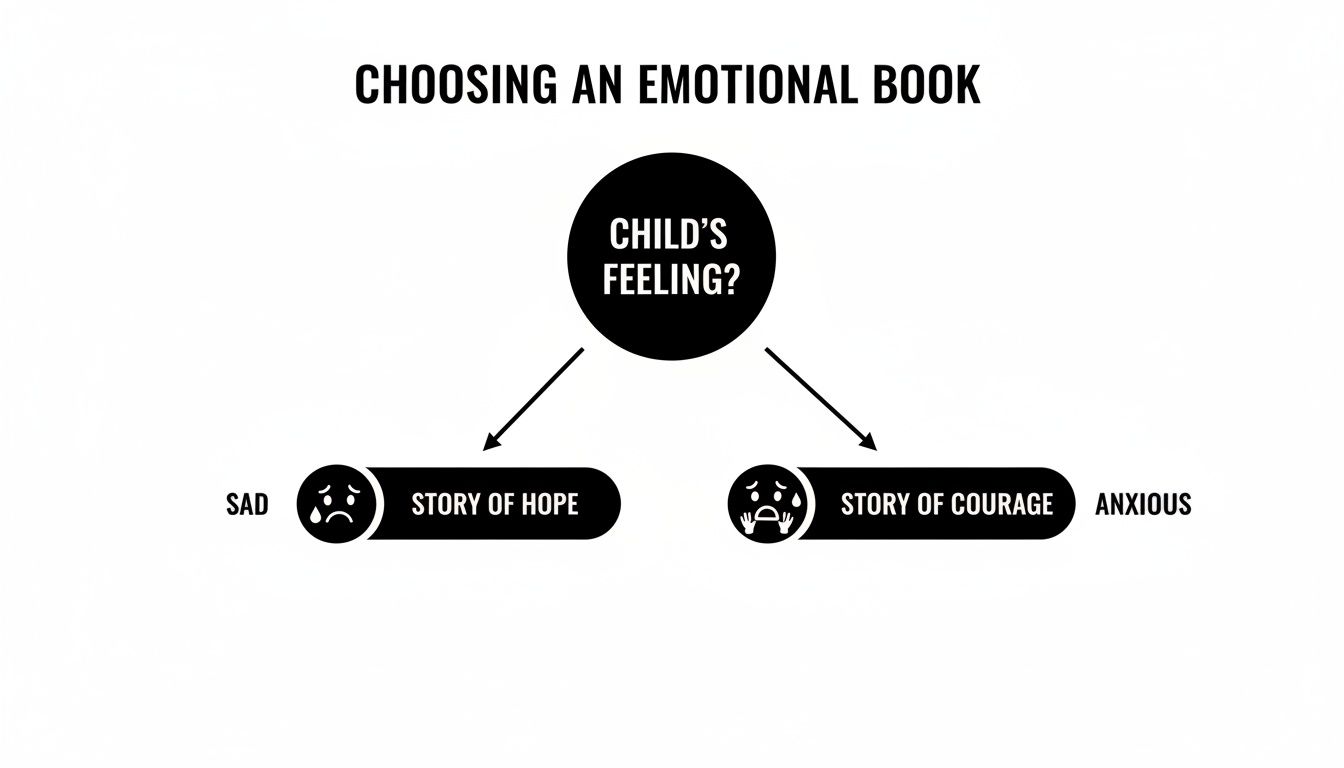
It’s a simple visual that shows how you can tailor your choice to offer comfort and encouragement for specific emotional needs.
What to Look for on the Shelf
Once you’ve got the age and stage sorted, think about the book's content and design. Look for diverse characters that reflect the world we live in, as this helps children build empathy and feel seen themselves. The illustrations are just as vital as the words; they need to be captivating and help push the story forward.
A great book is one that opens up a conversation. Look for stories that carry positive, affirming messages about self-worth, kindness, and resilience, giving you a natural starting point for talking about big ideas with your little one.
When you’re browsing, the visual appeal of a book—especially the cover colours—often plays a surprisingly big part in catching a child's (and your) eye. If you’re curious, learning about the psychology of colors in book design offers some fascinating insights into how those first impressions are made.
Making Reading an Interactive Adventure

Simply reading the words on a page is just the beginning. The real magic happens when you turn reading time from a quiet, passive activity into a shared adventure. It’s in these moments that a story becomes an opportunity for connection and active learning, building a level of understanding that the text alone just can't reach.
When you bring a story to life, you’re not just reading to your child; you’re inviting them into the narrative. They stop being just a listener and become an active participant, helping characters solve problems and exploring new worlds right alongside them.
Bring Stories to Life with Simple Techniques
Making reading interactive doesn't mean you need a box of props or a theatrical setup. It all starts with small, intentional shifts in how you share a story. The goal is simple: spark their curiosity and get them thinking creatively and critically about what’s happening on the page.
Here are a few simple ways to get started:
- Ask open-ended questions: Instead of just, "What colour is the cat?" try asking things like, "What do you think the character should do now?" or "How do you think that made them feel?" This encourages them to predict what might happen and builds empathy.
- Use distinct voices: Give each character a unique voice—a high-pitched squeak for a mouse or a deep rumble for a giant. It makes the story so much more dynamic and helps children follow who is speaking.
- Connect to their world: Try to link the story’s events to your child’s own life. You could say, "Remember when we felt a bit nervous on the first day of nursery, just like the little bear?" This makes the emotions in the book feel real and relatable.
Creating a calming, screen-free reading nook can make a world of difference. A cosy corner with cushions and good lighting signals that this is a special time for quiet connection, helping to encourage focus and make reading a cherished daily ritual.
Extend the Adventure Beyond the Final Page
The story doesn't have to end when you close the book. Simple post-reading activities are a brilliant way to cement the themes and lessons from educational kids books in a fun, hands-on way. It helps solidify what they’ve understood and lets them express it creatively. For more inspiration, check out our guide on making the most of interactive children’s books.
Why not try one of these next time you finish a story?
- Draw a favourite scene: Ask your child to illustrate the part of the story they enjoyed the most.
- Act out the plot: Take on different character roles and have fun acting out the story together.
- Create a new ending: Brainstorm different ways the story could have finished. What if the villain became a friend?
Personalised books, where the child is the main character, are another fantastic way to boost engagement. This corner of the book world is growing quickly; the UK personalised children’s books market was valued at USD 160.43 million and is set to grow even more. These interactive methods really do make sure every book feels like a brand-new adventure.
How Little Fish Books Supports Your Child's Journey
Here at Little Fish Books, we have a pretty straightforward mission: to champion children's mental and emotional wellbeing through the magic of storytelling. We see ourselves as a partner in your journey of raising a happy, resilient, and curious child. Our goal is to offer gentle resources that make talking about big feelings a natural, everyday part of family life.
Our collections of educational kids books are created with a lot of heart, exploring themes that really matter. Whether it's navigating frustration or building a sense of self-worth, each story is a gentle and reassuring guide for little readers.
Tools for Growth and Connection
We want to offer more than just stories; we want to give you tools that deepen the learning and connection that books bring. We’ve designed our resources to fit right into your routine, providing ongoing support for your child's emotional development.
- Thoughtfully Crafted Books: Explore our range of books focused on emotional intelligence and resilience.
- Free Downloadable Activities: Keep the conversation going with colouring sheets and activities that reinforce the book's message.
- Supportive Membership: Join our community for exclusive content and a bit of extra encouragement along the way.
We believe that every child deserves the language to understand their emotions. Our books act as a bridge, creating a safe space for conversations that build emotional literacy and strengthen family bonds.
Making Reading a Joyful Habit
Finding books that truly capture a child's imagination is key, especially when you look at the recent numbers on reading enjoyment. In the UK, only 40.5% of girls aged 8–18 said they enjoyed reading. While that's higher than the figure for boys, it still represents a worrying drop. You can learn more about UK children's reading habits from Statista.
By creating captivating stories with characters kids can relate to, we hope to spark a genuine love for reading. Our resources are here to help you turn storytime into a cherished ritual that nurtures both your child’s heart and mind.
Your Questions Answered
We get a lot of questions from parents, carers, and teachers about how best to use stories to support the little ones in their lives. Here are a few of the most common ones we hear.
What Age Should I Start Reading to My Child?
Honestly, it’s never too early. You can start reading to your baby from the moment they’re born.
Long before they can grasp the meaning of words, the gentle rhythm of your voice is incredibly soothing. Hearing you speak and read helps build vital neural connections in their tiny, developing brain. It’s a beautiful way to bond.
How Can Books Help with My Child's Mental Health?
Stories are a wonderfully safe space to explore big, complicated emotions. When children see a character working through feelings like sadness, anger, or worry, it does two powerful things: it validates their own feelings and gives them the words to talk about them.
This whole process builds what’s known as emotional literacy, which is a real cornerstone of good mental health.
A quick note: I'm not a mental health professional. While educational kids books are fantastic tools for connection and understanding, they are never a substitute for professional advice. If you have serious concerns about your child's wellbeing, please have a chat with your doctor.
My Child Isn't Interested in Reading. How Can I Encourage Them?
The key is to make it an adventure, not a chore. Try letting them pick the book from the shelf or the library – giving them that choice can make a world of difference.
When you read, get into it! Use silly voices for the characters, ask them what they think will happen next, and try to link the story back to things in their own life. When reading becomes a fun, shared activity, the magic starts to happen.
How Often Should We Read Together?
It's all about consistency, not how long you read for. A cosy ten-minute story every single night before bed can have a much bigger impact than a long reading session just once a week.
When you build reading into your daily routine, it becomes a cherished and expected part of the day – a special time for you both to connect.
At Little Fish Books, our passion is creating stories that help nurture emotional wellbeing. All our resources are designed to help you open up those important conversations, turning storytime into a powerful moment of connection.
Discover our collection and find the perfect book for your child's journey at https://thatsokay.co.uk.