

Emotion Cards for Kids: Building Emotional Intelligence at Home
At their heart, emotion cards are beautifully simple tools. They're basically illustrated cards that give children a visual way to see, understand, and start talking about their feelings. Think of them as flashcards, but for the heart, helping to build a life skill we call emotional literacy.
Why Talking About Feelings Is More Important Than Ever
Navigating the big world of feelings can be incredibly tricky for a small person. Children often get hit with huge waves of emotion—frustration, pure joy, or crushing disappointment—without having the words to explain what’s happening inside. This is where emotional literacy comes in. It’s the ability to recognise, understand, and express our emotions in healthy ways, and it’s just as fundamental as learning to read or count.
Honestly, helping our kids build these skills has never felt more urgent. The latest statistics paint a worrying picture of children's mental wellbeing here in the UK. In 2023, it was estimated that 1 in 5 children and young people between the ages of 8 and 25 had a probable mental health condition. That’s a huge jump from 1 in 9 back in 2017. The rise of social media has added a new layer of complexity, with pressures around body image and online bullying impacting self-esteem from a very young age. This shows a real need for more supportive tools at home and in our schools.
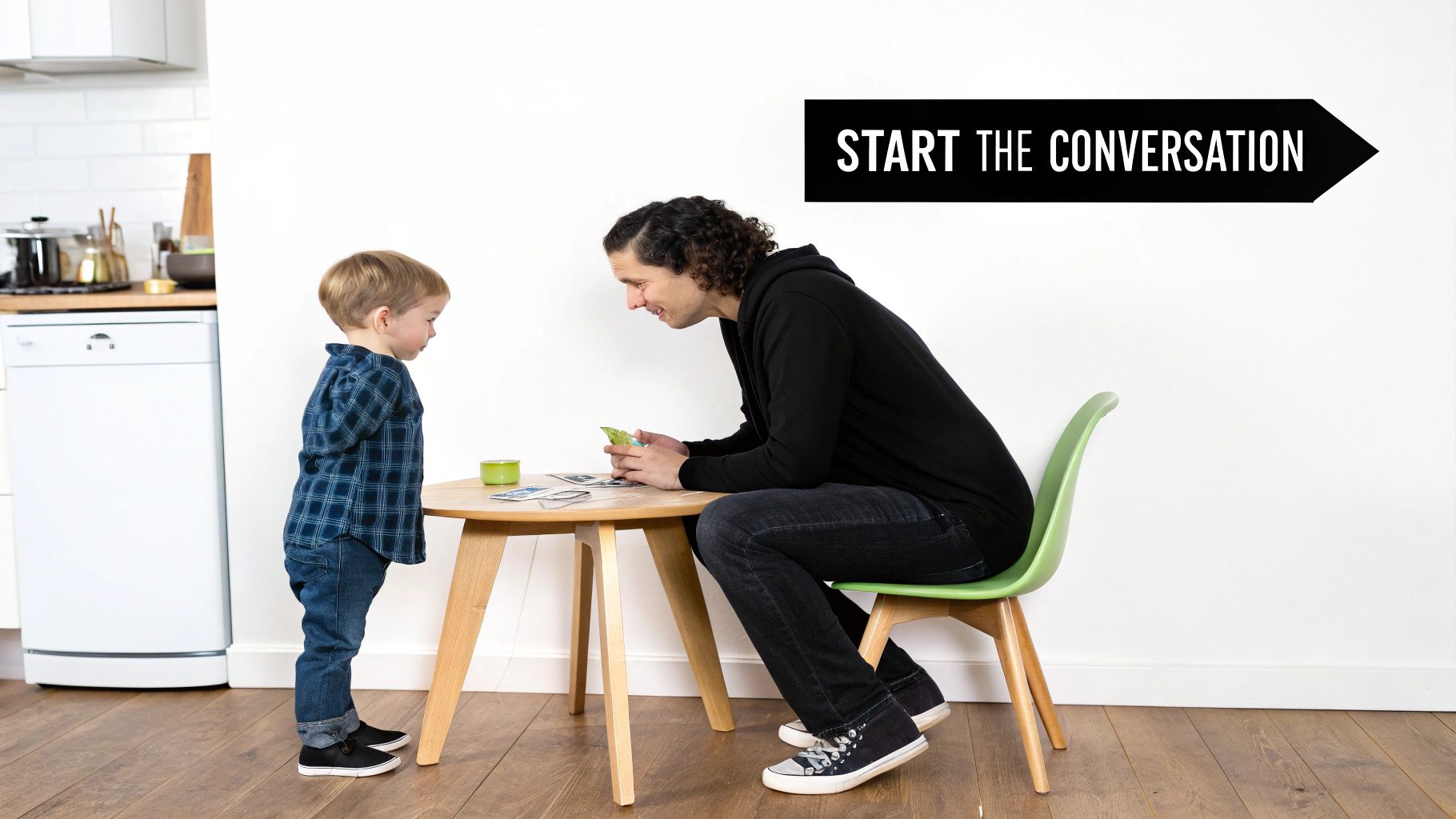
Starting the Conversation at Home
This is exactly where something as simple as a pack of emotion cards for kids can make a profound difference. They create a gentle, pressure-free way to open up conversations that might otherwise feel too big or scary.
By holding up a card with a 'sad' or 'angry' face, a child can show you how they feel, even when they can't find the right words. For example, if a child comes home from school quiet and withdrawn, instead of asking "What's wrong?", you could lay out a few cards and say, "Can you show me which of these you feel a bit like today?" This simple act of naming an emotion is a powerful first step towards learning how to manage it.
Important Disclaimer: Just a quick note to say I am not a mental health professional. This guide is for informational purposes only and is not a substitute for professional medical advice. If you have serious concerns about your child's mental health, please seek help from your GP or a qualified professional.
Building this foundation of emotional communication does more than just help with big feelings; it helps create a calmer, more connected family life. When children have the tools to express themselves, it can even help with those everyday friction points. For instance, things like getting kids to do chores without daily drama become easier when underlying frustrations can be talked about.
By equipping our children with these emotional tools, we’re empowering them to build resilience, empathy, and stronger relationships, setting them up for a healthier, happier future.
Understanding How Emotion Cards Work
At their heart, emotion cards for kids are a bit like flashcards, but for feelings. Think of them as a simple, visual tool designed to give children a vocabulary for their incredibly complex inner world.
Imagine trying to describe a colour you’ve never seen before. It’s almost impossible without a point of reference. For a child, abstract feelings like 'disappointment' or 'anxiety' can feel just as slippery and hard to grasp.
A typical set of cards will show clear illustrations of different facial expressions, each one paired with the name of the emotion it represents. One card might feature a bright, smiling face labelled 'Happy', while another shows a furrowed brow and a downturned mouth for 'Frustrated'. This simple pairing is powerful; it builds a bridge between a confusing internal sensation and a solid, shareable word.
The Science of Naming Feelings
The real magic behind why these cards work so well comes down to a concept called affect labelling. It sounds complicated, but it's really just the simple act of putting feelings into words. Research shows us that when we name an emotion, it actually helps to calm down the brain's amygdala—the part that triggers our fight-or-flight response—and gets the more rational prefrontal cortex working instead.
For a child caught in the middle of a huge feeling, this process can be a game-changer. It helps them take the emotion out of their head, making it feel less overwhelming and much more manageable. It’s the difference between being lost in a thick fog of anger and being able to step back and say, "Oh, this is anger I'm feeling."
This is especially important in a world where children's mental wellbeing is under more and more strain. The pressures of school, friendships, and daily life can create a perfect storm of confusing emotions. Giving a child a tool to name their feelings is the very first step toward building resilience.
More Than Just a Game
While you can definitely use them for simple identification games, the real value of emotion cards is their versatility. They are a launchpad for much deeper conversations and understanding.
- Building Empathy: By looking at a 'sad' card, a child can start to wonder, "What makes other people feel sad?" This simple question helps them begin to see the world from someone else's perspective.
- Problem-Solving: Once a feeling is identified ("I feel frustrated"), you can gently guide them to the next step: "Okay, what can we do to help with this feeling of frustration?"
- Storytelling: The cards are perfect for discussing the feelings of characters in books or on TV, helping children to better understand why characters act the way they do.
Ultimately, emotion cards for kids aren't about getting rid of difficult feelings. They’re about giving children the confidence and the vocabulary to face them, understand them, and talk about them. It's about building a solid foundation for lifelong emotional health.
The Real-World Benefits of Using Emotion Cards
Bringing emotion cards for kids into your daily routine is so much more than just a fun activity. Think of it as a powerful investment in your child's long-term mental wellbeing. The positive effects ripple outwards, strengthening not just their emotional skills but the connection and understanding within your whole family.
This simple diagram breaks down how it works. It shows how a big, abstract feeling gets translated into a concrete, understandable word using an emotion card.
This process is what helps a child move from a state of confusion to one of clarity, which is the very first step towards managing their feelings in a healthy way.
Expanding Their Emotional Vocabulary
Most young children start with a pretty basic emotional toolkit: 'happy', 'sad', and 'angry'. Emotion cards throw open the doors to a much richer vocabulary, introducing more nuanced feelings like 'frustrated', 'proud', 'disappointed', or 'nervous'.
Imagine a child wrestling with a tricky puzzle. They might lash out in what looks like anger, but is it really? Handing them the 'frustrated' card helps them pinpoint the exact feeling, which instantly makes it feel less overwhelming. This specific labelling is a cornerstone of building a child's emotional literacy — an absolutely vital skill for self-awareness.
Fostering Greater Empathy
Empathy isn't something kids are just born with; it’s a skill we help them build. Emotion cards are a brilliant tool for this, as they create a visual link between a feeling and a facial expression. When you show them a card for 'lonely', you can gently ask, "How do you think this person feels? Have you ever felt that way before?"
This simple exchange encourages them to step outside of themselves and consider another person's perspective, laying the groundwork for kinder, more supportive friendships. It’s a gentle nudge away from a me-centric world and towards understanding the feelings of those around them.
Improving Self-Regulation Skills
To a small child, big feelings can feel like an internal storm they can't control. Emotion cards act as an anchor in that storm. Instead of a full-blown tantrum, a child can learn to grab the 'overwhelmed' card and show you what’s happening inside.
This simple act of identification is a form of self-regulation. By naming the emotion, the child creates a small but vital space between the feeling and their reaction, giving them a chance to choose a more constructive response. For instance, once they identify 'anxious', you can introduce simple relaxation tips, like taking slow, deep "balloon breaths" or giving themselves a comforting hug.
This is a skill that will serve them for the rest of their lives, helping them navigate the playground, the classroom, and all the challenges yet to come.
Strengthening Your Connection
Using emotion cards together creates a safe, dedicated space for sharing feelings without any judgement. When you respond with empathy and understanding to a card your child chooses, you send a powerful, unspoken message: "Your feelings are valid, and I am here to listen."
This consistent, supportive back-and-forth strengthens the parent-child bond and builds a deep, unshakable sense of trust. It reassures them that they can come to you with any emotion, no matter how big or small.
Ultimately, weaving these simple tools into your day provides tangible benefits for emotional intelligence, much like other thoughtful toddler gifts that foster development and learning. Each small conversation about a feeling is another brick in the foundation of a resilient, emotionally healthy future.
Simple Activities to Try With Your Emotion Cards
Now that we’ve covered the ‘why’ behind using emotion cards for kids, let's dive into the fun part—the ‘how’. The real magic happens when you turn these cards into playful, engaging activities. Think of these games not as formal lessons, but as small, daily rituals that build connection and open the door to meaningful conversations about feelings.
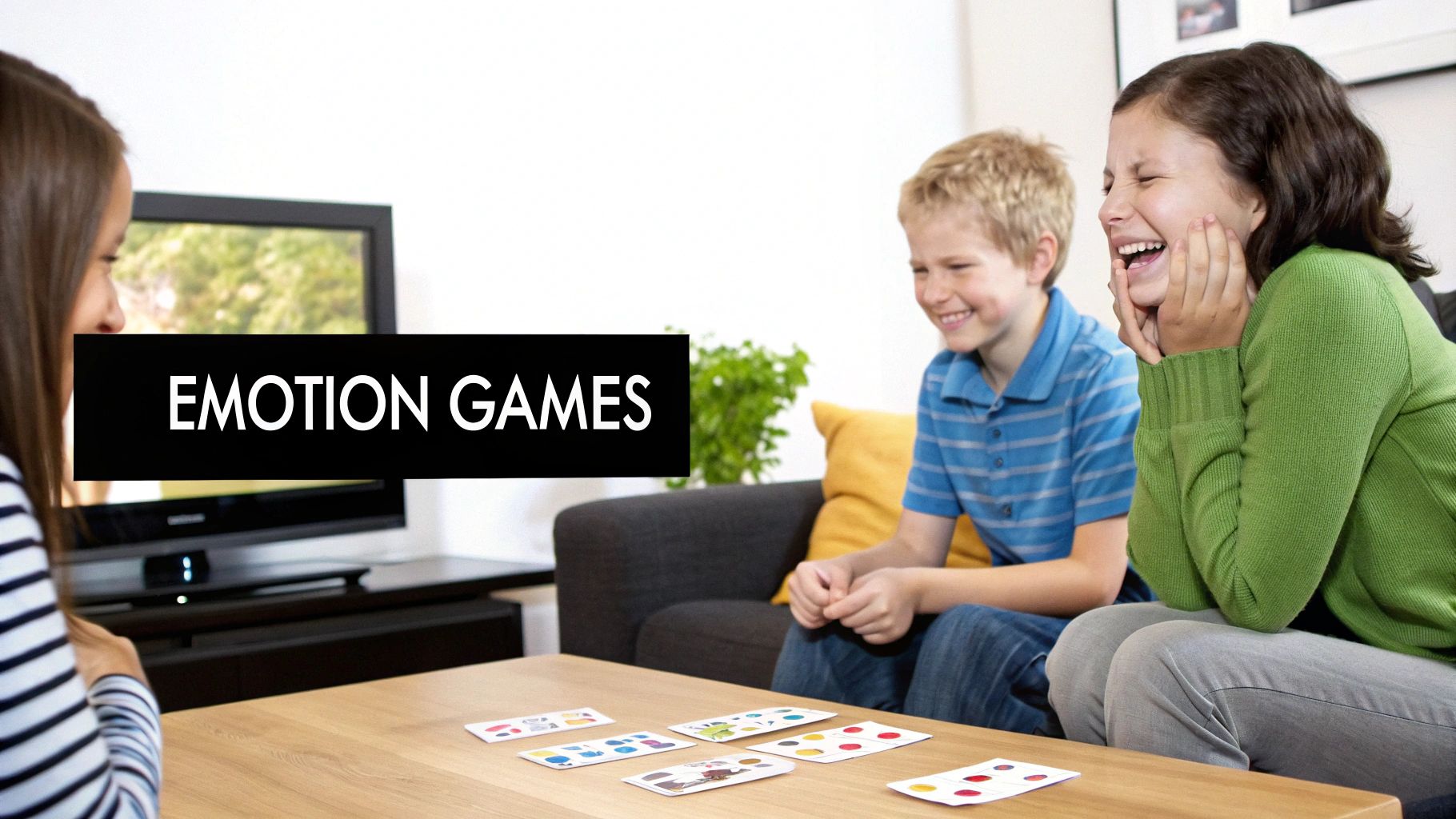
The best approach is a gentle one, without any pressure. If a child isn’t interested today, that’s perfectly fine. Just put the cards away and try again another time. The goal is to make talking about feelings a normal, safe, and comfortable part of your family’s culture.
The Daily Feeling Check-In
This is a fantastic way to build a routine around emotional expression. It works beautifully at the breakfast table to start the day or just before bed to wind down. It’s incredibly simple, yet profoundly effective.
- Lay out the cards: Place a small selection of emotion cards face-up on a table. You don’t need the whole deck; just a few common ones will do to start.
- Take turns sharing: Each person chooses a card that shows how they’re feeling right now. It helps to model it yourself first, with something like, "I'm choosing the 'tired' card because it was a really busy day."
- Listen with empathy: When your child picks a card, listen without judgement. If they choose 'sad', you could say, "Thank you for showing me that. I'm right here if you want to talk about what's making you feel sad."
This small act validates what they’re feeling and quietly reinforces the message that all emotions are okay.
Emotion Charades: A Playful Game
For something a bit more energetic, why not turn emotional learning into a family game night favourite? This activity is brilliant for helping children recognise what feelings look like on other people, building those crucial empathy skills.
This game is fantastic because it connects the abstract name of an emotion to physical body language. Children learn to read non-verbal cues in a fun, low-stakes environment, which is a vital skill for navigating social situations and friendships.
To play, just take turns drawing a card from the deck and acting out the emotion without using any words. The rest of the family has to guess the feeling. Expect plenty of giggles, especially with emotions like 'surprised' or 'embarrassed'! For even more ways to put these ideas into practice, you can explore other fantastic emotional literacy activities that build on these foundational skills.
Storytelling with Feelings
Books, films, and even TV shows are filled with emotional moments, making them the perfect launchpad for exploring empathy. Try using your emotion cards as a companion during story time.
- During the story: When a character goes through something big, pause and ask, "Which card do you think they are feeling right now?"
- Discuss their choices: You can follow up with gentle questions like, "Why do you think they feel that way?" or "What do you think might happen next?"
This helps children see the link between actions and feelings, both for fictional characters and, by extension, for themselves and their friends. It teaches them that emotions don’t just happen in a vacuum; they're often a response to the world around us. There are also many fantastic mental health books for children that explore these themes in more depth.
These simple, practical games can transform a humble deck of cards into a powerful tool for connection, resilience, and emotional wellbeing.
How to Choose or Create the Right Emotion Cards
Finding the right set of emotion cards for kids can feel a bit like finding the perfect key to unlock some really important conversations. With so many different options out there, it helps to narrow down what you’re looking for. A few key features can make all the difference in picking a deck that truly connects with your child and supports their emotional journey.
Ultimately, the goal is to find a tool that feels natural and relevant to your child's world, weaving emotional learning seamlessly into your day.
What to Look for When Buying
When you're browsing for a set of cards, keeping these three things in mind can be a game-changer. They really influence how well the cards are received and, more importantly, how often they get used.
- Age-Appropriateness: For toddlers and younger children, simple, bold illustrations of core emotions like happy, sad, and angry are best. As they get older, look for sets that introduce more nuanced feelings like disappointed, proud, or anxious. This helps to gradually expand their emotional vocabulary.
- Inclusive Illustrations: It’s so important for children to see themselves reflected in their learning tools. Try to choose cards that feature a diverse range of characters from various ethnic backgrounds and abilities. It’s a powerful way to reinforce that feelings are a universal human experience, shared by everyone.
- Durable Materials: Let’s face it, little hands can be rough. Opt for cards made from thick, durable cardstock—or even laminated ones—to make sure they can stand up to plenty of enthusiastic use during playtime and chats.
A Simple Guide to Making Your Own
If you're on a budget or just feeling a bit creative, making your own emotion cards is a fantastic and personal alternative. This approach is wonderful because it makes emotional learning accessible to absolutely everyone, no matter their resources.
Creating your own set is surprisingly simple. You can use anything from index cards to cut-up paper, or you could use a handy blank faces template to get you started. Getting your child involved in drawing the faces makes it a fun, collaborative project where they can show you what emotions look like to them.
This DIY approach isn't just about saving money; it's about bridging socioeconomic gaps in access to mental health resources. Affordable, homemade tools ensure every child has the chance to build these vital skills from an early age.
This is especially crucial when you consider how socioeconomic disparities can amplify mental health struggles. In the UK, children from the least well-off households are four times more likely to experience serious mental health difficulties by age 11 compared to their wealthiest peers. You can read more about these findings on the Centre for Mental Health website. This makes inclusive and affordable aids like homemade emotion cards an indispensable part of providing equitable emotional support.
Common Questions About Using Emotion Cards
As a parent or carer, you’ll naturally have questions before bringing something new into your family’s rhythm. The idea of introducing emotion cards for kids is to offer support, not to add another item to an already long to-do list. Let's walk through some of the most common queries I hear, to help you feel confident as you get started.
At What Age Can I Start Using Emotion Cards?
You can introduce simple emotion cards surprisingly early, often between 18 and 24 months. At this age, it's all about basic recognition. Think big, clear expressions for core feelings like 'happy', 'sad', and 'angry' to start building that foundational emotional vocabulary.
As your child gets older, you can bring in a wider range of more nuanced feelings like 'disappointed', 'proud', or 'nervous'. The secret is simply to match the complexity of the emotions to their developmental stage, letting the cards grow with them.
What If My Child Doesn't Want to Use Them?
This is a big one. It's so important never to force it. If your child isn't interested, just put the cards away and try again another day. The goal is to make sharing feelings a positive, safe experience, not a chore they have to endure.
A really gentle and effective approach is to model using them yourself. You could casually say, "Mummy is picking the 'tired' card because it's been a very long day." This shows them it’s a normal and safe way to talk about feelings, and it often sparks their curiosity without any pressure. You can also normalise these conversations through other means, like wearing mental health apparel that promotes openness about feelings.
Are Emotion Cards a Substitute for Professional Help?
This is a crucial point to understand. Emotion cards are a fantastic tool for building emotional literacy at home and opening up healthy conversations. They are a supportive aid, but they are not a replacement for professional mental health support. The failure to address mental health early on doesn't just impact individuals; it has a significant economic effect, with mental ill-health costing UK businesses an estimated £56 billion per year in lost productivity.
If you have serious concerns about your child's mental wellbeing—like big changes in their behaviour, mood, or sleep—it's vital to speak with your GP, their school, or a qualified child mental health professional. These cards can be a wonderful companion on a therapeutic journey, but they are not a clinical treatment.
How Do I Find Cards That Are Inclusive?
Making sure every child feels seen and represented is essential for building their self-esteem. When you're choosing a set of emotion cards, look for ones that feature illustrations of children from diverse ethnic backgrounds, abilities, and family structures. It reinforces the powerful message that emotions are a universal experience shared by everyone.
And if you decide to make your own cards, it becomes a wonderful opportunity to get your child involved. You can create drawings that look like them, their friends, and their family members, making the whole experience deeply personal and validating.
At Little Fish Books, we believe in creating accessible, empathetic tools to support every child's emotional journey. Our resources, from books to downloadable activities, are designed to make these important conversations easier and more engaging for the whole family. Have a look at our collection to find the perfect tools to help your little one understand their big feelings.
Find your emotional support resources at https://thatsokay.co.uk