
A Guide to Using a Feelings Chart in Your Classroom
A feelings chart for your classroom is a simple visual tool that helps pupils put a name to their emotions and share them. Often using faces and words, this kind of display acts as a vital bridge for children who find it hard to express how they feel, helping you build a more supportive and emotionally aware space.
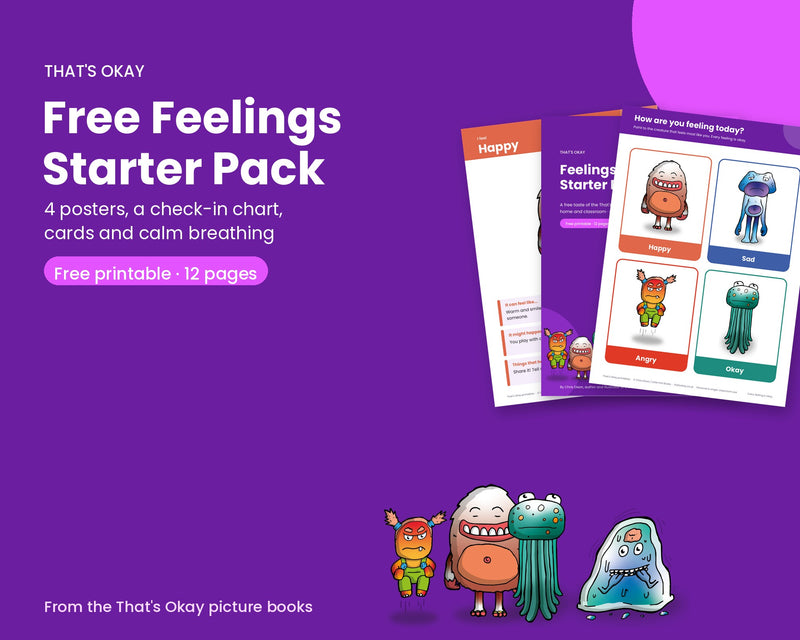
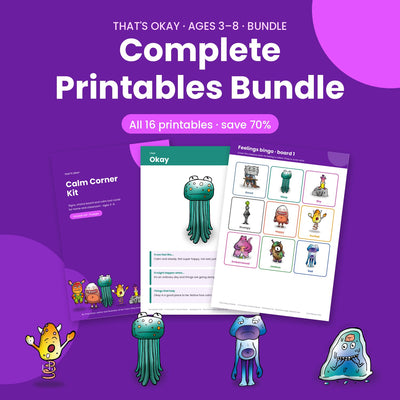
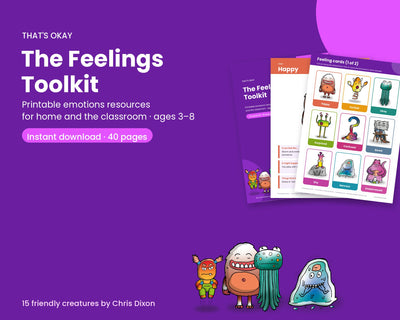
Free printable: the Feelings Starter Pack. 12 pages of feeling posters, a check-in chart, feeling cards and calm breathing cards to help children name their feelings.
Think of it as the first, essential step towards a classroom culture where mental wellbeing is something everyone can talk about openly.
Why Your Classroom Needs an Emotional Compass
In any modern classroom, looking after a child's emotional wellbeing isn't just a side task anymore; it’s a central part of being a teacher. The pressure on our children is huge, coming from all angles—from academic expectations to the dizzying, often harmful, world of social media. Research shows that 1 in 6 children aged 5-16 are likely to have a mental health problem. A feelings chart is far more than just a pretty wall display; it’s a practical, everyday tool that helps you tackle this need head-on.
This simple visual aid opens up a really important, non-verbal dialogue about mental health. For a child who feels overwhelmed, anxious, or just plain sad, finding the right words can feel impossible. The chart gives them an immediate, low-pressure way to show a trusted adult how they’re feeling.
It helps normalise the whole experience of having big emotions and sends a clear message that all feelings are valid and worth talking about.
Building Essential Life Skills
When you use a feelings chart for classroom activities, you're laying the groundwork for what’s known as emotional literacy. This is a crucial life skill—the ability to understand and express emotions in a healthy way.
By interacting with the chart day in and day out, children start building a vocabulary for their inner world. They can move beyond simple words like 'happy' or 'sad' to more specific feelings like 'frustrated', 'proud', or 'lonely'. Want to dive deeper? You can learn more about what emotional literacy is and why it matters in our detailed guide.
This process doesn't just help the pupils; it gives some much-needed support to educators, too. Many UK teachers are feeling the strain of providing pastoral care. A comprehensive survey of 500 UK teachers found that over 60% worry they spend too much time managing pupils' emotional needs. What's more, 52% felt they are seen as social workers but simply don't have the right tools for the job. You can find more insights from this study about the pressures on modern educators.
A feelings chart becomes one of those tools—a proactive, supportive instrument that helps you manage these daily challenges.
Disclaimer: It’s really important for me to say that I am not a mental health professional. The advice and suggestions in this article are meant for educational support inside the classroom. If you have serious concerns about a child's mental health, it is vital to get help from a doctor or a qualified medical professional.
Ultimately, by bringing a feelings chart into your classroom, you’re creating a safer, more empathetic environment for everyone. It’s a clear signal to every child that their emotional wellbeing is a priority, which sets the stage for better learning, stronger relationships, and healthier ways of coping with whatever life throws at them.
Designing a Feelings Chart That Actually Works
Right, let's get practical. A truly effective feelings chart for classroom use is one that pupils genuinely connect with; it needs to be so much more than just a poster on the wall. The secret ingredient is engagement, and that all starts with a design that fits your specific group of children.
The format you choose can make a world of difference. For Early Years pupils, simple, bright emoji-style faces for core emotions like happy, sad, and angry are perfect. They're instantly recognisable and easy for little ones to point to. For example, a simple smiling face for "Happy", a downturned mouth for "Sad", and a scrunched-up face for "Angry".
As children get older, you can begin to introduce more complex and nuanced emotions. A chart for older primary pupils could include words like 'frustrated', 'proud', 'anxious', or 'calm'. This is a fantastic way to help them build a richer emotional vocabulary, moving far beyond the basics. You could ask them to describe a time they felt "frustrated" (e.g., "when I couldn't get my shoelaces tied") to connect the word to a real experience.
Choosing the Right Format and Materials
The physical design of your chart is just as important as the feelings it displays. A static poster is a decent start, but interactive charts often have a much bigger impact. When you're thinking about materials, looking into options like specialised interactive magnetic or dry erase boards can make the daily check-in process more dynamic and hands-on.
Here are a few popular formats I've seen work well:
- Peg Chart: Pupils move a peg with their name on it to the feeling that best matches their mood.
- Velcro Chart: Laminated feeling faces or words can be moved around by the children themselves.
- Pocket Chart: Children can place a name card or symbol into a pocket beneath the relevant emotion.
The goal is to create something pupils can physically interact with. That physical connection is what encourages them to use it every single day.
This simple decision tree below offers a clear pathway for responding when you notice a pupil seems distressed, guiding you from observation right through to supportive action.
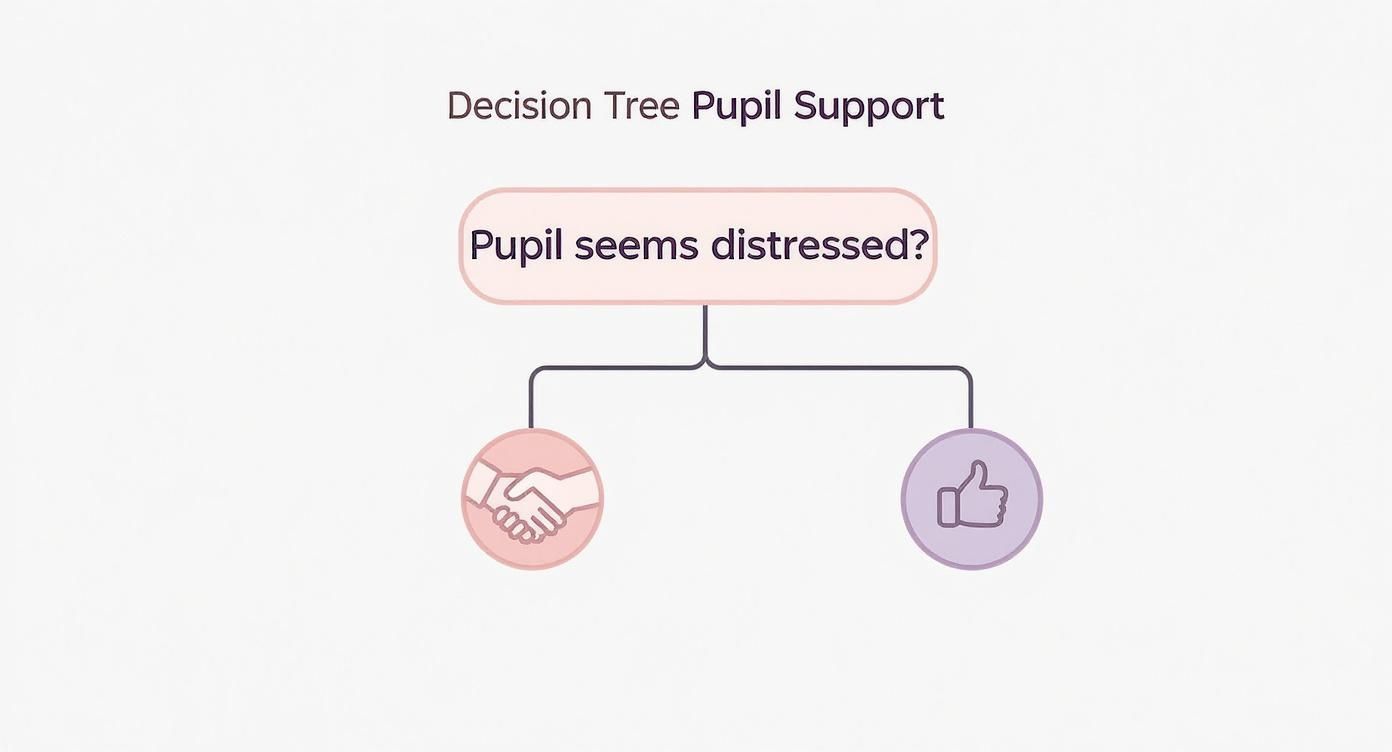
As the visual highlights, the first step is always gentle, non-judgemental observation. This then leads to a calm and considered response, rather than a reaction.
Comparing Feelings Chart Formats for Your Classroom
Choosing the right format can feel overwhelming, but it really comes down to your pupils' age and your classroom's needs. This table breaks down some of the most common options to help you decide which will work best for you.
| Chart Type | Best For (Age Group) | Pros | Cons |
|---|---|---|---|
| Static Poster | Key Stage 2 (Ages 7-11) | Simple to create; great for reference and building vocabulary. | Less engaging; no physical interaction for pupils. |
| Peg Chart | EYFS & Key Stage 1 (Ages 3-7) | Highly interactive; provides a quick visual overview of the class mood. | Can be fiddly; pegs might get lost or broken. |
| Velcro Chart | EYFS & Key Stage 1 (Ages 3-7) | Very hands-on and easy for small children to use. | Laminated pieces can wear out over time; velcro can lose its stick. |
| Pocket Chart | Key Stage 1 & 2 (Ages 5-11) | Tidy and organised; versatile for different types of cards (names, pictures, symbols). | Can be less visually immediate than a peg chart. |
| Magnetic/Dry-Erase | All Key Stages (Ages 3-11) | Extremely versatile and durable; easy to customise and update daily. | Higher initial cost compared to DIY paper/card options. |
Ultimately, the best chart is one that gets used. Think about what will be most accessible and inviting for your particular group of children.
Fostering Ownership Through Co-creation
Here's the most powerful tip I can give you: create the chart with your pupils. This process fosters a deep sense of ownership and makes them far more likely to actually use it.
Start by brainstorming a list of feelings together. Ask them what each feeling looks like, and what it feels like in their bodies. This conversation alone is an incredibly valuable lesson in emotional literacy.
By involving pupils in choosing the colours, drawing the faces, and writing the words, you transform the chart from 'the teacher's tool' into 'our chart'. It becomes a shared resource that belongs to the entire classroom community.
Let them vote on the colours or draw the illustrations themselves. Their involvement ensures the vocabulary and imagery are relevant and meaningful to them. If you're looking for more structured activities to help pupils identify and process their feelings, exploring some emotion regulation worksheets can be a brilliant complementary resource.
An inclusive design, co-created with care, will quickly become an indispensable part of your classroom.
Weaving the Chart into Your Daily Classroom Routine
An unused feelings chart is just wallpaper. For it to become a dynamic part of your classroom culture, you need to weave it into the very fabric of your daily routines. Consistency is what shows your pupils that checking in with their emotions isn't a one-off activity, but a normal, important part of every single day.
Making it a habit doesn't have to be a huge, complicated thing. In fact, simple, repeated actions are often the most powerful.
Creating Rhythms for Emotional Check-ins
The key is to create predictable moments for pupils to interact with the chart. These moments become safe, expected touchpoints where they can pause and reflect on their inner world without feeling put on the spot.
Here are a few practical routines I’ve seen work wonders in real classrooms:
- The Morning Arrival: As pupils come in and hang up their coats, they can move their name peg or symbol to the feeling that best represents their morning. For example, a child might move their peg to "Tired" after a late night. This gives you an immediate, discreet snapshot of the room's emotional temperature before the day even begins.
- Post-Break Reset: That transition from the whirlwind of the playground back to structured learning can be a bit jarring. A quick, two-minute check-in at the feelings chart helps pupils settle their bodies and minds, ready to refocus. A child who had an argument at playtime could move their peg to "Cross".
- End-of-Day Reflection: Just before they head home, pupils can update their feeling one last time. This is a lovely way to encourage them to reflect on the day’s events and notice how their emotions might have shifted. For instance, a child who was "Worried" about a test might move their peg to "Proud" after doing well.
It's no surprise that a national behaviour survey in UK schools found that a massive 88% of school leaders and teachers now use social and emotional learning (SEL) interventions to support behaviour. This statistic really shows how central these emotional support strategies have become. You can explore the full findings of the national behaviour survey here.
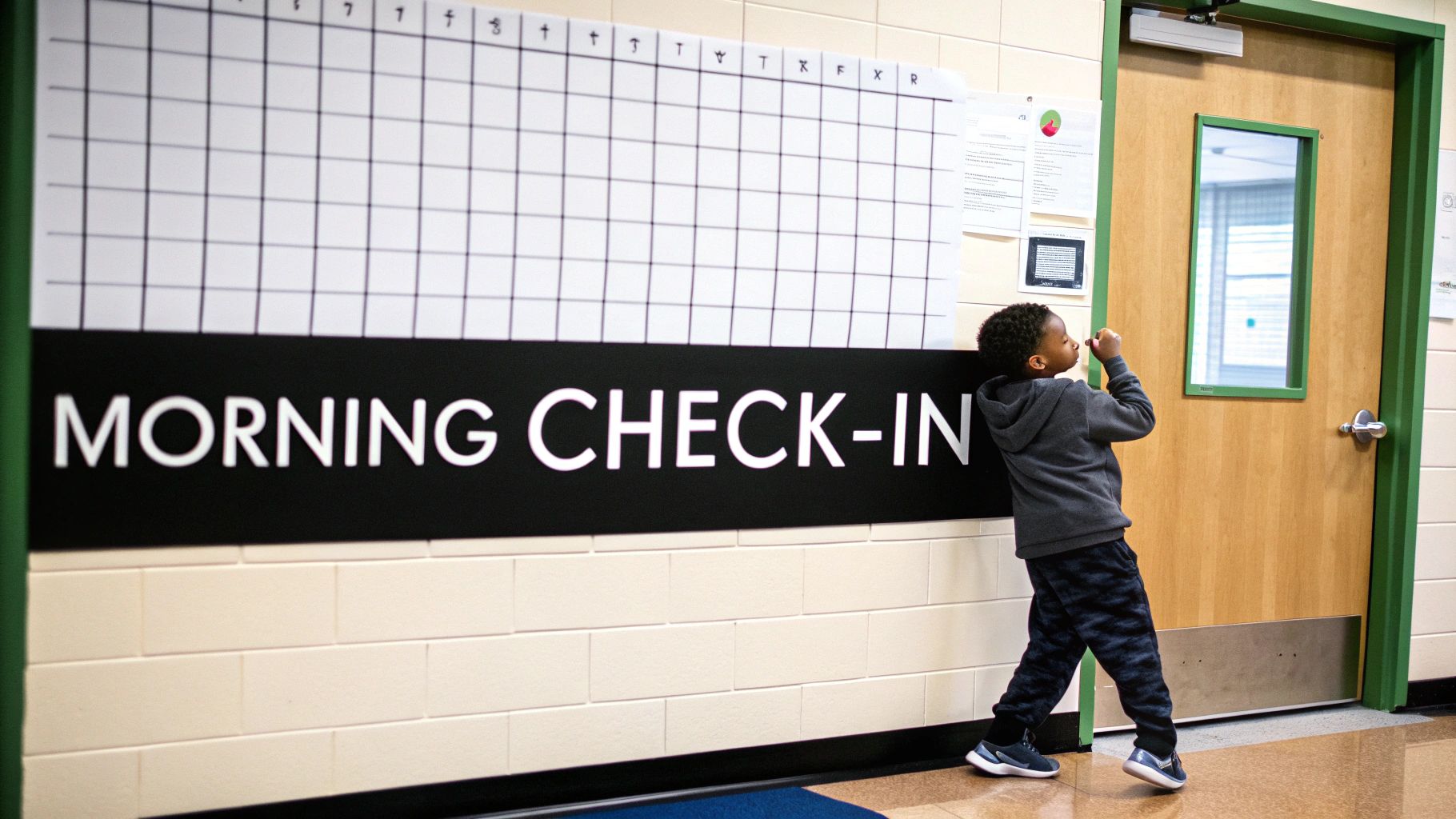
These little routines build emotional muscle memory. They turn the feelings chart for classroom use from a nice idea into an indispensable tool.
From Identification to Connection
The real magic, though, happens in how you respond. When a child indicates they are feeling 'sad' or 'angry', the priority isn't to immediately fix it. The first, and most important, step is to simply validate their feeling with empathy.
A quiet, simple acknowledgement like, "Thank you for sharing that you're feeling angry today. That’s a really important feeling," can make a world of difference. It shows the child they've been seen and heard, without any judgement.
This shifts the whole interaction from problem-solving to connection. Sometimes, just having their feeling acknowledged is all a child needs to feel settled and move on. Other times, it's a gentle invitation for a private chat later on, when the time is right.
But what if several children express difficult emotions at once? Don't panic. You can address the group with a supportive statement like, "I can see that a few of us are feeling sad this morning. That's okay. We're going to look after each other today." This creates a collective sense of care and reinforces that the classroom is a safe space for everyone, no matter how they feel.
Adapting Your Chart for a Truly Inclusive Classroom
Every child deserves to feel seen and understood in the classroom, but a one-size-fits-all feelings chart for classroom use often falls short. A truly inclusive space recognises that pupils have wonderfully different communication styles and needs.
For many children, particularly those with special educational needs and disabilities (SEND), a visual tool like a feelings chart is more than just helpful—it’s an absolute lifeline.
When a pupil is non-verbal, autistic, or faces other communication challenges, finding the words to express what they're feeling can feel like an impossible task. A well-designed feelings chart gives them a direct, low-pressure way to show you what’s happening on the inside, without needing complex verbal explanations. It’s a powerful tool for equity, helping you spot and support pupils who might otherwise be struggling in silence.
Tailoring Your Chart for Diverse Learners
Making your chart more accessible doesn't mean you have to start from scratch. Often, it's the small, thoughtful tweaks that make the biggest difference. The real goal is to lower the barrier to communication for every single child in your room.
Here are a few practical ideas I've seen work wonders:
- Use Recognised Symbols: Many pupils with SEND are already familiar with standardised symbol systems. Weaving in things like Widgit symbols can make your chart instantly more recognisable and easier for them to use.
- Incorporate Sensory Elements: Think beyond just the visual. Adding different textures next to emotions—like a piece of soft fleece for 'calm' or a square of rough sandpaper for 'frustrated'—can be a game-changer for sensory learners.
- Create Individual Charts: A big, public wall display can feel overwhelming or just too exposed for some children. A small, laminated chart kept on a pupil's desk gives them a private way to communicate their feelings directly to you, on their own terms.
These adaptations become even more critical when you consider the unique emotional load that many children with SEND carry. A nationally representative UK survey revealed that a staggering 67% of children with SEND worry about their schoolwork, compared to 44% of their peers without SEND. Even more concerning, the study found that only 67% of these pupils felt safe at school, versus 81% of non-SEND children. You can explore the full research about the challenges faced by children with SEND.
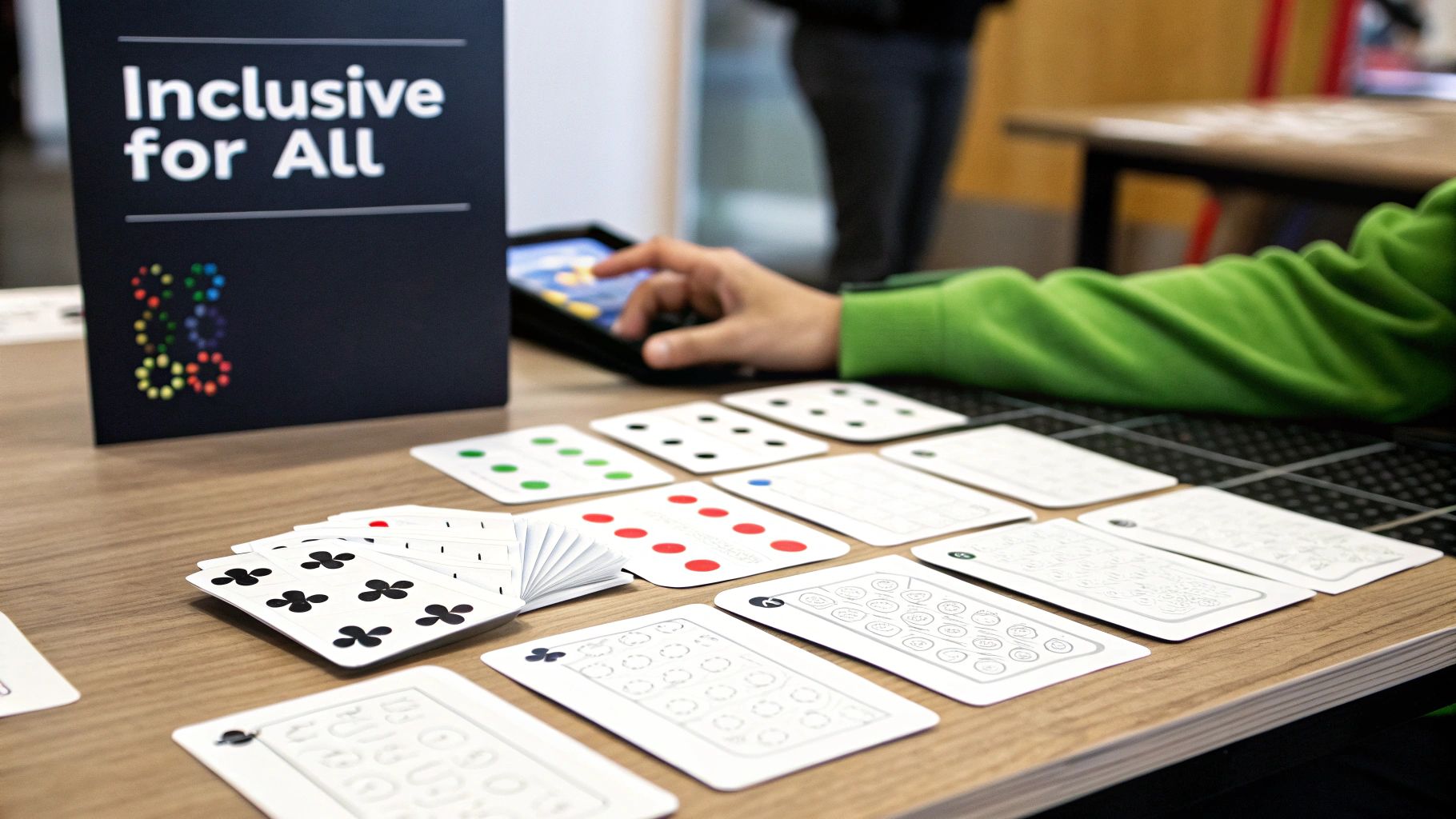
A Tool for Safety and Connection
By taking the time to tailor your feelings chart, you're actively creating a safer, more welcoming learning environment. You're sending a clear and powerful message: every pupil's inner world matters, and you are committed to understanding them, no matter how they choose to communicate.
When a child who struggles to speak can simply point to a picture of 'anxious' and see a look of immediate understanding on their teacher's face, that's a moment of profound connection. It builds trust and reinforces that school is a place where they belong and are supported.
This proactive approach lets you spot distress early on and offer support before a situation boils over into a behavioural issue. It shifts the classroom dynamic from reactive management to compassionate, pre-emptive care. Ultimately, an inclusive feelings chart is one of the best tools you have for building that foundation of trust and safety for everyone.
Moving Beyond the Chart to Nurture Wellbeing
A feelings chart for classroom success is a brilliant first step, but the journey towards true emotional wellbeing is much richer and more rewarding. Think of the chart as opening the door to a conversation; what comes next is building a culture where emotional awareness is woven into the very fabric of your classroom.
This means moving beyond simply putting a name to a feeling. The real work is in exploring how we can manage those big emotions once we've identified them.
The impact of social media on children's mental health cannot be overstated; constant comparison and online pressures contribute significantly to anxiety and low self-esteem. It's more important than ever that our children have a solid toolkit of coping strategies. The great news is that these are skills we can absolutely teach, practise, and embed right there in the classroom.
Simple Relaxation Techniques for Little Minds
When a child points to 'anxious' or 'angry' on the chart, having a simple calm-down activity ready to go is a game-changer. These don't need to be complicated or time-consuming. In fact, simple, mindful moments often work wonders.
Here are a couple of my go-to techniques:
- Belly Breathing: I ask pupils to place a hand on their tummy and imagine a little balloon inside. As they breathe in through their nose, the balloon slowly inflates. As they breathe out through their mouth, it gently deflates. It’s simple, physical, and effective.
- Grounding Exercises: The '5-4-3-2-1' technique is fantastic for pulling a child out of an overwhelming emotional spiral. I quietly ask them to name five things they can see (the clock on the wall), four things they can touch (their desk), three things they can hear (the birds outside), two things they can smell (their pencil), and one good thing about themselves.
These activities anchor a child in the present moment, away from whatever feeling was sweeping them away. Over time, you can teach them to use these tools independently, often within a dedicated quiet space. If you're looking for more inspiration on that, our guide with some brilliant calm-down corner ideas is packed with helpful tips.
Broadening the Emotional Conversation
To really deepen this work, you can start weaving emotional literacy into other parts of your teaching. Storytime and creative expression are fantastic avenues for exploring more complex feelings in a safe, relatable way.
A carefully chosen selection of children's books that tackle themes like worry, anger, or friendship can spark incredibly powerful class discussions. Books like The Huge Bag of Worries by Virginia Ironside or The Colour Monster by Anna Llenas are brilliant for this. For older children, introducing a 'feelings journal' gives them a private, creative outlet to write or draw about their day and process what's on their mind.
It's important to remember that I am not a mental health professional. These are educational suggestions. If you are ever seriously worried about a child's mental wellbeing, it is crucial to seek help from a doctor or a qualified medical expert.
Normalising Mental Health for Everyone
Finally, let's not forget about the adults in the room. A teacher's own wellbeing has a direct and undeniable impact on the emotional climate of their classroom. The cost of poor mental health to UK businesses is estimated to be over £50 billion a year due to absenteeism and reduced productivity, and schools are certainly not immune to this pressure.
Normalising conversations about mental health can be as simple as what you choose to wear. Mental health apparel, like a t-shirt or lanyard with a positive, encouraging message (e.g., "It's okay to not be okay"), sends a clear signal that it's okay for everyone—adults included—to talk about their feelings.
This simple act helps to dismantle stigma. It shows children that looking after our minds is just as important as looking after our bodies, creating a genuinely supportive environment for every single person in the room.
For younger children, a visual support can make transitions much easier. Our guide to using a now and next board includes a free printable board and 40 picture cards.
Common Questions About Using a Feelings Chart
Even with the best of intentions, bringing a new tool like a feelings chart for classroom use into your daily routine is bound to raise a few questions. Let's walk through some of the common things teachers ask, so you can handle these moments with confidence and care.
What if a Pupil Always Chooses a Negative Feeling?
First things first, try to see this not as a problem, but as valuable information. A child consistently pointing to 'sad' or 'angry' is sending a clear signal that they might need a bit of extra support.
Your best approach is a private chat, fuelled by gentle curiosity rather than pressure. A quiet question like, "I’ve noticed you’ve been feeling sad lately, is there anything you’d like to talk about?" can open a door without making them feel singled out. It’s your cue to observe them more closely, and if the pattern continues, it’s time to follow your school’s established pastoral care procedures. Remember, I am not a mental health professional, and persistent low mood should always be discussed with your school's safeguarding lead and may require referral to a GP.
How Can I Encourage Reluctant Pupils to Participate?
The golden rule here is never to force it. Participation has to feel safe, and that kind of trust is built up over time, not demanded. The single best way to encourage shy or reluctant children is to lead by example.
Use the chart to share your own feelings (appropriately, of course!): "I’m feeling really excited about our science experiment today!" This simple act models that sharing is normal, safe, and part of your classroom culture.
The bedrock of trust is ensuring every emotion a pupil shares is met with acceptance, never judgement. For children who are still hesitant, you could offer a more private check-in option, like a small feelings journal on their desk.
How Do I Manage Privacy with a Public Display?
This is a really important and valid concern. It’s entirely possible to create a system that protects pupil privacy while still being a useful tool for the whole class.
Here are a few practical ideas that work well:
- Use Symbols or Numbers: Instead of names, assign each pupil a personal symbol (like a star, a little animal, or a specific shape) or a number for their peg or card.
- A Private Check-in System: You could use the main feelings chart for general group discussions about emotions, but pair it with a more discreet check-in method. For instance, as pupils enter the room, they could place a coloured counter into a 'feelings box', letting you know how they feel without a public announcement.
This kind of hybrid approach allows you to keep the chart as a shared resource for building emotional vocabulary while honouring every child’s right to privacy.
At Little Fish Books, we believe that nurturing emotional literacy is one of the most important gifts we can give our children. Our curated collection of mental health books, activities, and resources are designed to support educators and parents in this vital work. Explore our tools to help you build a more compassionate and emotionally aware classroom today.
Discover our full range of emotional support resources at https://thatsokay.co.uk.
Free printable: the Feelings Starter Pack. 12 pages of feeling posters, a check-in chart, feeling cards and calm breathing cards to help children name their feelings.