

Flower Drawing Easy: A Relaxing Guide for Beginners
When you think of drawing a simple flower, you probably picture a circle for the centre and a few ovals for the petals. That’s a perfect place to start. The real magic isn’t in getting the lines perfect; it’s in the calming motion of creating something, which makes it a wonderful activity for children and adults who just need a quiet moment.
Drawing Flowers for Calm and Confidence
Before we even pick up a pencil, it’s worth touching on why this simple act can be such a powerful little tool for our wellbeing. Expressing ourselves creatively is deeply linked to our mental health, offering a gentle way to work through feelings, especially for younger minds.
Here in the UK, we're becoming more aware of the pressures our children face. In fact, research shows that one in six children aged 7 to 16 has a probable mental health problem. A focused, mindful activity like drawing offers a much-needed break from the noise of daily life and the endless scroll of social media, which can often fuel anxiety and comparison. It’s a tangible way to practise being present. The simple act of creating lines and shapes to form a flower demands your attention, pulling you into the now – a core principle of relaxation.
Nurturing Wellbeing Through Art
Art can give a voice to complicated feelings that children often struggle to put into words. Addressing mental health from an early age is vital; when issues aren't addressed, they can cast long shadows into adulthood. Poor mental health in the workforce costs UK businesses up to £56 billion a year through lost productivity and staff turnover. Drawing is a proactive and accessible way to start building emotional resilience. This isn't about creating a masterpiece, but about the therapeutic journey.
The goal is to use the creative process to explore feelings, reduce stress, and improve self-esteem. It’s a quiet conversation with oneself, expressed through colour and form.
In the UK, drawing flowers has a familiar, comforting feel. The English rose, a beautiful national symbol, is a fantastic subject. Its elegant form is surprisingly simple to sketch, and its place in our culture makes it a recognisable and encouraging starting point. You can find out more about beautiful native English flowers here.
As we move forward, please remember this guide is here to offer support for wellbeing. While drawing can be incredibly helpful, I am not a mental health professional. If you have concerns about your own or a child’s mental health, it’s always best to speak with a doctor.
Your Simple Toolkit for Beautiful Blooms
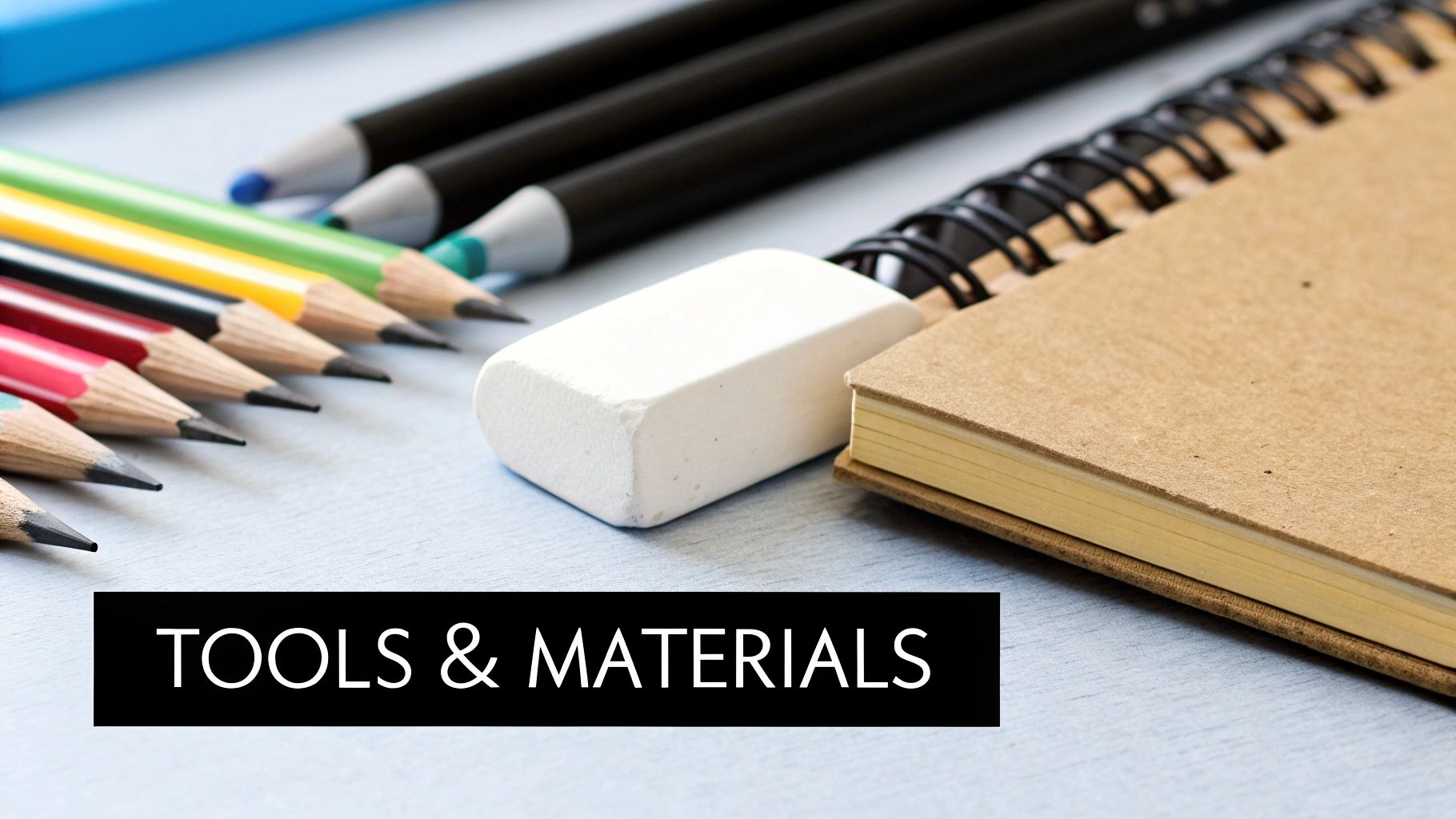
Starting a new creative hobby like drawing should feel exciting and freeing, not stressful or expensive. The good news is, you don’t need a professional studio overflowing with fancy supplies. In fact, you probably have everything you need to begin drawing flowers right now.
The whole point is to make it easy to just start. A simple notepad and a regular HB pencil are more than enough to sketch out your very first bloom. Of course, specialised drawing paper has a lovely texture, but for now, even plain old printer paper works perfectly well while you're getting the hang of basic shapes and lines.
When you're ready to bring your drawings to life with a splash of colour, the options are just as straightforward. Coloured pencils are brilliant for getting into the little details, while crayons can create those lovely soft, blended textures that are perfect for petals. Both are fantastic, low-cost ways to add some personality to your creations.
Choosing Your First Tools
Feeling a bit stuck on what to pick? Don't worry, it really just comes down to what feels right for you. Sometimes, a simple comparison can help guide you as you gather your bits and pieces. For a more detailed look, this guide on the top art supplies for beginners is a great resource.
Choosing Your Drawing and Colouring Tools
This little table breaks down the basics to help you get started on your flower drawing journey.
| Tool | Best For | Tip for Beginners |
|---|---|---|
| HB Pencil | Sketching light outlines and basic shapes | Don't press too hard at first. This makes it much easier to erase any lines you don't want. |
| Standard Paper | Practice sketches and just getting started | Using a simple notepad is a great way to keep all your practice drawings together in one place. |
| Coloured Pencils | Adding detailed colour and sharp lines | Try layering colours lightly on top of each other to build up a richer, deeper look. |
| Crayons | Creating soft textures and bold, vibrant areas | You can blend different crayon colours together with your fingertip for a smooth, dreamy effect. |
At the end of the day, the best tools are whichever ones get you drawing. So, grab what you have, find a quiet corner, and let’s start creating something beautiful together.
How to Draw a Simple and Elegant Rose
The classic English rose is a beautiful flower, but its layers of petals can look a bit complicated to draw. Don't let that put you off. The secret is that it's really just a collection of simple, curved shapes put together, which makes it a surprisingly easy flower to master. It's also a wonderfully mindful activity to get lost in. We're going to build it up gently, one line at a time.
Let's begin not by aiming for perfection, but with a simple, gentle swirl. In the centre of your paper, lightly sketch a small, loose spiral. This will be the very heart of your rose, where the petals are most tightly furled. Don't worry about making it neat – a little wobble actually gives it more character.
From the end of your spiral, draw a small, C-shaped curve that cups around it. That's your first proper petal done. Now, just add another slightly larger C-shape that overlaps the first one. See? You're already starting to build the beautiful shape of the bloom.
Building the Petals
Now you just keep adding these curved, overlapping lines around your central spiral. Think of them as soft, teardrop shapes or gentle arcs rather than perfectly formed, rigid petals.
It’s a good idea to let them vary in size – some smaller, some wider. This little bit of imperfection is exactly what makes a flower drawing look natural and alive. The aim is simply to create layers that feel like they are gently unfurling from the centre.
This little guide breaks down just how simple the basic shapes are for any flower drawing.
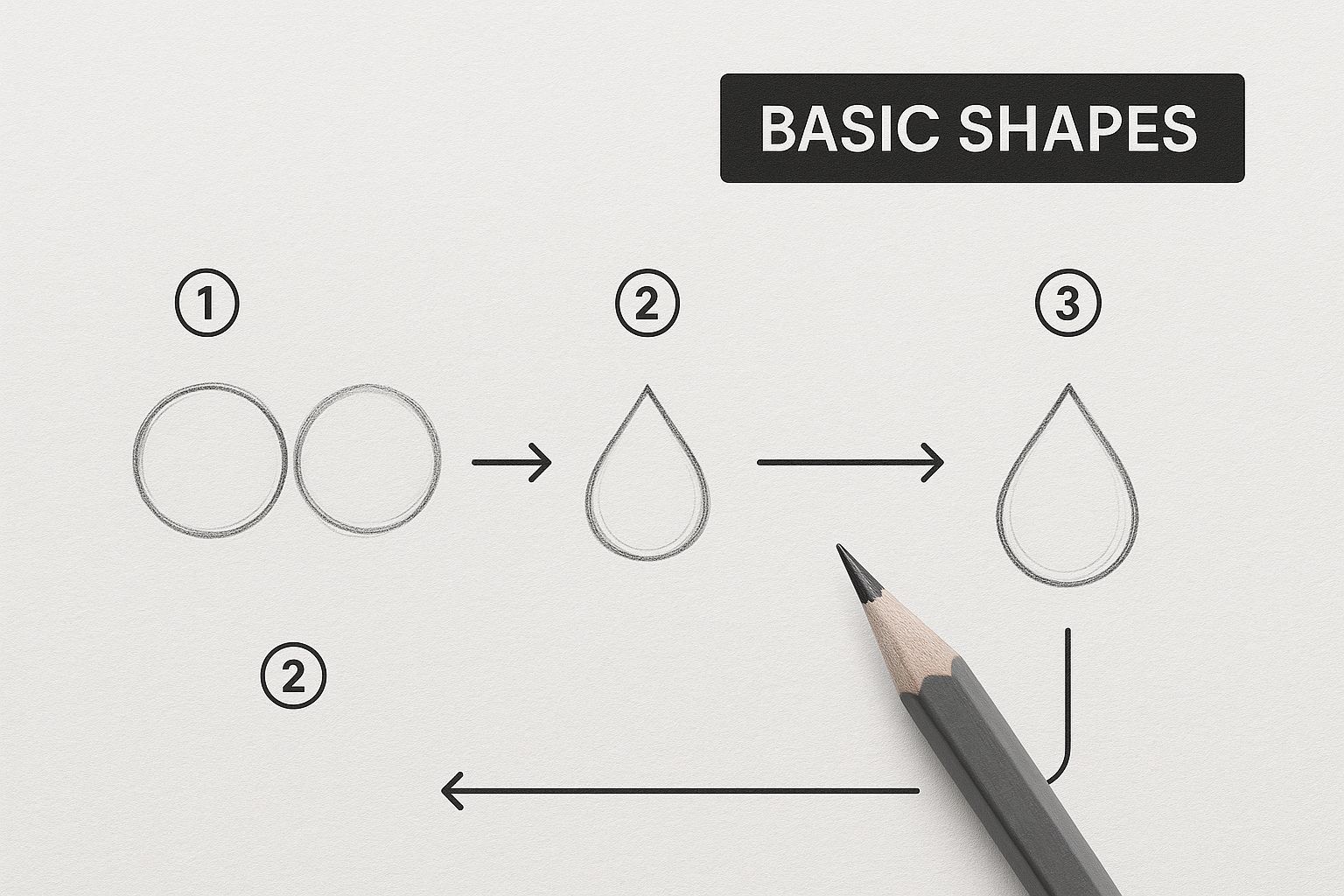
As you can see, when you start with basic circles and teardrop shapes, it takes all the pressure off trying to get it 'right' straight away.
Adding the Finishing Touches
Once you're happy with your bloom, it's time for the stem. Just draw two parallel lines down from the base of the flower. Easy. You can add a single leaf by sketching a pointed oval shape connected to the stem. Remember, the focus here is on the relaxing process, not creating a flawless botanical illustration.
Drawing a flower is such a quiet activity. It allows your mind to focus solely on the movement of your hand and the shapes appearing on the paper. It's a simple, effective form of mindfulness that anyone can try.
Here in the UK, botanical art has a really rich history, celebrated by organisations that understand just how culturally important it is. The Royal Horticultural Society (RHS), for instance, nurtures this tradition through amazing events and exhibitions that showcase stunning plant illustrations. Their collections really demonstrate a long-standing appreciation for capturing the beauty of flowers on paper.
Right then, after the lovely soft curves of the rose, let's switch gears and try a completely different shape. The bluebell is another iconic British woodland flower, and drawing its delicate, bell-shaped blooms is a wonderfully rhythmic and calming thing to do. This one is nice and easy, focusing on creating a little cluster of flowers along a single, gracefully arching stem.
First things first, we'll sketch the stem. Draw a long, thin line that curves gently downwards, just like a real bluebell stem would droop under the weight of its flowers. It’s this arch that gives the drawing its natural sense of movement and life, so please don't worry about making it perfectly straight. Nature is full of beautiful imperfections, and our drawings can be too.
Now for the little bell-shaped flowers. Starting near the top of the stem, sketch a small, downward-facing U-shape. This creates the main part of the bell. From the open end of that U, add a few tiny, pointed flicks outwards to show the delicate tips of the petals.
Building Your Bluebell Cluster
The real joy in this exercise comes from repetition. Just keep adding these simple bell shapes down along the curve of the stem.
- Vary the Angles: To make it feel more real, try drawing some bells facing slightly to the side and others more directly downwards. This simple trick adds a lovely sense of depth.
- Overlap Gently: Let some of the bells slightly overlap one another. It’s a small thing, but it makes your drawing look much fuller and more natural.
- Control the Numbers: You're in charge of how many flowers you add. A sparse stem can look just as elegant as a full one.
If you can, looking at real flowers truly enhances the experience and connects you with the natural world. The UK's flower and plant growing industry is a huge market, with a revenue estimated at £1.8 billion in 2024. This sector doesn't just support commercial florists; it also makes sure that artists and hobbyists like us have beautiful, British-grown blooms as subjects for our work. You can discover more about the UK's thriving flower and plant growing sector here.
This rhythmic action of drawing multiple small shapes is wonderfully soothing. It really helps to focus the mind and quieten all those distracting thoughts, turning a simple sketch into a powerful little act of mindfulness.
Creative Ideas to Deepen Your Practice
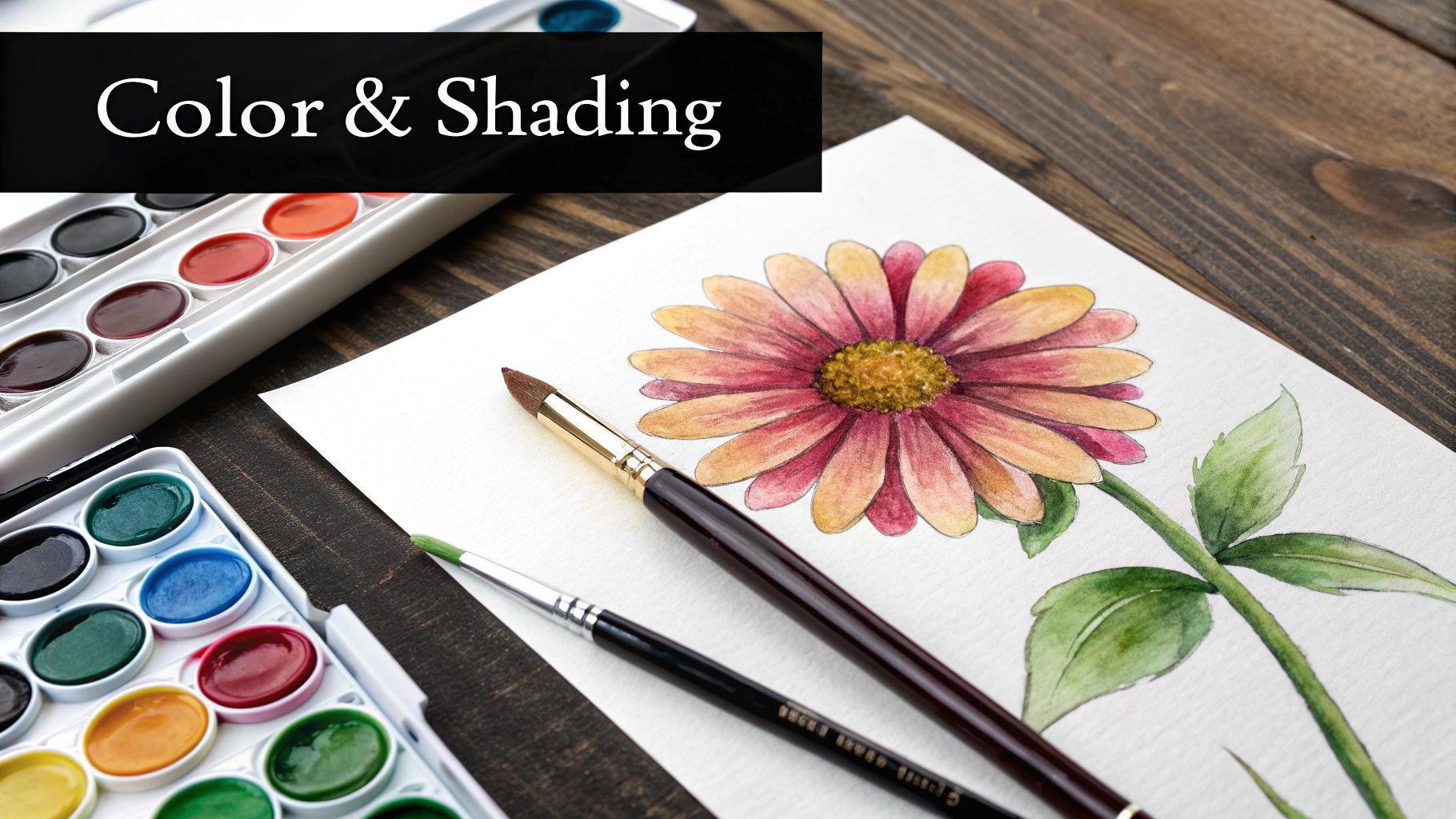
Once you’ve got the hang of sketching simple flowers, you can start to see how this lovely hobby connects to a bigger sense of wellbeing. Your flower drawing easy practice is a brilliant jumping-off point for all sorts of creative and mindful activities that support your mental health.
Why not turn your favourite drawings into handmade cards for friends and family? Another wonderful idea is to start a nature journal. You can sketch the flowers you spot on your walks, which not only sharpens your drawing skills but also gets you outdoors – fantastic for your state of mind.
To make your drawing time even more restorative, try pairing it with simple relaxation techniques. You could put on some calming music, or just take a few moments to focus on your breathing before you pick up your pencil. For a practical example, try the 'box breathing' technique: breathe in for a count of four, hold for four, breathe out for four, and hold for four. Repeat this a few times. It’s a small act of mindfulness that prepares your brain for a calm, creative session.
Expanding Your Wellbeing Toolkit
Connecting your art to other supportive resources helps build a really strong foundation for your mental wellness. This is about more than just drawing; it’s about creating a lifestyle that values calm and self-expression. To help cultivate your artistic side, exploring resources on fostering creativity and imagination can offer some fresh perspectives.
Here are a few more ideas to explore:
- Mental Health Books: Reading books like Matt Haig’s Reasons to Stay Alive or The Boy, the Mole, the Fox and the Horse by Charlie Mackesy can offer comfort and new perspectives on mental health.
- Mental Health Apparel: Sometimes, wearing clothing with positive affirmations, like a jumper that says "It's Okay to Not Be Okay," can be a comforting and empowering personal reminder.
- Colouring Sheets: There are days when you might just want to colour without the pressure of drawing from scratch. For a lovely start, you can download free colouring sheets that are designed to support emotional literacy.
It's important to remember that while these activities are incredibly beneficial, I am not a mental health professional. If you are ever worried about your own or a child's mental wellbeing, please seek advice from your doctor.
A Gentle Reminder: When to Seek Further Support
I truly believe in the power of simple, creative activities like drawing flowers. It can be a wonderful way to find a moment of calm and express feelings without words. But it's really important to be clear: I am not a mental health professional.
The ideas and drawings here are shared from the heart, intended as a gentle tool for wellbeing. They are in no way a substitute for professional medical advice, diagnosis, or treatment.
Children's mental health is precious. If you have any real concerns about your child's emotional state, or your own, the most important thing you can do is reach out to a doctor or a qualified mental health provider. They have the expertise to offer specific, tailored guidance that a creative hobby can support, but never replace.
Finding the Right Professional Help
Asking for help is a huge sign of strength. It's the first and most crucial step on any journey towards better wellbeing, for you or for a little one you care about.
Your GP is always the best first port of call. They can listen to what's going on in a safe, confidential space and guide you towards specialised services like Child and Adolescent Mental Health Services (CAMHS) if it seems right.
There are so many brilliant resources out there, from books to dedicated organisations. If you're interested in my own journey and perspective, you can read about why I created this children’s mental health book.
Ultimately, this guide is here to spark creativity and offer a bit of comfort, but professional advice must always come first when you're navigating mental health concerns.
Got Questions About Drawing to Relax?
It's natural to have a few questions when you're trying something new. Here are some of the things people often wonder about when using simple flower drawing as a way to find a bit of calm in their day.
What If I’m Not Good at Drawing?
That’s completely okay! Honestly, this isn't about creating a masterpiece for a gallery. The real magic is in the process itself—the simple, gentle act of putting pen to paper and focusing your mind on something creative and calm.
The goal is to enjoy the journey, not to worry about the destination. True relaxation comes from the soothing motion and focus, not from a perfect end result.
How Long Should I Draw for to Feel More Relaxed?
Even just 10-15 minutes of quiet drawing can make a real difference and help settle a busy mind. There's no magic number here.
Some days, you might get lost in it for a while, and other times, a short, focused break is all you need. The best advice is to listen to your own body and mind. Do what feels good for you in that moment.
It's important to remember that activities like this are here to support you, but they aren't a substitute for professional help. If you're really struggling, please have a chat with your doctor.
Can Drawing Really Help with Anxiety?
For many people, the answer is a definite yes. Drawing works a bit like mindfulness, pulling your attention into the here and now. When you're concentrating on creating lines and shapes, you're giving your brain a break from looping, anxious thoughts.
It provides a healthy, creative escape from the stress of the day. If you'd like to learn more about different kinds of support, have a look at our other frequently asked questions.
At Little Fish Books, we're all about creating resources that support emotional wellbeing. Take a look at our collection of books, activities, and clothing, all designed to help nurture young minds. https://thatsokay.co.uk