
Books for Teens: 16 Good Books to Read (UK Parent's Guide)
Finding good books to read for teens often starts with trying to understand their emotional landscape. The right story can act as both a mirror and a window, helping them feel seen while also offering new perspectives on the challenges they’re navigating.
Last updated: 1 October 2026
16 good books for teens: our picks
A mix of modern favourites and classics, roughly in order of age. The age guides are only a starting point: you know your teen best, and a few of these cover mature themes, which we've flagged.
| Book | Good for | Age guide |
|---|---|---|
|
Heartstopper Alice Oseman |
Friendship, first love and mental health, as a graphic novel. Great for reluctant readers. | 12+ |
|
The Outsiders S. E. Hinton |
Belonging, loyalty and class. A short classic that still lands. | 12+ |
|
The Hunger Games Suzanne Collins |
Courage, fairness and survival. A gripping way into bigger questions. | 12+ |
|
Boy, Everywhere A. M. Dassu |
A Syrian boy's journey to the UK. Builds empathy for refugees. | 11+ |
|
The Crossover Kwame Alexander |
Brothers, basketball and grief, told in verse. Quick to read. | 11+ |
|
Noughts & Crosses Malorie Blackman |
Prejudice, power and love across a divided society. | 13+ |
|
The Book Thief Markus Zusak |
Words, loss and kindness in Nazi Germany. | 13+ |
|
The Curious Incident of the Dog in the Night-Time Mark Haddon |
Seeing the world differently. Contains strong language. | 13+ |
|
A Good Girl's Guide to Murder Holly Jackson |
A twisty UK mystery for teens who love true crime. | 14+ |
|
One of Us Is Lying Karen M. McManus |
Secrets, pressure and the masks people wear. | 14+ |
|
Six of Crows Leigh Bardugo |
A heist fantasy about trust and found family. | 14+ |
|
Long Way Down Jason Reynolds |
Grief and the pull of revenge, in verse. Contains gun violence. | 14+ |
|
The Hate U Give Angie Thomas |
Speaking up, identity and injustice. Contains violence and strong language. | 14+ |
|
Radio Silence Alice Oseman |
Academic pressure, identity and finding your people. | 14+ |
|
Turtles All the Way Down John Green |
Living with anxiety and OCD, written with real honesty. | 14+ |
|
The Perks of Being a Wallflower Stephen Chbosky |
Friendship, trauma and feeling on the outside. Mature themes. | 15+ |
For reluctant readers: graphic novels like Heartstopper and verse novels like Long Way Down and The Crossover are quick to read and hard to put down. Barrington Stoke also publishes shorter, dyslexia-friendly books for teens.
Why the Right Book Is a Powerful Tool for Teen Wellbeing

In an age of constant screen time and mounting social pressures, connecting with our teens can feel like a genuine challenge. But a carefully chosen book does more than just entertain; it can become a vital resource for navigating the twists and turns of modern adolescence.
The teenage years are a period of immense change, and it's so important to address mental health. In fact, research shows that one in five children and young people in the UK now has a probable mental health condition. This really highlights the urgent need for supportive tools that can help them process their experiences in a safe, private space.
A Quiet Refuge from Digital Noise
Social media often presents a filtered, unrealistic version of life, which can easily amplify feelings of anxiety and inadequacy. Its algorithm is designed to keep users engaged, which can lead to endless scrolling and comparing one's life to others. A book offers a much-needed escape from this pressure. It provides a quiet space for reflection, free from notifications and the constant demand for engagement. This downtime is absolutely crucial for mental relaxation and emotional regulation.
For teens with a racing mind or anxiety before bed, diving into a story can be a brilliant way to quiet their thoughts. Practical relaxation tips like reading can be incredibly effective. For instance, you could suggest they try reading for 15 minutes before sleep instead of looking at their phone. The world of the best audiobooks for sleep can also be a remarkably effective method for calming their thoughts and fostering a sense of peace.
A Quick Disclaimer: I am not a mental health professional, and this guide is not a substitute for professional medical advice. If you are worried about your teen's wellbeing, please consult a GP or another qualified professional. This article is about empowering you, as a parent, to use the magic of stories to connect with and support your teen.
The Power of Representation and Connection
Reading allows teens to step into someone else’s shoes, which is fantastic for building empathy and understanding. When they see characters who look like them, share their struggles, or come from similar backgrounds, it validates their own feelings and experiences. You can learn more about this in our article explaining why reading books is important.
This sense of connection can be a powerful antidote to the loneliness that many young people feel. Finding a story that truly resonates can make them feel less isolated, reminding them that they aren’t alone in their journey. It's a simple yet profound way to support their mental health.
Discovering Your Teen's Unique Reader Profile

Before you can find the perfect book, you need to understand the reader you’re choosing for. I’m not talking about their assigned reading level at school or what you think they should be reading. This is about discovering what genuinely lights them up.
The aim here is to build a ‘reader profile’ based on their real passions, not just expectations. Recent research from the National Literacy Trust has painted a bit of a grim picture, showing that reading for pleasure is at a low point. Just 32.7% of young people say they enjoy it in their free time.
But here’s the hopeful part: 38.1% said they’d be more interested in books linked to films or TV shows they already love. This is our way in. You can read the full research on youth reading habits to see just how important this is. We need to meet them where they are and show them reading can be just as gripping as their favourite Netflix series or video game.
Looking Beyond the Obvious
The best way to start is with a few casual, low-pressure chats about the stuff they already love. Don't frame it as an interrogation about books; just show some genuine curiosity about their world.
Ask about the shows, films, and games that have them hooked. What is it about them they enjoy? If you listen closely, you'll start to notice recurring themes that can point you towards the right book genres. A practical example would be asking, "I noticed you're really into that show Stranger Things. What is it you like most about it? The mystery, the friendships, or the 80s vibe?"
- Are they always rooting for the underdog? They might connect with characters who have to overcome impossible odds.
- Do they get invested in complex friendships and rivalries? Look for stories centred on realistic, messy relationship dynamics.
- Are they fascinated by epic quests and intricate world-building? Fantasy and science fiction could be a perfect match.
Their answers will give you a map to the kinds of stories that will feel relevant and compelling, turning reading into a choice, not a chore. This is especially vital for neurodivergent teens; if you’re looking for tailored suggestions, our guide on books for dyslexia might be helpful.
Mapping Your Teen's Interests to Book Ideas
Use this table as a starting point to translate your teen's current hobbies and media preferences into potential book genres and themes.
| If Your Teen Enjoys... | They Might Love Books About... | Example Genres to Explore |
|---|---|---|
| Strategy Games (e.g., Civilization) | Power dynamics, complex decision-making, historical conflicts, building empires | Historical Fiction, Political Thrillers, Epic Fantasy |
| Dramatic TV Series (e.g., Heartstopper) | Friendship, identity, first love, navigating social challenges, finding your place | Contemporary YA, Romance, LGBTQ+ Fiction |
| Open-World Video Games (e.g., Zelda) | Epic quests, exploration and discovery, overcoming great evil, ancient magic | High Fantasy, Adventure, Dystopian Sci-Fi |
| True Crime Podcasts & Documentaries | Solving puzzles, uncovering secrets, justice and morality, psychological suspense | Mystery, Thriller, Detective Fiction |
| Anime & Manga (e.g., My Hero Academia) | Teamwork, mastering unique abilities, loyalty, perseverance against the odds | Urban Fantasy, Sci-Fi, Action/Adventure |
This isn't an exhaustive list, of course, but it shows how you can find the literary equivalent of what they already love. A teen who spends hours playing a strategy game might not just like history; they probably enjoy stories about power, difficult choices, and long-term consequences.
By understanding their world—from their online heroes to their personal hobbies—you can pinpoint good books to read for teens that feel like they were written just for them. It’s about validation and connection, not just literacy.
This whole approach changes the dynamic. It shifts the search for a book from a guessing game into a collaborative discovery. It shows your teen that you see and value their interests, making them far more likely to actually engage with a story you find together.
Finding Trustworthy UK Book Recommendations
A quick search for "good books for teens" throws up a dizzying number of lists. But how many of them are genuinely useful, especially when you're looking for something that speaks to a UK audience? It can feel like wading through noise to find a real signal.
This is where we move beyond generic bestseller charts and algorithm suggestions. Instead, we can turn to trusted UK-based organisations that live and breathe children's literature and wellbeing. Think of them as your personal vetting committee, ensuring every book they recommend is high-quality and right for the age group.
Start with the Experts
These organisations are your go-to panel of experts. Their shortlists and recommendations have already been carefully considered, giving you a brilliant starting point for finding books that truly support and inspire young readers.
- BookTrust: An absolutely fantastic resource offering book lists for all ages. They often theme their collections around specific topics like empathy or mental wellbeing, grounding their choices in helping families discover the pure joy of reading.
- The Literacy Trust: This national charity is dedicated to improving literacy levels. They frequently produce reports and book suggestions that are perfect for engaging reluctant readers or tackling specific challenges young people might be facing.
- The Carnegie Medal Awards: This is pretty much the gold standard. The Carnegie Medal is one of the most prestigious awards for children's and young adult literature in the UK. You can always count on its shortlist to be packed with exceptional, thought-provoking stories.
Tap into Local Knowledge
While the national organisations give incredible guidance, don't forget about the experts in your own community. Your local librarians and independent booksellers are absolute goldmines of information. They're passionate about what they do and can offer personalised advice based on what your teen is actually like as a reader.
They have real, hands-on experience and can often point you towards hidden gems that you'd never find on a mainstream list. Honestly, building a relationship with your local bookshop or library is one of the best moves you can make.
When you're looking at online reviews, try to find ones that talk about the themes and offer content guidance, not just a simple star rating. A thoughtful review from a parent or librarian explaining why a book was so impactful is worth a hundred generic "my teen loved it" comments.
Discover Specialised Publishers
It's also worth seeking out publishers who are specifically dedicated to creating stories that support emotional wellbeing. At Little Fish Books, for instance, our entire focus is on publishing titles that help young people understand and talk about their feelings. These books act as a gentle entry point for those really important conversations.
For a broader look, you might also find our guide on the best mental health books a helpful next step in your search.
When you look for these specialised publishers, you’re finding stories crafted with a deeper purpose. It’s about more than just entertainment; it’s about finding books that actively add to your teen’s emotional toolkit, helping them build resilience and self-awareness, one chapter at a time.
Connecting Books to Real-World Teen Challenges
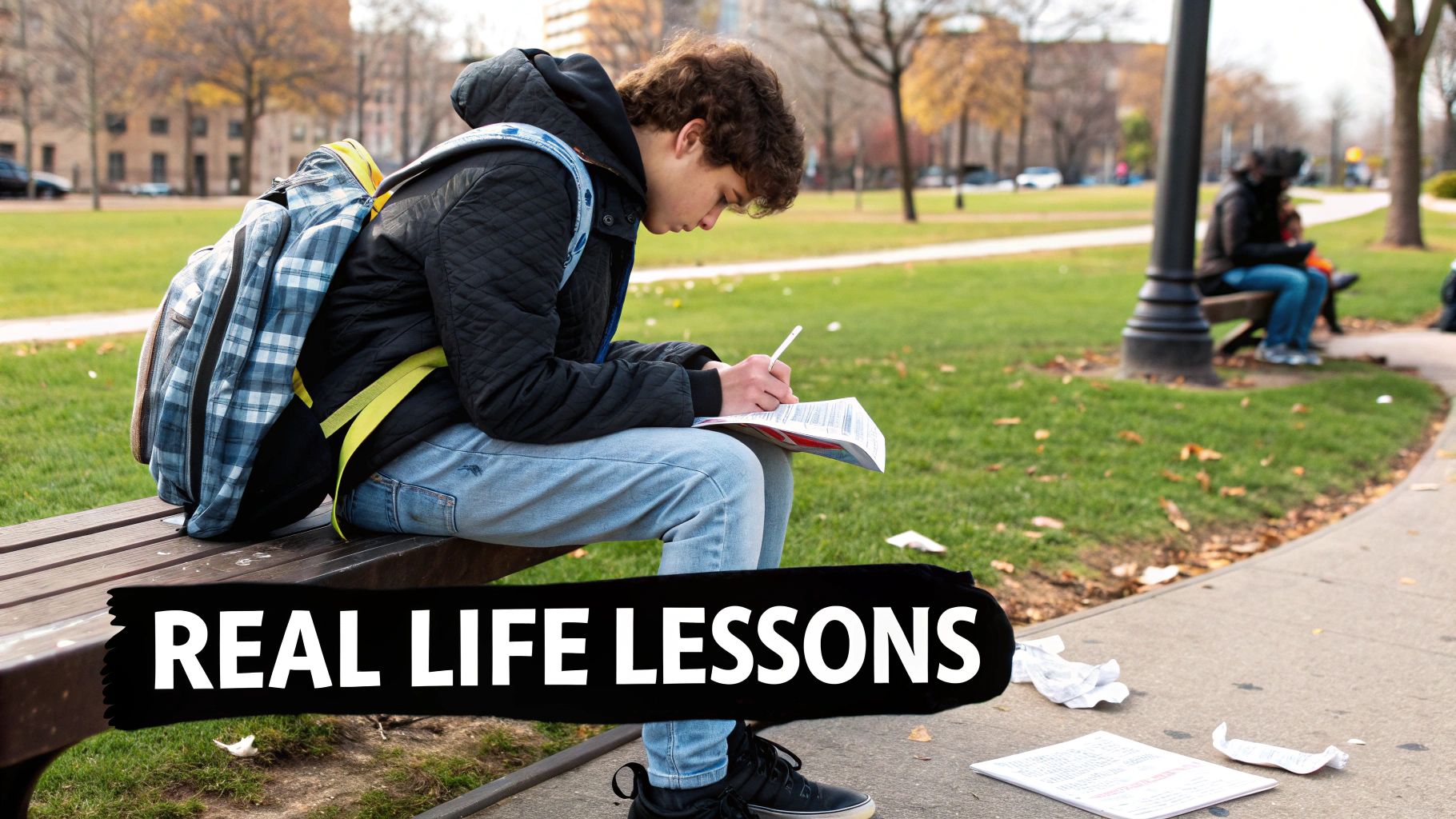
This is where stories stop being just words on a page. The real magic happens when we connect these narratives to the actual challenges teens face every day—from exam stress and social anxiety to those bigger questions about who they are and where they fit in.
Finding good books to read for teens isn’t about ticking boxes or being prescriptive. It's about finding stories that can validate their feelings and, quietly, help them build resilience.
Stories as Safe Rehearsals for Life
When a character navigates tricky friendship drama, overcomes a personal fear, or stands up for what they believe in, it offers a relatable model for your teen. Think of it as a safe rehearsal for real life, letting them explore tough situations from a distance.
Instead of launching into a lecture on resilience, you could try introducing a book with a practical example, saying something like, “The main character in this reminds me of the hero in that game you play—they both have to figure things out on their own and get really creative to solve problems.” This approach feels more like a shared discovery than a heavy-handed lesson.
It reframes the story as an adventure, making themes like perseverance and self-discovery feel much more approachable.
Normalising Mental Health Challenges
It is incredibly important to address mental health, and books are a powerful tool for doing so. As mentioned, around one in five children and young people in the UK have a probable mental health condition. Books featuring characters dealing with anxiety, depression, or stress can be so incredibly validating.
These stories send a powerful message: you are not alone in feeling this way. Seeing a character they admire work through their own struggles can reduce stigma and make it easier for a teen to acknowledge what they’re going through. Even something as simple as a character learning relaxation tips like taking a few deep, slow breaths before a big test can provide a practical, low-pressure example.
By seeing their own challenges reflected in fiction, teens can feel understood and less isolated. It opens the door to self-compassion and shows that asking for help is a sign of strength, not weakness.
The Power of a Personal Bookshelf
Simply having books at home makes a massive difference. Children who own their own books are nearly four times more likely to enjoy reading and much more likely to read daily than those who don't. This powerful link between ownership and engagement, which you can discover more insights about from The Literacy Trust, shows just how important it is to help teens build their own collection.
A personal bookshelf becomes more than just storage; it’s a source of support they can turn to. It’s a physical space filled with worlds they can revisit for comfort or inspiration, fostering a much deeper, more meaningful relationship with reading.
This is also an opportunity to build a shared library. Buying mental health books that subtly touch on these themes, like those in our collection at Little Fish Books, can populate their shelves with supportive stories. Even our mental health apparel, like hoodies with positive affirmations, can help normalise these conversations around the house. When a teen sees these messages as part of everyday life, it reinforces that it’s okay not to be okay.
Using Books to Spark Meaningful Conversations
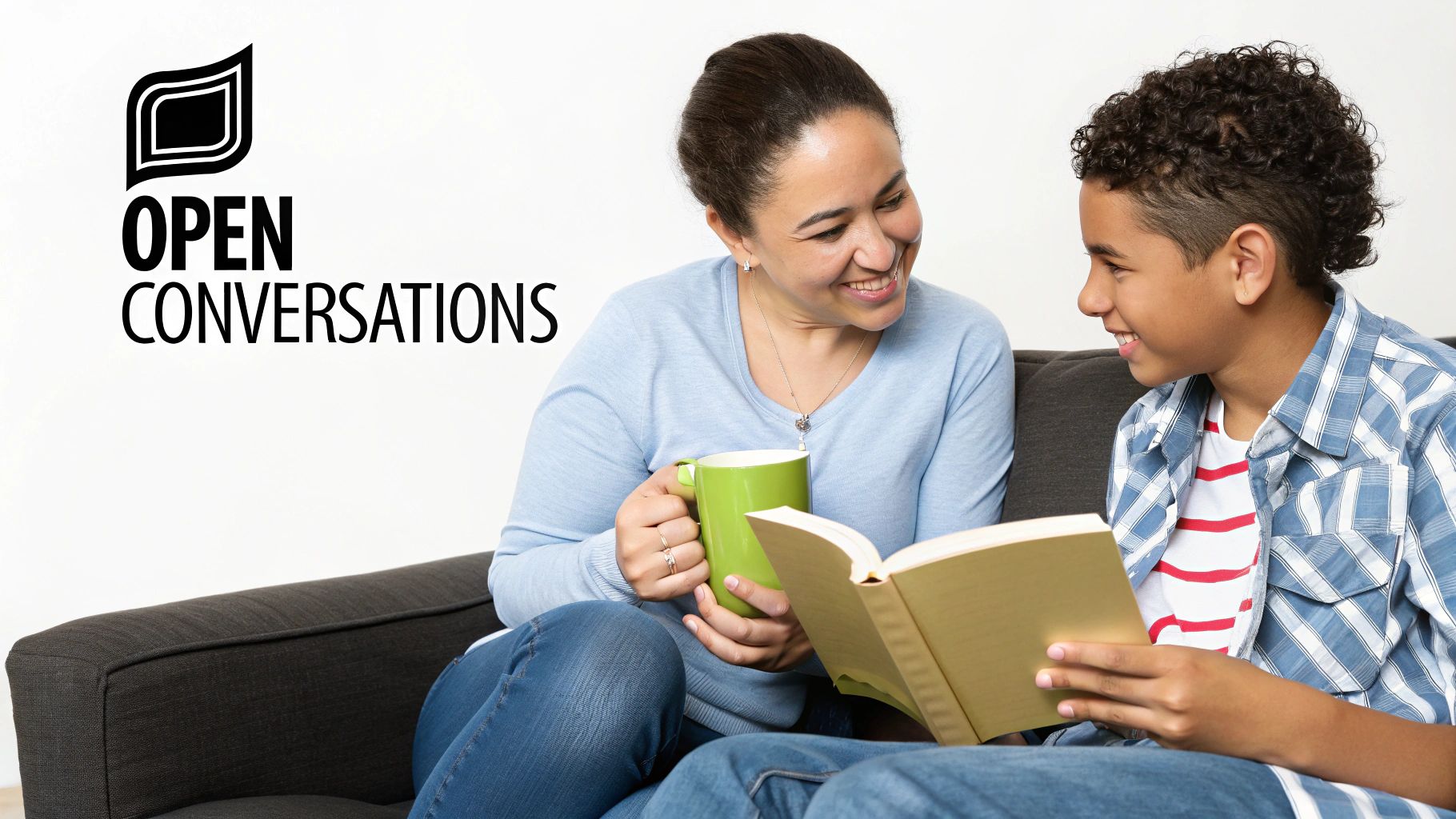
The magic of a book doesn’t stop on the final page. In fact, that's often where the real connection begins. Sharing a story can be a powerful bridge, turning what’s usually a quiet, solitary activity into a shared experience that genuinely strengthens your bond.
Opening up about mental health is more important than ever. Shockingly, around one in five children and young people in the UK now has a probable mental health condition. This isn't just a personal struggle; it has a ripple effect. The cost of mental health issues to UK businesses is now estimated at over £50 billion per year, showing how vital early support and honest conversations are for our future workforce.
Creating a Safe Space for Dialogue
The trick is to keep things gentle and open-ended. You want to avoid anything that feels like an interrogation or a pop quiz. The real goal is to create a safe space where your teen feels they can share their thoughts without any fear of judgement.
Let's face it, social media puts so much pressure on teens to present a perfect "highlight reel" of their life, which can negatively impact their self-esteem. A good book offers a welcome escape from that, giving you both a chance for a deeper, more authentic connection away from the glare of a screen.
Here are a few gentle conversation starters you could try after reading a book, whether you read it together or separately:
- "What did you think of the choice that character made near the end?"
- "That part felt really intense, didn't it? I was on the edge of my seat."
- "Was there any character you really related to, or one you just couldn't stand?"
These kinds of questions invite an opinion rather than a "right" answer, making the whole chat feel more like a collaboration.
Extending the Story Beyond the Book
Reading a book can be the perfect launchpad for all sorts of other shared activities that build on its themes. This approach turns the story into a jumping-off point for making new memories and deepening your connection.
You could watch the film adaptation together and chat about what was different, or maybe explore one of the book's themes online. If the story was about overcoming anxiety, you could even try out some simple relaxation techniques together. A practical example is the 'box breathing' technique: breathe in for four seconds, hold for four, breathe out for four, and hold for four. Doing this together for a minute can be a simple, calming activity. These practical activities help bring the story's lessons into the real world.
A Gentle Reminder: It’s really important to stress that I am not a mental health professional. If you are worried about your teen's mental health, please seek help from a doctor or a qualified professional. These tips are for connection, not diagnosis.
You can also find good books to read for teens that are specifically created to open these doors. At Little Fish Books, we publish mental health books designed to be natural conversation starters. Pairing these stories with something like our supportive mental health apparel can help normalise these topics in your family, making them a comfortable part of your everyday life.
Common Questions About Teen Reading and Wellbeing
Trying to find the right books for a teenager can feel like a minefield. It’s completely normal to feel a bit stuck, especially when you’re trying to encourage a love for reading while also being mindful of their mental health. Let's walk through some of the most common worries I hear from parents and carers.
It's a journey, not a race. Remember that consistent, gentle encouragement really does make a difference. Recent findings show that UK children in structured reading programmes read an average of 20.7 books per year. Sometimes, all it takes is tapping into a popular author or series to get the ball rolling. You can read the full report on what UK kids are reading to see what’s currently grabbing their attention.
My Teen Refuses to Read Anything I Suggest
This is a classic. The trick here is to shift your approach from suggesting to collaborating. Instead of just handing them a book you think they'll like, why not explore the options together?
Make an afternoon of it. Visit a proper bookshop with a good YA section and maybe a coffee shop afterwards. You could also spend some time browsing online recommendation sites or looking at books related to a film or game they already love. Giving them ownership over the choice is the single most powerful motivator you have.
What if a Book Deals with a Difficult Topic?
It's a valid concern. Many Young Adult (YA) books tackle mature, complex themes because, well, that’s what teens are thinking about and dealing with. This doesn’t have to be a red flag.
Use brilliant resources like Common Sense Media or reviews from trusted bloggers to get a sense of the content beforehand. It can even be a fantastic opportunity to read the book yourself first. That way, you're prepared to have an open, supportive chat if your teen decides they want to talk about it.
Parents also ask me about tools that can help teens process what they're reading. For more complex themes, an innovative resource like an AI Study Guide Maker can be a great way for them to organise their thoughts and deepen their understanding.
A gentle reminder: I am not a mental health professional. If you are worried about your teen's wellbeing, it is crucial to seek help from a doctor or another qualified professional for advice and support.
Balancing Fun Reading with Schoolwork
The key here is to frame reading for pleasure as a genuine escape, something totally separate from their schoolwork. Emphasise that this is their time, with no tests, essays, or analysis required.
Graphic novels, audiobooks, and funny books are excellent for creating that clear distinction. They help teens see reading as a rewarding break, not just another assignment. Sometimes, just cosying up in comfy mental health apparel like a soft hoodie can be the signal their brain needs to unwind with a good story.
At Little Fish Books, we are dedicated to providing resources that support these exact conversations. Our curated collection of mental health books for young people is designed to build emotional literacy and open the door to connection. Explore our books and supportive merchandise today. https://thatsokay.co.uk