
Gratitude Jar for Kids: How to Make One (Free Printable)
A gratitude jar is one of the simplest family habits you can start. Each day, someone writes down one good thing on a slip of paper and pops it in the jar. Over time it fills up with small moments worth remembering, and reading them back together is a lovely lift on a harder day.
This guide explains how to make a gratitude jar with children, how to keep the habit going, and what to write when you're stuck. There's a free printable with jar labels and gratitude slips below.
Get the free gratitude jar printable
A 4-page A4 PDF: two colour-in jar labels, 12 gratitude slips with prompts and the That's Okay feelings creatures, and a short guide for grown-ups with more prompt ideas.
You'll join the That's Okay email list for occasional free feelings activities and book news. Unsubscribe any time.
What is a gratitude jar?
A gratitude jar is a jar, tub or box where you collect notes about things you're thankful for. They can be big things, like a family holiday, or tiny ones, like a warm bath or a friend saving you a seat. The point isn't the size of the moment, it's the habit of noticing it.
Why gratitude is good for children
Noticing good things helps children build a more balanced view of their day. Instead of only remembering the argument at playtime, they also remember the game that went well afterwards. Over time, a gratitude habit can support:
- Wellbeing: paying attention to positive moments can lift mood and help on harder days.
- Relationships: many notes are about people, which helps children notice who cares about them.
- Emotional literacy: talking about why something felt good gives children words for their feelings.
Gratitude isn't about pretending everything is fine. Every feeling is okay, including sad and cross ones. A gratitude jar just makes sure the good bits get noticed too.
How to make a gratitude jar
- Find a jar. A clean pasta sauce jar, a plastic tub or a shoebox all work.
- Decorate it. Colour in one of the printable labels and stick it on. Add ribbon, stickers or paint if you like.
- Prepare the slips. Print the gratitude slips, or cut up any paper into small squares.
- Pick a time. After dinner or at bedtime works well for most families.
- Keep everything together. Leave a few slips and a pencil next to the jar so it's easy to add a note.
How to keep the habit going
- Keep it short. One note a day is plenty. It should take a minute, not become homework.
- Join in. Children copy what they see. Add your own notes and read them out sometimes.
- Help little ones. Younger children can draw a picture, or tell you and you write it down.
- Accept "nothing". Some days are hard. That's okay. Try again tomorrow.
- Read them back. Empty the jar at the end of the week, month or year and read the notes together.
Gratitude jar ideas: what to write
If your child is stuck, try one of these prompts:
- Someone who was kind to me today
- Something that made me laugh
- Something I'm proud of
- A favourite food I had
- Something I learned
- Something beautiful I saw outside
- A person who helps me
- Something I'm looking forward to
- A kind thing I did for someone else
- Something I can do now that I couldn't do before
Gratitude jars in the classroom
A class gratitude jar works the same way. Children add a note during the day, and the teacher reads a few out at the end of the week. It's a calm way to finish a Friday, and it can help a class notice each other's kindness. Keep it optional and avoid reading out anything a child might not want shared.
Other ways to practise gratitude
- Three good things: at bedtime, each person shares three good things from the day.
- Thank-you notes: help your child write or draw a thank-you for someone who helped them.
- Gratitude walk: on a walk, take turns spotting things you like.
If you're working on feelings more generally, our feelings check-in chart and kindness advent calendar ideas fit well alongside a gratitude jar.
More feelings activities from That's Okay
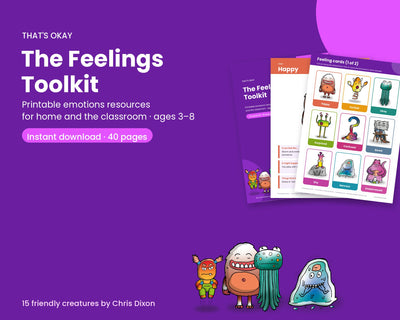
 The Feelings Toolkit £14.99 · printable PDF |
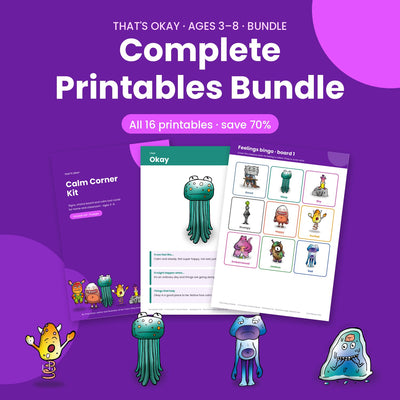
 Complete Printables Bundle £19.99 · all 16 packs |
 That's Okay picture book £12.99 · softcover |
Gratitude jar FAQs
What age is a gratitude jar for?
Children from about 3 can take part by drawing or telling you their good thing. From around 6, most children can write their own notes.
How often should we add to the jar?
Once a day works well, but a few times a week is fine too. Consistency matters more than frequency.
What if my child can't think of anything?
Offer a prompt, share your own first, or let them skip a day. Gratitude shouldn't feel like a test.
What do you do with the notes?
Read them together regularly. Some families keep a year's notes in a scrapbook or read them all on New Year's Eve.