
Restorative Practices in Schools: A Guide to Boosting Student Wellbeing
Picture this: a classroom where conflict isn't a disruption to be squashed, but an opportunity to learn and grow. That's the real heart of restorative practices in schools. It’s a complete shift in thinking, moving away from a focus on rule-breaking and punishment, and towards building and mending relationships.
This isn't about letting pupils off the hook. Far from it. It's about guiding them towards genuine accountability and empathy, skills that will serve them for the rest of their lives.
Unpacking Restorative Practices in Schools
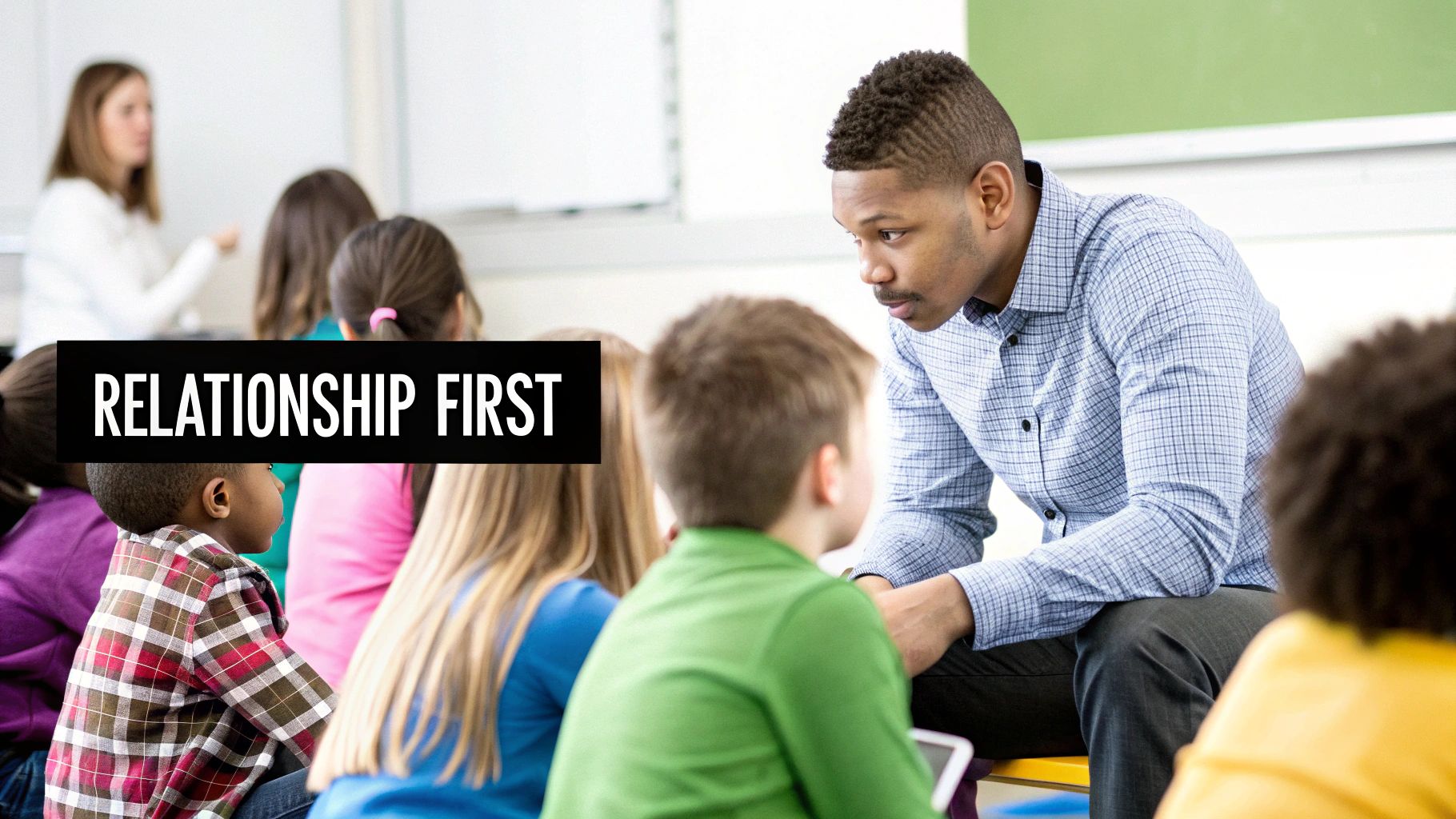
At its core, a restorative approach is a powerful way of handling harm and strengthening the school community. It draws on essential conflict resolution techniques to teach pupils how to solve problems and understand the impact of their actions on others.
I like to think of it this way: traditional discipline is like weeding a garden by just lopping the tops off the weeds. The problem seems to disappear for a moment, but the roots are still there, ready to sprout again. A restorative approach is more like tending to the soil itself, figuring out what the garden needs to flourish so the weeds don't get a chance to take over in the first place.
This focus on connection and underlying needs has never been more vital. With 1 in 5 children and young people now having a probable mental health problem, creating supportive, safe school environments is a priority. The pressures of social media, exams, and just growing up can be immense, making skills like empathy and conflict resolution absolutely essential.
The Shift from Punishment to Repair
The fundamental change is in the questions we ask when something goes wrong. We move away from questions like "What rule was broken?" and "What's the punishment?" to something far more reflective:
- What happened?
- Who has been affected by what you have done?
- What do you think you need to do to make things right?
This simple switch in dialogue encourages children to truly understand the consequences of their actions. It builds empathy, not fear. It's a proactive strategy that creates a strong, supportive classroom community where children feel safe enough to manage their feelings and respect one another. For example, instead of sending a child out for shouting, a teacher might ask, "I noticed some loud words were used. Can you tell me what was happening for you just then? Who was affected by the shouting?"
If you’re interested in learning more about supporting students through difficult experiences, our guide on what is trauma-informed practice is a great place to start.
To make this shift clearer, let's compare the two approaches side-by-side.
Punitive vs Restorative Approaches: A Quick Comparison
This table highlights the key differences in philosophy and application between traditional discipline and a restorative model.
| Aspect | Traditional Punitive Approach | Restorative Approach |
|---|---|---|
| Primary Focus | Rule-breaking and assigning blame. | Harm caused and repairing relationships. |
| Key Questions | What rule was broken? Who is to blame? What is the punishment? | What happened? Who was harmed? How can we make it right? |
| Goal of Intervention | To deter future misbehaviour through punishment (e.g., detention, suspension). | To teach accountability, empathy, and problem-solving skills. |
| Role of Students | Passive recipients of punishment. | Active participants in resolving conflict and repairing harm. |
| Outcome | Often leads to resentment, alienation, and repeat behaviour. | Fosters a stronger sense of community, responsibility, and emotional intelligence. |
As you can see, the restorative approach doesn't just address the incident; it aims to heal the community and equip pupils with lifelong skills.
A restorative approach replaces passive punishment with active accountability. Instead of a detention slip, pupils are guided to understand the impact of their actions and take meaningful steps to repair the harm they’ve caused.
Building Resilience for the Future
Teaching these skills is a direct investment in our children's long-term wellbeing. Addressing mental health in childhood is crucial, as unaddressed challenges can have serious consequences later on. It’s estimated that these issues cost UK businesses £56 billion annually through lost productivity and absenteeism. By equipping children with emotional literacy and relationship skills, schools are helping to build a more resilient and capable future workforce.
While this guide offers practical tips, it’s important to state that I am not a mental health professional. If you have serious concerns about a child's mental health, please seek advice from a doctor or another qualified medical expert.
Ultimately, restorative practices give pupils the tools they need to build, maintain, and mend relationships. These are skills crucial for their happiness and success, both inside and outside the classroom walls.
The Proven Benefits for Student Wellbeing
Moving towards a restorative approach is more than just a change in mindset; it delivers real, measurable results that tackle the growing youth mental health crisis here in the UK. When schools start prioritising connection and repair over old-school punishment, the positive effects ripple out across the whole community. The result is better behaviour, stronger relationships, and improved wellbeing for everyone involved—pupils and staff alike.
One of the first things schools notice is a huge drop in disruptive incidents. It's a consistent story: less bullying, fewer conflicts, and a calmer classroom. This creates a much safer and more focused learning environment where pupils can concentrate on their studies instead of dealing with social stress.
This isn't just a feeling, either. There's compelling UK evidence showing a direct link between restorative training and better behaviour.
Reducing Exclusions and Building Confidence
A major study in Barnet, London, gave us clear proof of just how powerful restorative practices in schools can be. The research discovered that schools which had received restorative justice training saw a massive 51% reduction in exclusions.
This was in stark contrast to 32 nearby schools that didn't get the training. Over the same period, those schools actually saw a 65% increase in exclusions. You can read the full research on restorative justice in British schools to see the data for yourself.
These numbers tell a vital story: restorative methods keep pupils in school, learning alongside their peers and feeling supported by their community. What's more, the staff in the trained schools reported feeling more confident and better prepared to handle bullying and sort out conflicts before they escalated.
But it goes deeper than the data. This approach fosters a genuine sense of belonging. When children feel heard, respected, and truly understood, they feel more connected to their school. This has several brilliant knock-on effects:
- Improved Attendance: Pupils actually want to come to a school where they feel safe and valued.
- Stronger Relationships: Focusing on empathy helps build real, trusting bonds between pupils and their teachers.
- Enhanced Emotional Literacy: Children get better at spotting, naming, and managing their feelings in a healthy way.
For a closer look at how schools can create this kind of supportive space, check out our article on the role of schools in providing youth emotional support.
Fostering a Healthier School Community
The benefits don't stop with individual pupils; a restorative culture changes the entire feel of a school. For teachers and staff, it means spending far less time on discipline and more time doing what they love—teaching. It's no surprise that lower stress levels and higher job satisfaction are common in restorative schools.
This shift is incredibly important, especially with the pressures of social media weighing heavily on young people's mental health. The constant comparison and online drama can chip away at self-esteem. A school built on restorative principles offers a crucial counterbalance by teaching resilience and what it means to connect authentically with others.
Restorative practices are not just a behaviour management strategy; they are a whole-school wellbeing strategy. They build the social and emotional foundations that allow both pupils and staff to thrive.
If you are ever worried about a child's mental health, please remember that I am not a mental health professional. It is essential to seek help from a GP or another qualified medical expert for guidance and support.
Ultimately, these practices are a proactive investment in creating a resilient, emotionally intelligent generation of young people. By building a community where every single person feels seen and supported, schools lay the groundwork for lifelong wellbeing.
How to Implement a Tiered Restorative Framework
Taking on restorative practices across a whole school can feel like a massive undertaking. I get it. But when you break it down into a clear, multi-layered framework, it's a much more manageable journey.
Thinking of it as a pyramid is a great way to visualise the process. It shows how a whole-school ethos forms the foundation for more specific interventions, turning a daunting task into a gradual cultural shift, built one layer at a time. This structure isn't about just reacting when things go wrong; it’s about weaving restorative principles into the very fabric of daily school life.
Before you jump in, it’s a brilliant idea to develop a comprehensive Theory of Change. This helps you map out exactly how your actions will lead to the student wellbeing outcomes you're aiming for. It’s a bit of strategic planning that clarifies your goals and the steps needed to get there.
This infographic really helps to show how this tiered approach builds a strong, safe, and inclusive school community.
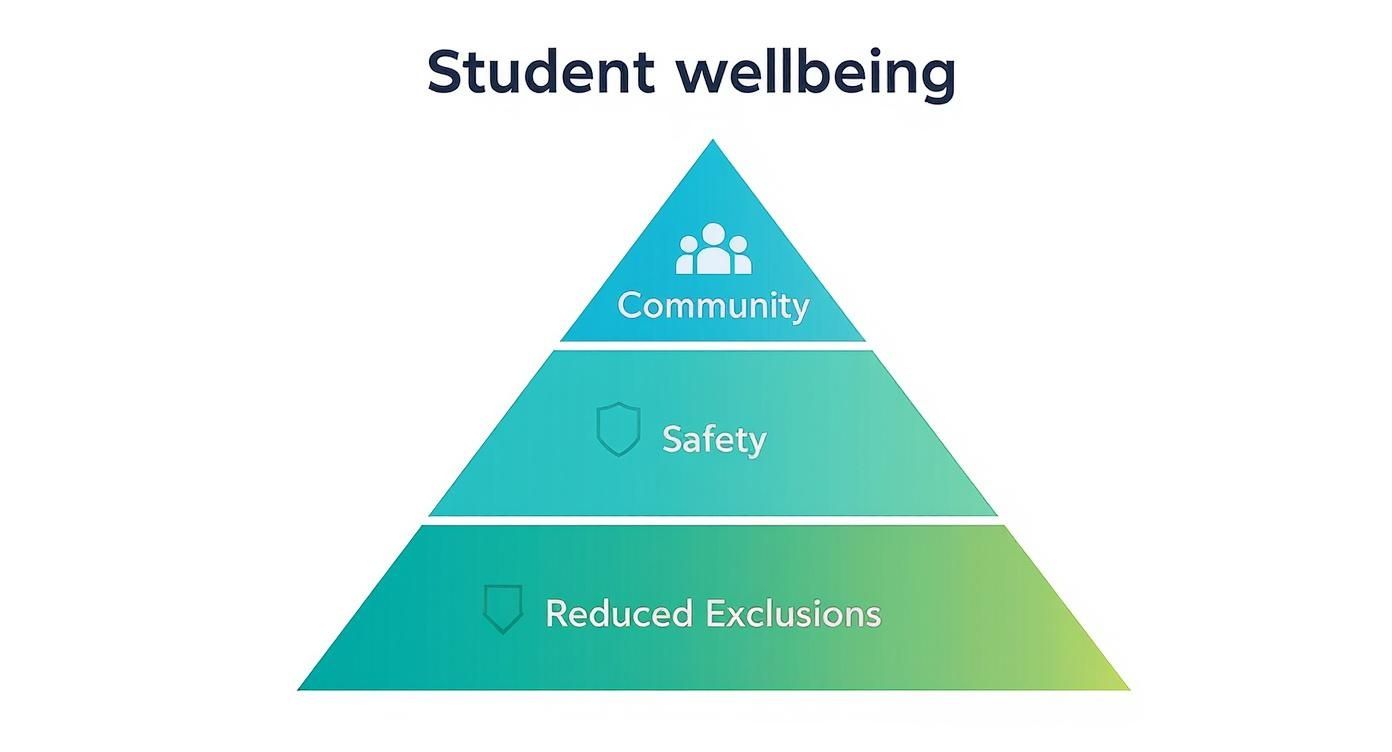
As you can see, a strong community foundation is essential. Get that right, and you create a genuine sense of safety, which naturally leads to fewer exclusions and other negative outcomes.
Tier 1: Universal Support for Everyone
The base of the pyramid is the biggest and, honestly, the most important part: Universal Support. This layer is all about proactive strategies that touch every single pupil and staff member. Think of it as the cultural bedrock that holds everything else up. The goal here is simple: build a powerful sense of community and stop conflicts before they even start.
What does this look like in practice?
- Daily Check-in Circles: A simple circle at the start of the day where pupils share how they're feeling or answer a light-hearted question. It’s a small routine that builds immense trust and makes talking about emotions normal. For example, the prompt could be, "On a scale of 1 to 5, how are you feeling today and why?"
- Shared Positive Language: Staff and pupils consistently use restorative language. Instead of asking, "Who is to blame?", the question becomes, "Who has been affected?"
- Classroom Agreements: Creating classroom rules with the pupils, not just for them. This gives them real ownership over their learning environment.
This proactive approach is really gathering pace across the UK. In Northern Ireland, for instance, it's becoming a go-to whole-school method for tackling behavioural issues and bullying. By 2017, a whopping 174 schools had adopted these practices, and they saw fantastic results, like reduced suspensions and better pupil achievement.
Tier 2: Targeted Support for Some
Moving up the pyramid, we get to Targeted Support. This layer is for the smaller group of pupils who need a bit more focused help to sort out everyday conflicts and disagreements. These interventions are responsive, giving staff the right tools to manage minor incidents in a restorative way.
This is where staff training becomes absolutely vital. It's about empowering teachers and support staff to feel confident enough to facilitate those tricky conversations, turning a moment of conflict into a chance for learning and connection.
The main tool at this level is the restorative conversation. This is a structured but informal chat between the people involved, guided by a staff member. It’s designed to help pupils understand the impact of their actions and work together to find a way to make things right. It's a quick, effective way to repair minor harm before it spirals into something bigger. For instance, after a disagreement over a game, a teacher could facilitate a chat where each child explains their side and they work out a new rule together for next time.
Tier 3: Intensive Support for a Few
At the very top of the pyramid is Intensive Support. This is reserved for the few serious incidents that need a more formal and structured response—things like persistent bullying, fighting, or other significant harm. This tier is where you’ll use formal restorative conferences.
A restorative conference is a carefully planned meeting that brings together everyone affected by what happened. This might include:
- The pupils who caused the harm.
- The pupils who were harmed.
- Parents or carers from both sides.
- Relevant school staff.
Led by a trained facilitator, the conference creates a safe space for everyone to share their side of the story. The group then collectively agrees on a plan to repair the harm and make sure it doesn’t happen again. It’s a powerful process that holds pupils accountable while helping to welcome them back into the school community.
Practical Restorative Tools for Your Classroom
Theory is one thing, but the real magic of restorative practices in schools happens when you roll up your sleeves and put it into action. This is your hands-on toolkit, packed with practical ideas you can start using in your classroom straight away.
These aren't complicated psychological techniques. They are simple, structured ways to de-escalate conflict, build genuine understanding, and support the mental wellbeing of every child in your care. It’s about moving beyond just managing behaviour and towards building a genuinely connected community.
Starting with Proactive Circles
Let’s be honest, the best way to deal with conflict is to stop it from happening in the first place. Proactive circles are the bedrock of a restorative classroom, creating a safe space for pupils to connect, share, and build trust every single day.
Think of it as an emotional warm-up. A daily circle helps normalise talking about feelings, which is more important than ever given that one in five children now has a probable mental health issue. Making this a routine teaches pupils that their feelings are valid and it’s okay to share them.
Here’s how to run a simple, effective check-in circle:
- Set the Scene: Get everyone in a circle where they can see each other. This simple physical shift immediately promotes a sense of equality and connection.
- Use a Talking Piece: This could be anything—a soft ball, a special stone, or a classroom mascot. Whoever holds it gets to speak without interruption. It’s a brilliant way to teach active listening.
- Start with Simple Prompts: Keep the questions light and low-pressure, especially at the start. The goal is participation, not deep, personal disclosure.
You could ask something like, "What is one thing you're looking forward to today?" or "If you could have any superpower, what would it be and why?" This small daily ritual builds a huge amount of trust over time.
A proactive circle is a daily investment in your classroom’s emotional bank account. By consistently building positive connections, you create a reserve of trust and goodwill that you can draw upon when conflicts inevitably arise.
Moving to Responsive Conversations
When things do go wrong, a responsive restorative conversation gives you a clear, structured way to address the harm. This isn't about pointing fingers or dishing out blame. It’s about understanding the impact of actions and figuring out a way to move forward together. We shift the focus from punishment to repair.
The conversation is guided by a core set of questions that encourage children to reflect on what happened and take accountability. The structure is simple, but it’s incredibly powerful for helping them see the real-world consequences of their actions.
To help pupils find the right words for their big feelings during these chats, visual aids can be a game-changer. Our guide on using a feelings chart for the classroom has some great tips that can make these discussions feel less daunting for everyone involved.
Here are the key questions that can guide these important conversations.
Key Restorative Questions for Different Situations
This simple framework gives you a script to start a productive and healing conversation, making sure everyone involved feels heard.
| For the Person Who Caused Harm | For the Person Affected by Harm |
|---|---|
| What happened? | What did you think when you realised what had happened? |
| What were you thinking at the time? | What impact has this incident had on you and others? |
| What have you thought about since? | What has been the hardest thing for you? |
| Who has been affected by what you have done? In what way? | What do you think needs to happen to make things right? |
| What do you think you need to do to make things right? | Is there anything else you need to say? |
As the teacher, your role here is more of a facilitator than a judge. You're not there to solve the problem for them but to guide them towards their own resolution. That’s a lesson that will stick with them for life.
While these tools are very effective, it is vital to remember that I am not a mental health professional. If you are ever worried about a child's wellbeing or mental health, please consult a GP or another qualified medical expert for professional advice and support.
Measuring Success and Ensuring Sustainability
So, how do you know if your shift towards restorative practices in schools is actually working? While you might feel the culture changing for the better, you need more than just a good feeling to keep the momentum going. Demonstrating real, tangible success is what secures long-term buy-in from staff, parents, and governors.
The secret is to look beyond just one single metric, like exclusion rates. It's about combining the hard numbers with the human stories. You need to blend quantitative data—think attendance figures and behaviour incidents—with qualitative insights from pupil wellbeing surveys, staff feedback, and those invaluable observations from circle time. Together, they paint the full picture of your school's journey.
A Real-World Example of Success
And the real-world evidence shows just how powerful this approach can be. Back in 2016, schools in Gloucestershire had the 4th highest exclusion rates in England. Something had to change. In response, over 70 schools in the area adopted restorative approaches to tackle the problem head-on.
The results in the very first year were stunning. One secondary school saw suspensions drop by 54%, while attendance climbed by 1.3%. At the same time, a primary school managed an incredible 82% reduction in suspensions and a 1.5% boost in attendance.
These aren't just numbers. They show that a restorative culture doesn't just manage behaviour; it creates an environment where pupils genuinely want to be. You can discover more about Gloucestershire's restorative schools project and its impressive outcomes.
Tracking Progress: A Holistic Approach
To truly get a handle on your impact, you need a balanced scorecard. Think about tracking progress across a few key areas to show how restorative practices are benefiting your entire school community.
-
Quantitative Metrics (The Numbers): This is the hard data that often speaks loudest. Keep a close eye on trends in fixed-term and permanent exclusions, attendance rates, the number of behaviour referrals, and incidents of bullying. A clear downward trend in negative incidents alongside an upward trend in attendance is a powerful sign you're on the right track.
-
Qualitative Insights (The Stories): But numbers never tell the whole story. You need to regularly gather feedback through anonymous surveys for pupils, staff, and even parents. Ask them about how safe they feel, their sense of belonging, and the level of trust in the school. Capturing quotes and anecdotes about conflicts being resolved or relationships improving provides personal, powerful proof of a culture in transformation.
The ultimate measure of success isn't just a drop in bad behaviour. It's an increase in the school community's ability to repair harm and strengthen relationships on its own.
Ensuring Your Restorative Culture Lasts
Embedding a new culture is a marathon, not a sprint. The initial buzz and enthusiasm can easily fizzle out if the approach isn't actively looked after. To sustain your restorative practices, you need a deliberate, ongoing strategy to keep the principles alive and kicking in the day-to-day life of the school.
Here are a few practical ideas to make sure your hard work sticks around for years to come:
- Create a Steering Group: Form a small, dedicated team of staff champions from across the school. This group can meet regularly to check on progress, solve problems, and plan the next steps. They are the engine room that keeps everything moving forward.
- Schedule Ongoing Training: Restorative skills are like any other—they get rusty without practice. Plan regular, short training top-ups or workshops for all staff, not just the new ones. This keeps the language and techniques consistent for everyone.
- Celebrate the Small Wins: Don’t wait for the big annual data report to celebrate. Share positive stories in staff meetings, newsletters, or assemblies. Highlighting a successful restorative conversation or a particularly good circle time keeps everyone motivated and reminds them why they're doing this work in the first place.
Where to Go From Here: Resources and Your Next Steps
Dipping your toes into the world of restorative practices in schools can feel like a huge step, but the good news is you don’t have to go it alone. There are tons of brilliant resources out there to guide you, from expert-led training courses to beautiful books that introduce these big ideas to little people in a gentle, accessible way.
Think of the journey towards a restorative culture as a powerful investment in the wellbeing of your students and your staff. With all the growing concerns around children’s mental health, creating learning environments where everyone feels safe and connected has never been more important.
Finding Support and Further Reading
To really build your understanding and confidence, it’s a great idea to explore materials that make tricky emotions easier to talk about. Simply reading age-appropriate mental health books with children is a wonderful way to normalise conversations about feelings and empathy, laying the perfect foundation for a restorative mindset.
If you’re looking for more structured support, several fantastic UK organisations offer certified training and resources specifically for schools. Getting that expert guidance can be a game-changer, especially when you’re trying to bring the whole school on board.
Here are a few simple ideas to get those conversations flowing:
- Mental Health Books: Look for stories that touch on friendship, falling out, and dealing with big feelings. Books are a brilliant way to give children a safe space to discuss difficult topics without feeling put on the spot. Some great examples for younger children include The Colour Monster by Anna Llenas or Ruby's Worry by Tom Percival.
- Relaxation Tips: You could bring simple mindfulness exercises into the classroom, like 'buddy breathing' where children watch a soft toy on their tummy rise and fall, or setting up a 'calm corner' with cushions and sensory toys. These little things help children learn how to regulate their own emotions.
- Mental Health Apparel: Sometimes, something as simple as staff and students wearing clothing with positive messages can be a subtle but powerful way to champion wellbeing and spark a conversation.
With the constant pressure of social media on children's self-esteem, building genuine resilience in the real world is so vital. Restorative practices give you the tools to help them forge those authentic, supportive connections.
A Quick Disclaimer: Please remember, I'm not a mental health professional. The information in this guide is here to educate and inspire. If you have real concerns about a child's mental health, it’s really important to get advice from a GP or another qualified medical professional.
Frequently Asked Questions
When people first hear about restorative practices in schools, a few common questions always seem to pop up. Let's tackle some of the biggest ones that educators, parents, and school leaders often ask.
Does a Restorative Approach Mean No Consequences?
Not at all. In fact, this is probably the biggest myth out there. A restorative approach isn’t about letting pupils off the hook; it’s about replacing passive punishment with meaningful accountability.
Instead of just sitting in detention, a pupil is guided to really understand the impact of what they did. They then have to take genuine, active steps to repair the harm they've caused. This takes a lot more courage and reflection than simply accepting a punishment, and it’s this focus on empathy and making amends that actually leads to lasting changes in behaviour.
Is This Approach Suitable for Serious Incidents Like Bullying?
Yes, but the key is making sure the method matches the seriousness of the incident. For small, day-to-day squabbles, a simple restorative chat between pupils, with a teacher guiding them, is often all that's needed and can be incredibly effective.
For more serious issues like persistent bullying or a physical fight, you'd need something more structured, like a formal Restorative Conference. This is a carefully planned meeting led by a specially trained facilitator. It brings everyone affected into the room—including parents—to make sure the process is safe, fair, and supportive for all, especially the person who was harmed. It's never about forcing someone to confront another person without the right preparation and support.
A common concern is that restorative practices let children ‘off the hook’. The reality is the opposite. It holds them to a higher standard by asking them not just to serve a consequence, but to actively mend the relationships they have damaged.
How Long Does It Take to See Results?
Shifting to a restorative culture is a journey, not an overnight fix. You'll likely see some positive changes quite quickly – maybe a calmer classroom atmosphere or hearing pupils use restorative language with each other within the first school year.
However, the big, data-backed improvements in areas like exclusion rates, attendance, and bullying incidents usually become clear over two to three years. Getting there takes consistent effort, strong backing from school leadership, and ongoing training and support for everyone on staff.
At Little Fish Books, we believe that nurturing emotional literacy is the foundation for creating kinder, more connected school communities. Our collection of books and resources is designed to help children understand their feelings and build empathy.
Discover tools to support your school's wellbeing journey today at https://thatsokay.co.uk.