

Mental Health Safety Plan Templates: A Practical Guide for Your Child's Wellbeing
A mental health safety plan is a collaborative roadmap that helps a child find their way through overwhelming emotions before they reach a crisis point. Using safety plan templates gives you a clear, structured way to start this vital conversation, making a tough topic feel much less intimidating for both of you. This guide will walk you through creating a practical, supportive plan together.
Disclaimer: I am sharing insights as a parent, not as a mental health professional. This guide is for informational purposes only. If you have serious concerns about your child's wellbeing, it is essential to consult a GP or a qualified doctor immediately.
Why a Safety Plan Is an Essential Tool for Modern Parenting
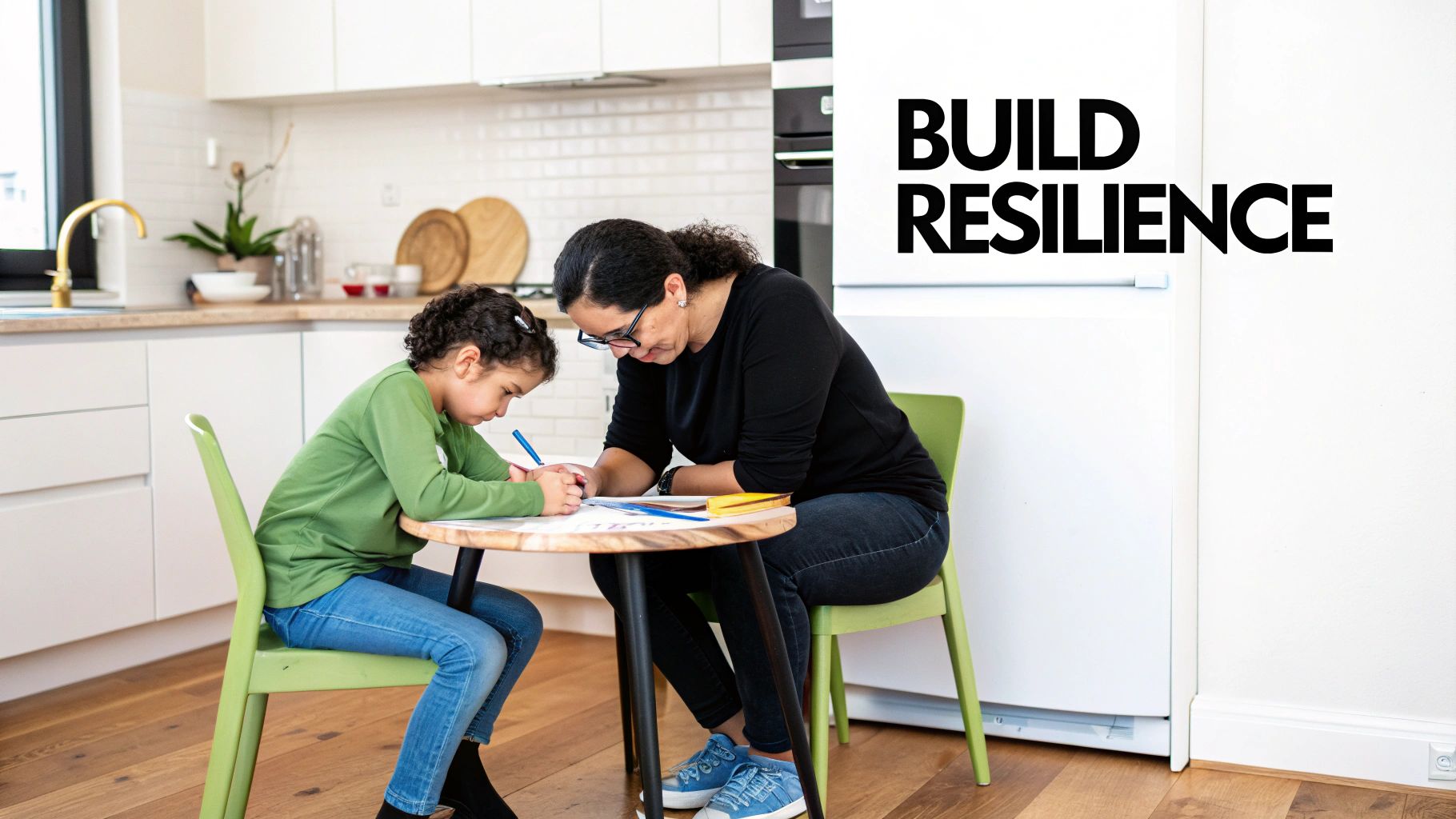
Let's be honest: navigating a child’s big emotions can be overwhelming for any parent. In a world where pressures feel greater than ever, a safety plan becomes more than just a document—it’s a proactive conversation and a hands-on tool for building resilience.
Forget the clinical jargon for a moment. At its heart, a safety plan is an empowering agreement you create with your child, not for them. It’s a way to open up a dialogue about feelings and map out a route to feeling better when things get tough.
The Growing Need for Emotional Support in Children
The landscape of childhood is changing. Recent statistics reveal a stark reality: one in five children in England aged 8 to 16 has a probable mental health condition. This really brings home the urgent need for proactive, accessible tools that families can use at home. You can read more about the youth mental health trends in England.
Factors like the constant presence of social media and economic uncertainty add layers of stress that previous generations simply didn't face. The impact of social media, in particular, can be profound, often creating a world of constant comparison that affects self-esteem. This isn’t about expecting the worst; it’s about preparing for the reality of emotional challenges. We now know that the cost of poor mental health isn't just personal; it significantly impacts businesses, with an estimated cost of £56 billion to the UK economy annually. This only reinforces the importance of early intervention.
A safety plan template provides a simple framework to meet these challenges head-on. It helps children build a crucial life skill: understanding their own emotional triggers and knowing what steps to take to find their way back to a calmer place.
Practical Steps for Wellbeing
Beyond creating a formal plan, fostering a culture of emotional openness at home is key. This doesn't have to be complicated. It might just mean introducing simple relaxation tips or making space for honest conversations.
- Mindful Minutes: Dedicate a few minutes each day to a simple breathing exercise together. A classic is "box breathing": inhale for four counts, hold for four, and exhale for four.
- Conversation Starters: Sometimes a physical prompt can help. Wearing something like a t-shirt with a positive affirmation from a brand creating mental health apparel can be a gentle, low-pressure way to start a chat about self-compassion.
- Shared Reading: Exploring mental health books designed for children, like those from Little Fish Books, can normalise big feelings and give you both a shared language to talk about them.
Ultimately, using safety plan templates is a positive, practical step for any family. It’s an act of love that equips your child with the tools they need to navigate life's inevitable ups and downs, building a strong foundation for their emotional future. It transforms a difficult topic into a collaborative project focused on care and connection.
The Building Blocks of a Child-Friendly Safety Plan
So, what actually goes into a safety plan that a child or young person will connect with? It helps to think of it less like a rigid form and more like a set of building blocks for emotional awareness. The real goal is to create something together—a personalised document that feels supportive, not clinical.
It all starts with dropping the adult-centric language and using the words your child already uses. This simple shift makes the whole idea feel more approachable and a lot less intimidating.
Identifying Personal Warning Signs
Every child shows distress differently. The first building block is helping them spot their own unique early warning signs—those physical feelings and emotional shifts that signal a tough time is on the way. It’s about giving them a language to describe what’s happening on the inside.
For younger kids, this might sound very simple and direct:
- "My tummy feels fizzy."
- "I’m having a 'grey cloud day'."
- "My body feels shaky and hot."
An older teen might describe their warning signs with a bit more nuance. For example, they might talk about feeling detached from things, getting irritable with their friends, or just not caring about their favourite hobbies anymore.
When you write these down in their own words, you’re not just making a list; you’re validating their experience. It makes the feelings tangible and, therefore, more manageable. This is a crucial step in developing what experts call emotional regulation. If you'd like to dive deeper, we have a helpful guide explaining what emotional regulation is and how to support it.
Creating a Toolkit of Coping Strategies
Once they can spot the warning signs, the next step is to brainstorm what they can do about them. This is the "what can I do by myself?" part of the plan—a personalised toolkit of simple actions they can take to feel calmer and more in control.
These strategies need to be practical and easy to remember in the moment. Think of them as first-response actions that don’t rely on anyone else being around.
- Relaxation Tips: Simple breathing exercises like 'square breathing' (inhale for four, hold for four, exhale for four, wait for four) or squeezing a stress ball can work wonders.
- Distractions: This could be anything from putting on a 'happy songs' playlist, watching a funny animal video on YouTube, drawing, or spending ten minutes on a favourite video game.
- Mindfulness: For some, this might be as simple as focusing on the feeling of their feet on the floor or naming five things they can see in the room to ground themselves. For example, 'I can see the green lamp, the blue cushion, the wooden table...'
The key is that these are their ideas. What works for one child won’t necessarily work for another, so this section has to be completely personalised to their interests and personality.
Mapping Out a Support Network
No one should have to manage big feelings all on their own. The final building blocks are all about identifying the trusted people and safe places that make up their external support network. This is about reminding them who they can turn to when their internal coping strategies aren't quite enough.
This part of the plan should be very specific:
- People: List trusted adults by name—Mum, Dad, a grandparent, a favourite teacher, or a school counsellor. Pop their phone numbers right there on the plan.
- Places: Identify safe spaces they can go to, like their bedroom, a quiet corner in the school library, or a grandparent's house. For instance, 'I can go to Grandma's house for a cuddle and a biscuit.'
- Emergency Contacts: Make sure to include professional resources like your GP's number or a helpline like Childline (0800 1111).
By mapping this out together, you create a clear, visual reminder that they are surrounded by support. It reinforces the most important message of all: it’s always okay to ask for help.
How to Create the Plan Together Without The Pressure
Knowing what to put in a safety plan is one thing, but how you create it together is just as important. The whole point is to make your child feel connected to the plan, and that only happens if the conversation is gentle and collaborative. This isn't about pressure; it's about making them feel seen, heard, and in control.
Forget sitting down for a formal, serious meeting. That's a recipe for shutdown. Instead, look for a quiet, relaxed moment—maybe on a drive, while you’re walking the dog, or just chilling out after dinner. The idea is to make it feel like a natural part of your everyday chats.
Starting the Conversation Gently
Finding the right words can feel like walking on eggshells, but honestly, simple and open questions work best. Your tone should be curious and caring, not like you're conducting an interview.
Here are a few ways you could get the ball rolling:
- "I've noticed you seem to have some really tough moments sometimes. I was wondering what you think helps you feel a bit better when that happens?"
- "You know how everyone has days where their feelings feel really big and wobbly? I thought we could make a little plan for those days, just for us."
- "I’m learning more about how to handle my own tricky feelings, and it got me thinking. What does it feel like for you when you’re having a hard day?"
The most important part? Listen more than you talk. Give your child the space to share in their own time, without you jumping in to fix everything. The process itself is a massive trust-building exercise.
Navigating Disinterest or Resistance
So, what if they just don't want to talk about it? That's completely normal. A child or teen might feel resistant, especially if they’re feeling overwhelmed or singled out. If you get a shrug or an "I don't know," don't push it.
See it as a chance to connect in a different way. You could say something like, "That's completely okay. We don't have to talk about it now. Just know I'm always here if you change your mind." Sometimes, just modelling the behaviour by creating your own 'calm-down' plan shows them it's a normal, healthy thing to do for anyone.
This patient, empathetic approach is a core part of what’s known as emotional coaching for parents. If you're curious, we explore some practical tips on how emotional coaching for parents can build stronger connections in another article.
The infographic below shows the three essential building blocks that every effective safety plan is built on.
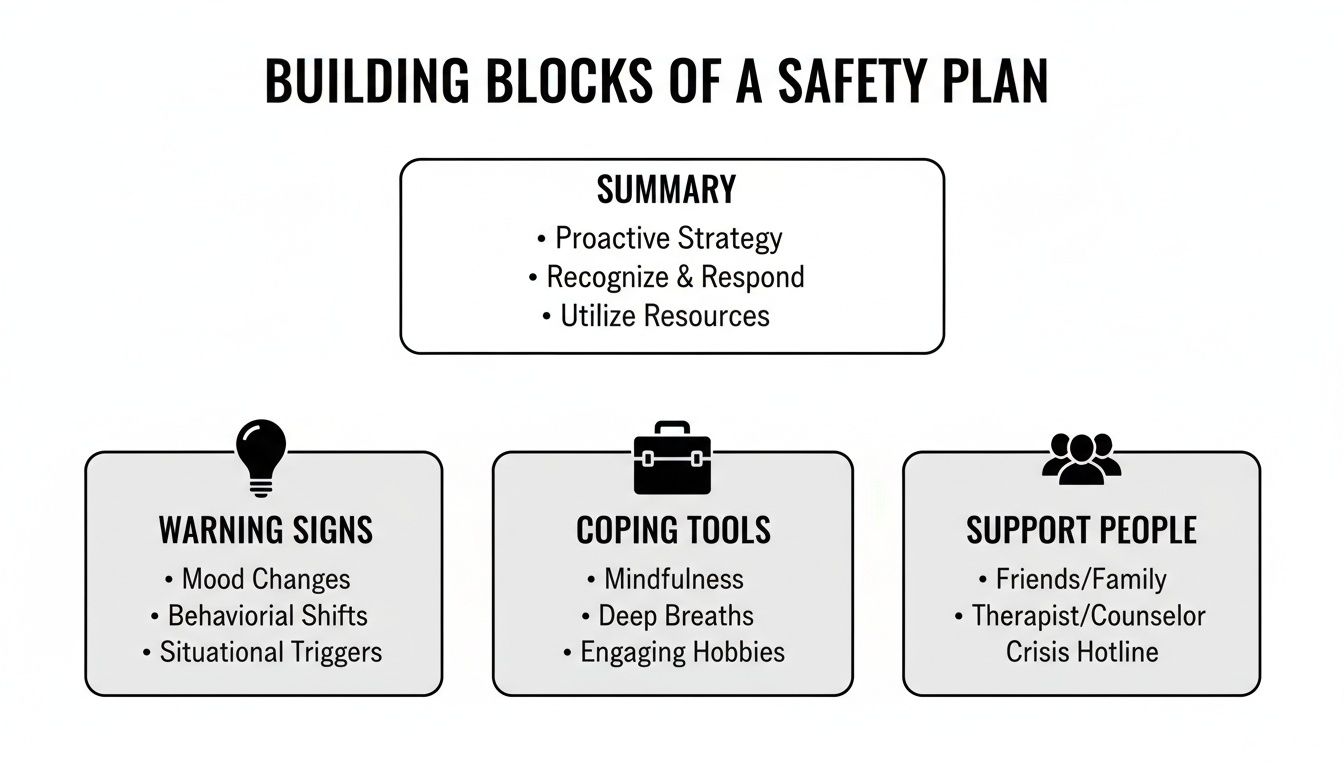
Thinking about it in these simple chunks—Warning Signs, Coping Tools, and Support People—can make the whole process feel less intimidating when you start.
The Art of Partnership in Planning
When you work through the template, think of yourself as their supportive partner and scribe, not the boss. Let them lead. If they want to draw their coping strategies instead of writing them, grab the coloured pencils. If they want to give their feelings funny names, write them down exactly as they say them.
This is their plan. The more they own it, the more likely they are to actually use it when they need it most. The goal is a resource they turn to because it feels genuinely theirs.
Please remember, I am a parent sharing personal experiences and insights, not a mental health professional. This guidance is for informational purposes. If you are worried about your child's immediate safety or mental health, it's vital to seek help from your GP or a qualified professional straight away.
Beyond the Plan: Building a Culture of Support
Creating the plan is a powerful first step, but its real magic comes alive when it’s part of a wider family culture where mental health is discussed openly and without shame. Addressing mental health early is crucial. The cost of poor mental health to UK businesses is significant, which just goes to show how vital these early conversations are for building a resilient future generation.
With the rise of social media adding another layer of complex pressure on young people, making these discussions a normal part of life is more important than ever. It helps build a defence against those external pressures.
Here are a few simple ways to weave wellbeing into your family life:
- Relaxation Tips: Introduce simple wind-down activities into your evening routine, like listening to a calming playlist or doing a few gentle stretches together. A simple shoulder rub can also be a wonderful way to connect and calm the nervous system.
- Wearable Reminders: Sometimes, a piece of mental health apparel, like a t-shirt with a positive message, can act as a subtle, positive reminder of self-worth and resilience for both kids and adults.
- Shared Reading: Exploring mental health books designed for children can provide a shared language and normalise complex emotions in a gentle, story-based format.
By weaving these practices into your daily life, the safety plan becomes more than just a piece of paper; it becomes a living symbol of your family's commitment to supporting one another, no matter what.
Making The Safety Plan a Living Document in Your Home
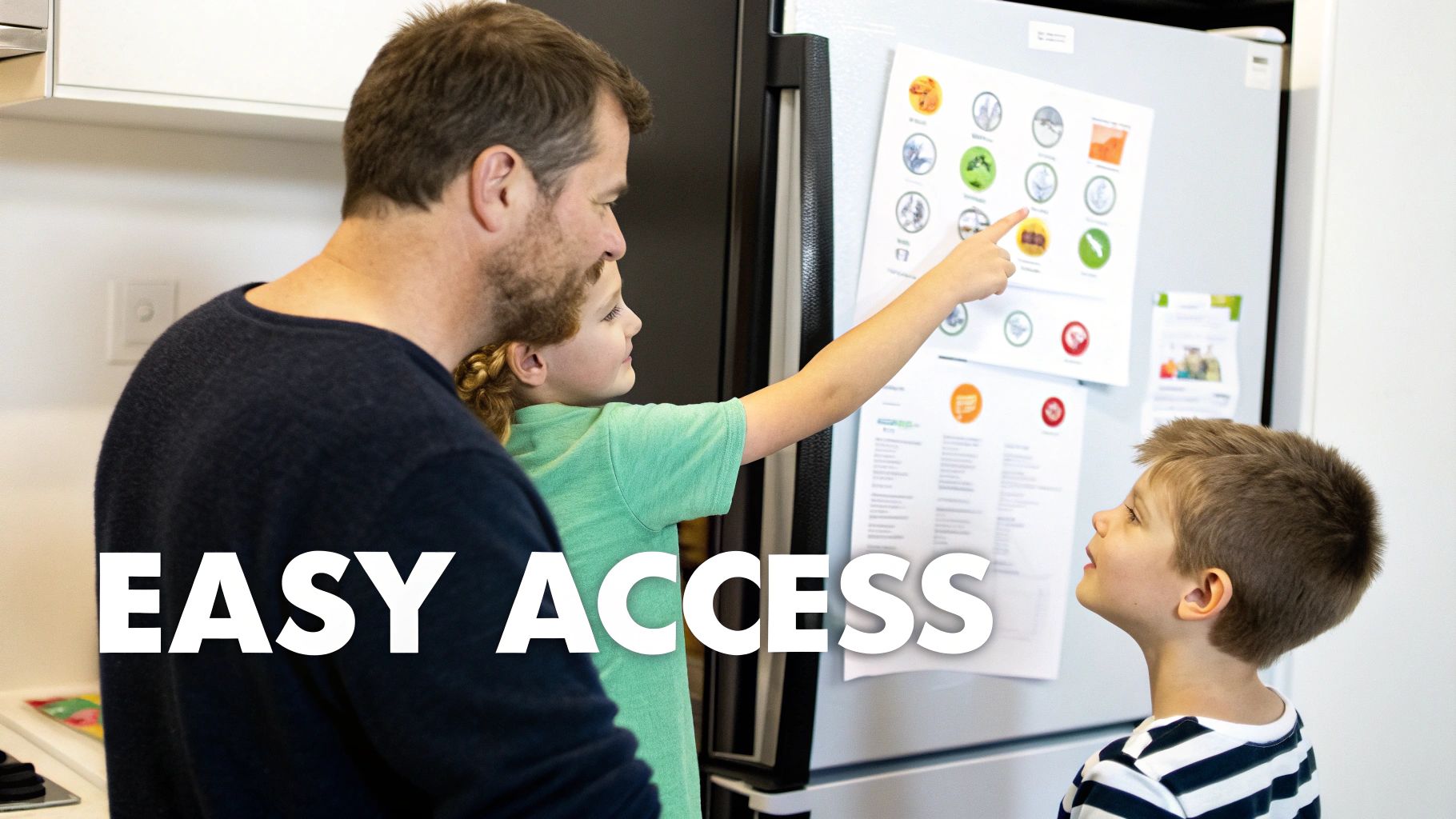
Creating a safety plan together is a huge, positive step. But a plan tucked away in a drawer isn't much help when a crisis hits. The real power of safety plan templates comes when they are woven into the fabric of your daily lives, becoming a trusted and accessible resource.
Its purpose is to be a practical tool, not a forgotten piece of paperwork. The key is making it visible and easy to reach, so your child can find it the moment those big feelings start to bubble up.
Finding the Right Place for Your Plan
Where you keep the plan depends entirely on your child's age and comfort level. The goal is accessibility, so think about where they spend their time and what feels most natural for them.
- For younger children: The fridge door is a classic for a reason. Keeping it in a central, visible spot alongside family photos and school artwork normalises it. Using magnets to hold it up makes it feel like just another part of family life.
- For older children and tweens: The privacy of their bedroom might be a better fit. Tucking it inside a journal, pinning it to a notice board, or keeping it on their desk ensures it’s their personal resource, ready when they need a quiet moment. A practical example would be putting it inside their favourite book.
- For teenagers: Let's be honest, a physical copy might not be their go-to. A practical solution is to take a clear photo of the plan so they can save it in a folder on their phone. This makes it discreet and instantly accessible, wherever they are.
The location should empower them. It sends a clear message: "This tool is yours, and it's here for you whenever you need it."
Sharing the Plan with a Wider Circle of Support
Sometimes, your child's support network extends beyond the family home. Sharing the safety plan with other trusted adults, like a favourite teacher, a school counsellor, or a sports coach, can create a consistent circle of care around them.
But this step needs to be handled with real care, and your child’s consent is non-negotiable. For a teen, sharing their private feelings without permission can feel like a huge breach of trust.
Frame the conversation with them carefully. You could say something like, "I think it might be helpful for Mrs. Evans to know what works for you on a tough day, so she knows the best way to support you at school. What do you think?" This puts them in the driver's seat.
Remember, this is about equipping other adults with the right tools to help, not about broadcasting your child’s struggles. Always prioritise their privacy and comfort, making them an active partner in the decision.
Treating It as a Living Document
Kids grow and change, and so do their coping skills. A safety plan created at age seven won't be as effective for a twelve-year-old navigating the complexities of secondary school and social media.
This is why you should treat the plan as a 'living document'—something that evolves right alongside your child. Scheduling regular, casual check-ins is the best way to keep it relevant.
You don't need a formal meeting. A quick chat every few months is perfect. You could ask:
- "Are the things on your plan still feeling helpful?"
- "Have you discovered any new songs or activities that make you feel calm?"
- "Is there anyone new you'd like to add to your list of support people?"
These gentle reviews keep the plan fresh and functional. It reinforces that their emotional wellbeing is an ongoing conversation, not a one-time task. This approach also makes space for creating things like a calm-down corner at home. To learn more, check out our guide on how to create a supportive calm-down corner for your child.
By making the safety plan a visible, shared, and evolving part of your home, you transform it from a static document into a dynamic tool for resilience.
Weaving Wellbeing into the Fabric of Family Life
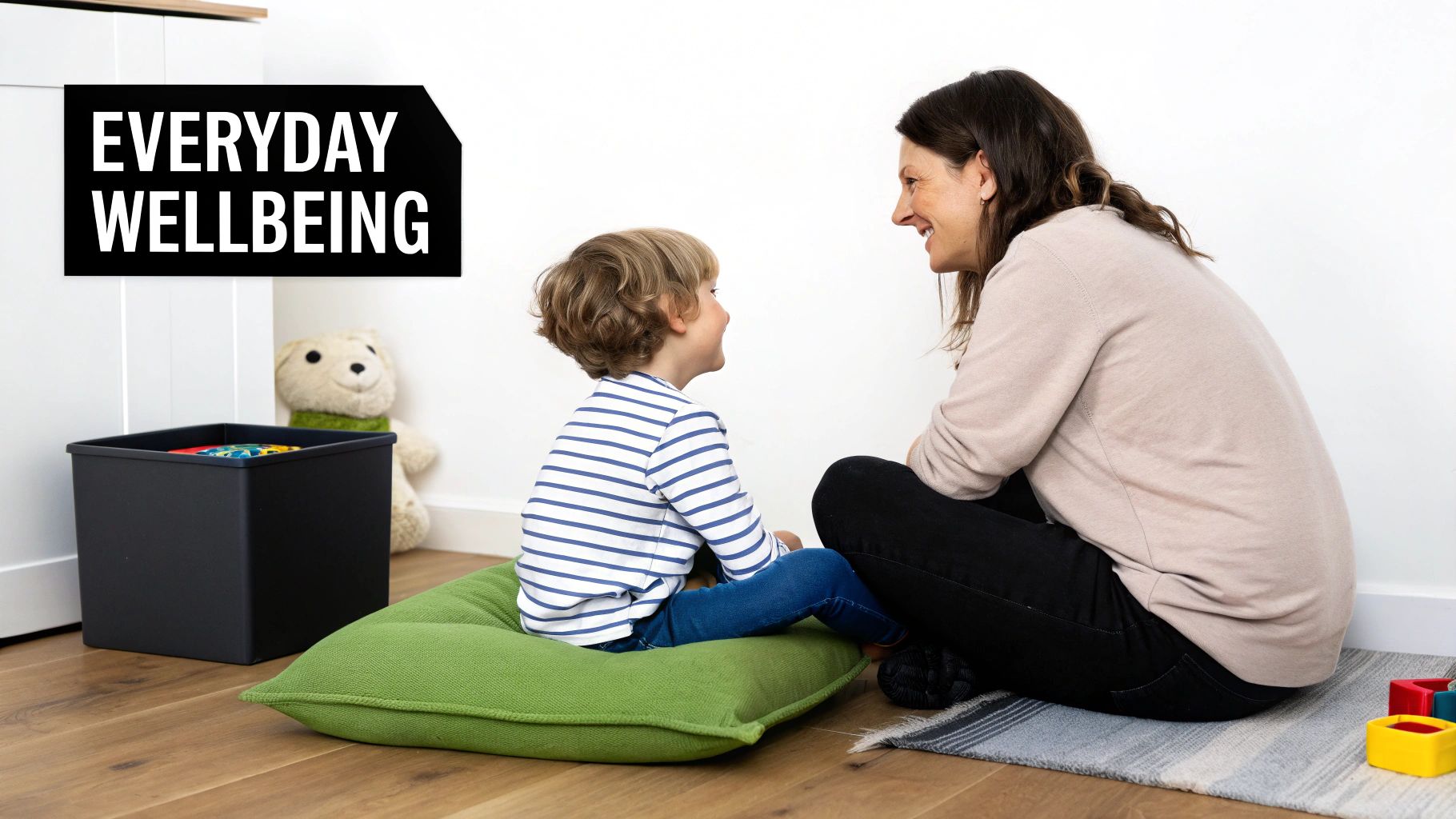
A safety plan is a brilliant, powerful tool. But its real magic happens when it’s part of a bigger picture – a family culture that champions emotional honesty and makes wellbeing a priority, every single day. Addressing mental health openly is one of the most important things we can do as parents.
Think of it less as a document you pull out in an emergency, and more as a reflection of your ongoing conversations about mental health. This approach weaves support into your daily routine, turning it into a continuous, loving process rather than a one-off task.
The aim is to get to a place where talking about feelings is as normal as chatting about what happened at school. When you create that kind of atmosphere, you naturally reduce the stigma that can stop children from speaking up when they need help.
Making Wellbeing a Part of Your Daily Rhythm
You don't need grand, sweeping gestures to integrate mental health support into your family's life. It's the small, consistent things that build connection and emotional awareness over time.
For instance, we all know the impact social media can have on a young person's mental health. Something as simple as regularly checking in about what they’re seeing online or encouraging a 'digital sunset' in the evenings can open up vital conversations about comparison and online pressures.
Here are a few simple, practical ideas to get you started:
- Set up a 'Calm-Down Corner': This doesn't have to be fancy. Just a cosy, quiet space in your home with comforting things like a soft blanket, some sensory toys, or colouring books. It gives your child a safe place to go when they feel overwhelmed.
- Practise 'Mindful Minutes' together: You don’t need to be a meditation guru for this! Just taking two minutes to focus on slow, deep breaths together can help regulate the nervous system and models a brilliant coping skill. For example, you could try 'teddy bear breathing' where a young child lies down with a teddy on their tummy and watches it rise and fall with each breath.
- Start a 'Feelings Journal': Encourage your child to draw or write down their emotions. A shared journal between the two of you can also be a wonderful way to connect when talking feels a bit too much.
The Ripple Effect of Open Conversations
When children learn to name their feelings and ask for support from an early age, they're building skills that will last a lifetime. The benefits of this ripple out far beyond your front door.
Just think about it on a larger scale. The cost of poor mental health to UK businesses is huge, with an estimated £56 billion lost each year due to absenteeism and reduced productivity. By raising emotionally intelligent children who see no shame in looking after their mental health, we're helping to shape a healthier, more resilient future workforce.
Important Note: I'm sharing these ideas from one parent to another, based on my own experiences. I'm not a mental health professional. If you have serious concerns about your child's wellbeing, it's so important to seek advice from your GP or a qualified professional as soon as you can.
Resources to Support You on Your Journey
Creating this culture of wellbeing is a journey, and having the right resources can make it feel much less daunting. Simple things can help reinforce the positive messages from your safety plan.
- Mental Health Apparel: It might sound simple, but sometimes a visual cue is the easiest way to get a conversation going. Wearing clothing with positive affirmations can be a subtle but powerful way to normalise chats about mental health.
- Books that Normalise Big Feelings: Reading stories together where characters navigate tricky emotions is a fantastic way to build empathy. It gives you a shared language for talking about difficult feelings. Exploring a curated list of mental health books for children can make these big topics feel much more approachable.
By bringing together the practical framework of safety plan templates with these everyday practices, you show your child that their emotional wellbeing is a top priority—not just in a crisis, but every single day.
Your Questions About Safety Plans Answered
When you’re thinking about creating a safety plan with your child, it’s completely normal for a few questions to pop up. To help you feel more confident, I’ve put together some quick, clear answers to the most common queries I hear from parents.
When Is the Right Age to Introduce a Safety Plan?
Honestly, there’s no magic number here. It’s all about adapting the idea to fit your child's age and understanding.
For little ones, maybe 5-7 years old, think visually. A simple chart with drawings of calming activities (like cuddling a pet) or pictures of trusted adults can work wonders. It’s less about words and more about recognisable symbols.
As they get older, the plan can evolve. For tweens and teens, it can be a more detailed, written document that they have a real hand in creating. When they co-author it, they feel a genuine sense of ownership, which is crucial for it to be effective. The key is making sure the complexity matches their developmental stage. A young child’s plan might feature a drawing of their favourite teddy, whereas a teen’s could list a specific playlist on their phone that helps them chill out.
What If My Child Doesn't Want to Make One?
First thing’s first: never force it. If they’re pushing back, it’s usually a sign that the timing isn’t quite right or they’re feeling pressured.
Instead, try opening up a gentle conversation. Something like, 'I was thinking this might help us both know what to do on tough days. What are your thoughts?' can be a great, low-pressure starting point.
Another idea is to model the behaviour yourself. You could create your own 'calm-down' plan and pop it on the fridge. This shows them that it’s a healthy tool for anyone to use, not just something for kids. It takes the stigma away. Keep the door open, and you can always revisit the idea when they seem more receptive.
Please remember, I am not a mental health professional. This guide shares insights from a parent's perspective for informational purposes. If you are ever worried about your child's wellbeing, please seek help from your GP or a qualified doctor immediately.
How Often Should We Update the Plan?
Think of a safety plan as a living document, not something you create once and file away. It needs to grow and change right alongside your child.
A good rule of thumb is to give it a quick review every 3-6 months, or whenever there’s a big life change—like starting a new school or a shift in the family. It doesn’t need to be a formal meeting; a quick, casual chat is all it takes to keep the plan relevant and genuinely useful.
You could ask a few simple questions:
- "Are these strategies still working for you?"
- "Is there anyone else you’d like to add to your support list?"
- "Have you found any new relaxation tips we should add in?"
Should the School Know About My Child's Safety Plan?
Sharing the plan with a trusted teacher, a school counsellor, or a favourite teaching assistant can be incredibly helpful. It creates a circle of support and ensures consistency between home and school.
However—and this is a big one—this must be done with your child's full permission, especially for older kids and teens. Their privacy is paramount. You can frame it as giving the adults at school the best tools to help them when they need it most.
Having that open conversation respects their autonomy and builds trust, all while making sure they have the support they need, no matter where they are.
At Little Fish Books, we believe in empowering families with the tools they need to build emotional resilience. From our thoughtfully created mental health books designed for children and mental health apparel to our free downloadable resources, we're here to support you and your child on your wellbeing journey. Explore our full collection and find resources that resonate with your family today. Learn more at https://thatsokay.co.uk