

A Parent's Guide to Creating a Safety Plan Template
A safety plan template is so much more than a document for emergencies. Think of it as a proactive and supportive toolkit, one you build with your child, designed to empower you both. It provides a clear, calm set of actions to take when overwhelming feelings bubble up, making it feel supportive rather than clinical.
Why a Safety Plan is Vital for Your Child's Wellbeing
Trying to navigate the emotional world of a child or teenager can feel incredibly complex, but you don’t have to do it without a guide. A safety plan works like a personalised roadmap, helping a young person spot their unique triggers and warning signs before emotions spiral into a crisis.
It’s a practical, written-down set of coping strategies, supportive contacts, and positive distractions they can turn to in moments of real distress. It’s less of an emergency alarm and more of a comforting toolkit they help create themselves.
This guide is here to offer informational support based on common practices. It's crucial to state that I am not a mental health professional. If you have serious concerns about your child's mental health, please seek advice from your GP or a qualified specialist.
The Growing Need for Proactive Support
Addressing mental health in childhood is one of the most important things we can do for future generations. The state of youth mental health in the UK highlights an urgent need for practical, immediate support tools. In 2023, an alarming one in five children and young people aged 8 to 25 had a probable mental health condition. That's a huge jump from one in nine back in 2017.
With long waiting lists for professional services, a safety plan template empowers families to provide structured, early support. It can bridge a critical gap while you’re waiting for further help. You can read more about these mental health statistics on the Young Minds website.
A well-crafted plan doesn’t just manage risk; it builds resilience, self-awareness, and emotional literacy. It sends a powerful message to your child: your feelings are valid, you are not alone, and we have a plan to get through this together.
By creating this plan collaboratively, you shift the dynamic from reactive crisis management to proactive skill-building. It gives your child a sense of agency over their own wellbeing, which is an invaluable life skill.
The Impact on Families and Beyond
The importance of addressing mental health early extends far beyond the individual child. The strain on family life and even the wider economy is significant. For example, poor mental health costs UK businesses an estimated £56 billion every year in lost productivity and absenteeism. By supporting young people, we are building a healthier future workforce.
Social media also plays a complex role. While it can offer connection, it often creates pressures around body image and social comparison that can negatively affect a young person's self-esteem. A good safety plan can include practical strategies for managing online interactions and knowing when to step away for a mental break.
Simple relaxation tips, like deep breathing exercises or a five-minute mindfulness activity, can be included as go-to calming techniques. Starting these conversations can be gently supported by resources like emotional literacy books or even mental health apparel that normalises these discussions. For further reading, check out our guide on mental health support for young people.
Beginning the Safety Plan Conversation with Your Child
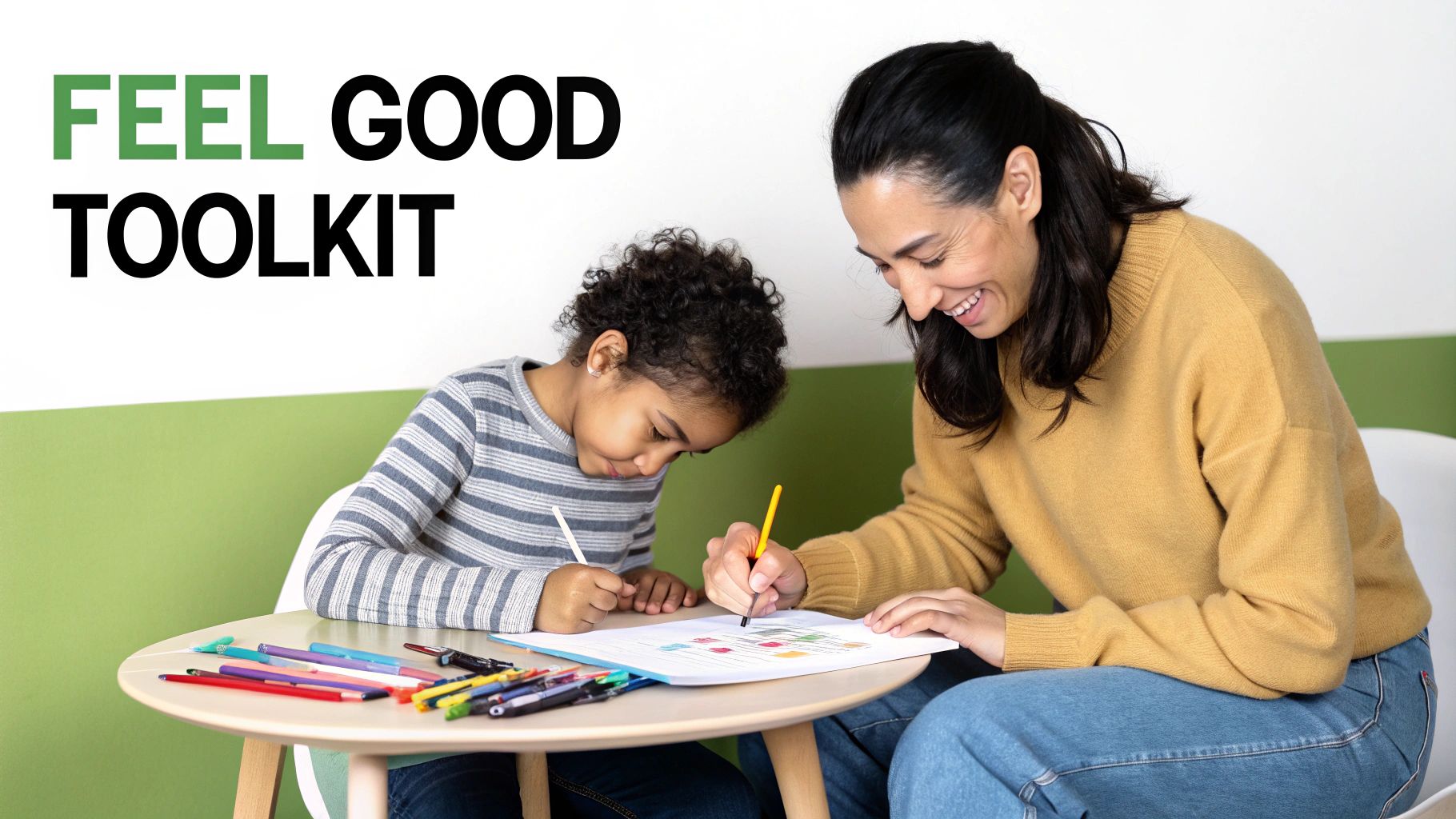
Starting a conversation about big, overwhelming feelings needs a gentle touch. This isn't about sitting down for a formal meeting; it’s about creating a safe, loving space where your child feels heard and understood right from the get-go.
The timing and tone you choose are everything. Find a quiet, calm moment when you’re both relaxed—maybe while colouring together, walking the dog, or during a peaceful car journey. This kind of low-pressure environment helps them open up without feeling defensive.
Instead of calling it a "safety plan," which can sound a bit scary, try framing it differently. You could call it a 'feel-good toolkit' or a 'calm-down map'. This simple language shift changes the focus from crisis to empowerment, turning it into something positive and creative.
Identifying 'Wobble Moments' Together
The first real step is to help your child recognise their personal warning signs. These are the little clues their body and mind give them when emotions are starting to bubble up. For younger children, abstract concepts like 'anxiety' are tricky to grasp, so using physical or visual language works so much better.
You could try asking questions like:
- "Where in your body do you feel your worries? Does your tummy get fluttery like butterflies?"
- "What does your face feel like when you're getting cross? Does it get hot?"
- "Do your hands start to feel fizzy or shaky when you're feeling a bit wobbly?"
This approach helps them link physical sensations to their emotions. A great activity is to use emotion colouring sheets or just draw a simple outline of a person and ask them to colour in where they feel their big feelings. It makes the invisible visible and gives you a concrete starting point for your safety plan template.
A huge part of this is active listening and validation. When they share something, respond with empathy. Simple phrases like, "That sounds really tough," or "It makes sense that you'd feel that way," show them their feelings are valid and accepted without judgement. This builds the foundation of trust you'll need for the whole plan.
Remember, the goal of this initial chat isn't to solve anything. It's simply to open the door to communication and plant the seed that you are a team, ready to figure things out together.
Making it a Collaborative Creation
Once you’ve started talking about these warning signs, you can introduce the idea of the toolkit. You might say, "When your tummy feels fluttery, what could we do to help the butterflies calm down?" This makes them an active part of finding their own solutions.
Suggesting simple relaxation tips can be a great starting point. For a younger child, you could try 'smelling the flower' (breathing in) and 'blowing out the candle' (breathing out). It turns a calming breathing exercise into a game rather than a clinical instruction. The emphasis is always on collaboration; this is their toolkit, and they are the expert on their own feelings.
With one in five children in the UK now facing a probable mental health condition, normalising these conversations is vital. It helps fight the stigma that so often stops young people from speaking up. By building this plan, you're giving them a language to express themselves and the skills to self-soothe.
As you explore these topics, you might find that learning more about emotional coaching for parents can offer even more strategies to support your child. This first conversation is the most important step in building a resilient and emotionally aware young person.
Building a Toolkit of Coping Strategies and Distractions
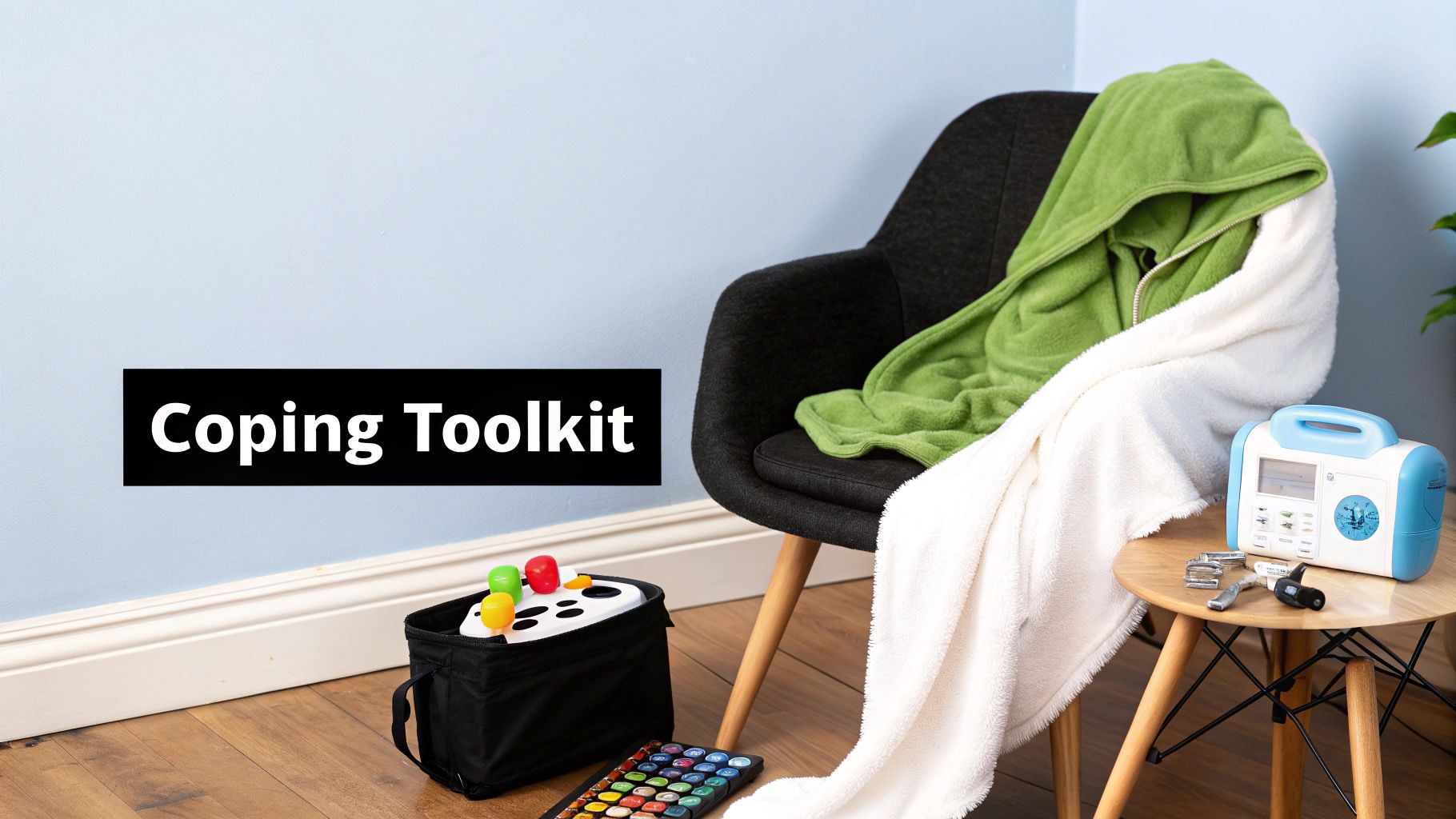
The heart of any safety plan that actually works is a personalised menu of coping skills your child can grab when they feel wobbly. This isn't just a clinical checklist; it’s a practical, real-world toolkit filled with comforting activities that offer genuine, in-the-moment relief.
The magic happens when you build this toolkit together. It transforms the process from a chore into something creative and empowering. You’re aiming for a real variety of options, because what works on a Tuesday might not be what they need on a Friday.
This is all about discovering what truly soothes and grounds your child, giving them back a sense of control over their emotional world. It makes the vague idea of 'coping' a set of tangible, actionable steps they can take all by themselves.
Creating a Sensory and Calming Environment
For lots of children, especially the younger ones, sensory input is a super effective way to regulate big feelings. A dedicated calm-down corner can be a fantastic part of your home and a cornerstone of their safety plan.
This doesn't have to be anything fancy. It could be a cosy nook in their bedroom or a quiet spot in the living room, stocked with comforting items. Think about including things like:
- A soft, weighted blanket or their favourite fluffy throw.
- A few squishy toys or a pot of modelling clay.
- Noise-cancelling headphones with a calming playlist you’ve both agreed on.
- A picture book with gentle illustrations. For example, a book about a little bear who learns to manage his big feelings can make coping strategies feel relatable.
The same idea works for teenagers, but the items will naturally be a bit more grown-up. Their 'calm-down corner' might be their whole room, with a specific lo-fi playlist, a favourite hoodie, or a sketchpad and pencils ready to go. It’s all about creating a space that signals safety and calm, where they can retreat without feeling judged.
The real power of a physical toolkit is that it makes coping strategies visible and easy to grab. When a child is distressed, trying to remember a breathing technique can be tough, but reaching for a familiar soft toy is instinctual and immediate.
Practical Grounding and Relaxation Tips
Beyond physical items, teaching simple relaxation techniques gives your child tools they can use absolutely anywhere, at any time. These methods help pull their focus away from overwhelming thoughts and bring them back into their own body.
One of the best and easiest to learn is Box Breathing. It’s a simple, four-step rhythm:
- Breathe in slowly for a count of four.
- Hold your breath for a count of four.
- Breathe out slowly for a count of four.
- Hold your breath for a count of four.
Just repeat this cycle a few times until they feel their body start to settle. You can make it more engaging by tracing a square in the air or on their hand as you count.
Another brilliant grounding technique is the 5-4-3-2-1 Method. This exercise gets them to reconnect with their immediate surroundings using their five senses:
- 5: Name five things you can see. (e.g., a green pen, a cloud, a pattern on the rug)
- 4: Name four things you can feel. (e.g., the soft fabric of your jumper, the cool surface of a table)
- 3: Name three things you can hear. (e.g., a clock ticking, a bird singing, distant traffic)
- 2: Name two things you can smell. (e.g., your pencil, the fresh air)
- 1: Name one thing you can taste. (e.g., the lingering taste of toothpaste, a sip of water)
To help you brainstorm, here are some age-specific ideas you can work through together when building out the safety plan.
Age-Appropriate Coping Strategy Ideas
| Age Group | Strategy Type | Practical Examples |
|---|---|---|
| Ages 4-7 | Sensory & Movement | Squeezing play-doh, jumping on a mini-trampoline, listening to a story on an audiobook, looking through a glitter jar, wrapping up in a heavy blanket. |
| Ages 8-12 | Creative & Cognitive | Drawing or doodling in a special notebook, writing a short story, building with LEGO, doing a puzzle, listening to an upbeat playlist on headphones, reading a chapter of a favourite book. |
| Ages 13+ | Mindful & Expressive | Journaling, listening to a podcast or specific genre of music (like lo-fi or classical), sketching, trying a guided meditation app, practising a hobby (e.g., playing guitar, coding), texting or calling a trusted friend from their support network. |
These are just starting points, of course. The best strategies will always be the ones your child personally connects with and finds genuinely calming.
The Power of Positive Distractions
Sometimes, the very best coping strategy is a good, healthy distraction. This is about shifting focus to an activity that is absorbing and enjoyable, giving the brain a much-needed break from a worry cycle. These should be activities your child genuinely loves and can start without any fuss.
Brainstorming this part of the safety plan can be a lot of fun. For more ideas, you can explore our detailed guide on https://thatsokay.co.uk/blogs/news/coping-strategies-for-children which offers a huge range of suggestions.
Building these skills is vital, especially when you consider that in the UK, 50% of all mental health problems are established by age 14. Integrating emotional intelligence books can build long-term resilience and even help reduce school absences, as one in six children aged 5-16 are identified as having a probable mental health condition.
To add another layer of support to their growing toolkit, consider incorporating books to help with anxiety. Reading stories about characters navigating similar feelings can normalise their experience and introduce new coping ideas in a gentle, relatable way.
Mapping Out a Trusted Support Network and Safe Spaces
No child should ever have to carry the weight of big, difficult feelings on their own. That's why a core part of any good safety plan is mapping out a trusted circle of support—the specific people and places a young person can turn to when everything feels a bit too much.
This isn’t just about making a list. It’s a chance to have a gentle, open conversation about who makes your child feel safe, heard, and truly understood. This network acts as a powerful safety net, reinforcing the one message they need to hear most: you are not alone.
In a world where social media can sometimes make kids feel more disconnected than ever, building this real-world crew provides a vital, grounding counterbalance.
Identifying Their Personal Support Crew
Start by gently asking your child who they feel comfortable talking to when they get a "wobbly" feeling inside. You might be surprised by their answers. This crew often extends far beyond just parents.
Their list of trusted people could include:
- Family Members: A grandparent who always listens, a favourite aunt or uncle, or an older sibling they look up to.
- School Staff: That one teacher they really connect with, the school counsellor, or a friendly teaching assistant.
- Friends: A close friend who’s a brilliant listener and makes them feel good about themselves.
- Beloved Pets: Never, ever underestimate the comfort of a furry friend. The simple act of stroking a dog or cat can be incredibly calming. For example, you could write on the plan: "When I feel sad, I will cuddle my dog, Buster."
For families where parents live apart, keeping this network consistent is so important. Things like utilizing a co-parenting schedule app can be a really practical way to coordinate and ensure a child feels a stable, united support system across both homes.
Listing Professional and Official Contacts
Alongside their personal crew, it's essential to have a clear list of professional contacts. Think of this as the "for the grown-ups" section of the plan. It ensures you know exactly who to call for guidance or in a more serious situation.
This part should be practical and easy to read, with names, contact numbers, and opening hours where you can find them.
It's crucial that I stress this again: I am not a mental health professional. This guide provides information, but if you are worried about your child's wellbeing, your first port of call should always be a doctor. A GP can provide professional advice and referrals.
Your professional contacts list should include:
- Your family GP’s surgery phone number.
- NHS helplines like Childline (0800 1111), which is free and confidential for children to use themselves.
- The contact details for any therapist or counsellor your child may be seeing.
- The number for NHS 111 for urgent medical advice when it's not an emergency.
Having all this info organised in one place within the safety plan removes that frantic scramble for numbers during an already stressful moment.
The Importance of Normalising Help-Seeking
Building this support network does something incredibly powerful: it normalises the act of reaching out for help. This is so important. UK mental health statistics show that children from the least well-off households are four times more likely to face serious mental health difficulties by age 11.
Tragically, stigma is still a huge barrier, with 22% of 18-25 year olds citing it as a reason for avoiding help. By including a GP and support lines in the plan, you frame them as normal, accessible options. You can explore more of these findings and learn about the impact of inequality on youth mental health.
Exploring Physical and Mental Safe Spaces
Support doesn't just come from people. The idea of a 'safe space' is another brilliant tool to build into the plan. This can be a real, physical place as well as a mental one.
A physical safe space might be their bedroom, a cosy reading corner, or a den in the garden. It’s simply a place where they feel secure and can retreat to when the world feels too loud.
A mental safe space is somewhere they can go in their imagination. Help them pick a really happy memory—a sunny day at the beach, a fun family holiday—and encourage them to picture it in vivid detail. This is a powerful relaxation technique that acts as a mental escape, showing them they have multiple ways to find comfort.
Keeping the Safety Plan Practical and Up to Date
For a safety plan template to be a truly effective tool, it can’t be something you create once and then file away. Think of it as a living, breathing document that needs to evolve right alongside your child.
Accessibility is everything. A plan is only useful if it can be found and acted on in a moment of distress. This means making sure it’s physically present in your child’s daily life, which is where you can get creative and find a format that clicks with their age and personality.
The goal is to make the plan a comforting, familiar presence rather than a hidden secret.
Making the Plan Accessible and Visible
Think about where your child spends their time and what they connect with. A plan that feels like a natural part of their world is one they’re far more likely to actually turn to.
Here are a few ideas to get you started:
- For a Teenager: A photo of the plan saved in a dedicated album on their phone is perfect. You could also list key contacts under an easy-to-remember name like 'Help Crew'.
- For a Younger Child: A colourful, laminated poster on their bedroom wall, decorated with their favourite drawings or stickers, can make it feel friendly and approachable.
- For On-the-Go: A small, credit-card-sized version tucked into their school bag, pencil case, or wallet ensures it's always with them.
Deciding the best way to present a safety plan can be a big step. To help you choose, here’s a quick comparison of different formats and who they might be best for.
Safety Plan Format and Accessibility Options
| Format Type | Best For | Pros | Cons |
|---|---|---|---|
| Digital Photo on Phone | Teenagers and tech-savvy older children | Always accessible, discreet, easily updated and shared with trusted contacts. | Relies on the phone being charged and available; could get lost in other photos. |
| Laminated A4 Poster | Younger children, visual learners | Highly visible in a safe space like a bedroom, can be made fun with drawings, easy to read. | Not portable, lacks privacy in shared spaces. |
| Credit Card-Sized Printout | Children of all ages, especially for school | Very portable (fits in a wallet, bag, or pocket), discreet, physical reminder. | Easily lost, can get damaged, limited space for detailed information. |
| Notebook or Journal | Older children and teenagers who like writing | Can be integrated with other coping strategies like journaling, offers privacy, allows for detailed notes. | May not be carried everywhere, could feel like a chore to look through during a crisis. |
| App-Based Plan | Tech-comfortable teenagers | Can include interactive features, reminders, and direct links to call/text support numbers. | Requires a specific app, might have subscription costs, relies on phone access. |
Ultimately, the best format is the one your child feels most comfortable with and is most likely to use. You might even find a combination of a visible poster at home and a portable card for school works best.
This flowchart offers a simple decision tree to help a child quickly figure out who to contact depending on what’s happening.
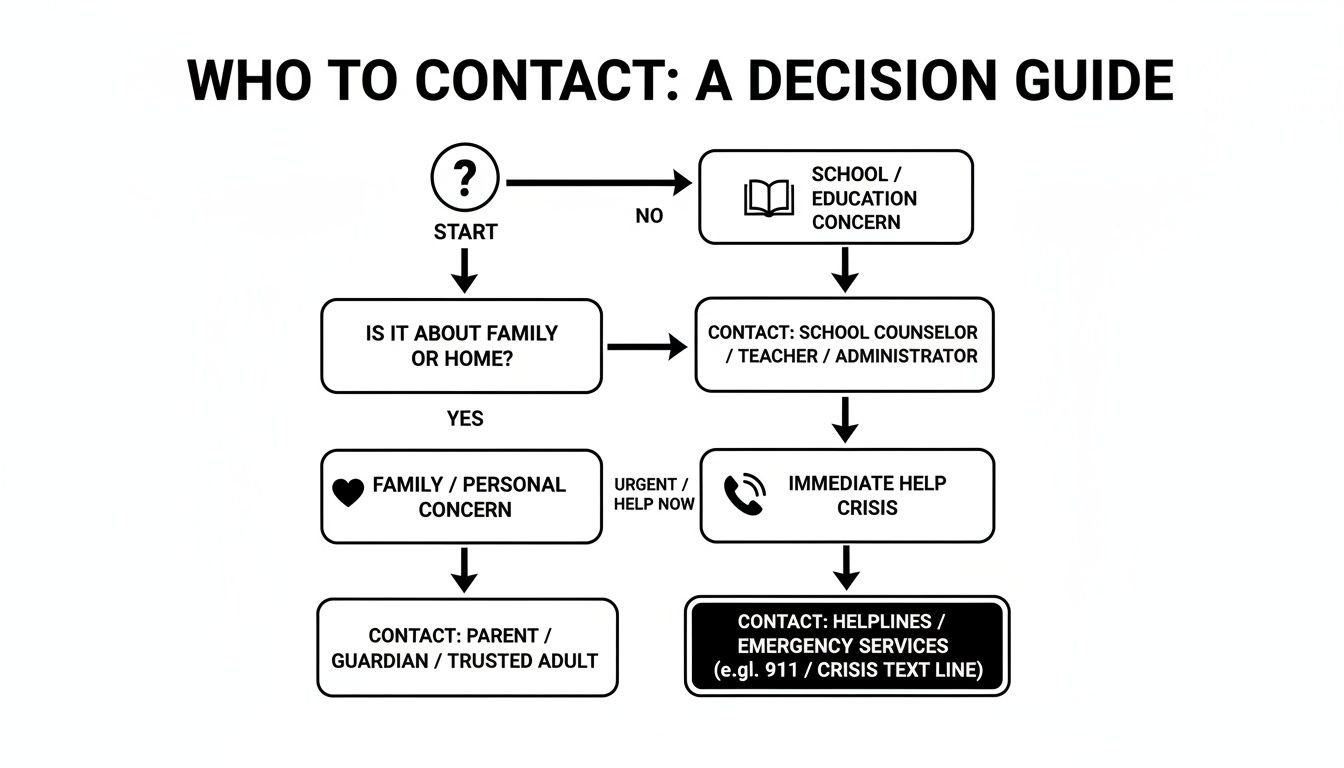
A visual guide like this reinforces that there are multiple pathways to support, from personal contacts to professional helplines.
Gently Reviewing and Updating the Plan
Children and their worlds change so quickly. Coping strategies that worked six months ago might not be as helpful today, and their support network may have new additions (or people who are no longer the right fit).
Regular, gentle reviews are key to keeping the plan relevant.
This doesn't need to be a formal sit-down meeting. Instead, try to build it into your routine as a casual, low-pressure chat every few months. You could bring it up during a quiet car ride or a relaxed evening, asking simple questions like, "I was thinking about our feel-good toolkit... is there anything new we should add to it?"
This approach keeps the plan a source of comfort, not a source of pressure.
The most important part of the review is listening. Your child is the expert on what works for them. Let them lead the updates, whether it’s adding a new friend to their support list or swapping out an old coping strategy for a new one.
Addressing Modern Pressures Like Social Media
In today's world, a child's wellbeing is often tied to their online life. Social media can be a brilliant source of connection, but it can also be a significant source of stress, anxiety, and comparison. It’s a really good idea to add a 'digital wellbeing' section to the safety plan.
This part of the plan can include practical strategies for managing online pressures. Work together to brainstorm some digital boundaries.
You could include things like:
- Mindful Scrolling: Setting a timer for social media apps to avoid getting lost for hours.
- Curating a Positive Feed: Agreeing to unfollow or mute accounts that make them feel bad about themselves.
- Designating 'No-Phone' Times: Such as during mealtimes or the hour before bed, to give their brains a break.
These small steps give your child a sense of control over their digital environment. It also shows them that their online feelings are just as valid and important as their offline ones. By including this in the safety plan, you’re acknowledging the real-world pressures they face and giving them practical tools to handle them.
Common Questions About Creating Safety Plans
Stepping into the world of emotional support for a child can feel a bit daunting, and it's only natural to have questions. This section is here to walk through some of the common queries that parents and educators have when putting together a safety plan template. My hope is to give you clear, practical advice so you can move forward with confidence.
At What Age Should I Start a Safety Plan?
There really isn't a magic number here. The beauty of a safety plan is that it can be wonderfully adapted for almost any age. The key is to match the complexity and language to your child's developmental stage, making sure it feels supportive rather than overwhelming.
- For the little ones (ages 4-7): Think tangible and sensory. You could create a 'calm-down box' filled with things like squishy toys, a soft blanket, and pictures of trusted adults. The focus is on physical soothers, not a detailed written plan.
- For older children (ages 8-12): This is a great age for a more structured, written plan that they can help design and decorate. Let them write down their own coping strategies and draw pictures of their 'support crew'.
- For teenagers: They can take real ownership of a more detailed document. This might include digital resources, contact numbers for friends, and strategies for navigating the stresses that can come from social media.
What If My Child Refuses to Participate?
It's completely normal for a child to be hesitant, and it's so important not to push them. Forcing the issue can create more anxiety and make the plan feel like a chore or even a punishment, rather than a helpful tool.
If they're not keen, just take a step back. You could try modelling the behaviour by creating a simple plan for your own 'wobbly feelings'. Saying something like, "Sometimes I feel overwhelmed too, and doing this really helps me," can make the whole thing feel more normal.
Start small. Just chat about one or two calming things they already enjoy, like listening to music or stroking the dog. The goal is to make it a low-pressure, supportive chat, not another task on their to-do list.
How Do I Share the Plan with Their School?
Having consistent support across home and school is crucial for a child's sense of security. Teaming up with their school can make a huge difference, but this should always, always start with your child's permission.
First, explain to your child why sharing the plan is a good idea, framing it as a way to help other important adults understand what they need when they're struggling. Once they're on board, schedule a chat with their teacher, head of year, or school counsellor. Bring a concise, easy-to-read copy of the plan with you.
Make sure to highlight the most critical bits for them: the child’s specific warning signs, the top two or three most effective calming strategies, and the main emergency contacts. This gets everyone on the same page, ready to offer a unified, predictable response.
Is a Digital Plan Better Than a Paper One?
Honestly, neither is "better." The best format is simply the one your child will actually look at and use when they're in a tough moment. It really just comes down to their personality and what they're comfortable with.
A tech-savvy teenager might prefer an app or a photo saved on their phone—it’s private and always with them. On the other hand, a younger child may find a colourful, physical plan stuck on their bedroom wall far more comforting and real.
You could even mix it up. Why not have a detailed paper plan at home, with key contacts and a few calming apps saved on their phone for when they're out and about?
Disclaimer: Please remember, I am not a mental health professional. This guide is intended for informational purposes only. If you have serious concerns about a child's wellbeing, it is essential to seek advice from a GP or another qualified healthcare provider.
At Little Fish Books, we believe in nurturing emotional literacy from a young age. Our collection of books, activities, and resources are designed to help you open up these important conversations in a gentle and supportive way. Explore our full range at https://thatsokay.co.uk to find the perfect tools for your family's feel-good toolkit.