
Sensory Activities for Preschoolers: 10 Engaging Ideas for Emotional Wellbeing
In today's fast-paced, digitally-driven world, the mental wellbeing of our youngest children has never been more important. One in six children aged 5-16 are identified as having a mental health problem, a significant rise from one in nine just a few years prior. Factors such as the pervasive influence of social media and reduced unstructured play contribute to a concerning increase in anxiety among preschoolers. The long-term cost of poor mental health to UK businesses is estimated at over £50 billion per year due to lost productivity and turnover. Addressing these challenges from the earliest years is not just beneficial; it's vital.
Sensory play offers a powerful, hands-on solution. It’s more than just fun; it’s a foundational tool for helping children understand and manage their emotions, develop self-regulation, and build resilience. This guide offers practical, engaging sensory activities for preschoolers, designed to support their emotional growth. You will find a curated collection of activities, from calming water play to focusing with playdough, each with clear directions, safety notes, and developmental goals. To explore more ideas and understand the broader scope of sensory engagement, delve into a guide on essential sensory activities for kids.
Please note: I am not a mental health professional. The following are suggestions for developmental support. If you have concerns about your child's mental health, it is essential to consult a GP or a qualified healthcare professional.
1. Sensory Bins
Sensory bins are a cornerstone of sensory activities for preschoolers, offering a self-contained world for tactile exploration. These containers, filled with materials like coloured rice, pasta, water beads, or kinetic sand, provide a rich sensory experience that can be either calming or alerting, depending on the contents and the child's needs. They are exceptionally versatile for developing fine motor skills as children scoop, pour, and grasp small objects.
Implementation and Variations
- Setup Time: 5-15 minutes
- Materials: A shallow plastic tub or tray, a filler material (e.g., dried beans, oats, sand), and various tools (e.g., scoops, funnels, small toys).
- Directions: Fill the bin with your chosen base material. Add tools and themed items, like toy sea creatures in a blue-dyed rice "ocean" or mini diggers in a kinetic sand "construction site". Encourage your child to explore freely, digging, pouring, and creating their own imaginative scenarios. A practical example could be a "gardening" bin with black beans for soil, small pots, and artificial flowers to plant.
Key Insight: Regularly changing the theme and materials of your sensory bin is crucial for maintaining engagement. A monthly rotation prevents sensory boredom and introduces new textures and learning opportunities.
Developmental Goals and Inclusivity
Sensory bins are fantastic for one-to-one focus or for small groups learning to share tools and space. For children with specific sensory needs, such as those on the autism spectrum, these bins offer a predictable and safe way to engage with different textures. You can learn more by exploring strategies for supporting children with autism and how sensory play fits in. Always supervise closely, especially with children under three, to ensure small items are not put in mouths.
2. Water Play Activities
Water play is a universally loved and deeply effective sensory activity for preschoolers. Whether in a dedicated water table, a simple basin, or even the bathtub, it provides a powerful medium for both calming and stimulating sensory input. Children can explore concepts like volume, temperature, and buoyancy, making it a foundational activity for early scientific thinking while developing crucial fine motor skills through pouring, splashing, and manipulating objects in the water.

Implementation and Variations
- Setup Time: 5-10 minutes
- Materials: A water table or large container, water, and various tools (e.g., cups, funnels, sponges, floating toys).
- Directions: Fill your container with a few inches of water. Add tools and toys to encourage exploration. You can create themed play, such as a "pond" with toy frogs and lily pads, or a "car wash" with toy vehicles and sponges. For a different texture and temperature experience, try adding ice blocks with small toys frozen inside for children to excavate. A simple variation is adding tear-free bubble bath and whisks to create a mountain of bubbles.
Key Insight: Introduce a "sink or float" experiment by providing a variety of objects (a cork, a small stone, a plastic block, a leaf). This simple game transforms unstructured play into a focused scientific investigation, encouraging prediction and observation skills.
Developmental Goals and Inclusivity
Water play is exceptionally adaptable for both solo and group settings, fostering cooperation as children share tools and navigate the space together. For children who are easily overstimulated, the gentle, repetitive nature of pouring and splashing can be incredibly calming and regulating. It’s also a fantastic way to introduce new vocabulary related to actions and properties (e.g., “full,” “empty,” “splash,” “drip”). Always ensure constant supervision around water, regardless of the depth, and have towels ready for a quick and easy clean-up.
3. Playdough and Clay Modelling
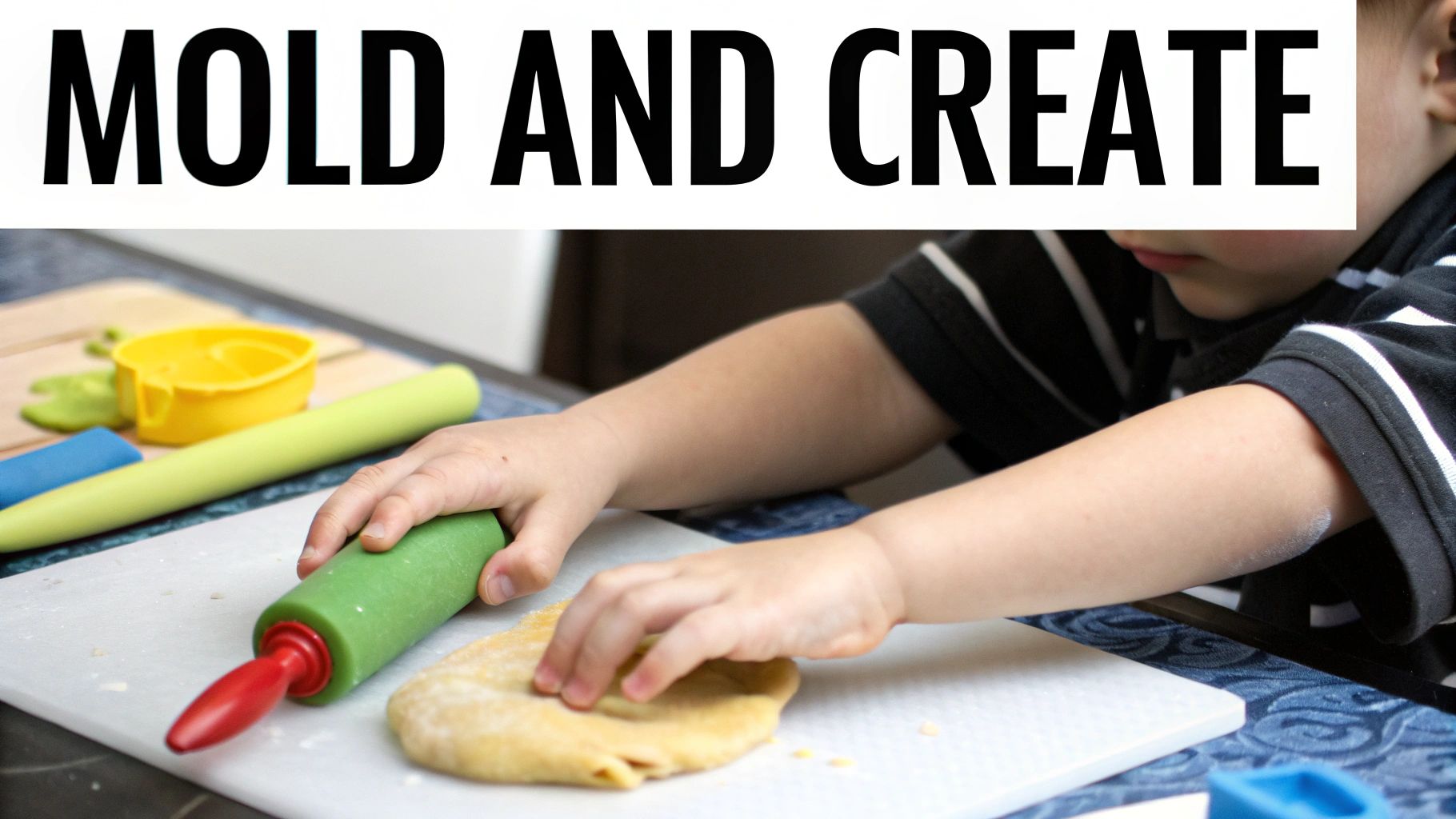
Playdough and clay offer a wonderfully tactile and creative outlet, central to sensory activities for preschoolers. The act of squishing, rolling, pinching, and shaping these malleable materials provides deep proprioceptive input, which can be incredibly calming and organising for a child's nervous system. It’s an excellent activity for strengthening the small muscles in the hands and fingers, laying the groundwork for future writing skills.
Implementation and Variations
- Setup Time: 2-5 minutes (using pre-made) or 15-20 minutes (for homemade).
- Materials: Commercial playdough, homemade salt dough, or natural air-dry clay. Add tools like rolling pins, cookie cutters, plastic knives, and themed playdough mats.
- Directions: Set out a ball of dough or clay on a protected surface. Provide a few simple tools and encourage your child to explore the material. A practical prompt could be asking them to create a playdough face that shows how they are feeling today, using pasta shapes for features.
Key Insight: Incorporating different scents and textures elevates the experience. Add a few drops of calming lavender essential oil to the dough or mix in small, smooth beads to provide new sensory feedback and keep the activity engaging.
Developmental Goals and Inclusivity
Playdough is a fantastic solo activity for focused, quiet time, but it also works well in small groups where children can share tools and ideas. For children who may feel overwhelmed by messier activities, dough offers a contained and predictable sensory experience. The firm pressure required to manipulate it helps release physical tension and can be a healthy outlet for big feelings like frustration or excitement. Always supervise to ensure children do not ingest the materials.
4. Nature-Based Sensory Exploration
Engaging with the outdoors is one of the most powerful sensory activities for preschoolers, connecting them directly with the rich textures, smells, and sounds of the natural world. This approach encourages children to investigate materials like mud, leaves, bark, and flowers, fostering curiosity and a deep appreciation for their environment. It’s an holistic experience that stimulates all the senses, from the feeling of cool mud between their fingers to the scent of damp earth after rain.
Implementation and Variations
- Setup Time: 0-10 minutes
- Materials: Access to an outdoor space (garden, park, woodland), a collection bag or basket, and optional tools like magnifying glasses or trowels.
- Directions: Take your child outside with a simple goal: to explore with their senses. This could be a nature scavenger hunt to find items of different textures (a smooth stone, a rough piece of bark), creating a "mud kitchen" with old pots and pans, or simply lying on the grass and listening to the sounds of nature. A practical activity is to create "nature faces" on the ground using leaves for hair, pebbles for eyes, and a twig for a smile.
Key Insight: Create a "nature treasure basket" that you and your child can add to over time. This ongoing collection of found objects like pinecones, interesting leaves, and unique stones provides a tangible link to your outdoor adventures and can be revisited for indoor sensory play on rainy days.
Developmental Goals and Inclusivity
Nature-based play is brilliant for both high-energy, alerting activities like running through leaves and for calming, focused tasks like examining a flower up close. It offers an unstructured environment that is particularly beneficial for children who find indoor settings overwhelming, allowing them to regulate their own sensory input. For children with sensory processing differences, the natural world provides authentic, varied, and gentle stimulation. Always ensure the area is safe from hazards and that children wash their hands thoroughly after playing, especially with soil or mud.
5. Sound and Music Exploration
Sound and music exploration is a fantastic auditory sensory activity for preschoolers, engaging their sense of hearing to foster creativity, rhythm, and listening skills. Activities can range from structured music-making with instruments like xylophones to spontaneous sound creation using household items. This type of play helps children develop auditory discrimination, which is the ability to distinguish between different sounds, a key skill for language development.
Implementation and Variations
- Setup Time: 2-10 minutes
- Materials: Simple instruments (e.g., maracas, drums, xylophone), recycled materials (e.g., plastic bottles, dried beans, pots, wooden spoons), or a music player.
- Directions: Create DIY shakers by filling plastic bottles with rice or beans. Set up a "drumming station" with upturned pots and pans. Alternatively, play different styles of music and encourage your child to move their body to the rhythm, perhaps using scarves or ribbons to visualise the sound. A sound scavenger hunt, where children identify specific noises around the house, is another great variation.
Key Insight: The goal is not musical perfection but joyful exploration. Focus on the process of creating and experiencing sound, which can be a powerful tool for emotional expression and regulation.
Developmental Goals and Inclusivity
Sound exploration is brilliant for developing coordination and an understanding of cause and effect. For children who are sensitive to loud noises, start with gentle sounds like soft shakers or bells, gradually introducing more vibrant instruments. These activities are highly adaptable for group settings, making them ideal for building social skills. You can find more ideas for group engagement by exploring preschool circle time activities that incorporate music and movement. Always ensure any DIY instruments are securely sealed to prevent small parts from becoming a choking hazard.
6. Light and Shadow Play
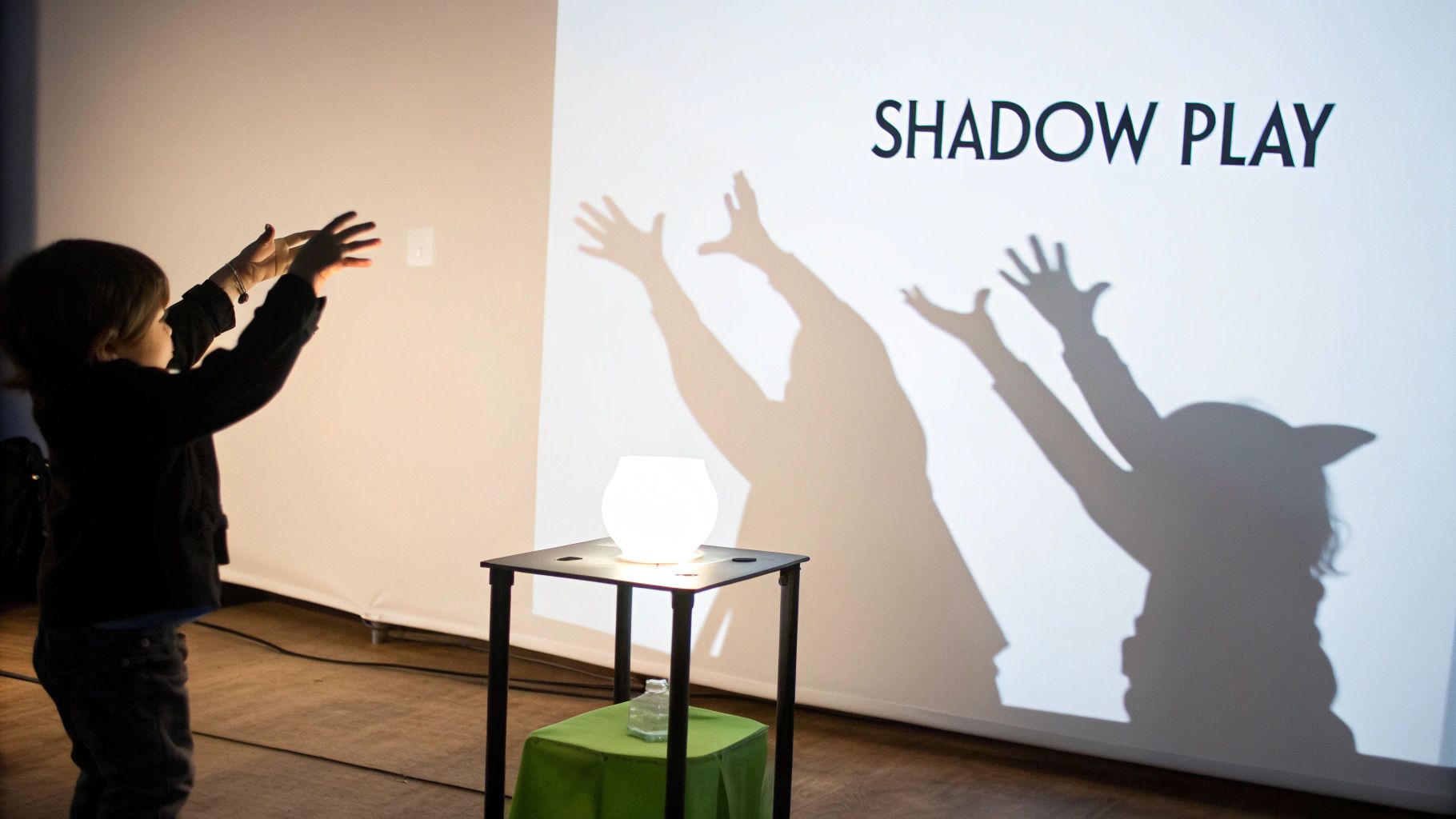
Exploring light and shadow is a captivating visual sensory activity that engages a preschooler’s curiosity about the world. This type of play uses simple tools like torches, natural light from a window, or a light table to help children investigate how light travels, what creates a shadow, and how colours can mix and change. It's a wonderful way to stimulate visual processing skills and introduce basic scientific concepts in a highly interactive and enchanting way.
Implementation and Variations
- Setup Time: 2-10 minutes
- Materials: A dark room, a light source (torch, lamp, or even a tablet screen), a blank wall or white sheet, and various objects or hand-made shadow puppets. Translucent materials like coloured cellophane or plastic shapes are great for light table play.
- Directions: In a darkened room, shine a torch onto a wall. Encourage your child to use their hands to create shapes in the light beam, making shadow puppets. Introduce different objects to see what kinds of shadows they cast. You can also create a simple shadow puppet theatre using a cardboard box and some greaseproof paper.
Key Insight: You don't need a dedicated light table for this sensory activity. A simple clear storage tub placed over a string of fairy lights or a tablet set to a white screen can create a brilliant DIY light box for exploring translucent objects.
Developmental Goals and Inclusivity
Light and shadow play is excellent for developing visual tracking, attention, and cause-and-effect reasoning. It can be a very calming and focused activity for one child or a collaborative storytelling adventure for a small group. For children who may be sensitive to touch, visual sensory activities like this offer a fantastic alternative for exploration. It's a low-pressure way to build communication skills as you describe the shapes and stories you see, supporting both emotional and language development.
7. Scent and Smell Exploration
Engaging the sense of smell is a powerful yet often overlooked component of sensory activities for preschoolers. Scent and smell exploration uses safe, familiar aromas to develop olfactory discrimination, enhance memory, and build vocabulary. From fragrant herbs to scented playdough, these activities connect children to the world through their noses, often triggering strong emotional and memory-based responses in a calm and focused way.
Implementation and Variations
- Setup Time: 5-10 minutes
- Materials: Small containers (e.g., spice jars, small pots), cotton balls, various natural scents (e.g., vanilla extract, lemon juice, peppermint oil, cinnamon), and fresh items like herbs or fruit peels.
- Directions: Create "smell bottles" by placing a scented cotton ball inside each container. Introduce the scents one by one, encouraging your child to smell each and describe what it reminds them of. You can also create matching games by making two sets of bottles and having children pair the identical smells. For a more hands-on activity, explore fresh herbs like basil and rosemary, crushing the leaves to release their aroma.
Key Insight: Always prioritise natural scents over artificial fragrances. Natural aromas from spices, fruits, and herbs provide a more authentic and less overwhelming olfactory experience, which is particularly important for sensitive children.
Developmental Goals and Inclusivity
Scent exploration is excellent for individual or small group settings, promoting descriptive language and turn-taking as children share their thoughts. For children who may be hesitant with tactile activities, this offers a less direct way to engage their senses. It's vital to be aware of potential allergies or sensitivities before introducing new scents. You can connect scents to emotions by asking, "How does this smell make you feel?", linking the activity to emotional literacy and mindfulness. This gentle sensory input can be incredibly calming, helping children self-regulate when feeling overwhelmed.
8. Texture Boards and Tactile Mats
Texture boards and tactile mats offer a focused, static sensory experience, allowing children to explore a variety of surfaces in one place. These collections of materials, such as velvet, sandpaper, corduroy, and bubble wrap, are mounted on a board or mat for children to touch and feel. This activity is excellent for developing tactile discrimination, which is the ability to distinguish different textures, and it helps refine the vocabulary used to describe the world around them.
Implementation and Variations
- Setup Time: 10-20 minutes
- Materials: A sturdy piece of cardboard or a mat, a strong adhesive, and a collection of textured materials (e.g., burlap, wool, faux fur, ridged plastic, smooth foil).
- Directions: Cut your materials into squares and securely glue them onto the board, creating a patchwork of textures. Introduce the board to your child, encouraging them to touch each square. Ask questions like, "How does this one feel?" and introduce descriptive words such as rough, smooth, bumpy, or soft. Variations can include creating matching games with pairs of textures or using the board for a blindfolded "guess the texture" game.
Key Insight: Integrating texture boards into a quiet space can provide a valuable grounding tool. A child feeling overwhelmed can focus on the different tactile sensations, helping them to self-regulate and manage big emotions.
Developmental Goals and Inclusivity
These tactile tools are brilliant for both individual exploration and guided small-group activities focused on language development. For children with sensory processing sensitivities, texture boards provide a structured way to experience different tactile inputs without the mess or unpredictability of a sensory bin. They make a fantastic addition to a quiet area or a designated calm-down corner, offering a predictable sensory outlet. You can find more inspiration by exploring these calm-down corner ideas for your home or classroom. Always ensure all materials are securely attached to prevent choking hazards.
9. Taste-Safe Sensory Play and Edible Activities
For younger preschoolers and toddlers who naturally explore the world with their mouths, taste-safe sensory activities provide a worry-free way to engage their senses. These activities use non-toxic, edible materials, allowing children to safely touch, smell, and taste their play environment. This approach is fundamental for oral sensory development and can be a gentle way to introduce new food textures and flavours in a low-pressure setting, making it one of the most essential sensory activities for preschoolers.
Implementation and Variations
- Setup Time: 5-20 minutes
- Materials: Food-based items like plain yoghurt with food colouring for paint, a flour and salt mixture for playdough, or cooked pasta and various fruits for texture exploration.
- Directions: Create your edible medium, for example, by mixing a few drops of food colouring into yoghurt to make finger paint. Place it on a high-chair tray or a wipe-clean mat and let your child explore the texture and taste. For a food exploration activity, arrange small pieces of soft fruits, cooked vegetables, and pasta for them to handle and sample at their own pace.
Key Insight: Always be mindful of potential food allergies and intolerances before introducing any edible activity. Start with simple, single-ingredient bases and introduce new components one at a time to monitor for any reactions.
Developmental Goals and Inclusivity
Taste-safe play is inherently inclusive, especially for children in the oral exploration phase or those with pica. It fosters fine motor skills through squishing and smearing, while also developing the gustatory (taste) and olfactory (smell) senses. For children who are hesitant eaters, this no-pressure sensory play can help reduce food-related anxieties. For truly taste-safe and engaging edible activities, consider involving children in the process of gardening. You can find a practical guide on how to start, for instance, in this article about growing your own blueberries for edible sensory activities. Constant supervision is essential to ensure safe play.
10. Freeze and Sensory Ice Play
Freeze and sensory ice play offers a fascinating exploration of temperature and texture, captivating preschoolers with the magic of transformation. This activity involves frozen water, often with objects embedded inside, providing a multi-sensory experience that engages touch, sight, and problem-solving skills. Children learn about concepts like freezing and melting while the cold tactile input can be incredibly calming and focusing for an active mind.
Implementation and Variations
- Setup Time: 5-10 minutes (plus freezing time of several hours)
- Materials: A container (e.g., ice cube tray, muffin tin, balloon), water, small waterproof toys or natural items (flowers, leaves), and tools for excavation (e.g., squeeze bottles with warm water, paintbrushes, toy hammers).
- Directions: Place small toys or items into your container, fill it with water, and freeze until solid. Once frozen, present the ice block to your child on a tray or in a bin. Provide them with tools to excavate the hidden treasures, encouraging them to chip away or melt the ice to release the objects inside.
Key Insight: Introduce scientific curiosity by adding salt to one area of the ice block. This allows children to observe how salt accelerates the melting process, adding a simple but effective science experiment to their sensory play.
Developmental Goals and Inclusivity
Ice play is excellent for developing fine motor skills and patience as children work to free the embedded items. It is a brilliant activity for one-to-one engagement but can also work in small groups if each child has their own ice block. For children who are sensitive to cold, offer thin gloves to handle the ice. Always supervise this activity, ensure the water used for melting is warm (not hot), and keep the play session to around 10-15 minutes to prevent discomfort.
Comparison of 10 Preschool Sensory Activities
| Activity | 🔄 Implementation Complexity | ⚡ Resource & Setup | ⭐📊 Expected Outcomes | 💡 Ideal Use Cases | ⭐ Key Advantages |
|---|---|---|---|---|---|
| Sensory Bins | 🔄 Low — quick setup | ⚡ Low — inexpensive fillers; containment needed | ⭐ Fine motor, regulation; 📊 high engagement | 💡 Independent exploration, themed stations, quiet time | ⭐ Highly customisable; reusable; calming |
| Water Play Activities | 🔄 Medium — set-up, supervision, hygiene | ⚡ Medium — water table/basin, lots of water, towels | ⭐ Gross/fine motor, cause-effect; 📊 strong cooperative play | 💡 Warm weather, group science experiments, outdoor play | ⭐ Calming; teaches physics; versatile props |
| Playdough & Clay Modelling | 🔄 Low — minimal prep; storage care | ⚡ Low — dough, tools, mats; airtight storage | ⭐ Hand strength, creativity; 📊 visible progress in skills | 💡 Tabletop sessions, fine-motor practice, therapeutic play | ⭐ Builds pre-writing strength; therapeutic; affordable |
| Nature-Based Sensory Exploration | 🔄 Medium — site-dependent, seasonal | ⚡ Low — natural materials; outdoor access required | ⭐ Gross motor, attention restoration; 📊 environmental awareness | 💡 Forest school, free outdoor exploration, seasonal studies | ⭐ Free resources; fosters stewardship; physical activity |
| Sound & Music Exploration | 🔄 Low — simple setup; noise management | ⚡ Low — instruments/DIY shakers; space for sound | ⭐ Auditory processing, language; 📊 social and rhythmic skills | 💡 Circle time, language support, movement integration | ⭐ Enhances listening/language; group participation |
| Light & Shadow Play | 🔄 Medium — darkened space or light table | ⚡ Medium — torches/light table, translucent props | ⭐ Visual tracking, science concepts; 📊 high visual engagement | 💡 Visual learners, storytelling, calm sensory sessions | ⭐ Engaging visual effects; teaches abstract concepts |
| Scent & Smell Exploration | 🔄 Low — simple prep; allergy checks | ⚡ Low — natural scents, containers; label materials | ⭐ Memory, descriptive language; 📊 emotional regulation benefits | 💡 Mindfulness, vocabulary lessons, cooking activities | ⭐ Strengthens memory/emotion links; inexpensive |
| Texture Boards & Tactile Mats | 🔄 Medium — initial assembly time | ⚡ Low–Medium — assorted fabrics, mountings, labels | ⭐ Tactile discrimination, vocabulary; 📊 portable sensory tool | 💡 Calm-down corners, tactile assessment, portable use | ⭐ Organised tactile exposure; durable and portable |
| Taste-Safe Sensory Play | 🔄 Medium — allergy planning, supervision | ⚡ Medium — edible ingredients, more cleanup | ⭐ Oral motor, food acceptance; 📊 positive food associations | 💡 Children who mouth objects, under-3s, feeding therapy | ⭐ Safe for mouthers; promotes food familiarity |
| Freeze & Sensory Ice Play | 🔄 Medium — prep and freezing time | ⚡ Low–Medium — freezer, moulds, outdoor space helpful | ⭐ Science of states, regulation; 📊 high novelty engagement | 💡 Warm days, short science demos, outdoor messy play | ⭐ Novel/intense sensory input; teaches melting/temperature |
Beyond the Play: Fostering a Lifelong Foundation for Emotional Health
Throughout this guide, we have explored a vibrant collection of sensory activities for preschoolers, from the tactile joys of playdough and texture boards to the immersive experiences of water play and nature walks. Each activity, while simple on the surface, is a powerful tool for development. They are not merely ways to pass the time; they are the building blocks of emotional regulation, fine motor skills, and cognitive growth. By engaging their senses, children learn to process information, understand their environment, and, crucially, begin to understand themselves.
The true value of these experiences is unlocked when we connect them to emotional literacy. Integrating discussions about feelings during these activities transforms simple play into a profound learning opportunity. For instance, when your child is energetically splashing in a water table, you can talk about feeling excited and full of energy. Conversely, the slow, repetitive motion of kneading dough can be linked to feeling calm and focused. This practice helps children build a vocabulary for their inner world, which is a cornerstone of mental wellbeing.
Actionable Steps to Continue the Journey
Moving forward, the key is consistency and integration. It’s about weaving these sensory moments into the fabric of your daily routine rather than treating them as isolated events. Here are some practical next steps to build on what you've learned:
- Create a "Calm-Down Corner": Designate a small, quiet space in your home with a few sensory items readily available, such as a texture board, a small tub of kinetic sand, or a bottle of calming essential oil (used safely). This gives your child an accessible place to self-regulate when feeling overwhelmed.
- Pair Activities with Language: Make a conscious effort to label sensations and emotions. Use descriptive words like "squishy," "gritty," "smooth," or "bumpy." Ask open-ended questions like, "How does that feel on your fingers?" or "What does this sound make you think of?"
- Incorporate Mindfulness Moments: Introduce simple relaxation tips into your sensory play. Practising deep 'belly breaths' before starting a messy play activity can help centre a child. Similarly, listening to calming ambient sounds during quiet activities like light and shadow play can become a lifelong coping skill. A simple tip is the '5-4-3-2-1' grounding technique: ask your child to name 5 things they can see, 4 things they can touch, 3 things they can hear, 2 things they can smell, and 1 thing they can taste.
The Bigger Picture: Championing Children's Mental Health
Fostering emotional resilience in our children is one of the most important responsibilities we have as parents, carers, and educators. The Mental Health Foundation notes that 50% of mental health problems are established by age 14. By providing tools for emotional expression and regulation from the preschool years, we are engaging in vital preventative care. This proactive approach helps build a generation of individuals who are better equipped to navigate life's challenges. You can also normalise conversations about feelings with tools like mental health apparel, such as T-shirts with positive affirmations, which act as gentle reminders to be kind to our minds.
Remember, while these activities are incredibly beneficial, it is essential to be mindful of your own limitations. This article offers guidance and inspiration, but I am not a mental health professional. If you have serious concerns about your child's emotional wellbeing or development, please seek advice from a GP or a qualified child psychologist. Your intuition as a caregiver is invaluable, and professional support is there to help.
By embracing sensory activities for preschoolers, you are not just planning a fun afternoon. You are nurturing curiosity, building neural pathways, and laying a robust foundation for a lifetime of emotional health and resilience. Every splash, squish, and scent is a meaningful step on this incredible journey.
Ready to take the next step in building your child's emotional toolkit? The resources at Little Fish Books are designed to perfectly complement these sensory experiences. Our beautifully illustrated mental health books and colouring sheets provide the visual language and narrative to help children name, understand, and navigate their big feelings, turning playtime into powerful lessons in emotional intelligence.
Explore the collection at Little Fish Books and discover how our stories can help you continue the conversation.