
Supporting Children Through Life's Transitions: A UK Guide
Supporting a child through a big change is all about being a steady, reassuring presence. It’s about clear communication, sticking to routines where you can, and providing a constant stream of emotional support to help them feel secure when everything else feels a bit wobbly.
The heart of it is simply acknowledging their feelings, giving them a gentle heads-up about what’s coming, and helping them build the skills to bounce back. It's crucial to address their mental health proactively, as unresolved anxiety can have long-term effects on their wellbeing and development.
Why Are Transitions So Tough for Children?
A child's life is full of big moments, from their first day at nursery to moving house or welcoming a new baby into the family. While we see these as normal parts of growing up, from a child's perspective, they can feel absolutely massive. Change often feels like a loss of everything familiar and predictable, which can kick off a great deal of uncertainty and anxiety.
This is because children really, truly thrive on routine. It’s what gives them a sense of safety and control in their little world. When that routine gets shaken up, their entire foundation feels unstable. Even a seemingly small shift, like a new teacher or just sleeping in a different bedroom, can be enough to unsettle their sense of security. The rising pressures on children's mental health are significant; one in five children and young people in England aged 8 to 25 had a probable mental disorder in 2023. Addressing these feelings early is more important than ever.
Spotting the Signs of Transitional Stress
Figuring out how this stress is showing up is the first step to helping. It's not always about dramatic, tearful goodbyes; anxiety has a habit of popping up in all sorts of confusing ways.
You might notice a few shifts in their behaviour:
- Sudden Clinginess: Your child might suddenly seem glued to your side or become really anxious about you leaving.
- Sleep Troubles: Difficulty nodding off, waking up a lot during the night, or a new bout of nightmares are common signs of a worried mind.
- Mood Swings: This can look like uncharacteristic irritability, big emotional outbursts over small things, or just being unusually quiet and withdrawn.
- Physical Pains: Those unexplained tummy aches or headaches? They can often be the physical manifestation of emotional distress.
These reactions are a completely normal part of processing a big life event. Remembering that helps us respond with empathy instead of frustration. A patient, supportive reaction shows them that their feelings are valid and that they are safe—a key part of creating a nurturing space. If you want to explore this idea further, our guide on what trauma-informed care is and how to apply its principles is a great place to start.
"A child’s behaviour is just another way they communicate. When they don’t have the words for their big feelings, their actions speak volumes. Our job is to listen to that unspoken language."
The Bigger Picture in the UK
It’s also worth remembering that outside pressures can make these transitions even tougher. Social and economic factors have a real impact on how children in the UK handle changes, especially at school.
For example, a staggering 10% of children in England live in households where no one works, a factor that’s strongly linked to educational challenges. When you look at the end of Key Stage 4, disadvantaged pupils achieve an average Attainment 8 score of 34.6, a stark contrast to the 50.0 their peers achieve. These numbers highlight the extra hurdles some children face and underscore just how vital robust, empathetic support systems really are.
Navigating the Primary to Secondary School Leap
The move from the familiar corridors of primary school to the sprawling campus of secondary school is easily one of the biggest leaps in a child’s life. It's a huge shift, not just in their environment but in expectations and social dynamics, too.
Supporting them through this transition involves more than just buying the right uniform; it’s about equipping them with practical and emotional tools to handle what's ahead.
Simple, proactive steps can make a world of difference. Why not map out the new school run together a few times before term starts? Turn it into a familiar journey rather than a daunting first-day trek. Or practise opening a combination lock at home until it feels second nature. These small wins build a crucial sense of competence and control. A practical example could be creating a visual timetable for their new secondary school schedule, colour-coding subjects to make it less overwhelming.
Preparing for the Social Shift
For many children, the biggest worry isn't the homework—it's the social side of things. Finding their friendship group in a much larger pond can feel overwhelming, especially with the added pressure from social media.
You can help by role-playing simple social scenarios. What do they say to introduce themselves to someone new? Who do they ask for help if they feel lost? Just opening up a conversation about their social fears validates their feelings and shows them you're on their team. Discussing the difference between online friendships and real-life connections can also be hugely beneficial.
For children with special educational needs (SEN), this transition requires an extra layer of planning and support. Working closely with the school's Special Educational Needs Coordinator (SENCO) is essential to ensure a smooth handover of information and strategies.
This proactive collaboration is more important than ever. The need for specialised support during educational transitions is growing. In the UK, the number of children with an Education, Health and Care (EHC) plan recently rose to 638,700—an increase of 10.8% from the previous year.
These figures highlight a critical demand for tailored support as children move between educational settings. You can explore the full report on EHC plans to understand more about the latest statistics.
It’s completely normal for children to show signs of stress during this period, but it's important to recognise when it might be more than just first-day jitters. Keep an eye out for patterns of disengagement.
Signs of Disengagement During School Transitions
| Indicator Category | Potential Signs to Watch For |
|---|---|
| Behavioural Changes | Increased irritability, sudden defiance, withdrawal from family activities, or a new reluctance to talk about their school day. |
| Emotional Indicators | Frequent complaints of feeling unwell (headaches, stomach aches), unusual tearfulness, heightened anxiety, or expressing a desire to avoid school. |
| Social Withdrawal | Mentioning feeling lonely, not talking about new friends, avoiding social events, or spending significantly more time alone in their room. |
| Academic Slippage | A sudden drop in interest in schoolwork, forgetting homework, negative comments about teachers or subjects they used to enjoy. |
If you spot several of these signs consistently, it's a good signal to check in more deeply and perhaps reach out to the school's pastoral care team for support.
Addressing the Achievement Gap
The transition to secondary school can also shine a light on existing educational disparities. The chart below illustrates the attainment gap between disadvantaged pupils and their peers by the time they finish Key Stage 4.
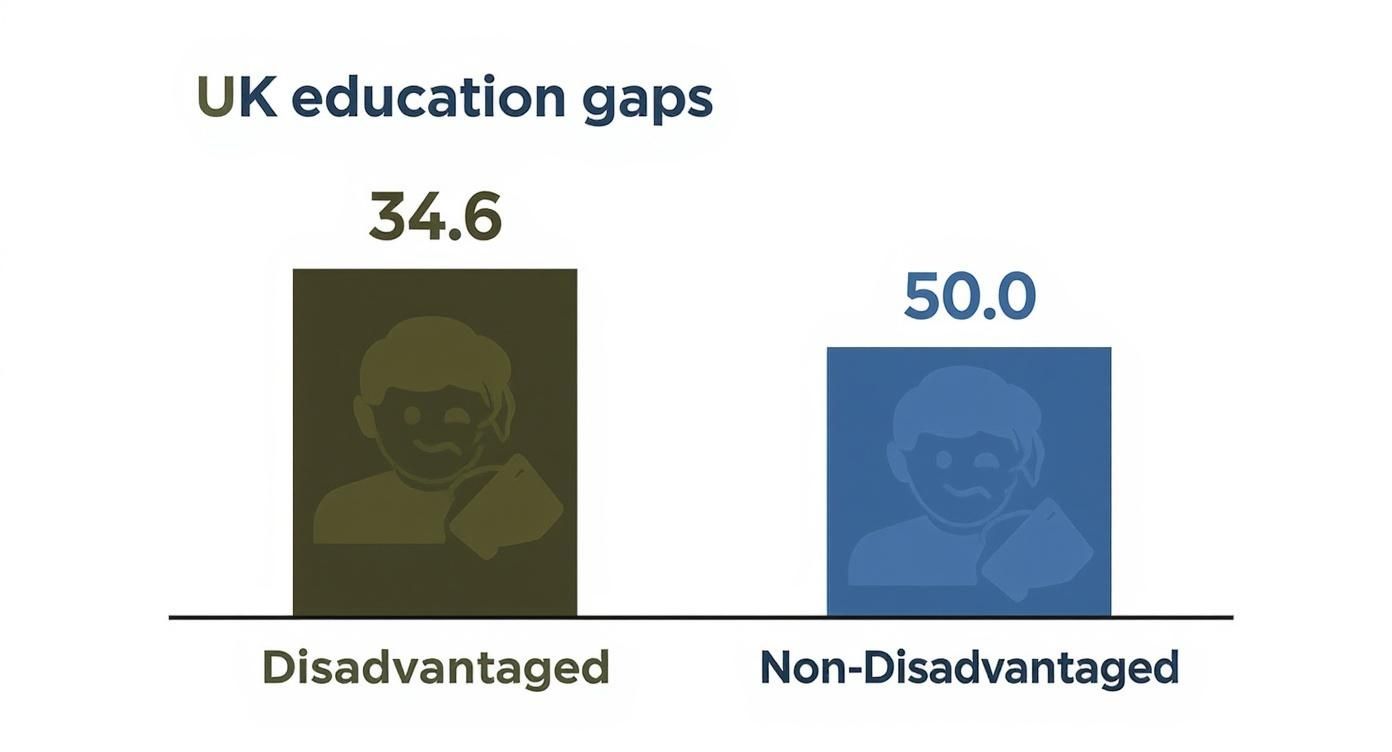
This data shows just how vital robust emotional and academic support is during the Year 7 transition. Getting it right can be a key factor in closing this gap and ensuring every child has the chance to thrive.
Understanding the role of schools in providing youth emotional support can offer deeper insights for parents and educators alike. By opening up conversations and giving them practical tools, we empower children with the confidence to walk through those new gates, ready for their next chapter.
Handling Big Changes on the Home Front

Life rarely stands still, does it? Big family shifts like moving house, welcoming a new baby, or parents separating can really shake up a child’s world. Suddenly, the ground beneath their feet feels wobbly and uncertain.
When this happens, our most important job is to be their anchor. Your calm, reassuring presence is the one constant they can cling to when everything else feels like it’s changing.
Maintaining Stability Amidst the Shift
One of the most powerful tools in your parenting toolkit during these times is routine. You can’t control the big event, but you absolutely can control the small, comforting rituals that frame their day. These predictable moments become a safe harbour in a storm of newness.
Think about the simple, grounding parts of your day:
- Consistent Mealtimes: Sticking to dinner at 6:30 pm can ground the end of a chaotic day of packing or adjusting.
- Bedtime Rituals: Don’t skip the usual bath, story, and cuddle. It’s a comforting, predictable full stop to their day.
- Weekly Traditions: The power of keeping Friday pizza night or a Sunday morning walk on the calendar is immense.
These small acts of consistency send a huge message: "Even though this big thing is happening, we are still solid, and you are safe." Routines become especially vital during transitions like understanding and navigating your child's first day at nursery, which is a huge step for everyone involved.
Age-Specific Ideas for Home Transitions
How you support your child will, of course, depend on their age and what you’re all facing. The real goal is to acknowledge their feelings and give them a sense of involvement, no matter how small.
If you’re moving house, try creating a ‘goodbye book’ for the old place with your little one. Let them take photos of their favourite spots—their bedroom, the garden swing, the cosy reading corner. This helps them honour their memories and process what it means to leave.
Is a new baby arriving? It’s crucial to carve out protected ‘one-on-one time’ with the older sibling. A practical way to do this is to schedule a 15-minute 'special time' each day that is just for them, where they choose the activity. Let them be a ‘special helper’ with small, manageable tasks to build a sense of pride and inclusion.
Your greatest asset through all of this is open, honest communication. Simply validating their feelings goes a long way. Try saying things like, "It's okay to feel sad about leaving our old garden," or "It's normal to feel a bit wobbly when things are so different."
By keeping those lines of communication open and leaning on consistency, you help your child feel secure and deeply loved, even when life feels unpredictable. This foundation is what will see them through any transition, big or small.
Everyday Tools to Build Emotional Resilience
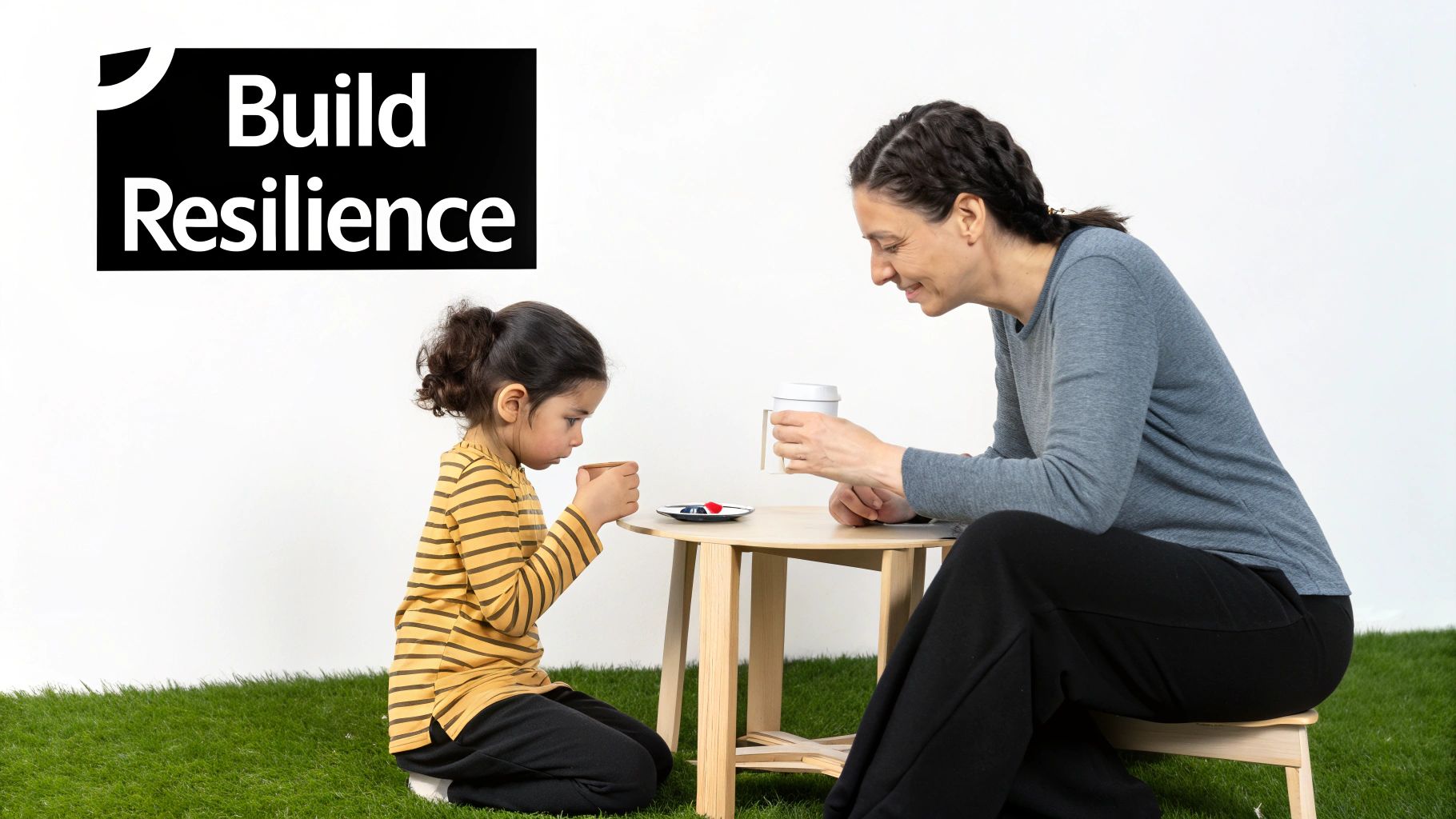
Supporting children through big changes isn’t just about dealing with the main event head-on. It’s also about weaving small, resilience-building habits into your everyday life. These simple tools give children the skills to manage their feelings long before a big transition even appears on the horizon.
Think of it as filling up their emotional toolkit. The more practical strategies they have tucked away, the more confident and capable they'll feel when uncertainty strikes. These don't need to be grand gestures, either—small, consistent actions always make the biggest impact.
Building a Feelings Vocabulary
A huge first step is helping children move beyond simply saying "I feel bad" to being able to put a name to their specific emotions. Giving a feeling a name helps to tame it, making it feel far less overwhelming.
You can start building this vocabulary in simple, playful ways.
- During story time: Just pause and ask, "How do you think that character is feeling right now? It looks like they might be feeling frustrated."
- While watching a film: Use the characters' experiences to talk about trickier emotions like jealousy, disappointment, or excitement.
- Use visual aids: Emotion flashcards or posters can give them a visual reference for feelings they don't yet have the words for.
This simple practice helps them connect the physical sensations in their body to a specific emotional state, which is a key part of learning to self-regulate. Storybooks about change or emotions, like The Invisible String by Patrice Karst or The Koala Who Could by Rachel Bright, are fantastic for gently starting these important conversations.
It's important to remember I am not a mental health professional. The advice shared here is intended as supportive guidance. If you have serious concerns about your child’s mental wellbeing, please seek advice from your GP or a qualified professional.
Calming Techniques for Turbulent Moments
When emotions run high, having a go-to calming exercise can be a total game-changer. These techniques help activate the body's relaxation response, slowing down a racing heart and a worried mind.
- Box Breathing: A simple but powerful relaxation tip. Breathe in for a count of four, hold for four, breathe out for four, and hold for four. You can trace a square in the air to make it more visual.
- Create a Calm-Down Corner: Designate a cosy spot in your home with cushions, a soft blanket, and a few favourite books or sensory toys. It's a safe space they can retreat to when they feel overwhelmed.
- Sensory Grounding: Ask them to name five things they can see, four things they can feel, three things they can hear, two things they can smell, and one thing they can taste. This pulls their focus out of their worried mind and into the present moment.
The Power of Creative Outlets
Sometimes, feelings are just too big or confusing to be put into words. This is where creative expression becomes an invaluable outlet.
Activities like drawing, journaling, building with LEGO, or even messy play allow children to process emotions without having to talk. There's no right or wrong way to do it; the focus is on the process, not the final product. Hobbies in general can be incredibly empowering. For instance, you could explore the developmental benefits of teaching children crafts like crochet as another way to build focus and calm.
Even something as simple as mental health apparel, like a T-shirt with a positive affirmation, can act as a gentle reminder of their own strength and normalise conversations about wellbeing. By integrating these tools, you are teaching them how to build emotional resilience one small step at a time.
Knowing When to Ask for More Support
You know your child better than anyone. Your intuition and steady presence are the most powerful tools they have when navigating big feelings, but sometimes, an extra layer of help is exactly what’s needed.
Recognising this and reaching out is a sign of incredible strength, not failure. It shows you’re committed to giving them everything they need to thrive.
But knowing when to seek that professional advice can feel tricky. It’s all about spotting the persistent changes that go beyond the typical adjustment wobbles. My best advice? Trust your gut if you feel something isn't quite right.
Spotting Persistent Signs of Struggle
While a bit of clinginess or a few moody afternoons are perfectly normal during a big change, certain behaviours can signal a deeper struggle if they stick around for several weeks without improving.
Keep an eye out for these more sustained patterns:
- Losing their spark: A noticeable and ongoing disinterest in hobbies, friendships, or activities they once absolutely loved.
- Pulling away: Consistently avoiding friends, skipping family gatherings, or backing out of social situations they used to enjoy.
- Those mystery aches and pains: A pattern of headaches, tummy aches, or generally feeling unwell that doesn't seem to have a clear physical cause.
- Big shifts in basics: Drastic changes in their appetite or persistent sleep problems (like trouble falling asleep or frequent waking) that don’t resolve on their own.
It’s really important for me to state that I am not a mental health professional. This advice is based on experience and research, not clinical training. If you have serious concerns about your child's wellbeing, please seek help from your doctor or a qualified professional.
Your UK Pathway to Getting Help
If your concerns are growing, the good news is there’s a clear pathway in the UK to get the right support for your child. Taking that first step is often the hardest part, but you absolutely don't have to figure it all out alone.
Your first port of call should usually be your GP. They can do a thorough check to rule out any physical issues and can make a referral to the right services if needed.
Alternatively, the pastoral team or SENCO (Special Educational Needs Coordinator) at your child's school is a fantastic resource. They see your child in a different environment every day and can offer brilliant insights and in-school support.
Beyond these initial steps, several incredible organisations are dedicated to children's mental health:
- YoungMinds: A leading charity offering a parents' helpline and a treasure trove of online information and advice.
- Place2Be: This amazing charity provides mental health support directly in schools right across the UK.
- NHS Children and Young People's Mental Health Services (CYPMHS): Often referred to by its old name, CAMHS, this is the core NHS service that assesses and treats young people with emotional, behavioural, or mental health difficulties.
Arming yourself with this knowledge means you can act with confidence, ensuring your child gets the compassionate, expert support they deserve, right when they need it most.
For younger children, a visual support can make transitions much easier. Our guide to using a now and next board includes a free printable board and 40 picture cards.
Got Questions? You're Not Alone.
When you’re guiding a child through big changes, it’s only natural for questions and worries to pop up. Let's walk through some of the most common concerns I hear from parents and caregivers, with some straightforward, practical answers to help you feel a bit more confident.
How Does Social Media Affect My Child's Mental Health During a Big Change?
Social media can be a real double-edged sword during times of transition. On one hand, it’s a brilliant way for your child to stay in touch with their old friends after a house move, which can be a real comfort. On the other hand, the Royal Society for Public Health found that platforms like Instagram and TikTok are linked to increased anxiety and depression. It can paint a distorted picture where it looks like everyone else is sailing through changes without a care, making your child’s feelings of loneliness feel much bigger.
This is especially true for teenagers starting secondary school. The constant comparison to polished online highlight reels can make them feel like they’re the only one finding it tough. Keeping the conversation open about the massive difference between someone's online grid and their actual life is one of the most important things you can do.
What Are Some Simple Relaxation Tricks I Can Teach My Child?
Giving children a few simple relaxation techniques is like handing them a toolkit they can dip into whenever they feel overwhelmed. It gives them a sense of control.
Here are a few easy ones that work wonders:
- 5-Finger Breathing: Get them to trace their hand with a finger from their other hand. As they trace up a finger, they breathe in slowly. As they trace down the other side, they breathe out. It’s a wonderfully discreet little trick they can use absolutely anywhere – on the school bus or in the classroom.
- The Worry Box: Find a small box and some little slips of paper. Encourage them to write or draw their worries and 'post' them into the box. This simple act of physically putting the worry aside can be surprisingly powerful.
- Mindful Listening: This one is lovely to do together. Just sit quietly for one minute and listen. Afterwards, take turns sharing every single sound you noticed – the hum of the fridge, a car outside, birdsong. It’s a simple but effective way to ground them in the present moment.
How Can Things Like Books and Even Clothes Help with Mental Health?
Resources like storybooks that touch on emotions or navigating change can be fantastic conversation starters. They offer a gentle, roundabout way to talk about big feelings. It allows your child to see their own experience in a character, which often feels much safer than talking about themselves directly. Some great examples are The Huge Bag of Worries by Virginia Ironside or Ruby's Worry by Tom Percival.
In a similar way, something as simple as mental health apparel – like a t-shirt with a positive message – can be a quiet, constant reminder of their own resilience and the importance of being kind to themselves. These small things help to normalise talking about mental wellbeing, weaving it into the fabric of your family life. The impact of poor mental health isn't just personal; mental ill health costs UK employers up to £56 billion a year, highlighting the importance of fostering good mental habits from a young age.
A Quick Note: Please remember, I'm not a mental health professional. The ideas and information shared here are meant as supportive guidance from my own experience. If you have real concerns about your child's mental health, the best first step is always to chat with your GP or another qualified professional.
At Little Fish Books, we're passionate about nurturing emotional literacy right from the start. Our collection of books, activities, and resources has been carefully chosen to help you and your child navigate life's ups and downs with a bit more confidence and compassion. Come and explore our supportive tools and start building emotional resilience together by visiting us at https://thatsokay.co.uk.