

Tee Shirts Womens Cotton: Your Guide to Tees (tee shirts womens cotton)
A great T-shirt is so much more than a piece of clothing, isn’t it? It’s your daily go-to, a second skin, and a canvas for the things you care about. For parents, teachers, and mental health advocates, what we wear can be a small but mighty act of self-care and a quiet signal of our values.
More Than Just a Tee: Finding Your Perfect Cotton Companion
This guide is for anyone who knows that comfort and conscience can, and should, go hand-in-hand. We’ll walk through how to choose the perfect women's cotton T-shirt, from understanding the real difference between fabrics to finding a fit that feels like it was made just for you.
Think of this as a friendly chat to help you make choices that not only feel amazing on your skin but also align with your commitment to wellbeing and positive messaging.
A Message on Fabric
Mental health is a cornerstone of wellbeing, especially for our children. In the UK, a staggering one in six children aged 7 to 16 is identified as having a probable mental health problem. These aren't just numbers on a page; they represent real kids navigating big, complex emotions in a world that can feel overwhelming.
Small, consistent acts of support can make a world of difference. Wearing a T-shirt with a positive affirmation, for instance, is a personal reminder to practise a bit of self-compassion. It also helps to gently normalise conversations around mental health, chipping away at the stigma that so often stops people from reaching out.
When a child sees an adult they trust championing wellbeing, it sends a clear, powerful message: it's okay to talk about your feelings. It's important.
The Power of Conscious Choices
Our choices, even down to the clothes we buy, can reflect our dedication to creating a healthier, kinder world for ourselves and the next generation. This feels particularly important when you consider the impact of social media, which can so easily distort a young person's sense of reality and self-worth.
Books and resources that teach emotional literacy are fantastic tools. They give children the language to understand and express what's going on inside. Pairing these tools with simple, everyday reminders—like a message on a T-shirt—can gently reinforce these crucial lessons in a way that feels natural and accessible.
Please remember, I'm not a mental health professional. The thoughts I share here are for informational purposes only. If you have concerns about your own or a child's mental health, it is essential to seek advice from a doctor or a qualified professional.
Simple Steps for Wellbeing
While professional support is vital, we can also weave simple relaxation techniques into our daily lives. Practising a moment of mindfulness, taking a few deep, grounding breaths, or stepping outside for a bit of fresh air are small but incredibly effective ways to manage stress.
Choosing comfortable, soft cotton clothing is another quiet form of self-care. It creates a sense of physical ease that supports a calmer mind. This guide is all about helping you find that perfect tee—a small piece of comfort in a very busy world.
Understanding the World of Cotton Fabrics
Ever grabbed a cotton T-shirt off the rack and it felt unbelievably soft, while another one felt… well, a bit stiff and scratchy? You’re not imagining things. Let’s pull back the curtain on the world of cotton fabrics. Think of it like paper: some is for jotting down quick notes, functional and straightforward, while other types are premium, archival-quality, made to feel incredible and last a lifetime.
The specific type of cotton used in a T-shirt has a massive say in its comfort, how long it will last, and even its impact on our planet. Getting this choice right is the first real step to finding a garment that doesn't just look good but feels genuinely great to wear, day in and day out.
The Main Types of Cotton
It’s a simple truth: not all cotton is created equal. The secret lies in the length of the cotton fibre. Longer fibres can be spun into yarns that are finer, stronger, and much softer. This is what separates a basic, everyday tee from a truly premium one.
Here are the main varieties you’ll come across:
- Conventional Cotton: This is the most common type of cotton you'll find. It’s affordable and everywhere, but its cultivation often relies heavily on pesticides and a lot of water, which raises some serious environmental questions.
- Organic Cotton: Grown without any synthetic pesticides or fertilisers, organic cotton is a much kinder choice for the planet and the farmers who grow it. Because the fibres aren't damaged by harsh chemicals, it often feels softer and is a far better option for anyone with sensitive skin.
- Pima and Egyptian Cotton: These are the luxury players in the cotton world, known as extra-long staple (ELS) cotton. They are famous for their incredible softness, strength, and resistance to pilling (those annoying little bobbles). T-shirts made from these feel exceptional and are built to last.
This simple map neatly lays out the core elements of a great cotton T-shirt—from how it feels to the styles you can choose and its power as a canvas for your message.
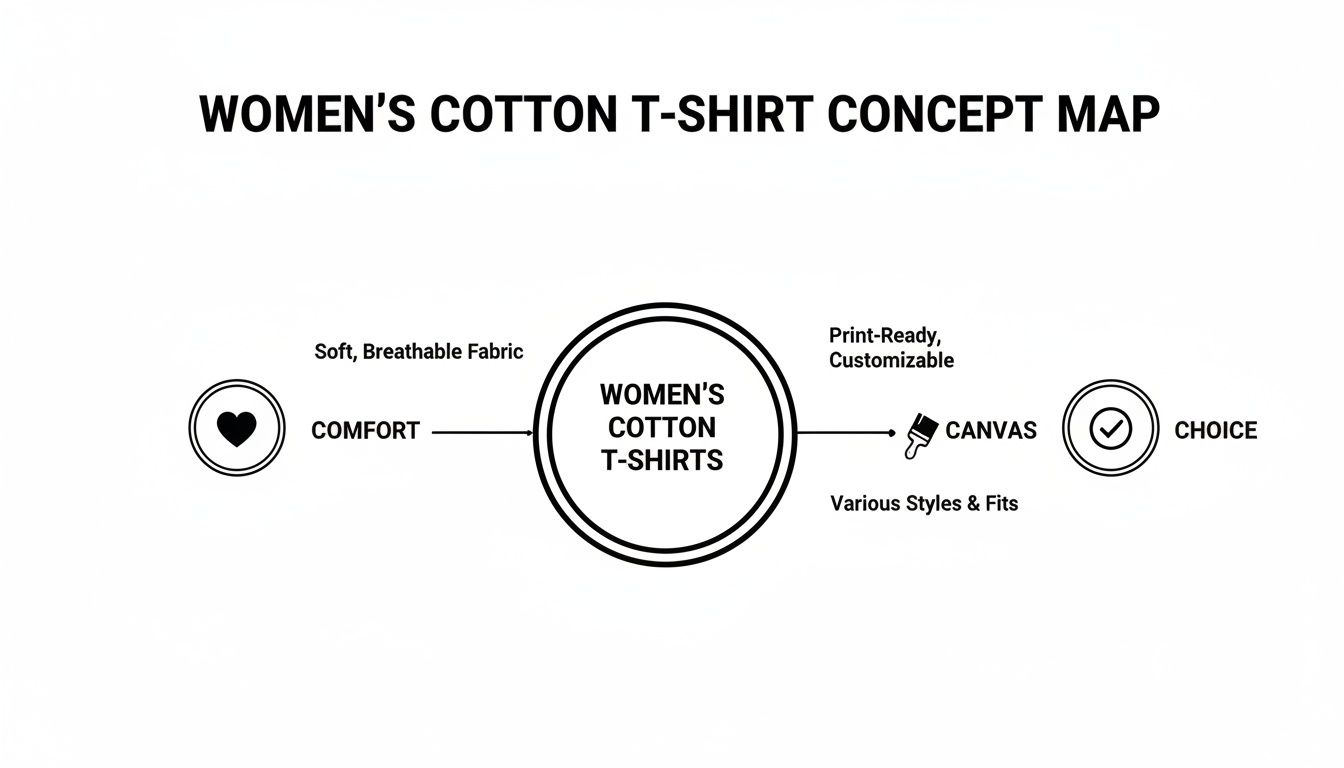
Ultimately, you can see how these three pieces—comfort, canvas, and choice—come together to create a T-shirt that’s so much more than just a piece of clothing.
A Quick Guide to Common Cotton T-Shirt Fabrics
Feeling a bit overwhelmed by the options? Don't worry. This little table is designed to help you quickly compare the different cotton varieties and find the perfect match for your needs, whether you're prioritising softness, durability, or sustainability.
| Cotton Type | Key Characteristics | Best For | Sustainability Profile |
|---|---|---|---|
| Conventional Cotton | Affordable and widely available. Can feel less soft due to shorter fibres and chemical processing. | Budget-friendly basics, large-scale production. | High water and pesticide usage raises significant environmental and health concerns. |
| Organic Cotton | Grown without synthetic pesticides/fertilisers. Softer and more durable than conventional cotton. Hypoallergenic. | Everyday wear, sensitive skin, eco-conscious brands. | Much lower environmental impact. Promotes biodiversity and healthier farming communities. |
| Pima/Egyptian Cotton | Extra-long staple (ELS) fibres create a silky-soft, lustrous, and exceptionally strong fabric. Resists pilling. | Premium, luxury T-shirts where comfort and longevity are paramount. | Generally a high-quality fibre. Look for organic certifications for the best sustainability profile. |
Choosing the right fabric sets the foundation for a T-shirt that people will truly love to wear, not just once, but over and over again.
Decoding Sustainability Labels
When you're browsing for T-shirts, you might spot labels like GOTS or OEKO-TEX. These aren't just confusing acronyms; they are really important certifications that tell you the story of a T-shirt’s journey, from the farm right through to your wardrobe.
Understanding these labels helps you see beyond the price tag and recognise the true value in a high-quality, certified organic cotton t-shirt. They are your assurance of a product made with care for both people and the environment.
- GOTS (Global Organic Textile Standard): This is the gold standard for anything made with organic textiles. A GOTS certification is a guarantee that the entire process—from harvesting the cotton to manufacturing and labelling—meets incredibly strict organic and social rules. It means the T-shirt is at least 95% certified organic fibre and was produced without harmful chemicals and with total respect for workers' rights.
- OEKO-TEX Standard 100: This label is all about your health. If a T-shirt has this certification, every single component—from the thread to the buttons and the printed design—has been tested for harmful substances and is completely safe for your skin. Think of it as a sign of a non-toxic, skin-friendly garment.
The importance of cotton in the UK women’s clothing market really shows how much shoppers are leaning towards quality and sustainability. While polyester was a huge player back in 2021, cotton holds its own because it’s natural, breathable, and fits with the growing demand for eco-conscious fashion. This trend is only getting stronger with the rise of online shopping and a real shift towards high-end, sustainable clothing. If you're curious, you can find more great insights about UK apparel trends from Statista's research.
By learning to read these labels, you can make choices you feel truly good about. You can pick a tee that lines up with your values, knowing what you wear is good for you, for the people who made it, and for the planet we all share.
How to Find Your Perfect Fit and Style
Choosing the right fit for a women's cotton T-shirt can feel like a bit of a lottery, especially when you're shopping online. It often seems like sizing changes from one brand to the next, which can really knock your confidence. But finding a fit that makes you feel comfortable and empowered is the whole point of a great tee.
Let's break it down with a simple analogy. Think of common T-shirt fits like your favourite coffee mugs. A 'classic' fit is your standard, reliable mug—not too tight, not too loose, just right for every day.
A 'slim' fit is more like a tall, sleek travel mug, designed to sit a bit closer to your body. Then you have the 'relaxed' fit', which is like that wide, comforting cuppa you curl both hands around—it offers plenty of room and a wonderfully casual feel.
Getting your head around these basic styles is the first step. The next is figuring out which one is right for you.
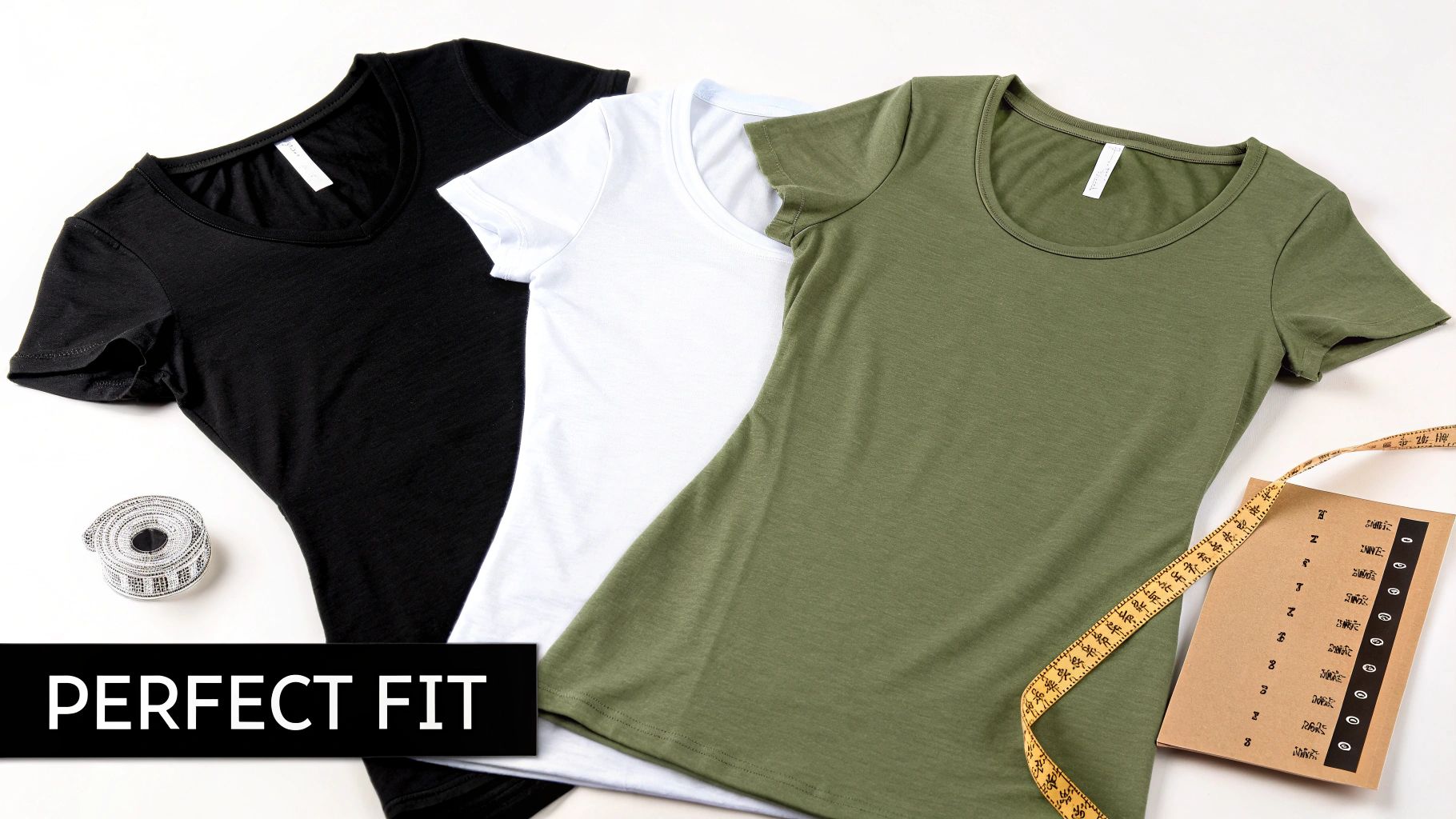
Taking Your Measurements Accurately
The most reliable way to find your perfect fit is to ignore the size label for a moment and focus on your actual measurements. It's easy—all you need is a soft measuring tape.
- Bust: Measure around the fullest part of your chest, keeping the tape level all the way around your back.
- Waist: Find your natural waistline. This is usually the narrowest part of your torso, just above your belly button. Measure around it.
- Hips: Measure around the widest point of your hips, making sure the tape stays parallel to the floor.
Jot these numbers down. This is your personal size guide, and it's far more dependable than a generic "M" or "L".
Decoding Size Charts
Once you have your measurements, the brand's size chart becomes your best friend. Don't just glance at it; properly compare your bust, waist, and hip numbers to see where you land.
If you find you're between sizes, think about the kind of fit you prefer. For a snugger 'slim' fit, you might want to size down. For a 'relaxed' style, sizing up could give you that extra comfort you're looking for.
Remember that the fabric makes a difference, too. A 100% cotton tee will have less give than a cotton blend, so it's always wise to allow a little extra room for movement and potential shrinkage after the first wash.
Expressing Yourself with Style Details
Beyond the overall fit, small details like the neckline and sleeve length play a huge role in the final style of your tee shirts womens cotton. They're the finishing touches that help express your personality and ensure your new affirmation tee is one you'll want to wear again and again.
- Crew Neck: A classic, round neckline that sits close to the base of the neck. It's versatile, timeless, and a great canvas for printed messages.
- V-Neck: This neckline can elongate the neck and often feels a little more open and dressy than a standard crew neck.
- Scoop Neck: A deeper, wider round neckline that has a more relaxed and feminine feel.
- Sleeve Lengths: From classic short sleeves to cap sleeves or even longer three-quarter lengths, each style creates a completely different silhouette.
By combining the right fit with the perfect style details, you can create a T-shirt that truly feels like your own. For a bit more inspiration on putting it all together, have a look at our tips on choosing and styling women's organic cotton tee shirts. You'll be well on your way to finding a combination you'll absolutely love.
Wearing Your Values: Affirmations and Mental Health
A comfy cotton T-shirt with a positive message is more than just clothing; it's a quiet but powerful tool for wellbeing. It works on two levels: as a personal reminder to be kind to yourself, and as a gentle conversation starter that helps normalise talking about mental health. This is a big deal in the UK, where poor mental health is estimated to cost businesses up to £56 billion a year.
These small prompts can honestly make a huge difference. Wearing apparel that supports mental health helps build a culture of wellbeing, both for you and within your community, whether that's at school or in the workplace. It's a simple, everyday way to show solidarity and create an environment where emotional health is seen and valued.
Let's explore how your choice of tee shirts womens cotton can become a vehicle for positive change, and we'll also look at the printing methods that bring these important messages to life.
The Power of a Positive Message
We’re all swimming in a sea of constant digital noise, and the messages we absorb really matter. Social media can be great for connecting us, but it can also take a toll on our mental health, especially for children and young people who are still figuring out who they are.
An affirmation on a T-shirt is a welcome antidote. It’s a tangible, real-world prompt that cuts right through the digital chatter. Think about a simple phrase like "It's Okay to Not Be Okay"—for the person wearing it, and for anyone who reads it, that can be a profound source of comfort.
A gentle reminder: I'm not a mental health professional. The information I'm sharing here is for educational purposes. If you are worried about your own mental health or that of a child, it's so important to seek help from a doctor or another qualified professional.
Mental Health in a Broader Context
Talking openly about mental health isn't just a personal thing; it's a societal one. With one in six children in the UK now experiencing a probable mental health problem, normalising these conversations is more urgent than ever.
Apparel can play a small but meaningful part in this shift. When a teacher wears a T-shirt promoting kindness, it quietly reinforces classroom lessons on empathy. When a parent wears one, they’re modelling self-compassion for their kids. It’s a subtle but consistent way to weave mental health awareness into the fabric of daily life. For more on this, you can discover how mental health T-shirts can promote awareness and break stigma.
The good news is, the market for thoughtful apparel is growing. The UK's online women's clothing retail sector is expected to hit an estimated £15.1 billion by 2025, with social media playing a huge role in how we shop. This trend is perfect for brands that blend emotional wellness with their products, allowing them to connect directly with parents, educators, and advocates through authentic storytelling.
Bringing Affirmations to Life
The way a message is printed onto a cotton T-shirt really affects how vibrant it looks and how well it lasts. There are two popular methods that will ensure your affirmations stick around as long as the fabric itself:
- Screen Printing: This is the traditional technique where ink is pushed through a mesh screen onto the fabric. It's fantastic for bold, simple designs and works really well for larger batches. The result is a vibrant, durable finish that sits on top of the cotton.
- Direct-to-Garment (DTG): Think of this like an inkjet printer, but for clothes. DTG sprays ink directly into the cotton fibres, which allows for incredibly detailed, multi-coloured designs. This gives you a soft, breathable print that feels like it’s part of the shirt itself.
If you're looking for inspiration, exploring powerful mental health quotes can be a great way to find daily affirmations that resonate. These can be perfect for custom apparel or just for personal reflection. Books on mental health also provide a quiet space for learning and growth away from our screens. By choosing the right printing method, you can make sure these valuable messages are displayed clearly and beautifully.
Making an Ethical and Sustainable Choice
How can a simple cotton T-shirt be part of making the world a little bit better? It all comes down to choosing one that’s made ethically and sustainably. This isn't just about buzzwords like 'fair trade'; it’s about what those terms really mean for the people who make our clothes and the planet we all share.
This video does a beautiful job of showing the real human journey behind a T-shirt. It's a powerful reminder that conscious shopping is a natural extension of supporting wellbeing – caring for our global community is just as important as caring for ourselves.
When you choose ethically-made tee shirts womens cotton, it becomes a small but powerful act. It’s a choice that contributes to a much bigger positive impact, which can make you feel even better about the mental health message you’re wearing.
What Ethical Production Truly Means
At its heart, ethical production is about making sure every single person involved in creating your T-shirt, from the cotton farmer to the garment worker, is treated with fairness and dignity. This feels especially important when you think about it, because mental health is a global issue that touches people in every corner of the world.
Think of it this way: it feels a bit hollow to support mental wellbeing in our own communities if the products we buy are made in poor conditions by workers elsewhere. True wellness has to be interconnected.
Ethical practices really boil down to a few key things:
- Fair Wages: People are paid a living wage that allows them to properly support themselves and their families.
- Safe Working Conditions: Factories are clean, safe places to work, free from hazards. The health of the workers is always a priority.
- No Forced or Child Labour: This one is non-negotiable. Every worker is there by choice and is of a legal working age.
By choosing brands that are open about where their clothes come from and hold certifications like Fair Trade, you're voting with your wallet for a kinder fashion industry. It aligns your purchase with the very same values of compassion and support that you advocate for in mental health.
The Impact of Sustainable Choices
Sustainability and ethical production go hand-in-hand. Sustainability focuses on lessening the environmental footprint of our clothing. A sustainable cotton T-shirt isn't just about feeling good on your skin; it’s about doing good for the planet. For a deeper dive, you can learn more about the benefits of an organic cotton T-shirt and its positive impact in our related article.
This is a really powerful area for us to make a difference. The UK women's T-shirt market generated an incredible USD 5,232.5 million in 2021 and is expected to hit USD 8,419.0 million by 2028. This shows that people are actively buying quality clothes, which creates a massive opportunity for brands with a real purpose. You can discover more insights about the women's T-shirt market from Grand View Research.
Your Checklist for Conscious Shopping
Making a conscious choice doesn't need to be complicated. Here are a few simple things to look out for when you're buying your next cotton T-shirt:
- Check for Certifications: Look for trusted labels like GOTS (Global Organic Textile Standard) and Fair Trade. Think of them as your guarantee of high environmental and social standards.
- Read the Brand's Story: Brands that are genuinely committed to doing things the right way are usually proud to talk about it. Check out their "About Us" or "Our Mission" page to see how they make their products.
- Choose Quality Over Quantity: Investing in one well-made, sustainable T-shirt means it will last you so much longer. This reduces waste and, in the long run, means you buy less over time.
Every ethical purchase sends a powerful message to the industry that we, as consumers, demand better. It shows that we care not just about the T-shirt itself, but about the entire journey it took to reach us.
Caring for Your Cotton Tee
You've found the perfect cotton tee, the one with a message that just gets you. Now, how do you keep it looking and feeling that good for years? Looking after it properly doesn't just protect the fabric and fit; it keeps that positive affirmation on the front looking crisp and clear, ready to give you a little boost wash after wash.
Think of it as a little ritual of care for a much-loved item. Following a few simple steps helps you sidestep those classic laundry dramas like shrinking and fading. It’s a small thing, but it’s also a wonderfully sustainable habit, helping your favourite garments last so much longer.
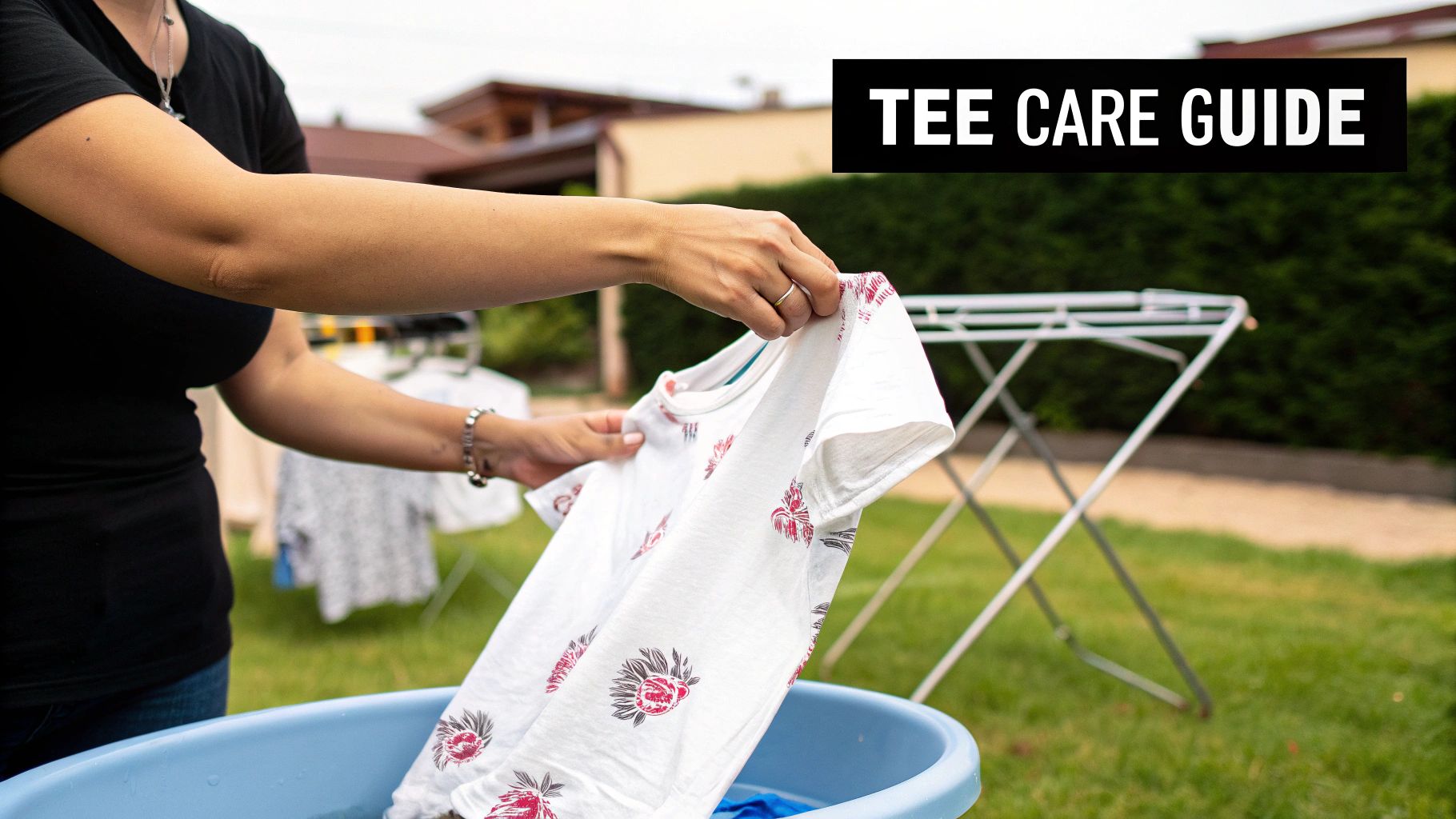
Washing Your Cotton Tee
Getting the wash cycle right is the first step to a long and happy life for your T-shirt. It can be tempting to just bung everything in on a hot wash, but cotton – especially printed cotton – really appreciates a gentler touch.
A cool wash is your tee's absolute best friend. Aim for 30°C, as it cleans perfectly well while being much kinder to the cotton fibres and the printed design. Hot water is what causes those fibres to tighten up and shrink, and it’s a notorious culprit for fading colours.
Here's the most important tip for any printed top: always, always turn it inside out before you wash it. This simple action creates a shield for the affirmation, protecting it from rubbing against other clothes and the inside of the machine. Honestly, this one step will make a massive difference to how long the print lasts.
The Gentle Art of Drying
How you dry your tee shirts womens cotton is just as crucial as how you wash them. The tumble dryer might be quick, but its intense heat is public enemy number one for shrinking fabric, causing damage, and making prints peel.
Whenever you can, let your tee air dry. It’s the kindest method by a long shot. Just give it a little reshape while it's damp and pop it on a line or a clothes horse. Try to keep it out of intense, direct sunlight, which can act like a natural bleach on the colour.
If you absolutely have to use a tumble dryer, choose the lowest heat setting you can. A good compromise is to take the T-shirt out while it’s still a tiny bit damp and let it finish drying naturally. This protects it from the worst of the heat.
A Few Final Tips for Longevity
Keeping your favourite tee in top condition is pretty straightforward. Here are a few last pointers:
- Avoid Harsh Chemicals: Stay away from bleach and aggressive detergents. They can weaken the natural cotton fibres and strip the colour right out of the fabric. A mild, eco-friendly detergent is a much better choice.
- Iron with Care: If your T-shirt needs an iron, make sure it’s still inside out. Use a low-to-medium heat and never, ever iron directly over the printed part.
- Store It Properly: It’s best to fold your T-shirts neatly and keep them in a drawer. Hanging cotton tees for a long time can sometimes cause the fabric around the shoulders to stretch and lose its shape.
Your Questions About Women's Cotton T-Shirts
Let’s tackle some of the most common questions that pop up when choosing, wearing, and caring for your favourite tee shirts womens cotton. I’ll do my best to give you clear, helpful answers that build on what we’ve talked about, so you can feel confident in your choices.
Wearing a T-shirt with a positive message is more than just a fashion choice; it's a small but powerful act of self-care. It also helps to open up conversations around mental health, which is so important when you consider that one in six children in the UK is identified as having a probable mental health issue.
Why Should I Choose Organic Cotton Over Regular Cotton?
Think of it this way: organic cotton is grown the way nature intended, without a cocktail of harsh pesticides and chemicals. This means it’s much kinder to the soil, the farmers, and, of course, your skin.
Because the fibres aren't weakened by chemical processing, they're often stronger, softer, and more durable. If you have sensitive skin or you’re passionate about making eco-conscious choices, switching to organic cotton is a simple way to align your wardrobe with your values.
Please remember, I am not a mental health professional. The information shared here is for educational purposes. If you are worried about your own or a child's mental health, it is essential to seek advice from a doctor or another qualified professional.
Sometimes, the simplest things bring the most comfort—like taking a few deep breaths or pulling on a super-soft, familiar T-shirt.
How Do I Know if a T-Shirt Is Ethically Made?
The best way to know for sure is to look for trusted third-party certifications. Labels like GOTS (Global Organic Textile Standard) or Fair Trade are a great sign that a brand is serious about ethical production.
Brands that are genuinely committed to doing the right thing are usually proud of it and will share this information on their websites or product tags. It’s also worth remembering that poor mental health costs UK businesses up to £56 billion annually, which really highlights how vital supportive, caring cultures are—not just in our workplaces, but across the globe. If you can't find the information easily, don't be shy about asking the company directly. Transparency is key.
What Is the Best Way to Keep My Printed T-Shirt from Fading?
To keep that affirmation message looking bold and bright, a little care goes a long way. Always turn the T-shirt inside-out before washing it in cool water on a gentle cycle. Stay away from harsh detergents or bleach.
The best method for drying is to let it air dry away from direct sunlight. Tumble dryers can be too harsh, and the high heat can damage both the print and the soft cotton fibres. With social media constantly affecting our mental health, having these tangible, offline reminders of our worth is more important than ever.
Are 'Relaxed Fit' and 'Boyfriend Fit' the Same?
They're very similar, but there can be subtle differences. Both styles are designed for a looser, more comfortable feel, which is a world away from a tight, structured fit.
A 'boyfriend fit' often has a straighter, boxier cut through the body with slightly longer sleeves, mimicking a classic men's tee. A 'relaxed fit', on the other hand, is still loose but might be designed with a woman's frame in mind—perhaps with a gentle taper at the waist or a wider neckline. My advice? Always check the brand's size guide, as their definitions can vary.
Exploring mental health books can also offer wonderful insights and tools for your wellbeing journey.
At Little Fish Books, we believe in nurturing emotional literacy through stories, resources, and mindfully made products. Discover our collection of mental health apparel and books designed to support wellbeing for all ages. Visit us at https://thatsokay.co.uk to learn more.