
What is Behavioural Activation? A Practical Guide for Young People
Behavioural Activation, or BA for short, is a wonderfully straightforward and powerful way to help lift a low mood. It’s built on a simple, yet profound, idea: what we do has a direct impact on how we feel. Instead of just waiting around for motivation to strike, BA encourages us to get going with small, positive activities to actually create that motivation.
An Introduction to Behavioural Activation
When a child or young person is feeling low, sad, or just plain flat, their natural reaction is often to pull back. They might stop seeing their friends, drop hobbies they once loved, or just spend more and more time alone in their room. This kicks off a really tough cycle: the less they do, the fewer positive experiences they have, which in turn makes them feel even worse.
Behavioural Activation works by gently interrupting this downward spiral. I like to think of it as being a bit like a car with a flat battery. You can sit in the driver's seat and wish for the engine to start all you want, but it won't happen. What you need is a jump start. BA provides that jump start for our mood, helping young people get back in touch with activities that give them a sense of enjoyment or achievement, even if it's just in a tiny way to begin with.
Why This Matters Now
Let's be honest, being a young person today isn't easy. The pressures from school, friendships, and the ever-present world of social media create a complicated and often stressful environment. So, focusing on children's mental health has never been more critical. The statistics really bring this home.
In the UK, one in six children aged 7 to 16 has a probable mental health problem. Addressing these challenges early isn't just about individual wellbeing; it's about building a healthier, more resilient society for the future. Poor mental health also has a significant economic impact, with the cost to UK employers estimated to be up to £56 billion a year due to absenteeism and reduced productivity. Tackling these issues in childhood is a crucial preventative step.
The Core Idea Summarised
Unlike some therapies that spend a lot of time digging into thoughts and feelings, BA is all about action. It's a practical, hands-on approach that puts the power back into a young person's hands, showing them they can influence their mood through their own behaviour. If you're interested in learning how this fits into the bigger picture, you might find it helpful to read more about understanding broader behavioral intervention strategies.
To make it even clearer, here’s a quick rundown of the main ideas.
Behavioural Activation at a Glance
This table breaks down the key pillars of BA into simple, easy-to-grasp concepts. It’s a great way to see how the different parts of the theory fit together.
| Concept | Simple Explanation |
|---|---|
| The Action-Feeling Link | What you do directly affects how you feel. |
| The Cycle of Inactivity | Withdrawing from life makes low moods worse. |
| Activity Scheduling | Planning small, positive actions breaks the cycle. |
| Values-Based Action | Activities are chosen based on what is personally meaningful. |
At its heart, Behavioural Activation is about recognising that small steps can lead to big changes in how we feel. It's about taking gentle, purposeful action to break free from the grip of a low mood.
Understanding the Vicious Cycle of Low Mood and Inactivity
When a child is feeling low, their world has a tendency to shrink. The motivation to do things they normally love—like kicking a football around with mates or even just having a laugh online—can completely vanish. What's left is a quiet, empty space. This isn't a choice; it's a symptom of the low mood itself, but it accidentally kicks off a self-perpetuating cycle that can be incredibly tough to break.
This very pattern is what behavioural activation is designed to tackle. When a young person stops taking part in activities that give them a sense of reward, they lose opportunities to feel good. The less they do, the fewer chances they have for joy, connection, or accomplishment, which only makes those initial feelings of sadness feel heavier.
The Downward Spiral in Action
Think about a teenager who absolutely loves being on the school football team. When a low mood hits, the idea of getting changed, heading to practice, and making conversation feels like climbing a mountain. So, they decide to skip it. They just don't have the energy.
While that decision might bring a moment of relief from the pressure, it also means they’ve just missed out on:
- The physical boost that comes from exercise.
- The laughter and connection with their teammates.
- That feeling of pride after a really good training session.
By staying home, they dodged a challenge, but they also lost a key source of positive reinforcement. This makes their world a little smaller and their mood a little lower, making it even harder to get to the next practice. And so, a powerful downward spiral begins, where inactivity and low mood feed each other.
This concept map really helps to visualise the link between our actions, our feelings, and the cycles they create.
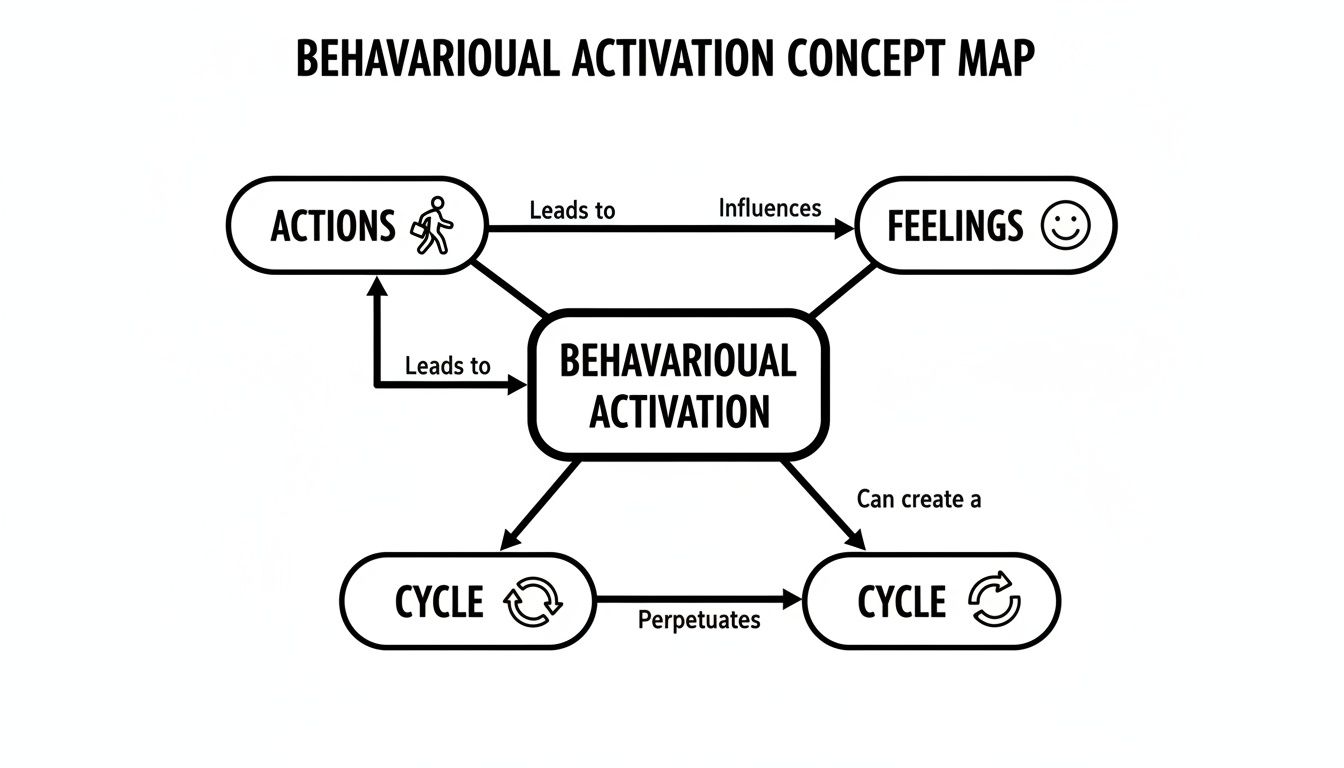
As you can see, pulling back from activities directly strengthens negative feelings, reinforcing the very cycle we need to interrupt.
Modern Pressures and the Inactivity Trap
The world today throws some unique challenges into the mix that can make this cycle even stickier. The endless scroll on social media, for example, is a passive escape that can easily take the place of active, real-world engagement. While it might feel like a distraction at the time, hours spent passively consuming content often leaves a young person feeling more disconnected and inadequate than they did before. This constant comparison can fuel feelings of anxiety and depression, making it even harder to find the motivation for real-life activities.
This kind of passive consumption gives us very little of the genuine reward our brains are wired for. It’s the difference between watching a video of someone climbing a mountain and taking a single step up a small hill yourself; only the latter actually builds your confidence and shifts your mood.
The point of understanding this cycle isn't to place blame on anyone. Far from it. It's about recognising a common and powerful pattern. Once we can see how inactivity keeps a low mood going, we can start to see how small, deliberate actions have the power to turn it all around.
Putting Behavioural Activation Into Practice With Your Child
Moving from the 'why' to the 'how' is where this all comes together. It’s the part where you can start making a real, tangible difference at home. This isn’t about forcing your child into activities, but rather about working together to find those little sparks of joy or feelings of achievement again.
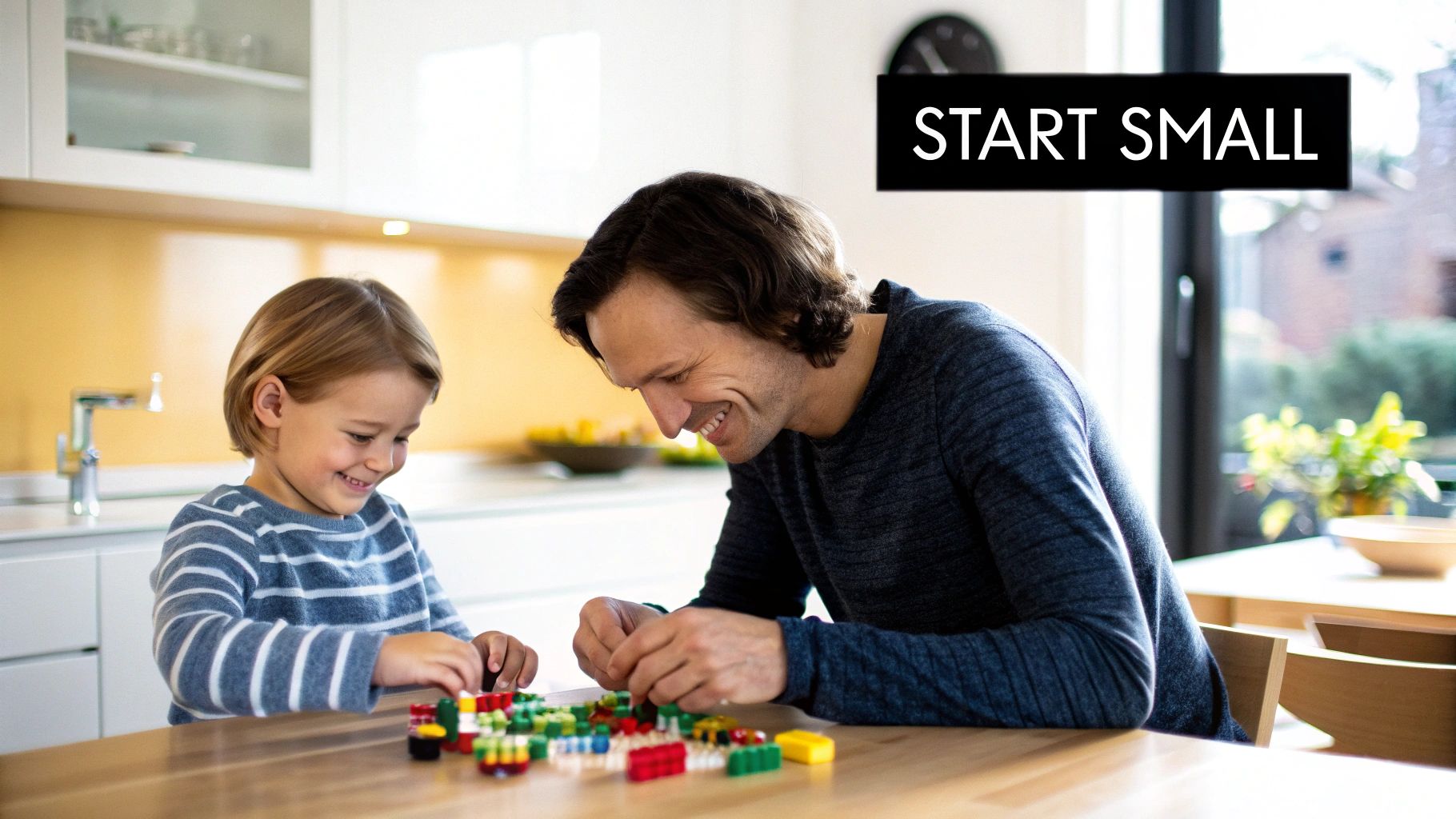
The key is to start small. Really small. The goal is to build momentum without piling on the pressure. The journey starts by figuring out what your child truly cares about, noticing how different activities impact their mood, and then gently planning new things to try. Think of it like placing one LEGO brick on top of another – each small step builds something bigger.
Connect With Your Child's Values
Before you even think about scheduling activities, you need a compass. You need to know what genuinely matters to your child, not what you think should make them happy. For little ones, this often revolves around creativity, play, or feeling close to family. For teens, it might be more about friendships, gaining independence, or getting good at something new.
You can gently explore this with a few open questions:
- "What's one thing that used to make you smile, even just a tiny bit?"
- "If you could design a 'perfect' day, what would you put in it?"
- "When do you feel most like yourself?"
This chat helps you build a menu of potential activities that are actually rooted in their world. This is the foundation for making behavioural activation stick.
Gently Monitor Activities and Mood
The next phase is to become a kind of mood detective, with your child as your partner. The mission is to help them see the direct line connecting what they do with how they feel. A simple chart or a notebook is perfect for this – just track an activity and rate their mood on a scale of 1-10 before and after.
This isn't about judging their feelings or demanding happiness. It's simply about gathering data together. It’s helping your child realise that even a five-minute walk can nudge their mood from a 2 up to a 3. That tiny shift is powerful proof that they have some say in how they feel.
This step provides the evidence they might need to feel motivated for what comes next: planning ahead.
Brainstorm and Schedule Small Steps
Armed with an understanding of their values and some real-world data on what helps, you can start brainstorming and scheduling together. If you need some help with the planning part, exploring guides on creating structured daily routines can make it more visual and less intimidating. The golden rule is to always start with something that feels almost too easy to do.
For a young child, this could be five minutes of building with LEGOs. For a teenager, it might be as simple as texting one friend to say hi. For a bit more inspiration, our guide on kids' mental health activities has a whole host of ideas you can tweak. The table below breaks down how you can adapt activities for different age groups, focusing on both enjoyment and accomplishment.
Age-Appropriate Behavioural Activation Ideas
Here are some practical ideas to get you started, broken down by age. Remember to tailor these to your child’s unique interests, distinguishing between activities just for fun ('Pleasure') and those that provide a sense of achievement ('Mastery').
| Age Group | Pleasure Activities (For Fun) | Mastery Activities (For Accomplishment) |
|---|---|---|
| Toddlers (1-3) | Splashing in a puddle, blowing bubbles, listening to a favourite song. | Stacking two or three blocks, putting a toy in a box, helping wipe a spill. |
| Preschoolers (3-5) | Finger painting, playing make-believe, having a dance party in the living room. | Helping to water a plant, sorting toys by colour, completing a simple puzzle. |
| School-Age (6-12) | Playing a board game, riding a bike, reading a chapter of a fun book. | Helping to cook a simple meal, tidying their desk, learning a new card trick. |
| Teenagers (13+) | Going for a short walk in nature, listening to a new album, trying a new recipe. | Practising a musical instrument for 10 minutes, organising a playlist, completing one homework task. |
These are just starting points, of course. The best activities will come from your conversations with your child. The aim is to build a toolkit of positive actions they can turn to, helping them see that they have the power to influence their own well-being, one small step at a time.
Why Is Behavioural Activation a Big Deal for the NHS?
When you’re trying to find the right mental health support for your child, you want something that’s trusted, effective, and actually used by professionals. Behavioural Activation ticks all those boxes. It holds a really important place in the UK’s approach to mental health, especially within the NHS. This isn’t just based on a hunch; it’s backed by solid, real-world proof of what helps people get better.
That official backing is a huge source of reassurance for families. When a therapy is recommended by a body like the National Institute for Health and Care Excellence (NICE), it means it’s been through the wringer—rigorously tested and shown to be a credible, evidence-based way to support a young person. For parents navigating a sea of information, that kind of endorsement cuts through the noise and gives you confidence you’re on the right track.
The Research That Changed Everything
A massive reason for the NHS’s confidence in BA stems from some groundbreaking UK research. A landmark study, known as the COBRA trial, came back with a game-changing finding: for depression, Behavioural Activation is just as effective as the more well-known Cognitive Behavioural Therapy (CBT).
But here’s the kicker: the study also found BA is up to 20% cheaper to deliver. You can read more about these powerful findings from the COBRA trial yourself. This was fantastic news for families stuck in the mental health system. Because BA is more straightforward, it doesn't always require a highly specialised therapist, meaning a wider range of trained practitioners can deliver it. This makes the therapy much easier to scale up, helping to tackle those painfully long waiting lists for Child and Adolescent Mental Health Services (CAMHS).
What This Means for Your Family
The fact that BA is both effective and more affordable has a direct, positive impact on your child’s ability to get help. It means this brilliant support can be rolled out more widely in places like schools, community centres, and GP practices, reaching more children and young people much sooner. Simply put, its importance to the NHS helps bring effective mental health care closer to home.
By championing a therapy that is both effective and efficient, the NHS can help more families, more quickly. This practical approach is vital in addressing the rising need for youth mental health support across the country.
Ultimately, knowing that Behavioural Activation is a cornerstone of the NHS strategy should offer some peace of mind. It confirms that you’re exploring a respected, proven method to help your child reconnect with their world, all supported by a system trusted by healthcare professionals nationwide.
Helpful Resources and Tips to Support Your Child
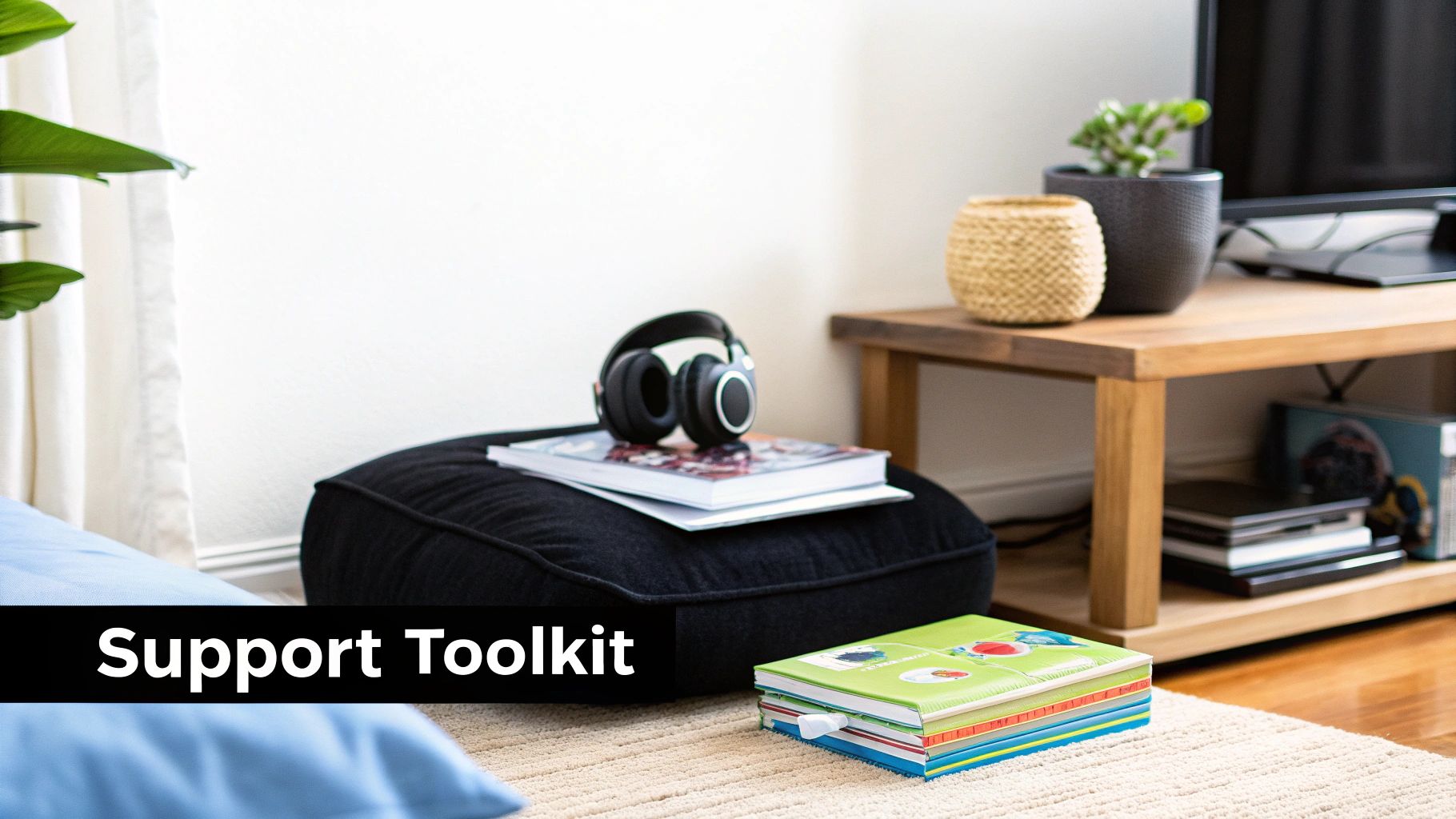
Supporting a child through a tough patch is about more than just scheduling activities. It’s about creating an environment rich with tools that build resilience and invite open conversations about feelings. Think of it as building a support toolkit that can complement behavioural activation, giving your child extra layers of comfort whenever they need them.
This isn’t just a nice idea; it's a strategy with solid backing. The National Institute for Health and Care Excellence (NICE) in the UK officially endorses Behavioural Activation for depression. This is backed up by studies that found strong evidence that BA is more effective than usual care for helping people recover from depressive symptoms. You can read the full review of this research to see just how effective it can be.
Creating a Calm Space
One of the most powerful things you can do is set up a 'calm corner' somewhere in your home. This isn’t a time-out spot or a naughty step. It’s a safe, cosy nook where your child can retreat to self-regulate when their emotions feel too big to handle.
Stock it with simple, comforting items:
- Soft blankets and cushions to create a feeling of security.
- A couple of their favourite books for a gentle distraction.
- Simple relaxation tools like a stress ball, fiddle toy, or some colouring pages.
Having this dedicated space gives them a physical anchor for managing big feelings, which makes it much easier to re-engage with the world when they're ready.
Books That Open Conversations
Stories are a wonderful, gentle way to explore tricky feelings and mental health topics. Reading together can make these conversations feel more normal and help a child realise they aren’t alone in what they're experiencing.
- For Younger Children: Books that name emotions, like The Colour Monster by Anna Llenas or The Worrysaurus by Rachel Bright, can be brilliant starting points.
- For Older Children: Books like A Monster Calls by Patrick Ness or The Boy, the Mole, the Fox and the Horse by Charlie Mackesy can explore complex themes with honesty and compassion.
- For Teenagers: Non-fiction guides and relatable fiction can be a game-changer. You might find some great ideas in our dedicated list of mental health resources for teens.
Simple Relaxation Techniques
Teaching your child simple breathing or grounding techniques gives them a portable skill they can use absolutely anywhere. These are brilliant for calming the nervous system before attempting an activity they're feeling anxious about.
A fantastic one to start with is 'box breathing':
- Breathe in slowly through the nose for a count of four.
- Hold that breath for a count of four.
- Breathe out slowly through the mouth for a count of four.
- Hold the breath out for a final count of four.
Another great technique is '5-4-3-2-1 grounding'. Quietly encourage your child to notice: 5 things they can see, 4 things they can feel, 3 things they can hear, 2 things they can smell, and 1 thing they can taste. This pulls their focus away from overwhelming thoughts and into the present moment.
Knowing When to Seek Professional Help
While this guide is packed with supportive strategies you can use at home, it's so important to remember that I'm not a mental health professional. This information is here to help, but it's never a substitute for expert medical advice.
Knowing how to support a child is a huge part of the puzzle, but it's just as crucial to recognise when it's time to bring in professional help. These strategies can make a real difference, but sometimes, a more structured level of support is exactly what’s needed. Addressing mental health challenges early is one of the most powerful things we can do for a child’s future.
Clear Signs It Is Time for Support
A persistent low mood that just doesn't seem to lift is a key indicator. If you notice your child’s difficulties are starting to get in the way of their schoolwork, friendships, or family life, that’s a clear signal to reach out for help.
Keep an eye out for specific changes, including:
- A lasting low mood or irritability that goes on for weeks.
- Significant shifts in their sleeping or eating patterns.
- Completely pulling away from friends, family, and activities they once loved.
- Any talk of self-harm or thoughts about not wanting to be here anymore.
Important Disclaimer: Please remember, I am not a mental health professional. The information provided here is for educational purposes only and is not a substitute for professional medical advice. If you have serious concerns about your child's mental health, please speak to your GP or a qualified professional. If you are worried about your child's immediate safety, seek urgent medical help from your GP or A&E.
Navigating the UK Healthcare System
Your first port of call is usually your GP. They're well-placed to assess your child’s needs and can refer you to specialised services like the Child and Adolescent Mental Health Services (CAMHS) if necessary. CAMHS offers more in-depth assessment and treatment for children and young people with more complex mental health needs.
The process can feel daunting, I know, but you are not alone in this. For a more detailed walkthrough, our article on finding the right mental health support for young people gives a really helpful overview of the different pathways available in the UK.
Taking that first step is the most powerful thing you can do to make sure your child gets the comprehensive care they deserve.
Your Questions Answered
When you first hear about behavioural activation, it's natural for a few questions to pop up. Let's walk through some of the most common ones parents ask.
Is This Just Forcing My Child to Do Things They Don't Want To?
Not at all. In fact, that's the opposite of how it works. Behavioural activation is built on teamwork and collaboration, not demands.
It all starts with a conversation about what your child genuinely cares about. It’s about rediscovering their sparks of interest and then, together, figuring out tiny, manageable steps to reconnect with those things. Think of it as gently guiding, not pushing.
How Long Does It Take to See a Difference?
Every child's journey is unique, so patience is key. But one of the great things about behavioural activation is its practical, hands-on nature. Because of this, many families start to see small but meaningful shifts within a few weeks.
The real magic is in celebrating those little wins. A slight lift in their mood after a short walk, a brief moment of engagement in a hobby they used to love—these moments build momentum and pave the way for bigger changes.
Can We Use This Alongside Other Therapies?
Yes, absolutely. For children and teens with mild to moderate depression, behavioural activation can be a powerful standalone approach.
It also slots in beautifully with other treatments. Think of it as another tool in the toolkit, working alongside medication or other talking therapies as part of a complete care plan. Your GP or a mental health professional can help you decide on the best combination for your child's specific needs.
At Little Fish Books, we're passionate about creating resources that support the emotional wellbeing of children and young people. From beautifully illustrated books to engaging activities and positive mental health apparel, our goal is to help families open up positive conversations about mental health. Explore our full range of supportive tools and merchandise today at https://thatsokay.co.uk.