

What Is Co Regulation and How It Builds Emotional Resilience in Children
Co-regulation is that beautiful, supportive dance between a caregiver and a child. It’s the process of sharing your calm with them, helping them navigate big emotions they simply can’t handle on their own yet. Think of it as an interactive connection where you, the adult, provide the warmth, stability, and emotional guidance a child needs to feel safe and understood. This experience is the essential first step before any child can learn to manage their own feelings.
Disclaimer: I am not a mental health professional. This content is for informational purposes only. If you have serious concerns about your child's mental health, it is essential to seek help from your GP or a qualified professional.
Understanding the Heart of Co-Regulation
Picture a toddler’s world absolutely falling apart after dropping their ice cream cone. The tears are real, the frustration is huge. In that moment, co-regulation isn’t about immediately rushing off to buy a new one. It’s about kneeling down to their level, acknowledging their big feelings with a soft voice, and just being a comforting, steady presence. You’re lending them your calm until their emotional storm passes.
This shared emotional space is the very bedrock of a child's healthy emotional development. It’s a skill that feels more critical now than ever, especially when you look at the state of children's mental health here in the UK. The rise of social media has created a landscape of constant comparison and pressure, impacting young people's self-esteem and mental wellbeing. Co-regulation acts as a vital buffer, teaching children from the earliest age that their feelings are valid and, with a bit of help, completely manageable. It's not about fixing their problems for them, but about navigating the choppy waters together.
Why This Connection Matters Now
Addressing mental health in childhood is not just important; it's a critical investment in our collective future. Statistics reveal a worrying trend: one in five children aged 8 to 16 in England has a probable mental health problem. The need for supportive strategies has become incredibly urgent. These aren't just numbers; they represent children who need our support to build emotional resilience from the ground up.
Co-regulation is the blueprint for self-regulation. By consistently offering a calm and regulated presence, we are actively wiring a child’s brain for future emotional stability, resilience, and secure connection.
This guide is designed to give you practical, supportive advice that you can actually use. Understanding how to co-regulate effectively is a massive part of supporting a child’s wellbeing, something we dive into in our guide on what is emotional regulation. We’ll explore real-world ways to bring this into your daily life, from simple things like shared breathing exercises to creating a safe space for open conversations.
From Shared Calm to Inner Strength
Many parents wonder when their child should be able to ‘control’ their feelings. But that journey towards emotional independence, what we call self-regulation, doesn’t just happen overnight. It’s carefully built, piece by piece, through something called co-regulation – a process of shared emotional support between you and your child.
Think of it like learning to ride a bike. Co-regulation is you running alongside, one hand steadying the seat, shouting words of encouragement. You provide the balance and safety they need to feel the rhythm of the pedals and get the hang of steering. Your calm presence gives them the confidence to keep trying, even after a wobble or two.
Expecting a child to manage huge emotions all by themselves without this support is like telling them to ride that bike with no stabilisers and no helping hand. It’s an unfair ask that just leads to frustration. Self-regulation is that incredible moment they finally pedal off on their own, steady and sure, precisely because of all the support you gave them along the way.
The Foundation of Emotional Resilience
This supportive dance changes as your child grows. For an infant, co-regulation is the simple comfort of being held and rocked when they cry. For a toddler in the middle of a tantrum, it’s a parent calmly naming their big feelings (“You are so frustrated the blocks fell down!”).
For a teenager navigating the pressures of school and the often-toxic environment of social media, it’s having a non-judgemental space to talk through their anxieties without being dismissed.
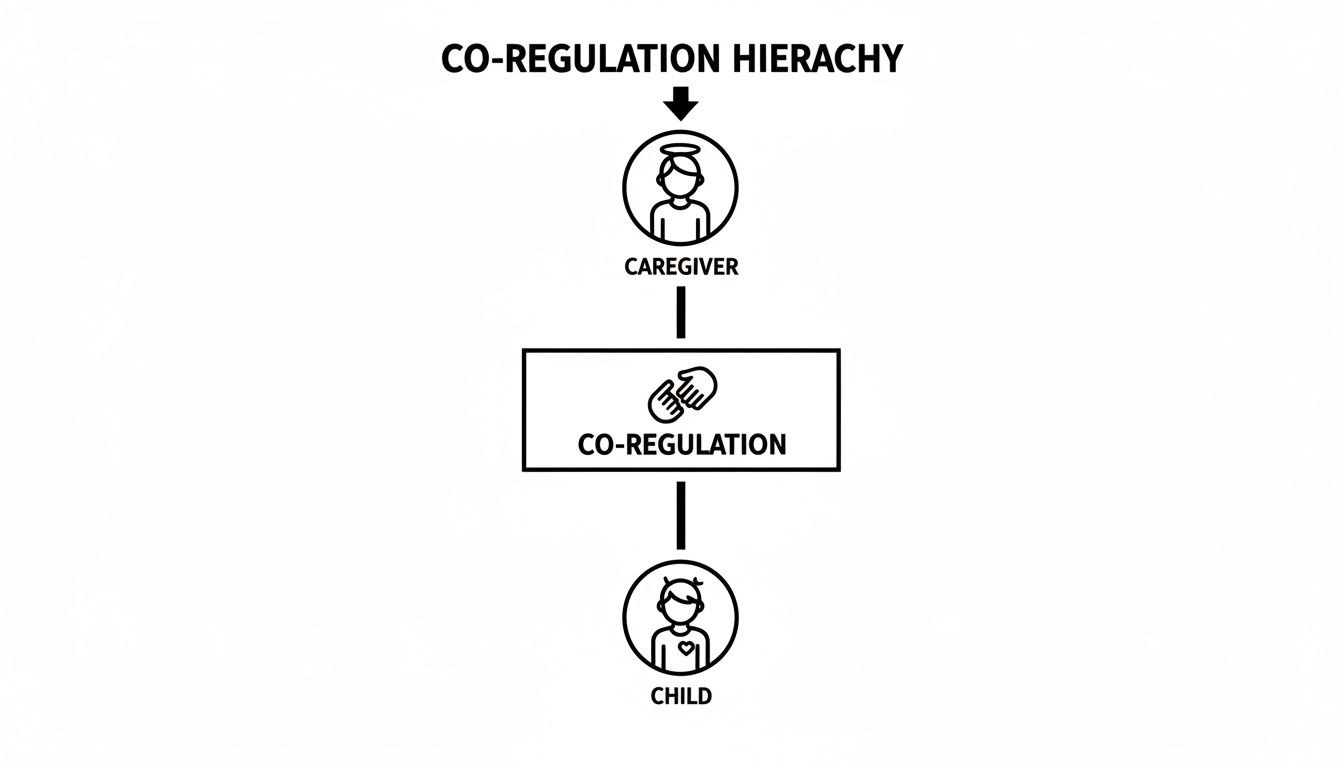
At every stage, you’re not just calming them down in the moment; you’re modelling how to handle stress and providing an emotional safety net. These repeated experiences literally wire their brain for resilience, teaching them that even overwhelming feelings are temporary and manageable with the right tools.
Co-regulation isn't about preventing emotional storms; it's about teaching your child how to navigate the waves. You are their lighthouse, guiding them safely back to shore until they can steer their own ship.
The path from shared calm to inner strength is all about developing effective emotion management strategies, which is the key outcome of successful co-regulation. By lending your calm and guidance, you’re giving your child an internal compass they’ll use for the rest of their lives.
Co Regulation and Self Regulation at a Glance
To make the distinction clearer, let’s look at these two concepts side-by-side. While they are deeply connected, they play very different roles in a child's emotional development. Understanding these differences can help you see where your child is on their journey and how you can best support them.
| Aspect | Co Regulation | Self Regulation |
|---|---|---|
| Who Leads? | The caregiver provides support, structure, and calming. It's an interactive, "we do it" process. | The individual manages their own emotions and behaviours. It's an internal, "I do it" process. |
| Core Idea | A shared process where a calm nervous system helps regulate another. | An independent ability to manage emotional responses and impulses. |
| Example | A parent comforting a crying toddler by hugging them and speaking in a soft voice. | A school-aged child taking deep breaths to calm down after losing a game. |
| Developmental Goal | To build trust, security, and provide a blueprint for managing emotions. | To develop internal coping skills, resilience, and emotional independence. |
This table highlights how co-regulation serves as the essential training ground for self-regulation. One cannot exist without the other; they are two parts of the same beautiful, messy, and vital journey toward emotional maturity.
Right, so we've got a handle on what co-regulation is. The next step? Actually putting it into practice in our day-to-day lives. This is where the theory meets the real, messy, beautiful world of raising children.
Moving from understanding the concept to living it out isn’t about grand, sweeping changes. It’s all about the small, consistent moments of connection that slowly build a foundation of emotional safety and trust. It's about meeting your child exactly where they are, emotionally and developmentally.
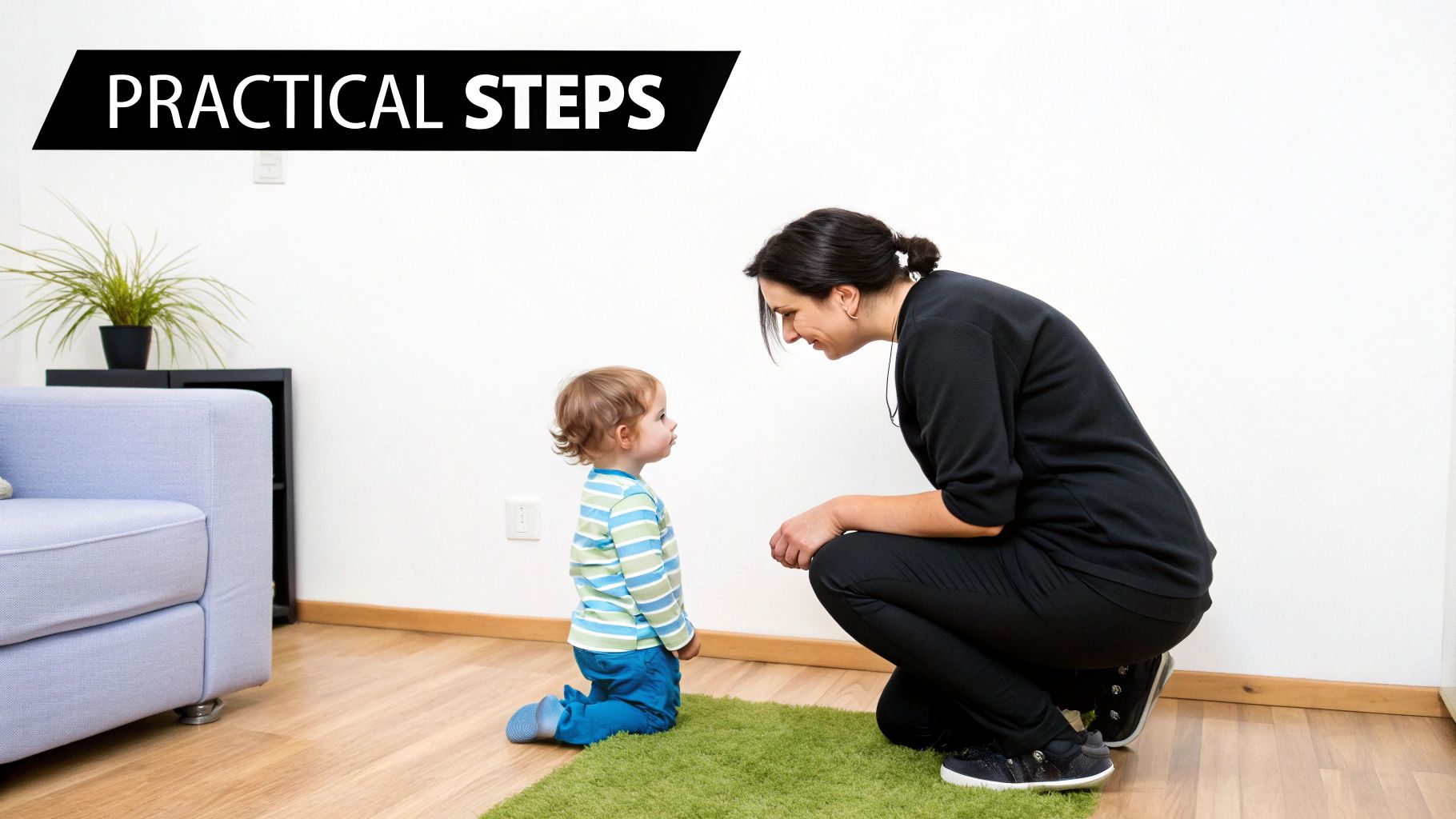
For a toddler in the grip of a massive feeling, the world can feel completely chaotic and frightening. In that moment, your calm presence is their anchor in the storm. This means getting right down on their level, physically. It instantly makes you less of a towering figure and more of an accessible ally.
Then, use simple, clear phrases that show you get it. A practical example would be saying, “You are so sad the tower fell down,” which validates their world and their feelings. These challenging moments are actually opportunities for growth, and you can find some brilliant, practical examples of how to respond to toddler tantrums with calm and connection.
Strategies for Primary School Children
As kids move into primary school, their emotional lives get a lot more complicated. Friendship fallouts, the pressure of schoolwork, and figuring out social rules are all new hurdles. Your role in co-regulation shifts a bit here—you become more of a coach, modelling how to stay calm when things get tough.
One of the most powerful things you can do is create a predictable, safe space for them to work through their feelings.
A 'calm-down corner' can be an absolute game-changer for this age group. This isn’t a time-out spot for punishment; it’s a cosy refuge filled with soft cushions, sensory toys, or their favourite books. It teaches them that it’s perfectly okay to take a break to get a handle on their emotions, giving them a physical place to practise calming down, with you right there to support them. For some great inspiration, have a look at our guide on calm-down corner ideas.
"When your child is upset, speak softly and use soothing physical contact, like a hug or a gentle rub on the back. Model calm behaviour to help your child feel secure and understood."
This modelling part is everything. When you take a few deep breaths and keep your voice steady while dealing with your own frustrations, you're giving them a live masterclass in emotional regulation.
Supporting Teenagers Through Modern Pressures
With teenagers, the challenges morph yet again. The non-stop buzz of social media and intense academic stress can feel relentless. Co-regulating with a teen is less about physical comfort and more about building a fortress of emotional safety through open communication. Your goal is to become their non-judgemental sounding board.
This requires active listening. Really listening. Put your phone down, make eye contact, and hear what they’re actually saying without immediately trying to fix it for them. A practical example is asking open-ended questions like, “That sounds really tough, how did that make you feel?” instead of jumping in with solutions.
Creating this safe space, free from judgement, is the absolute cornerstone of co-regulating with a teenager. It lets them know they can bring all of it—the messy, confusing, overwhelming feelings—to you and be met with acceptance, not a lecture.
And finally, a simple relaxation tip that works wonders across all age groups: shared relaxation. Try practising paired breathing, where you breathe in and out in sync with each other. It’s a powerful, tangible way to connect and literally share your calm. It’s a quiet reminder that you're in this together, strengthening your bond while building their emotional toolkit for life.
Building a Foundation for Lifelong Mental Health
Co-regulation is so much more than a quick fix for a tantrum. Think of it as a deep investment in your child's future mental and emotional health. Every time you lend your calm, you're laying another brick in the foundation of their resilience, helping them forge the secure attachments and strong social skills that will carry them through life.
The importance of addressing mental health from an early age cannot be overstated. Poor mental health has a significant ripple effect on society. In the UK, the cost of mental health problems to businesses is estimated to be around £53-£56 billion per year due to factors like absenteeism and reduced productivity. By nurturing emotional wellbeing in children today, we are helping to build a more resilient and productive workforce for tomorrow.
The Lasting Impact of Your Connection
The quality of these supportive moments has a real, measurable impact on a child's development. Your consistent support helps build the emotional skills they will need to navigate life’s challenges.
On the flip side, a lack of emotional support can have long-term negative consequences. It is a stark reminder of just how vital the right kind of support really is.
Your consistent, compassionate presence teaches a child one of life's most important lessons: that big feelings are manageable, connection is a source of strength, and they are never truly alone in their struggles.
This secure base becomes incredibly important as children get older and face the inevitable pressures of social media, school stress, and friendship dramas. The skills they learn through co-regulation—understanding their emotions, knowing when to seek support, and calming their own nervous system—become their internal toolkit for life.
From Childhood Support to Adult Resilience
Ultimately, this shared emotional journey is all about fostering inner strength. By repeatedly experiencing your calm and empathy, children begin to internalise that very model. They learn how to offer themselves the same compassion when they face challenges later on.
This process is fundamental to developing a strong sense of self and the ability to form healthy, meaningful relationships as an adult.
By teaching them how to manage their emotions in a healthy way, you’re giving them the tools for lasting wellbeing. If you'd like to explore this topic in more detail, you might find our guide on how to build emotional resilience really helpful. By investing your time and heart in co-regulation, you are giving your child a gift that will last a lifetime.
Your Toolkit for the Co Regulation Journey
Setting off on the co-regulation path with your child is all about patience, genuine connection and having the right aids within reach. Confidence comes when you know you’re prepared. Fortunately, the UK brims with resources designed to guide your family every step of the way.
This kit of ideas and aids ranges from simple conversation prompts to professional advice—everything you need to cultivate a warm space where emotional wellbeing can truly flourish.
Curated Mental Health Books for Big Feelings
Reading together turns story time into a springboard for honest chats. The right picture-book or chapter story can give children the words to describe their inner world—and the comfort of knowing they’re not alone.
- For Children: Our range of mental health books at Little Fish Books offers tales crafted to help youngsters explore anxiety, sadness or courage. Each narrative opens a gentle door to meaningful discussion.
- For Parents: Look for guides that break down emotional development in everyday language. A great example is The Book You Wish Your Parents Had Read by Philippa Perry, which provides practical strategies to weave into daily life.
Mental Health Apparel as a Conversation Starter
Sometimes, what we wear speaks louder than any lecture. A hoodie or tee emblazoned with a positive message becomes an unspoken invitation to talk about feelings. On the playground or in the school corridor, these simple garments help chip away at outdated stigma. In doing so, they remind youngsters that admitting “I’m not okay today” is a sign of real strength.
Talking about mental health isn’t a luxury. It’s a necessity. When we own our feelings, we teach our children that asking for help is a mark of courage.
Essential UK Support Services
Even the best book or bold slogan can’t replace professional guidance when things feel overwhelming. Thankfully, the UK hosts a strong network of charities and services dedicated to children’s emotional health.
Disclaimer: I am not a mental health professional. If you are worried about your child's wellbeing, please consult your GP or a qualified professional for advice.
Here are some trusted organisations to consider:
- YoungMinds: The UK’s leading charity championing young people’s mental health.
- NHS Every Mind Matters: Expert advice and practical tips for supporting your child’s wellbeing.
- Place2Be: A school-based service offering counselling and emotional support to pupils and families.
Together, these tools and services form a sturdy safety net. No family has to navigate emotional ups and downs alone. Reaching out is a positive stride towards nurturing your child’s long-term emotional health.
Your Co-regulation Journey: A Final Word of Encouragement
Your journey into co-regulation isn't about getting it right every single time. Far from it. It’s about being present, a supportive partner for your child as they navigate the often-choppy waters of their feelings. Think of it as a marathon, not a sprint, built on all those small, consistent moments of connection that tell them their feelings are valid and lend them your strength when they need it most.
The path from that shared calm to your child’s own inner resilience is paved with your patience and empathy. You are the most powerful tool your child has for learning how to manage their emotional world, and that’s an incredible role to play.
Of course, the challenges of modern parenting are very real. The pressures of social media, overflowing schedules—it can all feel incredibly demanding. It's so important to be kind to yourself through this process. You simply cannot pour from an empty cup, so looking after your own wellbeing isn't selfish in the slightest—it's essential for providing that steady, calm support your child needs.
Your presence is your power. Every time you meet a big feeling with calm connection, you are strengthening your child's foundation for lifelong mental health and resilience.
This journey is empowering for you both. Remember to celebrate the small victories along the way and trust in the incredible, lasting impact of your supportive presence. The efforts you make today are building a legacy of emotional strength for years to come.
Disclaimer: Please remember, I am not a mental health professional. This content is for informational purposes only. If you have serious concerns about your or your child's mental health, it is essential to seek help from your GP or a qualified professional.
Your Co-Regulation Questions Answered
At What Age Should a Child Be Able to Self-Regulate?
That’s the million-dollar question, isn’t it? The truth is, there's no magic age. Self-regulation is a skill that develops slowly over many, many years, well into early adulthood.
A toddler can certainly start learning simple calming techniques with your help, but being able to consistently manage those huge emotions all on their own is a much longer journey. The goal should always be to offer the right co-regulation support for their current stage, rather than expecting a level of self-control they just aren't ready for yet.
What If My Attempts at Co-Regulation Just Seem to Make My Child Angrier?
This is incredibly common, so please know you’re not alone. Sometimes, a child is simply too overwhelmed by their feelings to accept a hug or kind words straight away. In those intense moments, your main job is to be a 'calm anchor'.
Stay physically close to make sure they're safe, use a steady, neutral tone of voice, and keep your words to a minimum. You might just say, "I'm right here with you. I will keep you safe." Once the emotional storm starts to pass, they'll be much more open to connection and comfort. It's about your steady presence, not about problem-solving in the heat of the moment.
Can Co-Regulation Spoil a Child or Prevent Independence?
It’s actually quite the opposite. Co-regulation doesn’t mean you’re shielding a child from every tricky feeling. It means you’re teaching them that all feelings are manageable and that they have a safe person to turn to when things feel too big to handle alone.
This secure connection is the true foundation of independence. By modelling how to handle stress and showing them relaxation tips like taking deep breaths together, you are giving them the internal blueprint they'll need to eventually do it for themselves. This builds genuine, lasting resilience, not dependence.
Ready to start conversations about big feelings with your little one? The stories from Little Fish Books are crafted to help children explore their emotions in a safe and gentle way. Discover our collection and find the perfect book to support your co-regulation journey at https://thatsokay.co.uk.