
What is Mental Wellbeing? Explore what is mental wellbeing and why it matters
When we talk about “mental wellbeing,” it's easy to think it just means not having a mental illness. But it's so much more than that. True mental wellbeing is a positive state where children feel equipped to handle life's ups and downs, discover their own potential, learn effectively, and feel like they belong.
At its heart, mental wellbeing is about feeling good and functioning well. It’s the foundation that gives our kids the resilience they need to navigate the world around them.
Unpacking Mental Wellbeing: A Guide For Parents

Often, when we hear "mental health," our minds jump straight to things like anxiety or depression. But mental wellbeing is something we all have, all the time. Think of it like looking after a garden. Good gardening isn't just about pulling out the weeds (addressing problems); it’s about making sure the plants get plenty of sunshine, water, and good soil so they can really flourish.
This ‘mind garden’ needs consistent, gentle care. For a child, that means nurturing their emotional and psychological state every single day. This helps them build the inner strength to handle everything from a small tiff in the playground to the bigger pressures of exams.
Feeling Good and Functioning Well
So, what does this actually look like day-to-day? Mental wellbeing isn’t an all-or-nothing thing; it’s a spectrum. It’s made up of two key parts that work hand-in-hand.
- Feeling Good: This is all about experiencing positive emotions like happiness, joy, curiosity, and feeling content. It’s the excitement a child feels when they finally learn to ride their bike or the comfort they find in a cuddle after a bad day. A practical example is the pure delight a toddler feels when they successfully stack a tower of blocks.
- Functioning Well: This side of the coin is about a child's ability to get on with their life. It means building good relationships, feeling like they have a purpose, managing their emotions, and having the strength to bounce back when things don't go their way. For a teenager, this could look like revising for an exam even when they feel stressed, showing they can manage pressure.
A huge part of functioning well is being able to spot and name feelings. We actually have a whole guide dedicated to this skill, which you can read here: what is emotional literacy.
Getting to grips with these two pillars helps us shift our focus from just putting out fires to proactively building a strong, solid foundation for our children. And with the growing pressures facing young people here in the UK, understanding this has never been more important.
Mental wellbeing is not a destination, but a continuous process of nurturing a child's inner world. It’s about equipping them with the tools to grow, adapt, and thrive, no matter what life throws their way.
To make this even clearer, let's break down what good mental wellbeing looks like in the real world for a child.
The Core Pillars of a Child's Mental Wellbeing
| Pillar of Wellbeing | What It Means for a Child |
|---|---|
| Emotional Resilience | Bouncing back from disappointments and seeing challenges as temporary. |
| Positive Relationships | Forming and maintaining supportive friendships with peers and family. |
| Sense of Purpose | Feeling engaged in activities, hobbies, or schoolwork. |
| Self-Esteem | Having a generally positive view of themselves and their abilities. |
By keeping these pillars in mind, we can better support the children in our lives, helping them build a foundation for a happy and resilient future.
Why Mental Wellbeing Is So Important for a Child's Development
Knowing what mental wellbeing is is a great start, but understanding why it matters so much is the real key to helping a child reach their full potential. A child's mental state isn't some separate thing from their physical health or how well they learn; it’s the very ground everything else is built on. Think of it like the strong roots of a tree—they provide the stability needed to grow tall and stand strong against the wind.
When a child feels emotionally secure, they have a much better chance of building healthy friendships, being curious in the classroom, and developing a solid sense of who they are. It’s the invisible engine that powers their ability to truly thrive.
The Foundation for a Happy Life
A child’s mental wellbeing has a direct impact on their ability to learn and do well at school. It’s not hard to imagine why. Anxious or overwhelmed children often find it difficult to focus, take in new information, and join in with activities. On the flip side, a child with a strong sense of wellbeing can face challenges with confidence and bounce back from setbacks—a quality we call emotional resilience.
This resilience isn't about being happy all the time. No one is! It’s about having the inner toolkit to navigate tricky emotions, solve problems, and understand that bad feelings don’t last forever. This is one of the most important skills we can foster for their long-term success and happiness.
The impact of this goes way beyond childhood. Poor mental health in the workplace costs UK businesses an estimated £53-£56 billion every single year. When we invest in a child's wellbeing today, we’re investing in a healthier, more productive society for tomorrow.
The Growing Urgency in the UK
We can’t ignore the fact that prioritising children’s mental wellbeing has become more urgent than ever. Modern life comes with its own unique pressures, from school expectations to the dizzying world of social media, and UK statistics show a worrying trend.
One in five children aged 8 to 16 now have a probable mental health problem. Young people across the UK are facing a significant rise in mental health challenges. For example, children in England aged 8-16 saw a staggering 62% increase in probable mental health conditions between 2017 and 2023. You can read more about these trends and the data behind declining mental health in the UK.
It's easy to see these numbers and feel alarmed, but it’s more helpful to see them as a call to action. Proactive support and catching things early can completely change a child's life, turning potential struggles into moments for growth.
By facing these issues head-on, we empower our children instead of leaving them to figure it all out alone.
What Happens When We Offer Proactive Support?
When we actively focus on a child's mental wellbeing, we see real, positive results that ripple through every part of their life. We're not just preventing problems down the line; we’re giving them a platform to flourish right now.
- Better Learning and Concentration: Children who feel emotionally settled can engage their minds more easily, which often leads to better results at school and a genuine love for learning.
- Improved Physical Health: The mind and body are completely connected. Lowering stress and anxiety helps with better sleep, stronger immune systems, and healthier habits.
- Stronger Family and Social Bonds: A child who can understand and talk about their feelings is far more likely to build deep, meaningful connections with family and friends.
- More Confidence and Self-Esteem: Nurturing wellbeing helps children develop a positive self-image, empowering them to try new things and believe in themselves.
Simple things can make a huge difference. Relaxation tips like deep breathing or spending time outside can be incredibly effective. Even conversations sparked by mental health apparel or books can make these topics feel normal and open the door for support. It's so important to remember that I am not a mental health professional. If you are worried about your child's mental health, please seek help from your GP or a qualified professional.
Spotting the Signs of Wellbeing in Your Child
Knowing what mental wellbeing means gives you a map, but learning to spot the signs in your own child is more like learning to read the weather. It helps you see when the sun is shining brightly for them and when storm clouds might be gathering on the horizon. This isn't about diagnosing problems, but simply about being aware and knowing when a gentle conversation might be needed.
Of course, children change enormously as they grow. What’s typical for a toddler is a world away from what we'd expect from a teenager. By looking at the signs appropriate for their age, you can get a much clearer picture of your child’s inner world and how to support them.
Just remember, I am not a mental health professional. If you have serious concerns about your child, please chat with your GP or a qualified expert.
A Quick Guide to Age-Appropriate Signs
Children express their feelings and wellbeing in different ways depending on their age and stage of development. What might be a sign of a struggle in a teenager could be perfectly normal behaviour for a five-year-old.
This table is designed to help you tune into the unique emotional language of your child, whether they're in nursery, primary school, or navigating their teenage years. It's a starting point to help you notice patterns and open up conversations.
Spotting the Signs: A Guide for Parents and Carers
| Age Group | Signs of Positive Wellbeing | Potential Signs of a Struggle |
|---|---|---|
| Early Years (3-5) | • Engages in imaginative play • Asks lots of questions • Forms bonds with carers and friends • Seeks comfort when upset |
• Unusually withdrawn or quiet • Frequent, intense tantrums • Big changes in sleeping/eating habits • Shows little interest in playing |
| Primary School (6-11) | • Building and keeping friendships • Developing hobbies and interests • Can express a range of feelings • Generally enjoys school and activities |
• Loses interest in things they once loved • Frequent unexplained tummy aches or headaches • Constant struggles with schoolwork • Seems withdrawn from friends |
| Teenagers (12-18) | • Balances social life, school, and downtime • Has supportive friendships • Can bounce back from setbacks • Shows interest in their future |
• Dramatic and persistent mood swings • Isolating from friends and family • A sudden drop in school performance • A negative relationship with social media |
Remember, every child is different, and off-days are completely normal for everyone. The key is to look for persistent changes in behaviour that seem out of character for your child. It's these patterns that might signal something deeper is going on.
Recognising these signs is the first step. It opens the door to a conversation, allowing you to gently ask, "I've noticed you seem a bit quiet lately, is everything okay?" That simple question can make all the difference.
Teenagers and Modern Pressures (Ages 12-18)
The teenage years are a rollercoaster of change, both physically and emotionally. The pressure to fit in, do well at school, and figure out who they are can feel massive. And today, we have to add the huge impact of social media into that mix.
A teenager who is coping well is often able to find a balance between their social life, schoolwork, and personal time without feeling completely swamped. Their friendships are usually a source of strength, not constant drama, and while they might get knocked down by a bad grade, they have the resilience to get back up again.
The digital world adds a whole new layer of complexity. The constant comparison, the fear of missing out (FOMO), and the threat of online bullying can take a heavy toll. Social media can expose young people to unrealistic beauty standards and curated lifestyles, leading to feelings of inadequacy and low self-esteem. Signs of a struggle might include dramatic changes in mood, shutting themselves away from family and friends, or a sudden drop in their grades. Paying attention to their relationship with technology is a crucial part of understanding their mental state.
Practical Strategies to Nurture Your Child's Mental Wellbeing
Knowing what mental wellbeing looks like is one thing, but putting that knowledge into practice is where the real magic happens. The good news? You don't need grand, sweeping gestures. Nurturing your child's wellbeing is all about the small, consistent habits you weave into the fabric of your daily life.
These everyday actions build a safe harbour for your child—a space where they feel truly seen, heard, and valued for who they are. Let’s walk through five key areas, with simple yet powerful ways to support their emotional growth, from opening up conversations to navigating the digital world together.
Fostering Open and Honest Communication
If there’s one thing you can do, it’s creating a space where your child feels safe enough to talk about their feelings. This isn't about forcing deep chats but making them a normal, everyday part of your routine. The goal is to show them that no feeling is "wrong" and that you're always there to listen without jumping in to fix things.
Simple, curious questions can open the door to much bigger conversations. Instead of the classic "How was school?" which usually gets a one-word reply, try something a little different.
- "What was the most interesting thing you learned today?"
- "What made you laugh?"
- "Was there anything that felt a bit tricky or frustrating?"
These kinds of questions show you’re genuinely interested in their world—the highs and the lows. For more ideas on sparking these chats, you can find some great kids' mental health activities that encourage connection.
Establishing Healthy and Predictable Routines
Children, and adults for that matter, thrive on routine. When life feels a bit chaotic, predictable schedules for sleep, meals, and homework create a comforting sense of stability and security. This structure helps regulate their bodies and minds, making it far easier for them to manage big emotions and stress.
A consistent bedtime is especially crucial. Sleep is when the brain processes the day and recharges, and it's absolutely vital for emotional regulation. In the same way, regular, nutritious meals help keep moods and energy levels on a more even keel.
The visual below shows how the signs of wellbeing can look different across age groups, which really highlights why age-appropriate support and routines are so important.
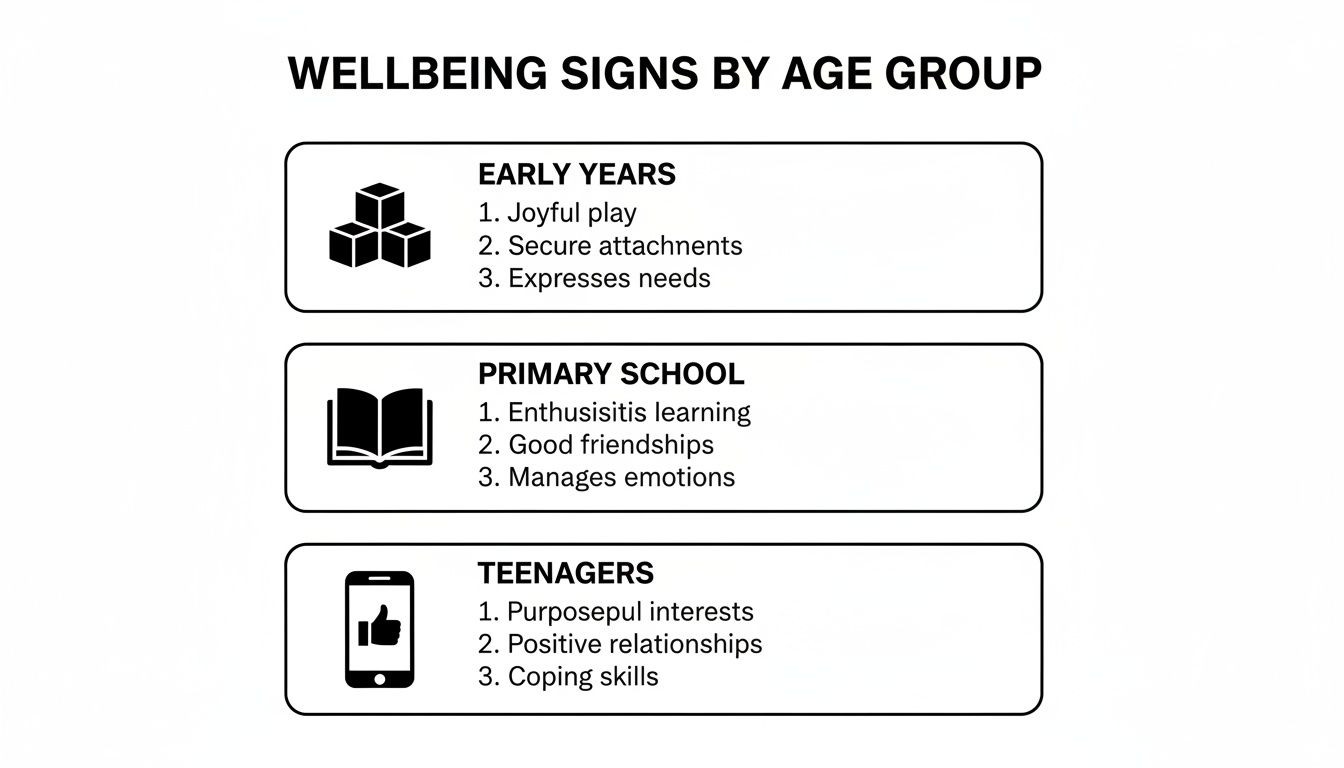
You can see how those fundamental building blocks in the early years evolve as our kids face the more complex social and digital challenges of growing up.
Navigating the Digital World Together
These days, managing screen time is a huge part of protecting a child's mental wellbeing. It's not about banning screens entirely, but about finding a healthy balance. The constant stream of social media can create a perfect storm of pressure around body image, social comparison, and that nagging fear of missing out.
Setting up simple "screen-free" zones, like during meals or for the hour before bed, can make a massive difference. It's also so important to have open, ongoing conversations about what they're seeing online and how to stay safe. If you're looking for concrete steps, there are plenty of helpful guides with 10 actionable ways to reduce screen time as a family.
Please remember, I am not a mental health professional. The advice in this article is for informational purposes only. If you are worried about your child's mental health, the best first step is always to speak with your GP or a qualified healthcare provider for professional guidance.
Promoting Relaxation and Unstructured Play
Life can get so busy and over-scheduled, but children desperately need downtime. I’m talking about real, unstructured play—where they call the shots, with no rules or goals. It might look like just mucking about, but it’s how they process their world, solve problems, and let their creativity run wild.
Relaxation doesn’t have to be complicated, either. A few simple activities can work wonders for a busy or anxious mind.
- Mindful Moments: Try some simple breathing exercises. A favourite is asking your child to imagine they're slowly blowing up a big balloon, then letting the air out just as slowly. This is a great practical example of grounding.
- Creative Outlets: Drawing, painting, or even just colouring can be incredibly calming. It gives kids a non-verbal way to get their feelings out onto the page.
- Time in Nature: Never underestimate the power of the outdoors. A walk in the park or just sitting in the garden can have a powerful grounding effect, helping to lower stress and lift their spirits.
Using Tools to Normalise Conversations
Sometimes, the words are just hard to find. Using tools like books or even clothing can be a brilliant way to break the ice and make talking about feelings feel more natural. When you read a book with a character who is struggling with big emotions, it gives your child the language and permission to talk about their own experiences.
Even things like mental health apparel, with positive and affirming messages, can act as a quiet conversation starter. It sends a signal that it’s okay to talk about this stuff, helping to chip away at the stigma within the family and with their friends. These tools aren't a fix on their own, but they are fantastic aids for building a supportive and open culture at home.
When and How to Seek Professional Support
Knowing when it’s time to ask for professional help is a sign of incredible strength. It shows you’re a powerful advocate for your child. While all the strategies we’ve talked about can build a brilliant foundation for wellbeing, sometimes more specialised support is exactly what’s needed.
Always trust your instincts. If you have that persistent gut feeling that something just isn’t right, it’s always best to take that next step and talk to someone.
It’s really important to say that I am not a mental health professional, and this guide is here to offer information and support, not clinical advice. If you are worried about your child's mental health, your first and most important port of call should always be your GP. They can listen to your concerns, rule out any physical causes, and point you towards the right support services in your local area.
Starting the Journey to Professional Help
The idea of seeking professional help can feel huge and overwhelming, but it often just starts with a simple conversation. In the UK, your GP is the main gateway to many specialist services, including Child and Adolescent Mental Health Services (CAMHS). They'll want to hear about the changes you've noticed in your child's behaviour, mood, and daily life to get a sense of the bigger picture.
It can be a massive help to jot down a few notes before you go. Think about when the changes started, how often they're happening, and the impact they're having on your child at home and at school. Having this information ready will help your GP make the most appropriate referral for your family.
Beyond your doctor, there are other places you can turn to for support.
- School Support: Most schools have a designated mental health lead, a counsellor, or a pastoral care team. They can often provide support right there in the school or connect you with local services they trust.
- Charities and Helplines: Amazing organisations like YoungMinds and Mind offer fantastic resources, advice, and confidential helplines for both parents and young people.
- Private Therapy: If it's a realistic option for your family, seeking private counselling or therapy for your child is another route you can explore.
Navigating the System and Managing Waiting Lists
It's a tough reality, but accessing services isn't always quick. Unfortunately, access to mental health treatment in the UK is still woefully inadequate, which undermines the wellbeing of millions. In 2023-24, anxiety referrals for under-17s shot up to 204,526—that's more than double pre-pandemic levels. Despite this, 35% of 18-25-year-olds with emotional difficulties don't seek any help at all. You can discover more insights about UK mental health statistics from Priory Group.
This means that waiting lists for services like CAMHS can be incredibly long, which is deeply frustrating when you know your child is struggling right now.
But this waiting period doesn't have to be a passive one. You can continue to be a proactive advocate for your child. Keep the lines of communication open with the school, explore the brilliant resources from mental health charities, and focus on maintaining those positive routines and open conversations at home. For more detailed information, have a look at our guide on mental health support for young people.
Remember, seeking help is a courageous step. It’s about making sure your child has every tool and opportunity available to them to feel good and function well, both now and for the rest of their lives.
Helpful Resources and Tools for Your Family
Knowing how to support your child is a journey, and having the right tools in your corner can make all the difference. Think of this section as your curated hub of practical resources, all designed to help you build a strong foundation for your family’s mental wellbeing. These aren’t quick fixes, but genuine aids to support you along the way.
From books that give children the language to talk about their feelings to creative activities that offer a moment of calm, these tools help make conversations about mental health a natural part of everyday life.
Books That Build Emotional Literacy
Reading together is such a powerful way to explore big, complicated feelings in a safe and gentle space. A good story can act like a mirror, helping a child see their own experiences in a character, which immediately makes them feel less alone.
- For Younger Children (Ages 3-7): Look for picture books that focus on naming basic emotions. Stories that show characters feeling sad, angry, or worried—and then finding a way to cope—are absolutely perfect for this age group. A fantastic example is The Colour Monster by Anna Llenas, which helps children link feelings to colours.
- For Older Children (Ages 8-12): Chapter books that dig into themes like friendship troubles, bouncing back from setbacks, and self-esteem can be brilliant conversation starters about the real challenges of growing up. A Kind of Spark by Elle McNicoll is a wonderful story about finding your voice.
Creative and Calming Activities
Sometimes, you don't need words at all. Creative outlets are a fantastic, non-verbal way for children to process what’s going on inside and find a sense of calm.
A simple activity like colouring can be a form of mindfulness. It helps quieten a busy mind and allows a child to focus on the present moment, which is a key part of understanding what is mental wellbeing.
At Little Fish Books, we have a range of free downloadable colouring sheets designed to be both fun and emotionally supportive. They can be a wonderful, low-pressure way to spend some quiet time together.
Normalising Mental Health Conversations
Breaking down the stigma around mental health really does start at home. One simple but surprisingly effective way to do this is through mental health apparel. Wearing clothing with positive, affirming messages can spark curiosity and open up conversations with your children and even their friends. It’s a visible reminder that it’s okay to talk about our feelings.
For even more support and a comprehensive list of organisations and tools, you might find these essential mental health resources for everyday needs incredibly helpful. Remember, building a support system is all about using the different tools available to you.
Common Questions About Child Mental Wellbeing
Dipping your toes into the world of child mental wellbeing can feel a bit overwhelming, and it’s natural for questions to pop up. This final section is all about giving you clear, straightforward answers to some of the things we hear most often, helping you feel more confident as you support the young person in your life.
What Is the Difference Between Mental Health and Mental Wellbeing?
This is a brilliant question because the two terms get mixed up all the time. The easiest way to think about it is that mental health is the big umbrella term, a bit like ‘physical health’. Everyone has it, and it can range from good to poor, covering everything from our day-to-day emotional state to diagnosed conditions.
Mental wellbeing, on the other hand, is a more positive, proactive piece of the puzzle. It’s not just about the absence of problems, but the presence of good things. It’s about feeling good, coping with life’s ups and downs, and having the resilience to bounce back. Good mental wellbeing is what we’re all striving for.
How Can I Talk to My Teen About Social Media?
This is a big one for so many parents. The secret is to come at it with curiosity, not judgement. Instead of immediately laying down the law, try asking open questions to understand what their online world is actually like for them.
- Start by asking which apps they love and what they like about them.
- Gently probe how they feel after they’ve been scrolling for a while. Do they ever log off feeling worse than when they started?
- Introduce the idea of the online ‘highlight reel’—how people tend to only show their best moments—and chat about how that can make us feel like our own lives don’t measure up.
By having these small, regular chats, you build a foundation of trust. It makes it so much easier for them to come to you if they run into something tricky, whether that’s online bullying or seeing content that makes them question themselves.
What If the School Is Not Providing Enough Support?
It’s incredibly frustrating when you feel your child isn't getting the help they need at school. The first port of call should be to formally request a meeting with the school’s SENCO (Special Educational Needs Coordinator) or whoever leads on mental health support.
Before you go, get your thoughts in order. Jot down a list of your specific worries, any changes you’ve noticed in your child, and what kind of support you think would make a difference. This might be asking for access to a school counsellor, small adjustments in the classroom, or help getting a referral to an external service like CAMHS.
If you still feel like you’re not being heard, you can take your concerns to the headteacher or the school governors. At the end of the day, you are your child's most powerful advocate.
At Little Fish Books, we’re passionate about creating tools that make these big conversations just a little bit easier. From our beautifully illustrated books that gently explore big feelings to our free downloadable activities, our resources are designed to support your family's journey towards better mental wellbeing.
Explore our full collection of supportive tools at https://thatsokay.co.uk.