
Zones of Regulation Activities: 8 Ideas and Check-Ins for Kids
Welcome to our comprehensive guide on supporting children's emotional wellbeing. In the UK, the landscape of children's mental health presents a significant challenge. Statistics reveal a growing need for proactive support, with one in six children aged 5-16 likely to have a mental health problem. The pervasive influence of social media often adds a complex layer to young people's emotional development, creating pressures around body image and social comparison. Addressing mental health early is crucial; neglecting it carries a substantial long-term cost, not only for individuals and families but also for businesses, with poor mental health costing UK employers up to £56 billion a year through lost productivity and staff turnover.
Last updated: 1 October 2026
Zones of regulation activities at a glance
- Zone colour sorting and emotion matching
- Sensory bins and calming stations
- Zone movement and yoga
- Role-play with social scenarios
- Zone check-in worksheets
- Strategy posters and visual cue cards
- Zone games
- Individual zone plans and toolkits
For children who spend time in the red zone, our anger thermometer is a useful companion tool, with a free printable.
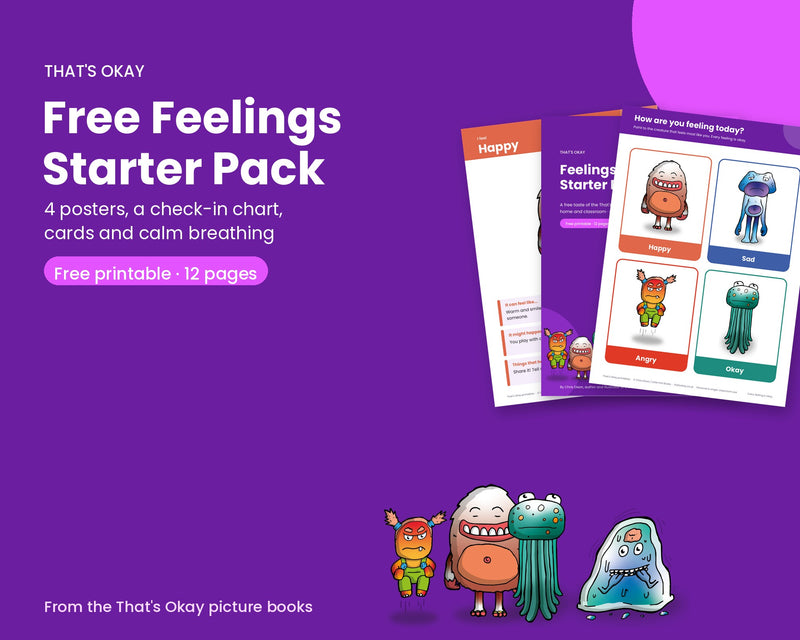
Free printable: the Feelings Starter Pack. 12 pages of feeling posters, a check-in chart, feeling cards and calm breathing cards to help children name their feelings.
This article focuses on a powerful, practical framework: The Zones of Regulation. It offers a structured approach to help children understand and manage their feelings by categorising them into four simple, colour-coded zones. We will explore eight distinct, actionable zones of regulation activities designed for seamless integration into classrooms, therapy sessions, and homes. These tools are vital for building emotional literacy and self-regulation skills from an early age, equipping children to navigate life's inevitable ups and downs with greater confidence. For instance, developing tools for managing common emotions like anxiety can be supported through resources such as these, which help in building emotional resilience.
From sensory bins to role-playing social scenarios, this list provides concrete strategies to make emotional learning tangible and engaging. You'll find step-by-step instructions, material lists, and age-appropriate adaptations for each activity, creating a complete toolkit for parents, educators, and therapists. Our goal is to empower you with the resources needed to foster emotionally intelligent, resilient young people. To support this, consider exploring mental health apparel that can act as a conversation starter, or engaging children with specially curated mental health books that normalise their feelings.
Important Disclaimer: While these activities are incredibly beneficial, I am not a mental health professional. The information provided is for educational purposes only. If you have serious concerns about a child's mental health, it is crucial to consult a doctor or a qualified professional for guidance.
1. Zone Colour Identification & Emotion Matching Activity
This foundational activity is the cornerstone of implementing the Zones of Regulation framework, serving as the essential first step for children to build self-awareness. It teaches them to connect their internal states - their emotions, energy levels, and even physical sensations - to the four coloured zones: Blue, Green, Yellow, and Red. By categorising these complex feelings into a simple, visual system, children gain a tangible language to understand and communicate what’s happening inside them.
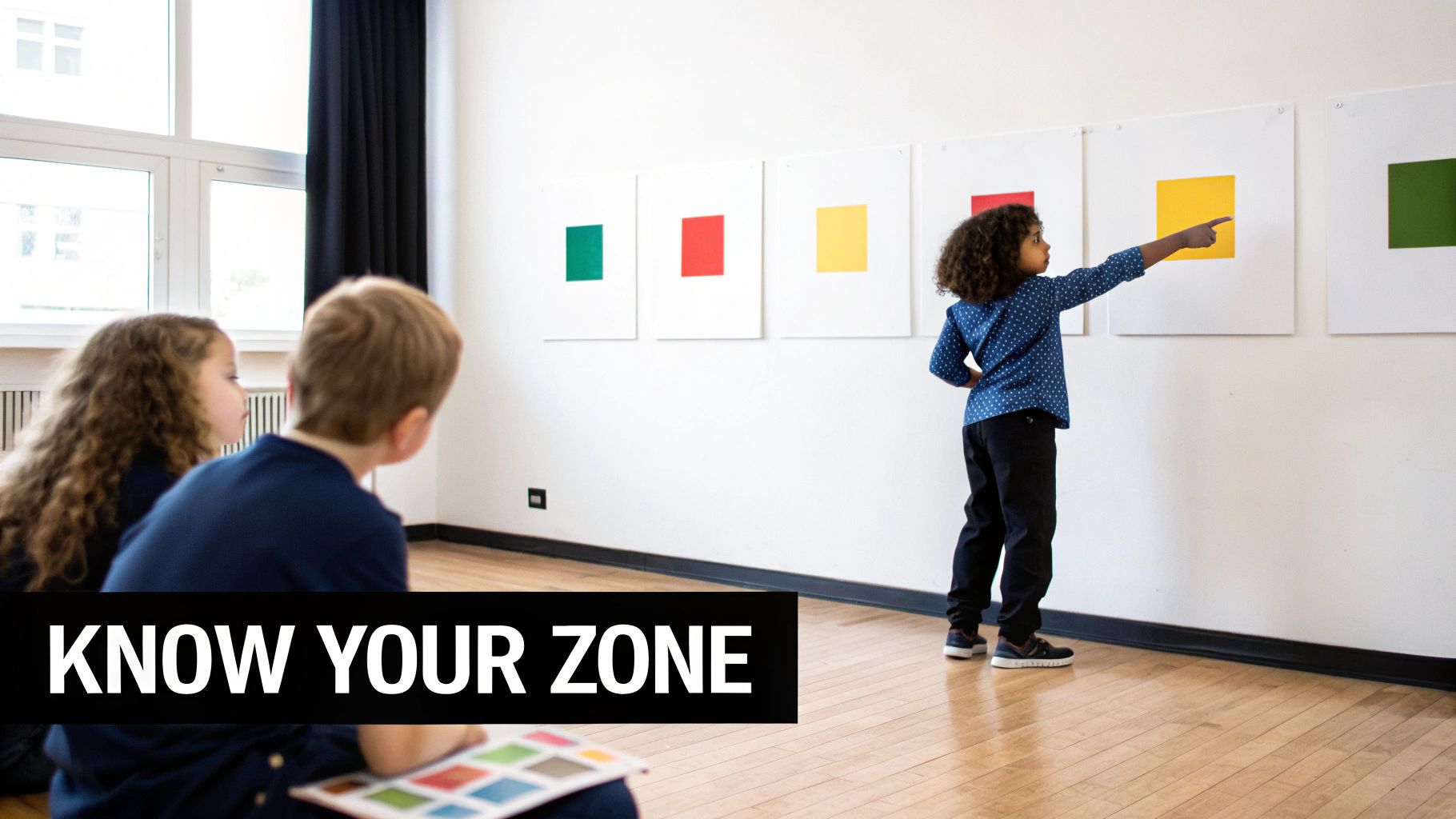
The primary goal is for a child to be able to pause and ask, "What zone am I in right now?". This skill is crucial because you cannot regulate an emotion you don't first recognise. This activity lays the groundwork for all other self-regulation strategies.
How to Implement This Activity
Successful implementation involves making zone identification a consistent and interactive part of a child's environment. The key is moving beyond a one-off lesson to an integrated daily practice.
- Create Collaborative Anchor Charts: Work with children to create large posters for each zone. Brainstorm together to list emotions, energy levels (e.g., "slow-moving engine" for Blue, "just right" for Green), and physical feelings (e.g., "butterflies in my tummy" for Yellow) that belong in each. This co-creation fosters ownership and deeper understanding. A practical example is having a child draw a sleepy face for the Blue Zone or a volcano for the Red Zone.
- Use Emotion & Zone Matching Cards: Develop a set of cards with different emotion words, facial expressions, or scenarios. Children can then sort these cards onto corresponding coloured mats representing the four zones. This hands-on game reinforces the connections visually and kinaesthetically.
- Integrate into Daily Routines: Make "zone check-ins" a regular part of the day, such as during morning meetings in a classroom or at the dinner table at home. Ask, "What zone are you in, and what makes you say that?". This normalises the conversation around feelings.
Pro Tip: When discussing zones, focus on the idea that all zones are okay and no zone is "bad". The goal is not to stay in the Green Zone forever but to recognise which zone is expected or helpful for a particular situation and develop tools to navigate back to it when necessary.
For a ready-to-use resource, the Little Fish Feelings & Zones Colour Matching Activity provides beautifully illustrated cards that help children link specific emotions directly to their corresponding zones, making this one of the most effective zones of regulation activities for beginners.
2. Sensory Bins & Calming Stations
This activity moves from identifying feelings to actively managing them through sensory input. Strategically designed sensory experiences, like calming stations or tactile bins, provide children with the physical tools they need to self-regulate. They work by engaging the senses - touch, sight, sound, and even smell - to help a child shift from a state of high alert (Yellow or Red Zone) or low energy (Blue Zone) back towards the calm, focused state of the Green Zone.
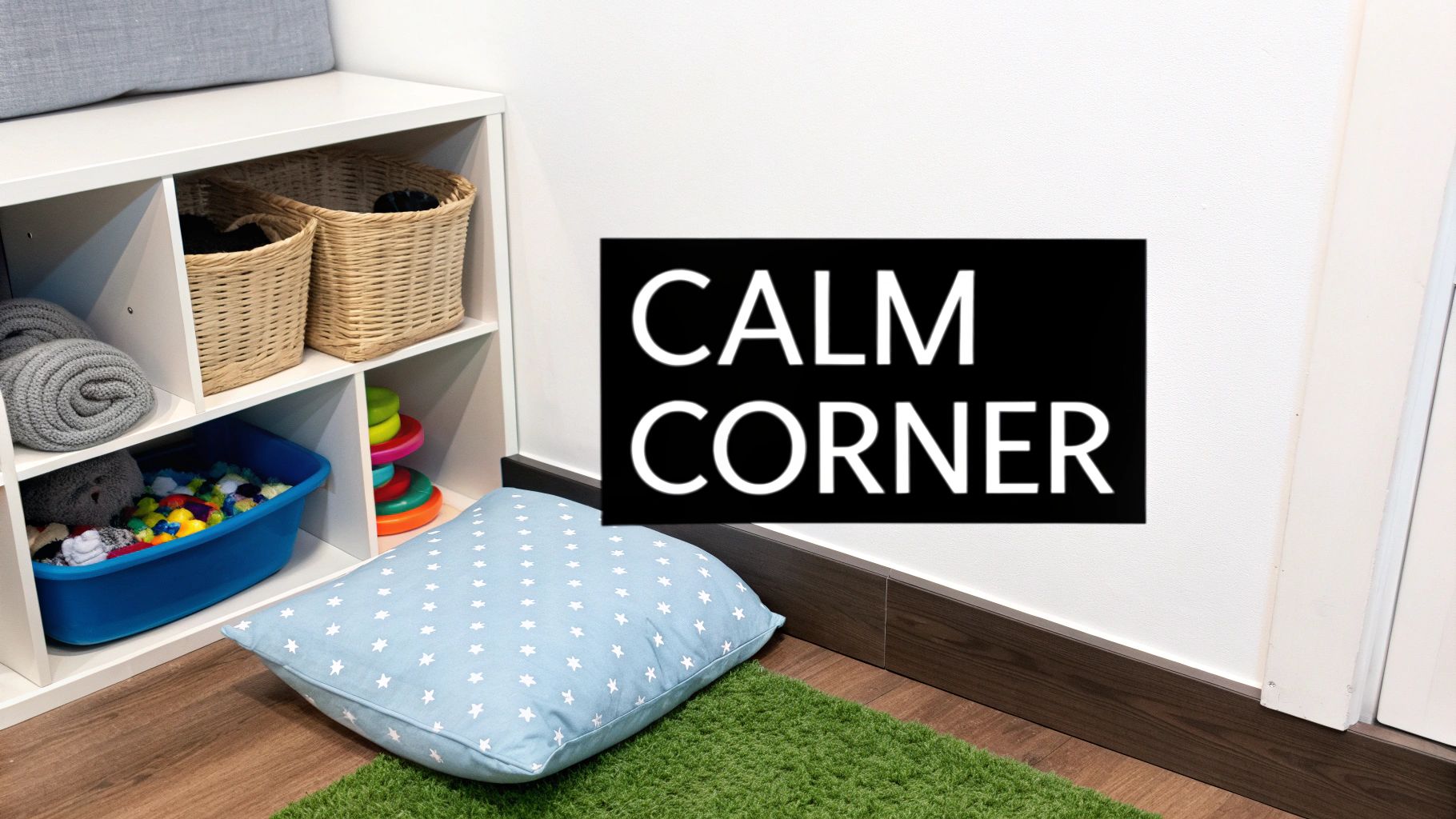
The primary goal is to empower children with tangible, self-directed strategies for managing their sensory needs and emotional states. When a child learns to recognise, "I feel jittery and in the Yellow Zone, I need to squeeze my stress ball," they are building a crucial life skill. This approach is fundamental to making emotional regulation a practical and accessible concept rather than an abstract idea.
How to Implement This Activity
Effective implementation involves creating dedicated, predictable spaces and toolkits that children can access when they feel their emotional state shifting. It's about proactively providing solutions before a child becomes completely overwhelmed.
- Create a Designated Calm-Down Corner: Set up a specific, quiet area in the classroom or home with comfortable seating like bean bags, soft lighting, and a selection of calming sensory tools. This space should be seen as a supportive retreat, not a punishment. For more in-depth guidance, discover our calm-down corner ideas on thatsokay.co.uk.
- Develop Themed Sensory Bins: Fill tubs with materials like sand, water beads, pasta, or kinetic sand, adding scoops, cups, and small toys. These bins are excellent for children in the Blue Zone needing alerting input or those in the Yellow Zone needing a focused, grounding activity. A practical example is burying 'treasure' in the sand for a child to find, focusing their attention and providing tactile feedback.
- Build Portable Sensory Kits: For individual needs, create small, portable kits in a bag or box. Include fidget spinners, textured balls, scented putty, and weighted lap pads. This allows children to have their personalised regulation tools available wherever they go.
Pro Tip: Explicitly teach the purpose of each sensory tool. During a calm moment (when the child is in the Green Zone), explain how a weighted blanket can help when feeling overwhelmed (Red Zone) or how a bright, textured toy can help when feeling tired and sad (Blue Zone). This instruction prevents misuse and maximises the tools' effectiveness. A simple relaxation tip is to practise slow breathing: inhale for four counts, hold for four, and exhale for six while squeezing a stress ball.
For a resource that directly supports this, the Little Fish Feelings Sensory Flashcards can be placed within the calming station to help children identify their feeling and then choose an appropriate sensory tool, bridging the gap between emotional awareness and active self-regulation.
3. Zone Movement & Yoga Activities
Connecting physical movement to emotional states is a powerful regulation strategy, and one of the most effective zones of regulation activities for channelling energy. This approach uses targeted physical exercises, like yoga, stretching, and "heavy work," to help children physically process their feelings. It acknowledges that emotions are not just in our heads; they are felt throughout our bodies, and moving our bodies can directly influence our emotional zone.
The primary goal is to provide a physical outlet that either helps release excess energy from the Yellow or Red Zones or stimulates and awakens the body from the Blue Zone. For instance, strong, grounding movements can be incredibly calming for a child feeling overwhelmed, while energetic, upbeat movements can help a child feeling sluggish. This mind-body connection is essential for developing holistic self-regulation skills.
How to Implement This Activity
Integrating movement should be a proactive and consistent part of a child's routine, not just a reactive measure. The key is to make physical regulation strategies accessible, fun, and empowering for the child.
- Create Zone-Specific Movement Stations: Set up different areas or create visual cards with movements tailored to each zone. For the Red Zone, this might include wall pushes or stomping like a dinosaur. For the Blue Zone, it could be big stretches towards the ceiling or star jumps to increase alertness. The Green Zone might feature gentle yoga poses or balancing exercises.
- Implement "Heavy Work" Tasks: Heavy work involves proprioceptive input, which is the sensation from our joints and muscles that tells our brain about our body's position. Activities like carrying a stack of books, pushing a piece of furniture, or kneading dough can be incredibly organising and calming for a child in the Yellow or Red Zone.
- Use Yoga and Mindful Stretching: Develop short, simple yoga sequences for different regulation needs. A "Calming Flow" with child's pose and slow cat-cow stretches can help a child de-escalate, while a "Waking Up Flow" with sun salutations can help a child in the Blue Zone feel more energised and ready to learn. A simple relaxation tip is the 'rag doll' pose: stand, exhale, and flop forward, letting the head and arms hang loosely to release tension.
Pro Tip: Always practise these movements when a child is in the Green Zone first. This builds muscle memory and a positive association, making it far more likely they will be able to access the strategy when they are actually feeling dysregulated. Choice is also critical; offer a few appropriate movement options to give the child a sense of control over their regulation.
4. Role-Play & Social Scenarios
This activity moves the Zones of Regulation from a theoretical concept to a practical, applied skill. Role-playing allows children to safely explore challenging real-life situations, practise identifying their emotional zone in the moment, and rehearse using coping strategies before they are needed. By acting out social scenarios, they build "emotional muscle memory," making it easier to navigate difficult interactions when they actually occur.
The primary goal is to bridge the gap between knowing what to do and actually doing it. Children can experience a situation, identify the shift into the Yellow or Red Zone, and then physically practise a calming strategy, all within a supportive and controlled environment. This interactive approach is crucial for generalising self-regulation skills to the playground, classroom, and home.
How to Implement This Activity
Successful implementation focuses on creating a safe space for experimentation and learning, where mistakes are seen as opportunities for growth. The key is to make the scenarios relatable and the process engaging rather than intimidating.
- Use Puppets or Small Figures: For younger or more hesitant children, using puppets can reduce pressure. They can act out scenarios like sharing a toy or feeling left out, allowing the child to project emotions onto the puppet and explore responses from a safer distance.
- Create Realistic Scenario Cards: Develop a deck of cards describing common challenges children face, such as "Someone cuts in front of you in the dinner queue," "You don't understand the schoolwork," or "You lose a game you really wanted to win." Children can draw a card and act out how they might feel and what tool they could use. A practical example would be acting out how to ask a friend for a turn on the swings instead of getting angry (moving from Yellow to Green).
- Integrate Social Stories: Read or create a social story that describes a specific situation and the expected social and emotional responses. Afterwards, invite children to act out the story, reinforcing the positive behaviours and coping mechanisms described. This is a powerful combination for cementing learning.
Pro Tip: Always debrief after a role-play. Ask questions like, "What zone do you think the character was in?", "What did you notice about their body language?", and "What other tool could they have tried?". This reflection solidifies the learning and helps children connect the activity to their own lives.
For those looking to explore complex feelings through relatable characters, the book Archie's Storm provides a perfect narrative foundation. Reading about Archie's experience with overwhelming emotions can serve as an excellent precursor to role-playing, giving children a shared context and language to explore their own big feelings. Many mental health books for children are designed to open up these important conversations.
5. Zone Check-In Worksheets & Self-Reflection Tools
This activity moves beyond simple identification into the crucial realm of metacognition, or thinking about one's own thinking. Structured worksheets and reflection tools guide children to not only name their zone but also to analyse the why behind it. They serve as a personal emotional diary, helping children recognise triggers, notice bodily sensations, and consciously choose a coping strategy.
The primary goal is to build a child’s self-awareness over time by creating a tangible record of their emotional patterns. This skill is vital for understanding personal needs and proactively managing feelings, which is a cornerstone of positive mental health. By externalising their internal process onto paper, children can view their emotions with curiosity rather than judgement.
How to Implement This Activity
The key to success with worksheets is making them a brief, consistent, and non-judgemental routine, rather than a chore. The focus should be on the process of reflection, not on perfect answers or pristine handwriting.
- Use Visual and Scaffolded Templates: Create or find worksheets that use plenty of visual cues like emotion faces, body outlines for noting physical sensations, and colour-coding. For writing, provide sentence frames like, "I am in the ___ zone because..." or "My body feels..." to support children who struggle with expressing themselves. A practical example is having a child circle a picture of a clenched fist to show how their body feels in the Red Zone.
- Integrate into Daily Transitions: Use worksheets as "exit tickets" at the end of a school day or a "check-in slip" before starting homework. A quick, one-minute reflection can provide invaluable insight for both the child and the supporting adult without causing fatigue.
- Create Personalised Zone Folders: Give each child a folder to keep their completed worksheets. This allows them to look back and see their own progress, identify recurring triggers (e.g., "I often feel in the Yellow Zone before a maths test"), and recognise which coping strategies work best for them.
Pro Tip: Never use reflection worksheets as a punishment or only when a child is in the Red Zone. The goal is to build a habit of self-reflection across all zones. Celebrate the act of checking in and building awareness, regardless of which zone the child is in. This reinforces that all feelings are valid.
For more ideas on structured self-reflection, these emotion regulation worksheets offer a variety of templates that can be adapted for different ages and needs, making them excellent zones of regulation activities for building deeper self-understanding.
6. Strategy Posters & Visual Cue Cards
Once children can identify which zone they are in, the next crucial step is knowing what to do about it. Strategy posters and visual cue cards act as powerful environmental supports, providing immediate, accessible reminders of coping tools that can help a child manage their state. They externalise the "what next?" part of self-regulation, reducing the cognitive load on a child who is already feeling overwhelmed in the Blue, Yellow, or Red Zone.

The primary goal of these visual aids is to empower children with a menu of pre-approved, constructive choices for each zone. This proactive approach builds independence, normalises the need for regulation, and shifts the focus from simply identifying a feeling to actively managing it. This makes them one of the most practical zones of regulation activities for ongoing reinforcement.
How to Implement This Activity
Effective implementation means embedding these visual cues into the child’s daily environment so they become second nature. The key is to make them visible, relevant, and consistently referenced.
- Co-create Zone Strategy Posters: Work together with children to brainstorm and design large posters for each zone. For the Yellow Zone, they might suggest strategies like "squeeze a stress ball," "take five deep breaths," or "walk to the water fountain." This collaborative process ensures the strategies are meaningful to them and increases their buy-in.
- Develop Personalised Cue Cards: For individual children, create small, laminated cue cards that can be kept on their desk, in a pocket, or on a lanyard. These can be tailored to their most effective strategies. For example, a card for the Blue Zone might show a picture of them snuggling with a soft toy or listening to a favourite song.
- Place Cues in Strategic Locations: Think about where dysregulation often occurs. Place visual reminders in calm-down corners, by the classroom door for transitions, or even on a bathroom mirror for a private moment to reset. The consistency of seeing these cues throughout their space reinforces their availability and purpose.
Pro Tip: Ensure your visual aids are truly accessible. Use clear, simple language and pair words with universal symbols or pictures, especially for younger children or those with additional learning needs. The aim is for a child to be able to glance at the poster and instantly recognise a strategy they can use, without needing to ask for help.
For a comprehensive set of pre-made visual tools, the Zones of Regulation Tools & Strategies Visuals Pack offers a wide array of printable cards and posters that can be used to build a robust system of environmental supports in any classroom or home setting.
7. Zone Games & Interactive Activities
Transforming abstract emotional concepts into tangible, engaging experiences is key to helping children master self-regulation, and game-based learning is a perfect vehicle for this. Using interactive games embeds the principles of the Zones of Regulation into play, making learning feel less like a lesson and more like fun. This approach helps children practise identifying zones and choosing helpful strategies in a low-stakes, enjoyable environment.
These activities are designed to build cognitive bridges between feeling an emotion, naming it, categorising it into a zone, and selecting a tool from their toolbox. By gamifying this process, we motivate children to repeatedly engage with these concepts, reinforcing neural pathways and making self-regulation skills more automatic over time.
How to Implement This Activity
Integrating game-based learning requires a mix of structured commercial games and creative, adaptable activities that can be tailored to specific needs. The goal is to make these zones of regulation activities a regular, anticipated part of the routine.
- Use Themed Board Games: Create or use pre-made board games where players land on different scenarios. For each scenario, the player must identify which zone they might be in and what coping strategy they could use. This encourages situational awareness and problem-solving.
- Play Digital and App-Based Games: Utilise educational apps or create simple quizzes on platforms like Kahoot! or Jeopardy. Questions can range from matching facial expressions to zones or identifying the best tool for a specific feeling, offering immediate feedback in a dynamic format.
- Implement Matching and Sorting Games: Use card decks where children match emotion words, scenarios, or physical sensations to the correct colour zone. A simple game of "Zone Snap" or a memory-matching game can be highly effective for reinforcement.
- Try Simulation Role-Plays: Invent creative group games like 'Escape the Red Zone', where children work together to identify triggers and use collaborative strategies to help a character (or the whole group) move back to the Green or Blue Zone.
Pro Tip: Always debrief after a game. Ask questions like, "What was the most challenging scenario in the game?" or "Which strategy did you find most helpful?". This reflection is crucial for transferring the skills learned in the game to real-life situations.
For those looking to expand their toolkit, exploring various emotional intelligence games for kids can provide a wealth of new ideas to keep learning fresh and engaging. These activities strengthen the foundation built by the Zones framework.
8. Individual Zone Plans & Personal Regulation Toolkits
Moving beyond group activities, creating individualised zone plans and personal toolkits is a powerful way to empower children with tailored self-regulation strategies. This approach recognises that every child's emotional landscape is unique; what works for one may not work for another. It involves collaborating directly with a child to identify their specific triggers, warning signs, and preferred coping strategies for each zone.
The primary goal is to create a proactive, personalised roadmap for emotional regulation that a child feels ownership of. This turns the abstract concept of self-regulation into a concrete, accessible set of tools and actions, which is particularly vital given the rising concerns around children's mental health. A custom plan helps a child feel seen, understood, and equipped to manage their feelings.
How to Implement This Activity
Successful implementation hinges on collaboration and making the plan a living document that adapts as the child grows. The process itself is a therapeutic and educational experience.
- Co-create a Visual Plan: Work one-on-one with the child to design a simple, one-page visual plan. Use charts or templates to map out what each zone looks and feels like for them, what might trigger a move into the Yellow or Red Zones, and a menu of 2-3 preferred strategies to help them return to the Green Zone.
- Assemble a Personal Toolkit: Based on the plan, gather physical items for a personal toolkit. This could be a small bag or box containing sensory items like putty, a stress ball, headphones for quiet, a favourite small toy, or a set of personalised strategy cards. The key is that the child chooses the items. A practical example is a child choosing a small, smooth stone to rub when they feel anxious (Yellow Zone), as it's a discreet tool they can use in class.
- Integrate into Daily Routines: Ensure the child knows where their toolkit is and feels comfortable accessing it without judgement. For educators, this means communicating the plan with all relevant staff. For parents, it means making the toolkit available at home and even creating a travel-sized version for outings.
Pro Tip: Involve the child in every step, from choosing the colour of their toolkit bag to drawing pictures for their visual plan. The more ownership they feel, the more likely they are to use these zones of regulation activities and strategies effectively. Always ensure plans are shared discreetly to respect the child's privacy.
For a great starting point, the My Feelings and Me Personalised Workbook helps children explore their unique emotional triggers and successful calming strategies, making it a perfect companion resource for building these individualised plans.
Zones of Regulation check-in ideas
A daily check-in is where zones work really sticks. It only takes a minute or two, and it helps children notice how they feel before a feeling gets too big. Here are some simple check-in ideas that work alongside the zones approach at home or in the classroom.
- Morning arrival check-in. Children move a peg, name card or magnet to the zone or feeling that matches how they feel as they come in. It gives adults a quick picture of who might need support.
- Point, don't tell. For younger children or children with communication needs, let them point to a picture of a feeling instead of saying it. Faces and characters are easier than words in the moment.
- After-break check-in. Feelings often shift after playtime. A quick second check-in after break helps children notice the change and choose a strategy before learning starts again.
- Thumbs check. Thumbs up, sideways or down for a whole-class temperature check, followed by a quiet word with anyone who shows a thumbs down.
- Feelings wheel. Children turn a wheel to show their feeling. It gives them something to hold and makes the check-in feel like a game.
- Pair it with a next step. A check-in works best when it leads somewhere. If a child is in a high or low zone, have a small set of strategies ready, like breathing cards, a drink of water or a few minutes in a calm corner.
- End-of-day reflection. Ask "Which zone were you in most today, and what helped?" to build the habit of reflecting on feelings.
If you'd like ready-made check-in tools, the That's Okay Feelings Check-In Pack has printable check-in charts and emotion cards starring friendly feelings creatures, and the Feelings Wheel makes a hands-on check-in children can turn themselves. They use feelings rather than colour zones, so they sit nicely alongside a zones approach.
Zones of Regulation: 8-Activity Comparison
| Activity | Implementation Complexity 🔄 | Resource Requirements ⚡ | Expected Outcomes ⭐ 📊 | Ideal Use Cases 💡 | Key Advantages ⭐ |
|---|---|---|---|---|---|
| Zone Colour Identification & Emotion Matching Activity | Low 🔄 — teachable routines; needs repetition | Low ⚡ — posters, cards, minimal prep | ⭐ Better self-awareness; 📊 shared vocabulary across settings | Whole-class instruction, morning meetings, introductory SEL lessons | ⭐ Highly visual, low-cost, adaptable |
| Sensory Bins & Calming Stations | Medium 🔄 — design & supervision needed to avoid overload | Medium ⚡ — sensory tools, space, maintenance | ⭐ Rapid regulation for many students; 📊 increased independence | Calm corners, OT sessions, high-anxiety moments | ⭐ Multi-sensory, customisable, immediately accessible |
| Zone Movement & Yoga Activities | Medium 🔄 — routines to teach and model; space planning | Low–Medium ⚡ — mats, minimal props, clear space | ⭐ Improved regulation via proprioception; 📊 wellness gains | Brain breaks, PE, transitions, group regulation routines | ⭐ Engaging, research-backed, minimal equipment |
| Role-Play & Social Scenarios | Medium–High 🔄 — requires skilled facilitation & debrief | Low ⚡ — scripts, puppets or videos; time for practice | ⭐ Enhanced empathy & social skills; 📊 safer practice of responses | Social skill lessons, conflict resolution, small groups | ⭐ Memorable, experiential, builds perspective-taking |
| Zone Check-In Worksheets & Self-Reflection Tools | Low–Medium 🔄 — consistent implementation and review | Low ⚡ — print/digital templates, data tracking tools | ⭐ Increased metacognition; 📊 usable for progress monitoring | Individual reflection, progress tracking, home-school communication | ⭐ Individualised records, low cost, easy differentiation |
| Strategy Posters & Visual Cue Cards | Low 🔄 — design and intentional referencing required | Low ⚡ — print/laminate or digital displays | ⭐ Passive supports reduce load; 📊 prompts independent strategy use | Classroom/environmental supports, quick reminders | ⭐ Always-available cues, inclusive for non-readers |
| Zone Games & Interactive Activities | Medium 🔄 — prep and behaviour management needed | Medium ⚡ — game materials or apps, facilitation time | ⭐ Higher engagement & retention; 📊 practice in low-pressure format | Small groups, centres, students resistant to direct instruction | ⭐ Motivating, repeatable practice with peer interaction |
| Individual Zone Plans & Personal Regulation Toolkits | High 🔄 — individualised planning, monitoring, privacy | Medium–High ⚡ — tailored tools, staff time, coordination with families | ⭐ Maximum effectiveness for complex needs; 📊 measurable improvements | IEP/504 support, students with significant dysregulation | ⭐ Highly personalised, increases ownership and self-advocacy |
Building a Toolkit for Lifelong Emotional Resilience
Throughout this guide, we have journeyed through a comprehensive collection of zones of regulation activities, each designed to build a child’s capacity for emotional self-awareness and management. From the tangible exploration of Sensory Bins and the reflective practice of Zone Check-In Worksheets to the dynamic energy of Zone Movement & Yoga, these strategies are more than just exercises. They are the foundational building blocks for a lifetime of emotional resilience.
The journey of emotional regulation is not about eliminating challenging feelings or staying in the Green Zone permanently. It is about equipping children with the self-awareness to recognise which zone they are in and the confidence to use a personalised set of tools to navigate back to a state of balance and readiness for learning. This toolkit, once built, becomes a reliable internal resource they can draw upon in the classroom, on the playground, and throughout their adult lives.
Key Takeaways for Lasting Impact
As you begin to implement these zones of regulation activities, remember these core principles for success:
- Consistency is Crucial: Regular, predictable practice is what transforms these activities from novel games into ingrained skills. Weave Zone check-ins into morning routines, use strategy posters as constant visual reminders, and make movement breaks a standard part of the day.
- Personalisation is Powerful: No two children regulate in the same way. The true strength of the Zones framework lies in helping a child discover what works for them. An Individual Zone Plan is not a static document but a living guide that should evolve as the child grows and their needs change.
- Co-regulation Comes First: For a child to learn self-regulation, they must first experience co-regulation. This means adults must model calm behaviour, offer empathy, and provide a safe, supportive presence during moments of distress. Our own ability to manage our zones directly influences a child's learning process.
Actionable Next Steps: From Theory to Daily Practice
Moving forward, the goal is to integrate these concepts seamlessly into your environment. Start by selecting one or two activities from our list that feel most achievable and relevant to your child or group. Perhaps it's creating a simple Calming Station in a corner of the room or introducing the "Zone Colour Matching" game.
As you build confidence, expand your repertoire. Encourage children to contribute ideas for their own personal toolkits, fostering a sense of ownership and empowerment. For those looking to deepen their understanding of emotional management, exploring mindful meditation techniques for emotional well-being can offer complementary strategies for both children and adults, enhancing the ability to stay present and centred.
Ultimately, the power of these zones of regulation activities lies not in their isolated application, but in their collective ability to create a culture of emotional intelligence. It normalises the conversation around mental health, reduces stigma, and champions the vital truth that it's okay not to be okay. By openly discussing feelings and strategies, we provide children with the language and permission they need to seek support, a skill that is arguably one of the most important for lifelong well-being. This proactive approach is a profound investment in their future happiness and success. Remember, if you are worried about a child's mental health, please seek advice from a doctor.
Ready to enhance your emotional regulation toolkit with beautifully illustrated stories and practical resources? Explore the collection at Little Fish Books, where our engaging mental health books for children perfectly complement the zones of regulation activities you've learned about today. Visit Little Fish Books to discover powerful narratives and downloadable tools that make learning about emotions a positive and memorable experience.
Free printable: the Feelings Starter Pack. 12 pages of feeling posters, a check-in chart, feeling cards and calm breathing cards to help children name their feelings.
Printable resources to support zones work
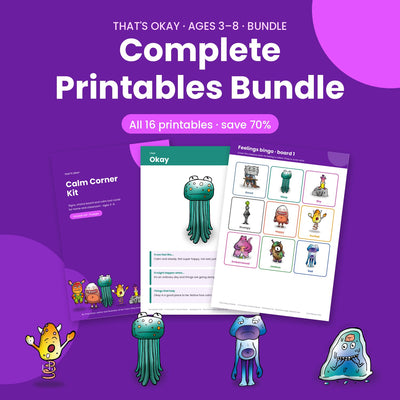
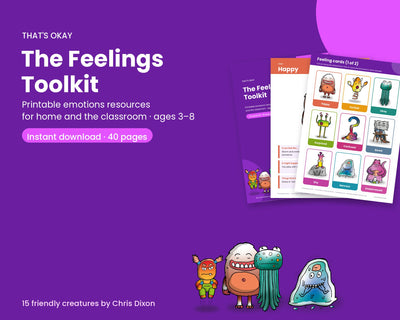
The That's Okay printables are instant PDF downloads designed for ages 3 to 8, starring the 15 friendly feelings creatures from the That's Okay picture books. Useful ones for zones-style regulation work include the Feelings Check-In Pack, the Calm Corner Kit (signs, a calm down choice board and coping skills cards), Calm Breathing Cards and the Feelings Posters. Or get every pack at once in the Complete Printables Bundle.
Buying for a whole school? See our resources for schools.