
Organic Cotton Clothing: Gentle Comfort for Kids
Some mornings begin with a stand-off over a sock seam.
A child is already tired before school has started. The neckline feels wrong. The label scratches. The fabric is stiff in a way adults barely notice, but their nervous system notices immediately. Then the day starts with tears, refusal, or that shut-down look parents know so well. People often read this as fussiness. I don’t. I read it as a body asking for relief.
As a child psychologist, I’ve seen how small physical discomforts can pile into big emotional strain. As a founder in the mental health clothing space, I’ve also seen how the right fabric can do something beautifully simple. It can stop adding pressure. That matters more than many people realise.
Organic cotton clothing is often discussed as an environmental choice. It is that. But for children, especially those with sensitive skin, sensory differences, eczema, or anxiety, it can also be a comfort choice. Sometimes that comfort becomes a regulation tool. Sometimes it becomes part of a calmer morning, a less distracted school day, or a bedtime routine that feels safer in the body.
Table of Contents
- More Than Just a T-Shirt Why Fabric Matters for Mood
- Understanding the Journey of Organic Cotton
- The Connection Between Gentle Fabrics and a Calm Mind
- A Guide to Trustworthy Organic Clothing Labels
- How to Select and Maintain Your Garments
- Beyond the Fabric Communicating Mental Wellness Through Apparel
-
Answering Your Questions About Organic Cotton
- Is organic cotton clothing worth the higher price
- How can I spot misleading organic claims
- Does organic cotton shrink more than conventional cotton
- Is soft always the same as sensory-friendly
- What matters most if my child has eczema or easily irritated skin
- Can organic cotton improve my child’s mood
More Than Just a T-Shirt Why Fabric Matters for Mood
A child pulls at their sleeve all the way to nursery. By lunchtime, they’re distracted. By home time, they’re brittle, tired, and more likely to melt down over something small.
That chain of events doesn’t always begin with behaviour. Often, it begins with sensation.
Clothing sits against the skin for hours. If it pinches, traps heat, scratches, or carries rough finishing chemicals, a child’s body keeps reacting to it. Many children can push through that discomfort. Others can’t, and they shouldn’t have to. When a child already has a sensitive nervous system, uncomfortable fabric can become one more demand on a day that already feels loud.
When comfort becomes emotional support
Parents often ask me whether clothes can really affect mood. Yes, in a practical way. If a child isn’t spending the day wriggling away from irritation, they have more capacity for learning, play, and regulation.
That’s one reason interest in organic cotton clothing has grown. People aren’t just looking for something “green”. They’re looking for garments that feel gentler, breathe better, and reduce the small physical stressors that can tip a child into overload.
Clothing can’t solve anxiety on its own, but it can stop making a hard day harder.
This matters for everyday basics as much as special outfits. If you’re thinking about softer wardrobe choices for children, guides on organic cotton dresses for sustainable style can be useful because they show how comfort and practicality can sit together.
There’s also a wider emotional layer. What children wear can influence how steady, confident, and secure they feel in themselves. I wrote more about that in this piece on dressing for confidence and the power of clothing in enhancing mental well-being.
Understanding the Journey of Organic Cotton
Organic cotton sounds simple, but many readers aren’t quite sure what makes it different. The easiest way to understand it is to think about the journey from seed to shirt.
Conventional cotton often works like intensive farming. Organic cotton is closer to a carefully tended garden. The aim isn’t only to grow the crop. It’s to grow it in a way that protects the soil, limits harsh inputs, and avoids avoidable contamination.

From seed to fibre
With certified organic systems, the standards start early. For GOTS certification, which is the leading standard in the UK, a garment labelled organic must contain at least 95% certified organic fibres, while made with organic requires 70%. GOTS also verifies the whole supply chain and rules out genetically modified seeds, while setting strict limits for toxic processing inputs and wastewater practices according to this overview of organic cotton certifications.
That matters because the farming decision changes the fabric that eventually touches the skin.
A few key differences sit at the heart of that journey:
- Seed choice matters: Organic systems don’t rely on genetically modified seeds within the GOTS framework.
- Soil is treated as living: Organic production aims to replenish soil fertility rather than push output through synthetic fertilisers.
- Waterways get less chemical pressure: Soil Association data referenced in that same GOTS overview notes 46% less nitrate leaching into UK waterways compared with conventional cotton.
- Residues are tightly controlled: GOTS sets pesticide residue limits at below detectable levels, under 0.01 mg/kg for over 300 substances.
From fibre to finished garment
The second half of the journey is where many people get caught out. A cotton crop may start well, but finishing and dyeing can still introduce substances you wouldn’t want on sensitive skin.
GOTS addresses this by checking processing across the supply chain and prohibiting chemicals such as chlorine bleach, which produces dioxins in conventional processing, as described in the same certification overview. In simple terms, the standard looks beyond the field. It asks what happened in the mill, the dye house, and the factory too.
Practical rule: If a brand talks about organic cotton but says nothing about certification, ask what verified the journey from fibre to finished piece.
That whole-chain approach is one reason parents often find certified organic cotton clothing easier to trust. It gives you a clearer answer to a very sensible question. Not just “What is this made from?” but “What happened to it before it reached my child?”
The Connection Between Gentle Fabrics and a Calm Mind
The most important conversation about organic cotton clothing isn’t really about fashion. It’s about friction.
Not social friction. Literal friction. The rubbing, itching, overheating, and chemical irritation that can keep a child’s nervous system on alert.
For children with sensory sensitivity, the body is often where stress starts. If the skin feels under attack, the brain rarely stays calm. A child may become irritable, distracted, avoidant, or exhausted without having the words to explain why.
Skin comfort and emotional regulation
In the UK, eczema affects 1 in 5 children under 5, and synthetic fabrics can make symptoms worse, according to this discussion of the power of organic clothing and sustainable clothing choices. When skin is inflamed or reactive, a child isn’t only coping with itch. They’re coping with interrupted sleep, embarrassment, anticipatory worry, and the constant effort of not scratching.
That’s why gentler fabrics matter.
We don’t yet have studies that directly quantify the mental health effect of organic cotton on UK children. It’s important to say that clearly. But the same source notes an emerging trend from NHS sensory clothing pilots showing a 20% anxiety reduction, which points to something many families already know from experience. When you reduce distress in the body, you often reduce distress in the mind as well.
Why the nervous system cares about fabric
Children don’t separate physical discomfort from emotional experience the way adults try to. They feel the whole load at once.
A rough top can mean:
- Less focus in class: attention keeps being pulled back to the body
- More irritability at home: discomfort lowers tolerance for ordinary demands
- Harder transitions: dressing, school uniform changes, and bedtime all become bigger battles
- More self-consciousness: visible scratching or flare-ups can affect confidence
In these circumstances, organic cotton clothing can be helpful. Not as a cure. Not as a grand promise. As a reduction in one source of strain.
If you’re already thinking in this way for babies and younger children, resources on choosing an organic cotton play mat for your baby can be useful because they apply the same principle to another part of daily sensory life. What rests against the skin matters.
A calmer body gives a child more room for learning, connecting, and recovering from stress.
What parents often notice first
The first sign usually isn’t dramatic. It’s ordinary.
A child stops tugging at the collar. They settle more quickly after getting dressed. They complain less. Bedtime involves less scratching. School mornings lose one point of conflict.
Those shifts may look small from the outside. In family life, they’re not small at all.
A Guide to Trustworthy Organic Clothing Labels
Labels can feel like alphabet soup. Parents stand in a shop, turn over a tag, and see a few logos without knowing what any of them guarantee.
The two labels worth understanding are GOTS and OEKO-TEX. They don’t mean exactly the same thing, and that’s where confusion starts.
What GOTS tells you
GOTS is the broad, chain-wide certification. In the UK, it’s widely recognised as the leading standard for organic cotton clothing. It checks the supply chain from fibre through to finished garment.
A practical way to read it is this: GOTS helps answer whether the product is organic and whether harmful processing steps were restricted along the way.
According to this guide to organic clothing and what labels mean, GOTS matters because it gives buyers more than a vague eco claim. It gives a defined standard to look for.
The verified points that matter most at the point of purchase are these:
- Organic content threshold: GOTS requires 95% certified organic fibres for the label organic, or 70% for made with organic, as outlined in the earlier cited GOTS certification overview.
- Whole supply chain verification: it doesn’t stop at the raw cotton.
- Toxic chemical restrictions: it prohibits substances such as chlorine bleach in certified processing.
- Sensitive skin relevance: that same certification overview reports a 71% reduction in skin irritation risk in wearer trials.
What OEKO-TEX tells you
OEKO-TEX speaks more directly to harmful substance testing. It’s less about saying “this entire item is organic from end to end” and more about checking whether the textile meets defined safety criteria.
The OEKO-TEX ORGANIC COTTON certification requires at least 70% organic cotton in blended apparel and includes GMO testing with under 5% contamination allowed, plus negative pesticide screening for more than 100 substances, including PFAS and heavy metals such as cadmium at under 0.1 mg/kg, according to Hohenstein’s explanation of OEKO-TEX ORGANIC COTTON.
That same source gives some practical detail for safety-focused buyers:
- Residue comparison: conventional cotton processing can retain 0.5 to 2 ppm pesticide residues post-washing, while OEKO-TEX organic reduces this to under 0.01 ppm
- Allergen control: Hohenstein lab data found 92% lower azo dye allergens in certified fabrics
- Water use context: WRAP UK lifecycle assessments cited there report 62% less water use, averaging 2,700 L/kg versus 10,000 L/kg for conventional cotton
Organic certification at a glance
| Feature | GOTS (Global Organic Textile Standard) | OEKO-TEX STANDARD 100 |
|---|---|---|
| Main focus | Organic fibre content and full supply chain verification | Testing finished textiles for harmful substances |
| Organic requirement | Defined thresholds for organic claims | Not primarily an organic content standard |
| Processing rules | Strong restrictions on toxic inputs | Strong chemical safety testing |
| Best question it answers | “Was this made through a verified organic textile chain?” | “Has this textile been tested for harmful substances?” |
A short video can help if you prefer a visual explanation.
If you’re buying for a child with reactive skin, don’t settle for soft wording on a website. Look for a label that makes a clear, testable promise.
How to Select and Maintain Your Garments
Children's clothing is often chosen based on colour, price, and wash durability. All sensible. But when comfort matters, there are a few more things to inspect before you buy.
Good organic cotton clothing should feel calm before it’s worn. Not slippery. Not papery. Not oddly coated.

What to check in the shop or online
Start with the simplest clue. Read the label slowly.
If the garment uses organic cotton, the label should say so clearly and ideally point you to a recognised certification rather than a fuzzy phrase like “natural feel” or “eco inspired”. Product pages that explain fabric choices in plain English are usually more trustworthy than pages full of buzzwords. A useful example is this guide to an organic t-shirt, which shows the kind of straightforward detail buyers should look for.
Then pay attention to construction.
- Touch the fabric: It should feel breathable and even, not chemically slick.
- Check the seams: Flat, neat seams are often kinder for sensory-sensitive children.
- Look at the neckline and cuffs: These areas create repeated friction, so softness matters.
- Think about use: School day, sleep, lounging, and outdoor play place different demands on the same fabric.
The verified data also notes that for mental health clothing, 150 to 200 gsm jersey knits can be a good fit for sensitive child skin because they’re breathable and comfortable within that garment category, according to the previously cited GOTS overview. GSM refers to fabric weight. You don’t need to memorise it. Just know that very flimsy fabric may not wear well, and very heavy fabric may feel restrictive to some children.
How to wash for comfort and longevity
Parents often worry that organic cotton clothing is “precious”. It doesn’t need complicated care. It needs consistent care.
A simple routine usually works well:
- Wash with mild detergent. If a child has sensitive skin, avoid heavily fragranced formulas where possible.
- Use a gentler cycle when you can. Less rough washing helps preserve softness.
- Skip unnecessary extras. Fabric treatments can leave residues or alter the feel.
- Air dry when practical. It’s easier on fibres and often helps garments keep their shape.
- Store by use, not just by outfit. Keep the most comfortable pieces easy to reach for hard mornings.
Why maintenance matters emotionally too
Clothing care isn’t only about saving money. It’s about protecting predictability.
Some children build trust with a specific feel. If a top stays soft, keeps its shape, and smells familiar after washing, it remains part of a reliable sensory routine. That reliability can be reassuring.
Beyond the Fabric Communicating Mental Wellness Through Apparel
A soft garment does one kind of job. A meaningful garment can do two.
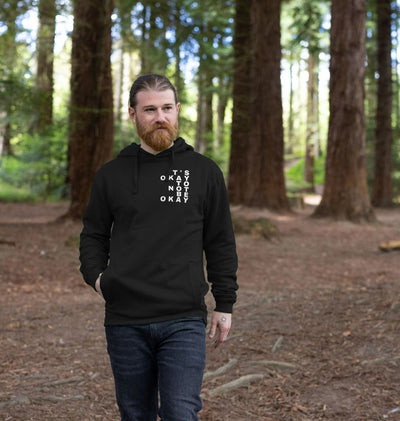
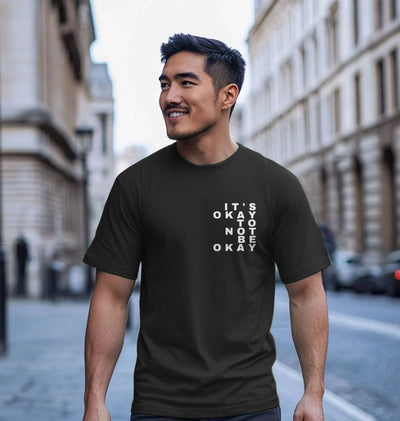
Mental health clothing thus becomes distinct from standard basics. The material supports the body, while the message supports the mind. When those two are aligned, clothing can become a quiet form of care.
Why the material should match the message
A shirt that says something kind about emotional wellbeing shouldn’t feel harsh to wear. If the message is about safety, rest, honesty, or self-acceptance, the fabric should reinforce that message rather than contradict it.
That’s why organic cotton clothing fits naturally within the mental health space. It signals care at two levels:
- Physical care: gentler contact with the skin
- Emotional care: language or artwork that validates real feelings
When adults choose mental health gifts for children, teenagers, or even other adults, they often focus on what the item says. I’d encourage one more question. How does it feel to wear? A thoughtful phrase printed on an irritating garment misses the point.
The best mental health gifts don’t just speak kindly. They feel kind too.
Clothing as a conversation starter
Parents and educators sometimes worry that mental health messages on clothing will feel too direct. In practice, clothing can be one of the gentlest ways to open a conversation.
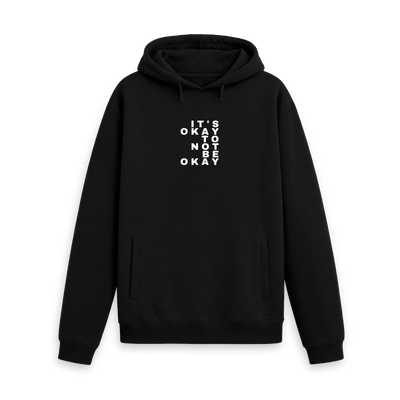
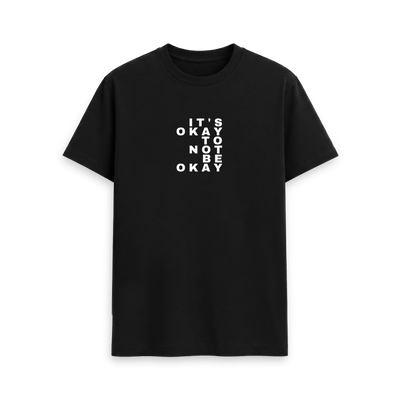
A hoodie, tee, or sleep top can do something a worksheet can’t. It can normalise emotional language in ordinary daily life. A child sees a phrase, asks about it, or chooses it on a day when they need that message nearby.
This can work well in several settings:
- At home: a parent can use the garment’s wording to check in without pressure
- In school pastoral spaces: clothing can support a wider emotional literacy culture
- In youth groups: it can help signal safety, empathy, and shared values
- For gift-giving: it offers comfort with meaning, not just novelty
A note for adults choosing for children
Messages should fit the child’s world. Short, clear, reassuring words usually land better than abstract slogans. So do designs that don’t feel performative.
The goal isn’t to make a child “wear a cause”. It’s to offer a piece of clothing that feels steady, affirming, and easy to live in. In that sense, good mental health clothing works almost like a visual cue for self-compassion. Not loud. Not forced. Just present.
Answering Your Questions About Organic Cotton
A few questions come up again and again, especially from parents balancing budget, laundry, and a child’s sensory needs.
Is organic cotton clothing worth the higher price
It can be, especially if your child is sensitive to texture or skin irritation.
The value isn’t only in the fibre itself. It’s in the combination of feel, lower exposure to harsh processing residues in certified products, and the fact that a comfortable garment often gets worn more. If something reduces dressing battles and stays in regular rotation, that matters.
How can I spot misleading organic claims
Start by looking for a recognised certification on the label or product page.
If a brand says “organic” but doesn’t explain whether that claim is verified, pause there. Reliable brands usually state the certification clearly and describe what it covers. Vague words like “earth friendly”, “pure”, or “natural comfort” aren’t the same as a proper textile standard.
Does organic cotton shrink more than conventional cotton
It can shrink, because cotton is a natural fibre, but shrinkage depends a lot on how the garment was made and how you wash it.
Follow the care label, avoid overly harsh drying where possible, and don’t assume organic automatically means fragile. What matters more is fabric quality and finishing.
Is soft always the same as sensory-friendly
No. Softness is only one part of the story.
A garment can feel soft in your hand but still annoy a child because of seams, fit, heat retention, neck shape, or printing. Sensory comfort is the whole wearing experience.
What matters most if my child has eczema or easily irritated skin
Prioritise clear certification, breathable fabric, simple construction, and garments your child wants to wear.
If possible, introduce one or two highly comfortable basics first rather than replacing everything at once. Notice what your child reaches for, what they avoid, and what changes during dressing, school, and sleep.
Can organic cotton improve my child’s mood
It may help indirectly by reducing physical triggers that contribute to discomfort and stress.
That’s a different claim from saying fabric treats mental health. It doesn’t. But if a child feels less itchy, less trapped, and less distracted in their clothing, many families notice more ease across the day.
If you’re looking for mental health clothing made with comfort and meaning in mind, explore That’s Okay and the It’s Okay To Not Be Okay collection. It brings together organic cotton, thoughtful design, and messages that support everyday emotional wellbeing for people who want what they wear to feel gentle and say something kind.