

A Guide to Organic Cotton Tee Shirts for Women in the UK
Choosing an organic cotton tee shirt for women is so much more than a style choice. It’s a quiet commitment to your own wellbeing and a nod of respect to the planet. It’s one of those small, everyday decisions that lets you line up what you believe with what you do, turning a wardrobe staple into a statement of mindful living.
Why Choose an Organic Cotton Tee Shirt
In a world saturated with fast fashion and endless options, it’s easy to feel a bit lost. Many of us are looking for something with a bit more substance, something that feels good inside and out. An organic cotton tee shirt is the perfect example of this shift towards conscious living. It’s a simple, tangible step towards a more sustainable and thoughtful lifestyle.
This choice is also an act of self-care. When you pick a garment made from pure, chemical-free fibres, you’re putting your own comfort and health first. This is especially true for anyone with sensitive skin, or for parents choosing clothing for their family. Organic cotton offers a gentle, non-irritating alternative to synthetic fabrics that can be loaded with harsh chemicals.
A Mindful Choice for Mental Wellbeing
It's amazing how much our daily choices can affect our mental state. When our actions truly reflect our values, it brings a real sense of integrity and peace. Choosing sustainable clothing is one small way to practise this alignment every single day. The importance of addressing mental health cannot be overstated; it is the foundation of our overall health and happiness.
When what we wear reflects our commitment to ourselves and the planet, it becomes a form of self-respect. This simple act of choosing mindfully can reinforce a positive self-image and contribute to overall emotional balance.
Plus, what we wear can be a powerful tool for starting conversations about mental health. Here at Little Fish Books, we’re big believers in the power of positive affirmations. A tee shirt featuring a message like "It's Okay to Not Be Okay" acts as a gentle, constant reminder to practise self-compassion. For parents and educators, wearing these messages helps normalise discussions about emotions with children, creating a space of openness and support. With around one in six children in the UK now having a probable mental health condition, these conversations are more vital than ever.
The Growing Movement of Conscious Consumers
This thoughtful approach isn’t just a niche interest anymore; it's a rapidly growing movement. The sustainable fashion market in the UK is projected to climb to USD 1,757.42 million by 2033, which just goes to show how many of us are becoming more eco-conscious.
Parents, in particular, are leading the charge, choosing organic cotton to model sustainable values for their children. For brands like Little Fish Books, our organic tees are more than just merchandise. They’re part of a cultural shift that blends sustainability with mental health awareness, reshaping UK wardrobes for a greener, more thoughtful future. You can explore the full market analysis on sustainable fashion trends to see the bigger picture.
Ultimately, choosing an organic cotton tee is a holistic decision. It supports your wellbeing, helps protect the environment, and lets you wear your values on your sleeve. It’s a simple garment that makes a profound statement about the kind of world you want to live in—and help create for the next generation.
Understanding What Makes Cotton Truly Organic
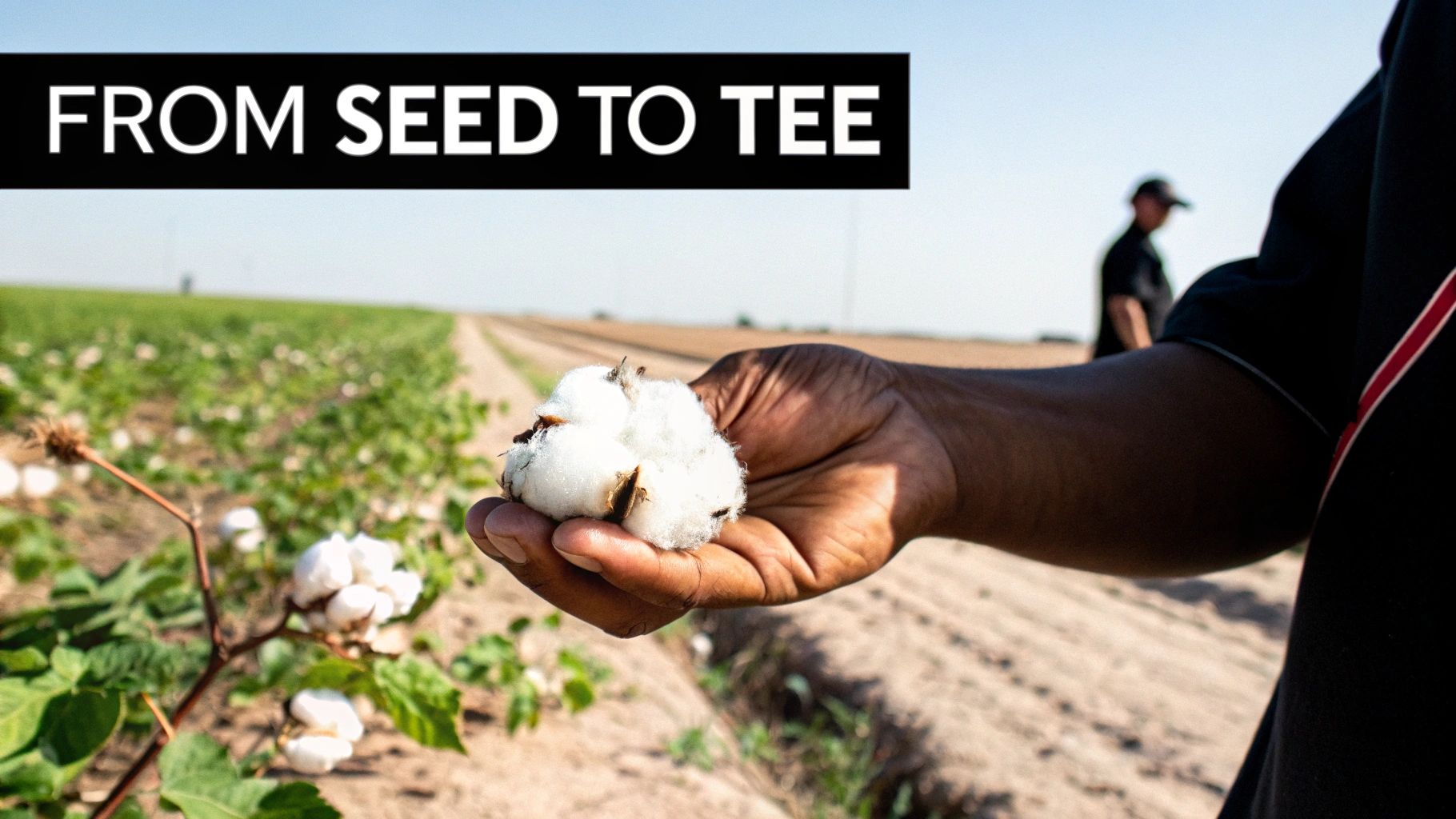
The word "organic" gets thrown around a lot, but when we’re talking about cotton, it means something incredibly specific. It points to a profound, measurable difference in how the material is grown and processed, from a single seed all the way to the soft tee you pull on in the morning. This isn’t just about a label; it’s a commitment to a healthier planet and healthier people.
Imagine an organic cotton farm as a thriving little ecosystem. It’s buzzing with life, from helpful insects to rich, dark soil, all working together in harmony. It’s a world away from conventional cotton farming, which often depends on a heavy cocktail of chemicals to get the job done.
It all starts with the seed. Organic cotton is grown from non-genetically modified (non-GMO) seeds, which means the plant’s natural integrity is protected from day one. This is the very first step in a long chain that always chooses natural processes over synthetic shortcuts.
From Healthy Soil Comes Softer Fabric
The heart and soul of any organic farm is its soil. Instead of pumping the ground full of synthetic chemical fertilisers, organic farmers build up healthy soil using time-tested methods like crop rotation and composting. This approach doesn't just feed the plant; it creates a resilient, living soil structure that holds onto water more effectively.
You can think of healthy soil as a natural sponge. It dramatically reduces water runoff, meaning less need for irrigation. This natural fertility grows stronger, more robust cotton plants without any chemical stimulants. The end result? A purer, higher-quality fibre that feels unbelievably soft against your skin.
This focus on soil health is a long-term game. It prevents the land from degrading and eroding, protecting it for generations to come. It’s a patient, nurturing process that works with nature, not against it.
A Gentler Way to Handle Pests
One of the biggest differences with organic cotton is how it deals with pests. You might be shocked to learn that conventional cotton is one of the world's most chemically-dependent crops, responsible for a staggering 16% of all global insecticide use. These harsh chemicals can harm farmers, local wildlife, and seep into our water supplies.
Organic farming takes a completely different path. Farmers rely on clever, natural ways to keep pests in check, including:
- Beneficial Insects: Releasing friendly bugs like ladybirds that naturally prey on common cotton pests.
- Trap Crops: Planting certain crops nearby to lure pests away from the main cotton plants.
- Natural Repellents: Using plant-based sprays, like neem oil, which are far kinder to the environment than synthetic options.
This method protects biodiversity and keeps the farm a balanced, healthy place. More importantly, it means no nasty chemical residues are left on the cotton fibres that will eventually become your T-shirt. You can find more details on why an organic T-shirt is such a better choice for your skin and the planet.
Processing Without the Harsh Chemicals
The organic promise doesn't stop when the cotton leaves the field. Once harvested, the cotton has to be processed under strict rules to keep it pure. This is where certifications like the Global Organic Textile Standard (GOTS) are absolutely crucial.
A GOTS certification is your guarantee that the entire supply chain—from harvesting and processing to dyeing and finishing—follows strict ecological and social rules. It bans the use of toxic heavy metals, formaldehyde, and harmful azo dyes that are often used in conventional textile production.
This means GOTS-certified organic cotton tee shirts for women are coloured using low-impact, non-toxic dyes. This is a huge reason why organic cotton is so often recommended for people with sensitive skin, eczema, or allergies. By choosing certified organic, you’re making sure the T-shirt you wear is as gentle on your skin as it is on the planet, giving you complete peace of mind.
The Health and Environmental Benefits of Going Organic
Choosing an organic cotton tee shirt is one of those simple acts that sends powerful ripples outwards, benefiting both your personal wellbeing and the health of our planet. The decision goes far beyond the fabric itself; it’s a conscious choice for a gentler, more sustainable way of living. Let’s explore the real-world advantages that make this choice so meaningful for you, your family, and the environment we all share.
For many, the most immediate benefit is personal. Your skin is your body's largest organ, and it’s in constant contact with your clothing. Organic cotton is naturally hypoallergenic and free from the harsh chemical residues often found in conventional textiles, making it an ideal choice for anyone with sensitive skin, eczema, or allergies.
This is especially important for parents and educators who are mindful of what touches a child’s skin. By choosing organic cotton tee shirts for womens and their families, they provide a soft, breathable, and non-irritating layer of comfort. It turns the simple act of getting dressed into a practice of gentle self-care.
A Kinder Choice for Your Family's Health
When you opt for organic, you’re saying no to a long list of substances that have no place near your skin. Conventional cotton farming is notoriously reliant on synthetic pesticides and fertilisers, and traces of these can linger in the final garment. Beyond the farm, the processing of non-organic textiles often involves:
- Harsh Chemicals: Chlorine bleach, formaldehyde, and heavy metals are commonly used to treat and dye conventional fabrics.
- Azo Dyes: Certain azo dyes, which can release carcinogenic compounds, are frequently used and are a known cause of skin irritation.
- Poor Breathability: Synthetic blends often trap heat and moisture, which can weaken the skin’s natural barrier and create an environment where irritation can occur.
Certified organic cotton, on the other hand, is processed without these toxic inputs. This commitment to purity means you can wear your tee with the confidence that it’s as clean and natural as possible.
By choosing organic cotton, you are not just buying a T-shirt; you are investing in a product that respects your body’s health. It’s a small but significant way to reduce your family's daily exposure to unnecessary chemicals.
Protecting Our Planet One Tee at a Time
The environmental case for organic cotton is just as compelling. Conventional cotton farming places enormous strain on the planet's resources, but organic methods offer a much more sustainable and hopeful alternative.
Let's take a look at how the two stack up side-by-side.
Conventional Cotton vs Organic Cotton at a Glance
| Feature | Conventional Cotton | Organic Cotton |
|---|---|---|
| Pesticides & Fertilisers | Heavy use of synthetic, chemical-based products. | No synthetic pesticides or fertilisers; uses natural methods. |
| Water Usage | Extremely high; requires extensive irrigation. | Up to 91% less water used due to healthy soil. |
| Soil Health | Degrades soil quality over time, leading to erosion. | Builds healthy, fertile soil that retains water and nutrients. |
| Chemical Processing | Involves formaldehyde, chlorine bleach, and heavy metals. | Processed with non-toxic, natural alternatives. |
| Ecosystem Impact | Pollutes rivers and groundwater, harming wildlife. | Protects waterways and promotes biodiversity. |
| Carbon Footprint | Higher due to energy-intensive chemical production. | Lower emissions by avoiding synthetic agrochemicals. |
As you can see, the differences are stark. Choosing organic isn't just a minor upgrade; it's a fundamental shift towards a healthier model of production.
The most dramatic difference is in water consumption. Organic farming practices build healthy, absorbent soil that retains water far more effectively. This leads to a staggering 91% reduction in water usage compared to conventional methods. It’s a powerful lesson in resource conservation that we can teach the next generation simply by making a thoughtful purchase. For more insights into the benefits, read our detailed guide on why you should choose organic cotton tee shirts.
Furthermore, by eliminating synthetic pesticides and fertilisers, organic farming prevents toxic runoff from polluting our rivers, lakes, and oceans. This protects aquatic ecosystems and ensures cleaner drinking water for communities worldwide. It also significantly reduces carbon emissions, as the production of these agrochemicals is an energy-intensive process.
This shift towards mindful consumption is reshaping the UK fashion landscape. The sustainable apparel market, with organic cotton leading the way, is projected to reach USD 2,561.64 million by 2035. This incredible growth is driven by consumers—like the parents and educators in our community—who see these tees as more than just clothing. They are wearable reminders of self-care and environmental responsibility, perfectly aligning with the values of youth mental health advocacy. You can explore the full story of mindful consumption in UK fashion to understand the trend's impact. Choosing an organic tee is a vote for healthier ecosystems, cleaner water, and a more stable climate for all.
How to Identify High-Quality Organic Tee Shirts
Diving into the world of sustainable fashion can feel a bit much at times, but figuring out how to spot a genuinely high-quality organic cotton tee is easier than you might think. It’s really about looking past the price tag to understand the real value of what you're buying. A well-made tee is an investment in your comfort, your wallet, and the planet.
Think of this section as your practical guide to becoming a more confident, clued-in shopper. We'll break down exactly what to look for, from the certifications that act as a stamp of approval for ethical production to the little details you can see and feel for yourself. This is the kind of know-how that empowers you to choose pieces that aren't just lovely to look at, but are genuinely built to last.
Look for Trusted Certifications
Honestly, the most straightforward way to know if a tee is truly organic and ethically made is to look for a certification label. These labels are like a promise, letting you know that an independent organisation has checked out the entire production line, from the cotton fields right down to the final stitch.
The most respected and thorough certification out there for textiles is the Global Organic Textile Standard (GOTS). When you see that GOTS logo on a tag, it’s your guarantee that the tee shirt meets incredibly strict standards at every single step.
A GOTS certification ensures that a minimum of 95% of the fibres are certified organic. It also bans harmful chemicals like toxic dyes and formaldehyde, and requires fair labour practices, including safe working conditions and fair wages for everyone involved.
This certification really is the gold standard because it looks after both the environmental and the social side of things. It confirms that your organic cotton tee shirt for women is not only kind to your skin but was also made by people who are treated with the respect and dignity they deserve.
This visual really brings home the impressive environmental savings of choosing organic cotton.
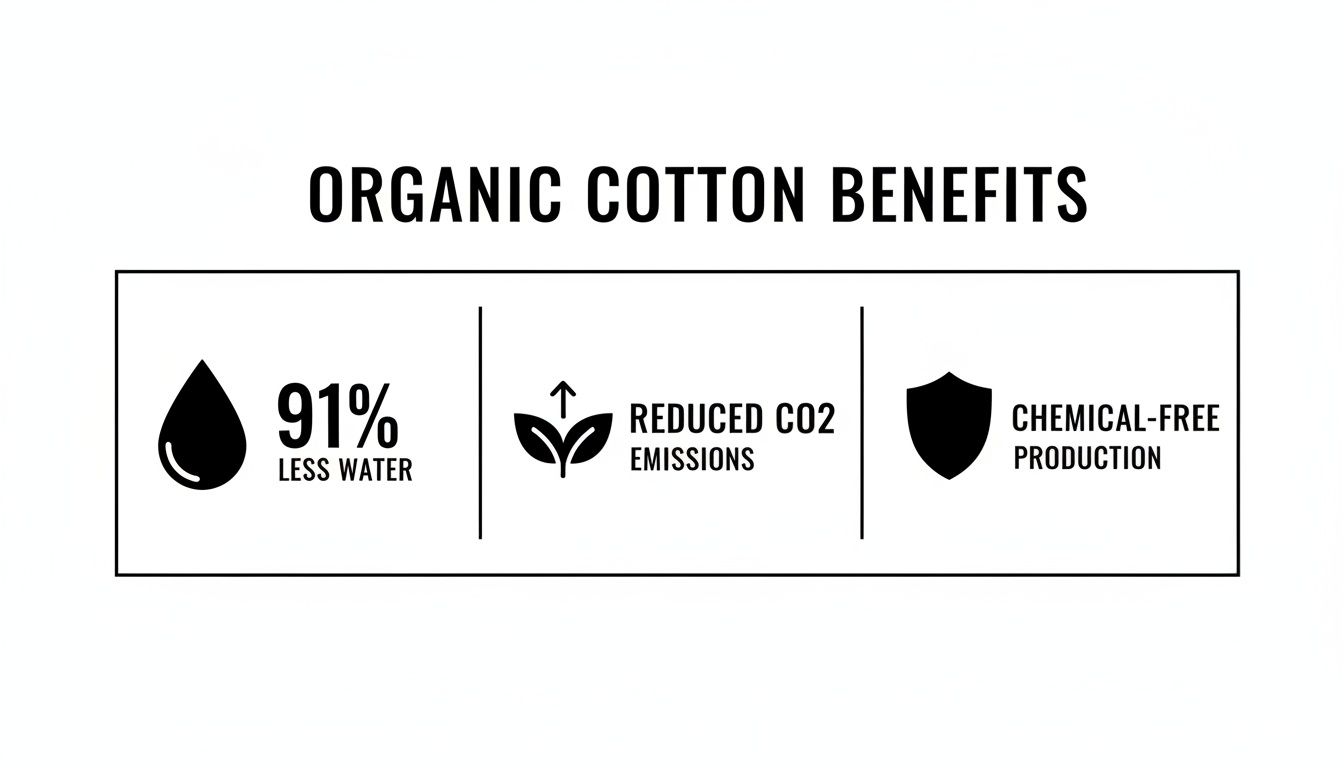
The numbers make it crystal clear: organic production uses drastically less water, lowers carbon emissions, and cuts out nasty chemicals from the entire process.
Assess the Fabric and Feel
Once you’ve spotted a certification, it’s time to trust your senses. The actual quality of an organic cotton tee is a huge clue to how well it will last. A high-quality garment just feels different.
First, think about the fabric weight. A tee that feels substantial in your hands, without being overly heavy, often has a higher GSM (grams per square metre). While a lightweight tee is brilliant for summer, a slightly heavier fabric usually means a denser weave. This translates to better durability and shape retention, wash after wash. It’s far less likely to go thin or get those annoying little holes after just a few wears. For example, a t-shirt with a GSM of 180 is a great all-rounder, offering durability without being too heavy.
Next, pay close attention to the feel of the material itself. High-quality organic cotton, especially long-staple varieties, feels incredibly soft and smooth against your skin. It shouldn't feel scratchy or rough at all. That superior softness comes from the longer, stronger cotton fibres, which create a smoother yarn with fewer fuzzy ends sticking out, meaning less friction and more comfort for you.
Examine the Stitching and Seams
The way a garment is put together is where its true quality shines through. Even the most beautiful fabric won't hold up if it's been poorly constructed. Take a moment to really look at the seams and stitching, as these details are what make a tee last.
Here’s what you should be looking for:
- Stitch Density: Look for small, tight, and even stitches. A higher number of stitches per inch means the seams are stronger and more durable. They'll be much less likely to pucker up or unravel over time.
- Reinforced Seams: Have a peek at the shoulder seams and neckline. Good manufacturers often add a little strip of reinforcing fabric tape over the shoulder seams. This gives extra strength and helps the tee keep its shape, preventing that annoying stretching and sagging.
- Finishing: Turn the tee inside out. Are the seams neat and flat? High-quality tees have cleanly finished seams that won't chafe or irritate your skin. A mess of loose threads is usually a tell-tale sign of rushed, low-quality production.
By taking just a few moments to check these details, you can easily tell the difference between a tee built for the long haul and one designed for a single season. Investing a little more in a well-made piece means you'll be replacing it far less often—which is better for your bank account and much kinder to our planet.
Styling Your Tee for Everyday Wellbeing
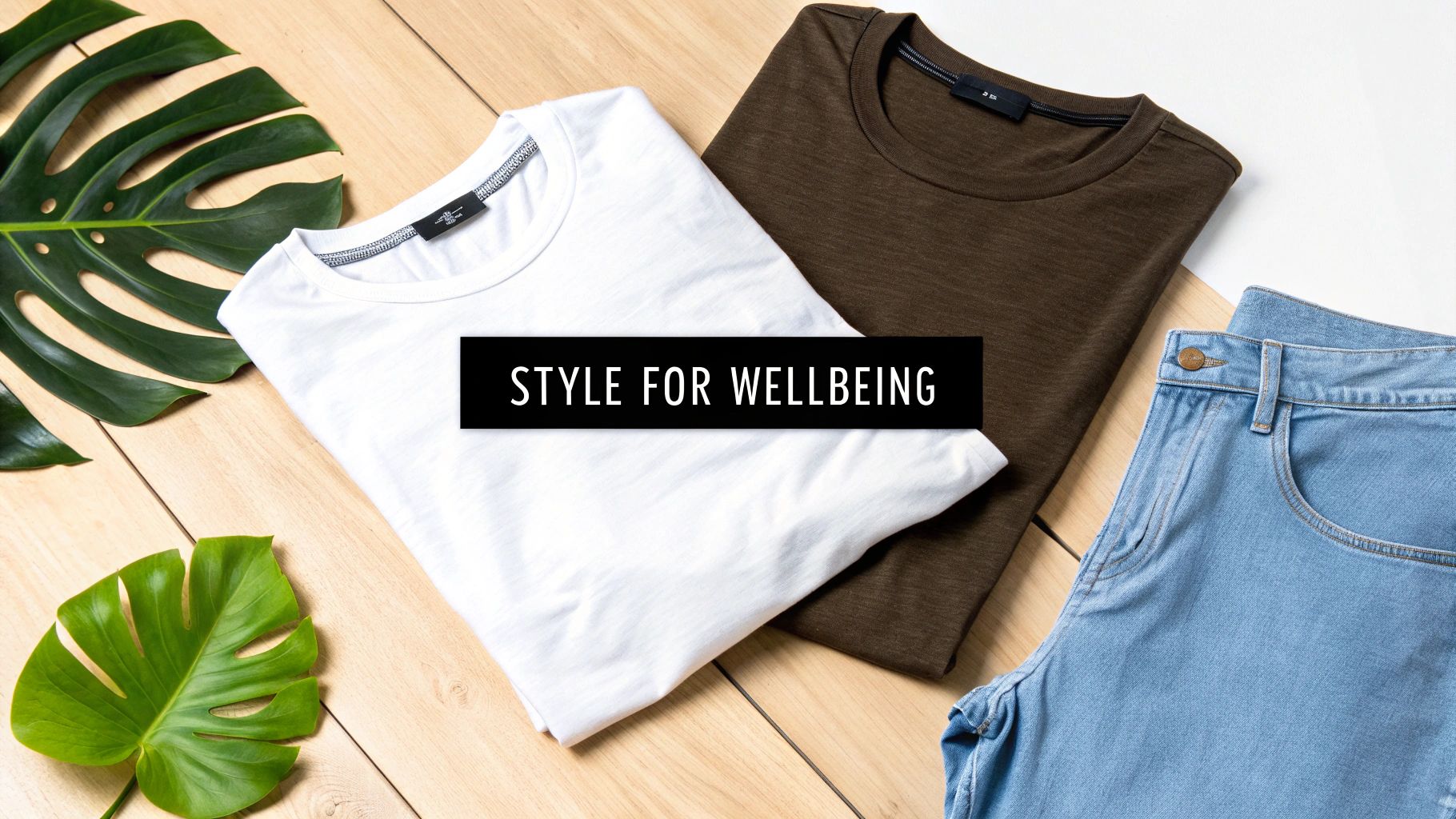
An organic cotton tee shirt for women is so much more than a comfortable basic. It’s a versatile canvas for self-expression, and even a quiet little tool for boosting your daily wellbeing. The way we dress genuinely affects how we feel, and styling your tee with a bit of thought can turn it into a source of comfort, confidence, and even connection.
It's all about creating outfits that support you through your day, from the morning school run to a relaxed evening at home. The real beauty of a high-quality organic tee is its sheer simplicity and adaptability. You can pair it with some well-fitting jeans and trainers for a casual, put-together look. Need to smarten up for a workshop or meeting? Just layer it under a blazer with tailored trousers. This effortless versatility makes it an indispensable part of a mindful wardrobe, cutting down on decision fatigue so you can focus on what really matters.
Clothing as a Conversation Starter
What we wear sends a message, not just to others, but to ourselves. A tee shirt with a positive affirmation or a message of self-compassion can become a personal anchor throughout your day. Think of it as a gentle, wearable reminder to be kind to yourself, especially when things feel a bit overwhelming.
This idea is particularly powerful for parents and educators. Wearing clothes that normalise mental health can open up vital conversations with children about their own feelings. For instance, when a child sees an adult wearing a shirt that says "It's Okay to Feel," it can give them the courage to talk about their own anxieties, turning a simple piece of clothing into a bridge for emotional connection.
Wearing your values is a form of self-care. When your clothing reflects a message of kindness and mental wellbeing, it reinforces those principles internally and signals to others that you are a safe person to talk to.
Bit by bit, this approach helps dismantle the stigma around mental health. It teaches children that emotions are a normal, healthy part of life and that talking about them is a sign of real strength.
Mental Health Apparel as a Tool for Support
The growing trend of mental health apparel is about more than just fashion; it’s a movement. These garments create a sense of community and solidarity, showing support for those who might be struggling quietly.
Choosing one of our plain oversized T-shirts for women in organic cotton and pairing it with a badge or pin that carries a personal message can be a subtle yet powerful way to express your support. With around one in six children in the UK having a probable mental health condition, apparel that sparks dialogue is a small but meaningful way to help create a more supportive environment for them.
Expanding Your Wellbeing Toolkit
Beyond apparel, many other resources can support your mental wellbeing journey. Reading mental health books that focus on emotional literacy and self-compassion, such as Matt Haig's The Midnight Library for adults or The Huge Bag of Worries by Virginia Ironside for children, can provide valuable insights and practical tools.
Here are a few simple relaxation tips to build a more supportive daily routine:
- Mindful Moments: Take five minutes just to focus on your breathing. Inhale slowly for a count of four, hold for four, and exhale completely for a count of six. This simple act can do wonders to calm your nervous system.
- Journaling: Write down three things you are grateful for each day. This simple practice helps shift focus towards positivity and can offer a new perspective.
- Connect with Nature: Even a short walk in a local park, paying attention to the sounds of birds or the feeling of the breeze, can lift your spirits and reduce stress.
Please remember, while we discuss wellbeing, I am not a mental health professional. This advice is for informational purposes only. If you or someone you know is struggling, it is so important to seek help from a doctor or a qualified mental health practitioner. They can provide the professional support you need.
Sustainable Care for Your Organic Cotton Apparel
Caring for your organic cotton tee shirts for womens is the final, beautiful step in your sustainable fashion journey. When you take a few gentle habits on board, you’re not just preserving the softness and shape of your new favourite tee—you’re extending its life for years to come. Think of it as honouring that mindful choice you made, keeping your T-shirt feeling incredible while shrinking its environmental footprint over time.
Proper care is so much simpler than you might think, and it’s all about reinforcing that same conscious living message. It’s the small adjustments that add up to a huge difference, both for your clothes and for the planet.
Simple Washing for Lasting Softness
The single most effective thing you can do for your organic cotton tee is to wash it in cold water. Popping it on a cool cycle (at 30°C or lower) is so much gentler on the natural fibres, helping them stay strong and preventing any unwanted shrinking.
But it’s more than that. Washing in cold water massively cuts down on energy use. Believe it or not, up to 90% of the energy a washing machine uses is just to heat the water. By making the switch to cold, you’re directly lowering your home’s carbon footprint with every single wash.
Always reach for a mild, eco-friendly detergent, too. Harsh chemicals and bleaches can literally strip the natural softness from the cotton fibres and might even irritate your skin. A gentle, plant-based detergent is all you’ll ever need to keep your tee clean and fresh.
The Gentle Art of Air-Drying
Whenever you can, please skip the tumble dryer. The intense heat is really tough on organic cotton and can cause unnecessary wear and tear, not to mention shrinkage. Instead, why not embrace the simple, completely energy-free method of air-drying?
Air-drying is the kindest way to treat your organic cotton apparel. It preserves the fabric’s natural softness, helps the garment retain its original shape, and costs absolutely nothing.
Just give your tee a little reshape while it’s still damp and hang it on a line or lay it flat on a drying rack. Try to keep it out of direct, harsh sunlight, which can make colours fade over time. This tiny change to your routine will make a world of difference in how long you get to enjoy your T-shirt.
Natural Solutions for Stain Removal
Life happens, and so do spills! But you really don’t need aggressive chemical stain removers to sort them out. For most common stains, a simple, natural approach works like a charm.
Here are a few easy tips to try:
- For general spots: Mix a little baking soda and water into a paste. Gently dab it onto the stain, let it sit for 15-20 minutes, and then wash the tee as you normally would.
- For oily stains: Sprinkle a little cornflour right onto the spot. It’s fantastic at absorbing grease. Leave it for about an hour before brushing it off and popping it in the wash.
- For fruit or drink spills: A simple solution of equal parts white vinegar and water can be gently dabbed onto the stain before washing.
By following these simple care instructions, you can make sure your organic cotton tee shirts for womens stay beautiful and comfortable for years, making your sustainable choice feel even better.
Answering Your Questions on Organic Cotton
Choosing organic cotton often brings up a few questions. It’s a thoughtful switch, after all. Let's walk through some of the common ones to help you feel even more confident about your choice.
Is Organic Cotton Really Better for Mental Health?
While an organic cotton t-shirt can’t magically fix mental health challenges, it can absolutely be a supportive part of your toolkit. Think of it this way: the physical softness and lack of chemical irritants offer a sense of comfort, which can be incredibly grounding on a tough day.
When that t-shirt also carries a positive affirmation, it becomes a gentle, daily reminder to practise a bit of self-compassion. For kids, seeing these messages helps to normalise talking about feelings, which is a cornerstone of their mental wellbeing.
It’s a small gesture, but creating supportive environments matters more than ever. Poor mental health costs UK businesses between £53 and £56 billion every single year, highlighting just how widespread the struggle is.
How Can I Support a Child's Mental Health?
Supporting a child's mental health is all about creating a safe space for them to feel and express themselves openly. It doesn't have to be complicated; small, practical steps can make a world of difference.
- Encourage Expression: Things like colouring sheets or mental health books about feelings are fantastic for helping them put a name to what they're experiencing inside.
- Model Healthy Habits: Let them see how you handle stress. Maybe you take some quiet time, go for a walk, or get lost in a good book. They’re always watching and learning.
- Limit Social Media: The impact of social media on mental health is significant, with studies linking excessive use to higher rates of anxiety and depression in young people. Setting clear, consistent boundaries around screen time is a loving act.
- Prioritise Relaxation: Even simple relaxation tips like a few deep breathing exercises before bed can work wonders to calm an anxious little mind.
A Gentle Reminder on Professional Advice
This is really important, so I want to be crystal clear: I am not a mental health professional. The clothing and resources I talk about are here to support wellbeing, but they are never a replacement for professional medical advice.
If you are worried about your own mental health, or that of a child, please seek help from a doctor or a qualified mental health practitioner. They have the training and expertise to provide a proper diagnosis and the support you need.
Your GP is always the best first port of call. They can listen to what's going on in confidence and guide you towards the right resources, whether that’s therapy, counselling, or other specialist support services in your area.
Here at Little Fish Books, we're passionate about creating things that nurture emotional literacy and wellbeing for the whole family. From our books and activities to our organic cotton apparel, everything is designed to support you on your journey. Come and explore our collection at https://thatsokay.co.uk to learn more.