
What is compassion focused therapy? A Quick Guide to Emotional Wellbeing
Compassion Focused Therapy (CFT) is all about learning how to be a supportive friend to yourself, especially when you're wrestling with tough feelings like shame or self-criticism. Think of it as training your own internal coach, someone who’s encouraging and understanding, rather than letting that harsh inner critic run the show. It isn't about letting yourself off the hook for mistakes, but about building the inner warmth and strength to face them, learn, and grow.
A Fresh Way to Think About Wellbeing
In a world filled with the pressures of school and the endless scroll of social media, looking after children's mental health is more critical than ever. The statistics are quite sobering. In July 2021, one in six children aged 5 to 16 were identified with a probable mental health problem. That's a huge jump from one in nine back in 2017, and it shows just how urgently we need to equip our kids with the tools for emotional resilience.
This is where Compassion Focused Therapy offers such a vital toolkit. It’s designed to help young people understand the whirlwind inside their own minds, learn to handle difficult emotions, and cultivate a real sense of inner safety and kindness. By nurturing this compassionate inner voice, we can help children become better prepared to navigate the inevitable ups and downs life throws their way.
Why is This So Important Today?
Looking after our mental health isn't just a personal matter; it has a ripple effect. For businesses here in the UK, poor mental health costs an estimated £53-£56 billion every single year through absences and reduced productivity. When we foster emotional literacy in childhood, we're not just helping kids feel better now—we're making a long-term investment in a healthier, more capable future workforce. For anyone interested in the broader landscape of mental and emotional health, exploring various wellness therapy courses can provide some brilliant insights.
This guide is here to explore how the core ideas of Compassion Focused Therapy can support children’s mental wellbeing. I want to be clear that I am not a mental health professional. This article is purely for informational purposes and is not a substitute for expert advice. If you're worried about a child's mental health, please speak with your GP or a qualified therapist.
The Three Emotional Systems: Your Brain's Inner Team
At the core of Compassion Focused Therapy is a beautifully simple idea: our brains have three main emotional systems that work together like an internal team. Getting to know this team helps us understand why we feel the way we do, and more importantly, gives us clues on how to find our balance again.
Think of each system as having a specific job to do, all with the goal of keeping you safe and well.
Meet the Team Members
First up is the Threat System. This is your brain's super-sensitive smoke alarm. Its main job is to constantly scan for danger, keeping you alert and safe from harm. This system is what triggers feelings like anxiety, anger, or disgust to protect you when it senses a problem – whether that’s a real physical danger or the social butterflies before a big school play.
Next, we have the Drive System, which you can think of as your brain's engine. This system is all about motivation, achievement, and chasing those feel-good rewards. It’s the force that pushes you to revise for a test, score a goal in football, or finish a drawing you're proud of, delivering feelings of excitement, pleasure, and accomplishment.
And finally, there's the Soothing System. This is like a safe, warm harbour inside your mind. This system is what helps you feel calm, content, and connected to others. It’s activated when we feel cared for and safe, allowing our minds and bodies to rest and recover. It's the feeling you get from a comforting hug, a kind word, or just a quiet, peaceful moment by yourself.
The image below shows how CFT helps to cultivate inner support, strength, and kindness, all of which strengthen this soothing system.
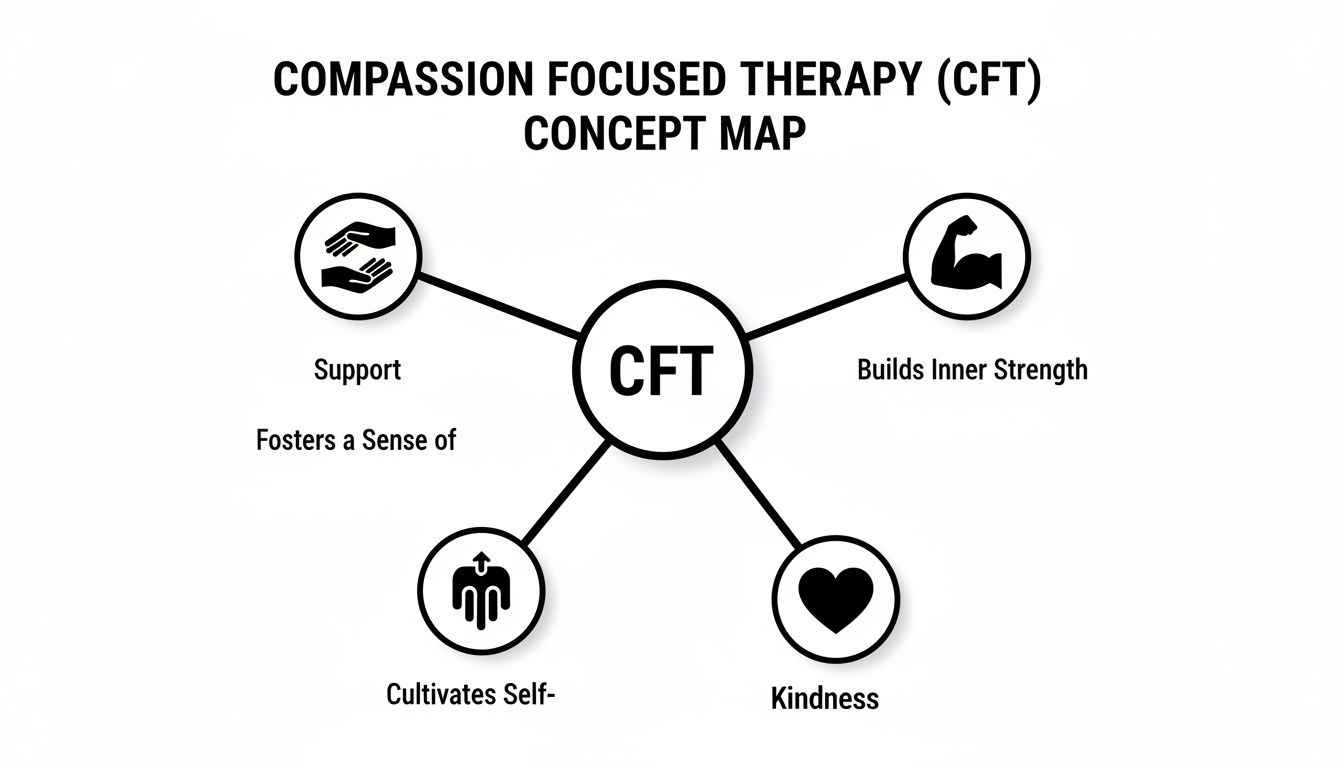
This really brings home that CFT isn’t just one single idea, but a way of weaving together concepts that help a compassionate mindset flourish.
Bringing the Team into Balance
Modern life, with its constant pressures from school, friendships, and social media, has a knack for keeping our threat and drive systems in overdrive. The endless need to be on alert and to achieve can leave our soothing system feeling a bit neglected and underdeveloped.
A child might feel perpetually anxious about fitting in (threat) while striving for top marks (drive), with very little time left to just feel calm and content. Sound familiar?
To make this a bit clearer, here’s a quick breakdown of how these systems might show up in a child's day-to-day life.
A Child's Guide to the Three Emotional Systems
| Emotional System | What It Does | A Child's Everyday Example |
|---|---|---|
| Threat System | Keeps you safe from danger; makes you feel anxious, angry, or worried. | Feeling nervous about being picked last for a team in PE, or getting a tummy ache before a test. |
| Drive System | Motivates you to achieve goals and seek rewards; makes you feel excited and successful. | Working hard to finish a LEGO model, or feeling brilliant after getting a good school report. |
| Soothing System | Helps you feel calm, safe, and connected; brings feelings of contentment and peace. | Getting a big hug from a parent after a tough day, or feeling cosy reading a story at bedtime. |
It's clear how each system has an important role to play. The trick is making sure they work together in harmony.
The goal of Compassion Focused Therapy isn't to switch off the threat or drive systems—after all, they are essential for our survival and success. Instead, the aim is to strengthen the soothing system, bringing the entire team back into balance for greater emotional health and resilience.
How to Cultivate Self-Compassion in Children
Understanding the theory behind Compassion Focused Therapy is one thing, but putting it into practice with children is where the real magic happens. The goal is to move beyond abstract ideas and introduce simple, tangible techniques that help build a child's compassionate inner voice and strengthen their all-important soothing system.
These aren't complicated clinical exercises. Far from it. They’re gentle, everyday activities that can make a world of difference.
A wonderful starting point is to adapt a core CFT practice: compassionate letter writing. For a young child, this can feel a bit hard to grasp. But you can frame it in a much more relatable way.

Imagine your child is really upset after losing a game. You could ask, "What would you say to your best friend if they felt sad like this?" They'll almost certainly offer kind, encouraging words. The next, crucial step is to gently guide them to turn that exact same kindness inwards, helping them say those supportive things to themselves. For instance, instead of thinking "I'm rubbish at this," they could learn to say, "It's okay to be disappointed, I tried my best."
Simple Calming Practices for Families
Another powerful technique is soothing rhythm breathing. This is something families can easily do together to activate the soothing system. It’s a simple, mindful practice that helps calm the body’s threat response when big feelings take over.
Here’s how you can try it together:
- Find a Quiet Space: Sit comfortably together for just a minute or two.
- Gentle Hand Placement: Place a hand gently over your heart or on your belly. This simple act of self-touch can be incredibly calming.
- Breathe Slowly: Breathe in slowly and deeply, and then breathe out even more slowly. Find a rhythm that feels calming and natural, without any forcing.
- Focus on Kindness: As you breathe, you can silently repeat a kind phrase to yourself, like "I am safe" or "I am okay."
This practice offers more than just immediate relaxation; it teaches children a fundamental skill for managing their emotions. This ability to self-soothe is a true cornerstone of resilience.
The impact of techniques like these is significant, particularly when that harsh inner critic takes hold. For example, chronic pain affects 28 million lives in the UK and often leads to harsh self-judgements. In a study on a virtual CFT group for this issue, 46% of patients saw clinically significant improvements in self-compassion, and importantly, no one's condition worsened. It just goes to show its gentle power.
Using Resources to Spark Conversations
These practical exercises are perfectly complemented by creative resources that open up conversations about feelings. For instance, using emotional colouring sheets or reading storybooks together can beautifully reinforce the core principles of self-kindness and understanding.
Books are a fantastic gateway to discussing complex emotions. They give children characters to relate to and a safe context to explore feelings like sadness, anger, or disappointment without feeling judged. The Huge Bag of Worries by Virginia Ironside is a wonderful example, showing children how to share their anxieties rather than keeping them bottled up.
Pairing these activities with the hands-on techniques of Compassion Focused Therapy creates a nurturing environment where children really learn what self-compassion is. Our guide exploring what is self compassion can help you dive deeper into the fundamentals. This combined approach helps embed these skills deeply, making them a natural part of a child's emotional toolkit for life.
The Science Behind Compassion Focused Therapy
Compassion Focused Therapy isn’t just a collection of nice, fluffy ideas; it's a solid, evidence-based approach rooted in our understanding of how the human brain and our emotions really work. When we actively train our minds to be more compassionate, we can actually create measurable changes in how we respond to stress – a vital skill for children navigating the pressures of modern life.
At its core, the therapy strengthens the brain's soothing system. Think of this as the part of us that helps us feel safe, calm, and connected. When this system is active, it acts like a counterbalance to our threat and drive systems, which are often firing on all cylinders in today's world. Teaching children how to activate their soothing system early on gives them a protective buffer against future mental health challenges, showing just how valuable it is to invest in their emotional education from a young age.
CFT in the Real World
The practical side of what is compassion focused therapy is being explored in some incredibly challenging situations, proving its real-world impact. In the UK, for instance, its principles are being put to the test within NHS stroke care. With around 110,000 strokes happening in England each year, the emotional fallout for patients and their families is immense.
A current study is looking at how even a brief, three-session CFT intervention can improve the mental wellbeing of individuals with acquired brain injuries. It shows the incredible potential of CFT to help families cope during major health crises. You can learn more about how CFT is being applied in UK healthcare on clinicaltrials.gov.
This kind of research really underscores that CFT offers tangible, practical tools to manage profound emotional pain, giving it real credibility.
An Investment in Future Wellbeing
It’s no secret that the rising rates of mental health issues in children are a serious worry. The constant pressure from social media and academic expectations can leave young people feeling anxious, isolated, and incredibly self-critical. By introducing compassionate practices early, we’re not just telling them to "be kind"; we’re equipping them with the internal resources to manage these difficulties with genuine strength and self-kindness.
Investing in a child's emotional literacy is one of the most significant contributions we can make to their long-term health. It helps build a foundation of resilience that supports them throughout their entire lives.
Ultimately, the science shows that compassion isn't a soft option – it's a powerful psychological tool. It helps regulate our emotional systems, builds resilience, and gives us a clear, validated path to support the mental wellbeing of the next generation. It’s an approach that prepares our children not just for tests at school, but for the real tests of life.
Practical Ways to Nurture Compassion at Home
You don’t need to be a therapist to bring the principles of Compassion Focused Therapy into your home. It’s actually about weaving small, consistent acts of kindness and understanding into the fabric of your family's daily life.
These simple strategies are powerful. They help children build a strong, compassionate inner voice, creating an emotional foundation that will support them for years to come.
One of the most effective things you can do is model self-compassionate language yourself. When you spill a drink, instead of a harsh, self-critical remark, try saying something like, "Oops, that's okay, accidents happen. I can sort this out." This shows your child that making mistakes is a normal part of life, not a reason for shame. It's a gentle but profound lesson in self-kindness.

With the rising tide of mental health challenges among young people, often amplified by the pressures of social media, this gentle approach is more important than ever. Creating a compassionate home environment provides a vital counterbalance to that outside world.
Creating a Safe Space for Big Feelings
A fantastic way to help a child manage overwhelming emotions is by setting up a dedicated 'calm-down corner'. This isn't a naughty step or a place for punishment. Think of it as a safe, cosy haven they can choose to go to when their threat system feels overloaded and they just need a moment.
To create this space, you could include:
- Soft Textures: A few soft blankets, comfy cushions, or a fluffy rug create a physically comforting sensation.
- Sensory Toys: Things like fidget spinners, stress balls, or mesmerising glitter jars can help focus their attention and soothe an overloaded nervous system.
- Comforting Items: A favourite teddy bear or a weighted lap pad can offer that extra bit of reassurance when they need it most.
This corner becomes a physical representation of their 'soothing system'. It’s a place where they learn the vital skill of regulating their own emotions, which is fundamental to wellbeing. You can discover more about supporting children through these moments by understanding the principles of co-regulation and its importance for emotional development.
Using Stories to Build Empathy
Books are one of the best tools we have for nurturing compassion. Stories that explore different feelings and perspectives can spark brilliant conversations and build a child's capacity for both empathy and kindness.
Look for books that:
- Name and Normalise Emotions: Stories where characters feel sad, angry, or worried help children see that all feelings are okay and a normal part of life.
- Show Acts of Kindness: Choose tales that highlight characters helping each other, showing forgiveness, or being a good friend.
- Explore Different Perspectives: Books that introduce children to different cultures or experiences broaden their understanding and compassion for others.
Nurturing Compassion in Everyday Life
Beyond specific activities, it’s the daily reminders that truly embed these lessons. For older children and even for us adults, wearing clothes with a positive affirmation can act as a gentle nudge to practise self-kindness throughout the day.
Engaging in practices like meditation and mindfulness is also crucial for cultivating that inner compassionate voice. A simple 5-minute guided meditation before bed can help settle a busy mind. You could even explore opportunities like attending a mindfulness day retreat to deepen this practice for yourself.
Disclaimer: I am not a mental health professional. The tips provided here are for informational purposes only. If you are worried about your or your child's mental health, please consult a GP or a qualified therapist for professional advice.
Knowing When to Seek Professional Support
While all the strategies in this guide are powerful ways to support your child’s wellbeing, it's so important to know when more help is needed. Think of these compassionate practices as tools for daily life, not as replacements for professional care when a child is really struggling.
It’s also crucial to remember that I am not a mental health professional. This content is purely for informational purposes. If you are worried about your child, the very first and most important step is to speak with a GP, a school counsellor, or a qualified child therapist who can give you a proper assessment.
Signs It Might Be Time to Seek Help
Persistent changes in your child's mood or behaviour can be a clear sign that they need some expert support. Always trust your instincts as a parent or carer; you know your child better than anyone.
Keep an eye out for ongoing patterns like:
- Persistent Low Mood: A sadness or irritability that just doesn’t seem to lift.
- Social Withdrawal: Consistently avoiding friends, family, or activities they used to love.
- Significant Changes: Noticeable shifts in their sleep, appetite, or how they're getting on at school.
- Overwhelming Worry: Anxiety that gets in the way of their daily life, whether at school or at home.
Seeing these signs suggests it's time to reach out. Getting support early can make a huge difference to a child’s long-term mental health. Exploring approaches like trauma-informed care can also offer valuable insights into creating the most supportive environments for children facing difficulties.
Please don't ever hesitate to seek professional advice. Asking for help is a sign of incredible strength and is the best way to make sure your child gets the support they deserve.
Compassion Focused Therapy is also used very effectively in clinical settings, especially when it comes to supporting families through tough times. Here in the UK, it has shown some remarkable results in Maternal Mental Health Services.
One evaluation of a group CFT programme for women experiencing perinatal loss found that psychological distress dropped significantly, with 87% of participants discharged after the sessions. You can read more about these powerful findings on CFT's effectiveness. This just goes to show how CFT can build a strong foundation of wellbeing for the whole family.
Your Questions About CFT, Answered
Let's clear up a few common questions that pop up when people first hear about Compassion Focused Therapy. Understanding what it really is helps us see how powerful it can be, especially for our kids. It's less about creating a soft bubble and more about building real courage.
Isn't This Just About Being 'Nice' to Yourself?
That's a great question, and it gets to the heart of a common misunderstanding. While kindness is definitely a big part of it, CFT is much more than simple self-praise. It's a proper, science-backed therapy.
Think of it this way: CFT helps us get under the bonnet of our own minds to understand why our 'tricky brains' so often default to self-criticism. Then, it gives us practical tools—like soothing rhythm breathing or creating a compassionate image in our minds—to train our brains to respond differently. It’s less about just telling yourself "you're great" and more about becoming your own wise, supportive coach who can guide you through tough times.
Will Self-Compassion Make My Child Lazy?
This is a worry I hear a lot from parents, but the research actually points in the complete opposite direction. It’s the harsh inner critic that often paralyses us with a fear of failure, leading to putting things off or avoiding challenges altogether.
Self-compassion does something amazing—it creates a sense of emotional safety. This safety net is what gives kids the confidence to take sensible risks, to see mistakes as learning opportunities, and to have the resilience to get back up and try again. Rather than killing motivation, it fuels it, helping children engage more deeply with their schoolwork, hobbies, and friendships.
What’s the Best Age to Start Teaching These Ideas?
You can start laying the groundwork for compassion from a really early age. The core principles can be adapted for any stage of development.
With toddlers, it’s all about modelling kindness yourself, using simple storybooks to help them put names to big feelings, and always offering comfort. For primary-aged children, you can start introducing simpler concepts like the 'three emotional systems' in a fun way or practise short, calming breathing exercises together. The secret is to keep it playful, age-appropriate, and consistent. You're building skills that will grow with them over a lifetime.
Here at Little Fish Books, we're passionate about creating resources that help nurture these vital life skills. From books that open up conversations about feelings to our mental health apparel that acts as a gentle, wearable reminder to be kind to yourself, our mission is to support the emotional journey of children and the adults who care for them.
Come and explore our collections to find the perfect tools for building a more compassionate mindset in your home or classroom at https://thatsokay.co.uk.