
Supporting a Bereaved Child in School: A Guide for Teachers and ELSAs
When a pupil is bereaved, school is often one of the few places where life still feels normal. Teachers, teaching assistants and ELSAs can make a real difference, simply by being consistent, noticing how the child is doing, and giving them space to talk when they need it.
This guide covers how to support a bereaved child in school: the first few days, what to say, how grief can show up in the classroom, and resources for ELSA and pastoral sessions.
Resources for school and ELSA sessions

Sixteen feelings creatures help children understand the emotions that come from loss.
£12.99

Colouring pages with the same creatures, for quiet time after reading.
£7.99
When you first hear the news
- Talk to the family first. Find out what the child has been told, the words the family uses, and what they would like the school to share with staff and classmates.
- Agree a key adult. One trusted member of staff, often a class teacher, TA or ELSA, who the child can go to and who keeps in touch with home.
- Tell the staff who need to know, including lunchtime staff, cover teachers and club leaders, so nobody is caught off guard.
- Acknowledge it with the child. A short, honest "I'm so sorry your dad died. I'm here if you want to talk" is better than saying nothing. Children often notice when adults avoid the subject.
Supporting the child's return to school
Some children come back within days, others take longer. Ask the child, and the family, how they'd like their return to go. Some children want their class to know, some want to tell their friends themselves, and some want things to feel as normal as possible.
A few things that help:
- A quiet place to go and a simple signal (such as a card on the desk) when they need a break, without having to explain.
- Flexibility with work for a while. Concentration and memory are often affected by grief.
- Routine. Familiar timetables, rules and expectations help a child feel safe, as long as they're applied with kindness.
- Regular check-ins with their key adult, even if it's just a few minutes at the start of the day.
How grief can show up in the classroom
Grief in children doesn't always look like sadness. You might notice:
- Anger, outbursts or behaviour that seems out of character
- Withdrawal, tiredness or difficulty concentrating
- Worry about other people dying, or about being separated from parents
- Tummy aches, headaches or more visits to the medical room
- Acting younger than their age, or trying very hard to be "good"
- Seeming completely fine, then becoming upset at unexpected moments
These are normal responses to loss. It helps to treat behaviour as communication: a child who is struggling may not have the words to say so.
What to say, and what not to say
Use clear words such as "died" rather than "lost" or "passed away", especially with younger children and children with SEND, who may take softer phrases literally. My guide on how to explain death to a child covers this in more detail.
Avoid phrases like "I know how you feel", "be strong for your mum" or "at least they're not in pain any more". Instead, try:
- "It's okay to feel however you feel."
- "Would you like to tell me about them?"
- "You can come and find me whenever you want to talk, or if you just want somewhere quiet."
ELSA and pastoral sessions for bereaved children
Many schools offer bereaved children a short run of one-to-one or small group sessions with an ELSA or pastoral lead. Children often find it easier to talk while their hands are busy, so sessions tend to work best around an activity.
- Read a story together. That's Grief was created by Michelle Barton, an ELSA, after supporting several children through bereavement. Sixteen creatures each carry a feeling that can come with grief, with what a child might want to do and why. Children can point to the creature that feels most like them, which is often easier than finding the words.
- Colour and talk. The That's Grief Colouring Book has the same creatures, with space for the child to write or draw their own feelings.
- Build a memory box or memory jar over several sessions.
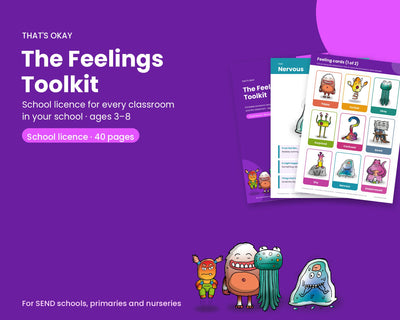
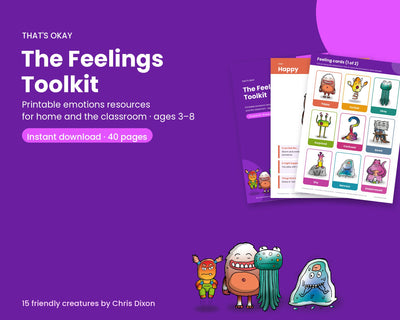
- Use a feelings check-in at the start of each session. The Feelings Check-In Pack is a simple printable, and the Feelings Toolkit School Licence lets you print feelings resources across your whole school.
There are more ideas in my guide to grief activities for children, and a list of other well-regarded titles in children's books about grief.
Planning for the year ahead
- Note key dates such as the anniversary of the death and the person's birthday, and pass them on at transition to a new class or school.
- Think ahead about Mother's Day and Father's Day. Talk to the child beforehand. They may want to make a card for the parent who died, for another important adult, or skip the activity altogether.
- Watch for delayed grief. Some children seem fine at first and struggle months later, or again at a new stage of development.
- Look after staff too. Supporting a grieving child can be emotionally demanding, particularly for an adult who has their own experience of loss.
When to involve specialist support
Most bereaved children are helped most by the familiar adults around them. If a child's distress is very intense, isn't easing over time, or is affecting their safety, speak to your DSL and the family about a referral, for example through the GP, school nursing team or a local bereavement service. Winston's Wish and Child Bereavement UK both offer guidance and training for schools.